25 Stylish Red Butterfly Locs Ideas to Save
Red is the shade that makes butterfly locs look expensive, and the exact red you pick matters more than the length. This guide names twenty-five specific reds, from near-natural auburn to blue-based cherry, and tells you which undertone each one flatters, how it fades, and the exact words that get you the right color in the chair.
 Edited by Lena Rose · Published July 11, 2026 · 35 min read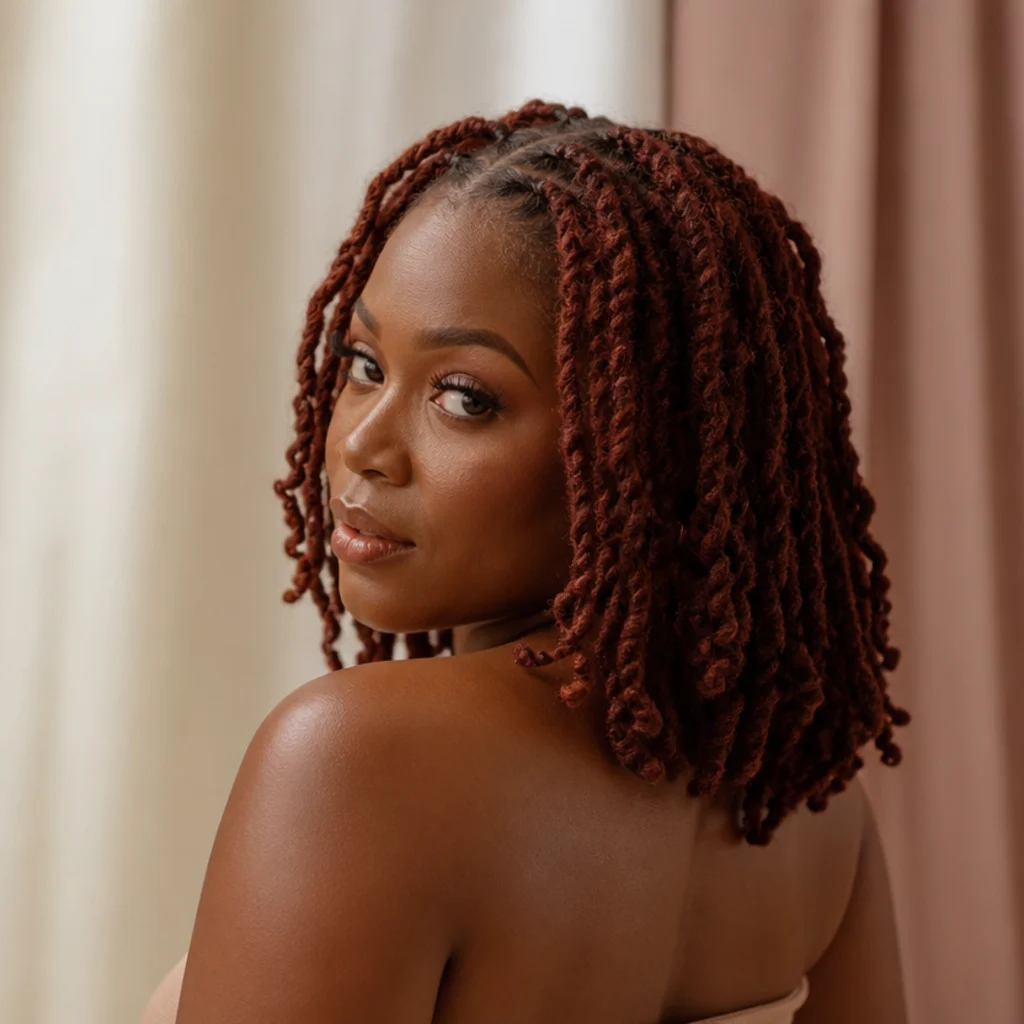
Quick Answer
- Best for: Anyone who wants a protective style with real color payoff. Warm and deep skin tones read beautifully in cherry, copper, and orange-red; cool and neutral tones tend to prefer auburn, berry, wine, and burgundy.
- Who might skip it: Anyone needing a fast weekend install, a very lightweight set, or a workplace with a strict conservative color code, unless you choose mahogany, ginger, or a peekaboo placement.
- Maintenance: Moderate. Nightly satin wrapping, cool-water gentle washes every one to two weeks, and a root refresh or takedown around the six-to-eight-week mark.
- Difficulty: Advanced to install yourself; most people book a braider. Day-to-day wear and styling are beginner-friendly.
- Cost: Variable. Extension hair and wrapping material typically run a modest supply cost; braider labor scales with loc count and length, so micro and waist-length sets sit at the top of the range and chunky short sets at the bottom.
- Wear time / longevity: Best-looking for six to eight weeks; the color itself never fades because it lives in the extension fiber, not your strands.
- Standout variation: Cherry ombre on short butterfly locs, which shows the color without the weight or the upkeep of an all-over bright set.
- How to ask your braider: Bring two to three saved photos and name the red precisely (cherry, ruby, mahogany, berry, wine), then specify loc size, length, and where you want any ombre or peekaboo to sit.
In This Guide
- Chin-Length Cherry Butterfly Locs
- Auburn Short Butterfly Locs
- Burgundy Bob Butterfly Locs
- Copper-Red Distressed Locs
- Cherry Ombre Short Locs
- Waist-Length Crimson Locs
- Ruby Red Butterfly Faux Locs
- Two-Tone Red and Black Locs
- Wine Red Mid-Back Locs
- Ginger-Red Shoulder Locs
- Red Butterfly Locs With Curtain Bangs
- Half-Up Red Loc Bun
- Mahogany Butterfly Locs
- Red-to-Blonde Ombre Locs
- Chunky Red Butterfly Locs
- Micro Red Butterfly Locs
- Red Locs With Gold Cuffs
- Strawberry-Red Bohemian Locs
- Deep Cherry High Ponytail
- Red Butterfly Locs With Side Part
- Fiery Orange-Red Locs
- Red Locs With Braided Roots
- Berry-Red Butterfly Locs
- Red and Burgundy Peekaboo Locs
- Long Fishtail-Wrapped Red Locs
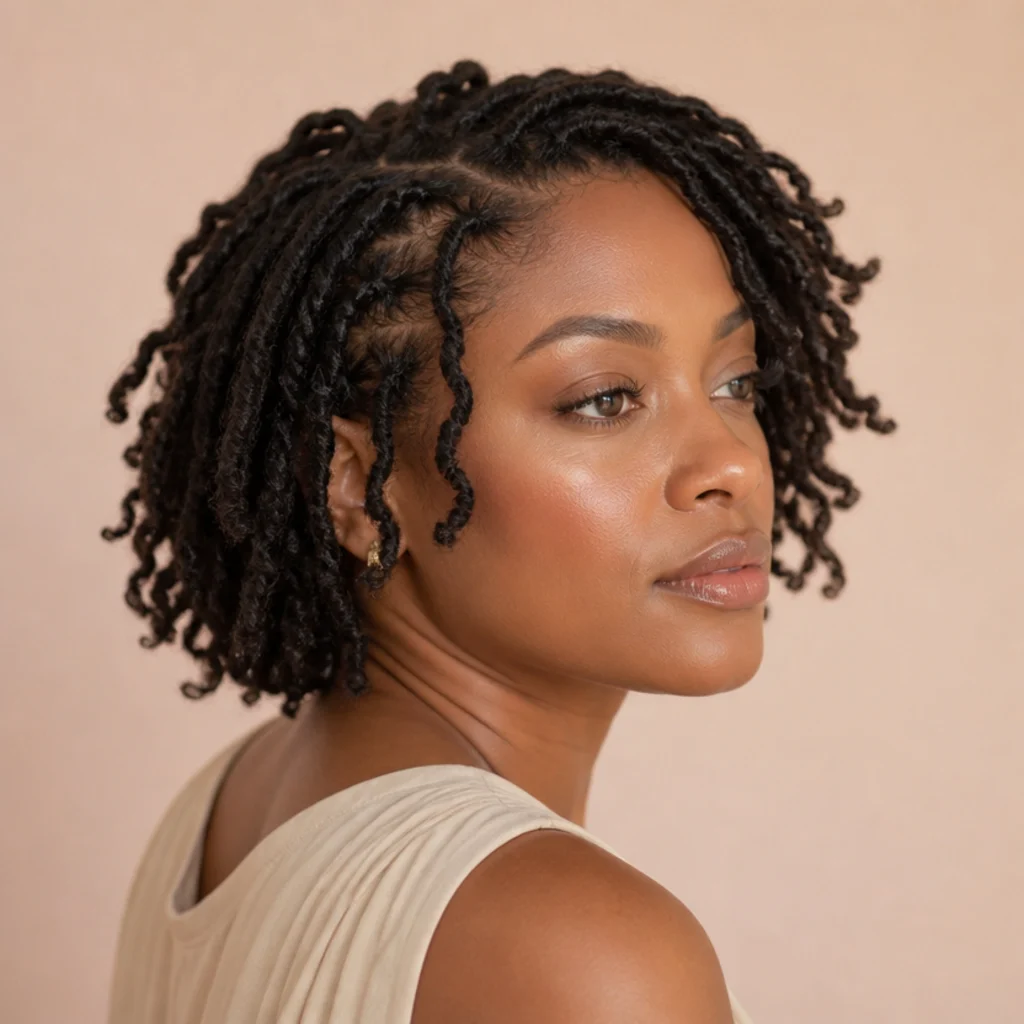
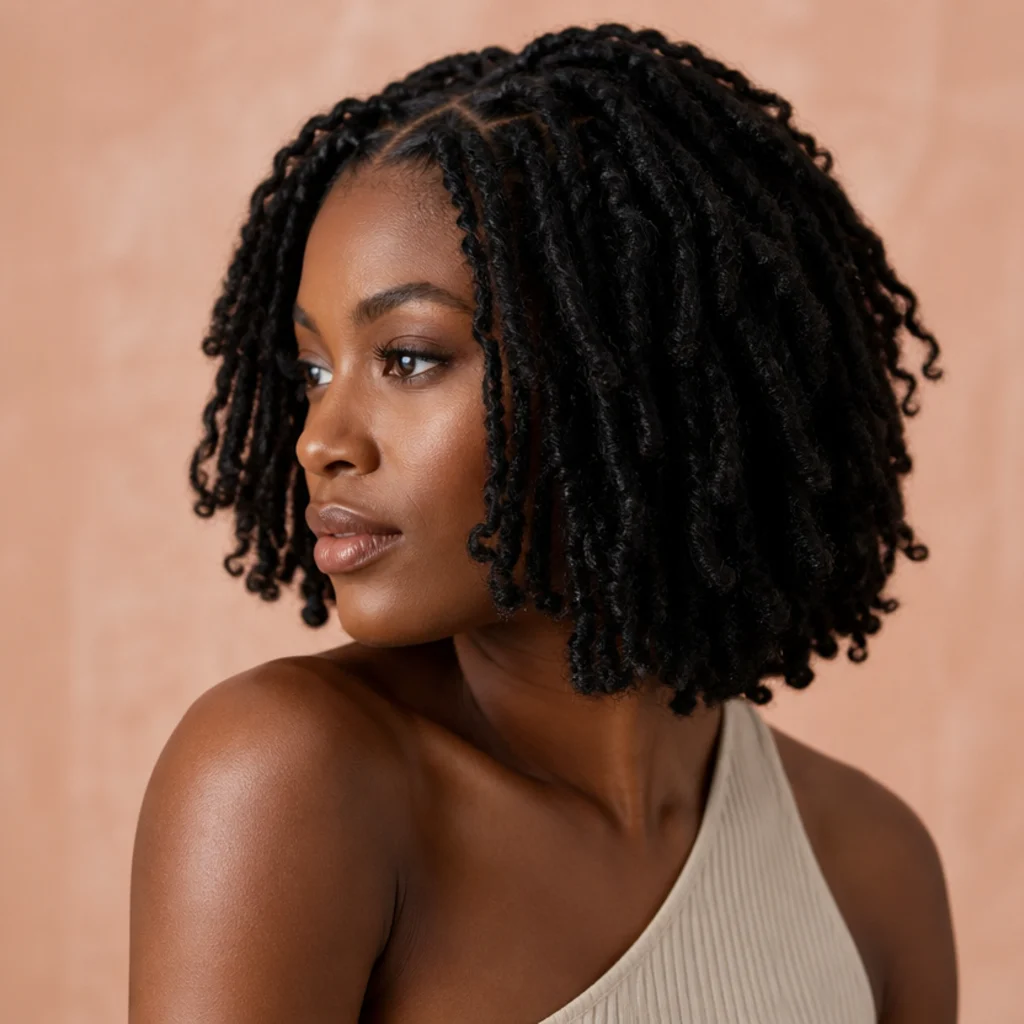
Red butterfly locs come down to two decisions, and getting both right is where the payoff lives. First is texture: the loose, deliberately distressed loops that give butterfly locs their airy, unfinished movement and set them apart from a smooth faux loc or a mature natural loc. Second is color, and red covers more ground than almost any other shade, from a near-natural auburn that only glows in sunlight to a saturated cherry that reads across a room. Butterfly locs are a wrapped, faux technique, so the red lives in the extension fiber rather than in your own strands. You get vivid color without committing your natural hair to dye or bleach, and it doesn't wash out. Short butterfly locs keep things light, quick to dry, and forgiving. Long butterfly locs turn the color into a full curtain that photographs beautifully but needs more nightly care. The twenty-five ideas below run from cropped and low-maintenance to waist-length and statement-making, with notes on undertone, suitability, fade behavior, upkeep, and the exact words to use so your braider mixes the red you actually pictured.
01Chin-Length Cherry Butterfly Locs
A chin-length crop is the gentlest way into short butterfly locs, and a true blue-based cherry keeps it from reading flat or costume-y. The hemline lands right at the jaw, softens angular and square face shapes, and pulls the eye up toward the cheekbones. There's so little hair that the set barely registers on the scalp, dries within an hour of washing, and moves freely, which makes it a solid pick for a first colored install. Cherry is a cool, saturated red with no orange in it, so it stays vivid against warm, medium, and deep skin without turning brassy as it settles. Upkeep is light: a satin bonnet nightly, a lightweight scalp oil once or twice a week, and a root check around week six. Ask for a blue-based, blue-red cherry rather than a fire-engine red. The cooler base holds its punch far longer under daily light, and it's the detail that keeps a chin-length set looking crisp instead of costume-bright.
02Auburn Short Butterfly Locs
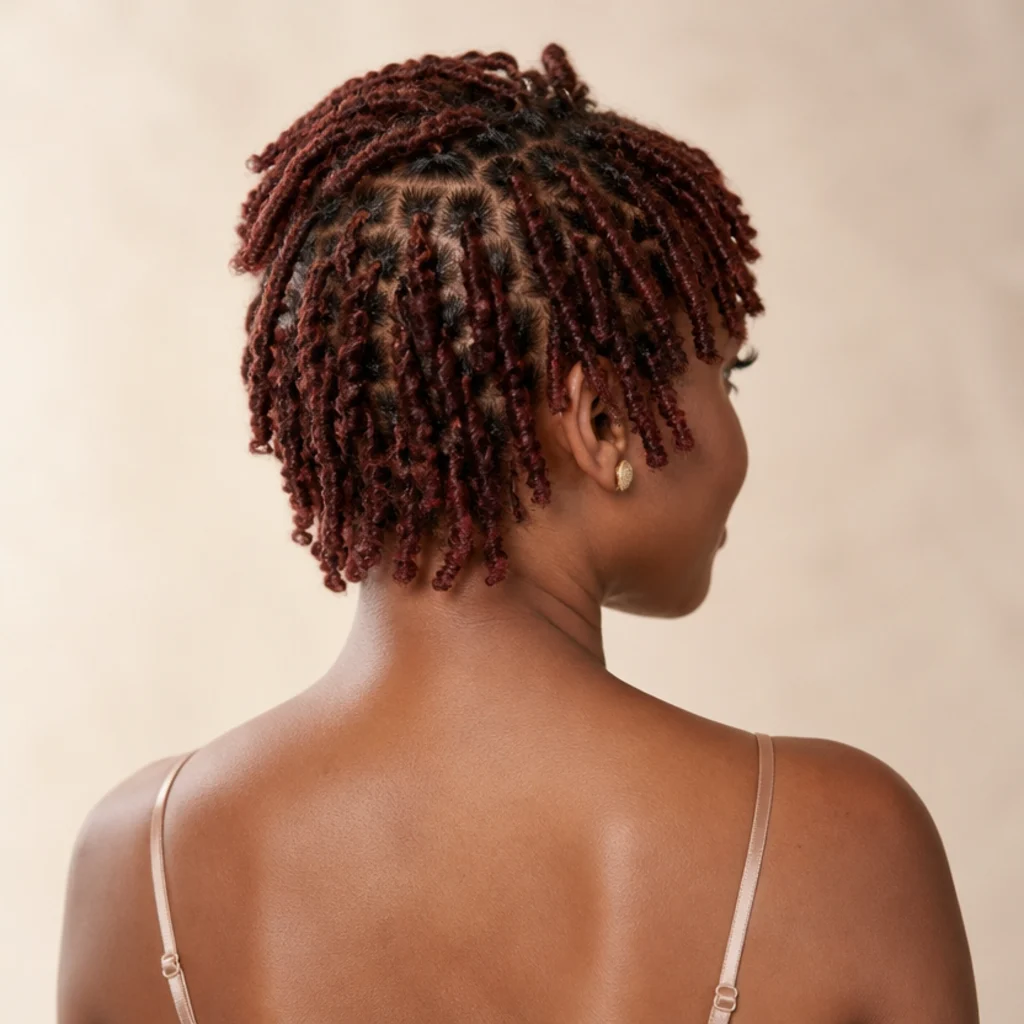
Auburn sits squarely between brown and red, so it flatters an unusually wide span of undertones and reads almost natural in low light before warming up in the sun. On short butterfly locs it stays grounded and easy to live with, the shade to reach for when you want color that whispers rather than shouts. It's also the most forgiving red as it settles, softening toward a warm caramel instead of swinging brassy or muddy, so an aging set still looks intentional. Auburn suits warm and neutral undertones best and pairs naturally with gold jewelry and earth-toned makeup. Because the tone sits close to many natural bases, roots blend in as your hair grows, which stretches the interval between refreshes toward the full eight weeks. Tell your braider you want an auburn one shade warmer than your natural base with a brown foundation, not a bright copper, so the color reads as a choice rather than a grow-out.
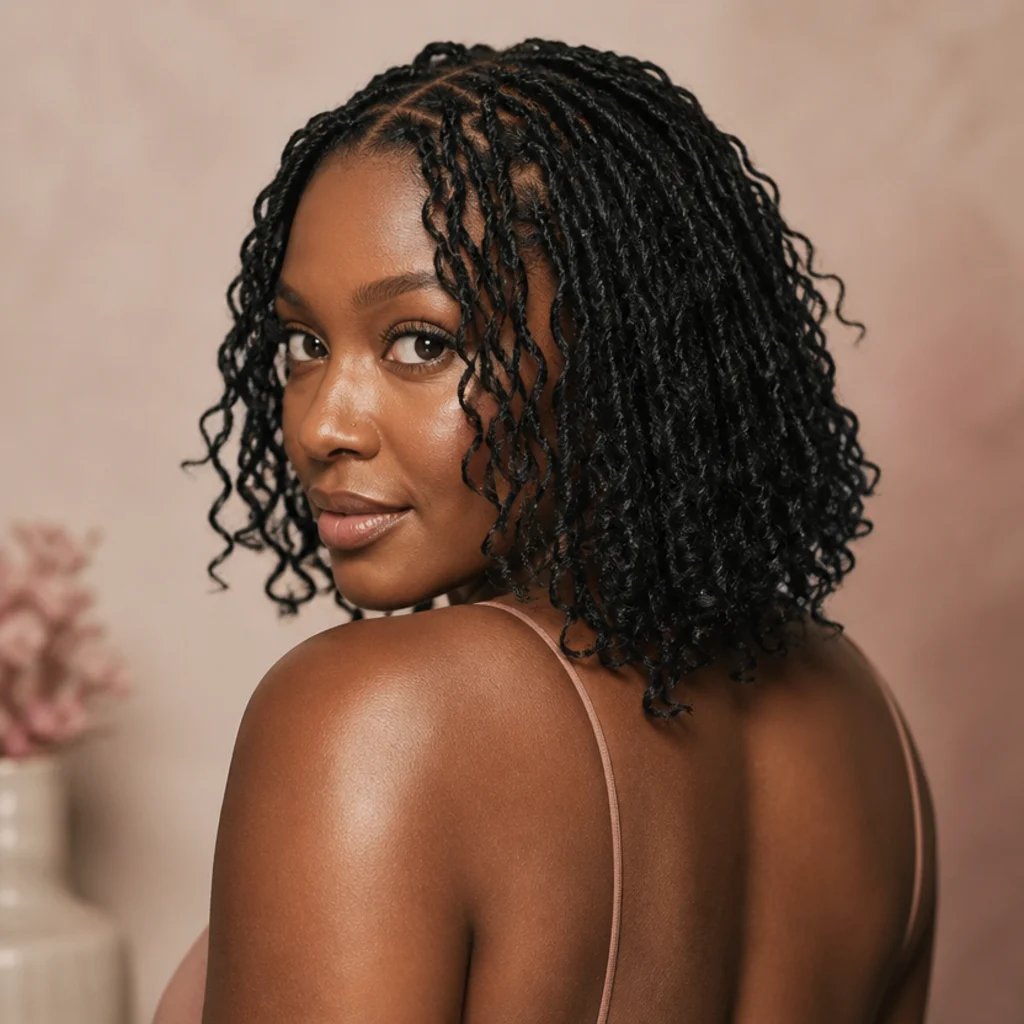
03Burgundy Bob Butterfly Locs
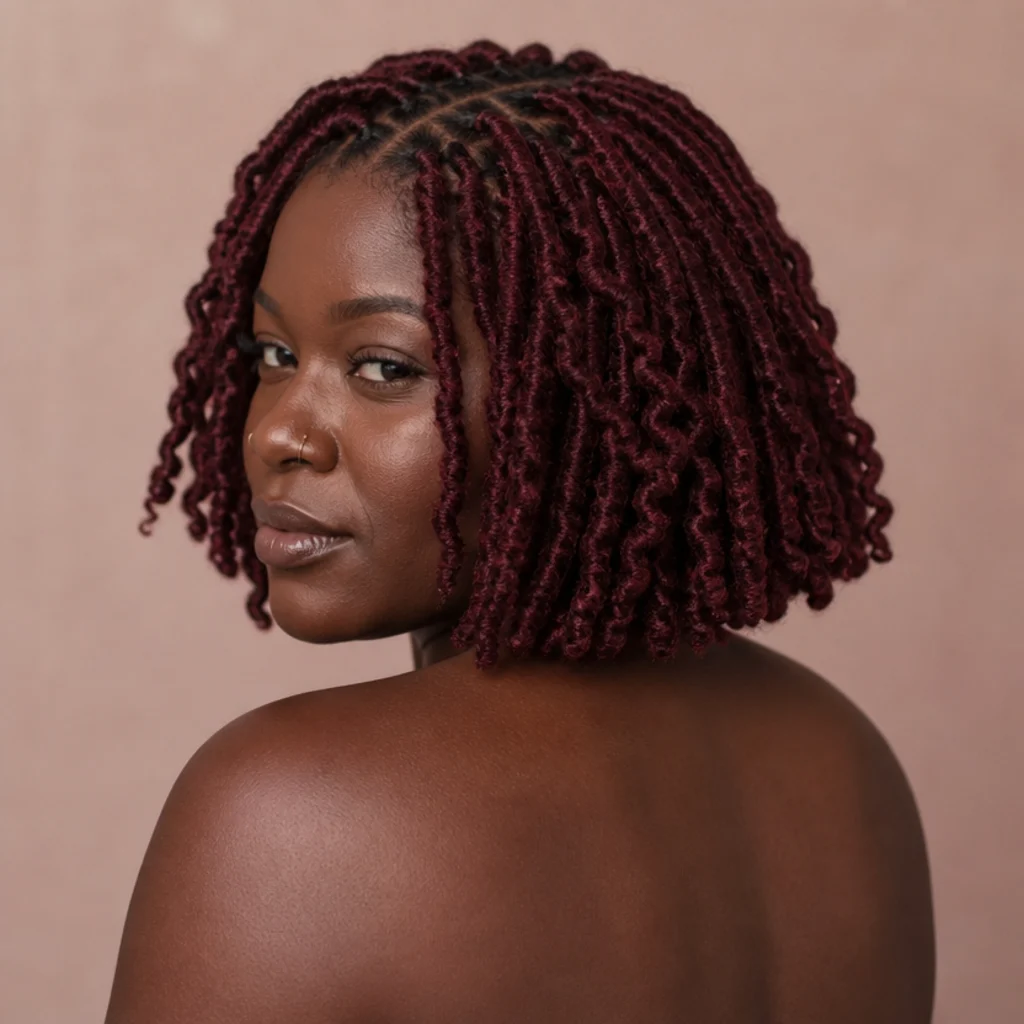
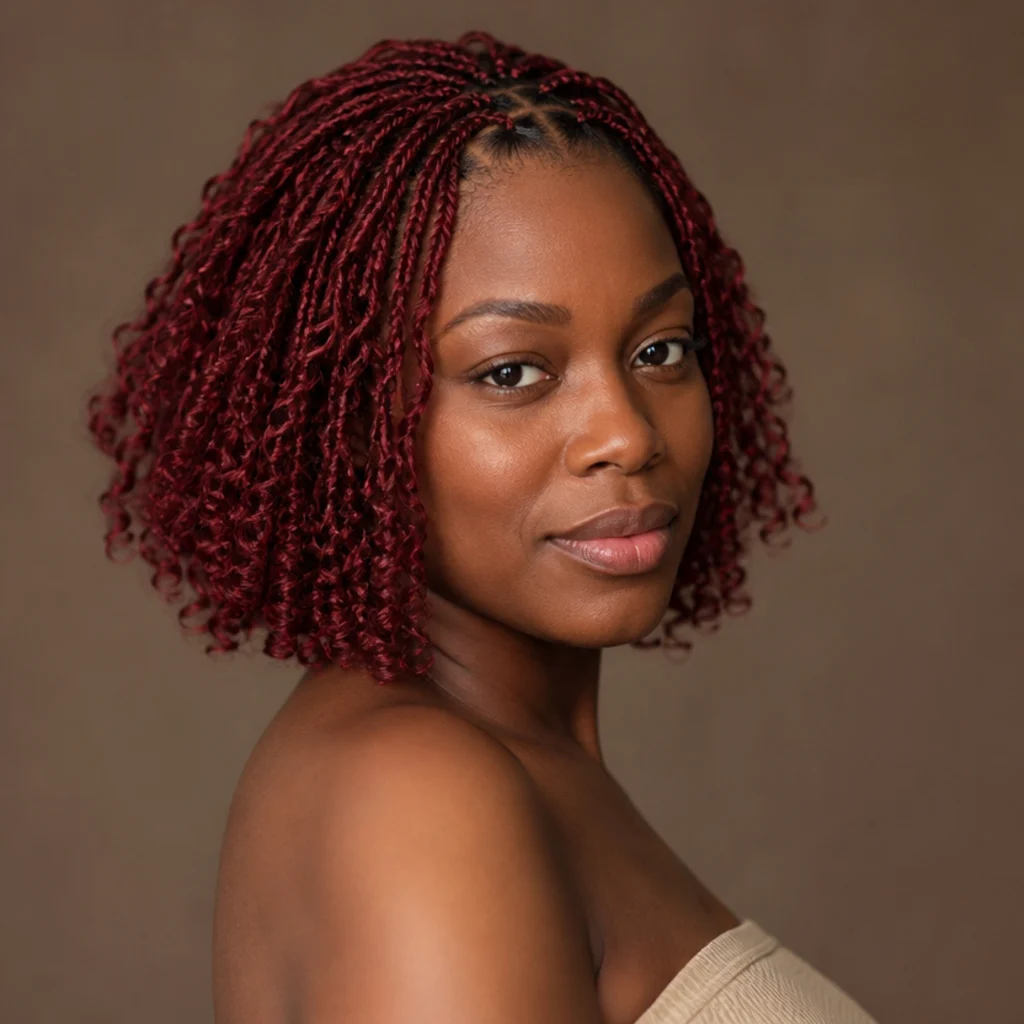
A burgundy bob takes short butterfly locs and gives them a sharper, more deliberate shape. The deep wine tone carries just enough darkness to feel polished and grown, which is exactly why it works in professional settings where a bright cherry might feel loud. The blunt hemline gives the distressed texture a defined edge, so the loops read as intentional movement instead of shapelessness. That structure is what separates a bob from a plain crop. Burgundy is a cool, blue-based red with brown depth, so it flatters cool and neutral undertones especially well and photographs rich in warm indoor light. One trade-off with any blunt shape: a ragged hemline shows fast, so precision at install matters. Have your braider trim stray loops along the bottom line after the set goes in, then wrap the ends nightly so the hemline stays even for weeks. Ask for a jaw-to-collarbone blunt bob in a brown-based burgundy, not a bright wine.
04Copper-Red Distressed Locs
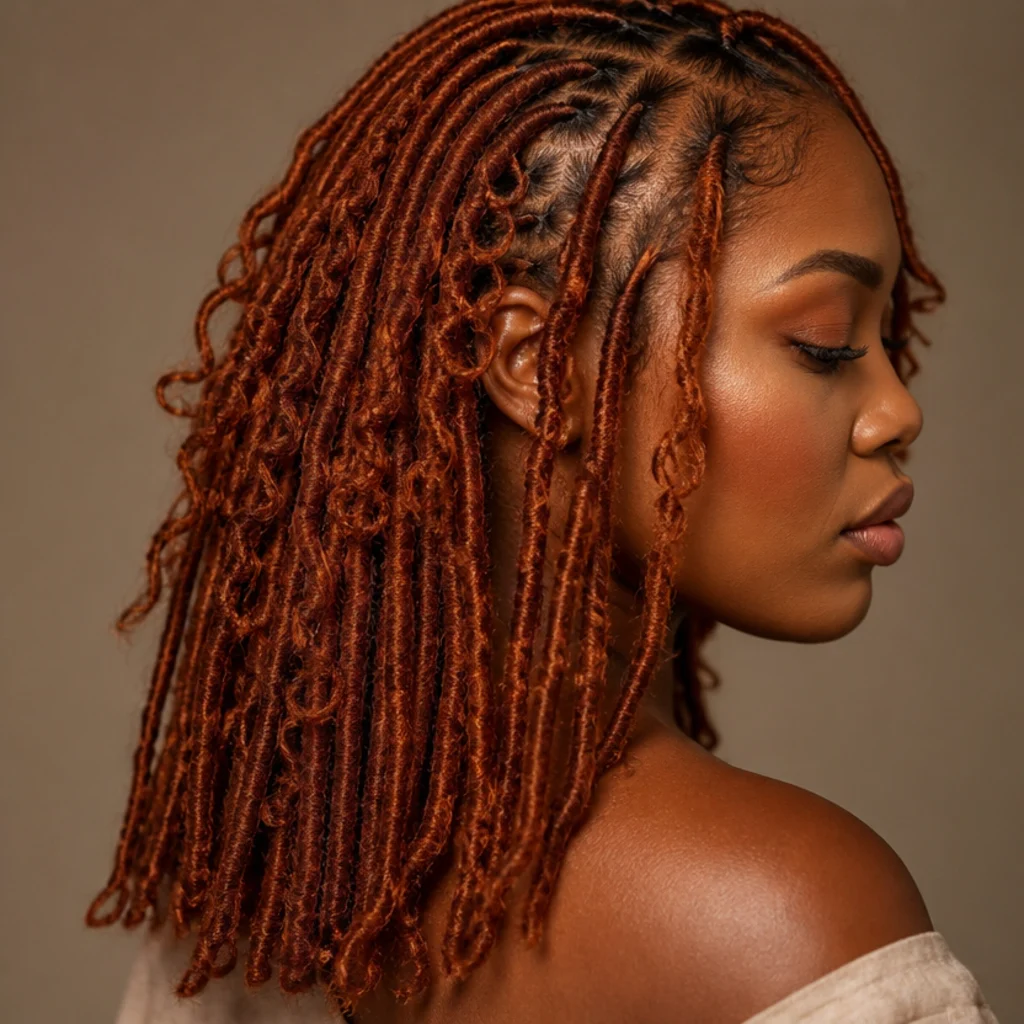
Copper leans firmly orange-red and radiates warmth, a natural match for deep and medium skin tones and anyone drawn to an autumn palette. The heavy distressed texture does real work here: the loose loops catch and scatter light, so the copper reads dimensional and molten rather than one flat sheet of color. This shoulder-grazing, medium-length set balances visible presence with day-to-day manageability, a sensible middle ground if you want color impact without committing to waist length. Copper's fade is a feature, not a flaw, drifting gradually toward a soft gold that many wearers enjoy as a built-in ombre. The shade suits warm undertones best and looks especially rich against gold accessories. Wash with cool water and a sulfate-free cleanser to keep the copper saturated; heat and clarifying formulas are what dull warm reds fastest. When you book, specify copper versus true red so the mix doesn't land cooler and browner than you pictured. Ask for a warm copper with orange depth on a shoulder-length distressed set.
05Cherry Ombre Short Locs
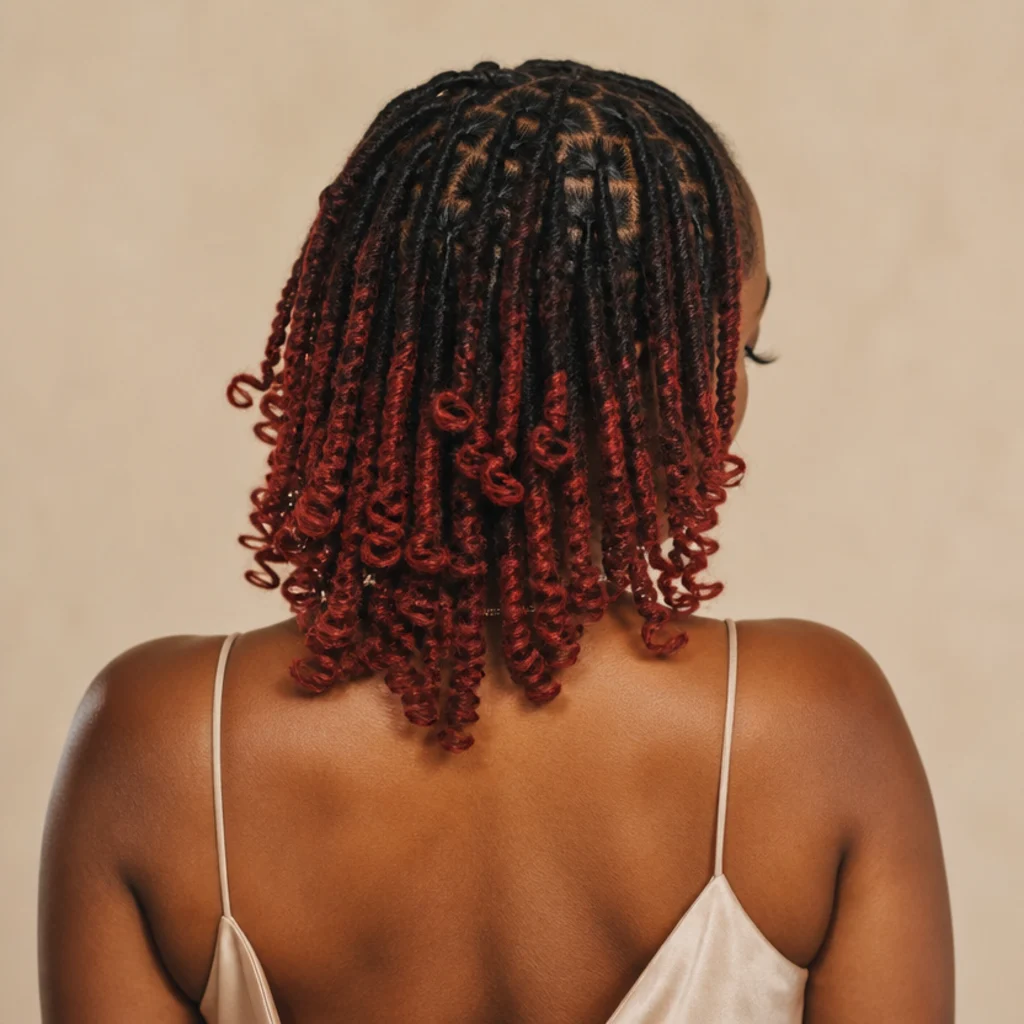
This is the standout pick from the Quick Answer, and the reasoning is practical as much as visual. Dark roots melting into cherry ends give short butterfly locs depth while quietly solving the upkeep problem, since new growth blends into the darker base instead of announcing itself. The gradient also lengthens the look of a short set, drawing the eye down through the color transition. It flatters nearly everyone, because the deeper tone frames the face while the brightest cherry lives safely at the ends, away from any undertone it might clash with. The key to a modern result is a diffused, gradual blend rather than a hard horizontal line. Ask for a soft root smudge that melts over two to three inches into cherry, so the transition reads smooth in photos and in motion. Because the roots stay dark, refreshes are simple and infrequent, one more reason this pick tops the list.
Save this to Pinterest to build your red-loc mood board.
06Waist-Length Crimson Locs
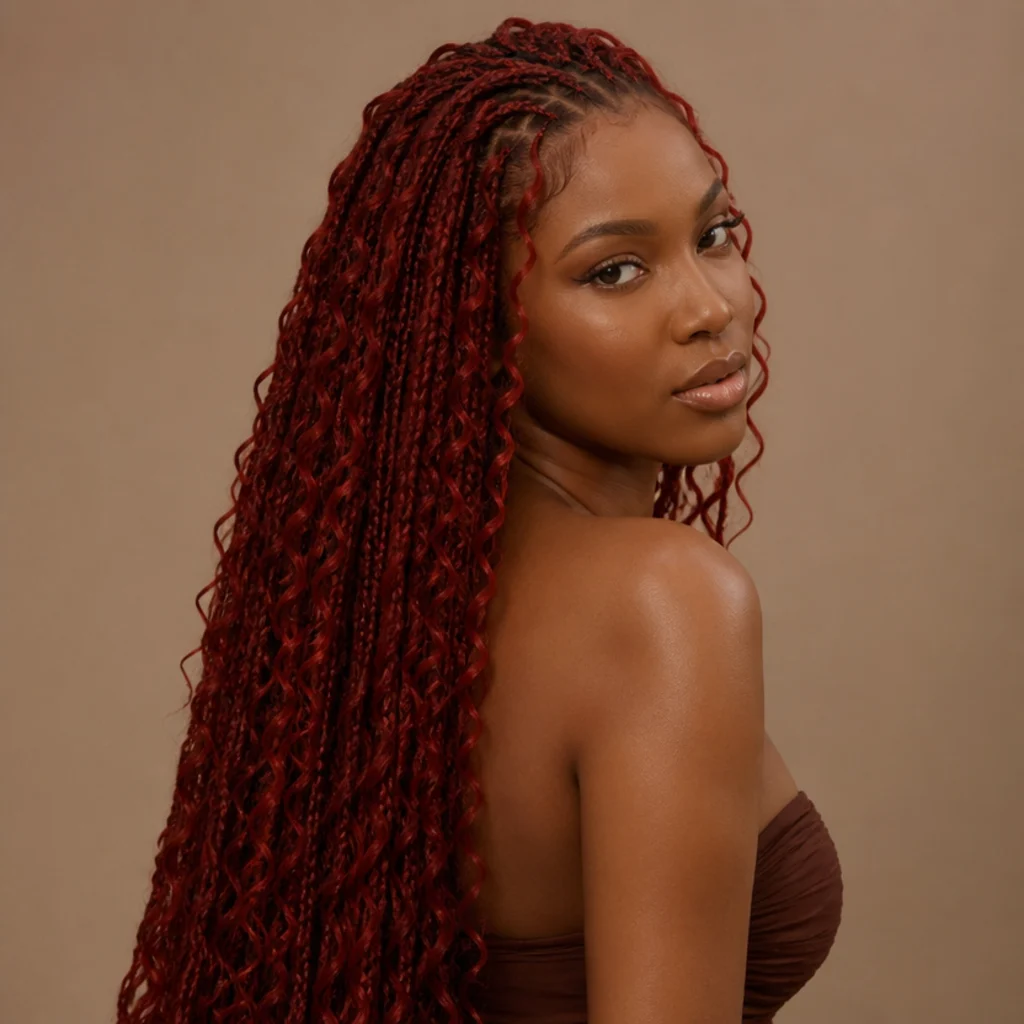
For maximum drama, long butterfly locs in a saturated crimson are hard to beat. The length turns the color into a full, unbroken curtain, and the distressed loops keep all that hair from reading heavy or severe, giving the drop softness and air. This is a real commitment: expect a long install, more packs of hair, and real weight at the scalp, so tension management isn't optional. Crimson is a pure, true red, neither orange nor purple, so it flatters an exceptionally broad range of undertones and photographs vivid without skewing warm or cool. The main risks with length are hairline tension and overnight tangling at the ends. Ask your braider to keep the sections balanced and the tension comfortable at the perimeter, and sleep with the locs loosely gathered and bound in a satin scarf so the ends don't knot. Specify a true crimson, not orange or wine, when you book a waist-length set.
07Ruby Red Butterfly Faux Locs
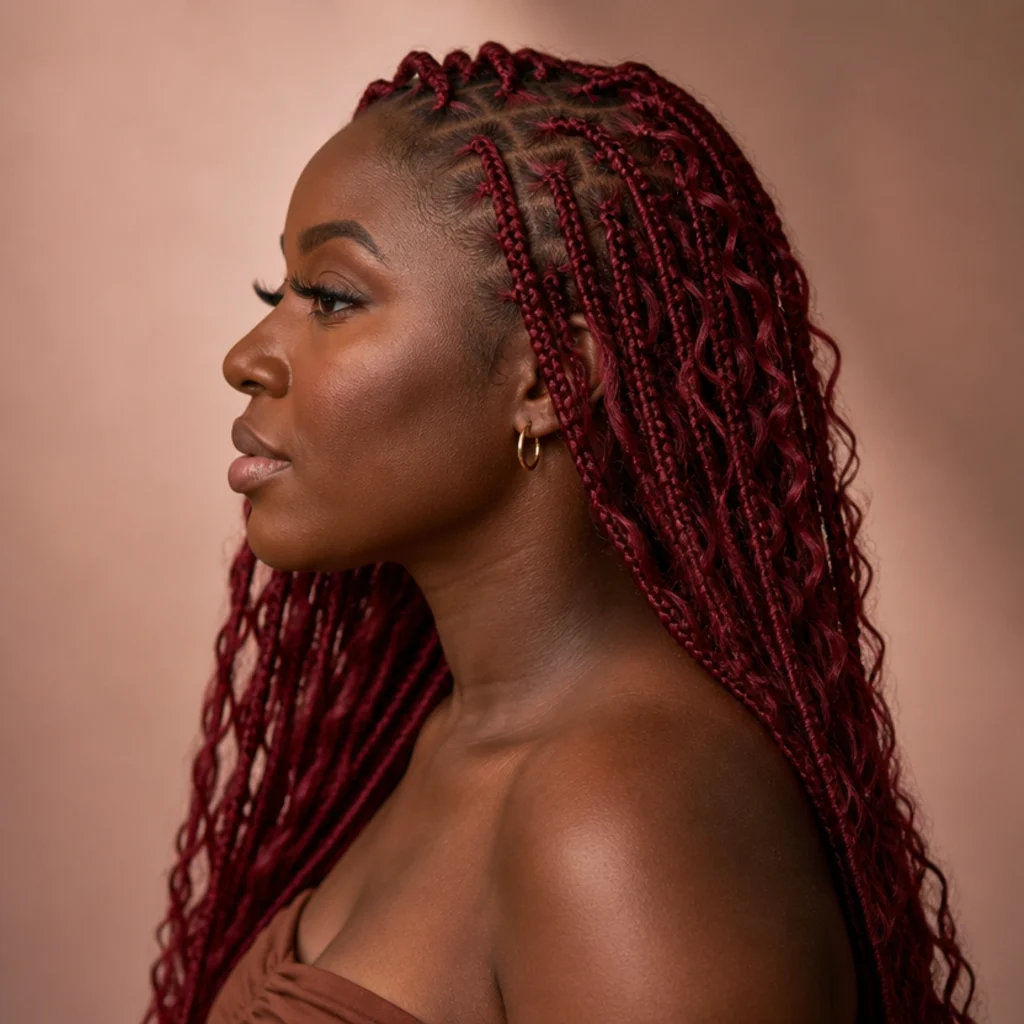
Butterfly faux locs are the wrapping technique underneath every look in this guide, and ruby is the shade that shows the method off best. Ruby is a clear, jewel-toned red with a slight cool lean, so it reads rich and intentional rather than muddy. Faux locs are wrapped around your hair rather than grown or chemically dyed, so the color is baked into the extension fiber. That means it holds indefinitely and never fades the way box dye on natural hair does, a real perk of the butterfly faux locs approach. This mid-length set flatters most face shapes and cool-to-neutral undertones especially well, and it pairs cleanly with silver or white-gold jewelry. When you order hair or brief your braider, say ruby or jewel red. The plain word red drifts toward muddier brick tones on many extension charts, so ask for a cool jewel-toned ruby by name on a mid-length set.
08Two-Tone Red and Black Locs
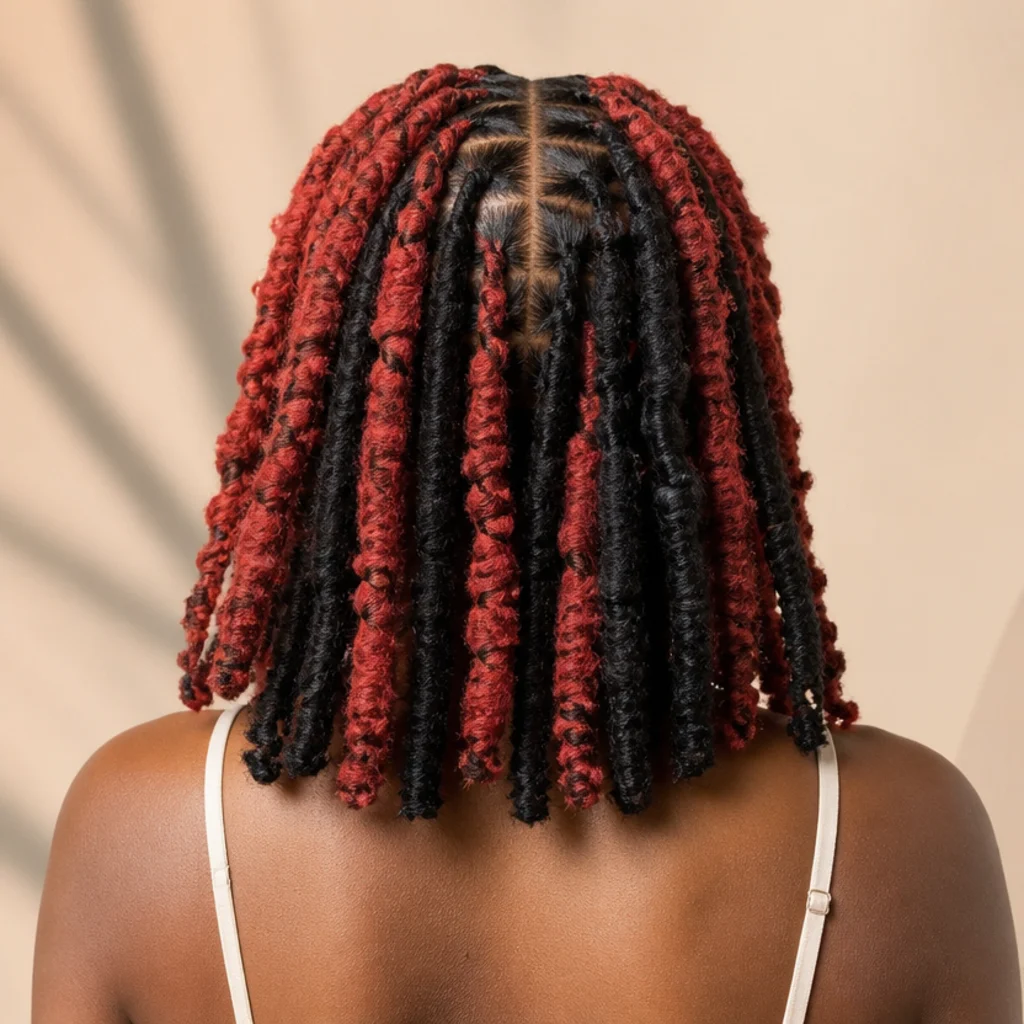
Alternating red and black locs give butterfly locs a graphic, modern edge a single tone can't match. The contrast makes each loc read distinctly and multiplies the visible movement as you turn your head, so the set looks dynamic even standing still. You get real placement control here: run the two tones evenly for a balanced salt-and-pepper effect, or weight the red toward the front and hairline for a face-framing pop against a darker back. This look suits anyone who wants color but likes the grounding, slimming effect of black woven through. The one thing that can go wrong is uneven distribution, which reads accidental instead of designed. Have your braider map the red-to-black ratio and placement before the first loc goes in, so the pattern stays deliberate from crown to ends. A contrast this crisp also rewards frizz control, since stray loops blur the boundary between the two shades.
09Wine Red Mid-Back Locs
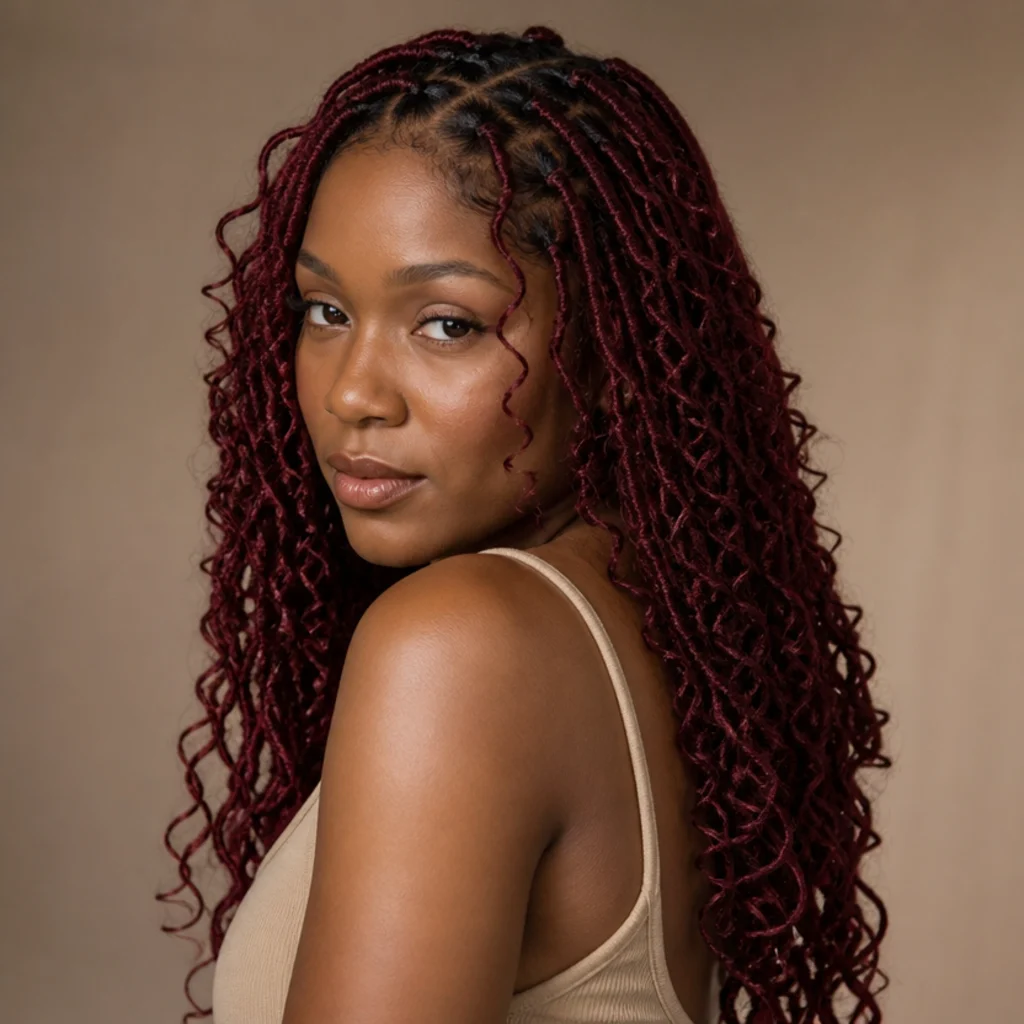
Wine red is burgundy's longer, softer cousin: a deep muted red with a plum undertone that trades vividness for sophistication. At mid-back length, that restraint is the whole point. You get drama in the length and quiet in the shade, so a long set never tips into loud. The muted depth photographs beautifully in low, warm light and flatters cool and neutral undertones, almost like a rich natural color caught in candlelight. As with any long set, the length demands more nightly discipline to prevent tangling and keep weight off the hairline. Loosely braid or gather the locs into a low, soft plait before bed to stop the mid-back ends from matting and keep weight off your edges overnight. When booking, describe it as a deep wine, not a bright red, so the tone stays plum-rich rather than candy-bright.
10Ginger-Red Shoulder Locs
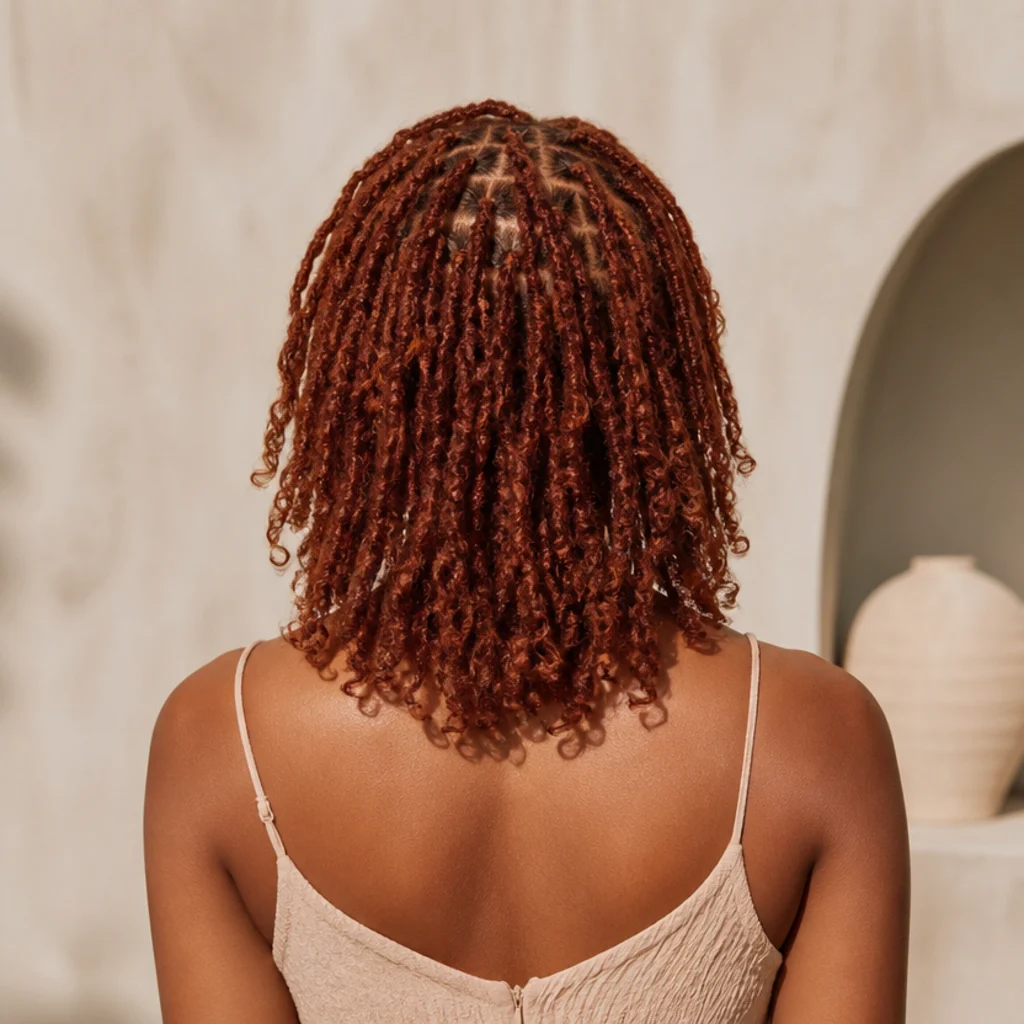
Ginger is the most natural-looking red on this list, a warm strawberry-tinged tone that mimics hair that's actually red rather than dyed. On shoulder-length locs it feels sunlit and easy, the kind of shade people assume you were born with. Ginger flatters warm undertones especially well and softens the face with an approachable warmth. Because it reads so natural, it's the smart pick when your workplace leans conservative but you still want the lift of color. Even its fade helps, drifting toward a soft blonde-red that stays flattering the whole time. The shoulder length keeps weight and upkeep moderate. Bring a photo of natural ginger or strawberry-blonde hair, not a bottled red swatch, so your braider matches the warmth and softness correctly instead of overshooting into copper.
Save this to Pinterest and note which reds match your undertone.
11Red Butterfly Locs With Curtain Bangs
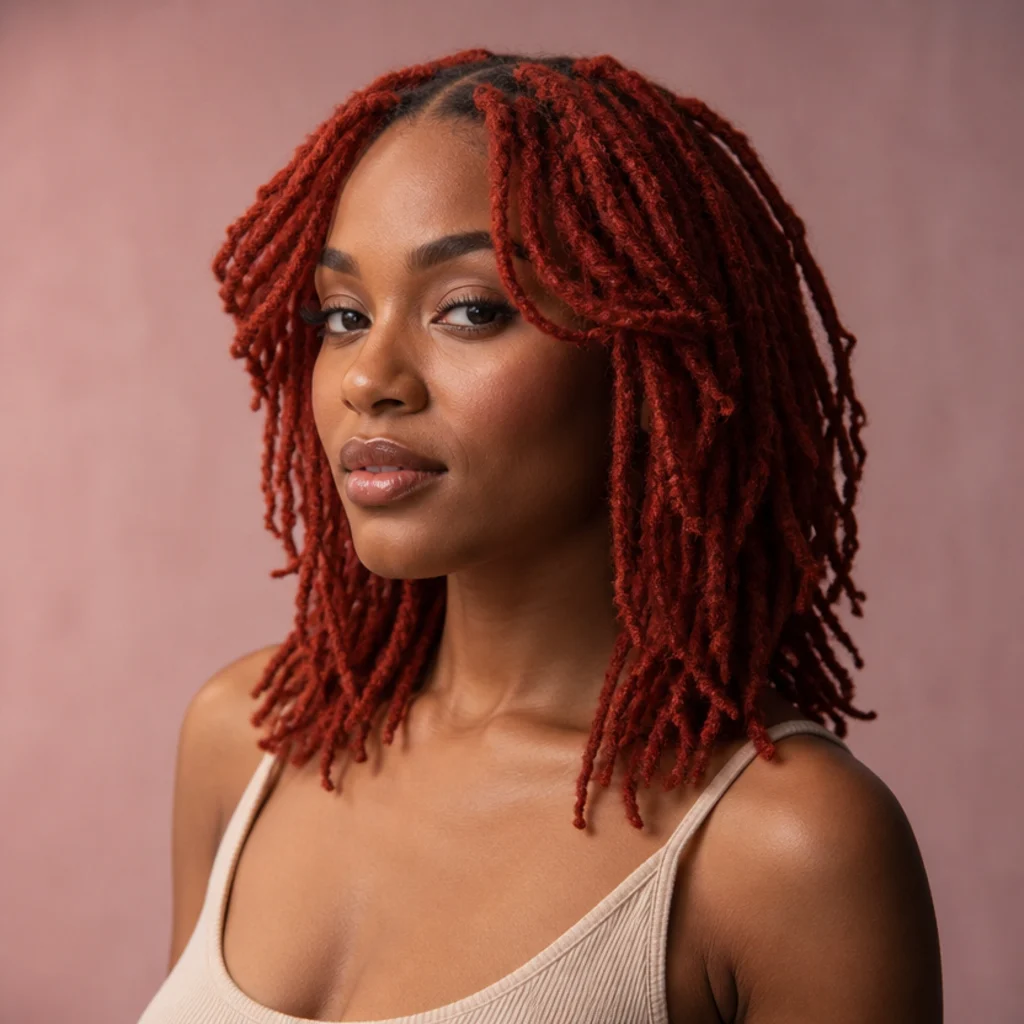
Curtain bangs bring a soft, face-framing shape to any red set, and the color makes the framing pieces read as a deliberate design choice. A handful of locs sweep away from a center part, softening the forehead and pulling focus toward the cheekbones. This works across short and long lengths but looks especially good on a mid-length set, where the sweep has room to fall without overwhelming the face. Curtain bangs flatter longer, oval, and heart-shaped faces particularly well, since the framing counterbalances length in the face and narrows a wider forehead. The framing locs need a little daily attention to hold their curve. Ask your braider to leave two to four locs looser and slightly shorter at the front to form the curtain, then tuck those pieces into your scarf at night so the sweep survives to morning.
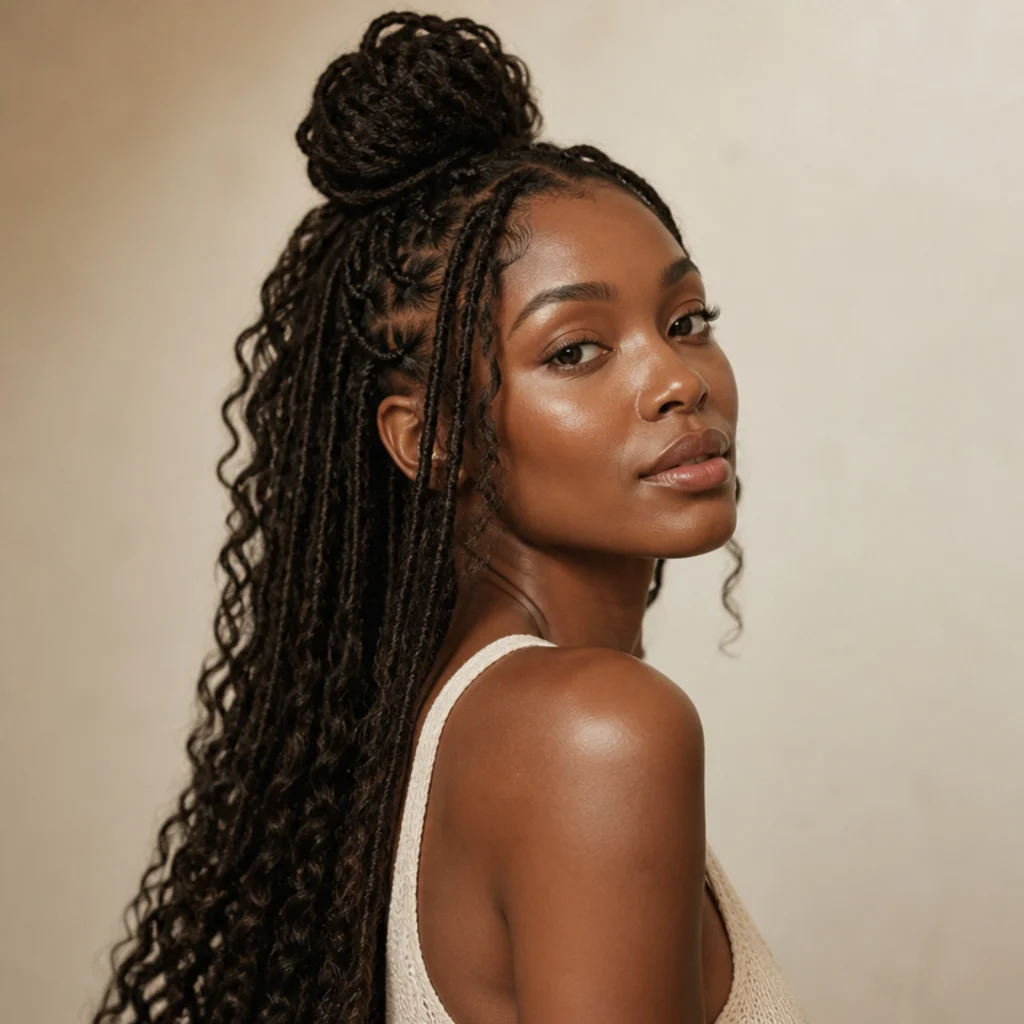
12Half-Up Red Loc Bun
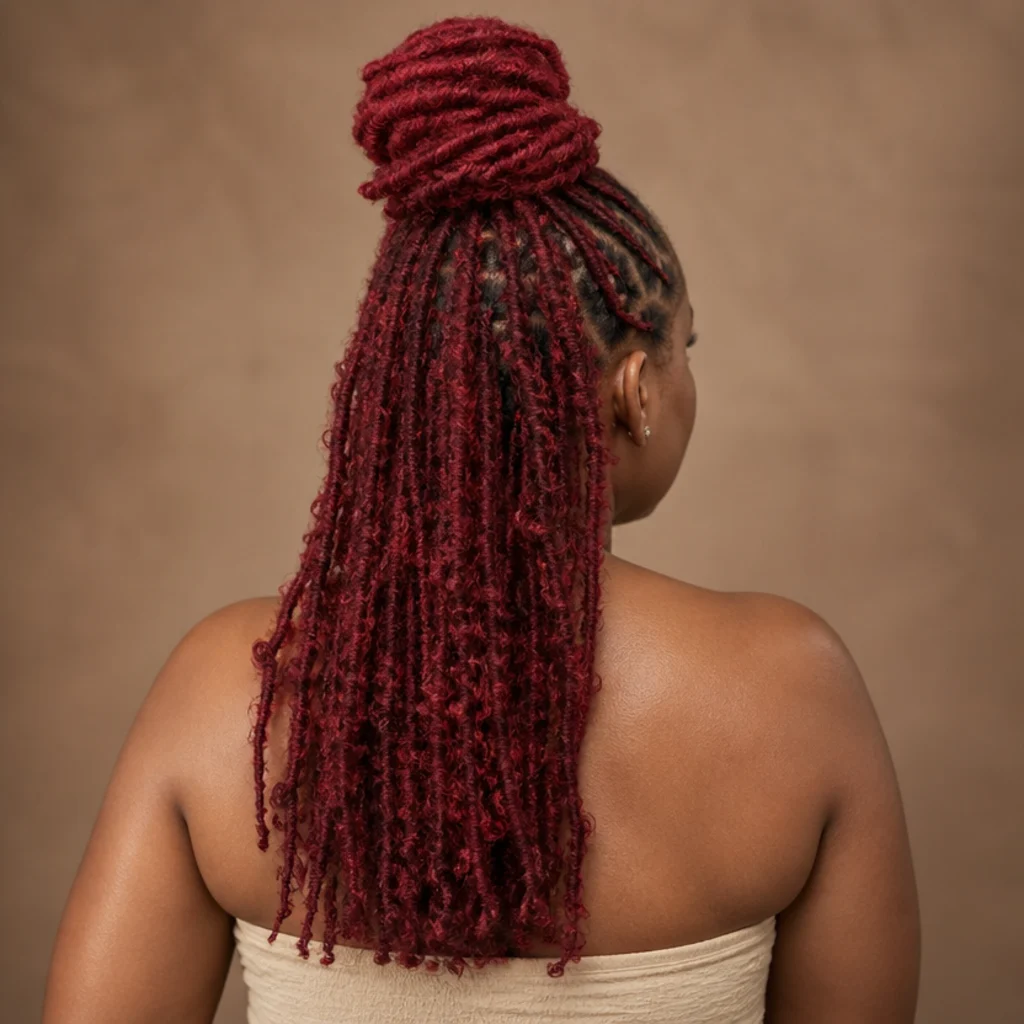
The half-up bun is a styling move rather than a separate install, and it works on nearly any red length past the shoulders. Gather the top section into a bun and it lifts the color up near the face and crown while the rest falls loose, giving you two silhouettes from one set and a quick way to look put-together. It's also the most practical heat-free option for warm days, since it gets hair off the neck without a full updo. Pulling the top section up redistributes weight away from the perimeter too, which can feel like real relief on longer, heavier sets. The only pitfall is tension at the hairline from tying too tight or too high. Use a soft, snag-free spiral or fabric tie and set the bun at mid-crown rather than the very top, keeping the front locs relaxed to protect your edges. Check that your length past the shoulders gives you enough hair for a full bun before you plan the style with your braider.
13Mahogany Butterfly Locs
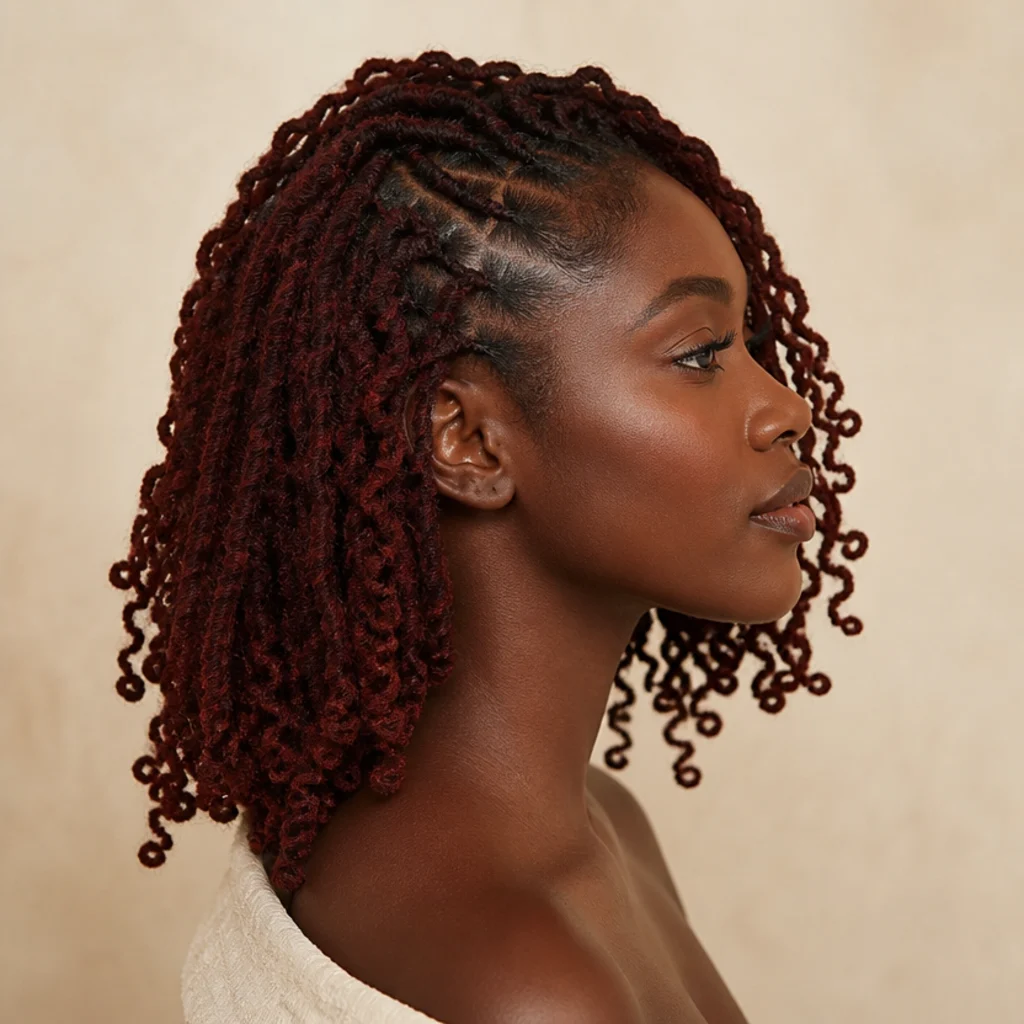
Mahogany is a brown-red with real depth, richer than auburn but softer and warmer than burgundy. It flatters deep skin tones beautifully and gives butterfly locs a luxe, understated finish that photographs like polished wood. Because the brown base tempers the red, mahogany never screams. It's one of the most versatile everyday colors here, moving from a work setting to a weekend without a second thought. This mid-length set shows the tone at its best, with the distressed loops adding quiet dimension as they catch light. The main way to lose mahogany's richness is stripping it with the wrong products. Keep the locs conditioned and steer clear of clarifying or high-sulfate shampoos, since they lift and dull the warm depth over time. When booking, ask for mahogany described as a brown-based red, so the mix stays deep rather than landing bright.
14Red-to-Blonde Ombre Locs
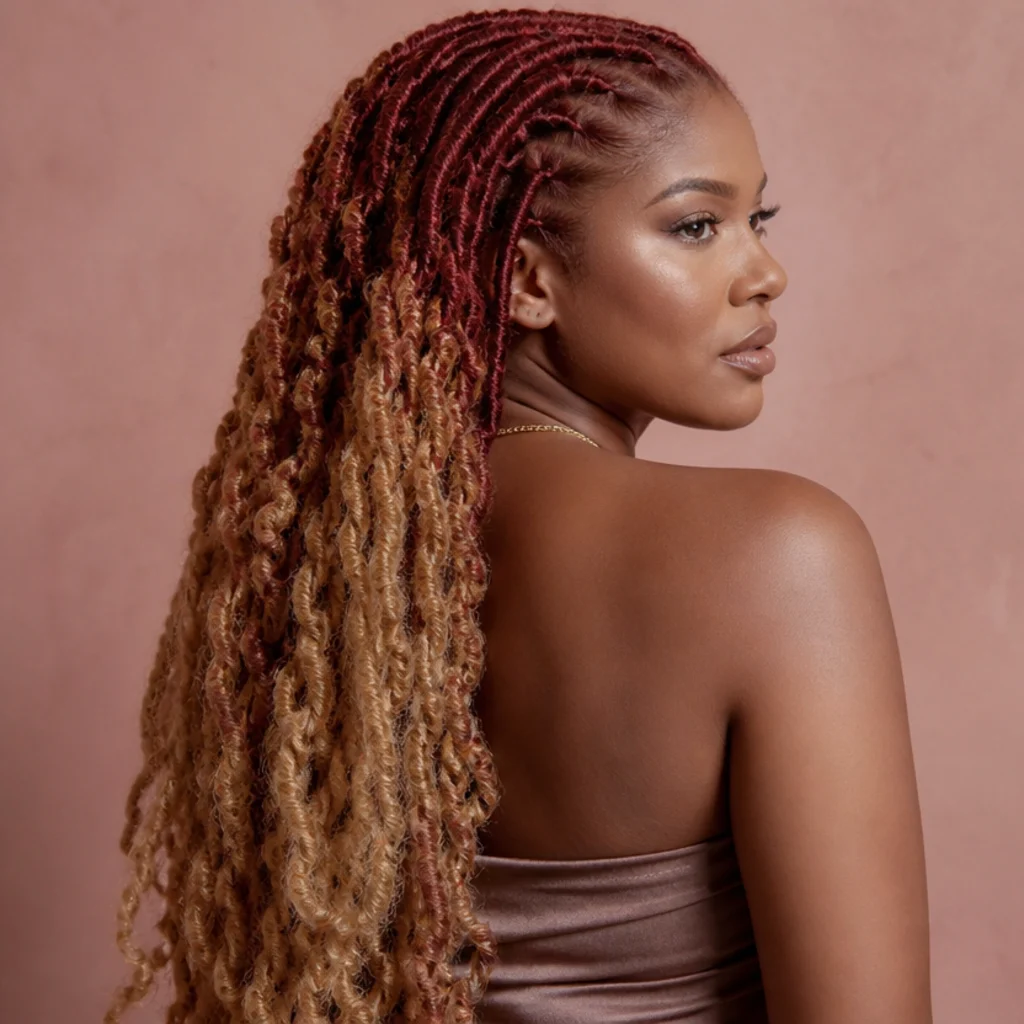
Flip the expected ombre: start red at the roots, then fade to a warm blonde at the ends. The effect is sunny, editorial, and unexpected, and it works best on long butterfly locs, where the gradient has room to breathe over a real span of length. This is a bolder statement than a dark-to-cherry melt, and it pushes butterfly locs with color about as far as the category goes. It suits anyone who wants a look that turns heads and doesn't mind two-tone upkeep, since two color zones mean two behaviors to watch. Because the ends are the lightest and most worked point, they tend to show wear and fraying first. Trim any frayed blonde tips as they appear, and bring a clear reference photo marking exactly where the fade should begin so the transition lands at a flattering point rather than mid-face.
15Chunky Red Butterfly Locs
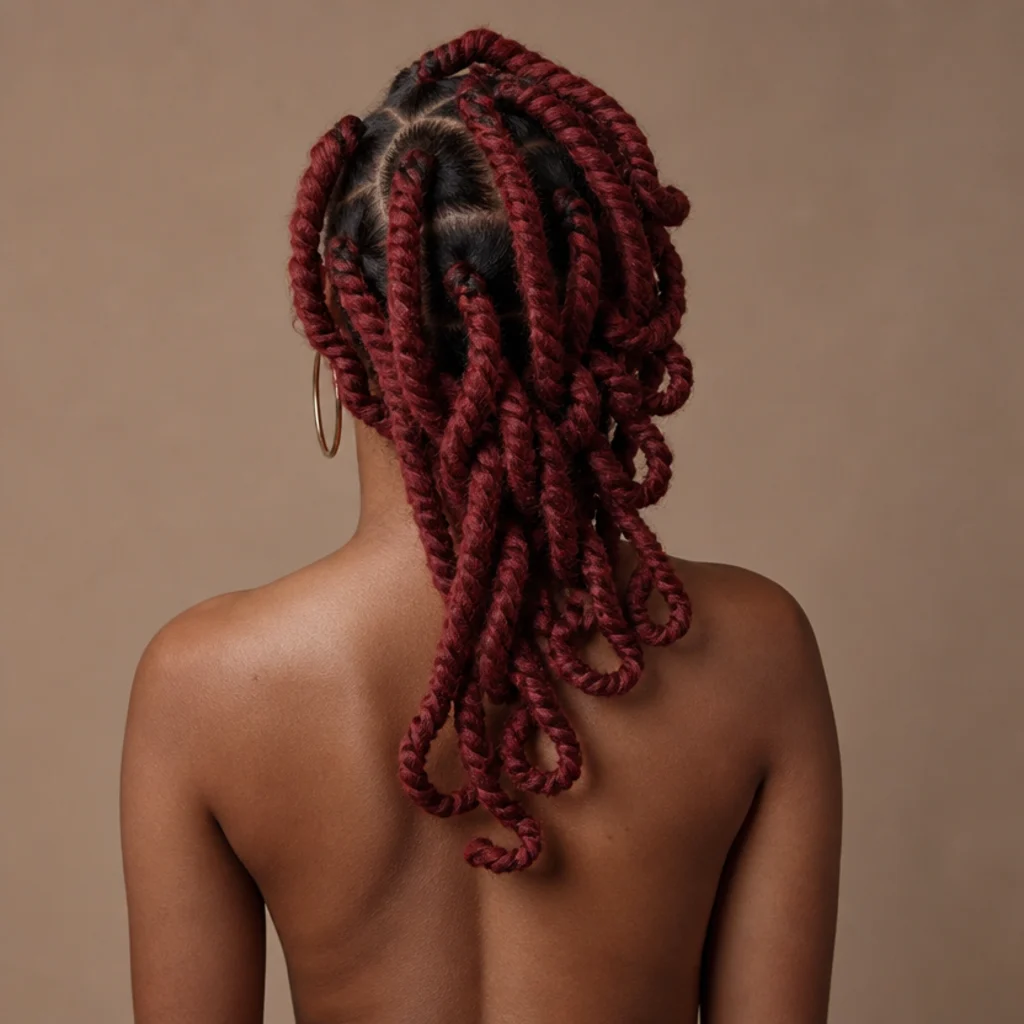
Chunky locs use fewer, thicker sections for a bold, full look that installs noticeably faster than a micro set. In red, the larger loops make the color feel abundant, and the distressed texture gets more room to show its loops, so the whole set reads plush. This is the pick when you want volume and a shorter appointment. Per loc, the thicker sections sit a little lighter on the scalp, though a full long set still carries overall weight. Chunky scale flatters rounder and fuller face shapes, adding vertical length and a sense of height that balances width. The one caution: oversized sections can look unrefined if the count is too low for the length. Ask for a chunky, low-count install sized to your length, so the loops stay bold without looking sparse.
Save this to Pinterest to compare chunky versus micro.
16Micro Red Butterfly Locs
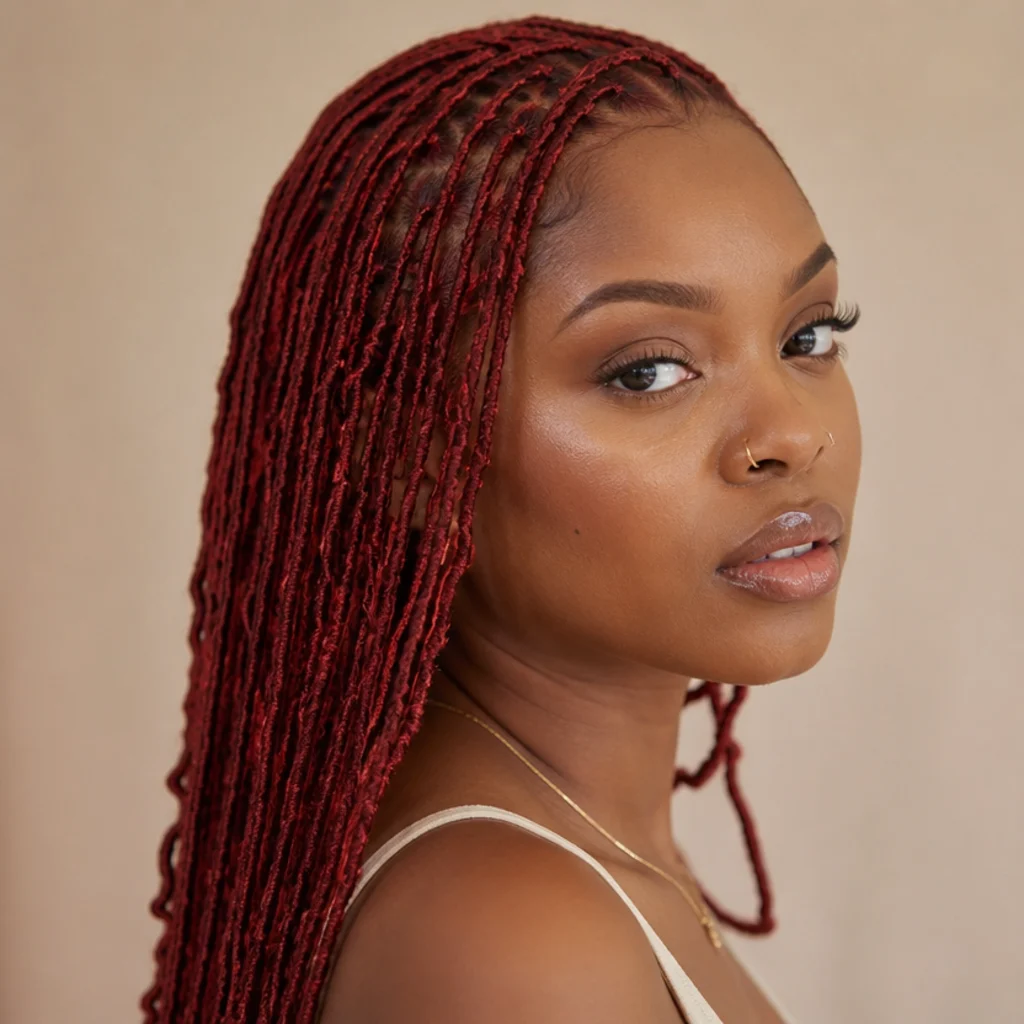
At the opposite end of the scale, micro locs use many fine sections for an intricate, high-detail finish. In red they read almost like woven fabric, the color layered across dozens of slim locs so it shifts and shimmers as you move. This is the most time-intensive install in the guide and the most delicate to maintain, but the payoff is a refined result no chunky set can match. Micro locs suit anyone who prizes detail and precision and doesn't mind a long appointment. Their flexibility also makes them the easiest to coax into updos, braided crowns, and sculpted styles. The trade-off is hours in the chair and more perimeter locs, so hairline tension needs watching. Discuss timing honestly up front, since a full micro set can span many hours or even two sessions, and confirm gentle tension at the edges before your braider starts.
17Red Locs With Gold Cuffs
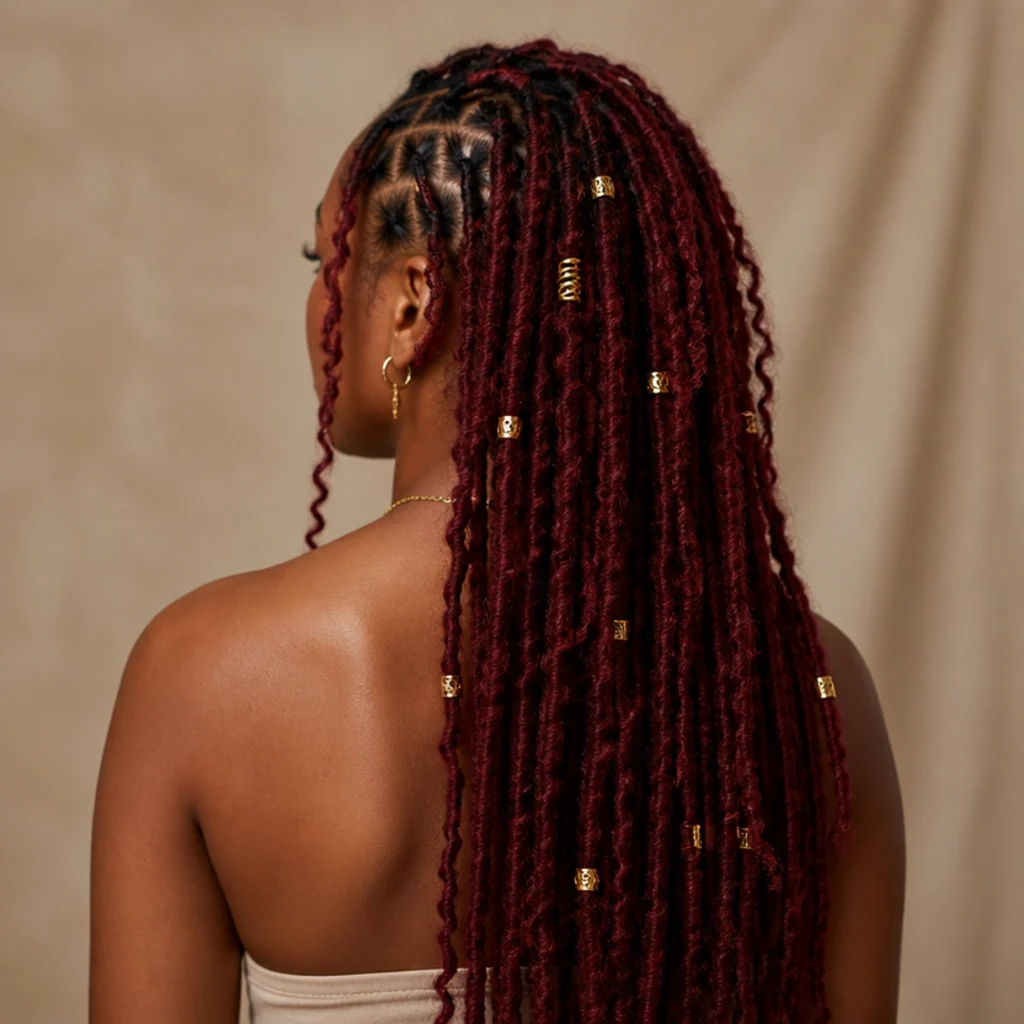
Accessories turn a good red set into an unmistakably personal one, and metal is the fastest way to do it. Gold cuffs and rings scattered through red locs add shine and warmth that plays directly off the color, especially against warm reds like copper, ginger, and mahogany, where the metal and hair share a family. The trick to a styled rather than cluttered result is placement and restraint: cluster a few cuffs near the face and scatter a lighter handful through the length, letting negative space do half the work. Cuffs slide on and off in seconds, so you can shift the whole mood without touching the install, the lowest-commitment upgrade in this guide. The only real risk is weight and tightness on individual locs. Choose lightweight cuffs sized to your loc width and avoid over-clamping, so no single loc gets strained or pulled thin at the cuff.
18Strawberry-Red Bohemian Locs
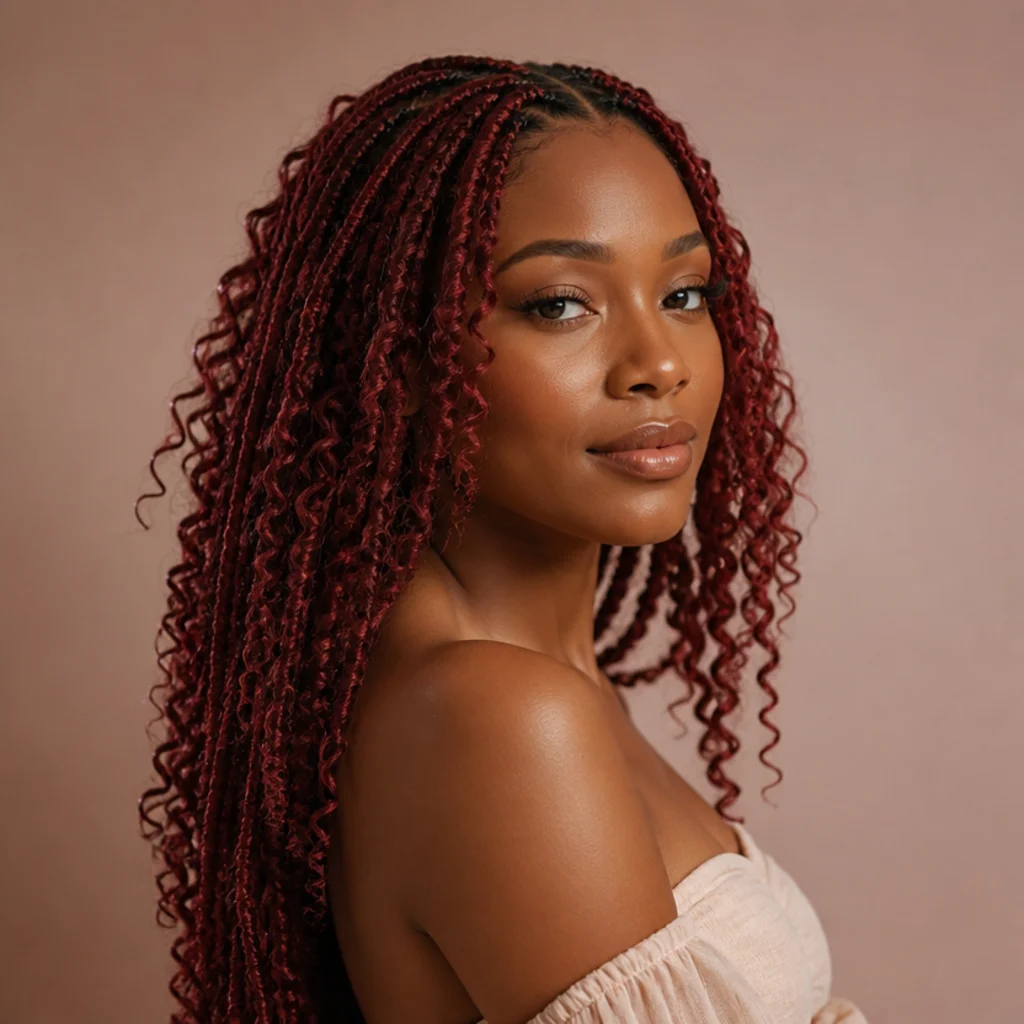
Bohemian locs leave curly, human-hair-textured pieces loose along the length for a softer, more romantic finish than a clean, closed loc. In strawberry red, that looseness reads sun-kissed and casual, like color caught mid-summer. The trade-off for that movement is care: the loose curls tangle more readily than wrapped locs and need gentle handling, but they reward it with real softness and a relaxed, festival-friendly look that suits anyone who finds a clean loc too severe. Strawberry red flatters warm and neutral undertones and pairs naturally with a bare, dewy makeup look. The loose pieces are also the first thing to dry out or frizz, so refresh the curly sections with a light water-based leave-in mist and scrunch, skipping heavy oils that weigh the curls flat. When booking, ask specifically for boho butterfly locs so your braider leaves the correct amount of curly hair out rather than sealing every loc.
19Deep Cherry High Ponytail
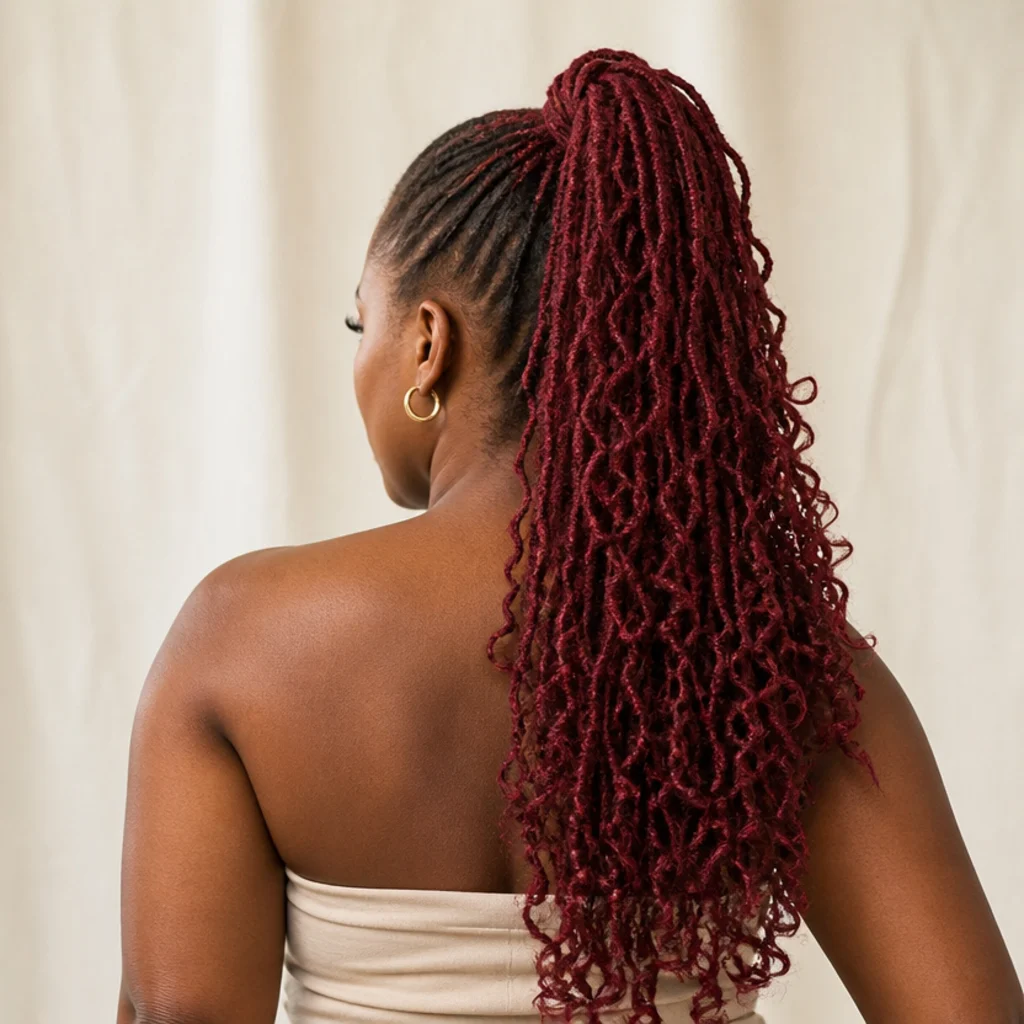
A high ponytail is a styling move that puts both length and color on full display at once. Gathering deep cherry locs up high creates a sleek, tensioned base and a full cascade that turns the red into the whole silhouette, a strong choice for events, photos, and nights out. The obvious trade-off is tension: a high, tight pony pulls hard at the hairline and temples, so keep it comfortable and occasional rather than a daily default. This style needs mid-length to long locs with enough hair to build a full tail; a short set looks sparse pulled up. Anchor the base with a strong but snag-free tie and, for a very full tail, wrap one loc around the base to hide the elastic, then loosen the front slightly to ease hairline strain.
20Red Butterfly Locs With Side Part
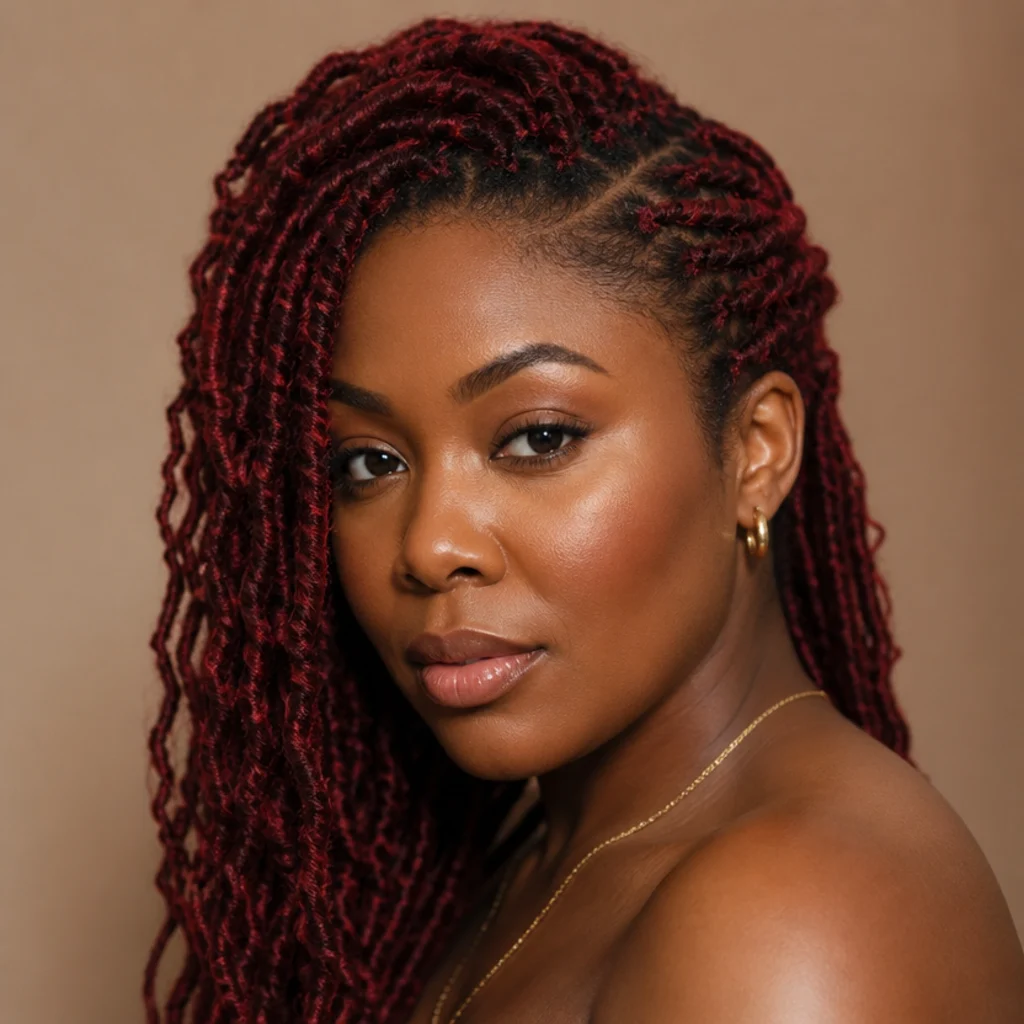
A deep side part is a small change that resets the whole feel of a red set. Sweep the locs to one side and you pile volume at the crown, introducing an asymmetry that flatters round and square faces by breaking up their width with a diagonal line. It's purely a styling choice, so you can move between a center and a side part whenever the mood shifts, no reinstall required, which makes it one of the most flexible looks in this guide. The heavier swept side can drape over one shoulder for a soft, editorial drop that shows the color in a single dramatic sweep. The only long-term caution is uneven tension from parting the same way every day. Alternate your part side every week or two so the hairline wears evenly and no single section of edges takes all the strain.
Save this to Pinterest to remember your favorite parting.
21Fiery Orange-Red Locs
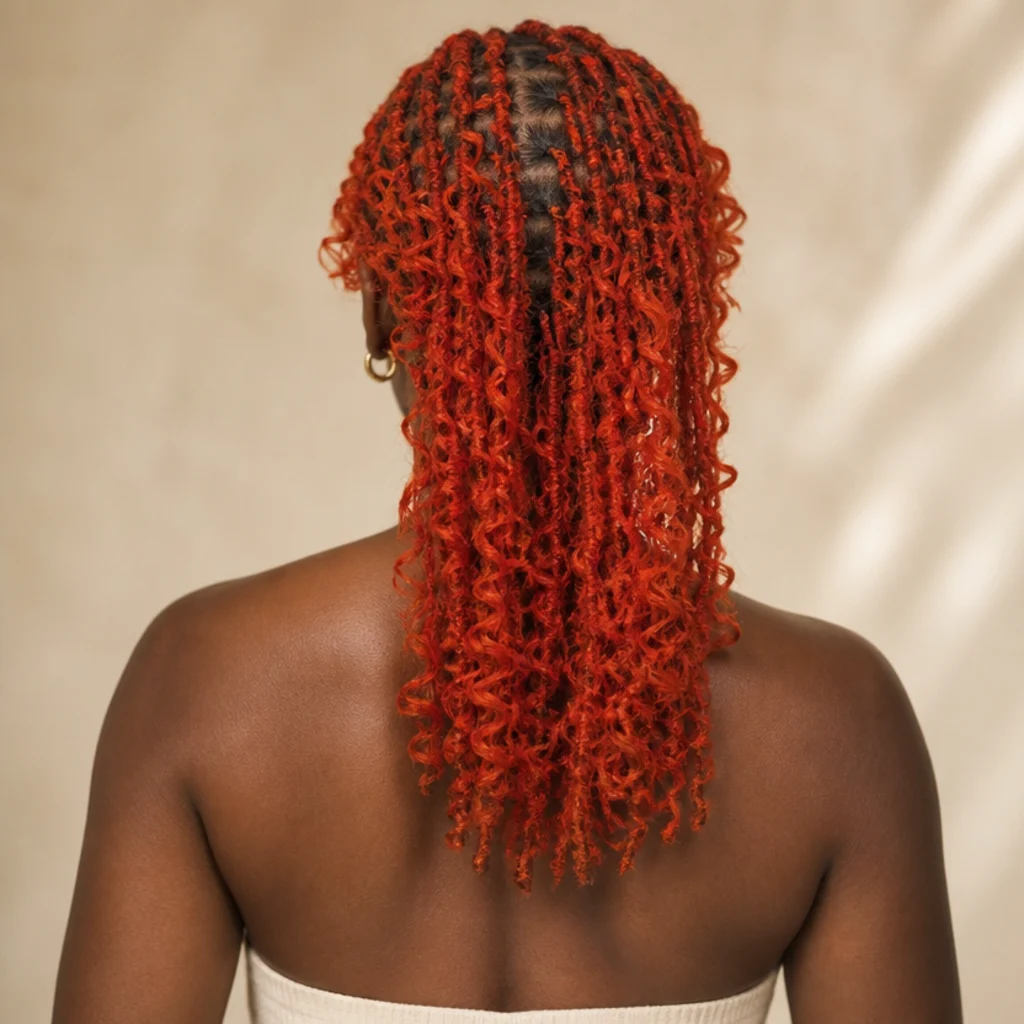
For the boldest warm red in the guide, a fiery orange-red turns butterfly locs into a real statement piece. The high saturation glows against deep and rich medium skin tones and stands out in any room, this is butterfly locs with color turned all the way up. The shade suits anyone who wants to be seen and welcomes the attention, and it rewards confidence over subtlety. The one honest caveat is longevity of vibrance: bright warm reds are the most prone to looking dulled by sun, heat styling, and harsh cleansers, even though the fiber color itself doesn't literally wash out. Protect the brightness with cool-water washes, a UV-aware approach in strong summer sun, and no unnecessary heat. Confirm with your braider or on the hair label that the extension is a true, clear orange-red rather than a muted brick, which photographs dull.
22Red Locs With Braided Roots
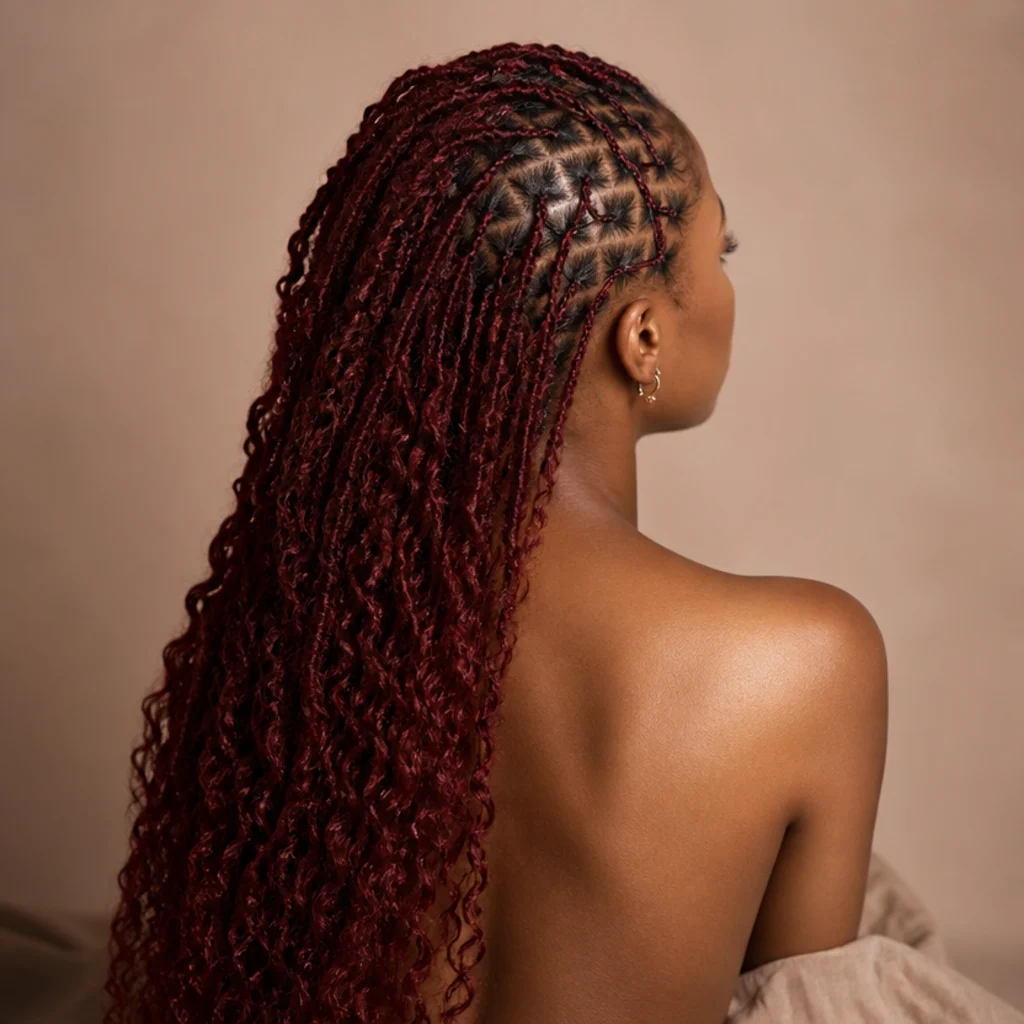
Braided roots give the crown a tidy, patterned foundation before the locs fall loose, blending two techniques into one polished style. The braided section keeps the roots sleek and the parting crisp, and because it disguises new growth so neatly, many wearers find this style stays presentable longer between refreshes, which stretches the interval a little past a standard set. In red, the braided pattern adds visible, sculptural detail right where the eye lands first, at the scalp. This works across every length and suits anyone who prefers a defined, structured crown over a loose, undone one. The braided base does put patterned tension on the roots, so comfort at install matters. Ask your braider to braid only the first few inches into a simple stitch or cornrow pattern before transitioning into the butterfly texture, snug but never tight enough to sting.
23Berry-Red Butterfly Locs
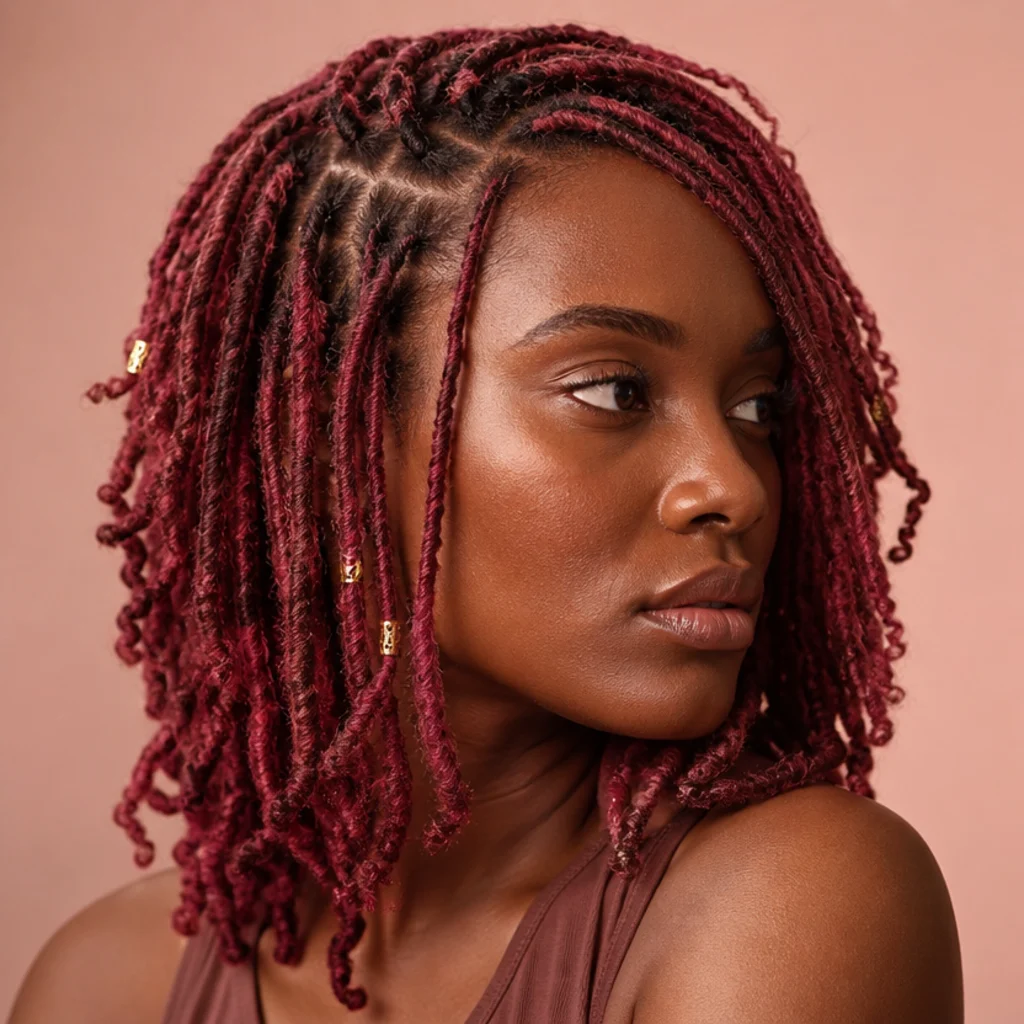
Berry red leans slightly pink and cool, landing somewhere between raspberry and wine. It's the playful-yet-grown alternative to a straight primary red, and that pink-tinged lean flatters neutral and cool undertones in a way warm reds can't. On mid-length locs the berry tone feels fresh and a little unexpected, reading as fashion-forward rather than traditional. Because it sits in the pink family, it pairs especially well with cool-toned makeup, silver jewelry, and jewel-tone clothing, a coordinated palette to build the rest of your look around. The one thing to watch is that cool, pink-based reds can shift as they settle if handled roughly. Keep washes gentle and cool to preserve the pink note, since heat and harsh cleansers pull berry tones toward a warmer, flatter red over time. When booking, describe it as berry, a pink-red, so the mix doesn't drift toward warm brick.
24Red and Burgundy Peekaboo Locs
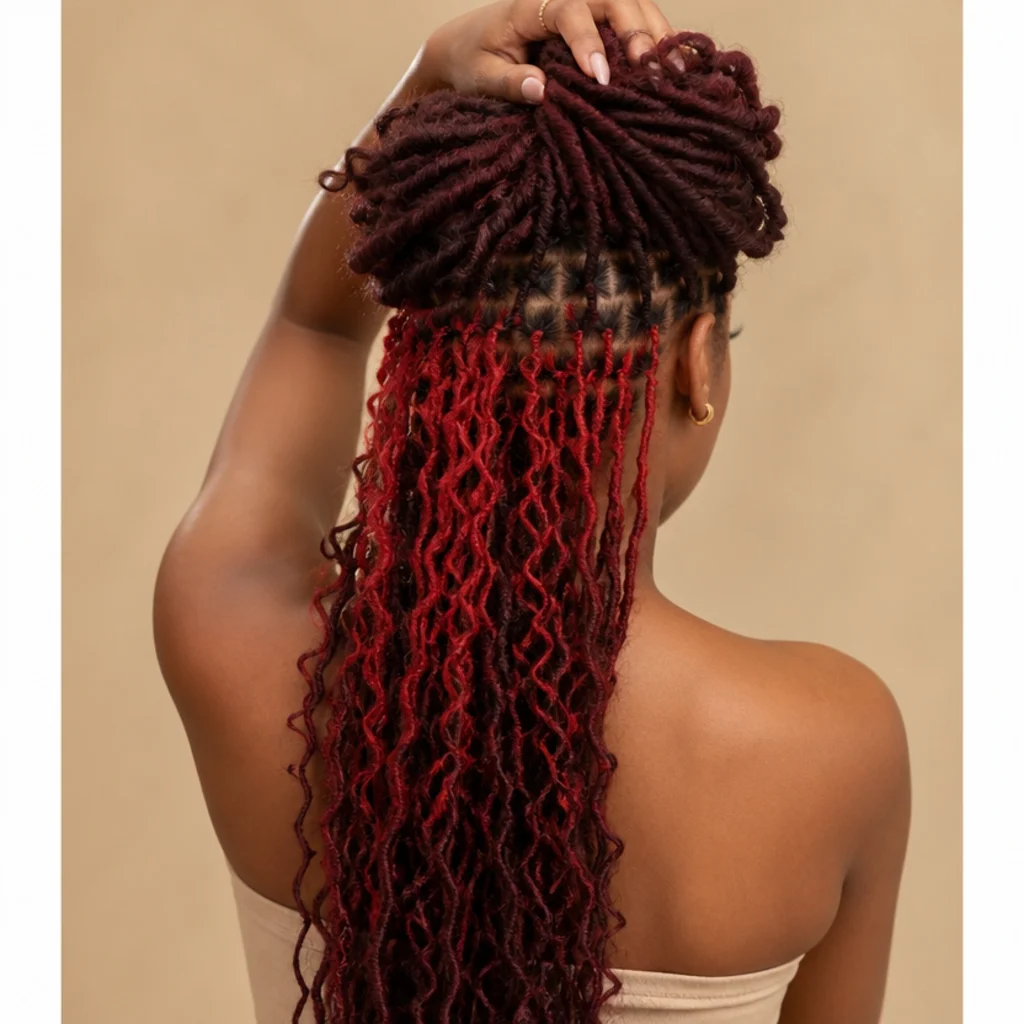
Peekaboo color tucks a brighter red beneath a deeper burgundy top layer, so the surprise shade only flashes when you move, lift the top section, or wear an updo. It's the most versatile way to wear two reds at once: the surface stays work-appropriate and grounded in burgundy, while a hidden pop of bright cherry or scarlet lives underneath for the moments you want it. This suits anyone who likes a private detail in their style, or who needs a conservative front with room to play. Everything here rides on placement. Ask your braider to keep the bright peekaboo red strictly on the underneath and nape sections, low enough that the top layer fully covers it when worn down, so the reveal stays intentional rather than accidental. A half-up style or a side sweep is the fastest way to show it off on demand.
25Long Fishtail-Wrapped Red Locs
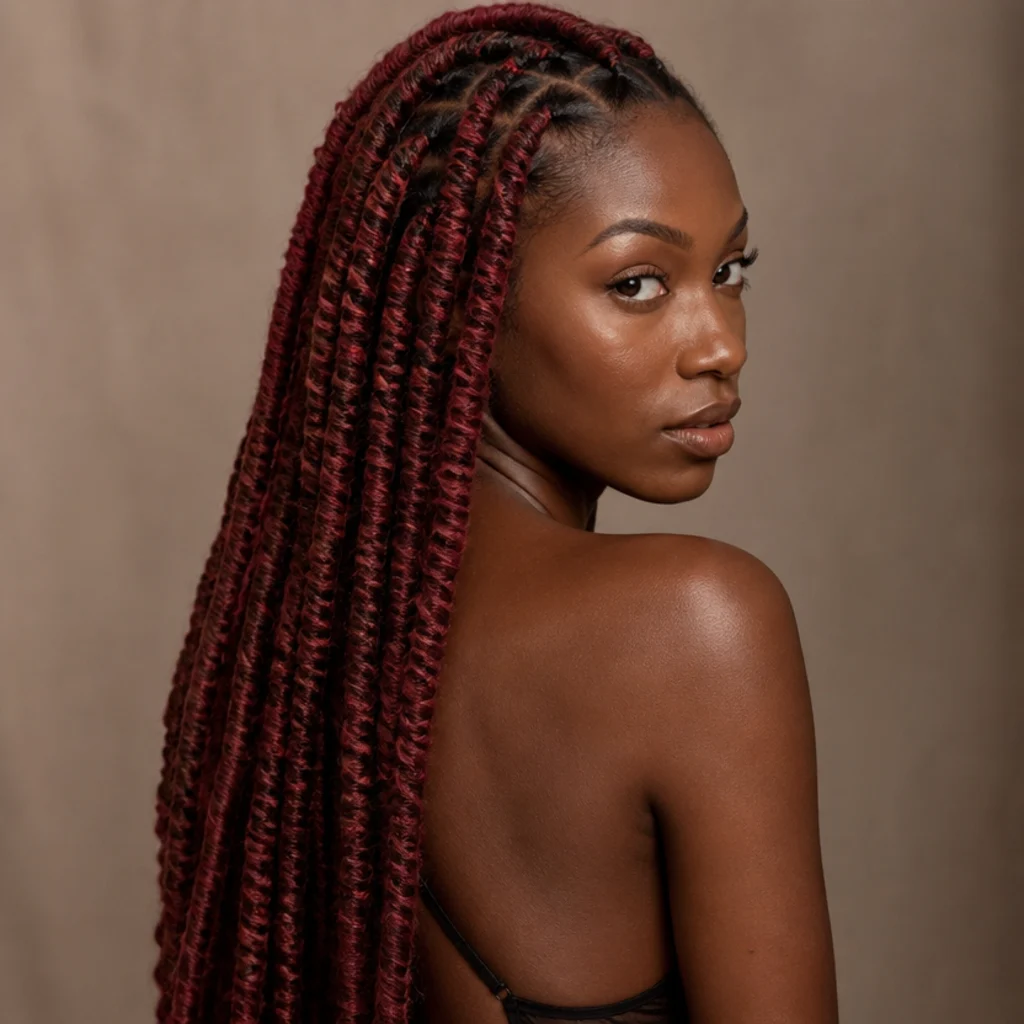
Fishtail wrapping adds an intricate, woven texture along the length of long butterfly locs and lifts the finish well beyond a standard smooth wrap. In red, that detail catches light and gives the whole set a crafted, editorial quality, so the length reads as a considered design rather than just a lot of hair. This is the most decorative long option in the guide, and it rewards a skilled braider, since the woven effect only looks refined when the wrapping is even and deliberate. The extra material does add a little weight, which is the main thing to plan for on an already long set. Keep hairline tension comfortable at install and support the locs at night in a loose satin-bound gather, so the woven texture and the ends both survive without matting. Because the technique is specialized, name it directly and ask for fishtail or woven wrapping when you book.
Pro Tips from the Editor
- Name the red, never just say "red." Cherry, ruby, copper, mahogany, wine, and berry steer a braider to a specific pigment; the bare word red produces a different result on every extension chart. Bring the physical hair swatch or product code when you can.
- Match the pigment's base to your undertone, not the color's name. Warm undertones glow in orange-based reds (copper, ginger, orange-red); cool and neutral undertones stay flattered by blue- and plum-based reds (cherry, wine, burgundy, berry). Mahogany and auburn are the safe near-neutral bridges.
- Cool water and sulfate-free cleansers are what keep vibrance. The fiber color doesn't literally wash out, but heat, sun, and harsh surfactants dull how bright reds photograph. Bright warm reds like orange-red and copper are the most sensitive; deep wine and mahogany are the most stable.
- Protect your edges from day one. Butterfly locs live or die on tension. Ask for comfortable perimeter tension at install, alternate your part and any high styles, and skip a daily tight ponytail on long sets.
- Wrap every night, no exceptions. A satin bonnet on short sets and a loose satin-bound gather on long sets prevent overnight frizz and end-tangling, the two things that age a set fastest.
- Book the length honestly against your time and budget. Micro and waist-length sets are the longest installs and the top of the cost range; chunky short sets are the fastest and most economical. Ask for a loc count and a realistic time estimate before you commit.
- Plan the takedown before the install. Remove within the six-to-eight-week window to avoid matting at your own roots, and schedule the appointment when you book, since a delayed takedown is where damage risk creeps in.
Length and Shade at a Glance
| Length | Weight and upkeep | Reds that suit it best | Flatters |
|---|---|---|---|
| Chin / bob (short) | Lightest, fastest to dry, lowest tension | Cherry, auburn, burgundy | First-timers, angular and square faces |
| Shoulder / mid-length | Moderate weight and care | Copper, ginger, mahogany, ruby, berry | Most face shapes, everyday wear |
| Mid-back to waist (long) | Heaviest, most nightly care | Crimson, wine, red-to-blonde ombre, fishtail | Statement looks, adds vertical length |
| Micro (any length) | Longest install, most delicate | Any; best for detailed, woven color | Updos, precision, elegant finishes |
| Chunky (any length) | Fastest install, bold volume | Copper, cherry, orange-red | Rounder and fuller faces, low chair time |
How to Choose / Get the Look
Work through four decisions in order and the rest falls into place. First, length. If this is your first colored set, short butterfly locs in auburn, mahogany, or ginger keep the commitment low, dry fast, sit light on the scalp, and blend gracefully as your roots grow. Long butterfly locs in crimson, wine, or a red ombre deliver the biggest statement but ask for a longer install, more packs of hair, comfortable perimeter tension, and disciplined nightly care. Second, undertone. Warm skin tends to glow in copper, ginger, and orange-red; cool and neutral tones usually prefer cherry, berry, wine, and burgundy; mahogany and auburn flatter almost everyone and are the safest bridges when you're unsure. Treat these as starting points, not rules, and trust what looks right against your own skin in natural light. Third, the exact shade language. Bring two or three saved photos and name the red precisely, because cherry, ruby, mahogany, and berry communicate a pigment far better than the word red alone; if you can, hand over the physical hair swatch or the product code. Fourth, the logistics. Ask about install time, comfortable tension at the hairline, how many packs your chosen length needs, and where any ombre or peekaboo should sit. Then plan upkeep from the start: a satin bonnet or scarf every night, gentle cool-water washes every one to two weeks, no unnecessary heat, and a root refresh or takedown around six to eight weeks.
Frequently Asked Questions
Are short or long butterfly locs easier to maintain?
Short butterfly locs are lighter, dry faster, and put far less tension on the scalp, making them the easier day-to-day choice and the smart pick for a first colored set. Long butterfly locs need more nightly care to prevent tangling at the ends and carry more weight at the hairline. Go short if low upkeep is your priority, and long only if you're ready to wrap and gather them every night.
Will red butterfly locs damage my natural hair?
Butterfly faux locs are wrapped around your hair rather than chemically colored, so the red lives entirely in the extension fiber and never touches your own strands with dye or bleach. The real risks are mechanical, not chemical: too-tight tension at the hairline and leaving the set in past its window. Keep the install comfortable, protect your edges, and take the locs down within six to eight weeks to keep your natural hair healthy.
How long do red butterfly locs last?
Most sets look their best for about six to eight weeks. After that, new growth and loosening at the roots usually call for a refresh or a full takedown, and pushing well past that window risks matting at your own roots. The color itself never fades, since it's part of the extension fiber rather than a dye on your hair. An aging set is a texture and root question, not a color one.
Which red suits my skin tone?
Warm undertones tend to glow in copper, ginger, and orange-red, where the shared orange base flatters the skin. Cool and neutral undertones usually lean toward cherry, berry, wine, and burgundy, whose blue and plum bases keep the color crisp against the skin. Mahogany and auburn are near-neutral bridges that flatter almost everyone. These are guidelines, not limits, so trust what you love when you see it against your own skin in daylight.
Can I style red butterfly locs in updos?
Yes, once your locs pass the shoulders. You can gather them into half-up buns, high ponytails, braided crowns, or side-swept looks, and micro sets in particular flex easily into sculpted styles. Keep ties snag-free, set buns and ponytails at mid-crown rather than the very top, and keep tension gentle at the hairline to protect your edges, since updos concentrate pull at the front.
How do I keep my red from looking dull or faded?
Because the color lives in the fiber it won't literally wash out, but heat, strong sun, and harsh cleansers dull how vivid it photographs. Wash with cool water and a sulfate-free cleanser every one to two weeks, skip clarifying shampoos that lift warm tones, avoid unnecessary heat, and be UV-aware in strong summer sun. Bright warm reds like orange-red and copper need this care most; deep wine, burgundy, and mahogany hold their look with the least effort.
How many packs of hair do red butterfly locs need?
It depends on the length, loc size, and how full you want it, so there's no single number here; your braider is the right person to spec it for your head. As a rough guide, shorter and chunkier sets use fewer packs, while long, full, or micro sets use more. Ask for a pack count and a loc count when you book, so you can budget for the hair and understand the cost before you sit down.
What is the difference between butterfly locs and boho locs?
Butterfly locs get their name from the loose, deliberately distressed loops pulled out along a wrapped faux loc, for an airy, undone texture. Boho, or bohemian, locs leave curly, human-hair-textured pieces loose along the length for a softer, more romantic finish. You can combine them, as in the strawberry-red bohemian look above, by asking for boho butterfly locs so your braider leaves curl out while keeping the distressed loops.
Can I wash red butterfly locs, and how often?
Yes, and gentle washing actually helps the scalp and keeps the set fresh. Aim for every one to two weeks using cool water and a diluted sulfate-free cleanser focused on the scalp, then let the locs air-dry fully to prevent any mildew smell. Avoid over-washing, hot water, and heavy oils, all of which either dull the color's appearance or weigh down the distressed texture and the ends.