15 Butterfly Locs vs Faux Locs Compared
Butterfly locs and faux locs read like twins in a thumbnail, but they wear on completely different timelines once you factor in construction, weight, root tension and how visibly each one frizzes. This guide lines them up 15 ways so you can match a style to your hair texture, density, face shape and real-life upkeep budget, not just a saved photo.
 Edited by Lena Rose · Published July 11, 2026 · 26 min read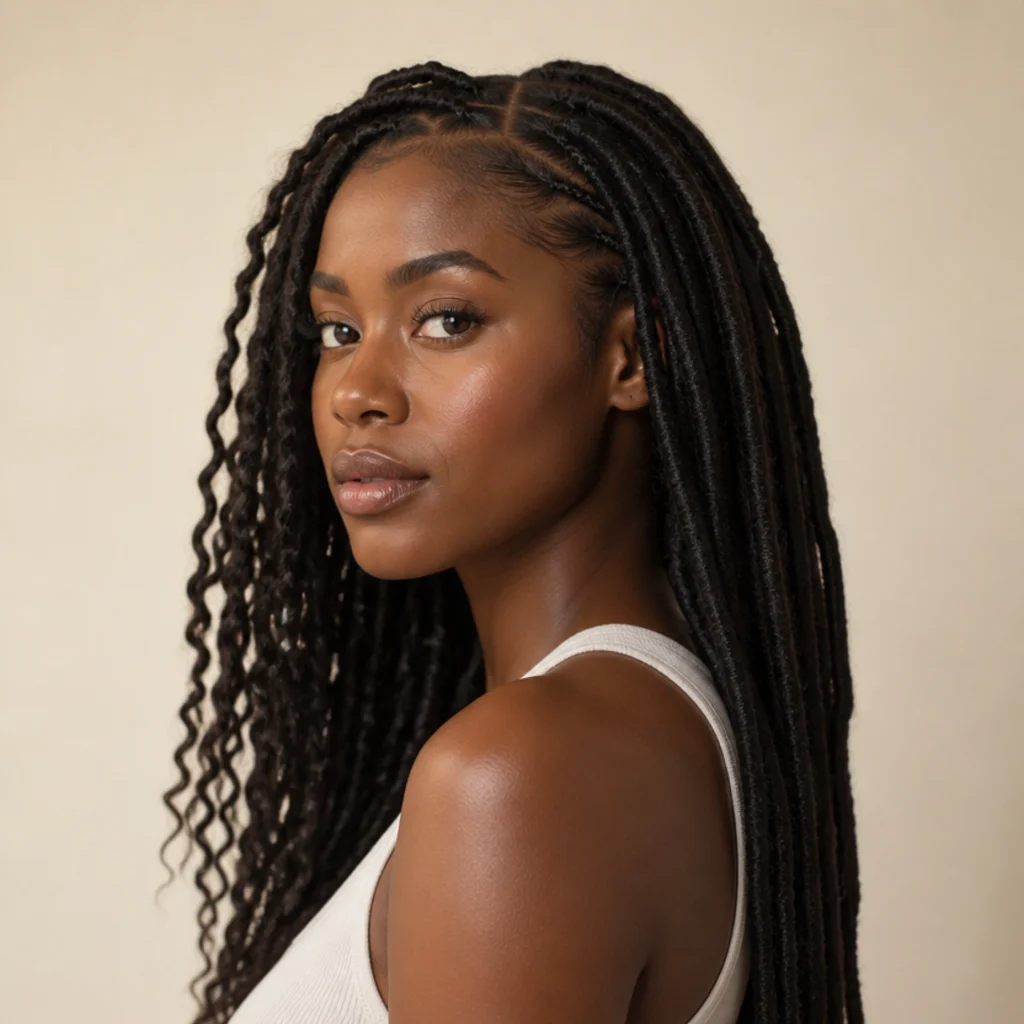
Quick Answer
- Best for: Anyone who wants the loc silhouette without locking natural hair, from short butterfly locs on a bob to waist-length faux locs.
- Who might skip it: Very fine, low-density hairlines that tension easily, and anyone unwilling to satin-wrap nightly, since both styles frizz faster on a bare pillowcase.
- Maintenance: Butterfly locs hide frizz and stretch further between touch-ups; faux locs need mid-cycle re-wrapping of the fuzziest locs to keep their clean line.
- Difficulty: Both are advanced installs; butterfly (crochet-looped) is more DIY-friendly, fully wrapped faux locs are firmly a salon job.
- Cost: Variable by region, density and length, roughly a mid-range braiding-service tier; crochet butterfly installs usually land below fully hand-wrapped faux locs.
- Wear time / longevity: Commonly four to eight weeks; butterfly typically holds visually a week or two longer because distressing masks aging.
- Standout variation: Short butterfly locs with color, especially a warm red-to-dark-root blend on chin-to-shoulder length.
- How to ask your stylist: Name the exact method ("crochet butterfly locs" vs "hand-wrapped faux locs"), and specify loc size, finished length, part size and color blend.
In This Guide
- The Core Difference in Texture
- How Each Style Is Built
- Short Butterfly Locs
- Long Butterfly Locs
- Butterfly Faux Locs, the Hybrid
- Butterfly Locs With Color
- Red Butterfly Locs
- Bohemian vs Smooth Finish
- Weight and Comfort
- Scalp Tension and Edges
- Upkeep and Frizz
- How Long Each Lasts
- Face Shape and Length Pairings
- Styling and Accessories
- Cost and Time, Framed Honestly
Butterfly locs and faux locs are two of the most-requested protective styles on the boards right now, and honestly, they're hard to tell apart in a single photo. Both wrap extension hair (usually water-wave or bulk braiding hair for butterfly, Marley or wrapping hair for faux) around a braided or twisted base, and both give you that lived-in loc silhouette without committing your natural strands to real, permanent locs. The whole difference lives on the surface. Butterfly locs are built with intentional loops and airy gaps that read soft and undone; faux locs are sealed smooth and uniform so every loc looks defined root to tip. That one choice cascades into everything downstream: how heavy the style feels, how much your edges get pulled, how fast visible frizz sets in, and how gracefully the look ages by week four. Whether you're eyeing short butterfly locs for a low-commitment bob or long faux locs that sweep the back, the 15 points below break down the practical trade-offs so you can decide with your own density, face shape and upkeep tolerance in mind, before you ever book the chair.
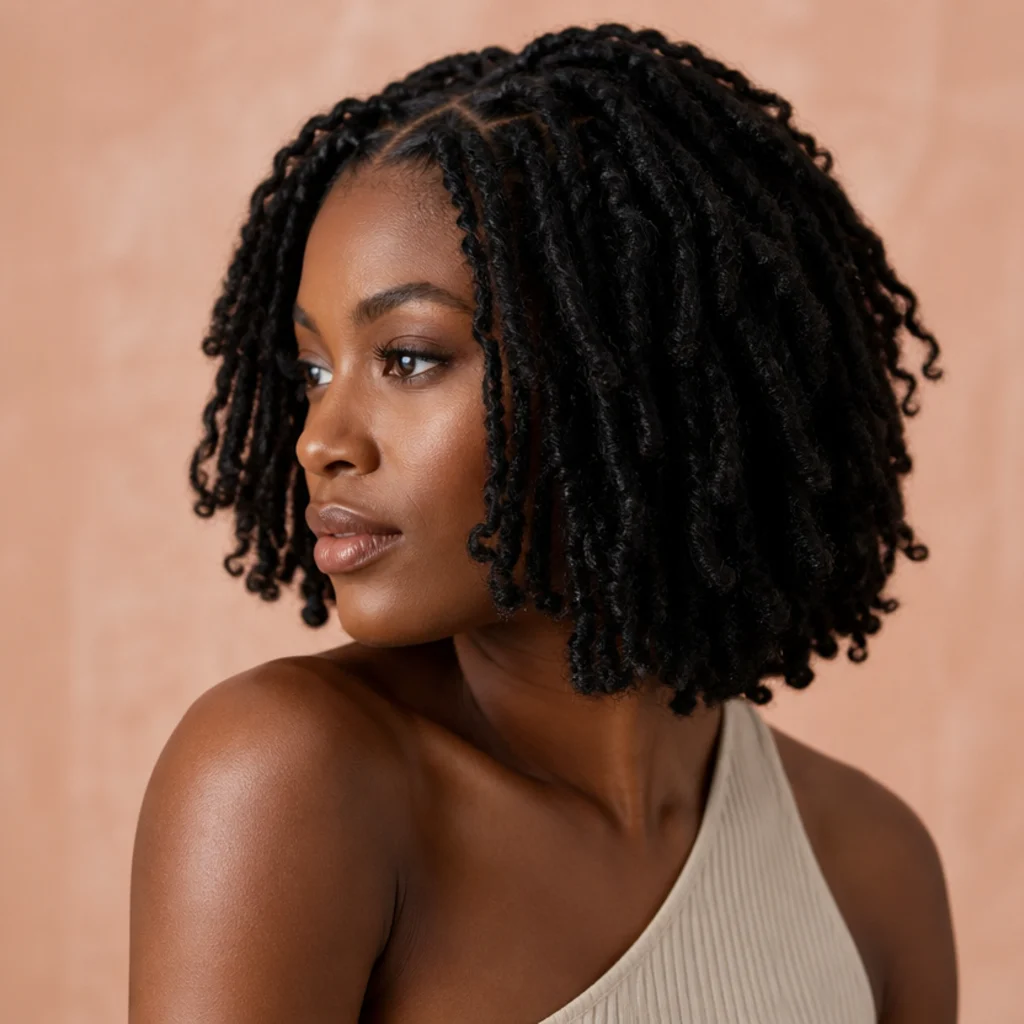
01The Core Difference in Texture
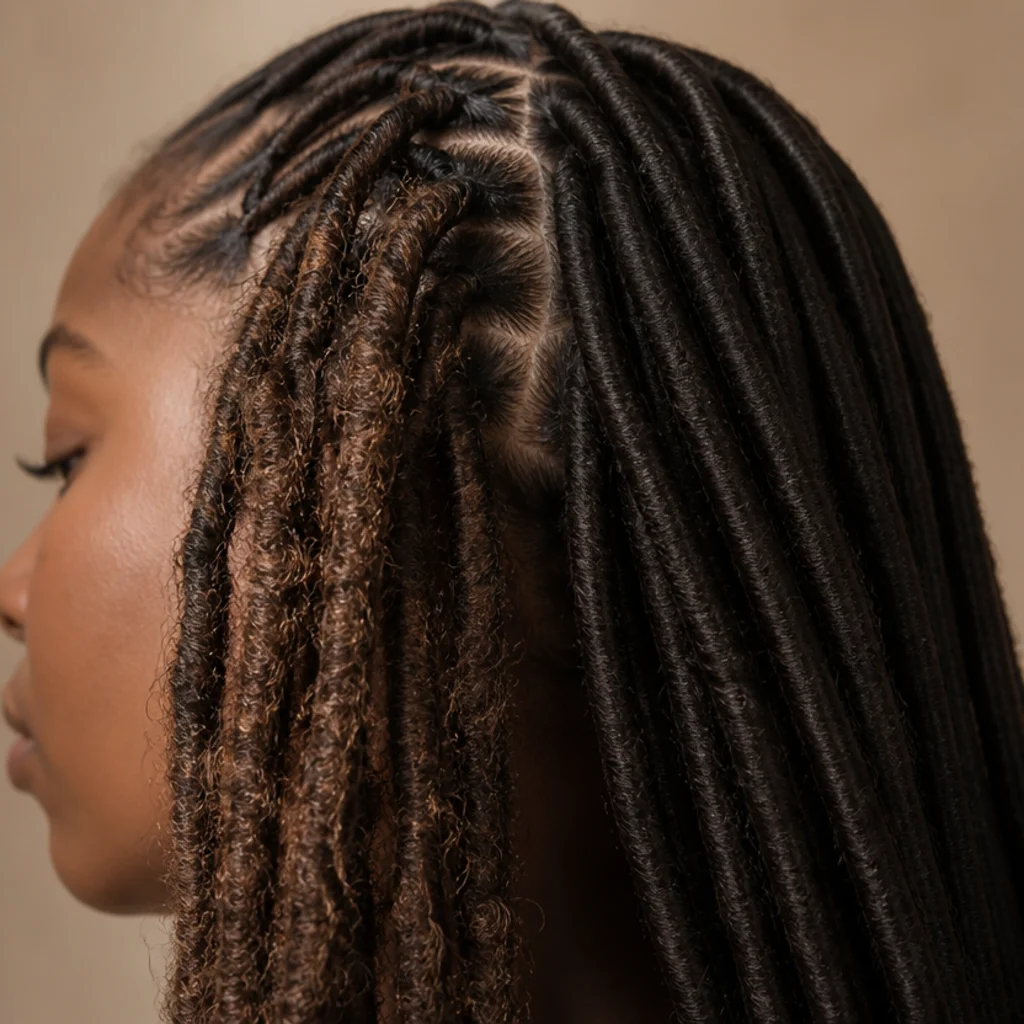
The fastest tell is the surface finish. Butterfly locs are crocheted or wrapped so the extension hair loops back on itself, leaving deliberate open gaps and pillowy "wings" along the shaft, the airy, distressed look the name comes from. Faux locs are coiled or wrapped tight and sealed, so each loc reads dense, continuous and sculptural from root to end. Practically, that texture difference is also a maintenance difference: the open loops on butterfly locs catch and diffuse light, which is why marled color reads richer on them, and they absorb incoming frizz instead of showing it. A smooth faux loc, by contrast, shows every stray fiber against its clean line. Neither is more authentic; they're two aesthetics on a shared foundation. Decide which surface you gravitate toward first, because it quietly settles most of the other 14 questions. Ask your stylist to show a healed, week-three photo of each, not just a fresh install, so you judge the texture you'll actually live with.
02How Each Style Is Built
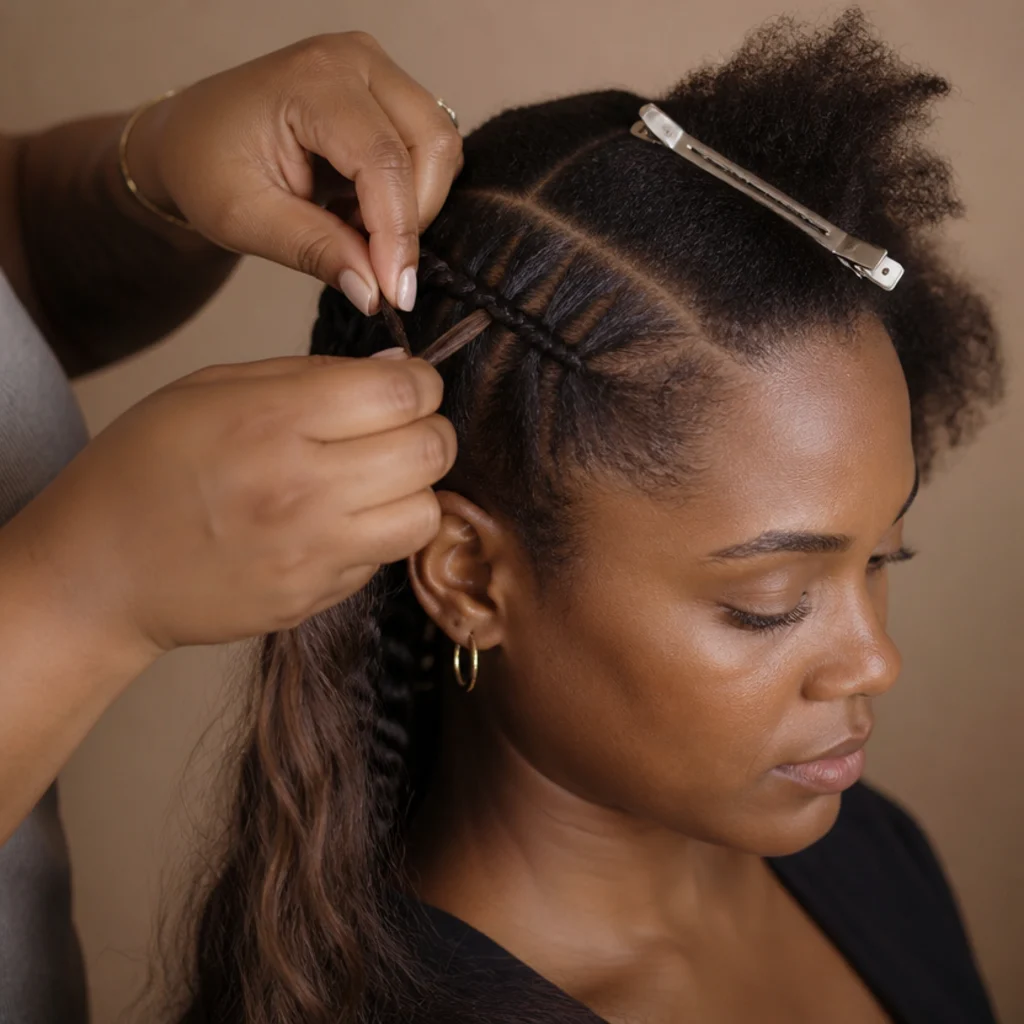
Both styles start the same way: natural hair is sectioned and either cornrowed or two-strand twisted into a base that anchors the extension hair. From there they split. Butterfly locs are most often made with a crochet loc looped back through itself using water-wave hair, which produces the open, distressed texture quickly and keeps the finished loc relatively light. Faux locs are more commonly hand-wrapped, with Marley or wrapping hair coiled tightly and continuously around each braid or twist, then sealed, more time at the chair and more weight per loc. That build difference explains almost every downstream trade-off in this guide: install speed, comfort, tension and how each one frizzes. Because the crochet method is more forgiving, butterfly locs are the more realistic at-home or beginner-stylist project, while fully wrapped faux locs reward an experienced hand. Ask your stylist which method they use, what hair brand and texture they prefer, and roughly how many locs your density will need, so the finished weight matches your hairline.
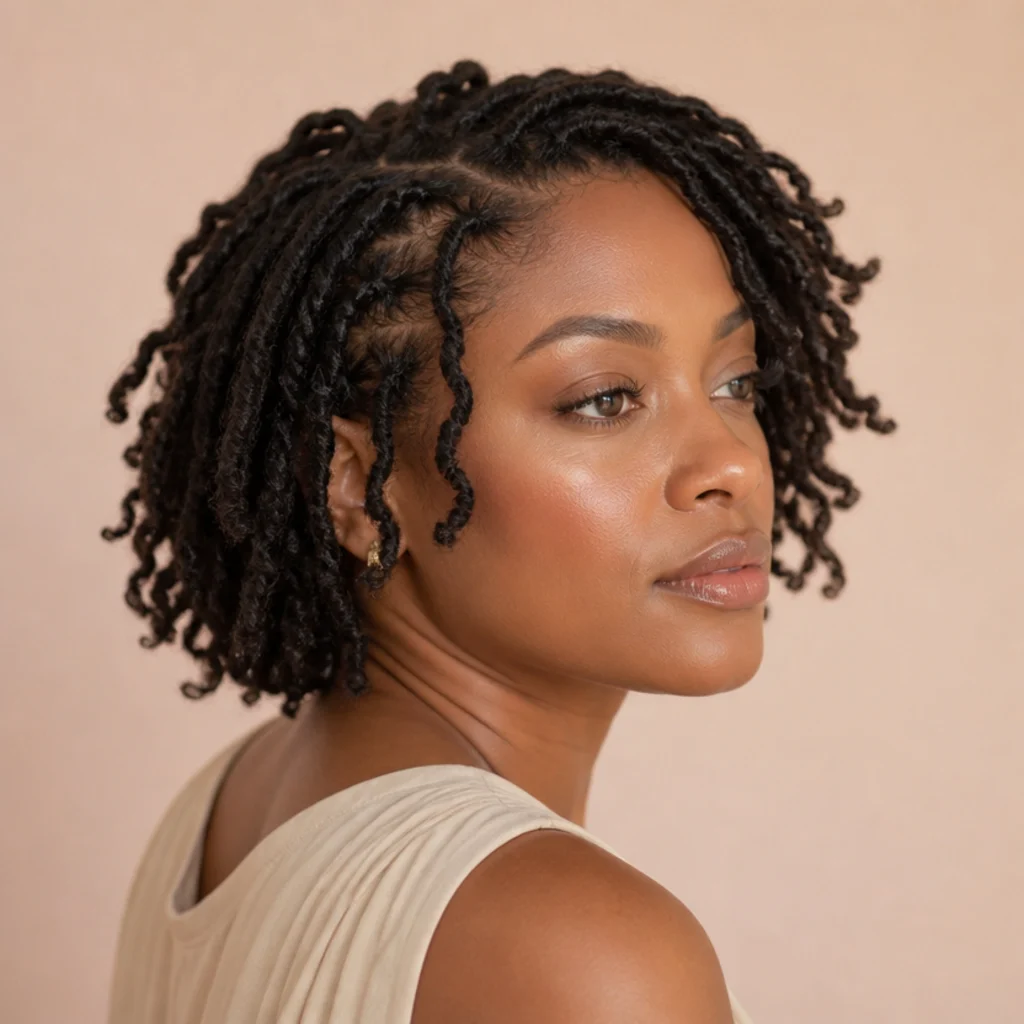
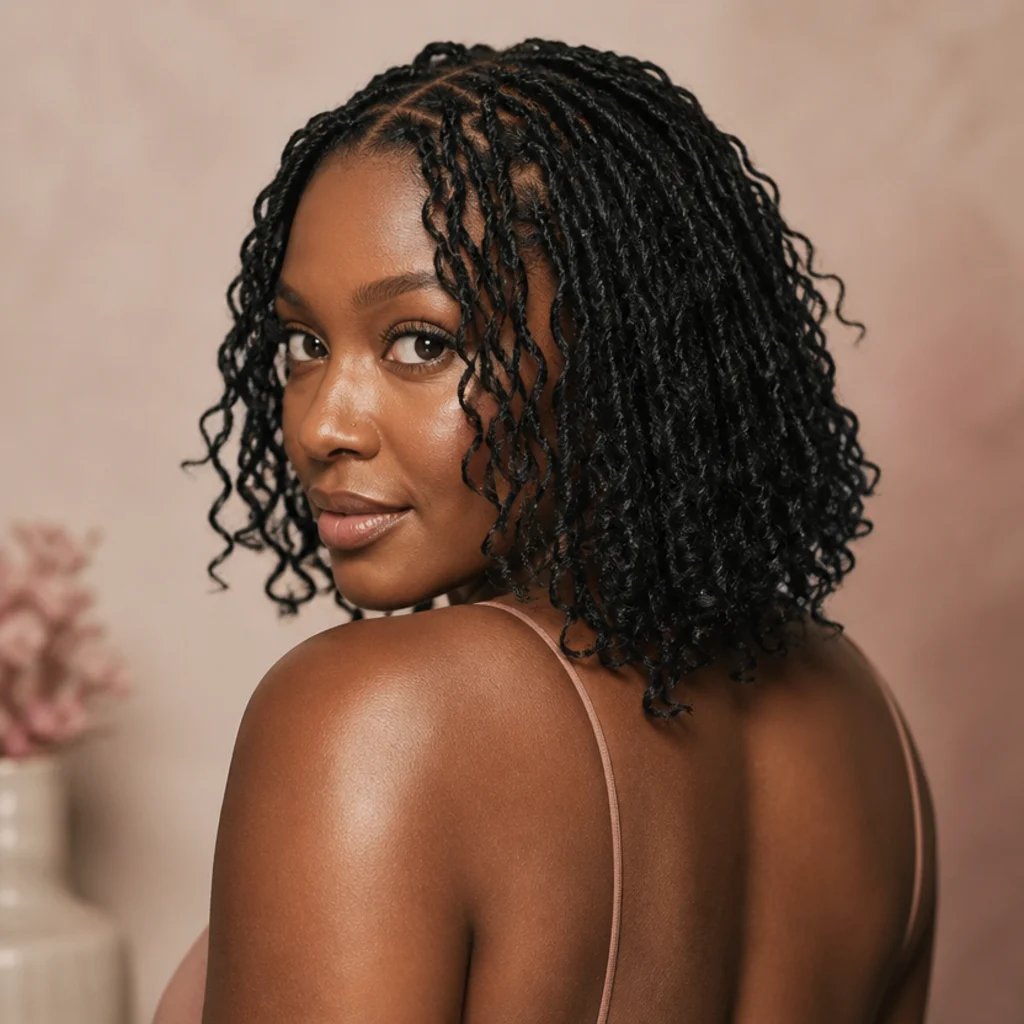
03Short Butterfly Locs
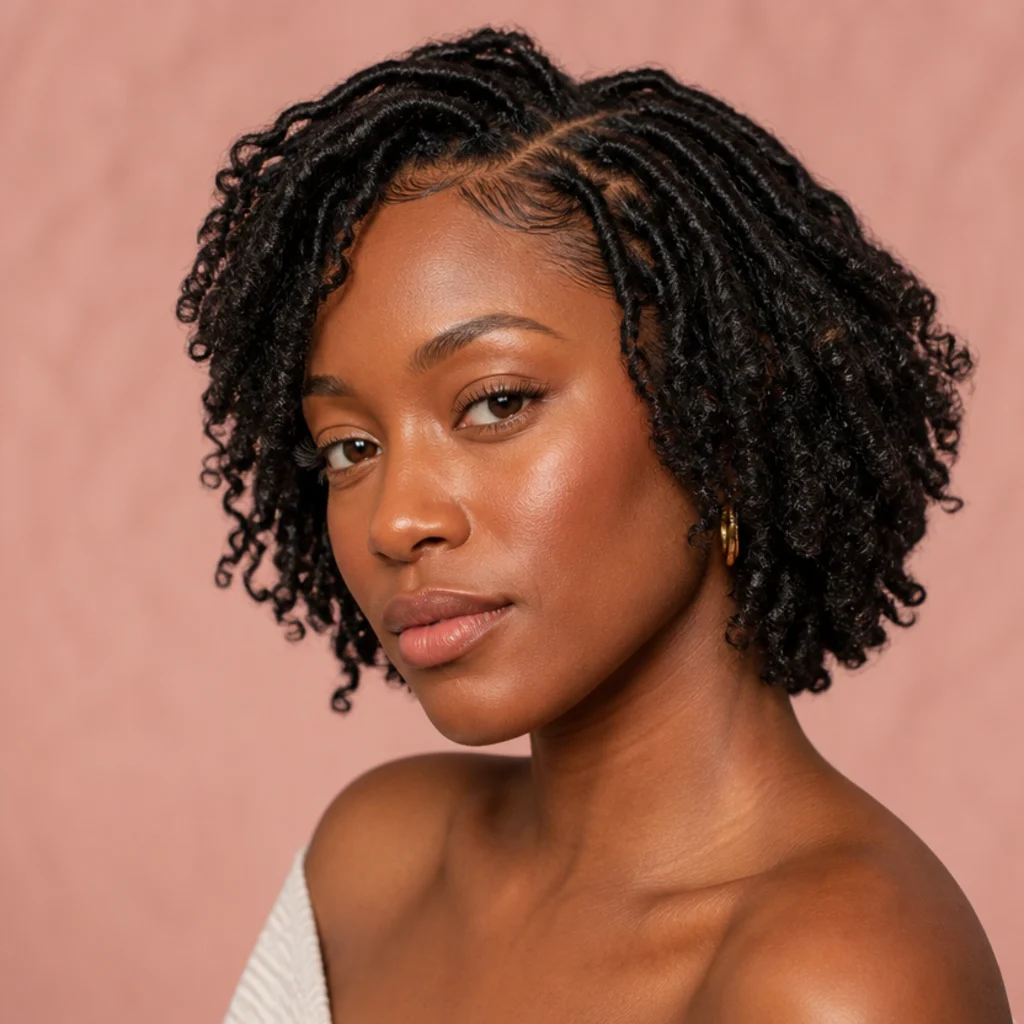
Short butterfly locs, roughly chin to shoulder, are the most flattering low-commitment protective style in the category. Less length means less weight hanging off the root, which is gentler on fine edges and far easier to sleep on and wrap at night. The looped texture builds visual volume, so even a blunt bob length never reads flat or sparse the way a smooth short loc can. This length is especially kind to round and heart face shapes, since locs that end at the jaw draw the eye to the cheekbones and add width where you want it. It's also the smartest entry point if you've never worn locs: shorter installs run faster in the chair and the shorter shaft simply has less surface area to frizz, so upkeep stays light. Refresh edges and roots around the four-week mark. Ask your stylist for a length that grazes just below the chin, and for a slightly larger loc size, which reads softer and more modern on short lengths.
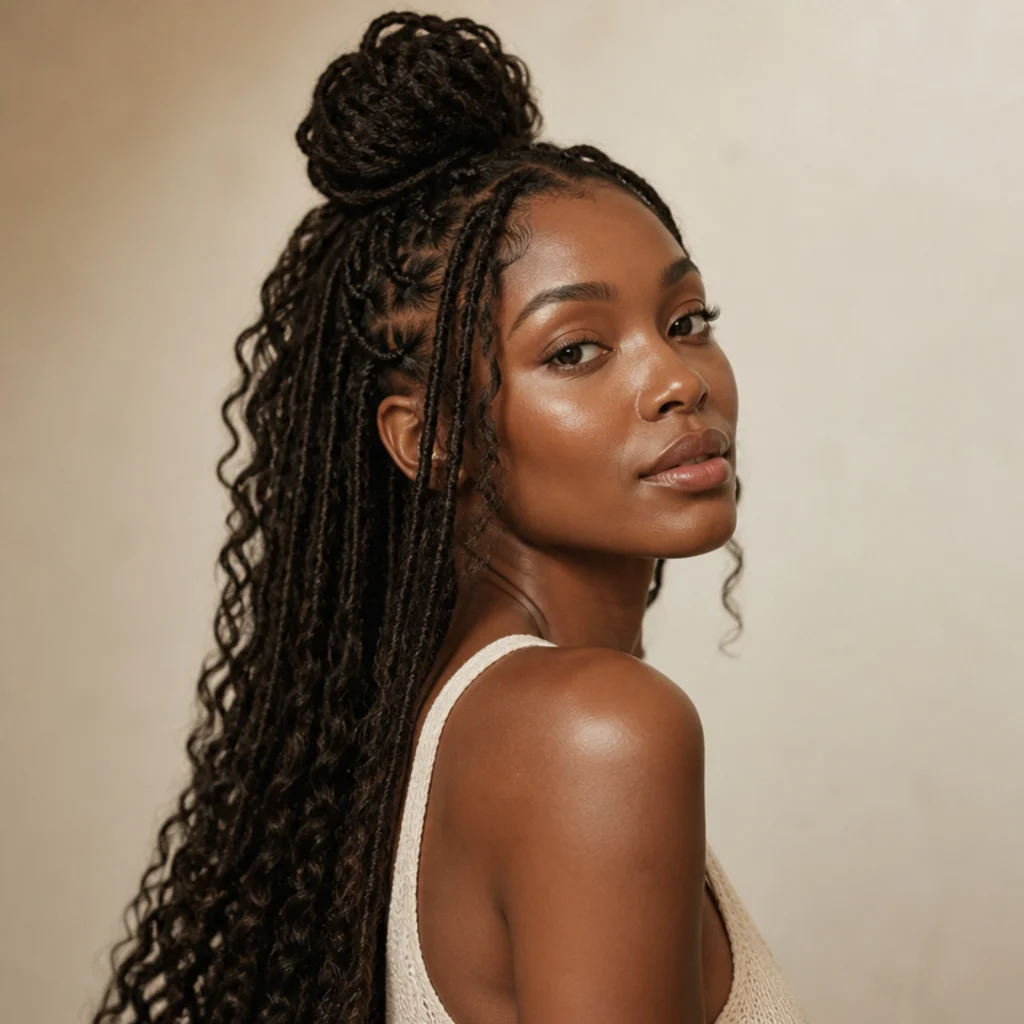
04Long Butterfly Locs
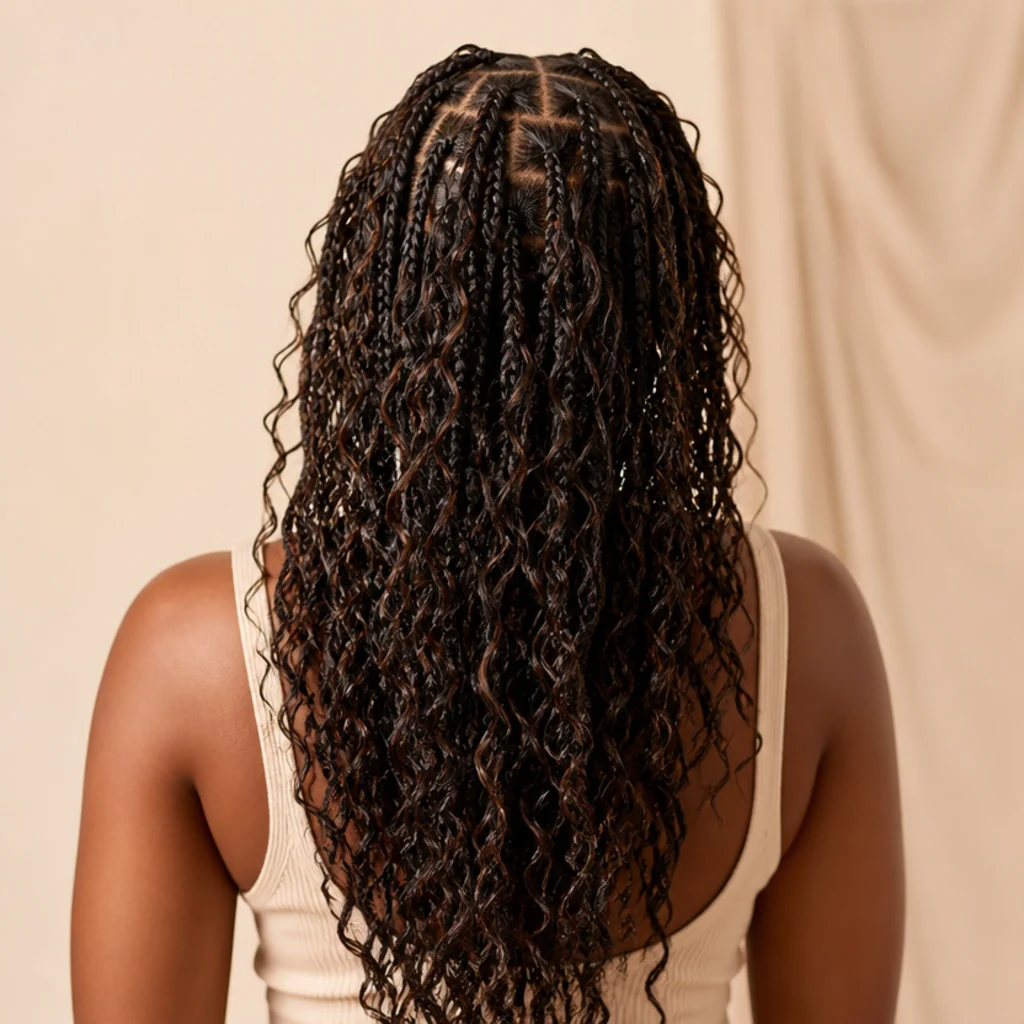
Long butterfly locs sweeping past the shoulder blades deliver the drama and the widest styling range, high buns, half-up crowns, face-framing sweeps and low pony wraps all open up once you have length to work with. The trade-off is real, though: more extension hair means more weight pulling at the root, longer install times, and far more surface area to manage against frizz. If your edges are fine or fragile, this is the conversation to have before you commit, ask about smaller loc counts, lighter hair, and looser front sections to spare the hairline. Length flatters oval and square faces and balances taller frames beautifully. Plan for a genuine nighttime routine: loosely pineapple or braid the length and satin-wrap it, or the ends will felt and tangle by week two. Refresh roots around week five to six. Ask your stylist to keep the front hairline locs lighter than the back so the weight distributes off your most vulnerable edges.
05Butterfly Faux Locs, the Hybrid
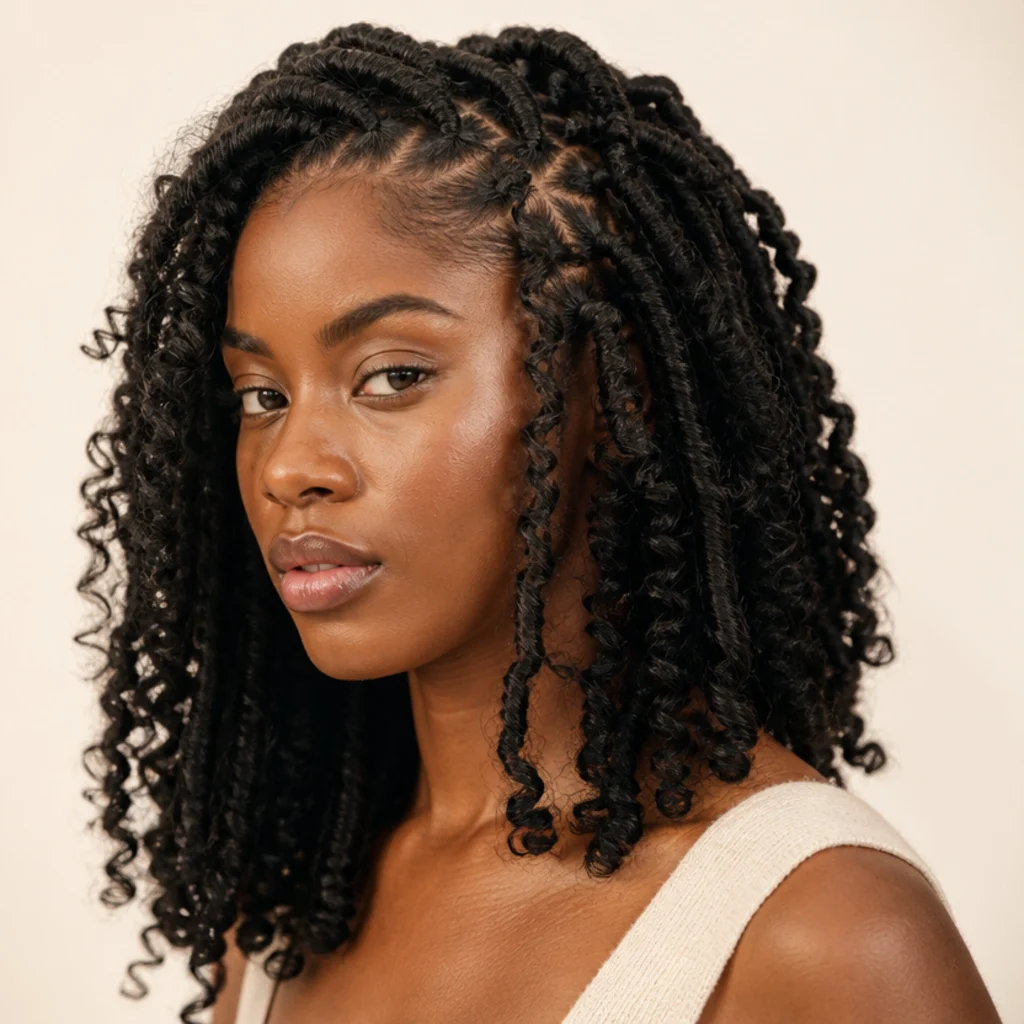
Butterfly faux locs are the real middle ground, and they resolve most "I can't decide" moments. They keep the smooth, sealed, defined base of a faux loc through the root and crown, then introduce the looped, airy distressing of a butterfly loc through the mid-lengths and ends. The result reads polished and structured up top, soft and boho toward the bottom, which is exactly why the hybrid has taken over so many boards. It suits anyone who wants a clean, tailored root, better for offices and formal wardrobes, without giving up movement and texture below. The distressed ends also camouflage new growth and frizz as the style ages, so it grows out more gracefully than a fully smooth faux loc. Refresh the smooth root section around week four to keep the contrast crisp. Ask your stylist specifically for "butterfly faux locs" and confirm they'll wrap the base and hand-loop the ends, rather than defaulting to one method for the whole loc.
Save this to Pinterest to remember the butterfly faux locs hybrid.
06Butterfly Locs With Color
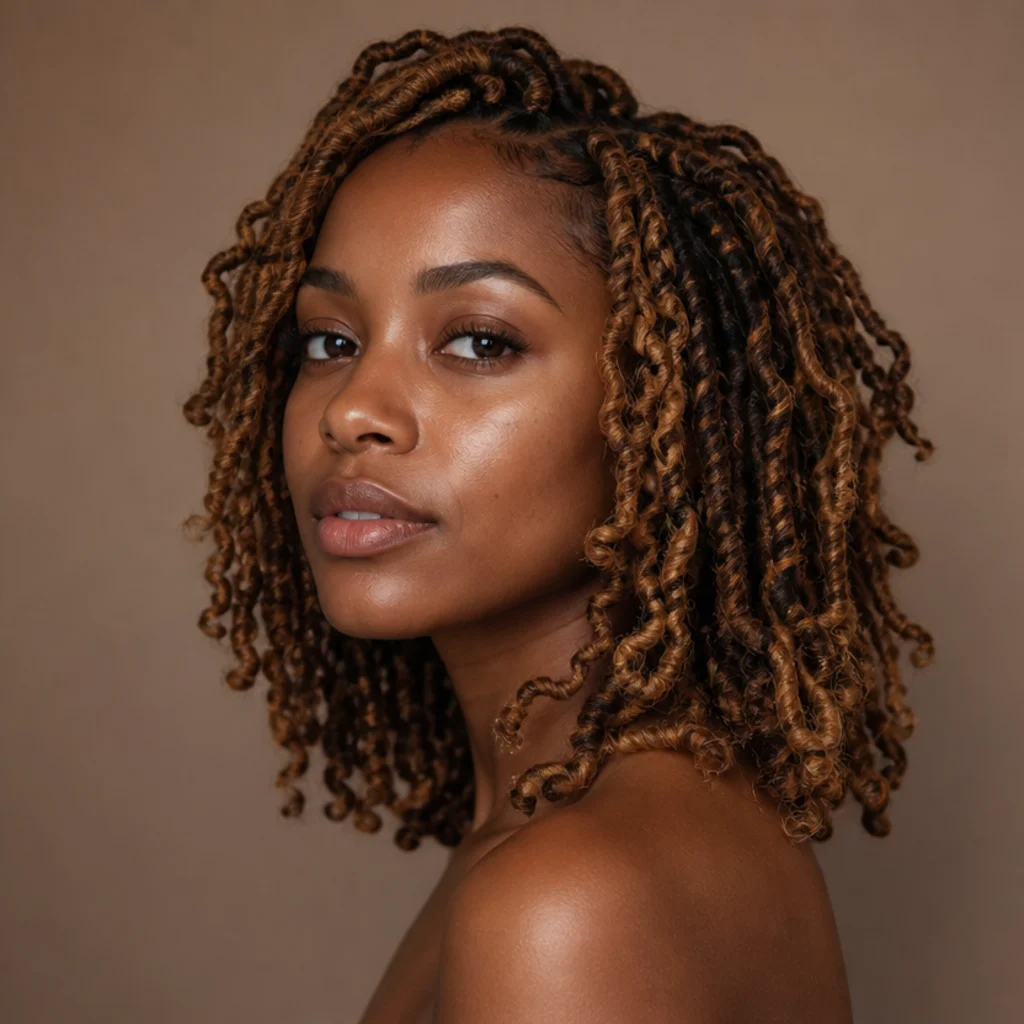
Color is where the looped construction outperforms a smooth loc, because the open gaps let a second tone peek through and catch light instead of sitting flat. Honey and caramel (warm 27/30 blends), copper, and cool ash browns all read beautifully against deeper skin, while a soft chestnut keeps things subtle and workday-appropriate. Because you're coloring extension hair, you get full payoff with zero commitment or damage to your natural texture, a real advantage over dyeing your own strands. Undertone is the deciding factor: warm and olive complexions glow under golden, copper and honey; cooler complexions carry ash, mushroom brown and burgundy without looking brassy. The technique matters as much as the shade, a marled blend (two tones twisted together) or a root-to-tip ombre keeps dimension alive as the texture moves, where a single flat color reads cheaper. Ask your stylist for a marled or ombre blend and to concentrate the brightest tone around the face for the most flattering, light-catching frame.
07Red Butterfly Locs
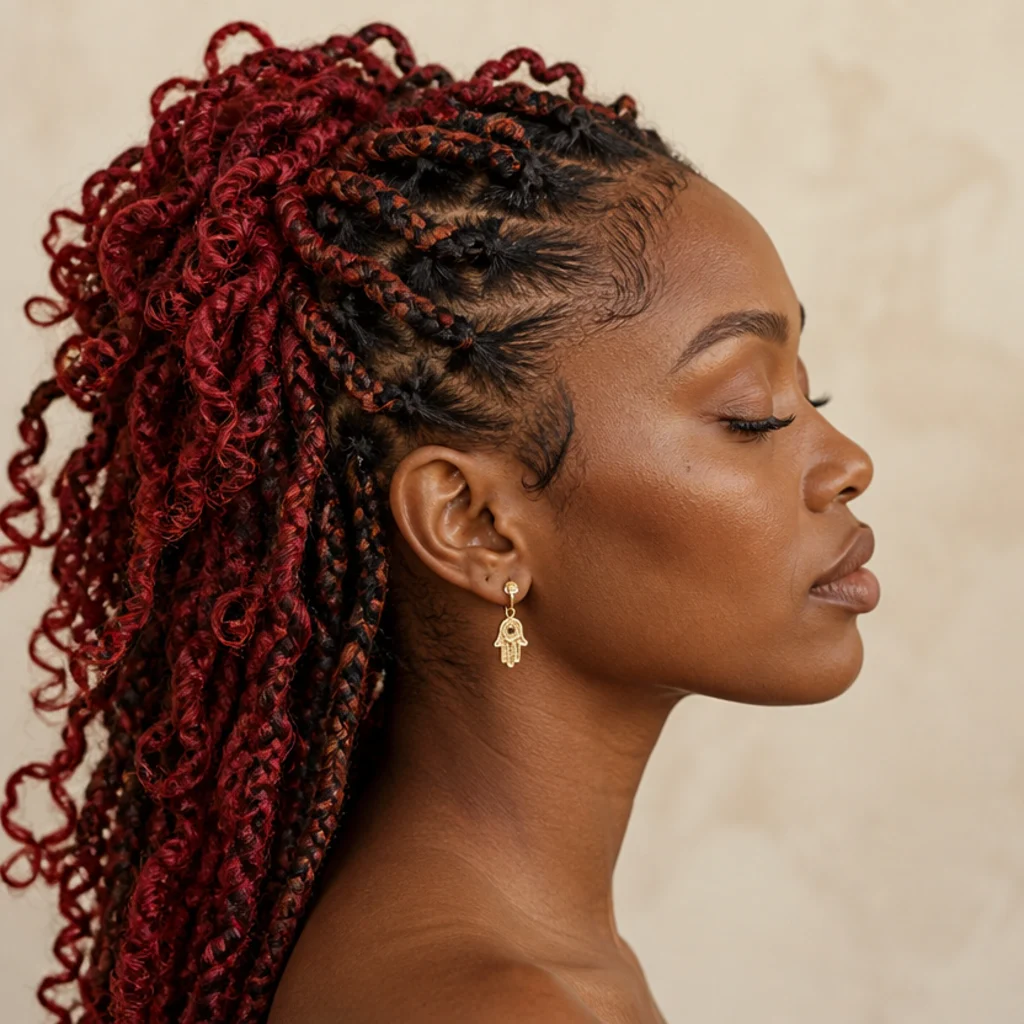
Red butterfly locs earn their own section because red is the shade everyone screenshots and almost no one books, usually out of commitment fear. Extension hair removes the risk entirely: you get a bold red season without a drop of dye on your natural color. Where you land on the red spectrum should track your undertone and nerve. Deep auburn and burgundy are the most universally flattering and read rich and grown-up rather than costume, they suit warm, cool and neutral skin alike. Cherry and copper-red make a louder statement and photograph vividly, best on warm and olive complexions. Pairing red with the distressed butterfly texture is what keeps it looking lived-in instead of like a flat wig, the loops break up the saturation so it moves like real hair. If you're red-curious but cautious, ask for a red-to-dark-root melt: the natural base grounds the look, eases regrowth, and lets the color build through the lengths where it flatters most.
08Bohemian vs Smooth Finish
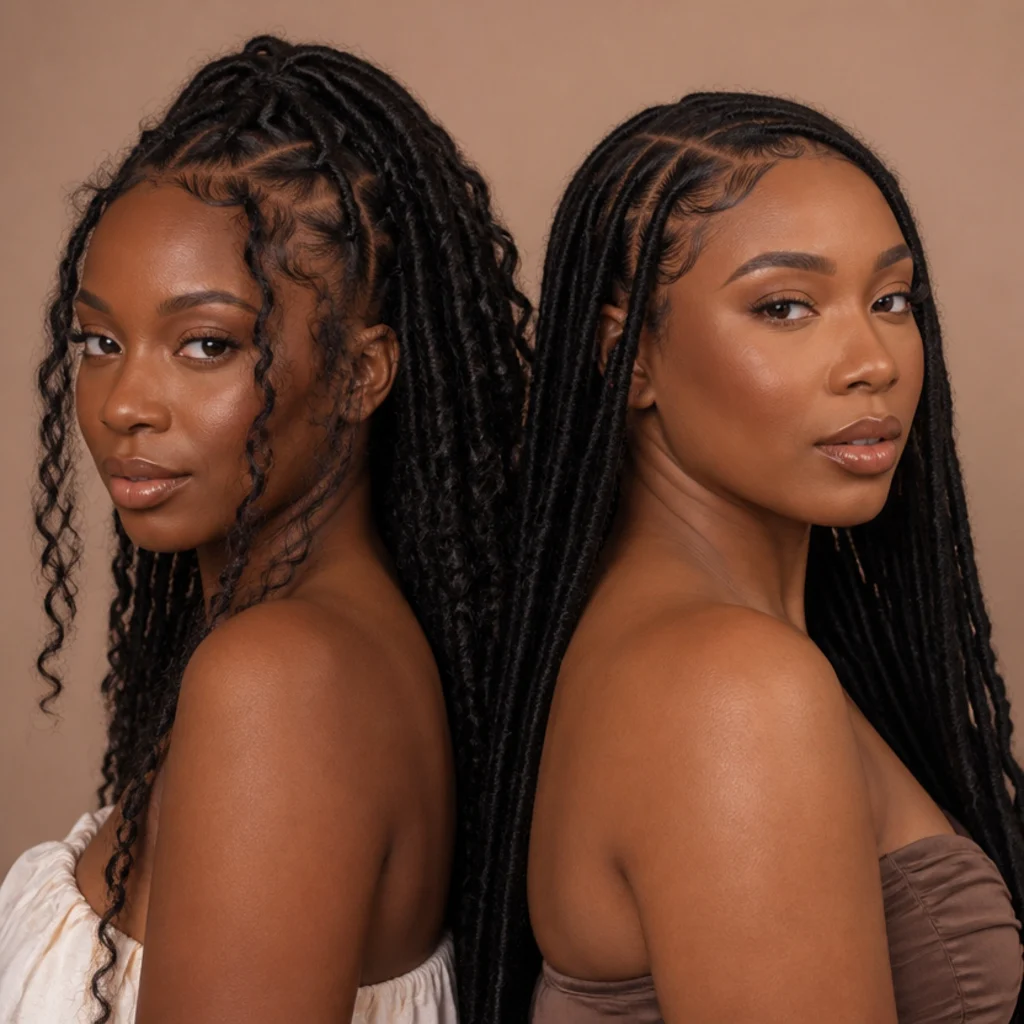
This is the emotional core of the whole comparison, and it's a wardrobe question as much as a hair one. Butterfly locs give a bohemian, free-spirited, slightly undone finish that flatters casual, creative, festival and linen-and-denim wardrobes. Faux locs give a smooth, sculptural, deliberate finish that partners with tailoring, minimalism and event dressing. Think soft-linen aesthetic versus clean-architectural one. Neither is inherently dressier, you can cuff, bead or bun either one up or down, so let personal styling habits break the tie. One practical angle people overlook: if you're a hair-toucher who constantly re-tucks and restyles, the distressed butterfly finish forgives that handling, where a smooth faux loc telegraphs every disruption and needs re-smoothing. Match the finish to how you actually move through your day. Ask your stylist to seal faux locs firmly at the ends if you choose smooth, since unsealed tips are the first place a "polished" install starts to look messy.
09Weight and Comfort
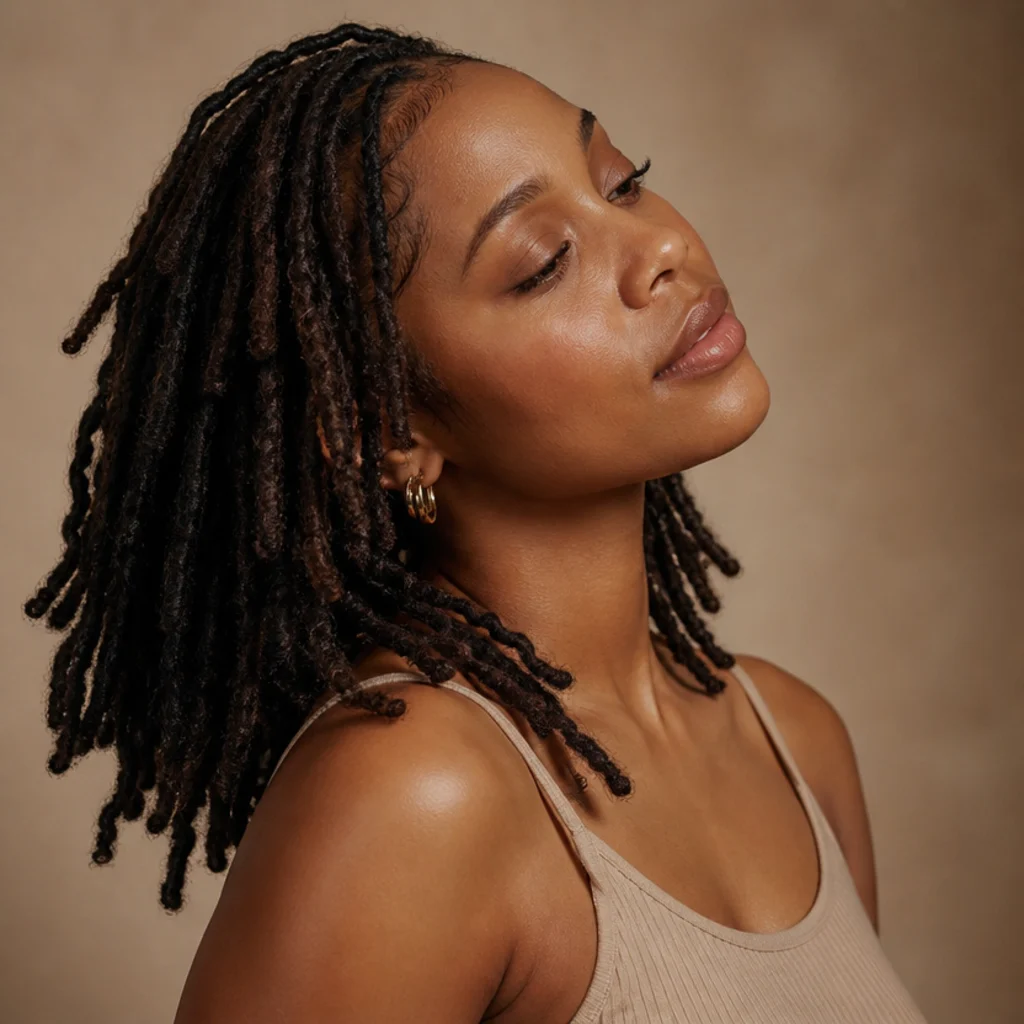
Comfort quietly decides which style you keep in and which you take down early. Butterfly locs, thanks to their looped crochet construction and lighter water-wave hair, tend to feel airier for their length, easier on the neck and the front hairline. Fully wrapped faux locs pack more extension hair around each base, so they read heavier loc-for-loc. Length and density multiply everything: a long, dense install of either style always outweighs a short, medium-count one, so weight is a function of your choices, not just the style name. If you've ever gotten tension headaches or you know your edges are delicate, say so up front and ask for fewer, lighter locs and deliberately looser roots. Expect the first 48 hours of any install to feel snug as the base settles, that's normal, but real throbbing, pain or tiny pus-tipped bumps aren't, and they mean loosen or take down. Short butterfly locs are the most comfortable place to start if you're unsure. Ask your stylist to prioritize your hairline and nape, the areas that ache first.
10Scalp Tension and Edges
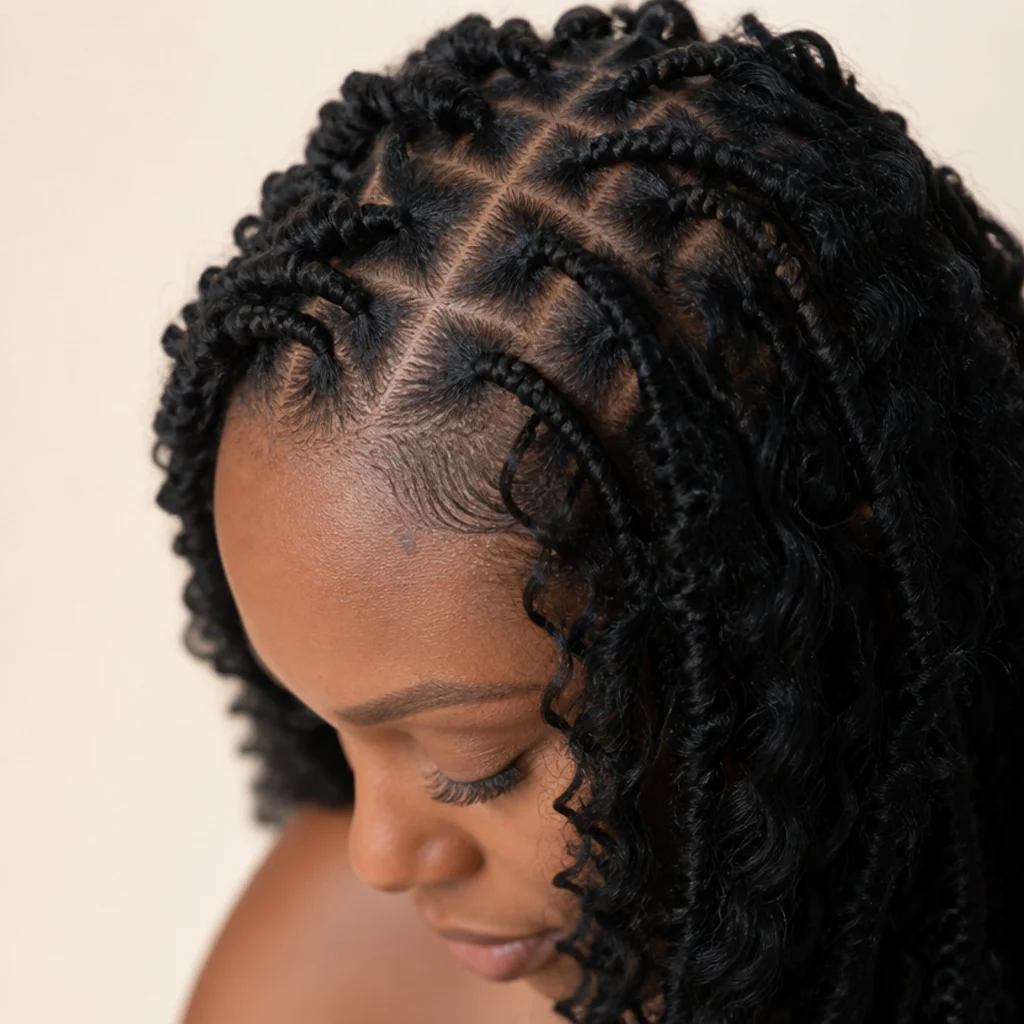
Edges are the least replaceable thing on your head, and both styles can strain them when installed too tight or too heavy. All the tension lives in the base braid or twist, so the smaller and tighter that base, the more constant the pull at the root, and traction damage builds silently over weeks, not on day one. Because butterfly locs often attach with crochet loops, a skilled stylist can sometimes anchor them with slightly less root tension than a fully wrapped faux loc, but honestly that comes down to the hand doing it, not the style label. Protect yourself with a few non-negotiables: medium-sized parts (not micro), no pencil-thin edge braids, and no slicked-all-back styles for the first week while the base is tightest. A scalp that stays tender, itchy or bumpy past two days is telling you to loosen, not to tough it out. Give your hairline a full protective-style-free stretch between installs. Ask your stylist to leave your edges and nape softer and larger than the interior sections.
11Upkeep and Frizz
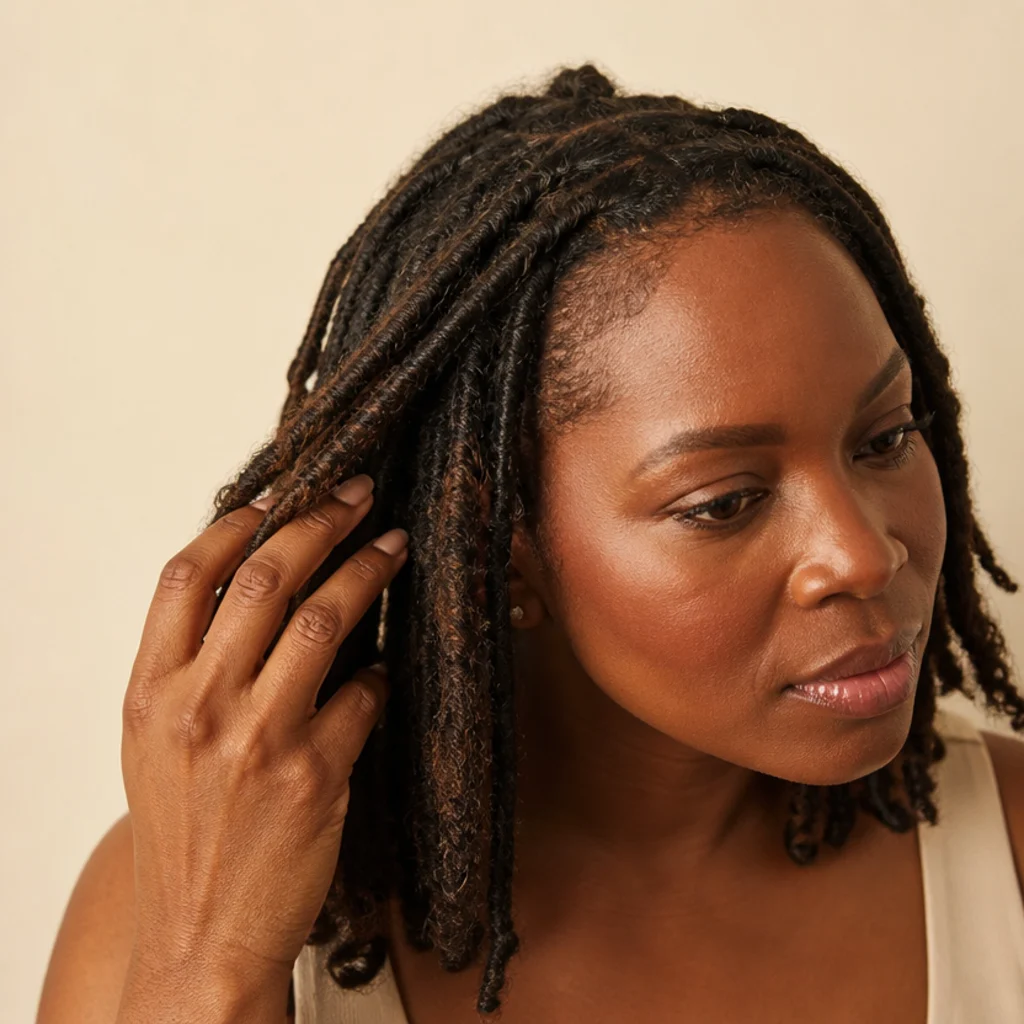
This is where the two styles diverge hardest, and it's the deciding factor for low-maintenance wearers. A faux loc starts sealed and smooth, so the moment frizz appears it reads as fuzz breaking a clean line, highly visible and demanding of mid-cycle re-wrapping on the worst offenders. A butterfly loc is distressed by design, so incoming frizz melts into the existing texture and the style ages far more gracefully, which makes it the more forgiving pick overall. Both share a non-negotiable core routine: a satin scarf or bonnet every single night, a light oil (avoid heavy grease that attracts buildup) or a touch of mousse on flyaways, and the discipline to stop over-touching. Wash gently at the scalp with diluted shampoo in a bottle and let locs air-dry fully to avoid mildew. Faux-loc wearers should budget for a smoothing session around the halfway mark; butterfly wearers can usually ride the texture longer. Ask your stylist which specific product they recommend for your hair and how to spot-refresh frizz without felting the loc.
12How Long Each Lasts
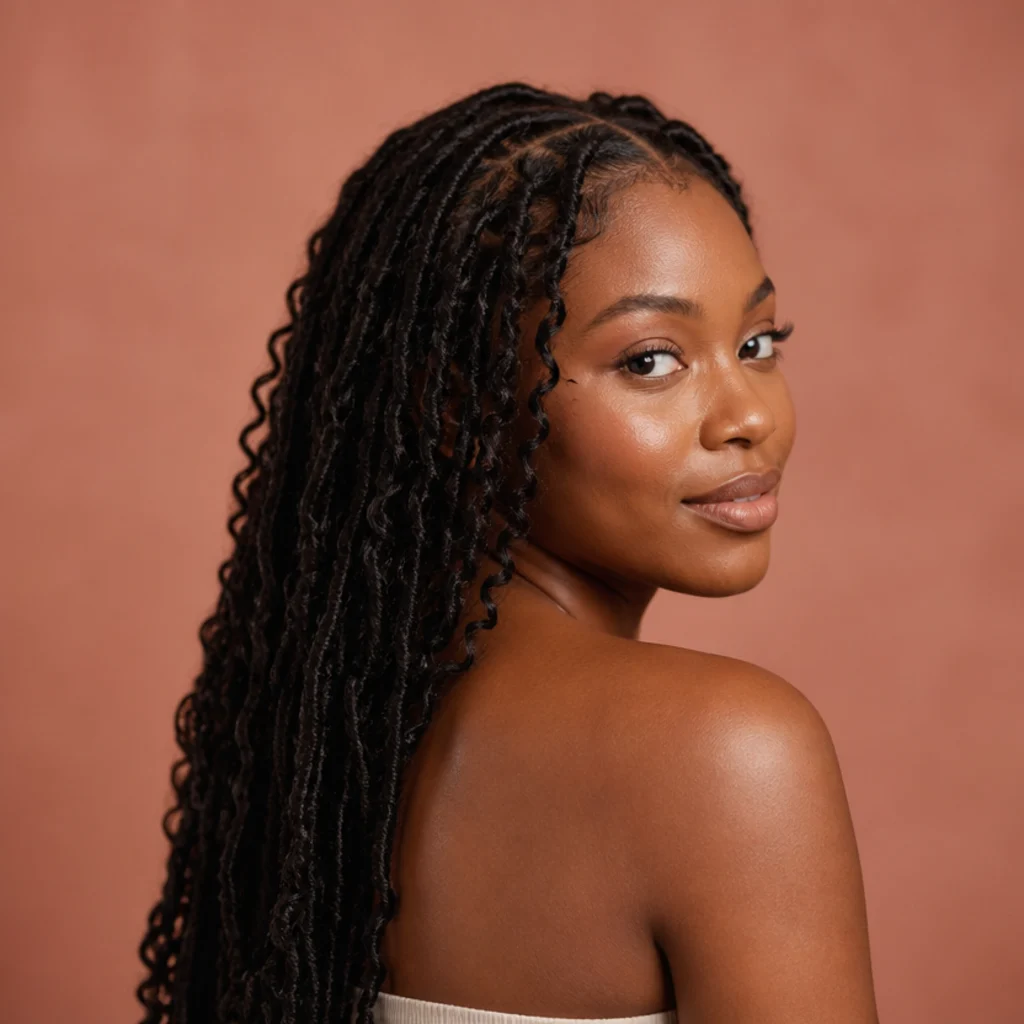
Longevity for both is a range, not a rule, and it swings with your hair type, your night routine and how the install was executed. As a working guide, faux locs hold their crisp, defined look for roughly four to six weeks before frizz tips them into "messy," while butterfly locs often stay presentable closer to six to eight because the distressed texture disguises the same aging. But here's the part most guides skip: the real clock isn't the extensions, it's your natural hair underneath. New growth loosens the base, product and sweat build up at the scalp, and left too long that combination invites matting at the root and even mildew if locs never fully dried. That's what decides takedown, not whether the loc "still looks fine." Resist the urge to stretch a protective style to breaking, the point of protection is a rested scalp, not a maxed calendar. When roots feel loose, itchy or you notice buildup, book the takedown. Ask your stylist for their honest maximum wear window for your specific texture.
13Face Shape and Length Pairings
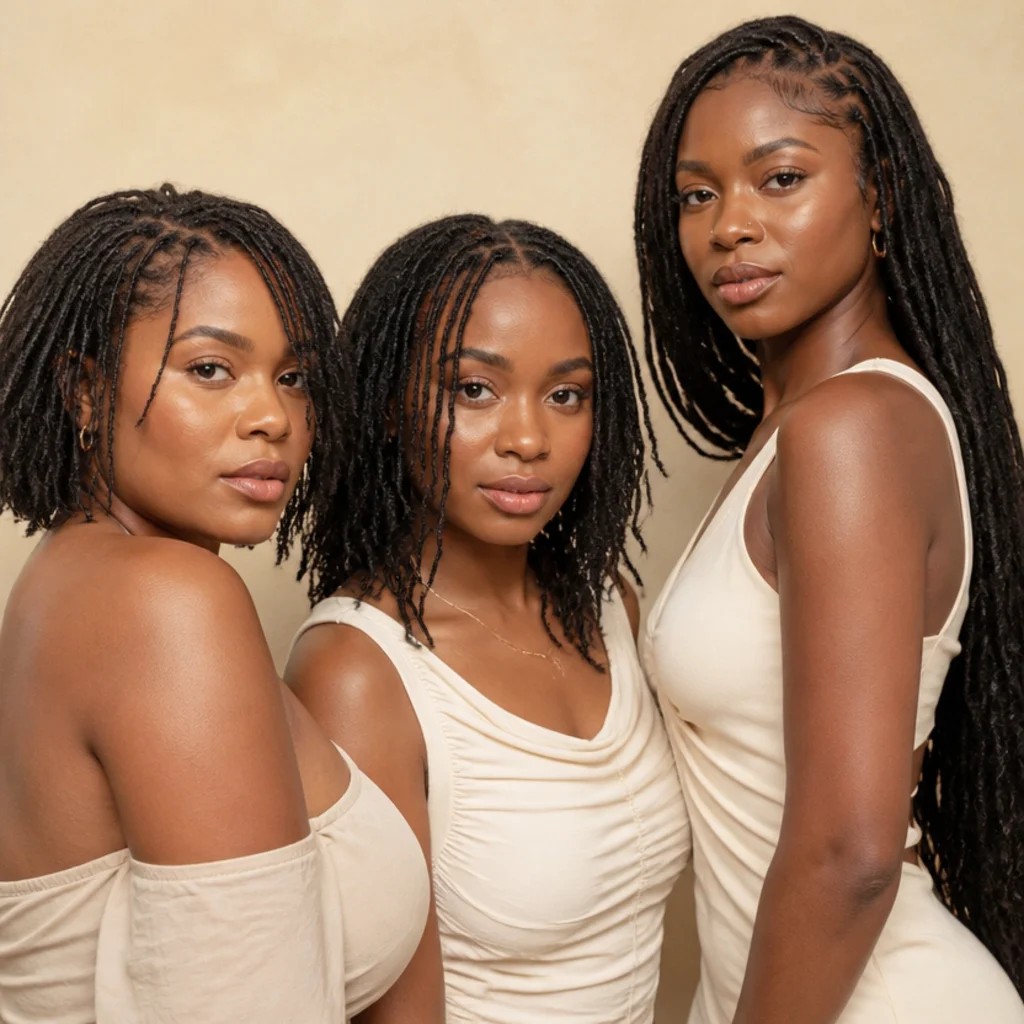
Length and volume flatter faces differently, and this is where the short-versus-long call actually earns its keep. Short butterfly locs at chin or jaw soften round and heart shapes and pull focus up to the cheekbones. Medium, shoulder-grazing lengths are the universal safe bet and suit nearly every face. Long butterfly locs elongate and balance square and oval faces and complement taller frames without overwhelming them. Volume is the second lever people forget: the airy butterfly texture adds fullness that flatters narrower and longer faces, while a smoother, slimmer faux loc keeps a leaner silhouette that suits rounder faces who don't want added width. Loc size matters too, chunkier locs read bolder and more modern, finer locs read classic. When in doubt, bring a reference and ask for a length and loc size that suit your face and your daily routine, not just the model in the photo whose density may be nothing like yours.
<div style="overflow-x:auto">
| Factor | Butterfly Locs | Faux Locs |
|---|---|---|
| Surface finish | Looped, distressed, airy | Smooth, sealed, defined |
| Usual method | Crochet water-wave loop | Hand-wrapped Marley/wrapping hair |
| Relative weight | Lighter per loc | Heavier per loc |
| Frizz behavior | Blends in, ages gracefully | Shows fuzz, needs re-wrapping |
| Typical visual wear | ~6–8 weeks | ~4–6 weeks |
| Install speed | Faster, more DIY-friendly | Slower, salon-preferred |
| Best vibe | Boho, casual, festival | Polished, tailored, formal |
</div>
14Styling and Accessories
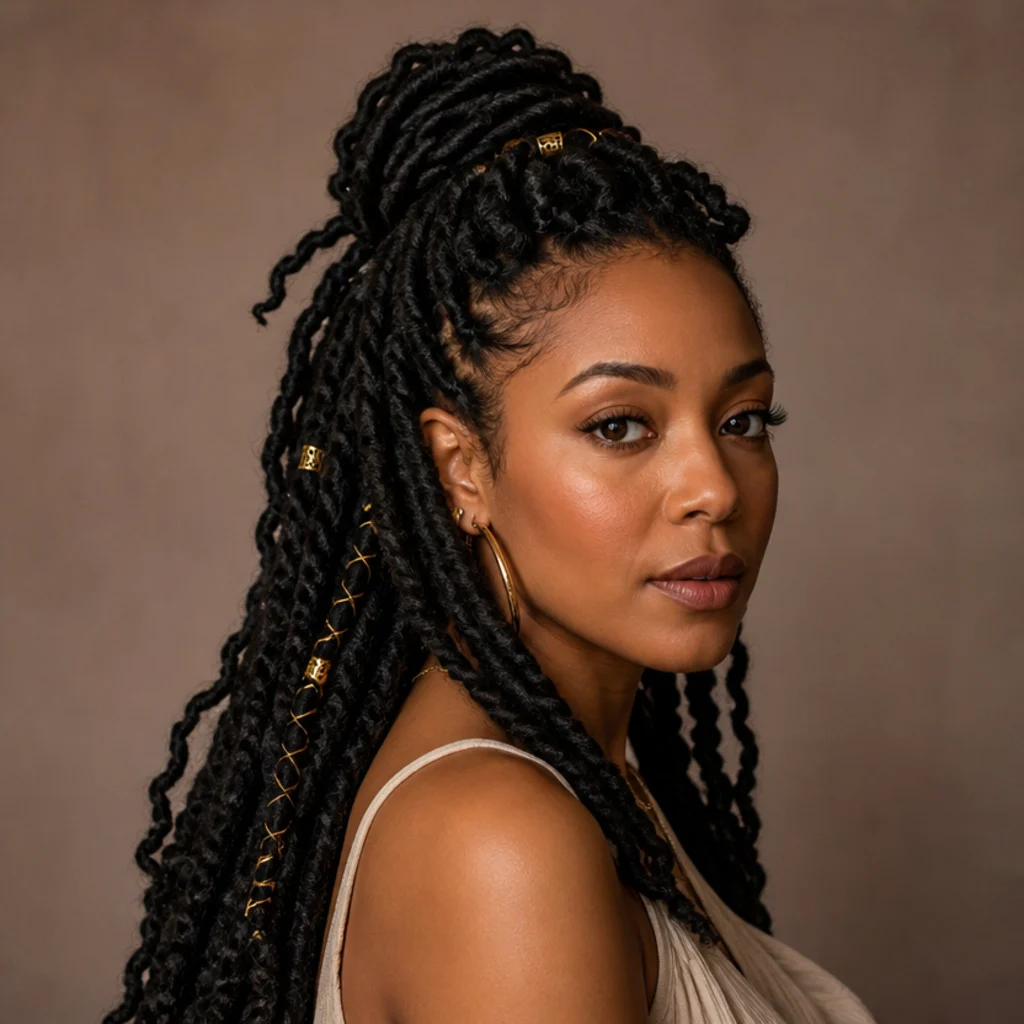
Both styles are an accessory playground, they just carry hardware differently. Smooth faux locs frame metallic cuffs, beads and thread wraps crisply, because the clean surface makes each accent pop like jewelry on skin. Butterfly locs give the same cuffs, cowrie shells and cord wraps a softer, organic backdrop that leans boho and pairs naturally with loose half-up crowns. On medium and long lengths of either style, buns, high and low ponies, top knots, side sweeps and half-up-half-down all work, just anchor updos with a loose elastic and avoid dragging the front hairline. Short butterfly locs look best worn down or in a small half-up that lets the texture speak. Whatever you add, keep it lightweight: heavy metal cuffs stacked near the root quietly add traction, and beads slid too tight restrict movement and stress the loc. Remove accessories at night so they don't snag inside your bonnet. Ask your stylist to place cuffs mid-shaft rather than at the root so the weight sits off your edges.
15Cost and Time, Framed Honestly
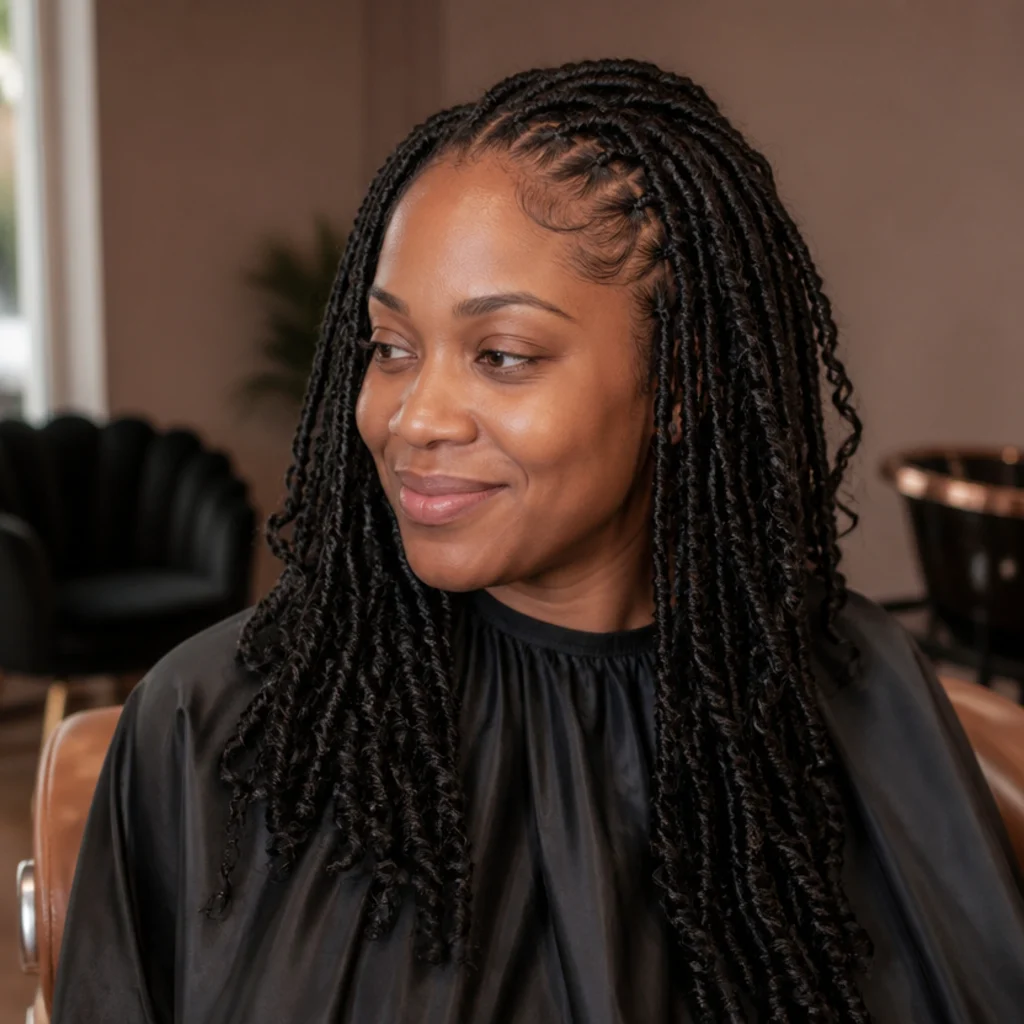
Pricing and chair time swing widely with region, stylist experience, hair length, loc size and count, so treat any single number online with real caution, a metro celebrity braider and a home-based stylist aren't the same quote. The reliable patterns: longer and denser installs of either style cost more and sit longer in the chair; fully wrapped faux locs generally run above crochet-based butterfly locs because the hand-wrapping is slower; and short butterfly locs are usually the most budget- and time-friendly entry point in the whole category. Build the full picture before you book, not just the install fee. Ask whether the hair is included or you supply it, how many packs your density needs, what a mid-cycle touch-up costs, and whether takedown is a separate appointment (it usually is, and it takes time). Factor upkeep products and that takedown into the true cost. Ask your stylist for an itemized quote covering hair, install, touch-up policy and takedown, so the day feels relaxed instead of full of surprises.
Pro Tips from the Editor
- Judge the week-three photo, not the fresh install. Every loc style looks crisp on day one; ask your stylist for healed, mid-cycle references so you choose the texture you'll actually live with.
- Protect the perimeter first. Request larger, looser locs and softer tension along your hairline and nape, the two zones that ache first and scar longest from traction.
- Dilute everything at the scalp. Use shampoo and light oil in an applicator bottle aimed at the roots, then rinse and air-dry fully, trapped moisture at the base is what breeds mildew and matting.
- Marl your color, don't flatten it. On butterfly texture especially, a two-tone marl or root-melt reads dimensional and expensive where a single block color reads synthetic.
- Wrap, don't just cover. A satin bonnet that slips off by 3 a.m. does nothing; pineapple or loosely braid the length first, then secure the wrap so the ends don't felt.
- Book the takedown when you book the install. Knowing your honest wear window (and pre-scheduling removal) stops you from over-wearing a style past the point your scalp needed a break.
- Match method to lifestyle, not just looks. Constant hair-toucher or gym-goer, lean butterfly; want a sleek, formal-ready line, lean faux, and accept the re-wrapping upkeep that finish demands.
How to Choose / Get the Look
Start with the finish, because it decides more than any other single factor. Want soft, distressed, boho texture that hides frizz and ages gracefully with minimal fuss? Go butterfly. Want smooth, defined, sculptural locs for a tailored, polished line? Go faux, and accept that the clean finish asks for mid-cycle re-wrapping. Torn between the two? Butterfly faux locs give you a structured root and a soft, forgiving end in one install. Next, pick length honestly against your actual routine and hairline: short butterfly locs are the lightest, comfiest and lowest-upkeep and the best first-timer choice, while long styles trade weight, tension and nightly effort for drama and versatility. Layer color last, a subtle caramel marl for workday-quiet, or a red-to-dark-root melt for impact, always steered by your undertone (warm to gold and copper, cool to ash and burgundy).
When you book, bring two or three references and be specific: name the method, the loc size, the finished length and the exact color blend, and confirm whether the hair is included. Ask how the base will be built, how much tension to expect, whether your density suits the count you want, and what the touch-up and takedown plan and costs look like. Defend your edges by requesting medium parts, softer front tension and no all-back styling in week one, and commit to a real satin routine every night. Give your scalp real breaks between installs, back-to-back protective styles on a strained hairline is how traction damage starts. The best style isn't the most-liked photo; it's the one that fits your texture, face shape and the upkeep you'll honestly keep up with.
Frequently Asked Questions
Are butterfly locs and faux locs bad for your hair?
Neither is inherently harmful when installed at comfortable tension and worn for a sensible stretch. Damage comes from specific mistakes: micro-thin edge braids, roots braided too tight, overly heavy long installs on fine hairlines, and wearing the style weeks past new growth. Keep roots loose, keep the perimeter larger and softer, air-dry fully after washing, and take the style down when growth loosens the base rather than pushing to the calendar limit.
Which lasts longer, butterfly locs or faux locs?
Butterfly locs usually stay presentable longer, often around six to eight weeks versus roughly four to six for faux, because the distressed texture absorbs frizz while a smooth faux loc shows every stray fiber. That said, the real limit for both is your natural hair, not the extensions: new growth, buildup and scalp health decide takedown time. If a faux loc's clean line matters to you, budget for a mid-cycle re-wrap of the fuzziest locs.
Can I get short butterfly locs if my natural hair is long?
Yes. The extension hair sets the finished length entirely, your own hair is braided or twisted down flat first, then locs are attached at whatever length you choose. Long natural hair is no obstacle to short butterfly locs; it simply means a bit more prep to braid the base down neatly. Short lengths are the lightest, most comfortable, lowest-upkeep option, so they're a great low-commitment starting point regardless of your natural length.
Do butterfly locs work with color like red?
Absolutely, and the looped texture actually shows color off better than a smooth loc because the open gaps let a second tone peek through. Since you're coloring extension hair, you can wear red, caramel, copper or a marled blend with zero dye and zero damage to your natural strands. A red-to-dark-root melt is the lowest-risk way to try bold color: the natural base grounds the look and makes regrowth far less obvious.
Are butterfly faux locs a real style or just a mix-up?
They're an established hybrid, not a naming error. Butterfly faux locs combine the smooth, sealed, wrapped base of a faux loc with the looped, distressed ends of a butterfly loc, giving you a structured, formal-ready root and soft, boho movement below. Ask for them by name and confirm your stylist will wrap the base and hand-loop the ends, so you don't get one method applied to the whole loc by default.
How much do butterfly locs and faux locs usually cost?
Cost varies widely by region, stylist experience, loc size, density and length, so treat online numbers as ballparks. The dependable pattern is that fully hand-wrapped faux locs run higher than crochet-based butterfly locs because the wrapping is slower, and longer, denser installs of either cost more. Short butterfly locs are typically the most budget-friendly entry point. Always request an itemized quote covering hair, install, touch-ups and the separate takedown before booking.
Can I wash butterfly locs and faux locs while wearing them?
Yes, and you should, a clean scalp is what keeps a protective style healthy. Use a diluted, sulfate-free shampoo in an applicator bottle aimed at the roots, gently massage the scalp, rinse thoroughly and let the locs air-dry completely before bed. The critical rule is full drying: extension hair holds water, and locs that stay damp against the scalp can develop mildew and matting. Wash every one to two weeks and avoid heavy, greasy products that leave buildup at the base.
How do I sleep in butterfly or faux locs without ruining them?
Loosely gather the length into a high pineapple or a few big, loose braids, then cover everything with a satin or silk bonnet or scarf, or sleep on a satin pillowcase as a backup. Cotton pillowcases rough up the texture, snag the ends and speed up frizz. For long installs especially, securing the length before wrapping keeps the ends from felting and tangling overnight, which is the single biggest thing that shortens how long the style looks fresh.
Should I choose butterfly or faux locs for a first-time protective style?
For most first-timers, short-to-medium butterfly locs are the gentler introduction. They're lighter per loc, install faster, forgive frizz and handling, and are the most comfortable to sleep in and maintain while you learn your routine. Faux locs are worth it if you specifically want that smooth, polished, formal line, just go in knowing they weigh more and ask for more upkeep. Whichever you pick, start with a comfortable tension and a medium loc count rather than the heaviest, longest version.