5 Olive Green Nail Mistakes to Avoid and Fixes
Olive green reads expensive when the undertone, shape, and finish agree, and cheap the moment one of them drifts. Here are the five errors that flatten an olive manicure, plus the exact fix and the words to say in the chair.
 Edited by Lena Rose · Published July 11, 2026 · 15 min read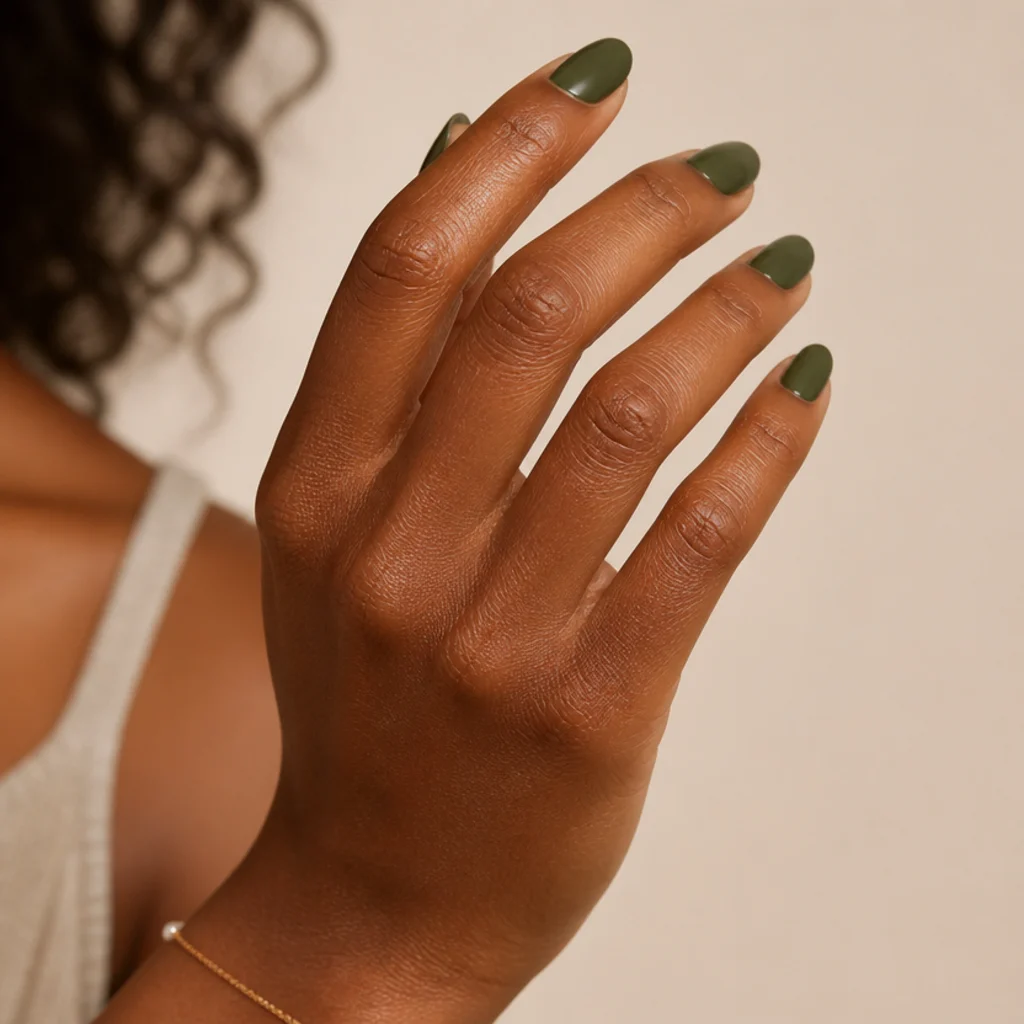
Quick Answer
- Best for: Anyone drawn to dark olive green nails who wants the shade to read rich and deliberate rather than washed out, mustard-muddy, or army-surplus flat.
- Who might skip it: Very cool, pink-fair skin that fights yellow-green may prefer a gray sage or a deep forest instead; if you want zero upkeep, a lighter muted olive hides regrowth better than a saturated one.
- Maintenance: Two to three weeks with gel or acrylic before regrowth shows; five to seven days for regular polish before the earthy pigment dulls. Re-cap the free edge midweek to slow tip wear.
- Difficulty: Easy to get right once you know what to watch. Almost every fix is a decision made before the brush touches the nail: shade, shape, coats, finish.
- Cost: Roughly a mid-range for a salon gel manicure and higher for acrylic extensions or chrome and structured work; a bottle of quality polish for the DIY route. Ranges swing widely by city and salon tier.
- Wear time / longevity: Gel holds depth about two to three weeks; builder gel and acrylic longer with fills; standard lacquer a workweek.
- Standout variation: A true gray-based dark olive under a soft satin topcoat, which keeps depth without the chalky matte cast.
- How to ask your nail tech: "A gray-based dark olive, two thin coats over a tinted base, medium almond, finished satin, not full matte, with tight cuticle cleanup."
In This Guide
Intro
Olive green sits in a rare sweet spot: earthy enough to behave like a neutral, unexpected enough to feel considered. That's exactly why dark olive green nails go wrong so easily. The same drab, complex undertone that makes olive feel costly can slide into mustard, sage-gone-gray, or army-flat territory the moment the pigment balance, nail shape, or topcoat is even slightly off. None of these are dramatic errors — they're small decisions made at the polish wall or in the salon chair, and they're what cost you the depth that makes olive worth wearing in the first place. Olive also rewards precision: once you know why it misbehaves, it turns into one of the most forgiving year-round shades, sitting easily against denim, camel, cream, and gold through every season. Below are the five mistakes that show up most often, from a too-yellow base to clashing accents and smudged sidewalls, each paired with a fix you can act on before or during your appointment. Whether you lean toward light olive green nails for spring or a moodier version for fall, treat this as a pre-manicure checklist so your olive lands rich and intentional every time.
01Picking a Muddy, Yellow-Heavy Olive
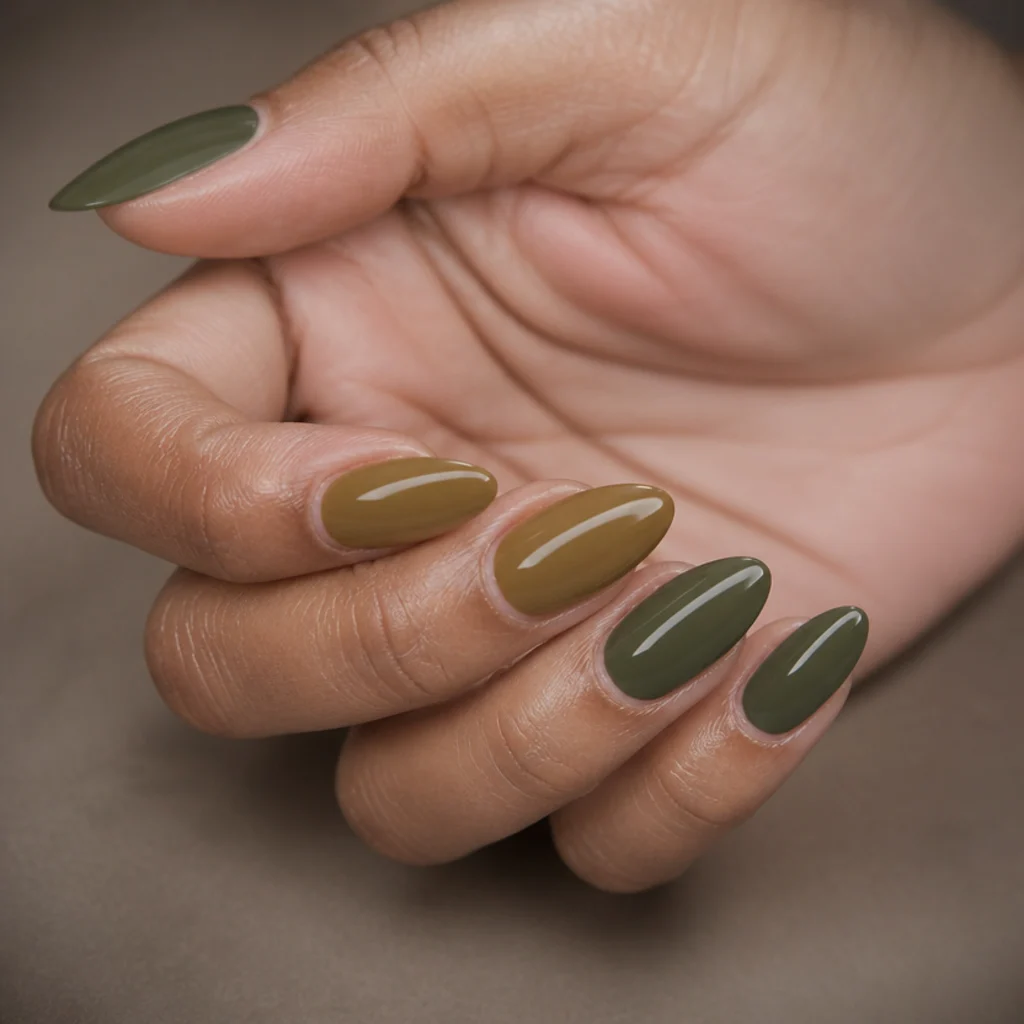
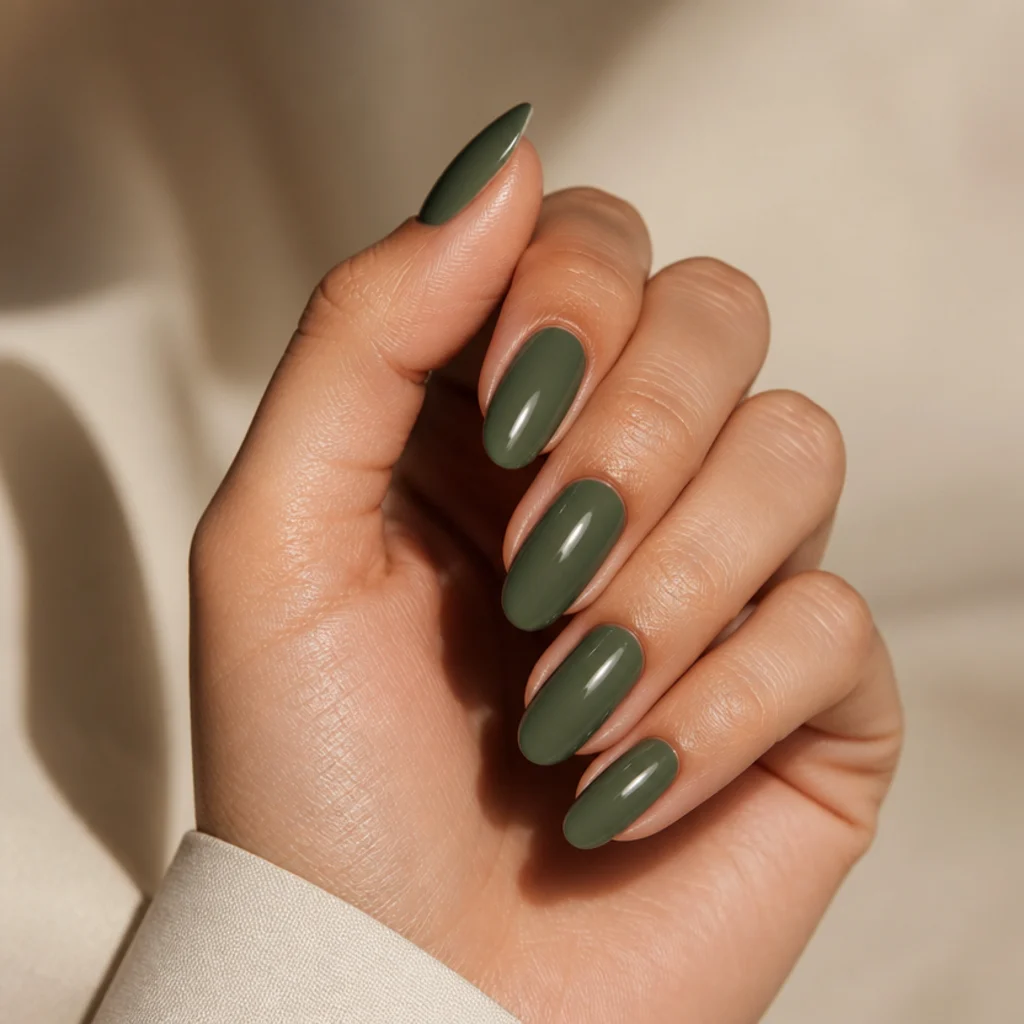
The most common misstep: grabbing the first bottle labeled "olive" without checking its undertone. Olive is a tertiary color, green cut with a muting brown or yellow, and that ratio decides everything. Formulas that lean heavy yellow-brown photograph like dried mustard on the nail, especially against warm or tan skin, where the pigment and the skin tone blur into one flat cast. Look instead for an olive built on a gray or slightly cool green base — sometimes sold as sage-olive, army, or "dirty" green — and swatch two coats on a paper nail wheel or a white card in real daylight, never under warm store lighting, which pushes every olive toward amber. Deep and rich skin tones can carry the most saturated, brown-leaning olives beautifully; fair, cool, and pink undertones usually look better in a muted, gray-leaning version that reads sophisticated rather than sallow. Hold the swatch below your knuckles against the back of your hand, not your fingertip, so you're judging it against the skin the polish will actually sit near. At the salon, ask your nail tech to line up their gray-based olive gels side by side before you commit.
02Ignoring Your Nail Shape and Length
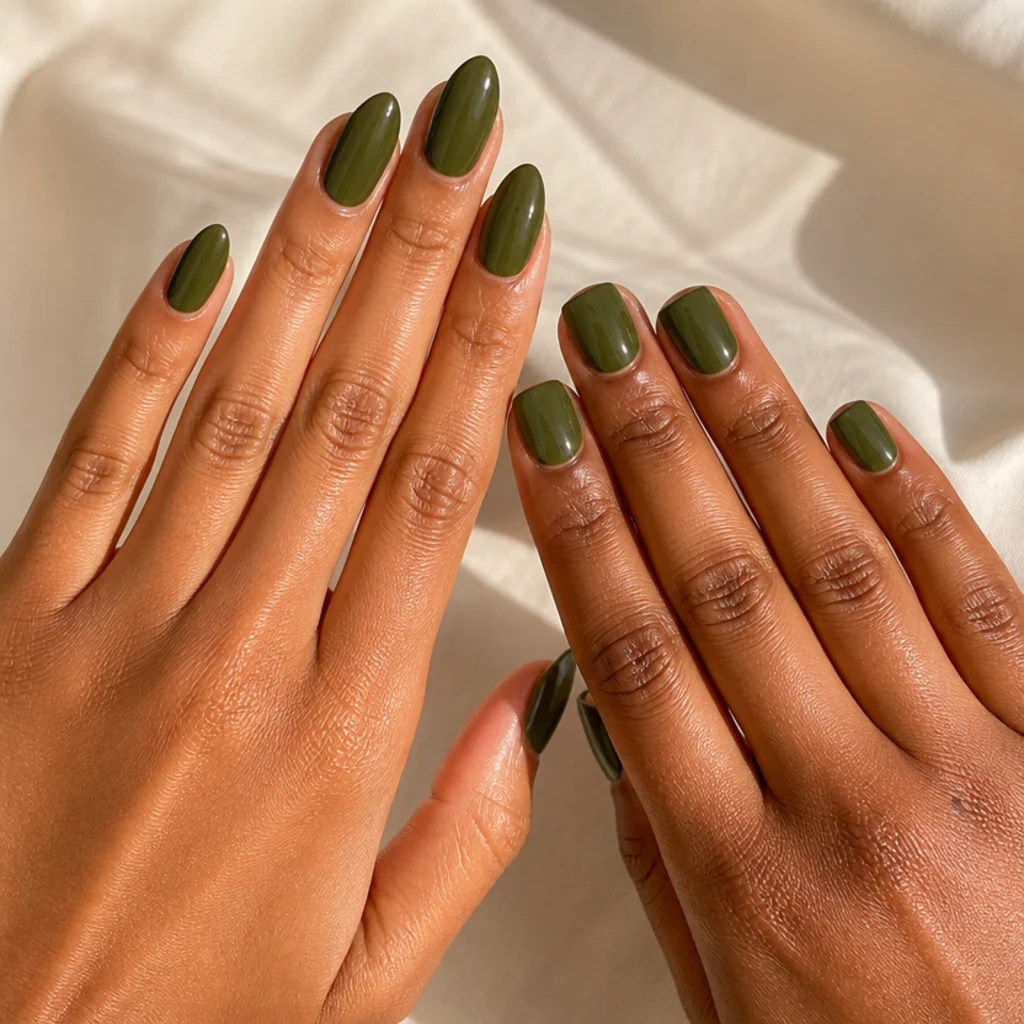
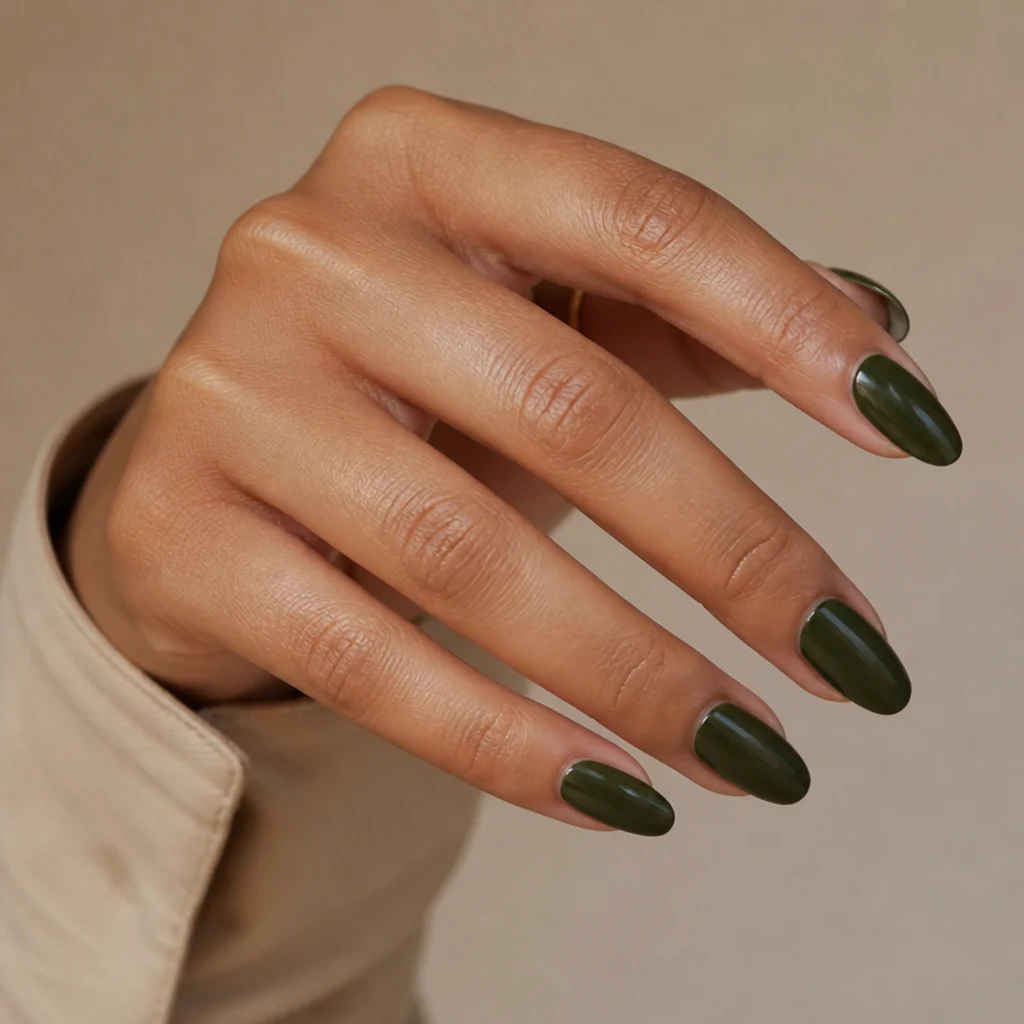
This is the step people skip entirely: a saturated dark olive behaves like a different color depending on the shape underneath it. On very long, wide coffin or square sets, deep olive spreads into a heavy, unbroken block that reads flat and can visually shorten the fingers. Olive green almond nails taper the pigment toward a soft point instead, drawing the eye lengthwise so even a moody shade looks elongated rather than heavy — which is why almond, tapered squoval, and short coffin flatter deep olive so reliably, while a stubby wide square makes it feel dense. Match saturation to surface area: save the darkest olive for short to medium lengths, and shift toward a muted or light olive green nails tone if you're set on long extensions. Narrow nail beds gain the most from an almond taper; wider beds balance better on a squoval with slightly rounded corners. If you're getting olive green acrylic nails, ask for a medium almond or short coffin with a slim apex so the shade stays elegant instead of overwhelming, and have the tech file the sidewalls straight before tapering the tip — that's what keeps the color running in clean, parallel lines that read expensive from arm's length.
| Nail shape | Olive depth that flatters | Best length | Notes |
|---|---|---|---|
| Almond | Deep to medium | Medium–long | Taper elongates; hides width |
| Squoval | Medium to light | Short–medium | Balanced, low-maintenance daily wear |
| Coffin | Medium (lighten if long) | Short–medium | Deep olive can go blocky when long |
| Square | Light to muted | Short | Keep saturation low to avoid heaviness |
| Round | Muted to light | Short | Softest, most casual read |
03Stopping at One Thin Coat
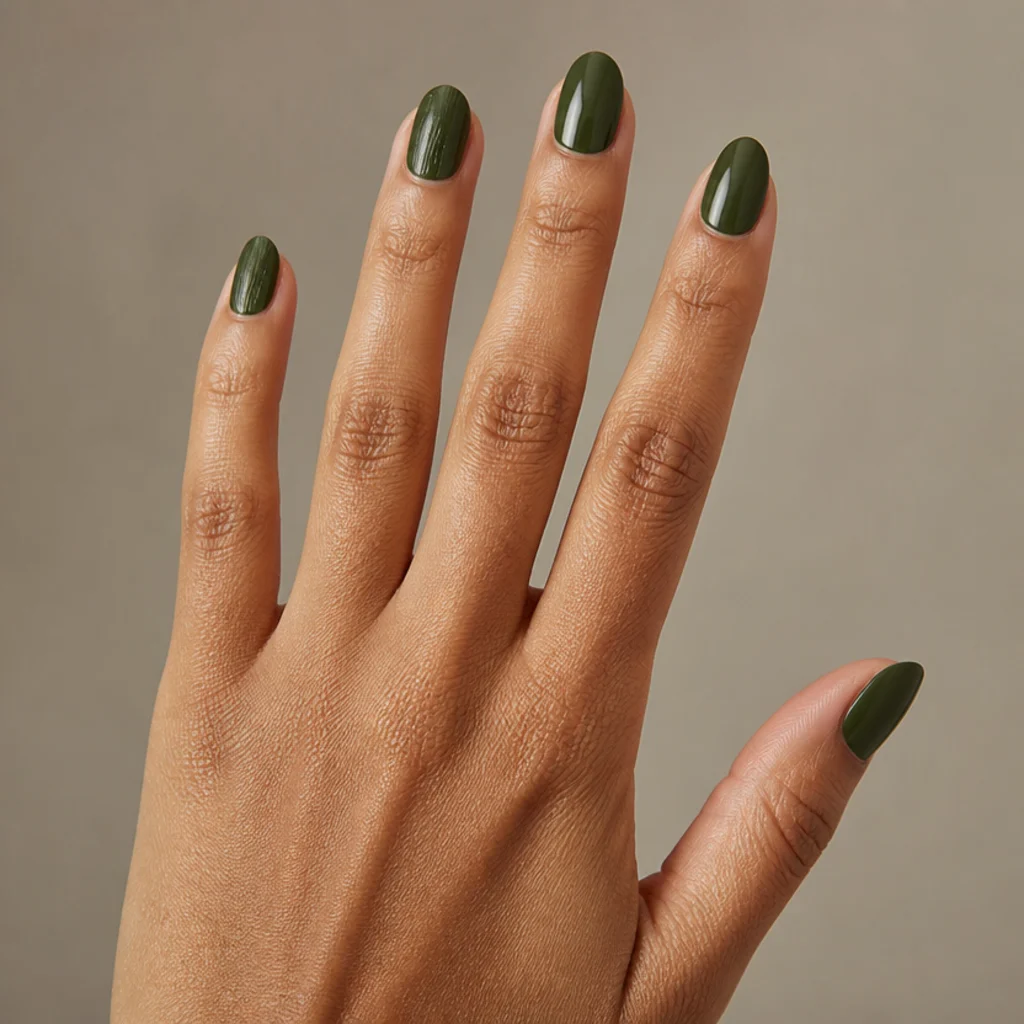
Olive is pigment-dense and unforgiving — rush it and it turns patchy, streaky, and thin. A single coat over bare nail leaves visible brush lines and a translucent, washed-out cast that undersells the depth you paid for. Compensating with one thick coat is worse: heavy layers stay gummy at the core, dent against a keyboard within the hour, and cure unevenly under a gel lamp, sometimes shrinking and lifting at the edge. What actually works is two thin, even coats, floating the brush instead of pressing it, letting each one flash-dry or cure fully before the next goes on. For the deepest payoff on dark olive green nails, lay a color-matched or gray tinted base coat first so the top coats read true and opaque instead of hollow. Building light olive green nails calls for the same discipline in reverse: sheer, deliberate layers so you control exactly how soft and airy the tone stays. Cap the free edge on every coat, running the brush along the tip's underside — that's where olive chips first and where regrowth shows up soonest. Tell your nail tech you want a tinted builder base under deep olive for extra dimension.
04The Wrong Finish for the Shade
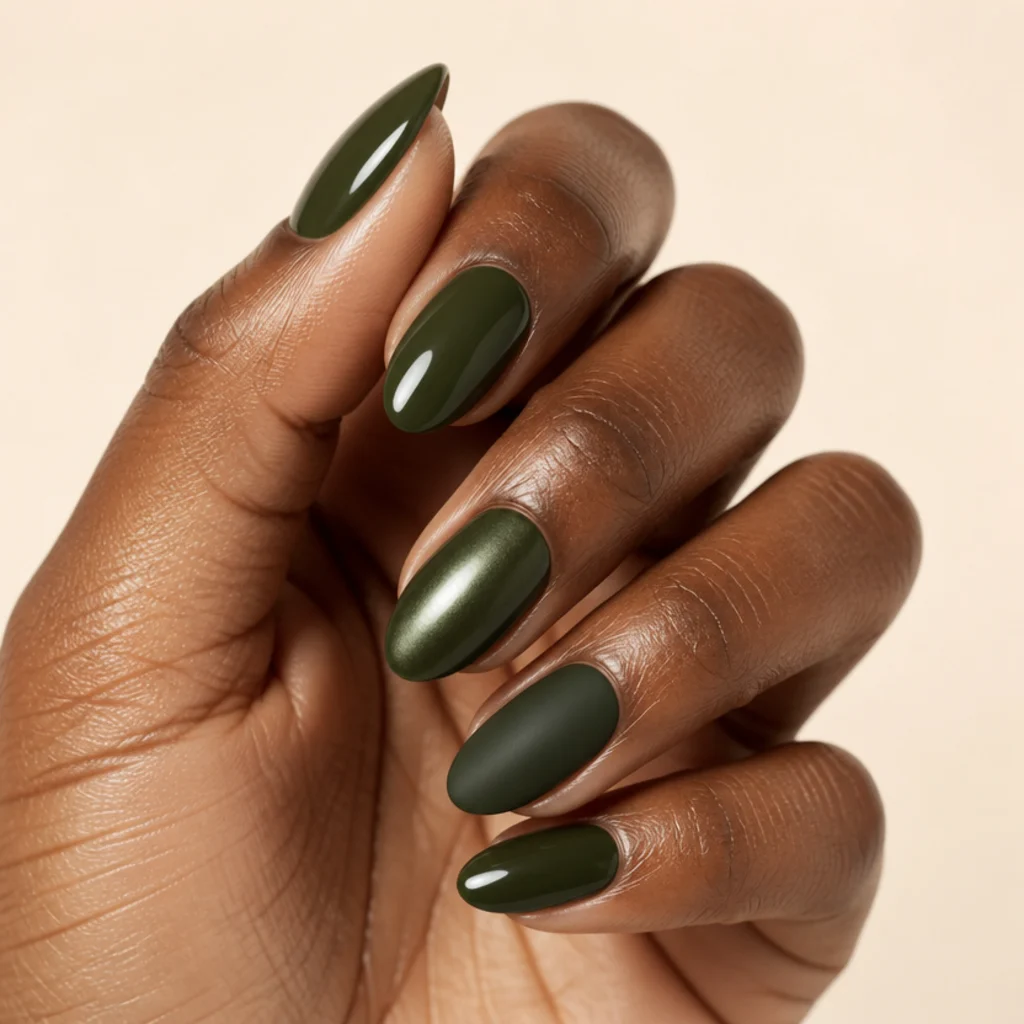
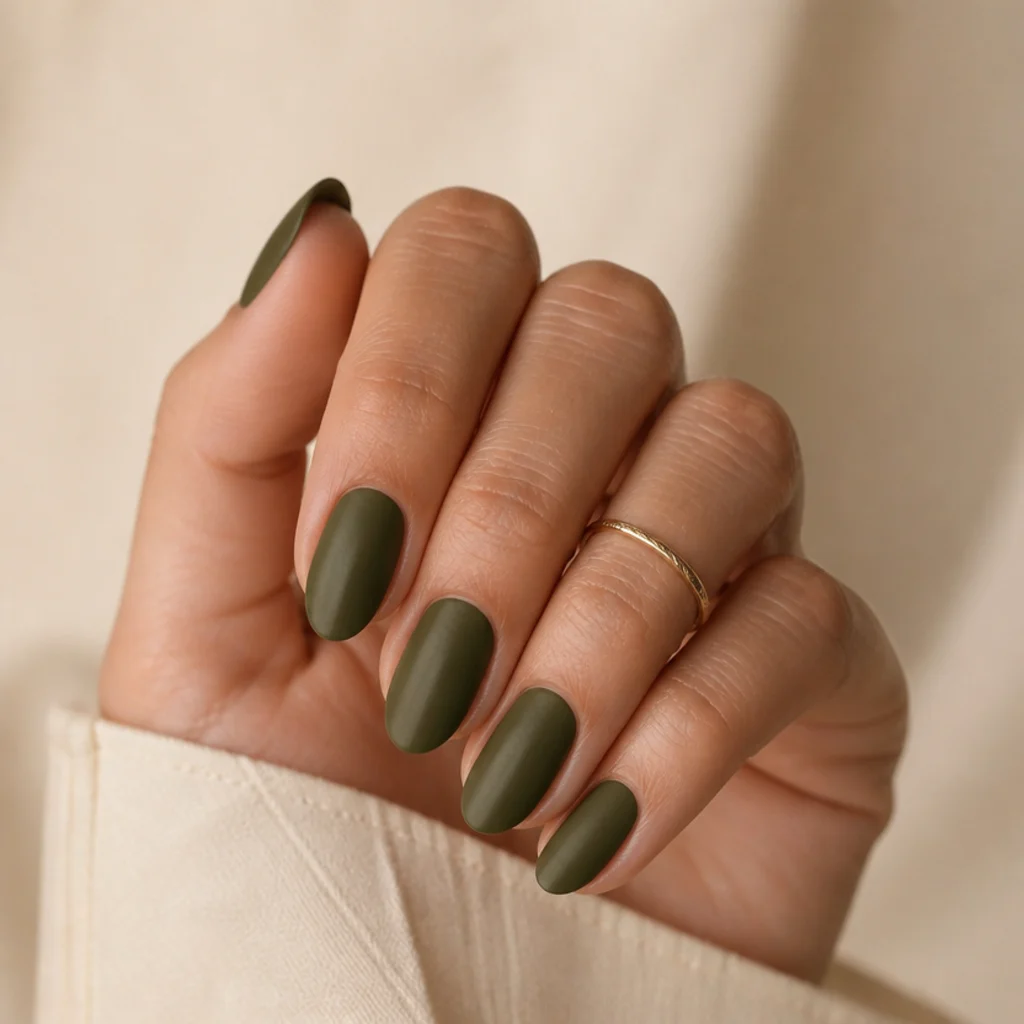
Finish makes or breaks olive, and most people treat it as an afterthought. Full matte over dark olive strips out the light play and flattens the shade into a chalky, army-surplus look that reads dusty instead of moody. Go the other way to high gloss and a deep olive can bounce so much light it reads near-black in photos, hollowing out the undertone you picked it for. A soft satin or low-sheen topcoat splits the difference — it diffuses light just enough to hold olive's depth while adding a quiet, costly glow, and it's the finish that photographs most consistently across lighting. Love true matte? Save it for a single accent nail against satin companions so the texture reads intentional rather than accidental. Chrome and glazed "velvet" finishes flatter olive too, turning a flat, drab tone into a liquid, dimensional surface with a pewter or antique-gold shift. One thing to know: satin and matte topcoats mute the base color slightly, so pick your olive a half-step deeper than you think you want. Ask your nail tech which of their topcoats is a true satin versus a diffused matte — the two behave very differently over dark olive.
Save this to Pinterest so the finish comparison is one tap away when you book.
05Clashing Accent Colors and Skipping Cleanup
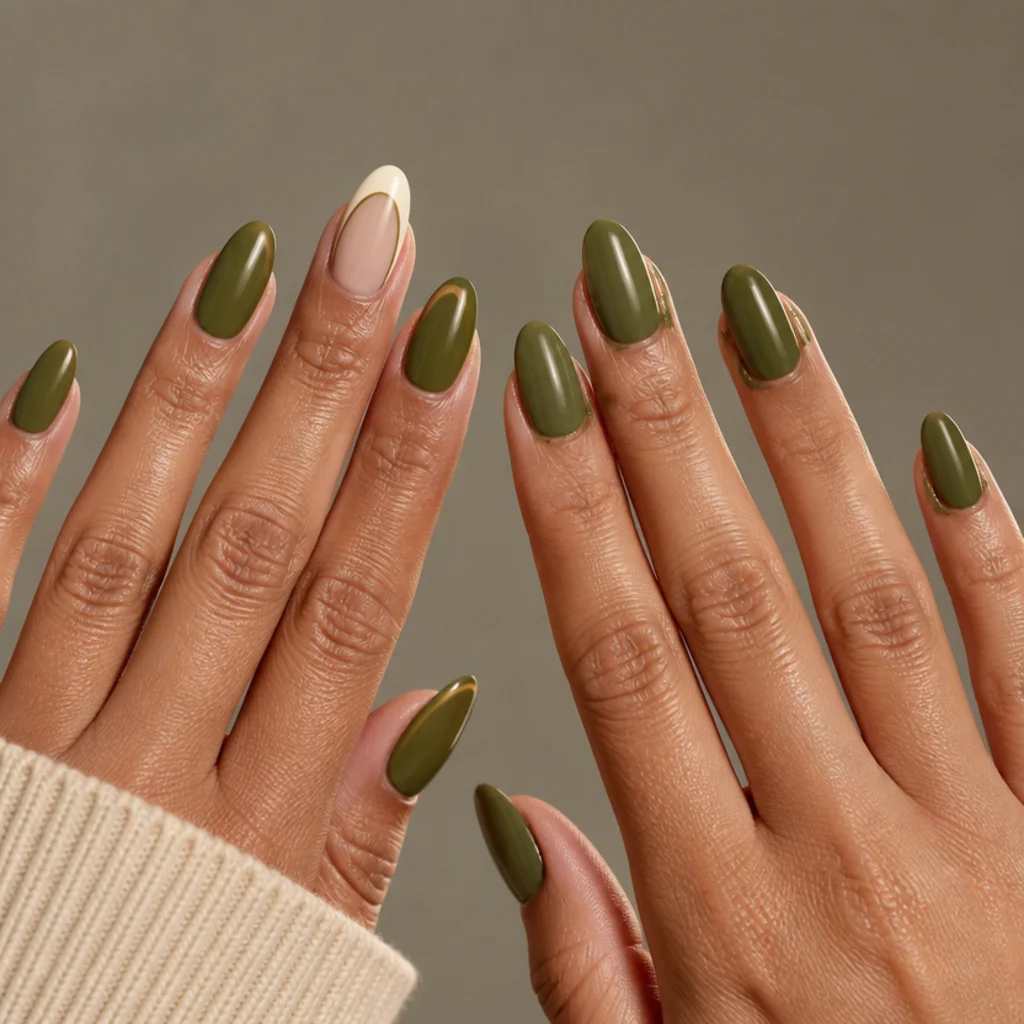
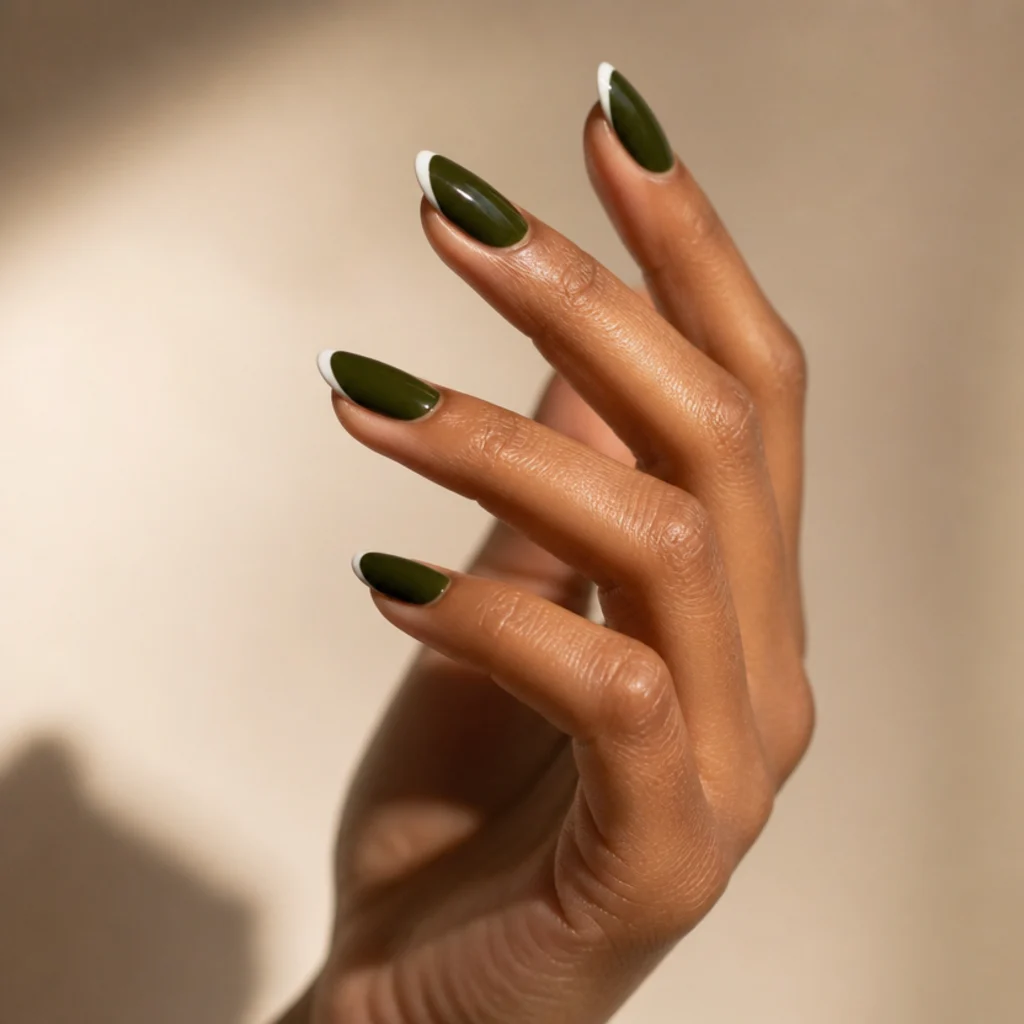
Two things sabotage an otherwise strong olive set: the wrong accent color, and messy edges. Pair olive with a cool, optic-bright white and it looks harsh and clinical, almost dental; pure jet-black accents muddy the green and drag it toward camouflage instead. Pull accents from olive's own earthy family, staying warm and low-contrast. Olive green and white nails look cleanest with a warm cream, bone, or off-white rather than stark white, and gold foil, taupe, soft chocolate, or a burnished bronze flatter far better than anything icy. For a French, swap the white tip for cream or a tonal, deeper olive. Cleanup matters just as much, because a dark, pigment-heavy shade shows every flooded cuticle and smudged sidewall. Have your tech tidy the sidewalls and cuticle line with a cleanup brush, or do it yourself with a small angled brush dipped in acetone so the color stops in a crisp, intentional line. A thin layer of cuticle oil or a peel-off latex barrier painted around the nail before a dark color makes stray pigment easy to lift away afterward. Ask for a tight cuticle reveal — a hairline of bare nail left showing — so regrowth stays discreet for longer.
Pro Tips from the Editor
- Judge olive against your veins, not the bottle. If your wrist veins read blue-green, gray-based olives sit cleanest; if they read distinctly green, you can carry warmer, browner olives without going sallow.
- Buy or request one half-shade deeper for matte and satin. Diffusing topcoats mute the base, so the olive that looks right glossy will read washed-out under a flat finish.
- Anchor the palette with metal, not black. Antique gold, brass, and bronze accents make olive look designed; jet black makes it look like fatigues.
- Re-cap the free edge midweek. A swipe of matching color plus topcoat across the tips buys several extra days before chips show on high-wear nails.
- Test chrome over a black-olive base. Pushing a very deep, near-charcoal olive under chrome powder yields a pewter, dimensional finish that photographs far better than chrome over a mid olive.
- Keep a tonal accent, not a contrast one. A single nail one or two shades lighter or darker in the same olive family looks more expensive than a true color pop.
- Warm your cream, cool your gray. Match cream accents to warm-leaning olives and gray-white or silver accents to cool sage-olives so the set reads cohesive rather than assembled from two stories.
How to Choose / Get the Look
Work through it as a short decision tree, in order, because each choice narrows the next. Start with undertone. Bring or screenshot a reference in natural light and decide whether your olive leans gray-green (the safest, most flattering direction across skin tones) or yellow-brown (richer and moodier, but risky on warm and tan skin where it can turn mustard). Then match saturation to your nails. Reserve the deepest dark olive green nails for short to medium almond or squoval shapes; if you wear long coffin or square extensions, lighten toward a muted or light olive green nails tone so the color doesn't turn blocky. Next, plan coverage. Ask for two thin coats over a color-matched or gray tinted base for full opacity, or sheer, controlled layers if you want a softer wash. Choose finish deliberately. Request a soft satin over deep olive, save true matte for a single accent, and consider chrome or glazed for extra dimension. Set the palette last. Describe the mood and let cream, gold, taupe, and bronze do the accent work instead of stark white or black. Finish with cleanup. Insist on a tight cuticle reveal and crisp sidewalls, because that clean edge is the single detail that separates a considered olive manicure from one that looks like it smudged on the drive home.
Frequently Asked Questions
What skin tones do dark olive green nails suit best?
Deep and tan skin carry rich, brown-leaning saturated olives beautifully because there is enough contrast to keep the shade from blending into the hand. Fair, cool, and pink undertones usually flatter more with a muted, gray-leaning olive so the color reads sophisticated rather than sallow. Check your reference in daylight, not warm indoor light, which pushes every olive amber.
Are olive green almond nails better than square for this color?
For deep, saturated olive, yes. Almond and tapered squoval shapes elongate the hand and taper the pigment toward a point, which stops a dark color from reading as a heavy block. Square and wide coffin shapes suit lighter, muted olive tones better; if you want deep olive on a square nail, keep the length short so the color doesn't overwhelm the bed.
How do I keep olive green acrylic nails from looking flat?
Ask for a soft satin or chrome finish instead of full matte, request two even coats over a color-matched or tinted builder base, and keep the length short to medium so the shade stays dimensional. A slim apex and capped free edge also help light travel across the nail rather than sitting dead flat.
What white goes with olive green and white nails?
A warm cream, bone, or soft off-white. Stark optic white looks harsh and clinical against olive, almost dental, while cream keeps the pairing warm and cohesive. For a French tip, cream or a tonal deeper olive edge reads far more expensive than bright white.
How long do olive manicures last before dulling?
Gel and acrylic hold their depth for about two to three weeks before regrowth shows. Regular polish tends to look dull after five to seven days as the earthy pigment loses its sheen. Re-capping the free edge midweek with a swipe of color and topcoat noticeably slows tip wear.
Why does my olive polish look muddy or mustard?
Almost always undertone plus lighting. A yellow-brown-heavy formula turns mustard against warm skin, and warm salon or store lighting hides it until you get home. Switch to a gray or cool-green-based olive, and always swatch two coats on a white card in daylight before committing to the bottle or gel.
Can I wear light olive green nails in winter, or is olive only for fall?
Olive works year-round. Deep, moody olive suits fall and winter against camel and charcoal, while light and muted olive green nails read fresh in spring and summer next to denim and cream. Adjust saturation and finish to the season rather than abandoning the shade.
Does matte or glossy topcoat work better over dark olive?
A soft satin outperforms both extremes. Full matte flattens deep olive into a chalky, army cast, and high gloss can bounce so much light the color reads near-black in photos. Satin diffuses light just enough to keep depth with a quiet glow. If you love matte, use it on one accent nail rather than the full set.
How do I stop dark olive from staining my nails?
Always use a base coat, ideally a slightly tinted or ridge-filling one, so pigment never touches the keratin directly. Avoid soaking bare nails in remover for extended periods, and if you do notice a faint cast after removal, a gentle buff and a few days of cuticle oil restore the natural tone.