3 Olive Green Nail Combos Worth Comparing
Olive green sits between neutral and statement, so it's worth a close look before you book. These three combos read differently on the hand, from tailored almond to high-drama acrylic to breezy two-tone, and this guide compares them on shade, shape, upkeep, and effort. Read it once and you'll walk into your appointment knowing the exact depth, finish, and file to ask for.
 Edited by Lena Rose · Published July 11, 2026 · 13 min read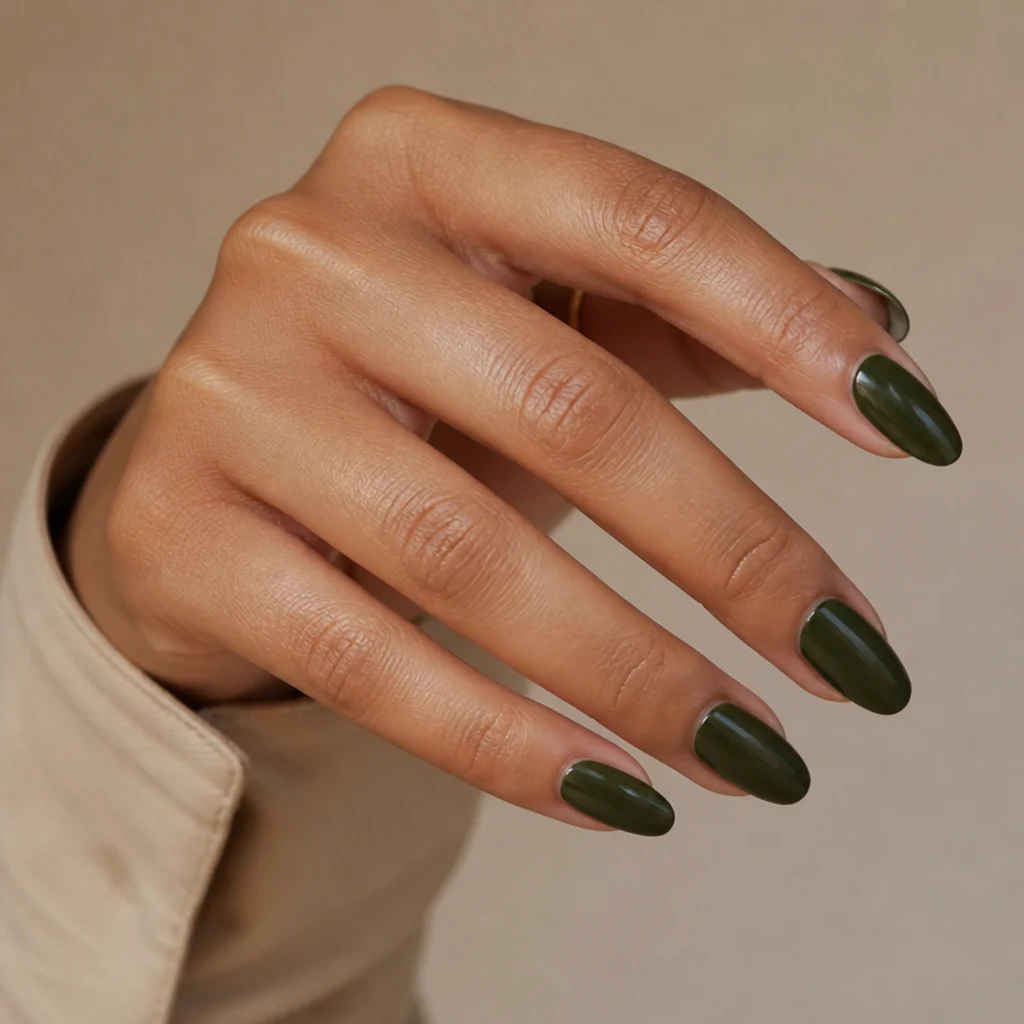
Quick Answer
- Best for: Anyone who wants an earthy, grown-up alternative to burgundy, nude, or classic red that still reads as a neutral.
- Who might skip it: Very cool, pink-toned hands that gravitate to jewel tones, or anyone who wants a high-shine bright that pops from across the room.
- Maintenance: Moderate. Deep olives disguise regrowth for two to three weeks; pale sage and two-tone edges show wear sooner and need tidier upkeep.
- Difficulty: Beginner-friendly as a single solid coat, intermediate for a crisp olive-and-white divide, salon-level for sculpted acrylic length.
- Cost: Roughly a standard gel manicure at the low end, climbing toward a full-set acrylic price for sculpted length; two-tone nail art usually adds a modest per-nail design fee.
- Wear time / longevity: Gel polish holds about two to three weeks; acrylic and gel-X extensions run three to four weeks before a fill or soak-off.
- Standout variation: Dark olive green almond nails for a tailored, finger-lengthening everyday look.
- How to ask your nail tech: "Dark, slightly grayed olive, not army green, glossy top coat, soft almond file" gets you closest on the first try.
In This Guide
Olive green has become one of the most wearable non-neutrals in the polish drawer. It has the ease of a nude with more personality, and it flatters an unusually wide range of skin tones because its warm, grayed base sits between cool and warm undertones instead of fighting either one. The catch is that "olive" covers a lot of ground, from deep army and moss shades to soft, dusty sage, and the direction you pick changes the whole mood of the hand. Depth, finish, and shape matter here as much as the pigment itself.
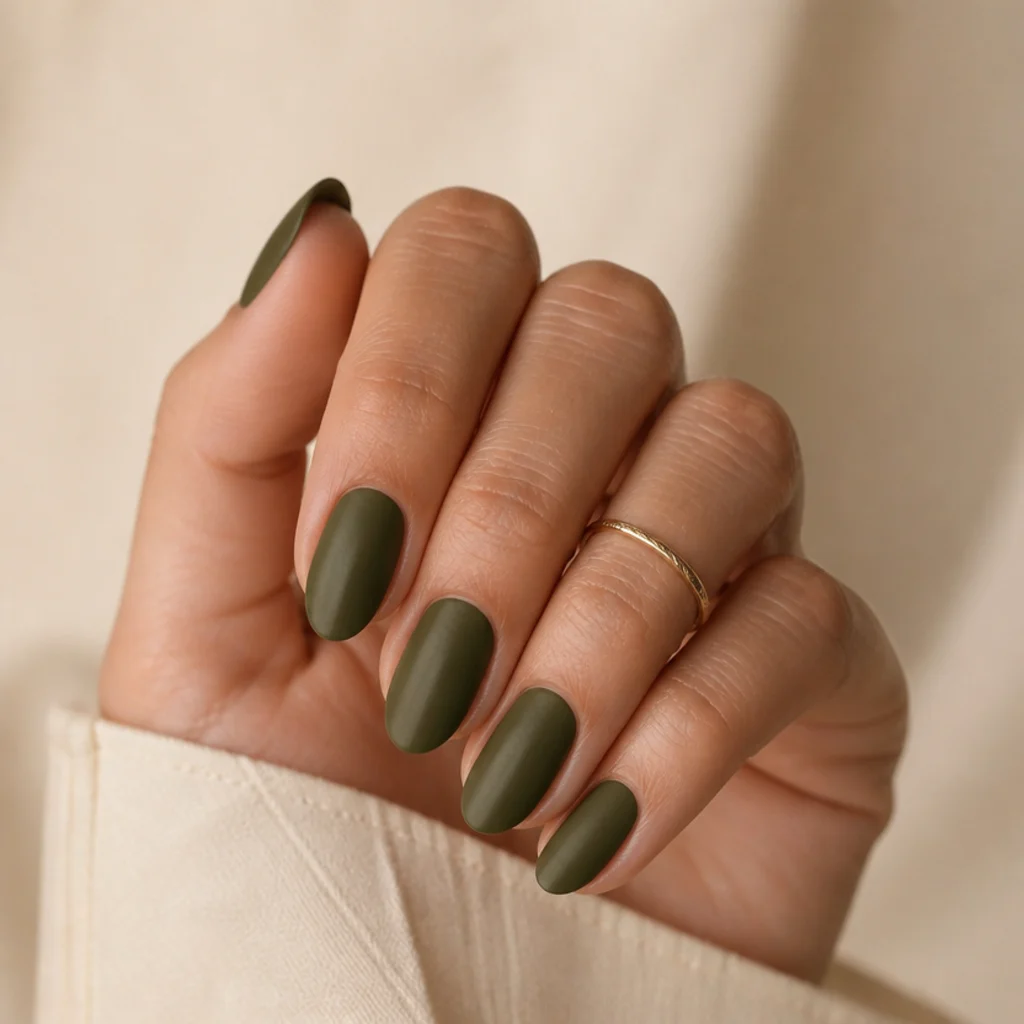
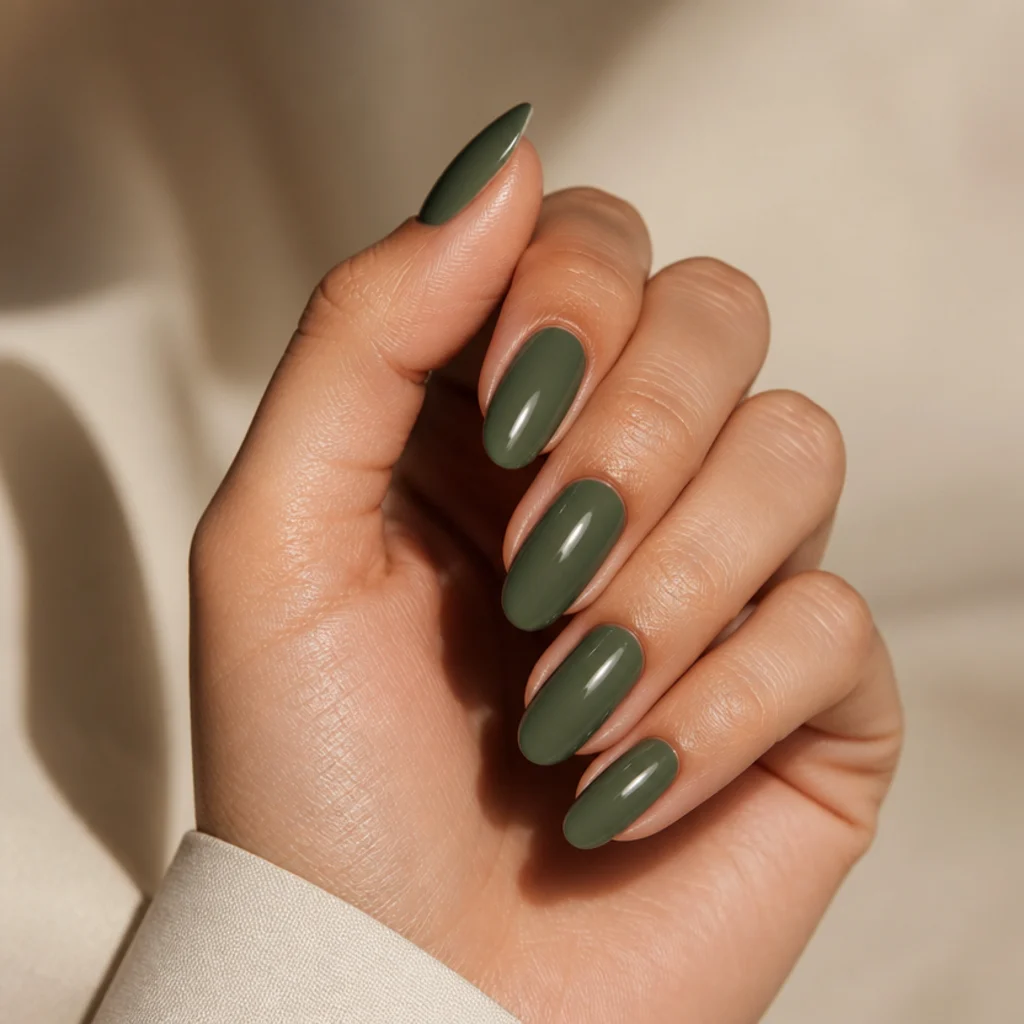
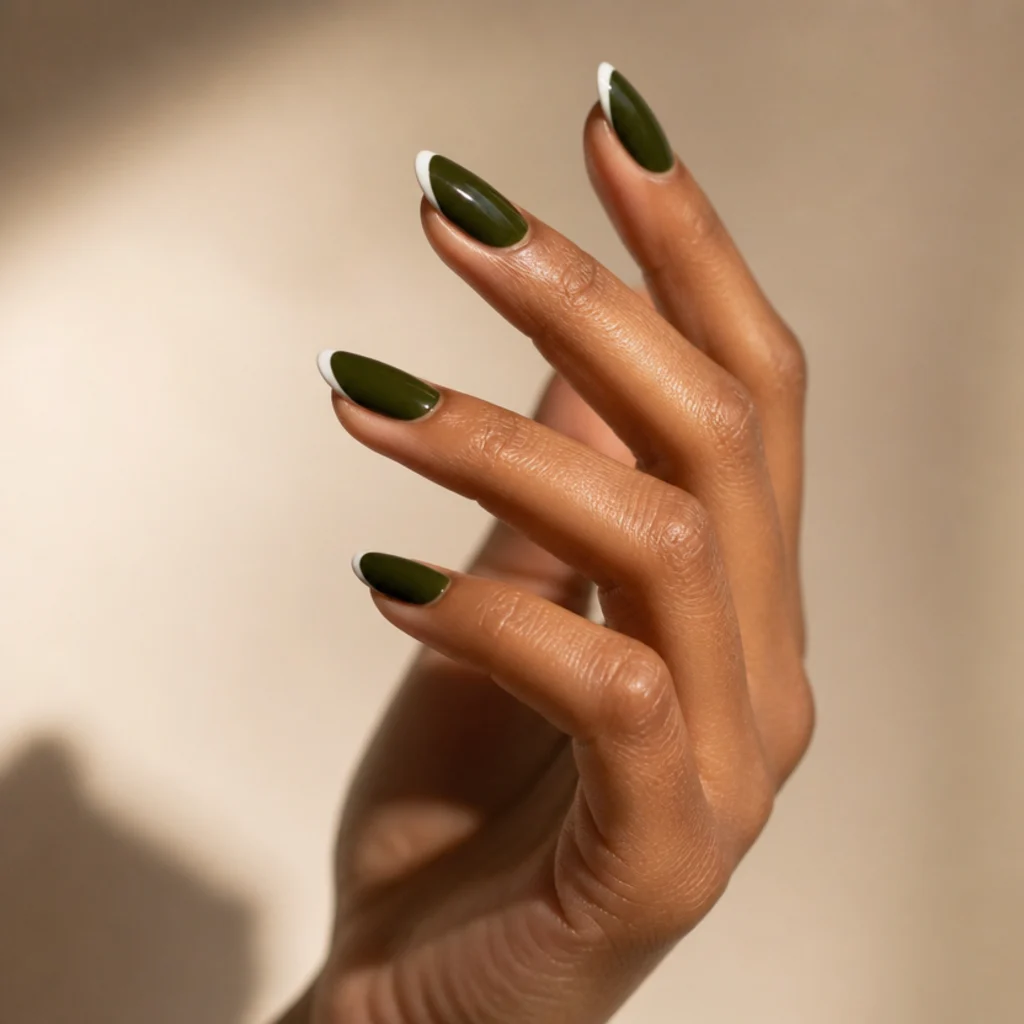
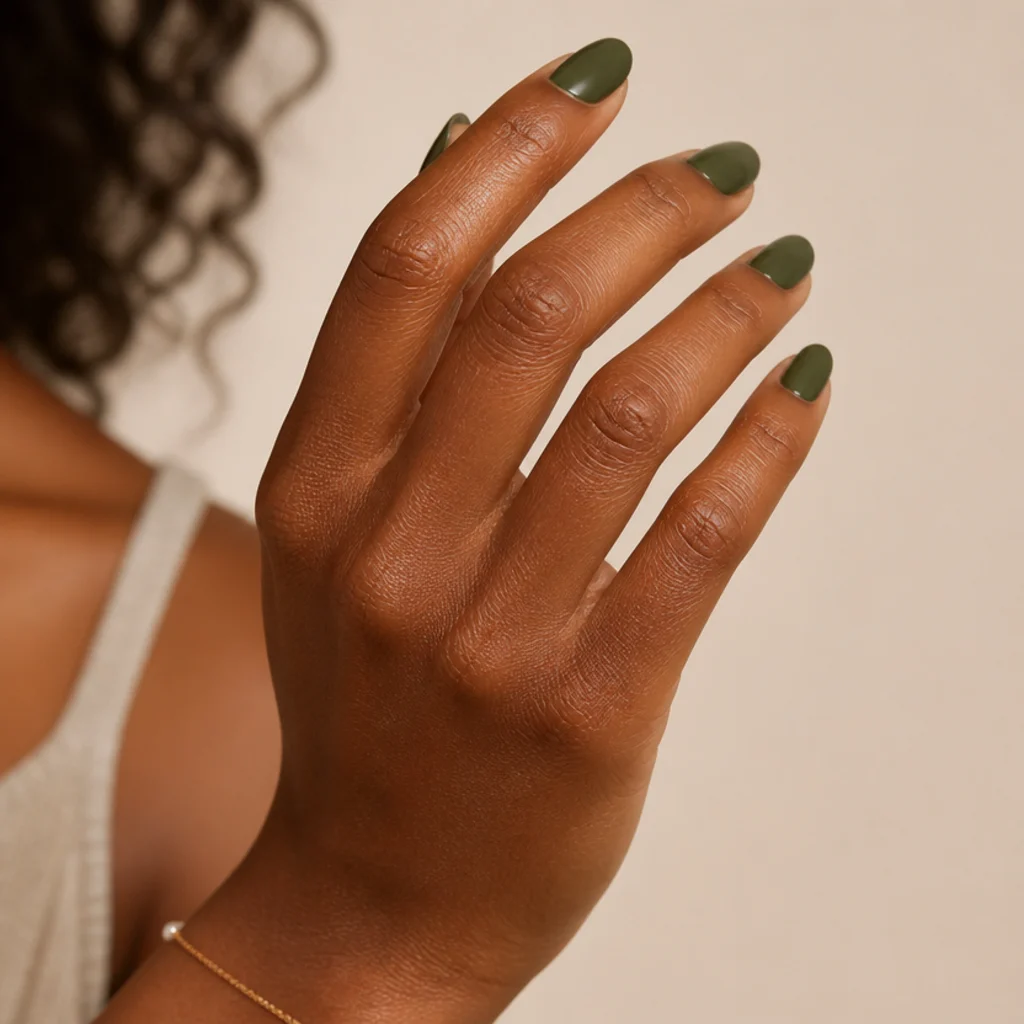
This comparison sticks to three requests people actually bring to the salon, not an endless swatch wall. Dark olive green nails on an almond shape lean polished and elongating, the reliable everyday winner. Olive green acrylic nails go for length, saturation, and staying power, built for anyone hard on their hands. An olive green and white pairing brings contrast and a lighter, seasonal feel that photographs well. Each gets the same honest breakdown below: shade cues, suitability by nail and finger shape, a realistic maintenance timeline, styling, and one pro tip, so you can weigh them against your own hands and routine before you commit.
01Dark Olive Green on Almond Nails
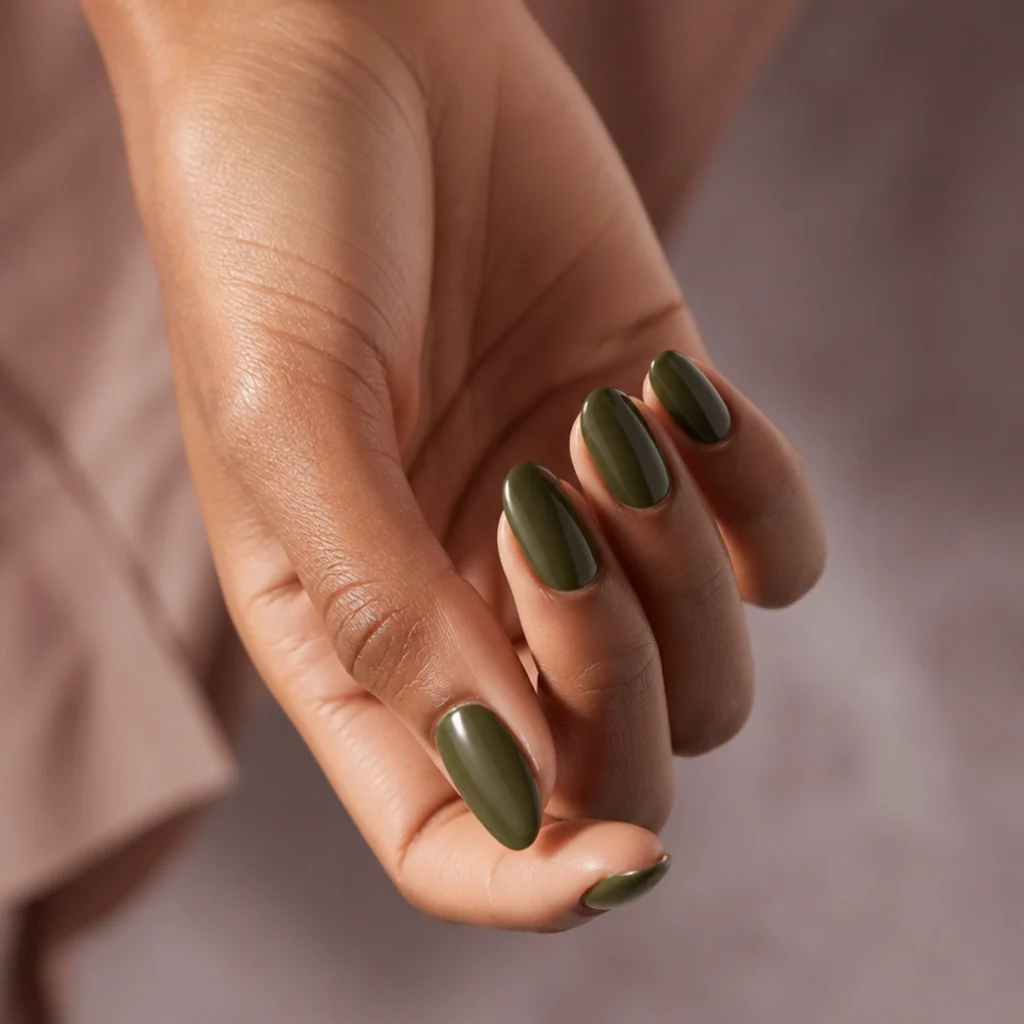
Dark olive green almond nails are the most universally flattering of the three. The tapered almond tip draws the eye lengthwise, slimming wider nail beds and stretching shorter fingers, while a deep, grayed olive stays refined instead of shouting. Aim for a shade with a soft brown-gray undertone rather than a pure green — think uniform down, not neon. This combo works best on medium to long natural nails with a healthy free edge, and it reads well across fair, medium, and deep skin because the muted warmth avoids the harsh contrast a true forest green can throw. Because the color is dark, cuticle regrowth stays subtle, so you can stretch two to three weeks between gel fills or repaints. Keep a glossy top coat for a polished finish, or switch to matte for a moodier, more autumnal read. It flatters warm metals, too; a thin gold band or hoop echoes the olive's undertone. Pro tip: one coat of a sheer olive over a nude base gives a softer, skin-flattering veil if full-depth feels heavy. Ask your nail tech for a soft almond file and a "dark, muted olive, not army green."
02Olive Green Acrylic Nails for Length
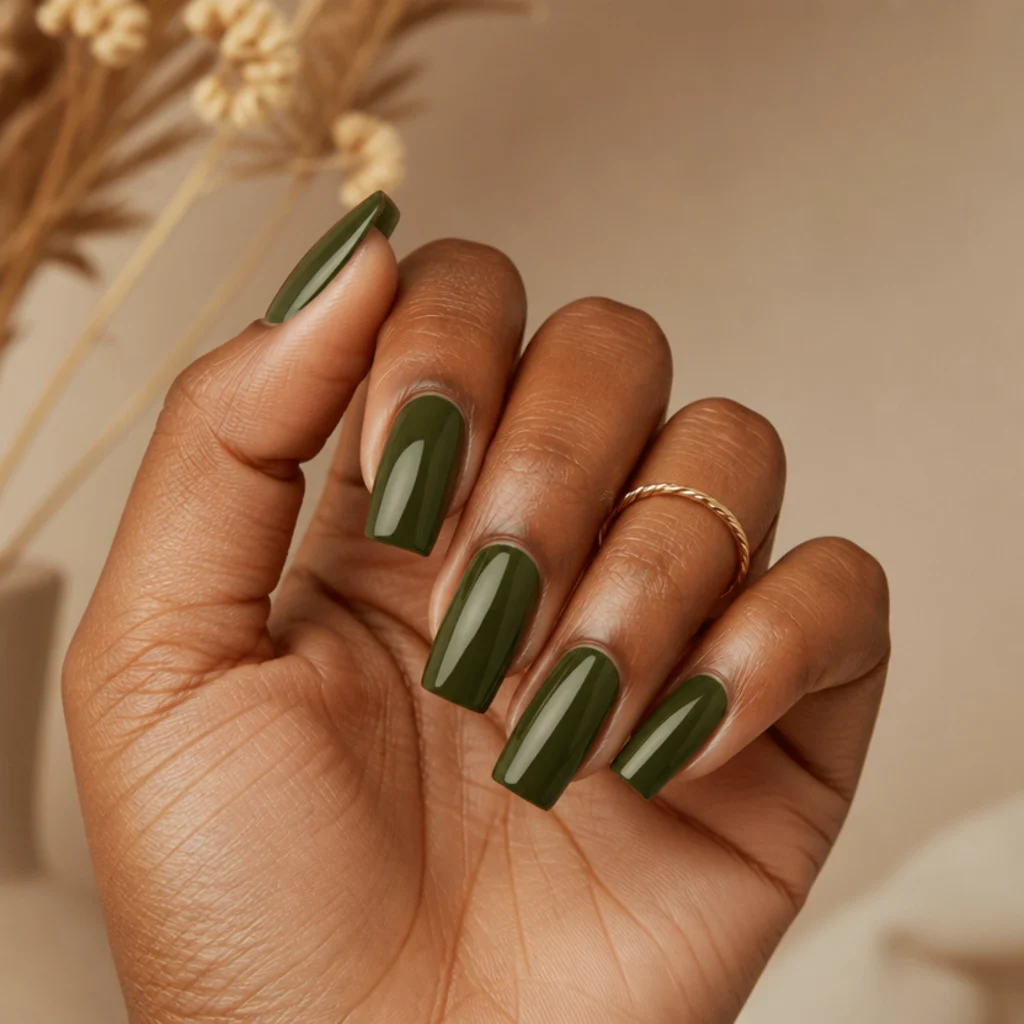
When you want length your natural nails can't reach, olive green acrylic nails give you both extension and durability. The rigid acrylic bed carries a dark olive evenly from cuticle to tip without the thinning or bald edges polish alone can leave on a long nail, so the shade stays saturated across the whole surface. This route suits anyone hard on their hands, typists and gym-goers included, or anyone who wants a bolder canvas for depth and finish play. Shape sets the mood: squoval keeps olive grounded and office-appropriate, coffin turns it editorial, and a long almond splits the difference. Expect more upkeep than natural-nail polish. A fill is due roughly every two to three weeks as growth opens a gap at the cuticle, and because the color is dark, any lifting shows up close, so gentle handling and cuticle oil matter. Difficulty is salon-level; this is a sculpted service, not a quick DIY. Pro tip: a single matte-topped accent nail among glossy olives adds dimension without extra color. Ask your nail tech for your exact shape and a "deep olive, fully opaque, no streaking at the tips," and bring one clear reference photo.
03Olive Green and White Two-Tone
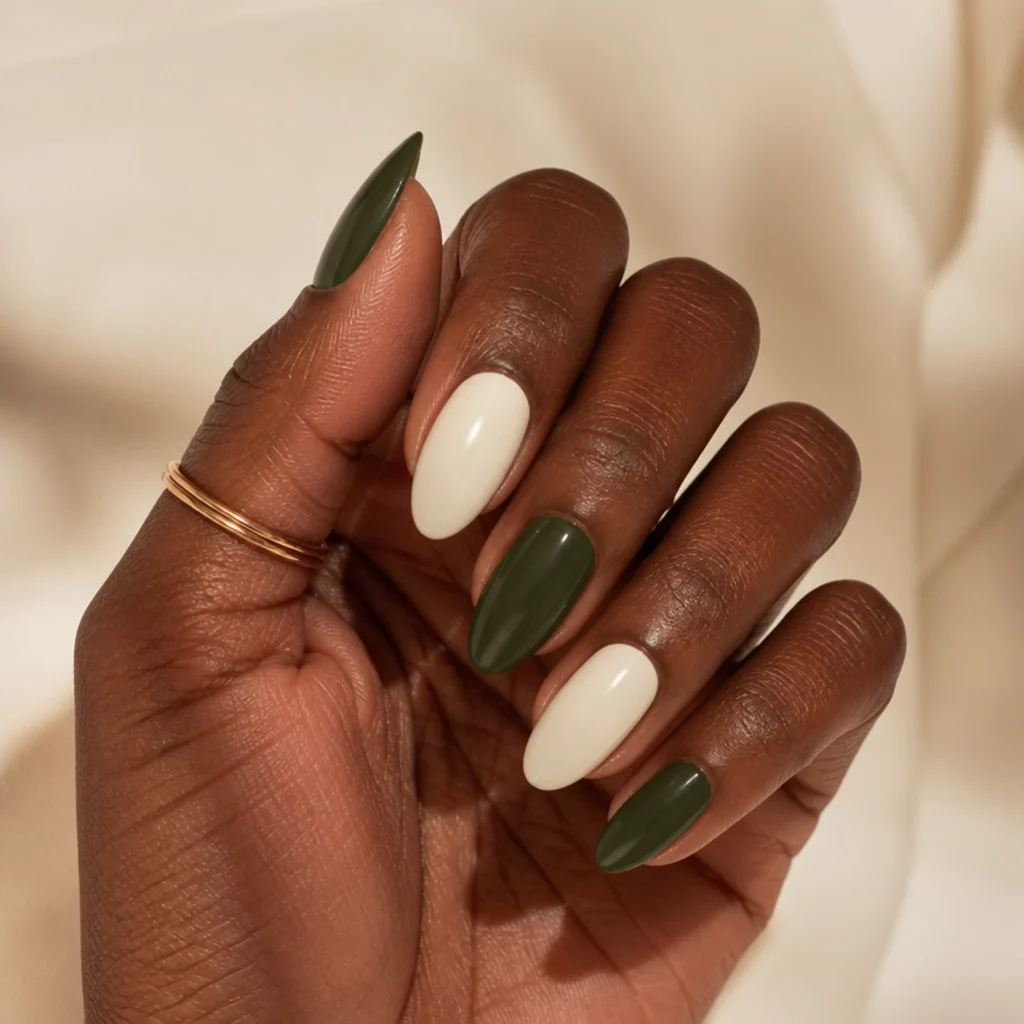
Olive green and white is the freshest, most warm-weather-friendly of the trio, and the contrast is what does the work. Pair a grayed olive with a soft, creamy white rather than a stark optic white; the warmer white keeps the two shades in the same family so the combo reads intentional instead of sporty. You've got real layout freedom here: alternate the two colors finger to finger, run a crisp French-style tip, block half-and-half across the nail, or float a slim olive stripe over white. It photographs well and saves easily on Pinterest for that reason. This is the intermediate pick, because clean two-shade lines demand patience, steady taping, and a fully cured base before the second color goes on. Almond and squoval hold the geometry best; very short nails can crowd a busy layout, so scale the design down. For a softer, airier read, swap the deep olive for light olive green against white. Pro tip: matte white against glossy olive adds quiet dimension without a third color. Ask your nail tech for "olive and cream, one thin clean divide," and mention whether you want the edge sharp or slightly diffused.
Save this to Pinterest so you can compare all three combos at a glance.
Pro Tips from the Editor
- Judge olive in natural daylight, not salon LEDs; warm bulbs pull the pigment yellow-green and can trick you into a shade that skews too bright once you leave.
- Match the shade to your undertone: a drop-of-brown, grayed olive flatters cool, pink-toned hands, while a slightly warmer, mossier olive lifts deeper and olive-toned skin.
- Dark olive is a magnet for tip wear on long nails; ask for the free edge to be capped (top coat wrapped over the tip) to buy a few extra days of clean color.
- For two-tone work, let the base color cure or fully dry before taping the divide, and lay tape from the center outward so polish can't bleed under the edge.
- Cuticle oil is non-negotiable with deep shades; hydrated skin keeps regrowth looking crisp instead of showing a dry, lifting line at the base.
- If you love olive but struggle with upkeep, choose gel over regular polish; the cured surface resists the dulling and chipping that makes dark colors look tired fast.
- Book a soak-off, never a peel; picking off dark gel or acrylic pulls up the top layer of the natural nail and leaves you starting your next set on thinner plates.
Olive Green Combos at a Glance
| Combo | Best nail shape | Typical wear | Upkeep effort | Difficulty | Best season |
|---|---|---|---|---|---|
| Dark olive on almond | Almond, medium–long | 2–3 weeks (gel) | Low–moderate | Beginner | Year-round |
| Olive acrylic for length | Squoval, coffin, long almond | 3–4 weeks | Moderate–high | Salon-level | Autumn–winter |
| Olive & white two-tone | Almond, squoval | 2–3 weeks | Moderate | Intermediate | Spring–summer |
How to Choose / Get the Look
Start with your natural nail and your lifestyle, then let color follow. Work through it in order. First, length and durability: if your nails are short, prone to breaking, or you're hard on your hands, acrylic or gel-X extensions in a deep olive give you a stable, saturated canvas; if your natural nails are healthy and medium-length, a gel or polish olive on your own plate keeps things lower-maintenance. Second, shape: almond flatters the widest range and elongates the finger, squoval keeps the look grounded and professional, and coffin pushes it editorial. Third, upkeep tolerance: dark olive forgives two to three weeks of regrowth, while pale sage and any two-tone edge reveal wear sooner and reward tidier hands.
Undertone is the tiebreaker. A grayed, muted olive flatters both warm and cool skin, but a very yellow-leaning olive can wash out fair, cool-toned hands, so swatch a single nail before committing the set. Finish sets the register: glossy reads polished and modern, matte reads earthy and soft. When you book, hand your tech four things: depth ("dark olive" versus "light olive green"), shape, finish, and one saved reference photo. That combination clears up almost all the guesswork and gets you the olive in your head instead of the one on the shelf.
Frequently Asked Questions
Do olive green nails suit every skin tone?
A muted, grayed olive is one of the most adaptable greens because it sits between warm and cool undertones instead of clashing with either. Fair, cool-toned hands usually look best in a slightly deeper, browner olive that adds contrast, while medium, olive, and deep skin can carry both dark and light versions with ease. The shades to approach carefully are very yellow or neon-leaning olives, which can flatten cooler complexions.
Are dark olive green nails hard to maintain?
Not especially, and that's part of the appeal. Because the shade is dark, regrowth at the cuticle is far less obvious than with pale colors, so many people stretch two to three weeks between touch-ups on natural nails or a gel finish. The main upkeep issue is tip wear, which shows on long nails, so ask for the free edge to be capped and keep a top coat on hand for a quick refresh.
Which nail shape works best with olive green?
Almond is the reliable, elongating choice and flatters the most hands, but olive also suits squoval and coffin. Longer shapes give acrylic and gel-X versions room to show the color's depth and any finish contrast, while a shorter almond keeps the look tidy and everyday-friendly. Match the shape to how much length you actually want to maintain, not just the mood of the photo.
Can I get an olive green and white look at home?
Yes, though clean lines take patience. Let the base color dry or cure completely, then use thin nail tape or a fine striping brush for the divide, working from the center of the nail outward so polish can't bleed under the edge. Finish with a top coat to seal both shades. Light olive green with a creamy white is the most forgiving beginner pairing because a slightly soft edge still looks intentional.
What is the difference between light and dark olive green nails?
Light olive green leans soft, sage-like, and airy, which suits warmer months and subtle, skin-flattering looks. Dark olive green reads richer and more tailored, disguises regrowth better, and pairs cleanly with both gold and silver accessories. If you want one olive that works year-round, dark is the safer buy; if you want a distinctly spring-summer feel, reach for the lighter sage.
Should I choose gel, acrylic, or regular polish for olive green?
Regular polish is cheapest and easiest to change, but dark olive dulls and chips faster on it, so it suits short-term looks. Gel gives a durable, high-shine two-to-three-week wear on your natural nails and is the sweet spot for most people. Acrylic and gel-X are the pick when you want added length and maximum durability, at the cost of higher upkeep and a required salon soak-off.
Does olive green look better glossy or matte?
Both work; they just set a different tone. Glossy top coat makes olive read polished, modern, and a touch dressier, and it deepens the pigment so the color looks richer. Matte pulls olive toward earthy, soft, and autumnal, and it plays especially well in a two-tone design where a matte white sits against glossy olive. Choose by mood, and remember matte finishes show fingerprints and dust more, so they need a quick buff to stay clean.
How do I keep dark olive polish from staining my natural nails?
Always use a clear base coat before any dark or pigment-heavy color; it sits between the polish and the plate so the stain can't set into the keratin. Avoid soaking freshly painted nails in hot water, and when you remove the color, press an acetone-soaked pad and hold rather than scrubbing back and forth. If a faint tint lingers, a gentle buff and a few days of cuticle oil usually clear it.
What colors and outfits pair well with olive green nails?
Olive is a natural neutral, so it flatters more than it fights. It sits beautifully against cream, camel, rust, chocolate brown, and denim, and it makes warm metals like gold and bronze jewelry glow. For contrast, burgundy, terracotta, and dusty pink all complement it. If you want your nails to feel seasonal, lean the olive lighter and pair with pastels in spring, or go deep and matte with knits and boots in autumn.