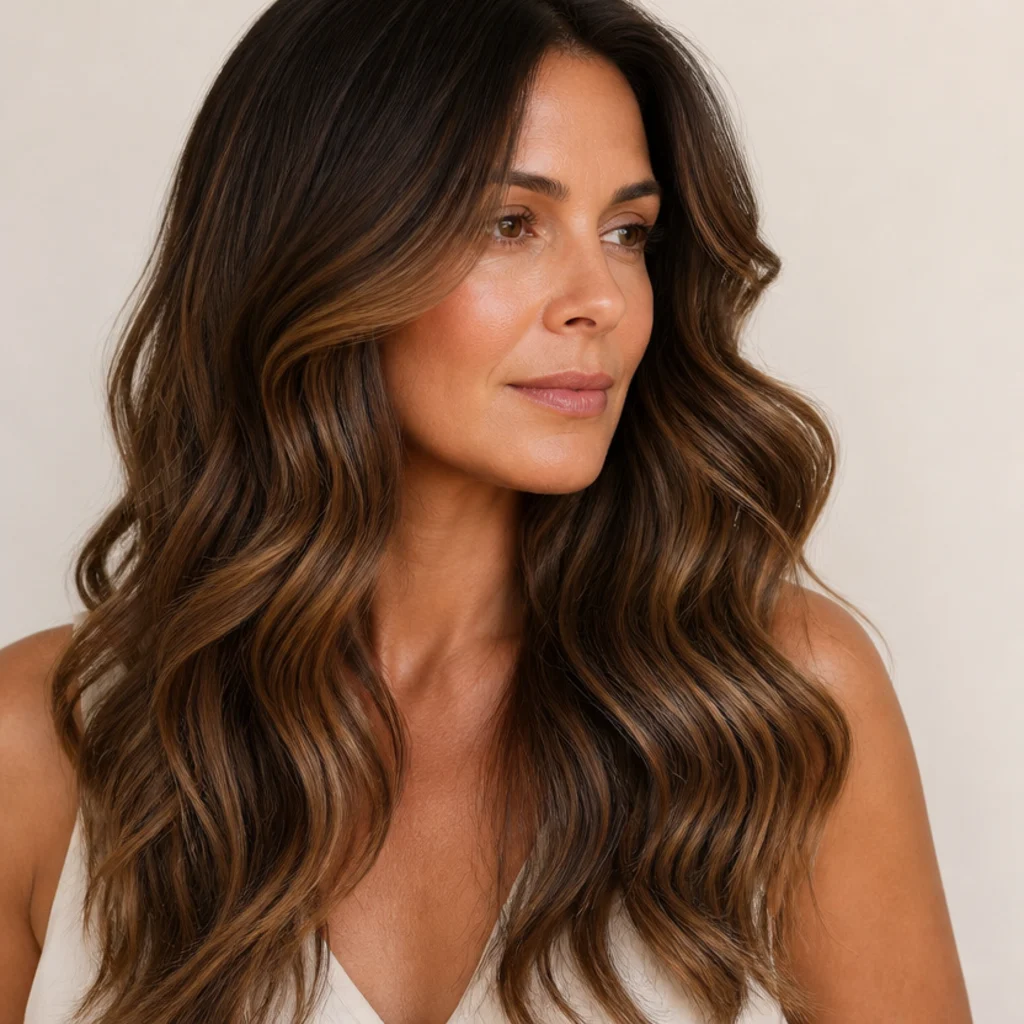
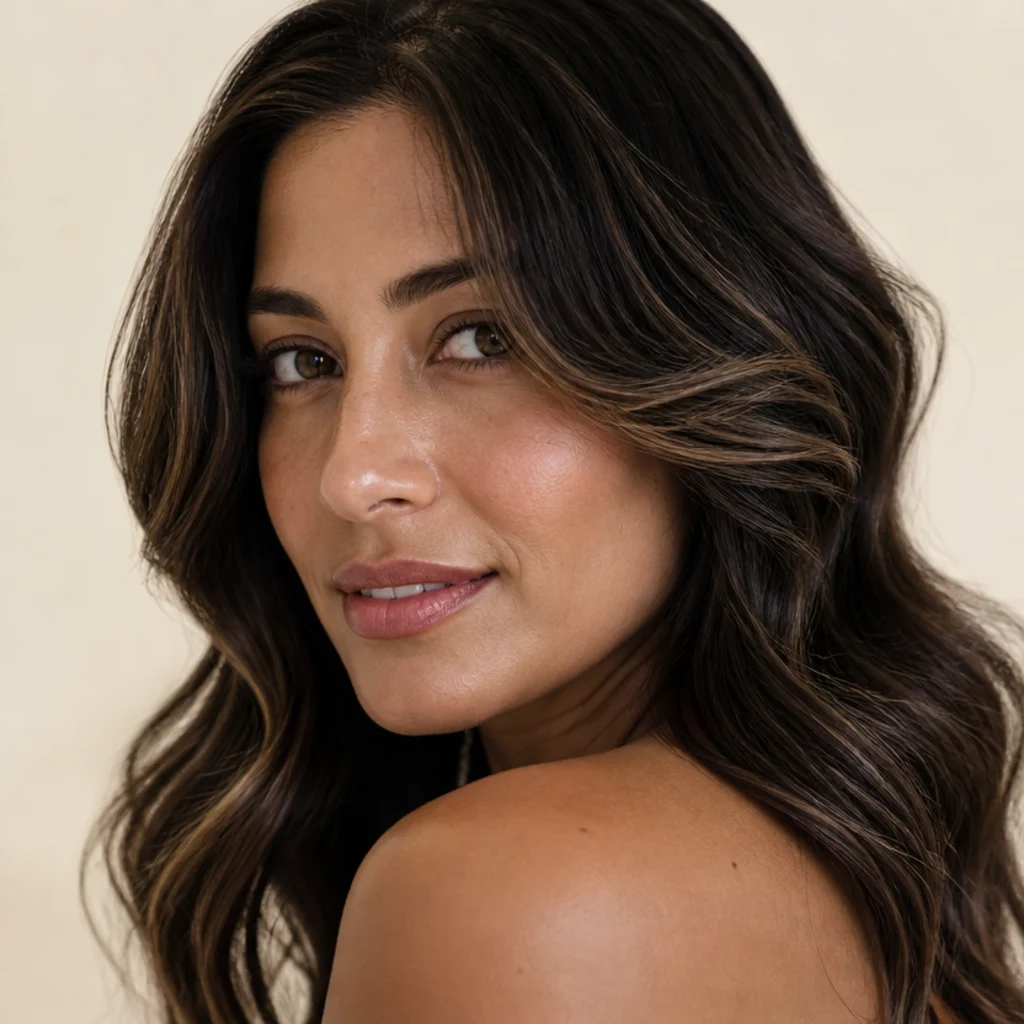
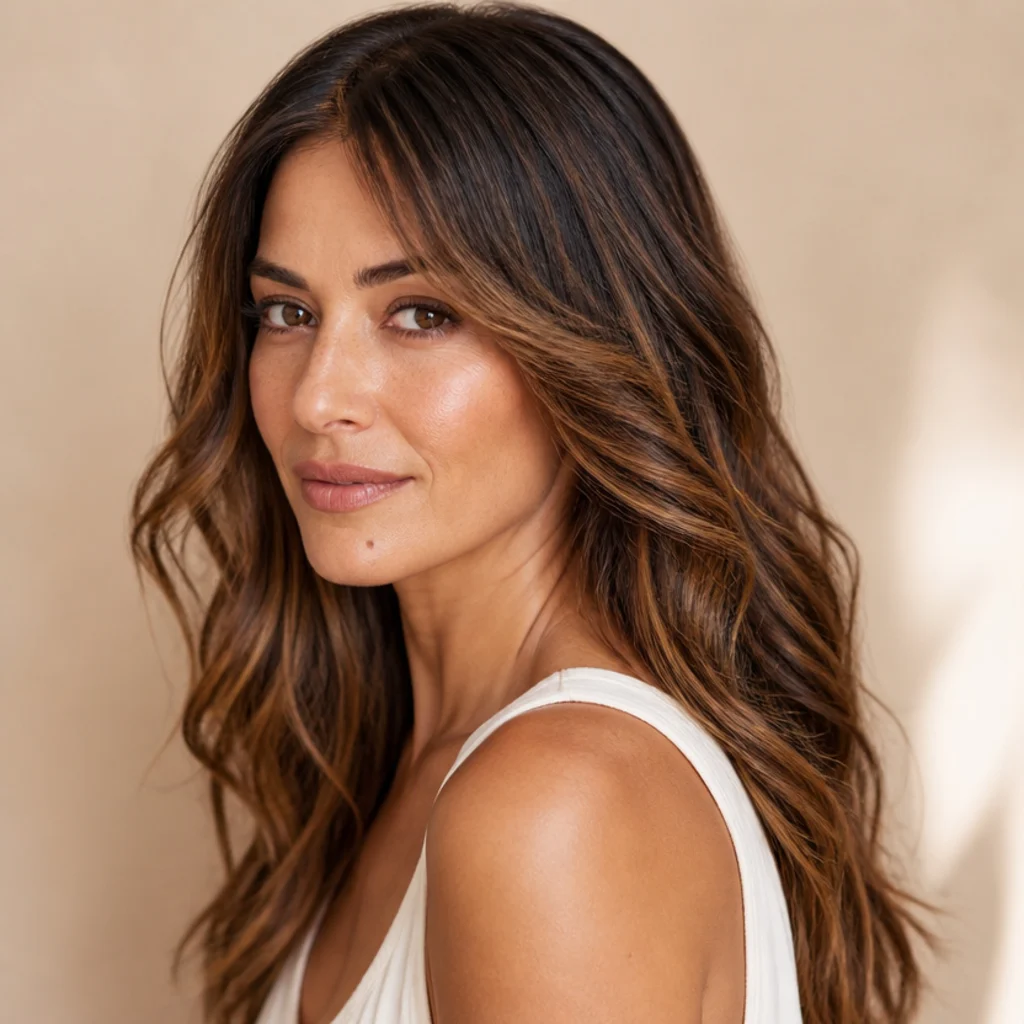
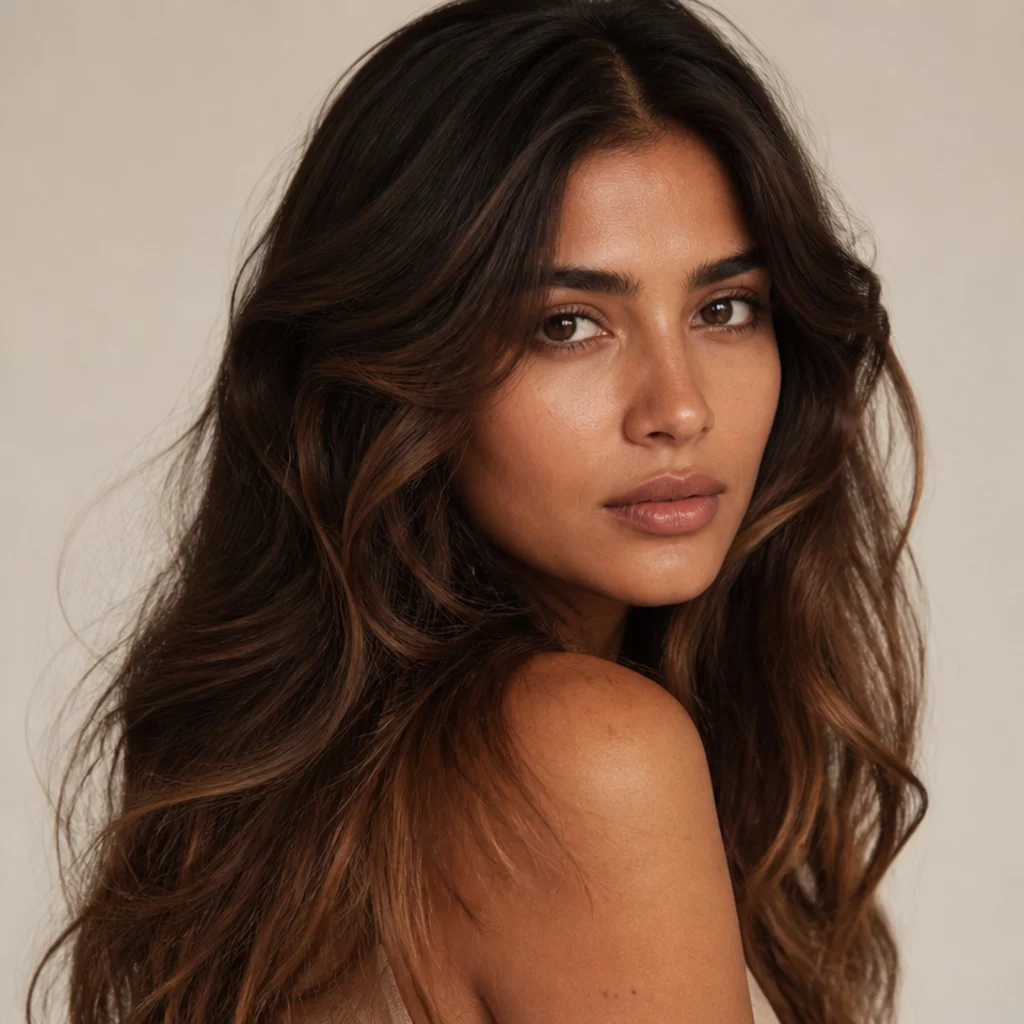
25 Gorgeous Soft Dimensional Brunette Looks
Soft dimensional brunette trades hard, ribboned highlights for feathered, tone-on-tone movement, so brown hair reads lit from within instead of striped. This guide breaks down 25 distinct takes, the exact tones and placement behind each, who they flatter, and the precise words to bring to your colorist.
 Edited by Lena Rose · Published July 11, 2026 · 35 min read
Quick Answer
- Best for: Natural or color-treated brown hair (levels 3-6) that wants blended depth and glow without a harsh, high-contrast grow-out line.
- Who might skip it: Anyone chasing a bright, obvious highlight or a stark platinum money piece, and virgin-dark heads unwilling to commit to gradual lightening over more than one session.
- Maintenance: Low to moderate. Root-melted and lived-in balayage placements stretch 12-16 weeks; face-framing, money-piece, and glossed finishes want a refresh every 6-8 weeks, with a gloss between full services.
- Difficulty: Salon-recommended for smooth multi-tonal blending and dry curl painting; a single soft face-frame or an all-over gloss is a lower-lift ask.
- Cost: Varies widely by region and technique. A gloss or toner sits at the low end, a partial balayage mid-range, and a full balayage plus tone at the high end; corrective sessions on dark virgin hair cost more and take longer.
- Wear time / longevity: Placement lasts 3-4 months; tone fades faster, usually 4-8 weeks, which is why glosses do the heavy lifting between appointments.
- Standout variation: Creamy caramel balayage melted into a cocoa root for that lit-from-within softness.
- How to ask your colorist: Lead with "soft, melted, low-contrast, no harsh money piece," name your base level and target tone, and point to exactly where you want brightness.
In This Guide
- Creamy Caramel Balayage
- Cocoa Root Melt
- Soft Mushroom Brown
- Honey-Kissed Face Frame
- Espresso With Warm Ribbons
- Golden Bronde Melt
- Soft Chestnut Babylights
- Toasted Almond Brunette
- Dark Dimensional Brunette Shadow
- Vanilla Chai Money Piece
- Beachy Sand Brunette
- Soft Bob With Diffused Dimension
- Warm Toffee Curtain Bangs
- Cool Ash Brunette Blend
- Cinnamon Glaze Brunette
- Soft Bronde Ombre for Long Hair
- Rooty Latte Brunette
- Muted Mocha Lowlights
- Soft Copper-Brown Warmth
- Dimensional Brunette Curls
- Smoky Truffle Brunette
- Sun-Faded Ends Melt
- Soft Dimensional Brunette Shag
- Praline Balayage Long Layers
- Glossy Soft Dark Brunette
Intro
Flat brown reads one-note, but a gorgeous soft dimensional brunette layers light and shadow so gently that the color seems to breathe. The mechanism is contrast control: instead of bold, evenly spaced ribbons, a soft dimensional brunette relies on feathered babylights, hand-painted balayage, and a blurred or shadowed root so no hard line of demarcation ever surfaces as it grows out. Colorists build the depth tone-on-tone, keeping the lightest and darkest pieces within two to three levels of each other, which is exactly what makes the result read expensive rather than obvious.
That softness is also what makes the look so wearable across the board. Because the contrast stays low, it works on warm, cool, and neutral undertones once the tone's dialed in, and it forgives fine, thick, straight, and curly textures alike. Right now the demand is skewing lived-in and root-heavy, driven by anyone stretching salon visits without sacrificing polish.
Below are 25 distinct takes, from creamy caramel and vanilla chai to smoky truffle and glossy dark brunette. Some lean warm, some cool, some are barely-there face-frames and others full dimensional brunette balayage. For each, I note the exact tones, who it suits, how much upkeep to plan for, and the precise language to bring so you leave with the depth you actually pictured.
01Creamy Caramel Balayage
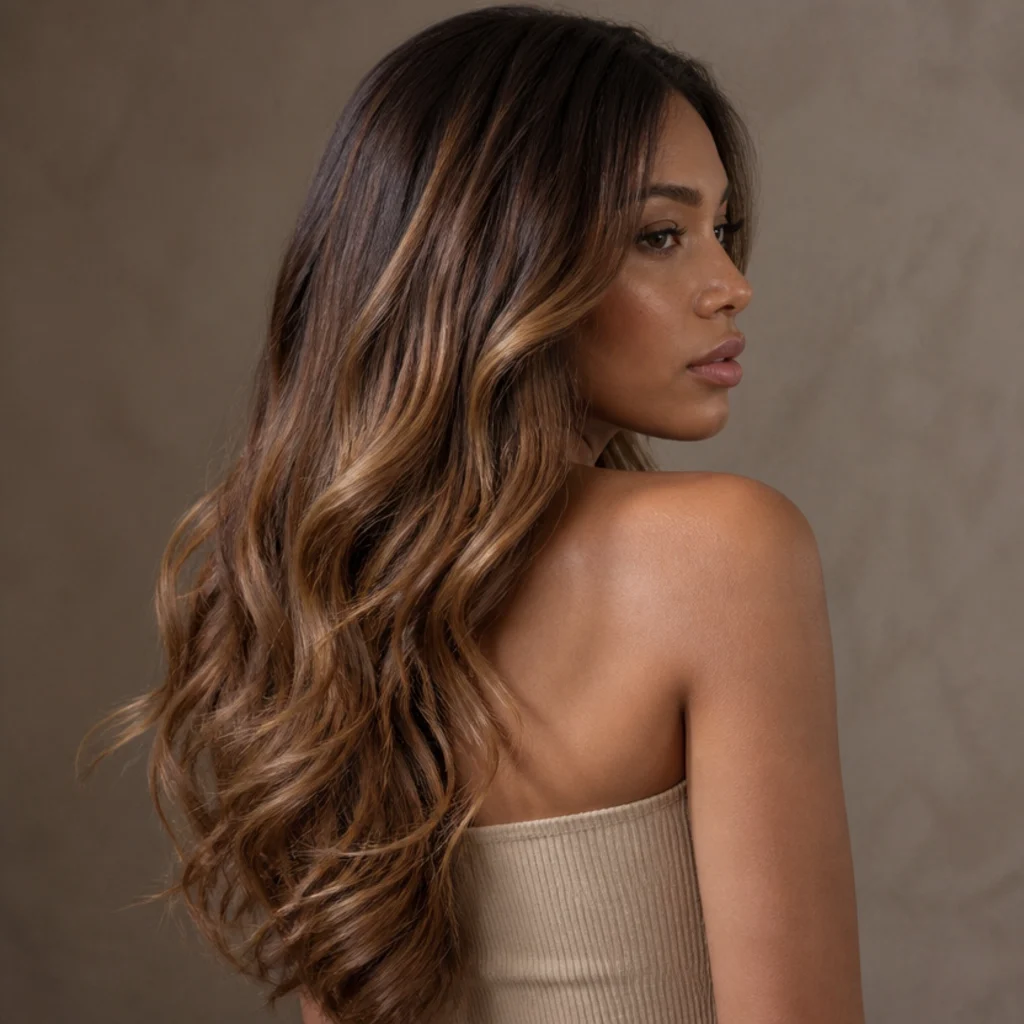
This is the reference point for soft dimensional brunette: a cool-to-neutral cocoa base (around level 4-5) painted with creamy caramel that lands buttery, not brassy, because it stays a warm-neutral rather than a true gold. The balayage is feathered open mid-shaft and saturated toward the ends in a teardrop pattern, so grow-out looks intentional instead of stripey. Warm and neutral undertones suit it best, and it reads nicest on medium-to-long hair with loose waves that bend light across the tonal shift; on poker-straight hair, ask your colorist to keep the ribbons finer so they don't flatten into bands. Upkeep is low: a toning gloss every 8-10 weeks holds the caramel creamy, with a full balayage stretch to 14-16 weeks. Pro tip: book the gloss on its own between painting sessions to double the life of the color without extra lightening. Ask for "a soft, melted caramel balayage on a cocoa base, no harsh money piece, blended teardrop placement kept neutral-warm."
02Cocoa Root Melt
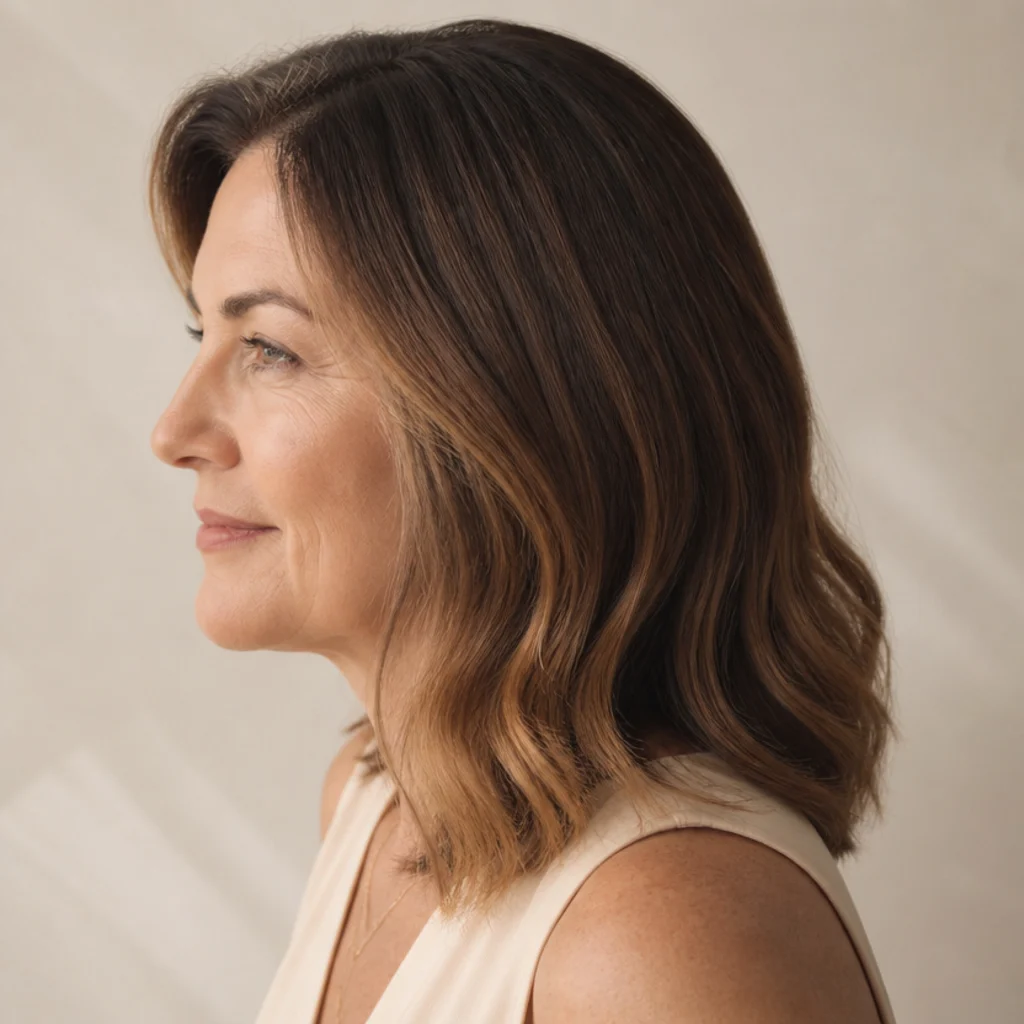
A root melt is where softness begins. Your natural or deepened cocoa root (level 3-4) is dragged and blurred down into slightly warmer chestnut lengths so there is no line of demarcation, giving quiet, glowing dimension that grows in rather than out. This is ideal if you love depth but hate a maintenance-heavy regrowth, since the dark root is meant to be there and extends naturally over time. Nearly every skin tone and length works with it, though it's especially elegant on a mid-length lob where the gradient has a clear start and end. Expect very low upkeep, often 12-16 weeks between services, with an optional gloss to refresh mid-length tone. Pro tip: ask for the melt to sit a touch higher than your part expects, so a shifted part never exposes a stripe. Tell your colorist you want "a soft cocoa root melt, shadow root blurred into warmer lengths, not a solid block," and bring a photo showing the gradient rather than a defined ombre.
03Soft Mushroom Brown
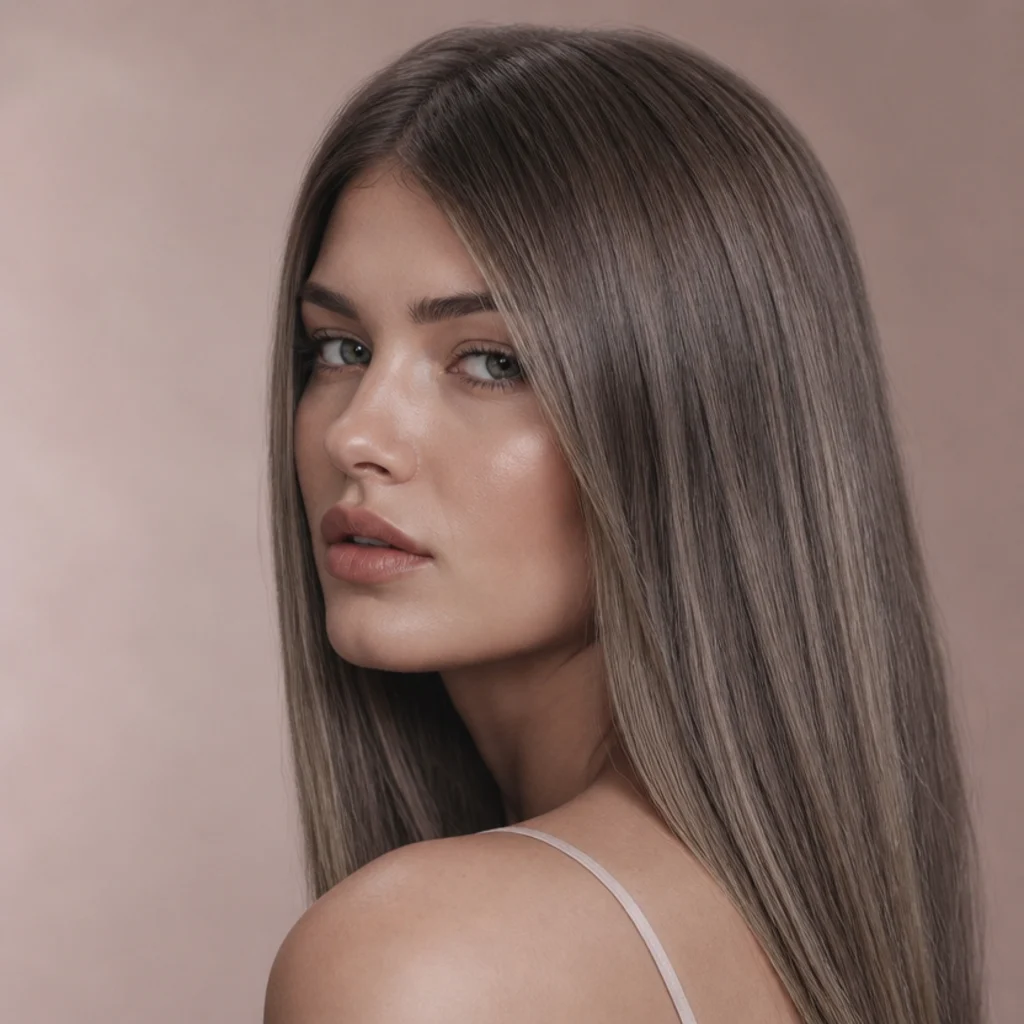
Mushroom brown blends cool ash and soft taupe for a muted, sophisticated dimensional brunette that never veers warm. The dimension is deliberately subtle, built from low-contrast babylights placed within a level or two of the base so it adds movement without brightness. It's a smart pick for cool or neutral undertones and anyone who finds gold clashes with their complexion or their eye color. Because it's low-contrast, it grows out gracefully, but ash is the first tone to fade warm, so a cool-toning gloss every 6-8 weeks is what keeps it true taupe rather than muddy. On fine or thin hair, mushroom brown is quietly clever: the closely spaced tonal shifts read as depth and density where a bold highlight would only expose scalp. Pro tip: fold in a violet-based purple shampoo once a week to slow the warm shift between glosses. Ask your colorist for "a cool mushroom brown with soft ash babylights, low contrast, toned to stay neutral rather than warm."
04Honey-Kissed Face Frame
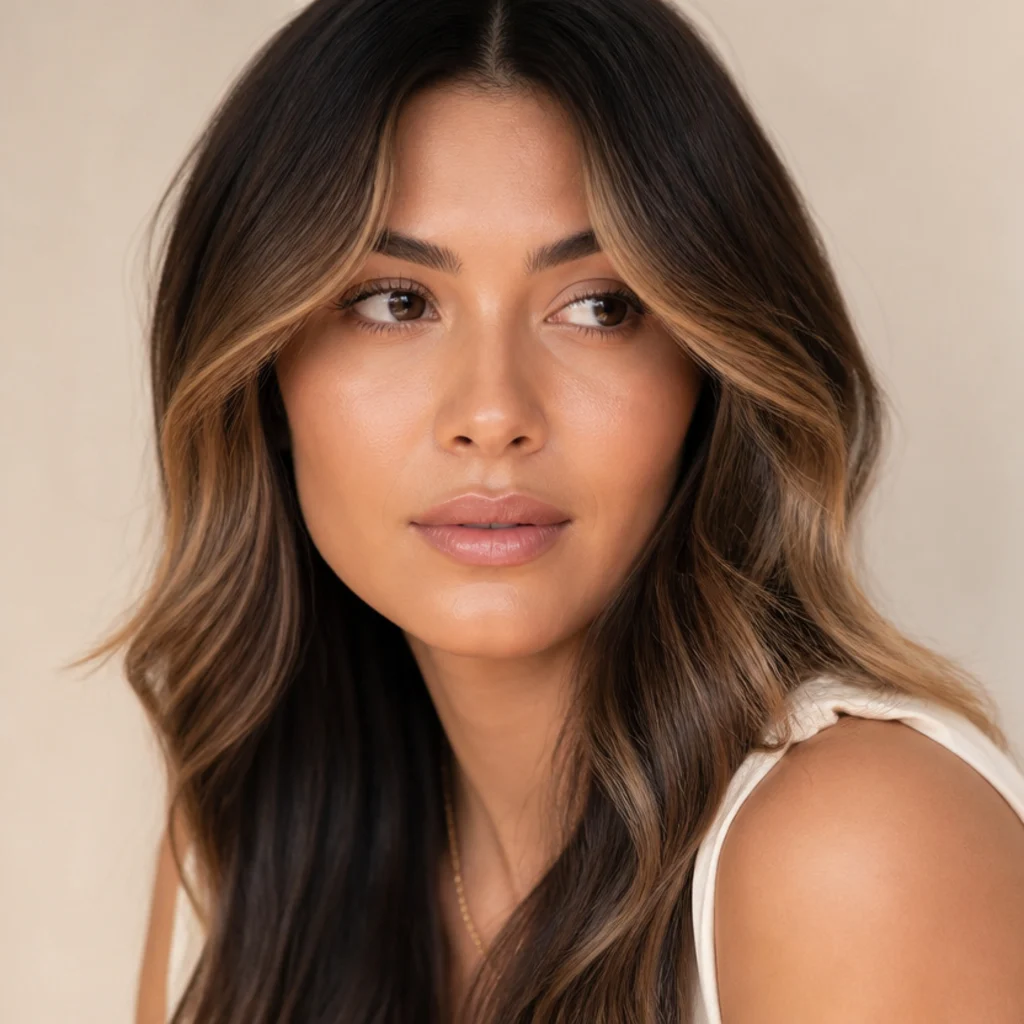
If you want the least commitment for the most payoff, a soft honey face frame delivers glow exactly where light hits. Rather than a blocky money piece, this is a diffused brightening around the hairline that melts back into the base by the cheekbone, so it flatters the face without carving a hard border. It's a great entry point into dimensional brunette highlights and a low-lift salon ask that many colorists can do in under two hours. Warm skin tones glow with honey; cooler tones should swap to a soft beige to avoid a sallow cast. Upkeep is moderate because the face frame sits where regrowth shows most, so plan a touch-up around 8 weeks. Pro tip: ask for the brightest pieces to start below the part line, not at the root, so grow-out stays soft. Ask for "a soft, melted honey face frame, diffused not blocky, brightest below the part and blended into my natural brown."
05Espresso With Warm Ribbons
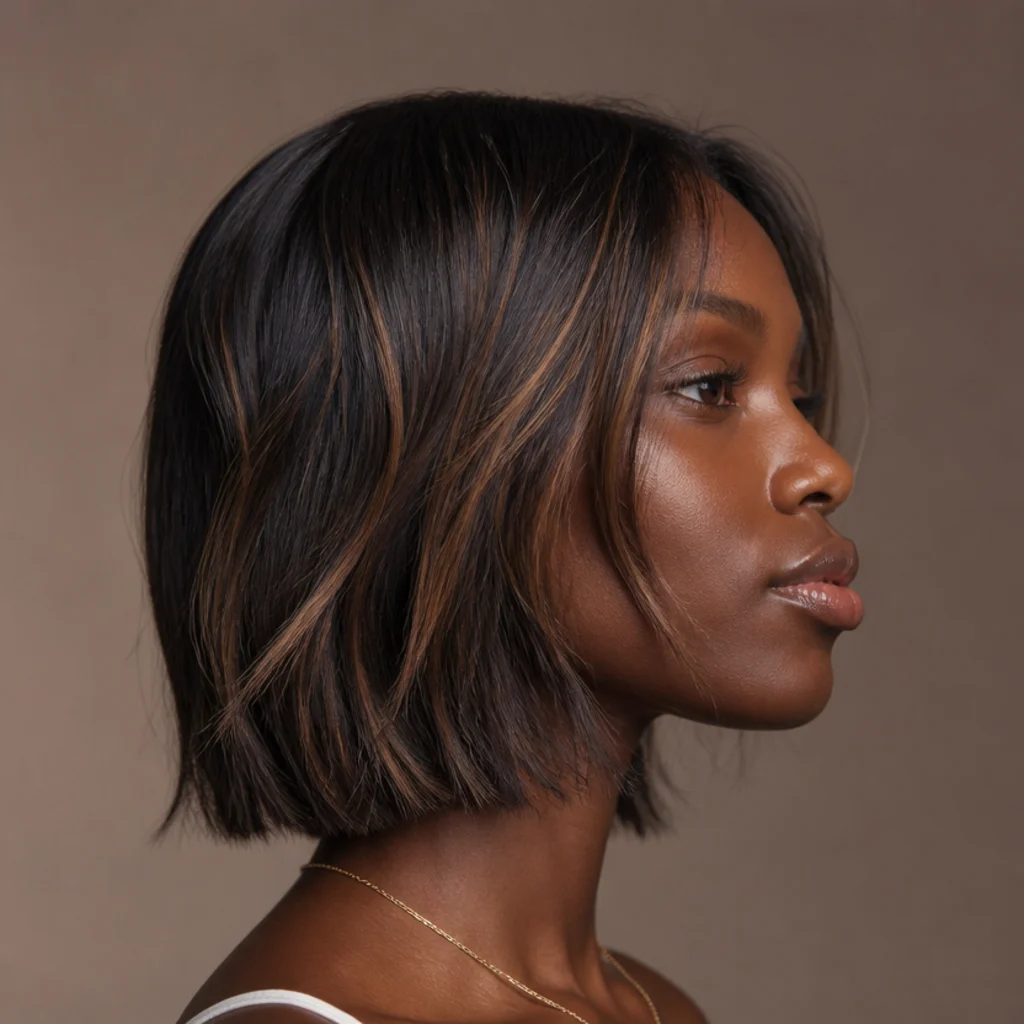
For deeper hair that still wants movement, espresso with warm ribbons keeps the base rich and low-maintenance while fine, warm strands add a controlled glow. The ribbons are placed sparingly and feathered so the look stays dark and polished, just not flat, and because they sit close to the base level, they never announce themselves as highlights. Deep skin tones look especially good with this, and it's forgiving on regrowth since espresso sits close to most natural browns. Upkeep is low, roughly 12-14 weeks, with an occasional gloss to keep the ribbons from oxidizing brassy. Pro tip: request the ribbons concentrated on the top two sections where light actually lands, so you get maximum shine payoff from minimal lightening. Ask for "a rich espresso base with soft warm caramel ribbons, finely placed on the top sections and blended, keeping it dark and dimensional."
Save this to Pinterest to build your soft dimensional brunette inspiration board.
06Golden Bronde Melt
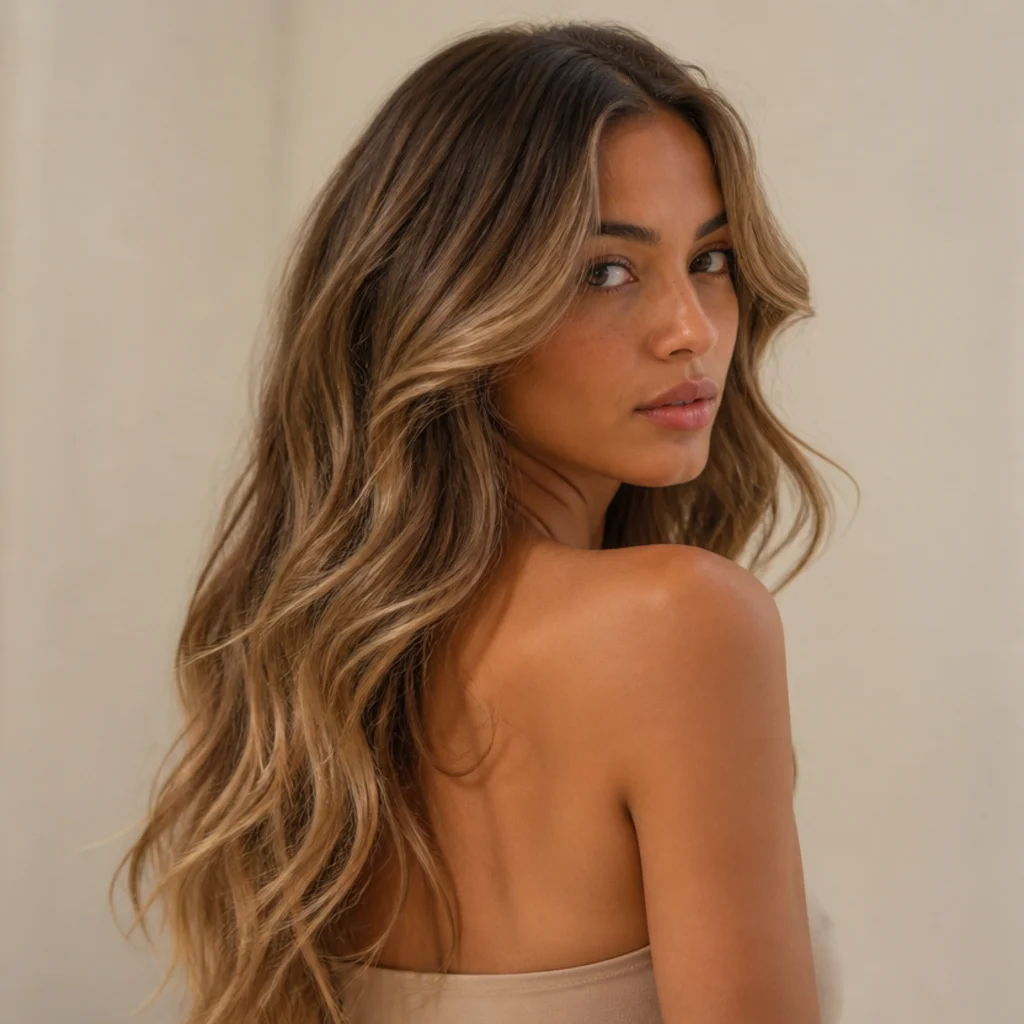
The golden bronde melt sits on the lightest edge of soft dimensional brunette, gliding from a brown root (level 5-6) into warm bronde ends without a defined ombre line. Because it's a true melt with a high, blurred transition point, the gradient reads gradual and sunlit rather than dip-dyed. Warm and olive undertones look richest in this, and long, layered hair gives the fade room to unfold. This is a bigger lift if you're starting dark: expect a longer first appointment, possibly staged over two visits to protect the hair, and a gloss every 8 weeks to keep the bronde from muddying into beige. Pro tip: ask for a warm, gold-leaning toner rather than a neutral one, since bronde ends fade cool and can drift ashy fast. Ask for "a soft brown-to-golden-bronde melt, high blurred transition, smooth gradient with no defined line, kept warm and creamy."
07Soft Chestnut Babylights
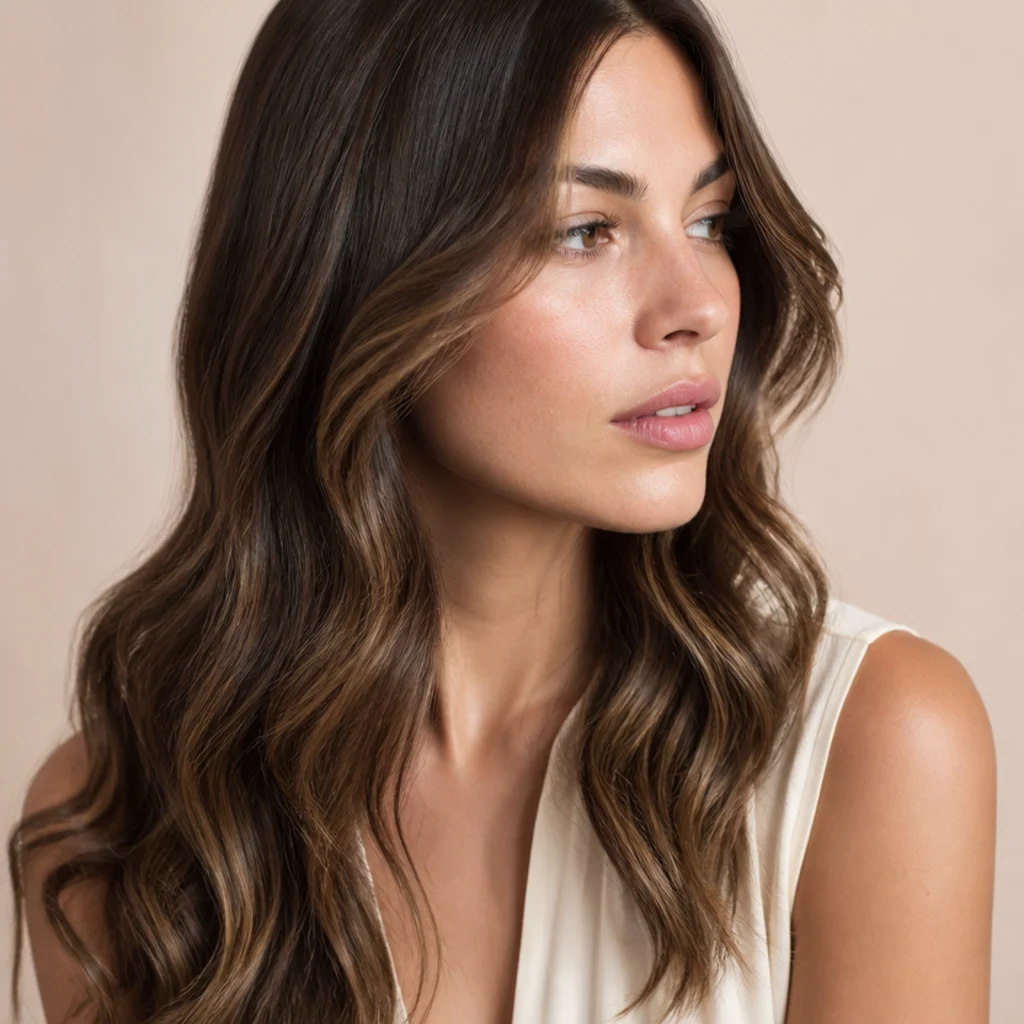
Babylights are the finest highlights a colorist can weave, and on a chestnut base (level 5) they create dimension that mimics childhood sun rather than salon work. This technique is all softness: no chunky pieces, just a delicate veil of lightness threaded through the mids and ends on tiny sections. Neutral to warm tones suit it, and it's long been a favorite for fine or thin hair since those hair-thin strands read as texture and depth without exposing the scalp. Because babylights are subtle, grow-out is gentle, though the fineness means a full refresh every 10-12 weeks to keep the veil visible. Pro tip: on fine hair, ask the colorist to keep babylights off the very crown so the part doesn't wash out and flatten your natural depth. Ask for "soft chestnut babylights, finely woven through the mids and ends for lived-in dimension, nothing chunky or contrasty."
08Toasted Almond Brunette
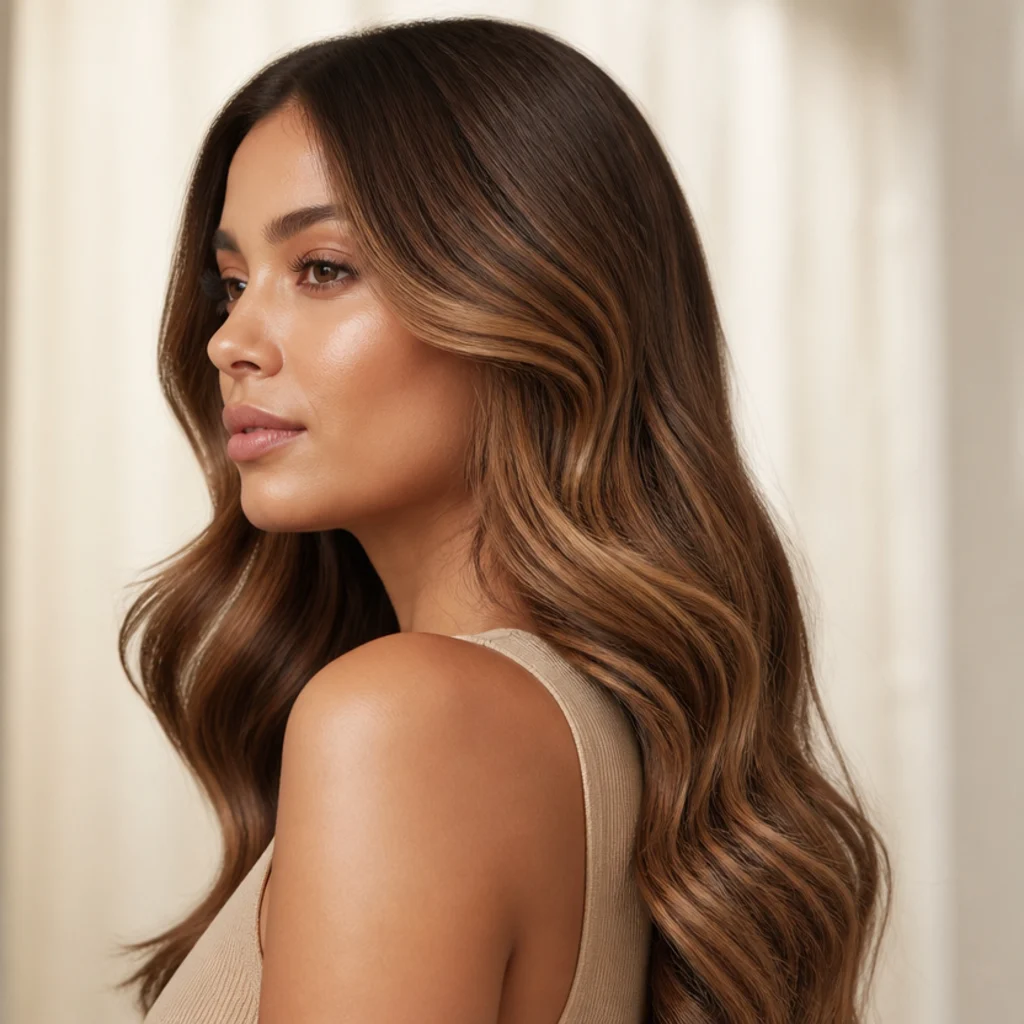
Toasted almond is a warm, golden-beige brunette that glows without tipping into brass, landing around level 6 with a soft neutral-warm balance. It reads expensive because the dimension is tonal rather than high-contrast, built from closely related warm shades melted together instead of distinct highlights. This is lovely on warm and tan skin and gives medium-brown hair a lit-from-within quality that photographs beautifully in natural light. Upkeep is moderate: golden-beige is a fade-prone tone, so a gloss every 6-8 weeks keeps it luminous rather than drab. It's the ideal middle ground if true blonde feels like too much upkeep but flat brown feels dull. Pro tip: pair it with a bond-building treatment at each visit, since the level-6 lift is where dryness starts to show on the ends. Ask for "a warm toasted-almond brunette, golden-beige tone-on-tone dimension, kept soft and blended, no ashy or brassy tones."
09Dark Dimensional Brunette Shadow
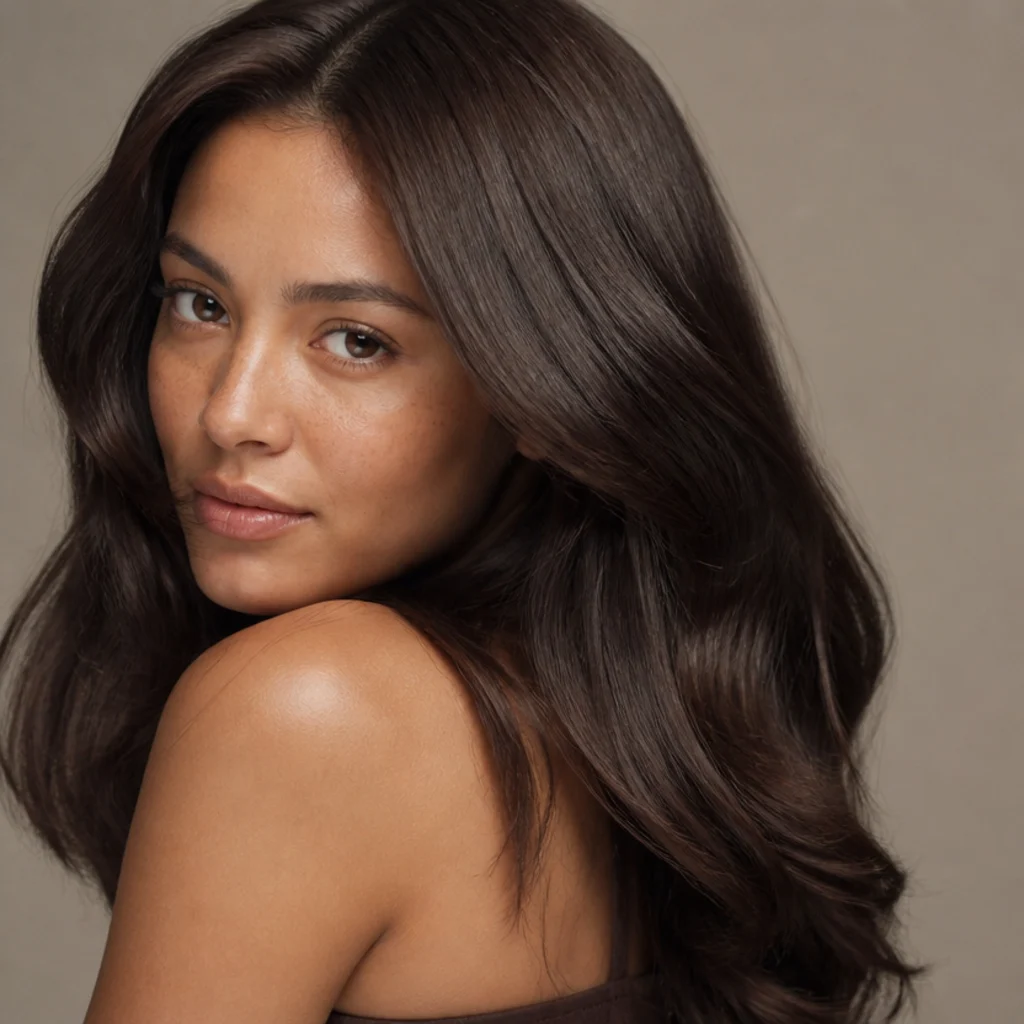
Proof that dark dimensional brunette doesn't mean flat: this look keeps a deep, glossy base (level 3-4) and builds movement purely through tone-on-tone shading and shine. Fine, barely-lighter strands, often just one level up, catch the light so the color moves even though it stays rich and dark. It's the most low-maintenance option here, ideal for anyone who loves depth, works in a polished setting, or is growing out lighter color and wants a soft landing. Every skin tone takes to it, and it hides regrowth almost completely since the lightest pieces sit close to natural. Plan a gloss every 8-10 weeks purely for shine and tone. Pro tip: a clear or same-level shine gloss adds the reflective depth here, so you get the "expensive" effect with zero lift. Ask for "a dark dimensional brunette, tone-on-tone depth and high shine, subtle low-contrast lightness one level up, no visible highlights."
10Vanilla Chai Money Piece
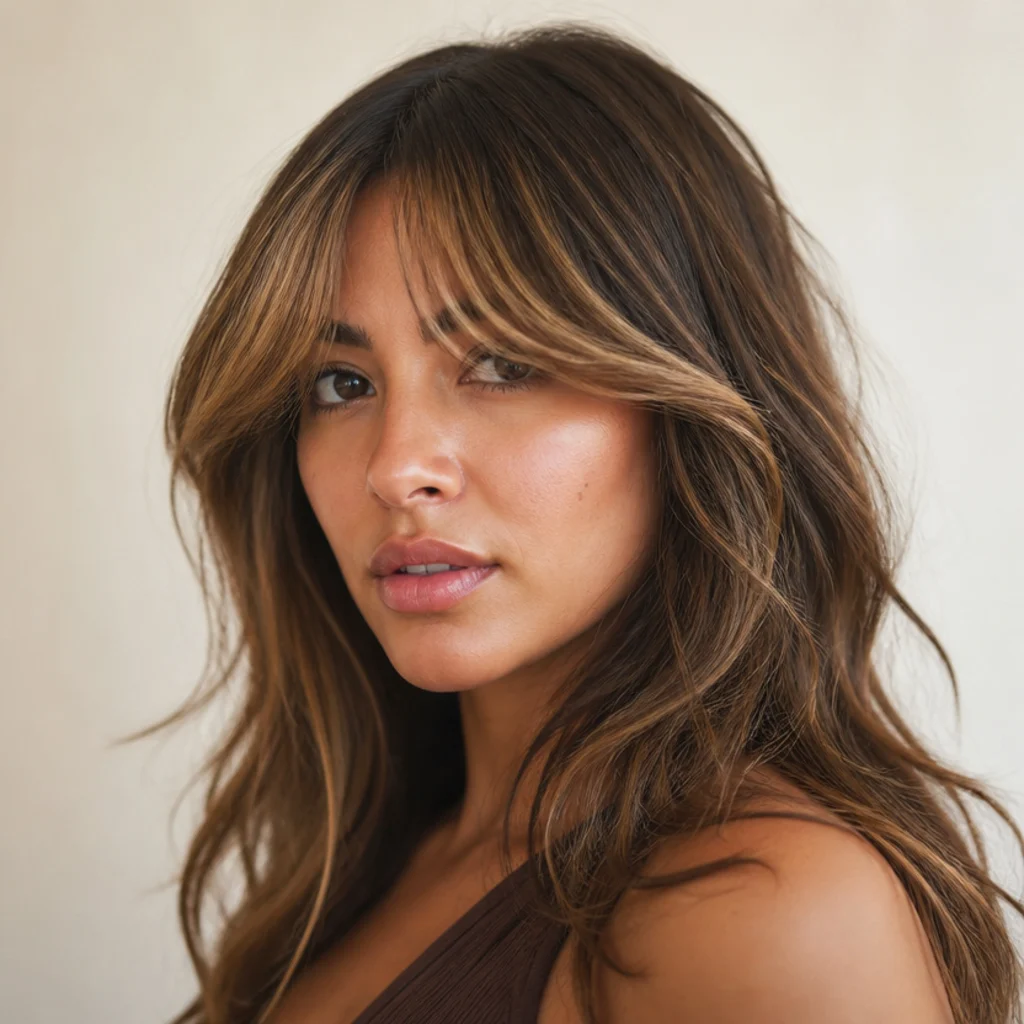
This softens the trendy money piece into something wearable and blended: a creamy vanilla-chai brightness at the front that fades into a spiced warm brown base rather than sitting on top of it. Unlike a stark, blocked money piece, the inner edges are melted so it flatters and frames rather than shocks. It draws light straight to the face and pairs naturally with curtain bangs, which echo the brightness. Warm and neutral tones suit the creamy vanilla; the front placement means a refresh around 7-8 weeks as regrowth reads quickly at the part. Pro tip: ask for the money piece to be teardrop-shaped, narrow at the root and wider toward the ends, so grow-out softens instead of forming a hard root band. Ask for "a soft, melted vanilla-chai money piece on a warm brown base, diffused teardrop edges, not a hard block of contrast."
Save this to Pinterest so your stylist can see the exact softness you want.
11Beachy Sand Brunette
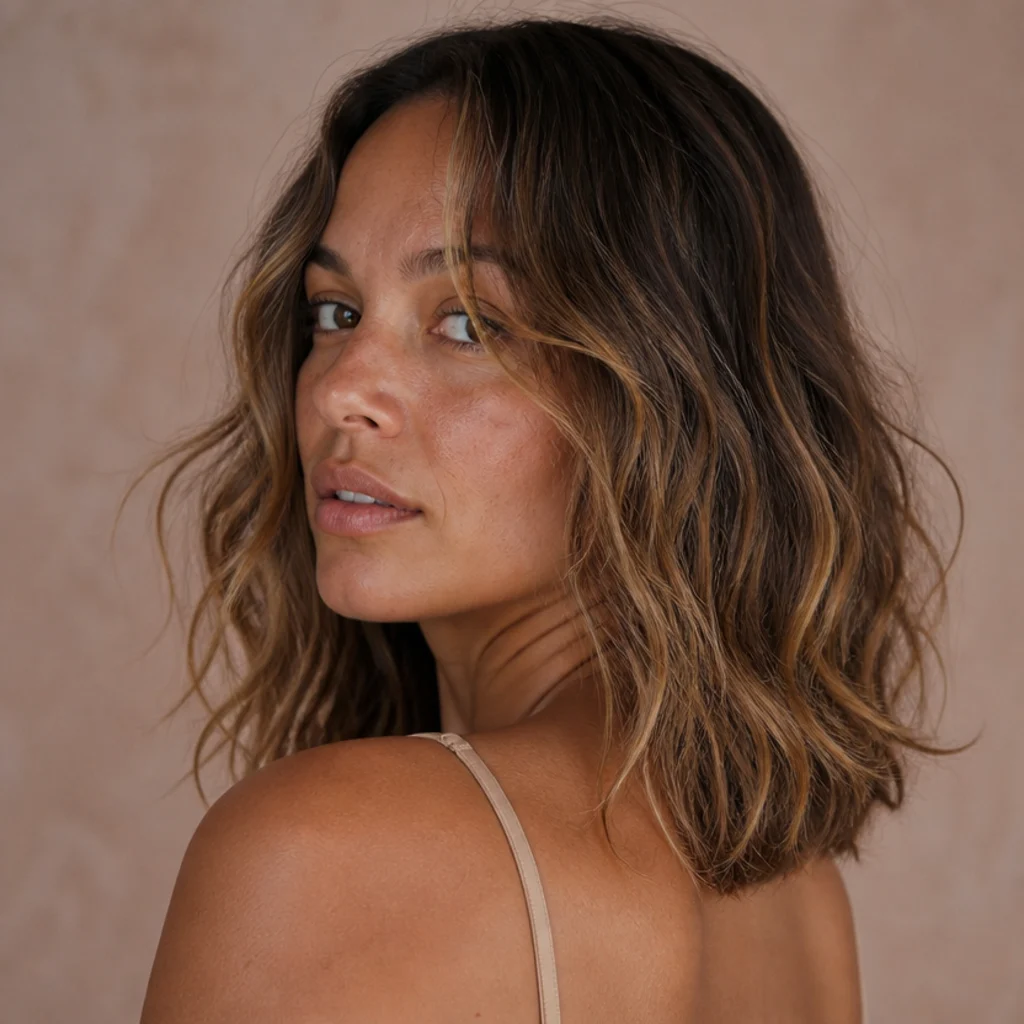
Beachy sand brunette mimics the way hair naturally lightens after a summer outdoors: soft, sandy pieces concentrated around the face and through the ends, over a slightly deeper root. The dimension is effortless and undone, which is exactly why it lives best on tousled waves rather than sleek blowouts. Neutral to warm tones suit it, and it looks best on medium-to-long hair with texture and movement. Because it's designed to look grown-out and lived-in from day one, upkeep is low, often 14 weeks, with a gloss to keep the sand from oxidizing brassy. Pro tip: ask for the placement to follow how you actually wear your part and waves, since a beachy look painted for a center part falls apart on a side part. Ask for "a beachy sand brunette, sun-faded around the face and ends, soft and lived-in, placement following my natural part and wave pattern."
12Soft Bob With Diffused Dimension
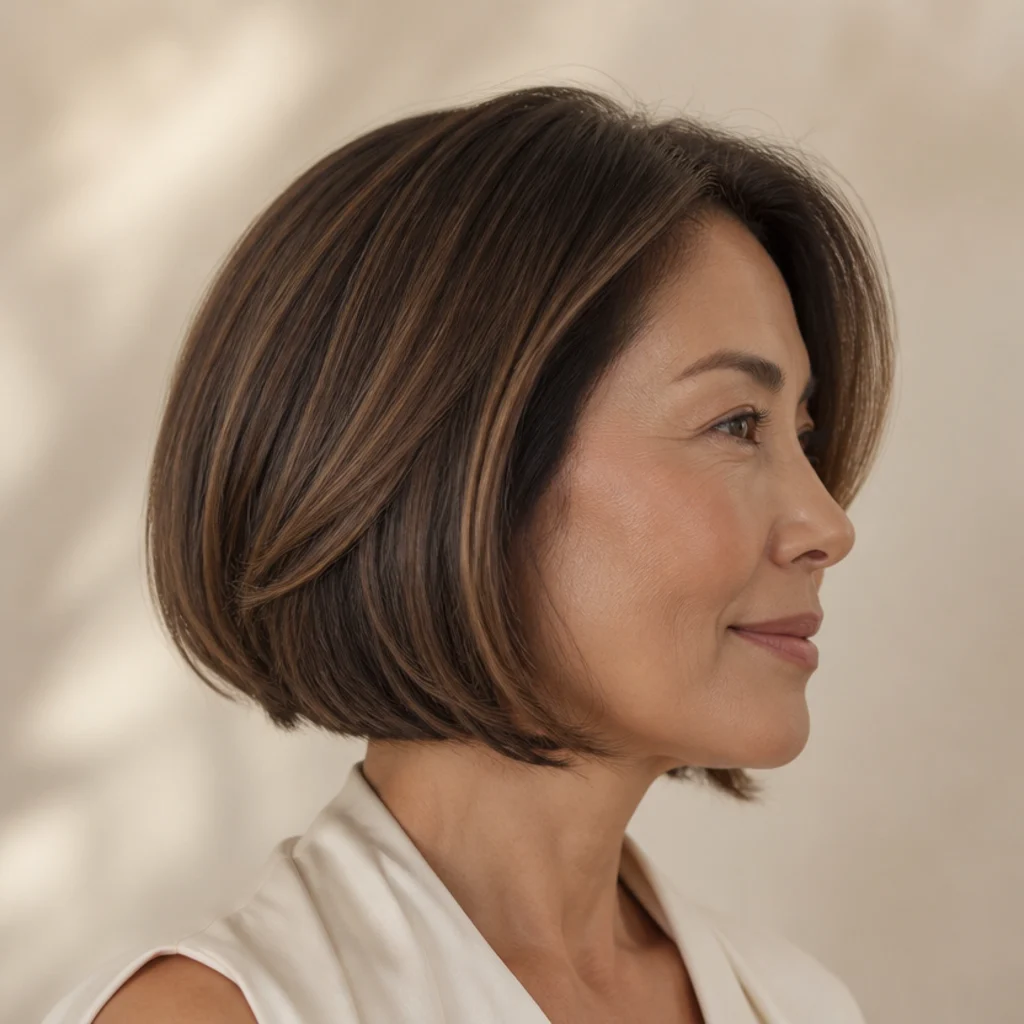
On a bob, dimension has to be placed carefully or it reads striped, because there's less length to blur a transition. The soft approach uses diffused babylights plus a subtle shadow root to add depth without lines, so a chin-length brunette swings with quiet movement and stays polished from every angle. Most face shapes take well to this; a slightly longer, chin-grazing bob softens rounder faces while a blunt line sharpens longer ones. It's especially good for fine hair, since dimension fakes fullness on a one-length cut. Upkeep ties more to the trim than the color, with a shape refresh every 6-8 weeks and a gloss as needed. Pro tip: request the babylights placed to catch the internal bend of the bob, not just the surface, so movement shows when the hair tucks. Ask for "a soft dimensional brunette bob with diffused babylights and a subtle shadow root, blended so it never looks stripey."
13Warm Toffee Curtain Bangs
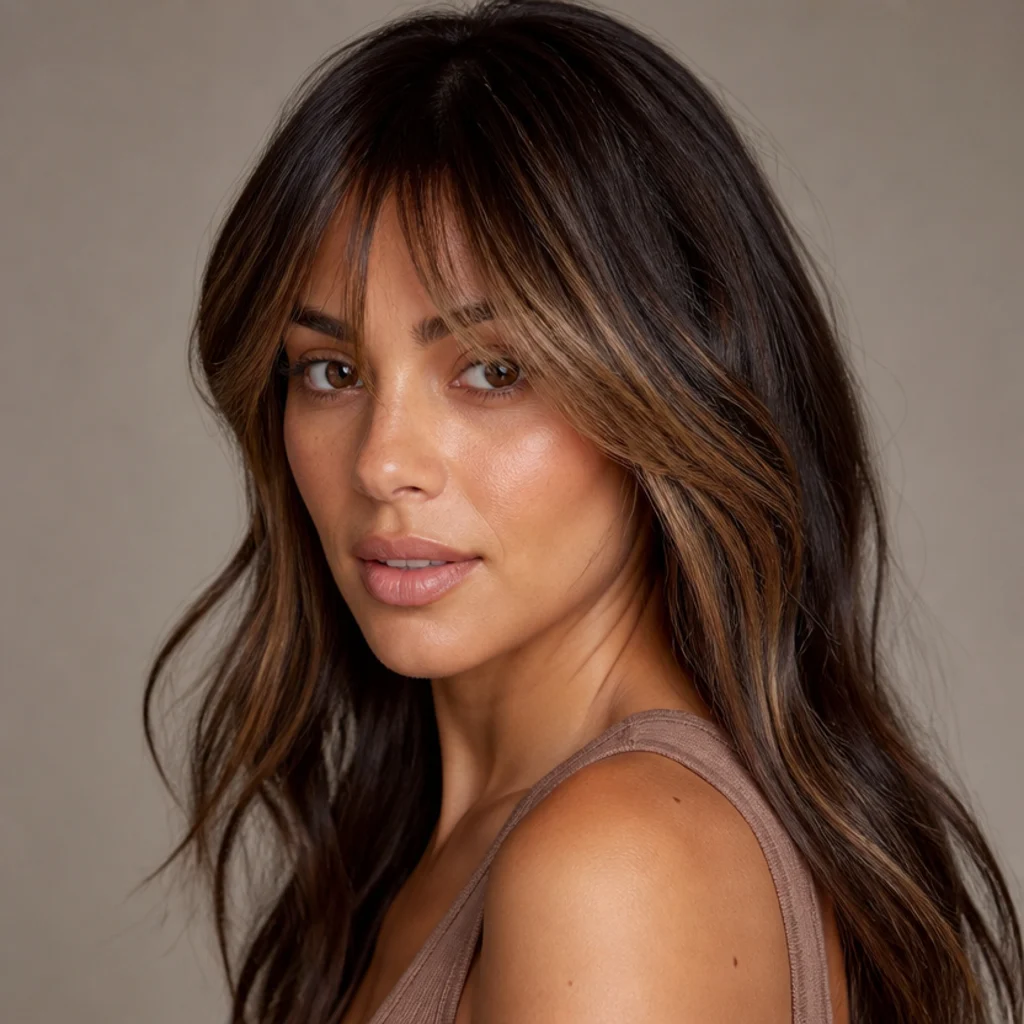
Curtain bangs beg for face-framing color, and warm toffee delivers cozy, blended brightness right where the fringe splits and falls open. The dimension is concentrated at the front so the bangs catch light, then softens into a deeper brown through the interior and back. Warm and neutral tones suit this, and it works best when the color's softness is matched by movement in the cut. Because bangs and face-frame regrowth show fastest of anything here, plan a bang trim every 3-4 weeks and a color gloss around 8. Pro tip: ask your colorist to hand-paint the bangs dry, in the exact way they fall when parted, so the brightness lands where your face actually sees it. Ask for "warm toffee dimension focused on my curtain bangs and face frame, painted to follow how the fringe parts, softly blended into a deeper brown base."
14Cool Ash Brunette Blend
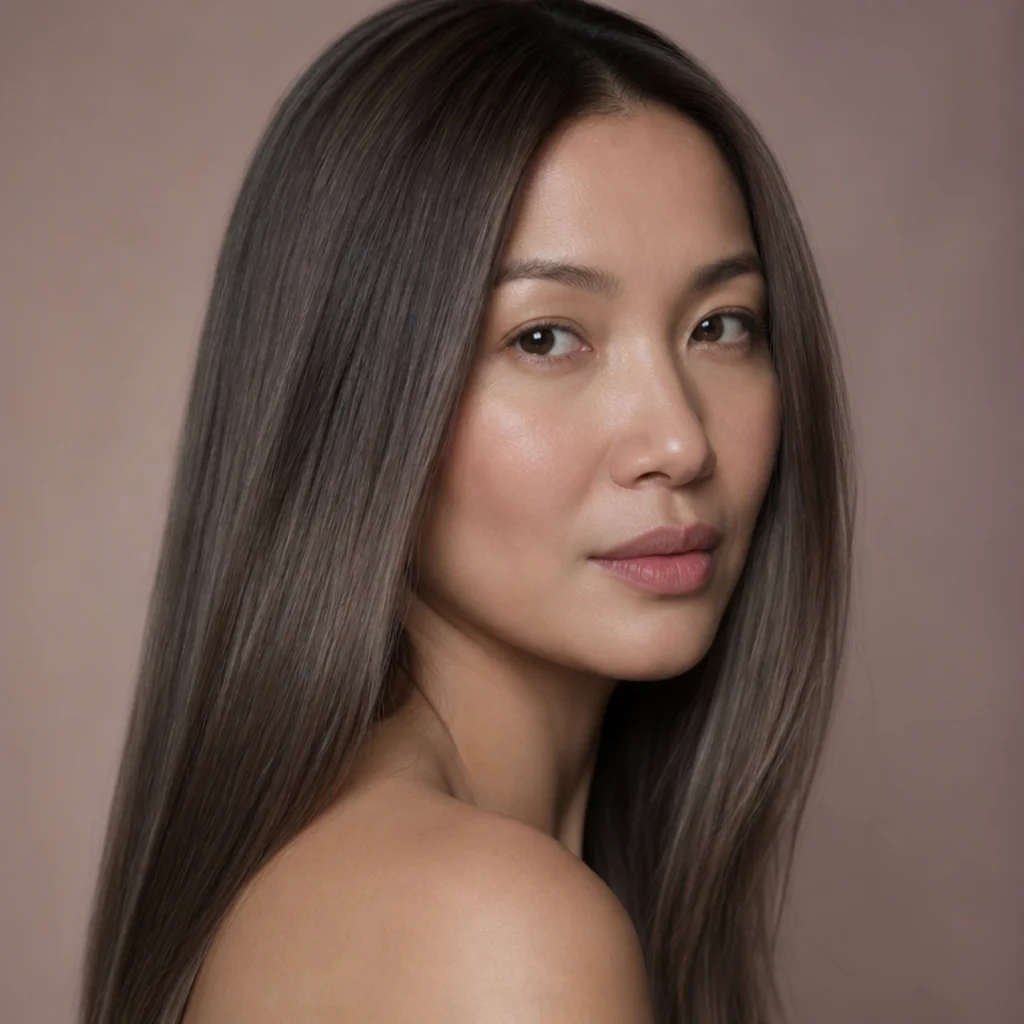
For anyone who wants dimension without a hint of warmth, a cool ash brunette blend keeps everything smoky and refined. Soft ash-toned strands, kept within a level of the base, add movement while the overall look stays cool and expensive. This is ideal for cool undertones, and it's a genuine fix for warm-toned or previously lightened hair that keeps pulling orange and needs neutralizing depth. The trade-off is that ash is the fastest tone to fade warm, so a cool-toning gloss every 6 weeks is just part of the deal. It looks especially sleek on straight, glossy hair where the light stays uninterrupted. Pro tip: avoid mineral-heavy hard water or a clarifying routine that strips toner, since both accelerate the shift back to warmth. Ask for "a cool ash brunette blend, smoky low-contrast dimension, toned to stay neutral-cool, no warmth or gold."
15Cinnamon Glaze Brunette
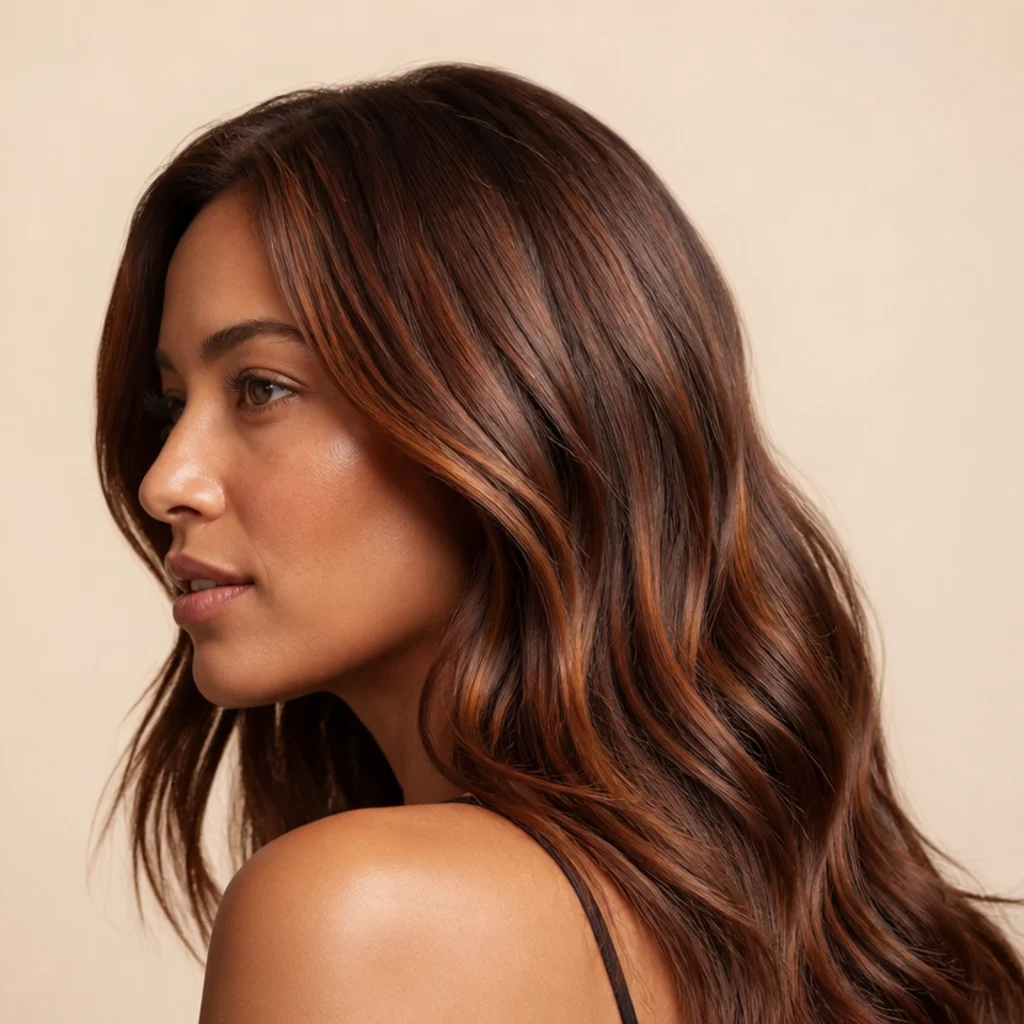
A cinnamon glaze layers soft, reddish-warm tones over a brown base for gentle dimension with a spiced glow. Because it's a deposit-only glaze rather than lightening, it's low-commitment: it adds richness and mirror shine instead of contrast, which makes it a favorite cool-weather refresh. Warm, olive, and deep skin tones look great with it, and it gives medium-brown hair a subtle red-brown luminosity that only shows itself in the light. Glazes are the fastest-fading option here since red molecules are large and wash out first, so refresh every 5-6 weeks to keep the warmth alive. Pro tip: switch to sulfate-free, color-safe washing and cooler rinse water, because red-based glazes bleed noticeably in hot water. Ask your colorist for "a cinnamon glaze over my brunette base, soft reddish-warm dimension and shine, nothing bold or coppery, just a warm veil."
Save this to Pinterest to keep your warm and cool options side by side.
16Soft Bronde Ombre for Long Hair
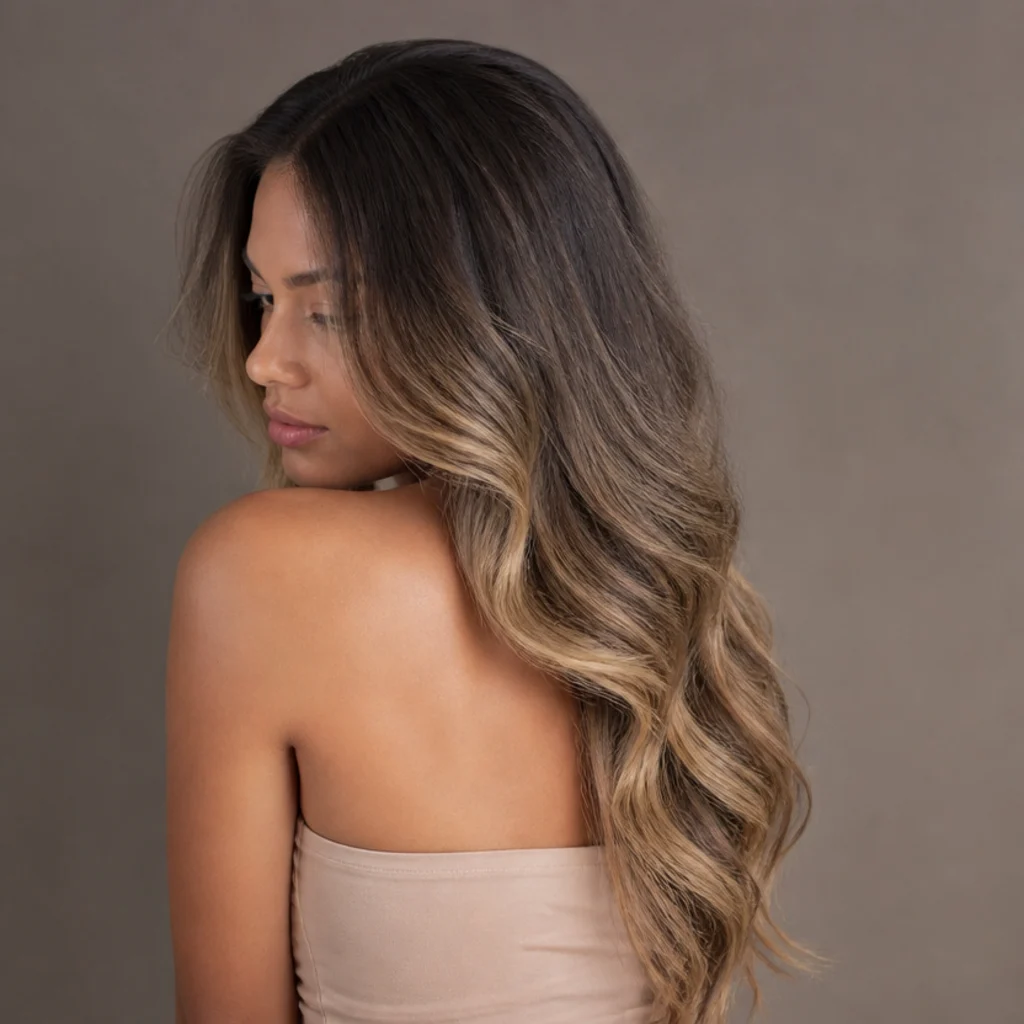
On long hair, a soft bronde ombre has the length to unfold gradually, so the transition from brown root to bronde ends stays creamy and slow rather than abrupt. The softness comes from a high, blurred melt point and careful toning, so the ends never look sharply divided from the base the way a classic ombre can. Warm and neutral tones suit it, and length and layers reward it especially, since layering breaks the melt into softer diagonal transitions instead of one horizontal line. Ombre grows out gently, so upkeep is low at the root, with a gloss every 8 weeks to keep the ends from fading brassy or dull. Pro tip: commit to a weekly bond or protein-balanced mask, because the oldest, most-lifted ends are where an ombre either glows or looks straw-like. Ask for "a soft bronde ombre on long hair, high blurred melt point, gradual and creamy, not a defined ombre line."
17Rooty Latte Brunette
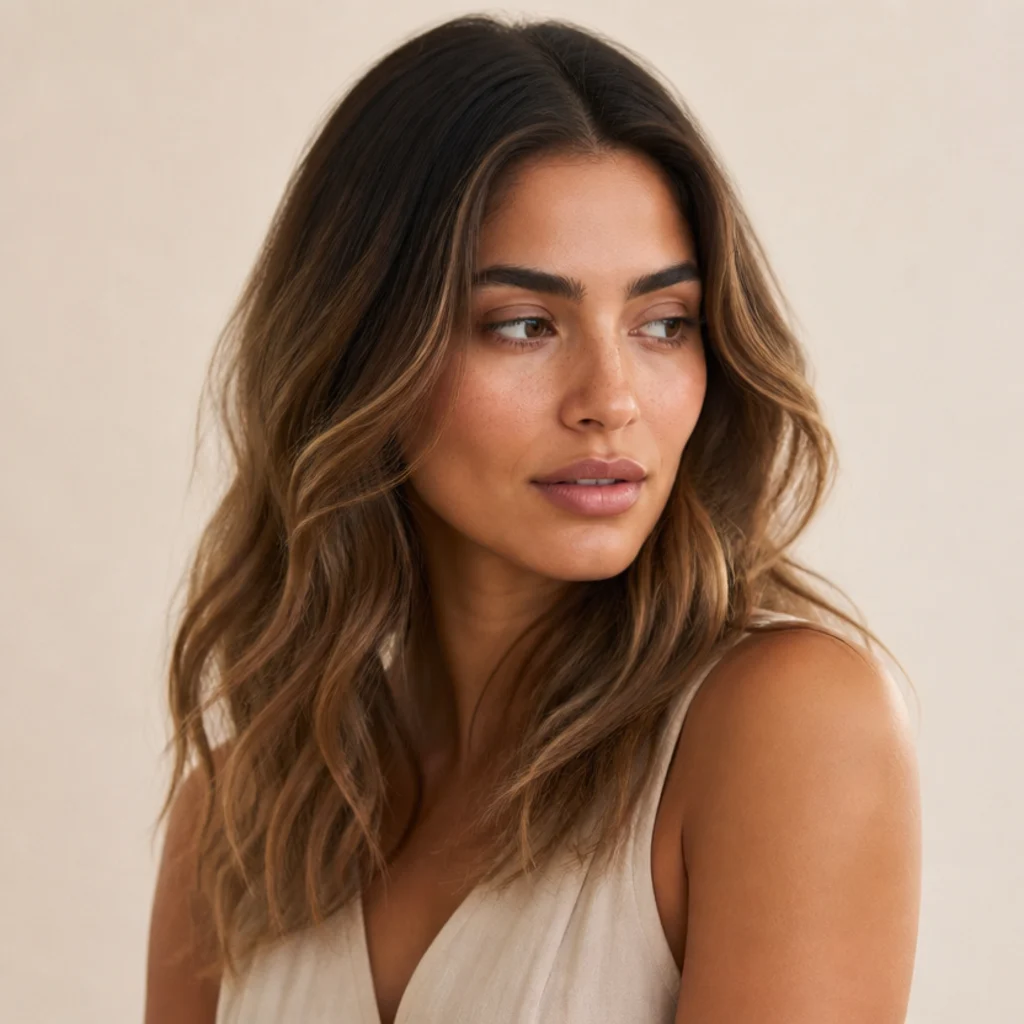
Rooty latte brunette is the definition of lived-in: a deliberately deeper root (level 4) melts into warm, latte-toned lengths for that effortless, been-growing-out-beautifully look. The dark root is intentional and built into the formula, which makes this one of the most forgiving dimensional brunette balayage styles for anyone who dreads salon frequency. Warm and neutral undertones suit it, and it looks luxe on waves, where the latte tone pools and shifts through the bends. Because the root is engineered in, you can stretch appointments to 14-16 weeks and just refresh the gloss as the lengths fade. Pro tip: ask for the root shadow to be a soft, translucent wash rather than a solid deposit, so it blurs into your regrowth instead of stacking a second dark band on top of it. Ask for "a rooty latte brunette, soft translucent deep root melting into warm caramel-latte lengths, low-maintenance and lived-in."
18Muted Mocha Lowlights
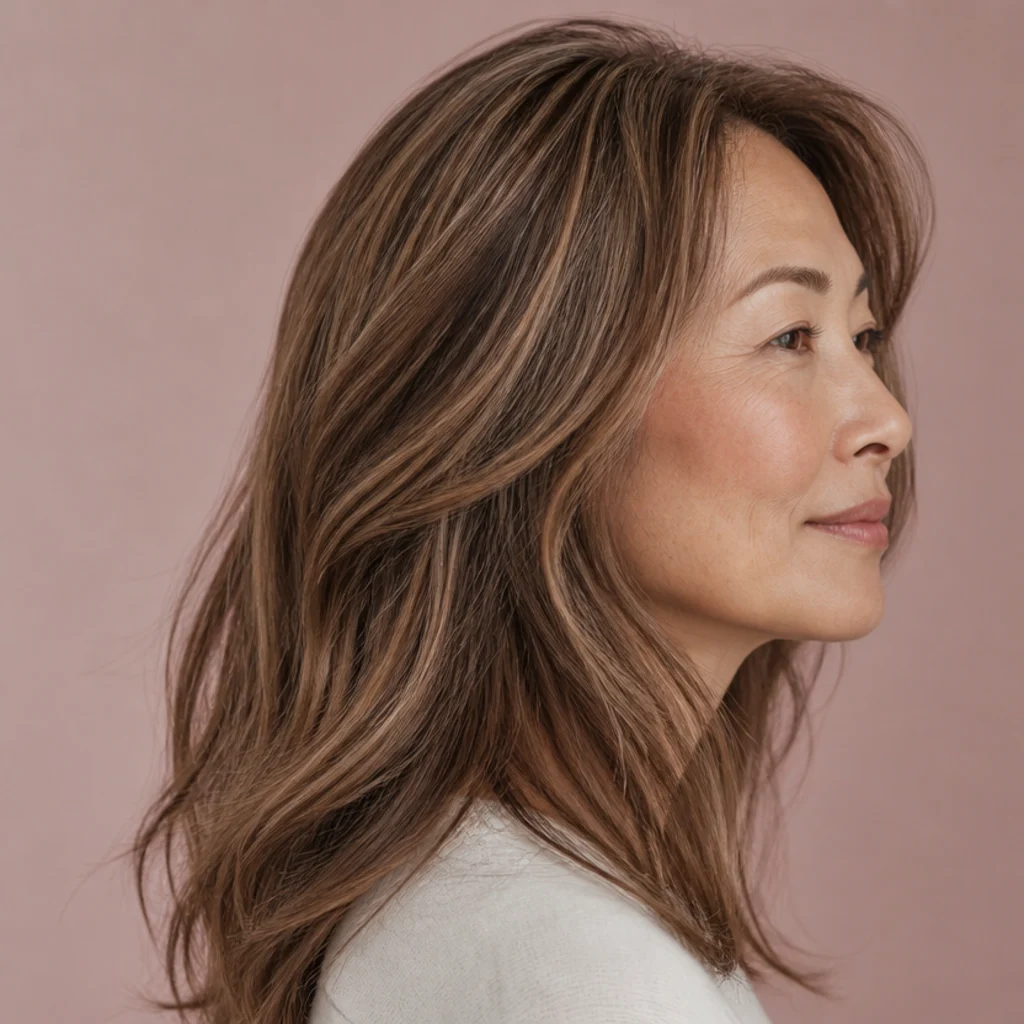
Sometimes dimension means adding depth, not brightness. Muted mocha lowlights weave darker, cool-mocha strands through a lighter or over-highlighted brown base to restore richness and softness that heavy highlighting stripped away. This is the ideal corrective if previous foils left your hair looking washed out, flat, or one-dimensionally pale. Neutral and cool tones suit it, and it reads especially natural since well-placed lowlights mimic your own deeper strands. Upkeep is refreshingly low, since darker tones grow out gracefully with no bright regrowth line, roughly every 12 weeks. Pro tip: ask for two closely related mocha tones rather than one solid lowlight, because a single flat lowlight can look like a stripe in reverse. Ask your colorist for "soft muted mocha lowlights in two close tones to add depth and dimension to my over-lightened brown, cool and blended, bringing back richness without going flat."
19Soft Copper-Brown Warmth
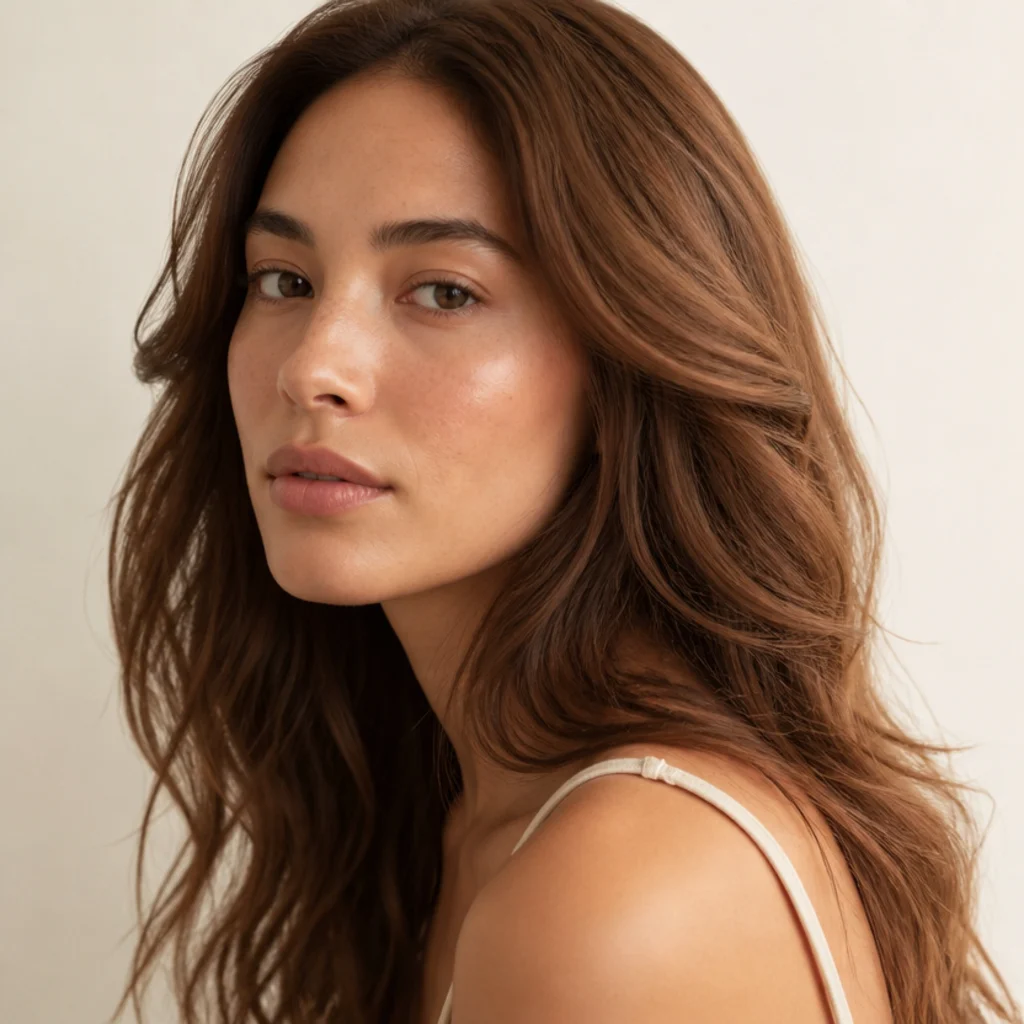
Soft copper-brown warms a brunette base with the gentlest hint of copper, kept muted so it glows rather than glares. The dimension is tonal, built from closely blended warm browns and soft copper melted together, giving a cozy, luminous finish that catches fire only under direct light. It's beautiful on warm, olive, and deep skin tones and brings a flat medium brown back to life. Muted copper fades faster than a neutral brown because warm pigments are the first to wash out, so a warm gloss every 5-6 weeks keeps it rich rather than dull. This is a smart middle ground if full copper feels too bold but you crave warmth you can actually keep. Pro tip: add a copper- or gold-depositing conditioning gloss at home between visits to top up the tone without a salon trip. Ask for "a soft copper-brown, muted warm tone-on-tone dimension and shine, blended, nothing bright or orange."
20Dimensional Brunette Curls
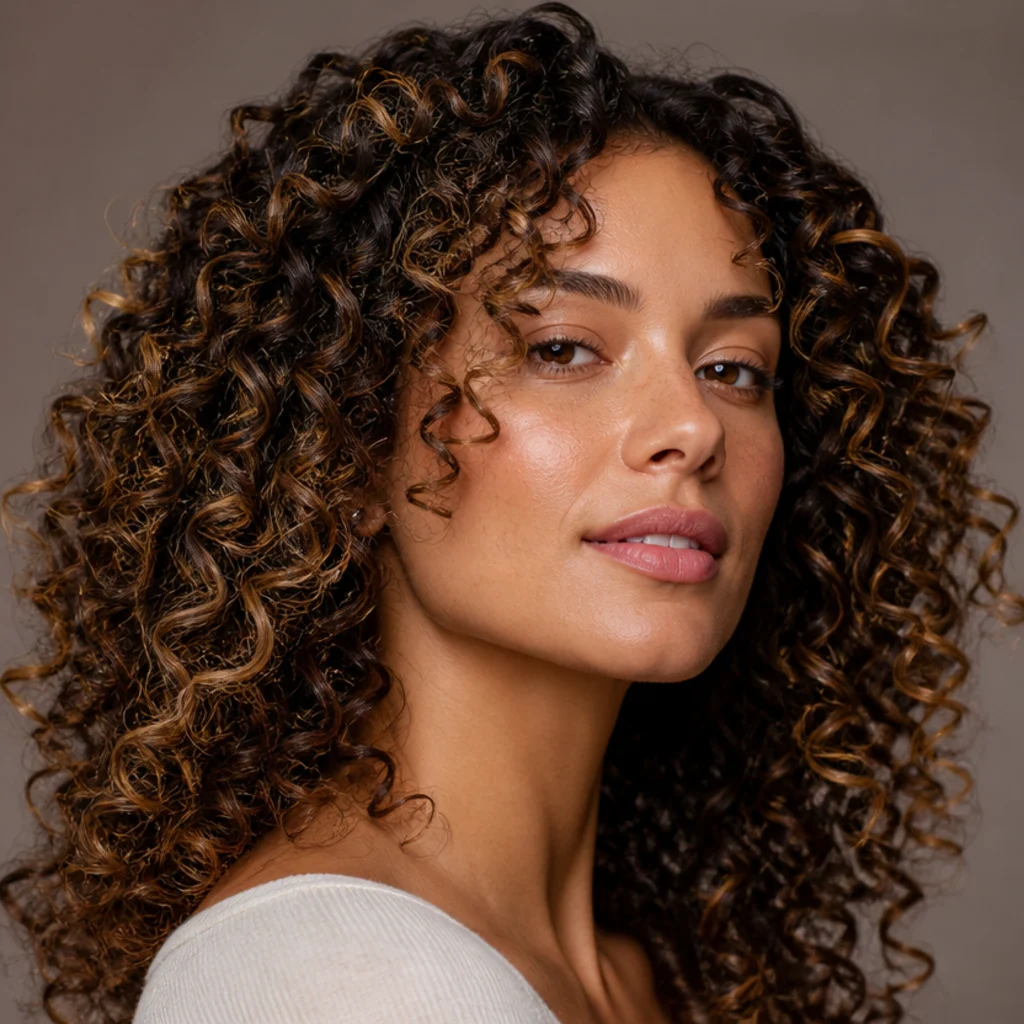
On curly and coily hair, dimension is placed to follow the pattern so each coil catches light instead of fighting a straight-hair placement. Soft caramel or honey tones are painted dry, curl by curl, brightening the surface of the coils without disturbing the deeper base underneath. This adds real depth and definition, and warm and neutral tones both suit it across textures from loose waves to tight coils. Balayage on curls is low-maintenance, since grow-out disappears into the movement, often 14-16 weeks between services. Pro tip: dry cutting and dry painting matter here, because wet curls stretch and hide their true shape, which leads to lightness landing in the wrong place once they spring back. Ask a curl-experienced colorist for "soft dimensional brunette balayage placed for my curl pattern, painted dry so the lightness sits on the coils, blended into a deeper base."
Save this to Pinterest and note which texture and length match your hair.
21Smoky Truffle Brunette
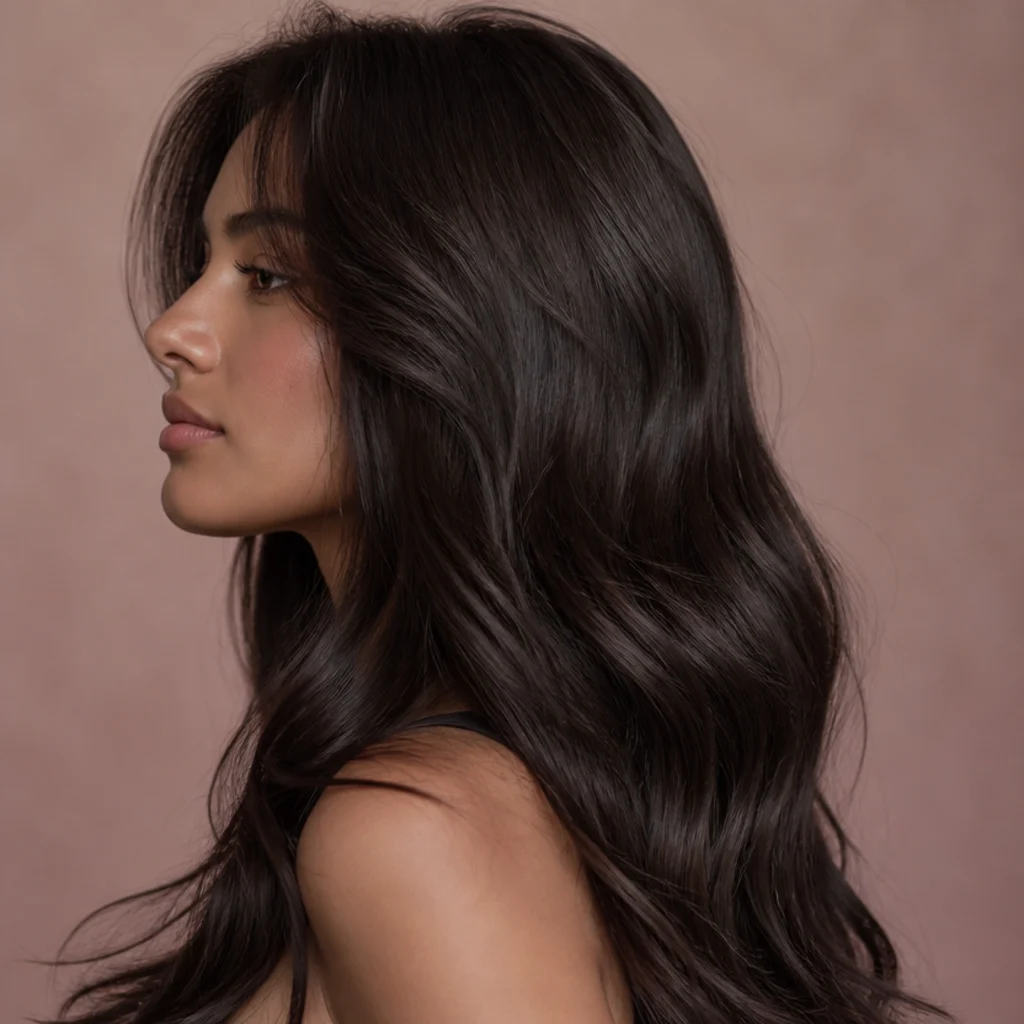
Smoky truffle is a deep, cool-leaning brunette (level 3) with soft, muted dimension that feels rich and moody. Think dark chocolate with faint smoky, almost grey-brown undertones and low-contrast depth rather than bright highlights. It's a sophisticated dark dimensional brunette, and cool and neutral undertones suit it best while it stays polished in any professional setting. Because the base is deep, regrowth barely registers, which makes this very low-maintenance apart from a cool gloss every 8 weeks for shine and to hold the smoke. Pro tip: this tone can read flat or even ashen-dull in low light, so ask for a clear high-shine gloss layered over it, since the reflection is what keeps "smoky" from sliding into "muddy." Ask for "a smoky truffle brunette, deep cool base with soft low-contrast dimension, glossy and rich, no warmth."
22Sun-Faded Ends Melt
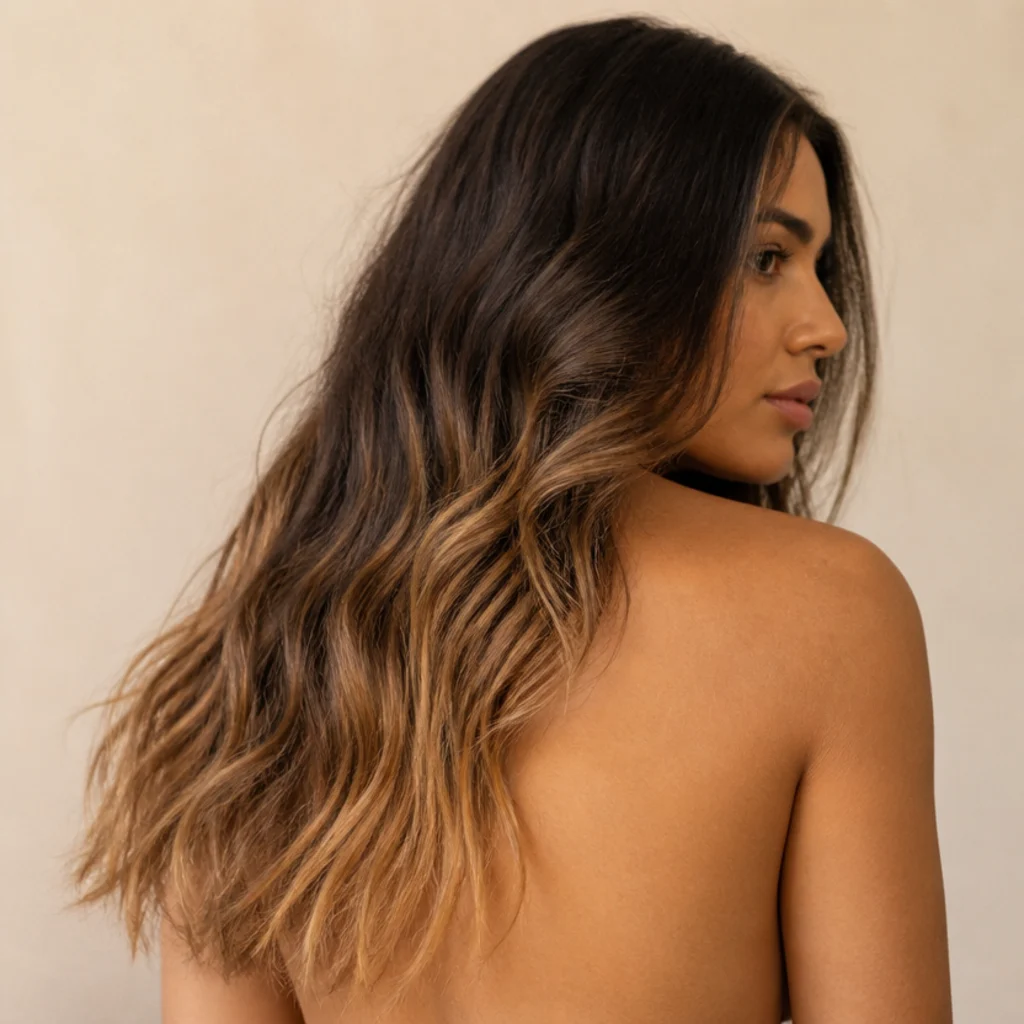
This look concentrates softness at the ends, mimicking hair that's gently lightened at the tips from sun while staying deep up top. The melt is soft and diffused so there's no ombre line, just a natural fade toward brighter, sun-touched ends that never reads dip-dyed. Warm and neutral tones suit it, and it looks especially pretty on long hair worn in loose waves, where the brightness pools at the tips. Since the lightness lives only at the ends, grow-out is effectively invisible and upkeep is minimal, mostly a gloss every 8-10 weeks. Pro tip: because the ends carry all the lift and all the history, schedule a micro-trim at each gloss so faded, fragile tips don't drag the whole look down. Ask for "a soft sun-faded ends melt, deeper root with gently brightened tips, diffused so there's no line, natural and lived-in."
23Soft Dimensional Brunette Shag
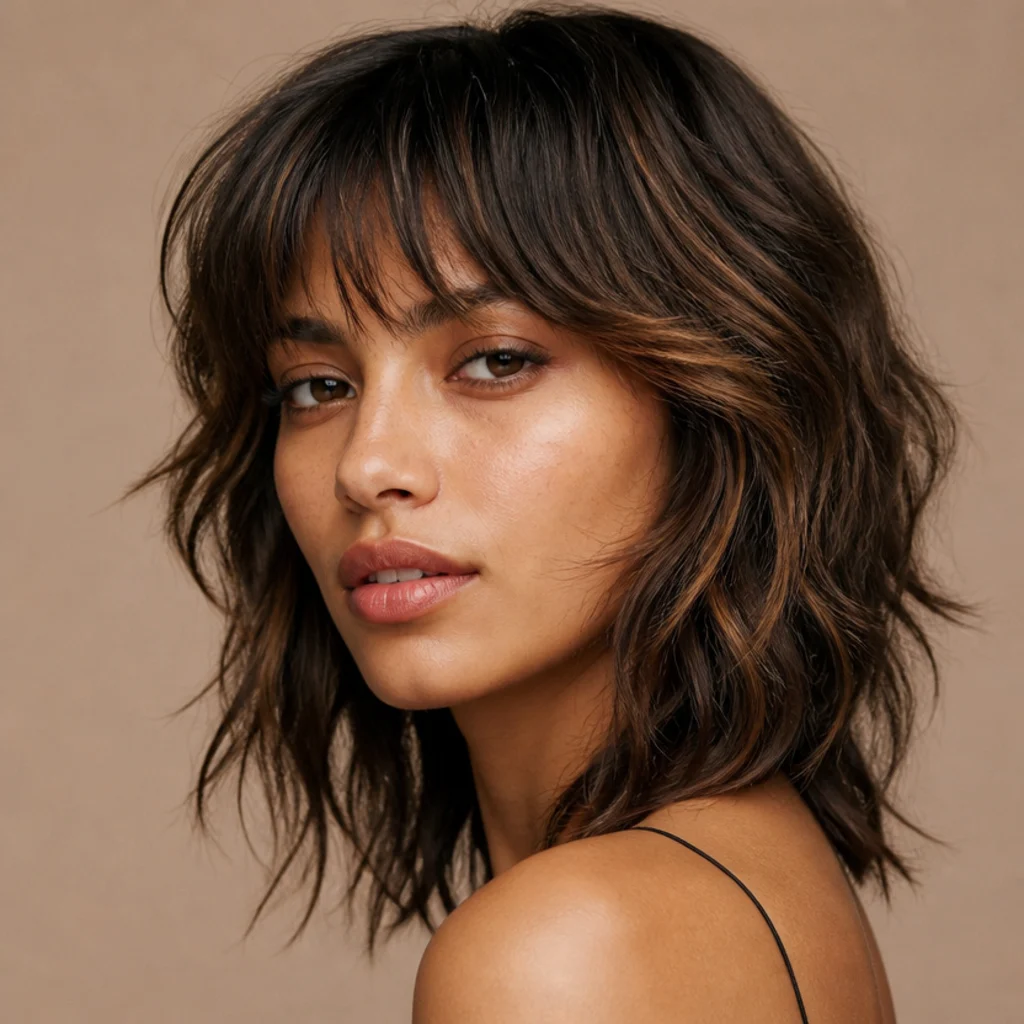
A shag's layers and fringe are built for dimensional color, and the soft approach threads warm, blended ribbons along the layers so the shape reads with movement and depth instead of looking heavy. Face-framing brightness plays up the fringe and shortest pieces while the interior layers keep their richness, which is what stops a shag from going flat. This pairs a modern, textured cut with lived-in color, and warm and neutral tones suit it best; it also adds visual thickness to fine or medium hair. Upkeep is tied more to the cut than the color, with a shape trim every 8 weeks and a gloss as needed. Pro tip: ask the colorist to paint after the cut, not before, so the ribbons follow the finished layers exactly rather than getting sliced through. Ask for "soft dimensional brunette color for a shag, warm ribbons painted after the cut to follow my layers and face-framing pieces, blended and lived-in."
24Praline Balayage Long Layers
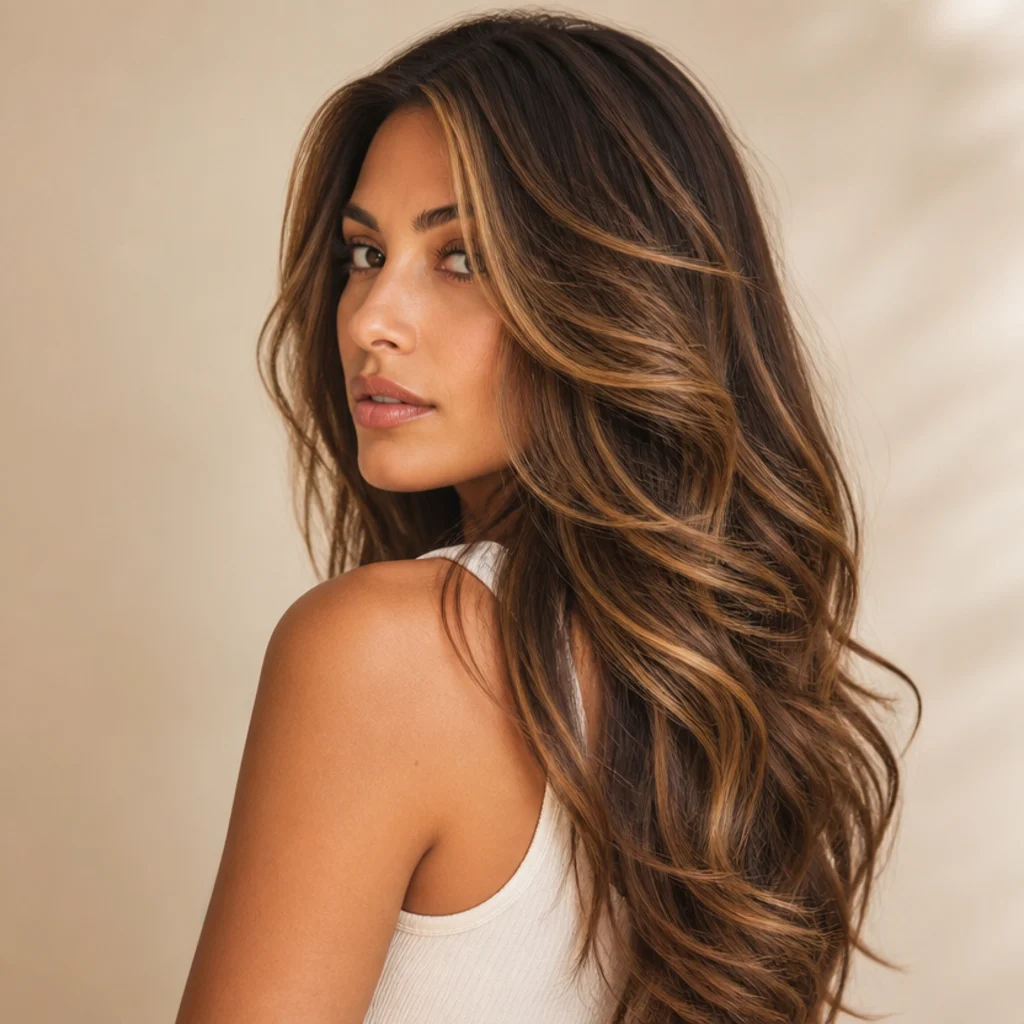
Praline balayage is a creamy golden-brown that sits between caramel and beige, painted through long layers so the dimension flows with the cut instead of cutting across it. The softness comes from feathered placement that follows each layer, giving that expensive, multi-tonal glow without harsh contrast between the painted pieces and the base. Warm and neutral tones suit it, and it looks most luminous on healthy, long layered hair where the layers reveal the tonal shift as the hair moves. As balayage, it's forgiving on grow-out, around 14 weeks, with a gloss every 8 to keep the praline creamy rather than brassy. Pro tip: bring a photo of your hair in motion or half-up, not just flat, so the colorist can see how your layers actually fall and place brightness where it will show. Ask for "a creamy praline balayage on long layers, soft golden-brown dimension painted to follow my layers, blended and buttery, no brass."
25Glossy Soft Dark Brunette
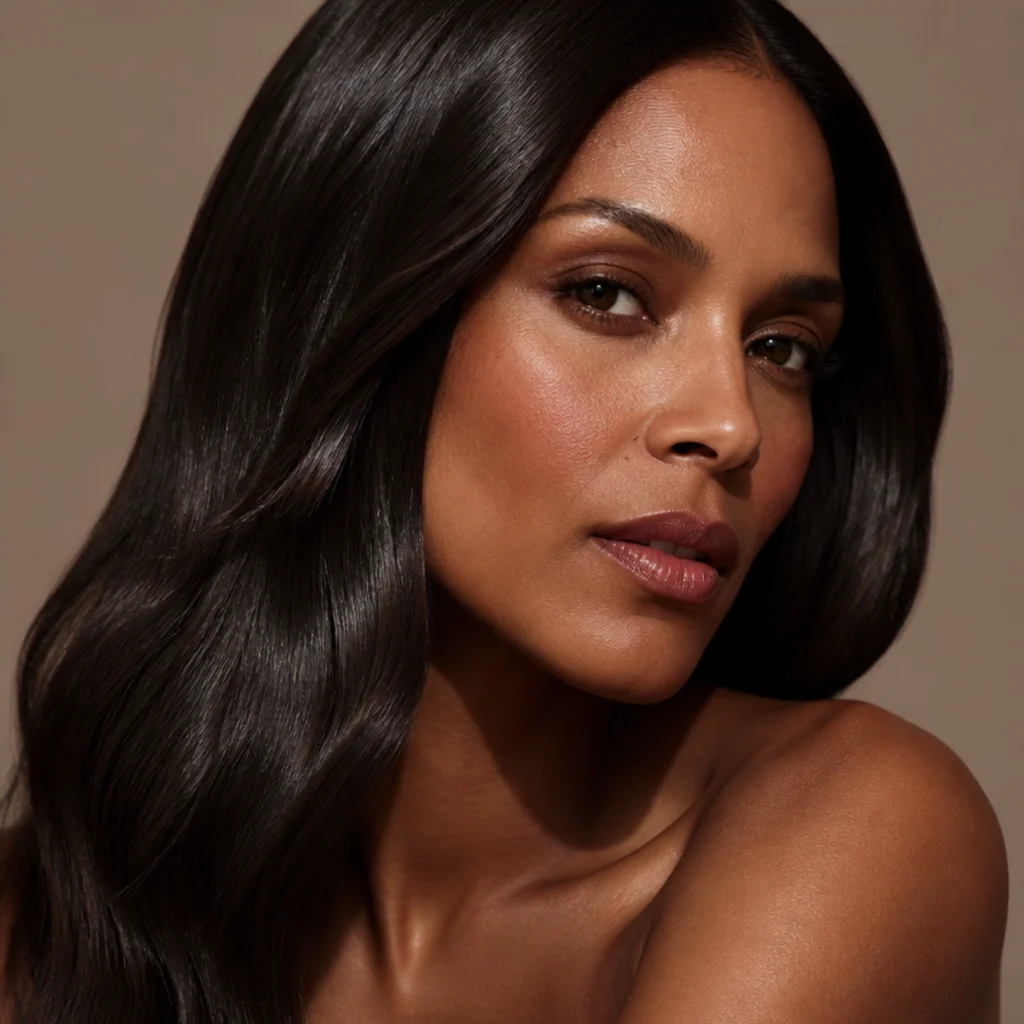
Closing where dark and soft meet: a glossy dark brunette that draws its dimension from shine and subtle tonal depth rather than any lightening at all. A high-gloss treatment layered over faint, tone-on-tone shading makes the color bend and reflect light so it reads deep and expensive, never flat or matte. This is the lowest-commitment, most polished dark dimensional brunette here. Every skin tone suits it, and it hides regrowth completely since nothing lifts above natural. Upkeep is just a gloss every 6-8 weeks to renew that mirror finish as it wears off. Pro tip: a weekly acidic or bond-sealing rinse keeps the cuticle flat, and a flat cuticle is the entire secret to this look reading glassy rather than dull. Ask for "a glossy soft dark brunette, tone-on-tone dimension with a high-shine gloss, deep and reflective, no visible highlights."
Pro Tips from the Editor
- Contrast, not just color, is what reads "soft." Keep your lightest and darkest pieces within two to three levels of each other; the moment that gap widens, the look tips from blended to striped no matter how pretty the tones are.
- Glosses are the real maintenance, not the balayage. Placement lasts three to four months, but tone fades in four to eight weeks. Booking a standalone gloss between painting sessions doubles the life of the color with zero extra lift.
- Match warmth to your undertone before you pick a name. Cool and neutral skin flatters mushroom, ash, mocha, and truffle; warm and olive glows in caramel, toffee, cinnamon, and copper-brown. The tone that fights your complexion will always read cheap.
- Ask where the brightest piece starts. Requesting that lift begin below the part line rather than at the root is the single change that keeps grow-out soft on face-frames and money pieces.
- Protect the lift you paid for. Sulfate-free washing, cooler rinse water, weekly bond or protein-balanced masks, and skipping clarifying shampoo all slow both fade and dryness, especially on lifted ends.
- Bring your hair in motion. Photos of your part, waves, and layers as you actually wear them let a colorist place dimension where you'll see it, instead of formulating for a flat, center-parted head.
- Green-light a two-session plan on dark virgin hair. Reaching bronde or golden-beige from a deep base safely often takes more than one visit; a colorist who says so is protecting your hair, not upselling you.
Quick Comparison: Soft Dimensional Brunette Techniques
| Technique | Best For | Contrast | Upkeep Window | Undertone Match |
|---|---|---|---|---|
| Balayage (caramel, praline) | Long, layered, wavy hair | Low-medium | 14-16 weeks + gloss at 8 | Warm / neutral |
| Root melt / rooty latte | Grow-out avoiders, all lengths | Very low | 12-16 weeks | All tones |
| Babylights | Fine hair, bobs | Very low | 10-12 weeks | Neutral / warm |
| Gloss only (glossy dark, cinnamon) | Deposit and shine, no lift | Minimal | 5-8 weeks | Tone-dependent |
| Lowlights (mocha) | Over-highlighted, washed-out hair | Low | ~12 weeks | Cool / neutral |
| Money piece / face frame | Framing brightness, low lift | Medium | 7-8 weeks | Tone-dependent |
How to Choose / Get the Look
Start with undertone, because tone is what makes or breaks the look. Cool undertones and anyone who fights brassiness will love mushroom, ash, smoky truffle, and mocha lowlights; warm and olive tones glow in caramel, toffee, cinnamon, praline, and copper-brown. Neutral tones can go either way, so choose by mood and wardrobe rather than rule. If you're unsure, look at whether silver or gold jewelry flatters you more, and lean your tone the same direction.
Next, weigh maintenance honestly against your calendar. If you rarely want to sit in a salon chair, lean into root melts, rooty latte, sun-faded ends, smoky truffle, and glossy dark brunette, all of which hide grow-out by design. Face-framing pieces, money pieces, and bobs pull light toward the part and hairline, so they show regrowth faster and want a touch-up every 6-8 weeks. Be realistic: the most flattering look you skip maintaining will read worse than a simpler one you keep up.
Then match the technique to your length and texture. Babylights and glosses suit fine hair and bobs where a bold highlight would only expose scalp; balayage and ombre reward long layers with room for a slow melt; curls need dry, pattern-aware painting from a curl-experienced colorist. Density matters too, since fine hair benefits from closely spaced tonal shifts that fake fullness, while thick hair can carry a slightly wider melt.
Finally, prepare for the consultation like it's the appointment. Bring two or three photos, including one of your hair in motion, name your current base level and your target tone, and use specific language: "soft, melted, blended, low-contrast, no harsh line." Point out exactly where you want brightness and ask two questions before anyone mixes color: is this realistic in one session from my starting level, and what will the grow-out look like at week ten? A good colorist will formulate from there and tell you the honest answer.
Frequently Asked Questions
What makes a brunette look "soft" and dimensional instead of striped?
Softness is a function of contrast and blending, not color choice. Fine babylights, hand-painted balayage feathered open mid-shaft, and a melted or shadowed root keep the lightest and darkest pieces within two to three levels of each other, so there's no hard line between light and dark. That low contrast is what makes the color read lit-from-within rather than ribboned.
Is soft dimensional brunette high maintenance?
It's among the more forgiving color choices, but the answer depends on placement. Root melts, balayage, and lived-in styles can stretch 12-16 weeks before you need more lightening. What actually fades faster is tone: a gloss every 6-8 weeks keeps the color true, and face-framing or money-piece styles need slightly more frequent touch-ups because regrowth shows at the part first.
Can I get dimensional brunette highlights on dark hair?
Yes, and it's one of the most flattering routes. Dark dimensional brunette relies on tone-on-tone depth, high-shine gloss, and strands lifted only a level or two rather than bold highlights, so you keep a rich base while still getting visible movement. Deep bases also hide regrowth almost completely, which makes this a low-maintenance choice despite looking polished.
Will soft balayage damage my hair?
Balayage is gentler than all-over bleach because it's painted onto sections and not saturated to the scalp, but any lightening opens the cuticle and affects the hair. Ask about bond-building add-ons during the service, keep up with weekly conditioning and protein-balanced masks, and use a gloss rather than repeat lightening to refresh tone. On the ends, which carry the most history, regular micro-trims prevent breakage.
How much does a soft dimensional brunette cost?
It varies widely by region, salon level, and technique, so treat any exact figure with suspicion. As a general order, a gloss or toner sits at the low end, a partial balayage or face frame in the middle, and a full balayage plus tone at the higher end. Corrective work on dark virgin hair or a multi-session lift to bronde costs more because it takes more time and product to do safely.
How often should I book a gloss versus a full color appointment?
Think of them as two separate rhythms. A full painting or balayage session goes roughly every 12-16 weeks, while a gloss every 5-8 weeks refreshes tone, adds shine, and neutralizes fade in between. Warm and red-based tones like cinnamon and copper fade fastest and need the shorter window; deep tone-on-tone dark brunettes can stretch longest.
Which soft dimensional brunette is best for fine or thin hair?
Closely spaced, low-contrast techniques do the most for fine hair because they fake density instead of exposing scalp. Soft chestnut babylights, a diffused dimensional bob, mushroom brown, and glossy shine treatments all read as depth and fullness. Ask your colorist to keep the brightest pieces off the very crown so the part doesn't wash out and flatten your natural depth.
How do I keep the tone from fading brassy between appointments?
Fade toward warmth is normal as toner wears off, but you can slow it. Use sulfate-free, color-safe shampoo, rinse in cooler water, and add a tone-correcting product to your routine, a purple or blue-based one for cool and ash tones, a warm gloss for caramel and copper. Avoid clarifying shampoo and hard-water buildup, both of which strip toner faster.
How do I ask my stylist for a soft dimensional brunette?
Bring two to three photos, including one of your hair in motion, name your base level and desired tone, and use the words "soft, blended, melted, low-contrast, no harsh money piece." Point out exactly where you want brightness, and ask whether your goal is realistic in one session from your current level and what the grow-out will look like at week ten.