20 Dark Dimensional Brunette Hair Ideas
Deep brown doesn't have to read flat. The right ratio of lowlights, tone-on-tone ribbons, and hand-painted brightness gives dark hair movement, glass-like shine, and quiet contrast, without committing you to blonde upkeep. Here are 20 dark dimensional brunette looks, each mapped to skin undertone, texture, and the exact words to say at the salon.
 Edited by Lena Rose · Published July 11, 2026 · 31 min read
Quick Answer
- Best for: Naturally deep hair (levels 2 to 4) that photographs as one flat block and needs light-catching depth without going lighter overall.
- Who might skip it: Anyone chasing bright, high-contrast blonde or a full gray blend; dark dimensional work is subtle by design, so if you want a dramatic before-and-after, this reads too quiet.
- Maintenance: Low to medium. A gloss or tonal refresh every 6 to 12 weeks; full re-painting only two or three times a year because the deep base grows out invisibly.
- Difficulty: Moderate to advanced. Low-contrast placement and smooth blending are harder to execute than bold foils, and never a box-dye job.
- Cost: Variable. Expect a partial hand-paint to sit in the lower-to-mid salon range and a full-head dimensional balayage plus gloss toward the higher end; toner-only refreshes are the cheapest touchpoint.
- Wear time / longevity: Placement lasts 3 to 5 months; tone (especially red, copper, and ash) softens far sooner, which is why the gloss cadence matters more than the highlight cadence.
- Standout variation: Espresso base with warm chestnut ribbons, shine you register before you register the color.
- How to ask your colorist: "I want a low-contrast dimensional brunette. Keep my root deep, stay within two to three levels of my natural, and build shine through tone rather than lift."
In This Guide
- Espresso Base with Chestnut Ribbons
- Soft Dimensional Brunette Balayage
- Cool Mocha with Ash Lowlights
- Face-Framing Money Piece on Dark Brown
- Warm Chocolate Melt
- Dimensional Brunette Highlights, Subtle Placement
- Cinnamon-Kissed Dark Brunette
- Smoky Brunette with Violet Undertone
- Dark Roast with Caramel Underlayer
- Espresso Curls with Hidden Warmth
- Deep Brunette Teasylights
- Chestnut Balayage on a Long Blunt Cut
- Mushroom Brown Dimensional Blend
- Dark Brunette Curtain Bangs with Brightness
- Cool Espresso Bob with Peekaboo Lights
- Warm Toffee Root Smudge
- Dark Chocolate with Copper Ribbons
- Sun-Grown Dimensional Brunette
- Deep Brunette Shag with Layered Movement
- Glossy Espresso with Baby Highlights
Intro
Dark dimensional brunette hair is what happens when deep brown stops reading as a single block and starts catching light. Instead of lifting the whole head, a colorist keeps a rich base at levels 2 to 4 and layers in tone-on-tone brightness: fine ribbons, tonal lowlights, and hand-painted sweeps that register as shine before they register as highlights. You get that expensive, lit-from-within finish with low commitment, because a deep root lets regrowth blend instead of announcing a line. It's popular on salon request boards because it flatters people caught between flat single-process color and the maintenance treadmill of true blonde. The color works with your natural depth instead of against it, so shine and warmth stay in your control. These 20 ideas run from barely-there soft dimensional brunette to bolder chestnut and copper accents, and cover bobs, long layers, curls, and tight coils. For each one you'll find who it flatters by skin undertone and hair texture, how demanding the upkeep actually is, a realistic timeline, styling pairings, one pro tip, and the exact salon language, from dimensional brunette balayage to money pieces.
01Espresso Base with Chestnut Ribbons
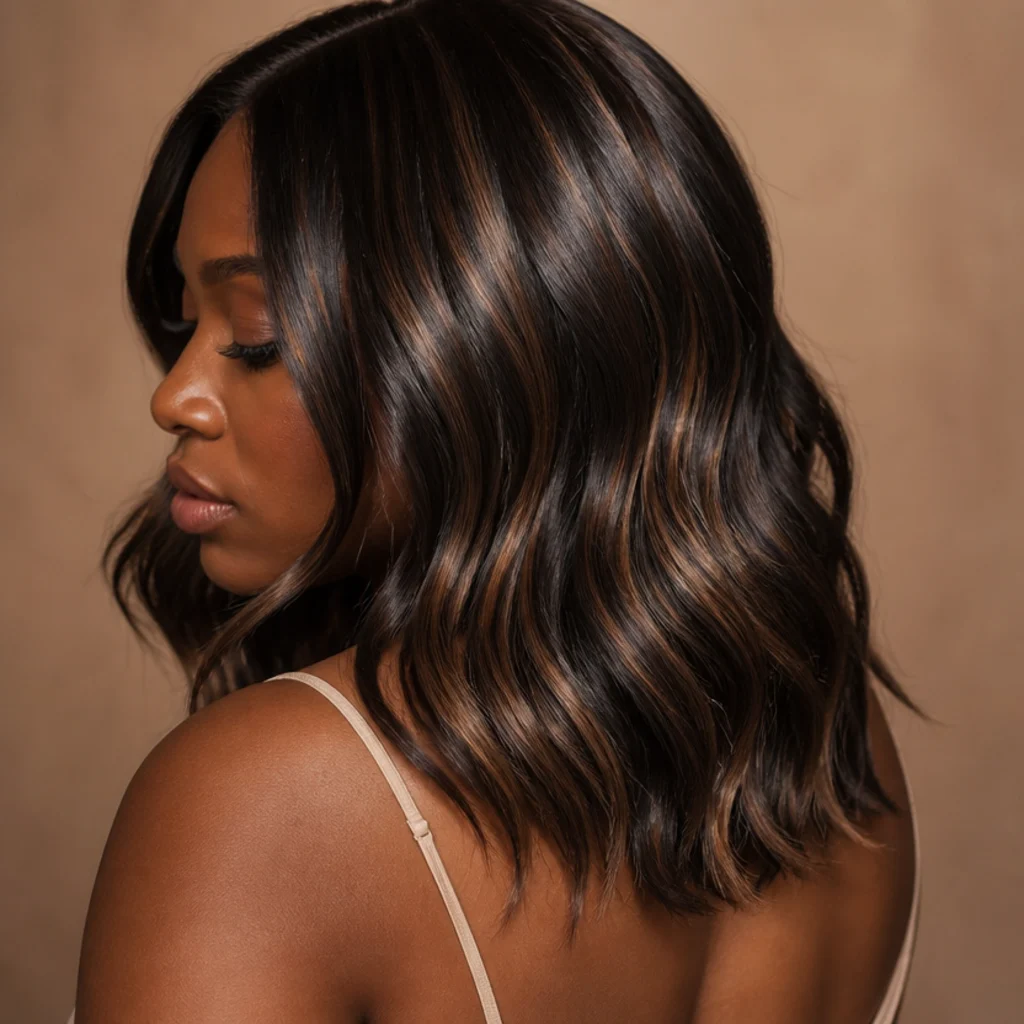
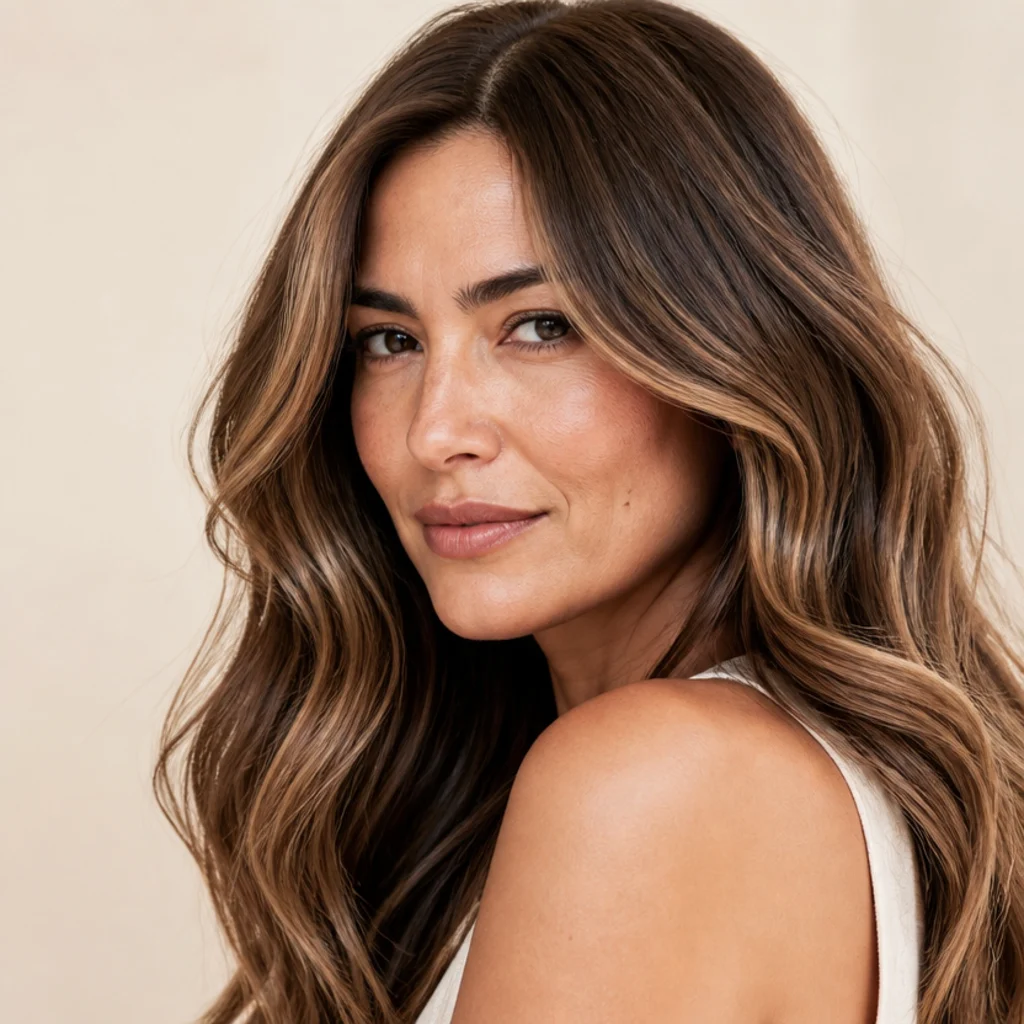
This is the reference look for dark dimensional brunette hair: a near-black espresso base (level 2 to 3) broken up by hair-thin chestnut ribbons hand-painted through the mid-lengths and ends. Because the ribbons land only one or two levels lighter with a warm-neutral reflect, they read as travelling shine rather than stripes. Deep and warm-neutral complexions suit it especially well, and it lives best on straight to loosely wavy hair, where light can run uninterrupted down the strand; on very tight textures, ask for the ribbons on the curl's outer face instead. Upkeep is easy because the deep root grows out cleanly, so the only real task is a warm-protecting gloss every 8 to 10 weeks to stop the chestnut sliding brassy. Pair it with a soft bend from a large-barrel iron to make the ribbons flash. Pro tip: ask for the ribbons kept below the crown so your part still reads deep and glossy. Ask your colorist for a "low-contrast ribbon balayage on an espresso base, warm chestnut, nothing above the parietal ridge."
02Soft Dimensional Brunette Balayage
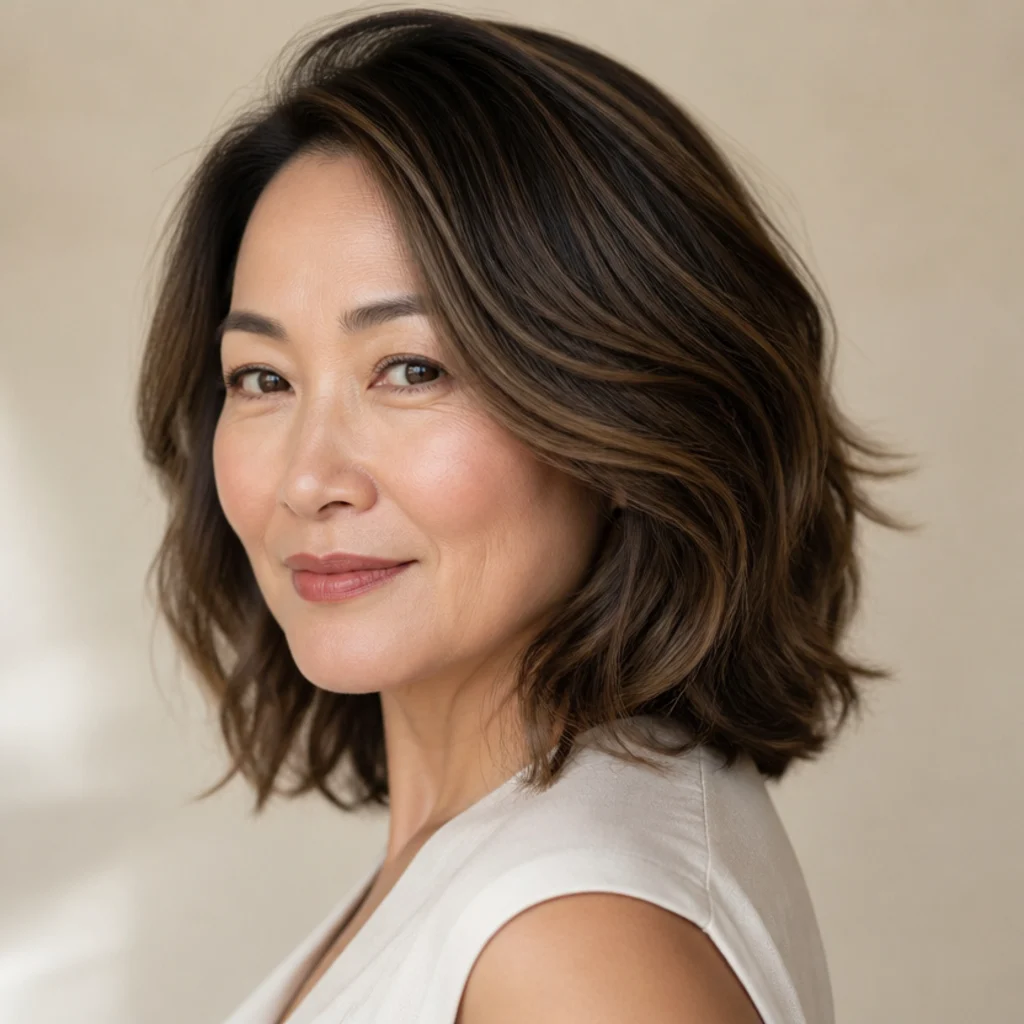
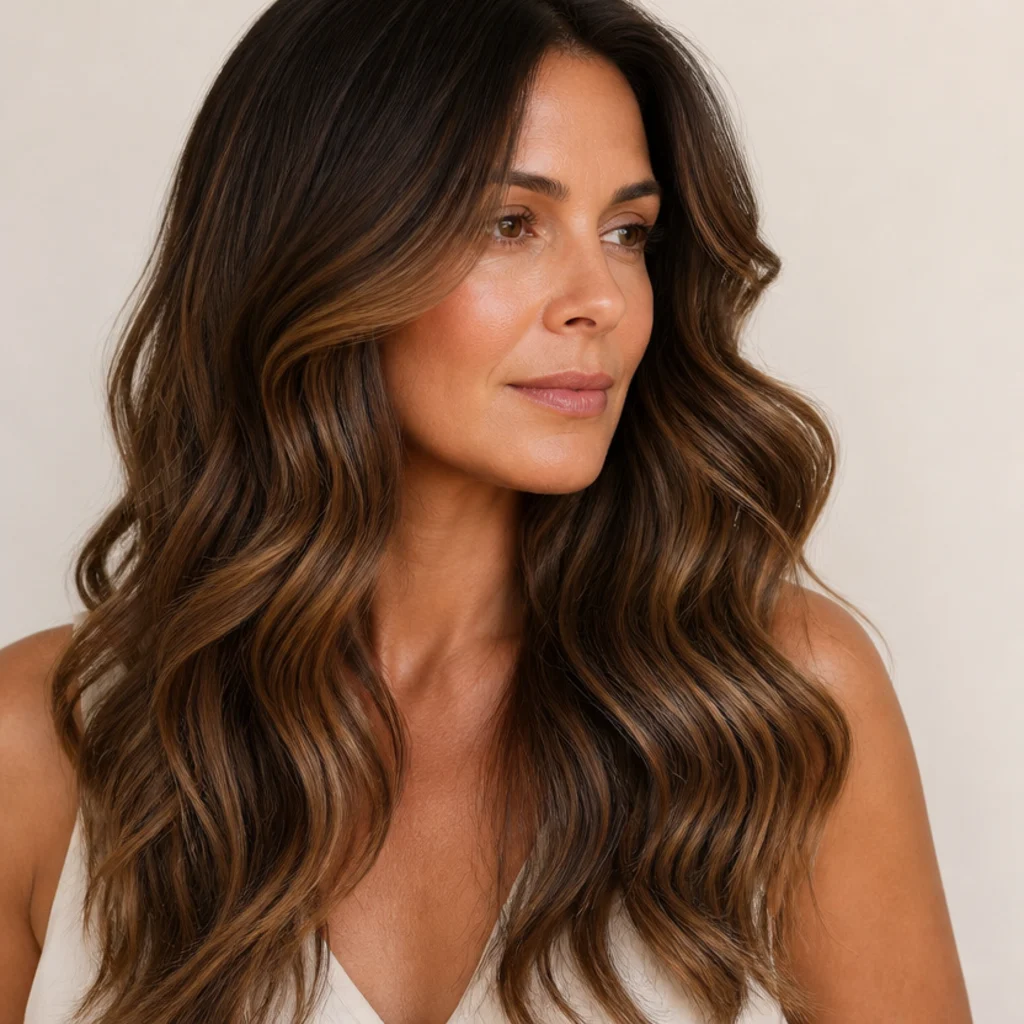
Soft dimensional brunette is the quietest expression of the trend and the hardest to fake. The colorist free-hands diffused, feathered sweeps that stay inside a tight one-to-two-level range, so there's no visible break and no obvious highlight, just a gentle sense that the sun has been at your hair. Anyone who wants color that reads natural rather than done will like this, and it forgives every face shape because placement follows your existing layers and movement rather than a fixed pattern. It's the lowest-maintenance option here; many wearers comfortably stretch it to four months, with a single gloss around the midpoint. Difficulty runs moderate to advanced because subtlety is harder to paint than contrast — uneven saturation shows instantly. It sits well on shoulder-length waves and lived-in layers. Pro tip: request a "melted" root drag so the sweeps start low and never create a shadow line. Ask for a "soft dimensional brunette balayage, seamless blend, no bold money piece, tonal within two levels of my natural."
03Cool Mocha with Ash Lowlights
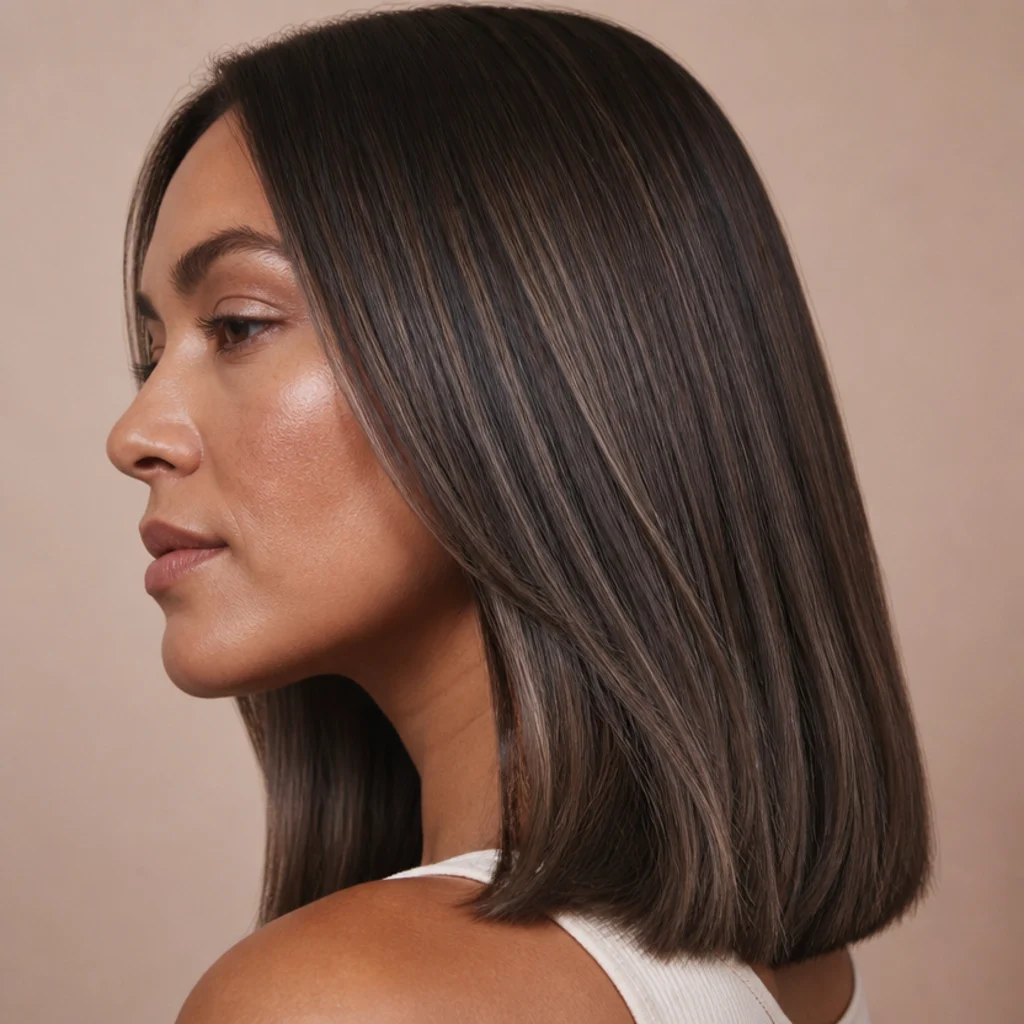
If warmth turns muddy or orange on you as it fades, this cool route keeps everything crisp. A mocha base (level 4 to 5) gets ashy lowlights dropped between existing depth to rebuild shadow, and that added contrast makes the surface tone look sharper and more reflective by comparison. Cool and neutral undertones are a strong match here, and it also works as a corrective for anyone whose old highlights oxidized to copper. Straight, blunt, and sleek styling shows the tonal step-down most clearly. Upkeep is medium because ash is the first tone to abandon the hair, so a cool-based gloss every 6 to 8 weeks isn't optional if you want it to stay true. Style it with a flat iron and a shine serum to amplify the glassy effect. Pro tip: ask your colorist to keep a warm-neutral micro-reflect underneath so the ash never tips flat or grey on camera. Tell your stylist you want "cool mocha with ash lowlights for depth, no exposed warmth, kept dimensional not solid."
04Face-Framing Money Piece on Dark Brown
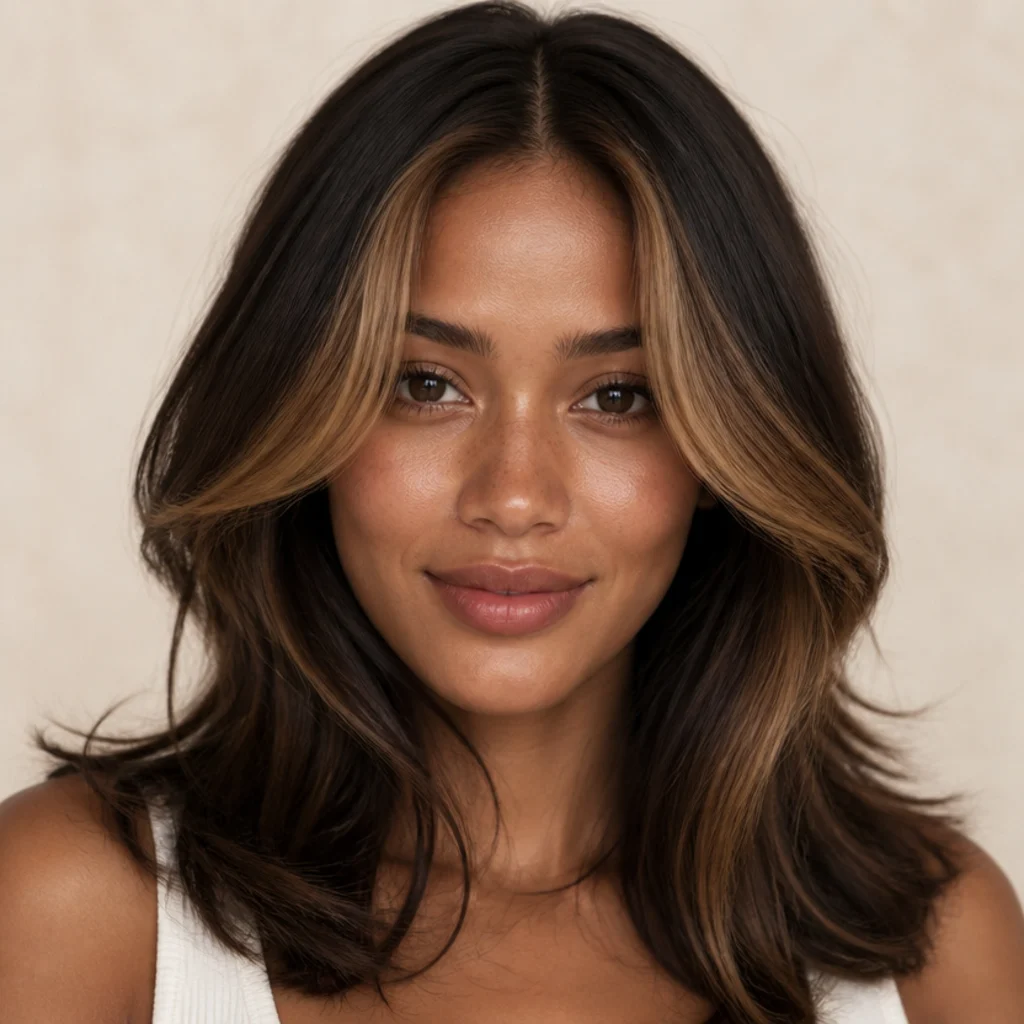
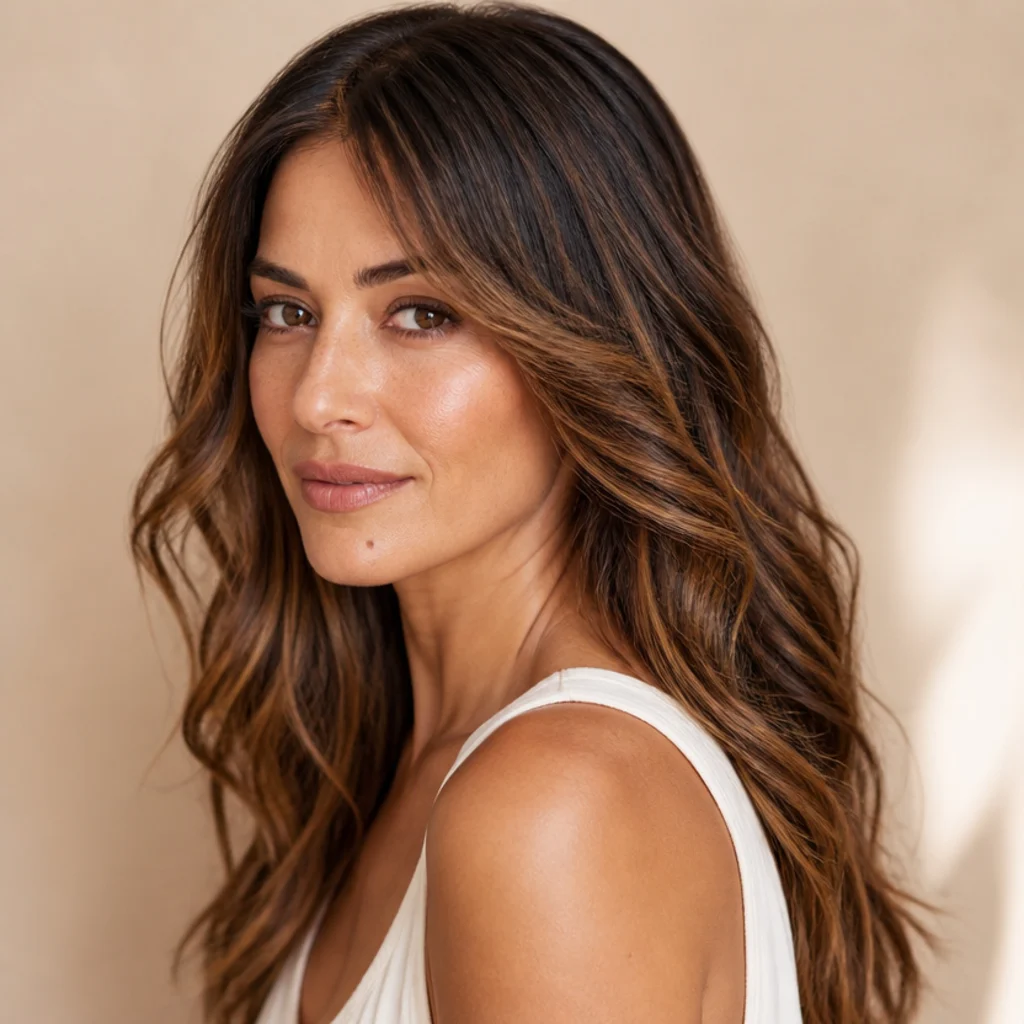
The money piece concentrates brightness exactly where it lifts and warms the complexion, right along the front, while everything behind stays deep and low-effort. On dark brown, a soft caramel or warm-toffee money piece two to three levels up gives real contrast without committing to all-over highlights, making it the highest impact-per-foil option on this list. Anyone who wants a visible change but easy regrowth should look here, and it's especially flattering with a center part and curtain layers that swing the brightness across the cheekbone. Maintenance runs medium because the front pieces catch the most light, sun, and shampoo, so they fade first. Difficulty is low to moderate. Pair it with a face-framing blowout that curves the ends outward. Pro tip: ask for it "shadow-rooted" a shade or two so grow-out melts instead of creating a hard band. Ask for a "face-framing money piece, two to three shades lighter, softly rooted so it grows out without a line."
05Warm Chocolate Melt
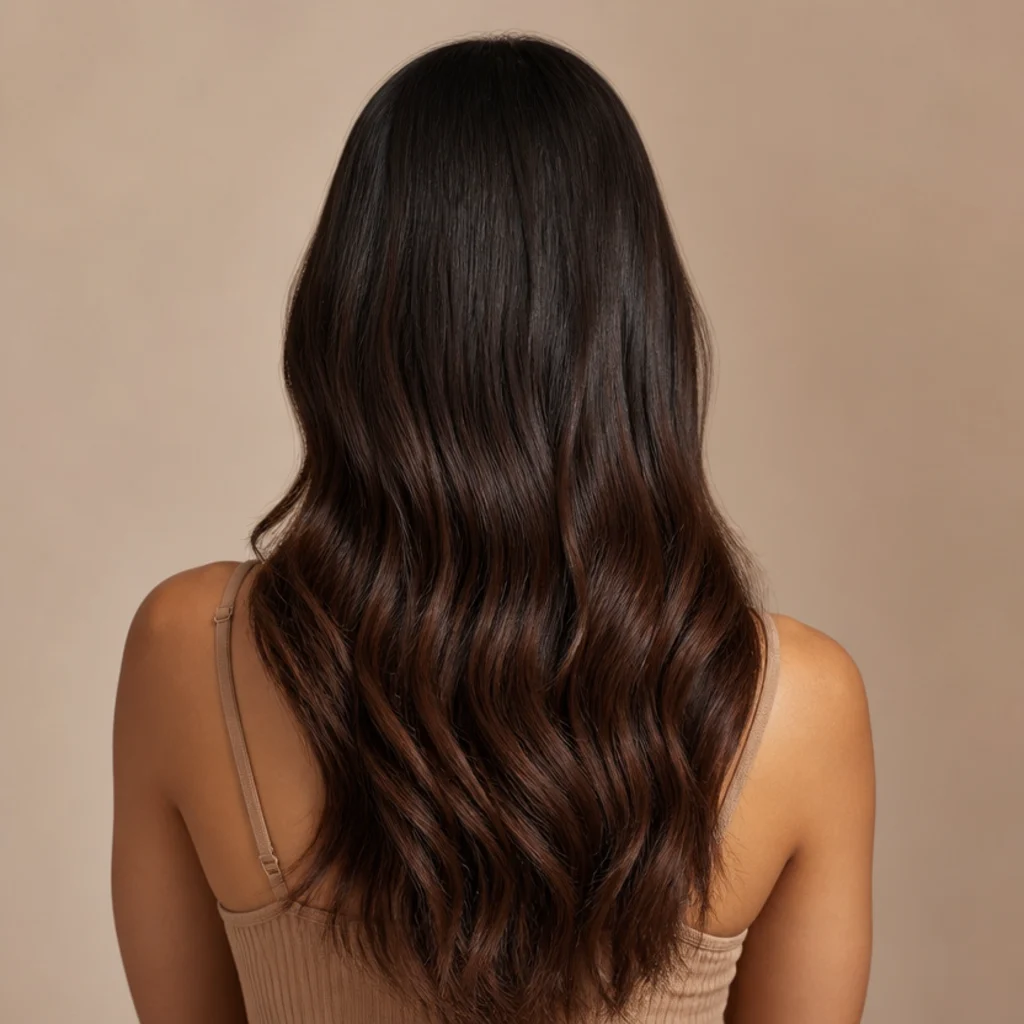
A color melt trades placement for gradient: deep chocolate at the root dissolving into a fraction more warmth toward the ends, blended vertically so there's no defined highlight, only a smooth shift that turns glossy in motion. Warm and olive skin tones look great with this, especially on long, one-length or lightly layered hair where the gradient has room to travel. It's one of the lowest-maintenance looks here because the root is meant to be dark, so grow-out is a non-issue; the only upkeep is a warm gloss to stop the ends muddying as they oxidize. Difficulty is moderate — the skill is in the smooth transition, not the lift. Style it with loose S-waves to let the melt read as dimension rather than a solid ombre. Pro tip: bring a photo of the exact end-warmth you want, since "warm" spans everything from cool-chocolate to red-toffee. Ask your colorist for a "warm chocolate root melt into slightly lifted ends, seamless, no visible highlights."
Save this to Pinterest so you can compare warm and cool melts side by side.
06Dimensional Brunette Highlights, Subtle Placement
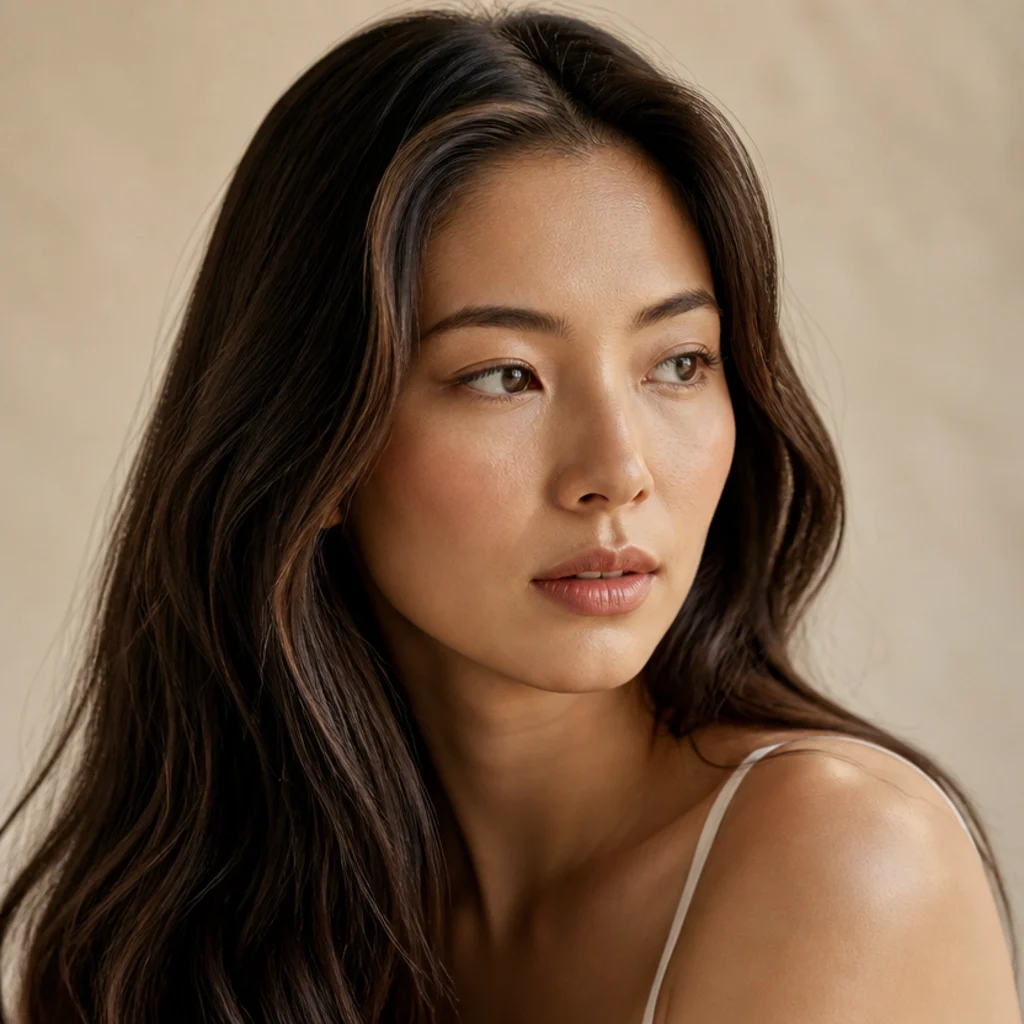
Classic foiled dimensional brunette highlights still earn their spot when placed with restraint. Fine, deliberately positioned foils around the crown, part, and hairline catch light exactly where the sun would naturally hit, so the effect reads organic instead of allover. If you want reliable, repeatable dimension and your hair looks flat under office and indoor lighting, where balayage can disappear, this is the fix. It works across textures and lengths, and the precision of foils makes it the easiest look to reproduce visit to visit. Maintenance is medium; expect a part-and-hairline touch-up around every 10 to 12 weeks, since surface placement shows regrowth sooner than a low-painted balayage. Difficulty is moderate. Style it with a middle or deep side part to control where the brightness sits. Pro tip: ask for a root shadow or "gloss down" at the base of the foils so the regrowth line stays soft. Ask for "fine dimensional brunette highlights, surface and hairline placement only, kept close to my natural depth so it stays low-contrast."
07Cinnamon-Kissed Dark Brunette
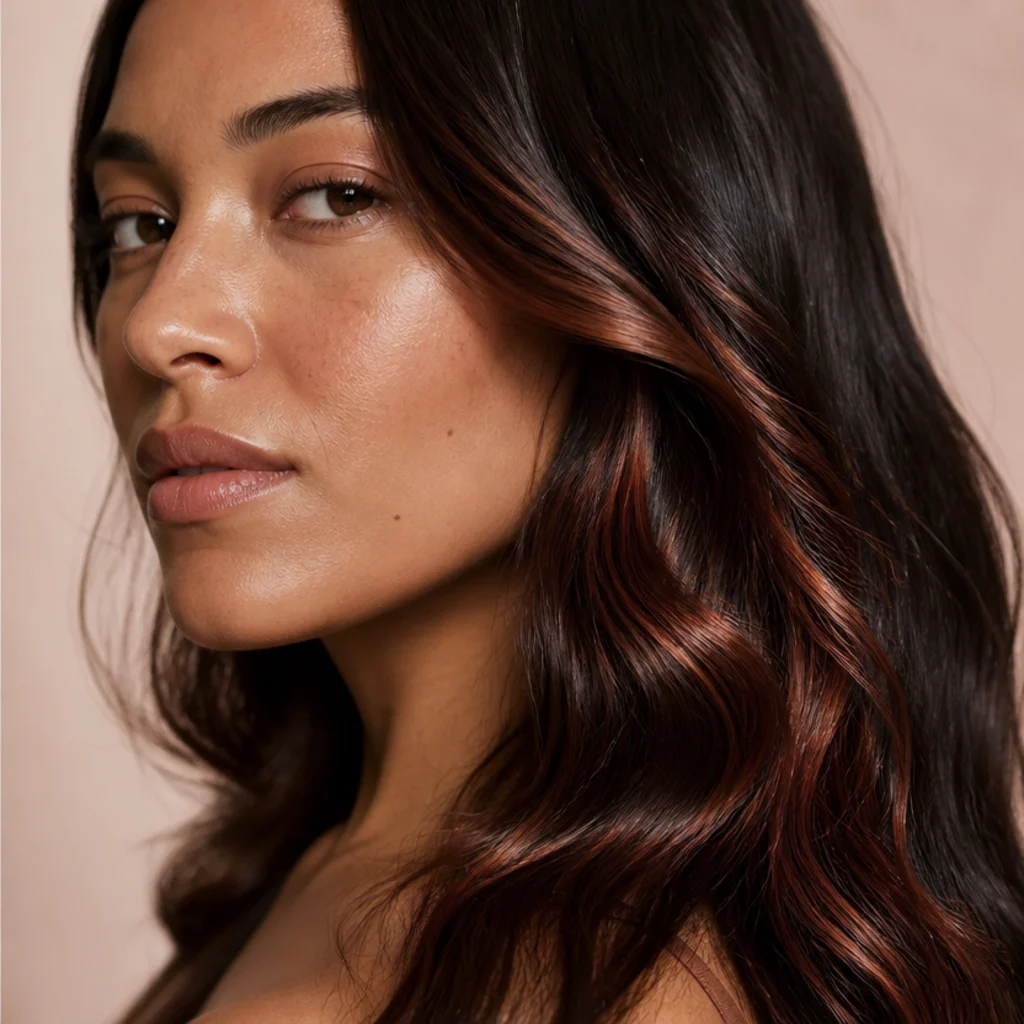
Cinnamon adds a spiced red-brown warmth that glows against a dark base without tipping into full copper. The colorist keeps the base deep and threads cinnamon-toned ribbons through the mid-lengths, so the red only surfaces when light hits — that's what keeps it firmly in brunette territory. Warm and golden undertones are the best match, and it also works for anyone who wants a whisper of red they can still call brown. Wavy and curly hair scatters the tone especially well, breaking it into little flashes rather than a solid panel. Upkeep is medium-plus because red molecules are the smallest and rinse out fastest, so a color-depositing gloss or a red-refreshing conditioner between visits protects the payoff. Difficulty is moderate. Style with defined waves to maximize the light-catch. Pro tip: switch to a sulfate-free, color-safe wash and cool water rinses to slow the fade. Ask for "cinnamon ribbons on a dark brunette base, warm not orange, subtle red dimension."
08Smoky Brunette with Violet Undertone
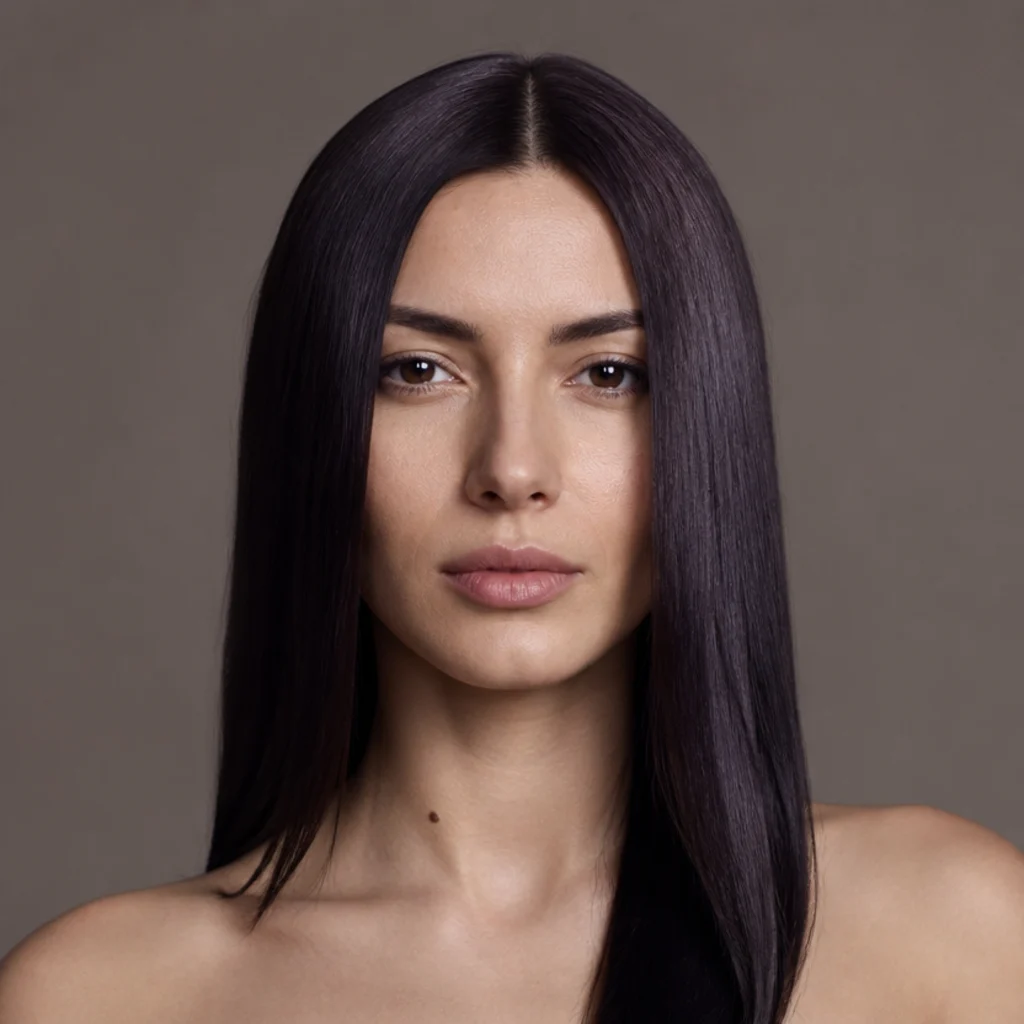
For the coolest end of the spectrum, smoky brunette leans on a violet-based undertone to neutralize hidden warmth and keep the color deep and glassy. Dimension here comes from tonal shadow rather than brightness, with slightly deeper panels layered beneath a smooth top so the hair reads dark, dense, and reflective. Cool and neutral undertones do best with this, along with anyone who can't stand red or gold peeking through as color fades. Sleek, straight styling shows the glass-like finish best, though it also gives a moody depth to loose waves. Maintenance is medium because violet toners soften and drift over 6 to 8 weeks, revealing the warmth they were hiding. Difficulty is moderate to advanced, since a heavy hand with violet can flatten the hair or leave a grey cast. Pro tip: use a gentle blue- or purple-toned gloss at home only as your colorist directs — over-toning is the most common way this look goes muddy. Ask for a "smoky cool brunette with a violet-based toner and subtle tonal lowlights, no warmth."
09Dark Roast with Caramel Underlayer
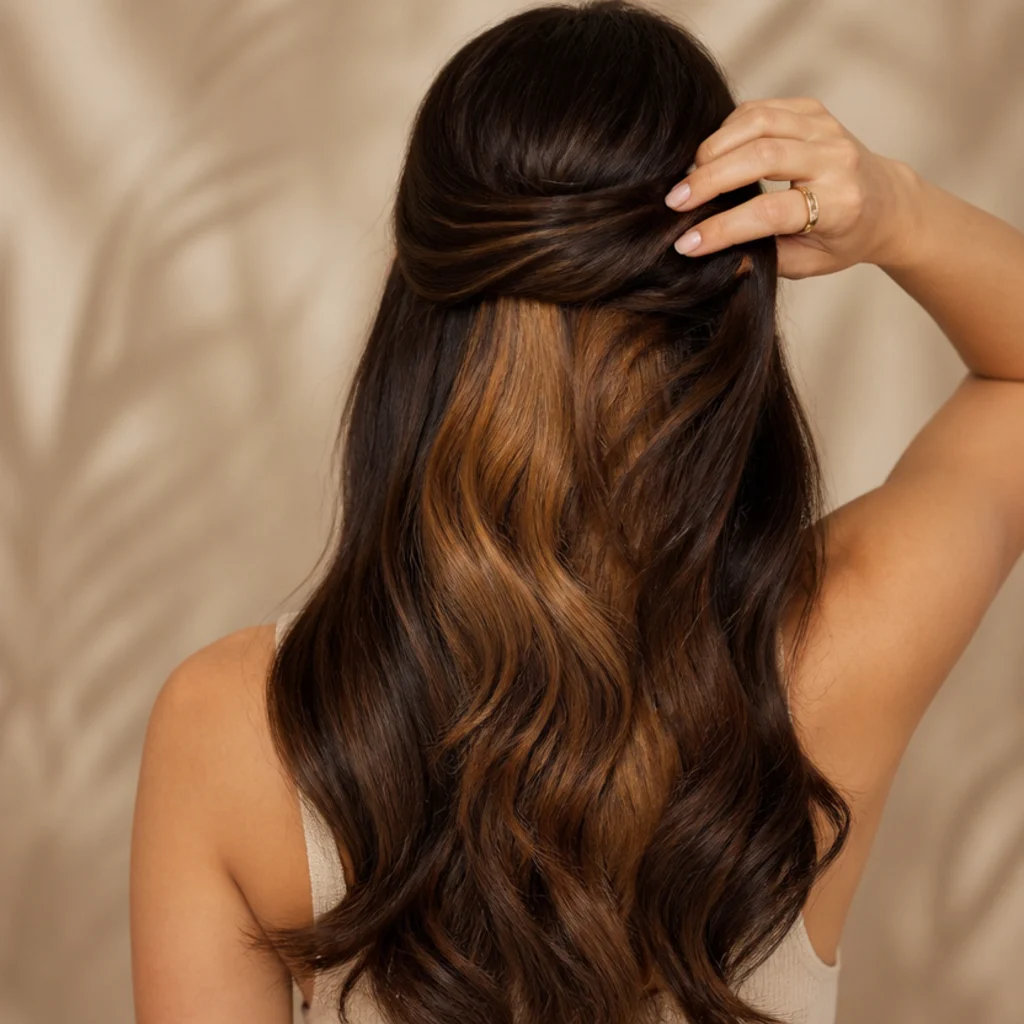
A hidden underlayer keeps the top deep and polished while a warmer caramel section lives beneath, revealed only when you move, tie it up, or run your fingers through. It's a playful, low-commitment way to wear dimension because the surface stays dark and professional, so it works for people whose workplace or preference rules out obvious highlights. If you want a private pop of warmth and live in half-up styles, textured waves, and messy buns, the underlayer flashes exactly when you need it to. Maintenance is low because fading happens underneath where nobody clocks it. Difficulty is moderate; the skill is in the clean horizontal split so the caramel never leaks onto the top. Pro tip: point out your part and how you usually wear it up, so the colorist places the caramel exactly where it will actually show. Ask your stylist for "a dark roast top with a caramel peekaboo underlayer, warm, hidden unless I lift the hair."
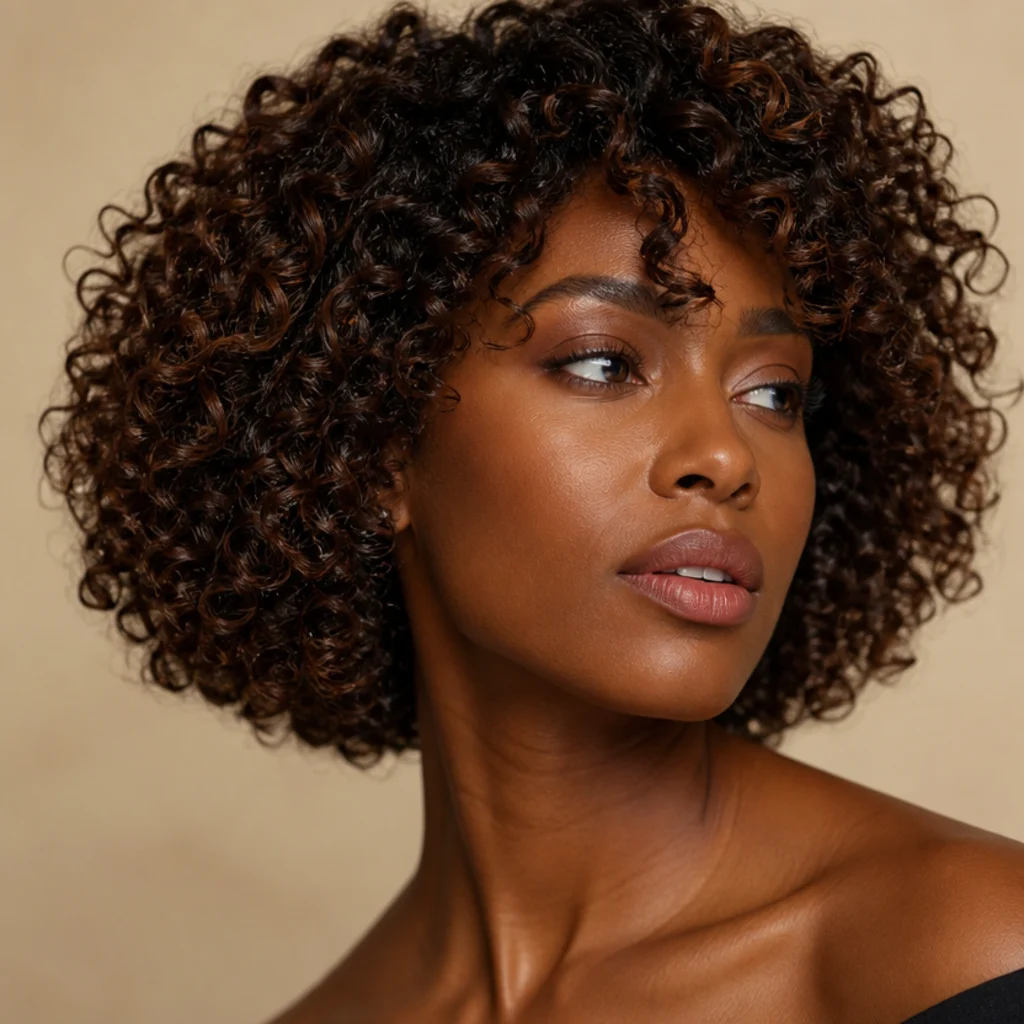
11Deep Brunette Teasylights
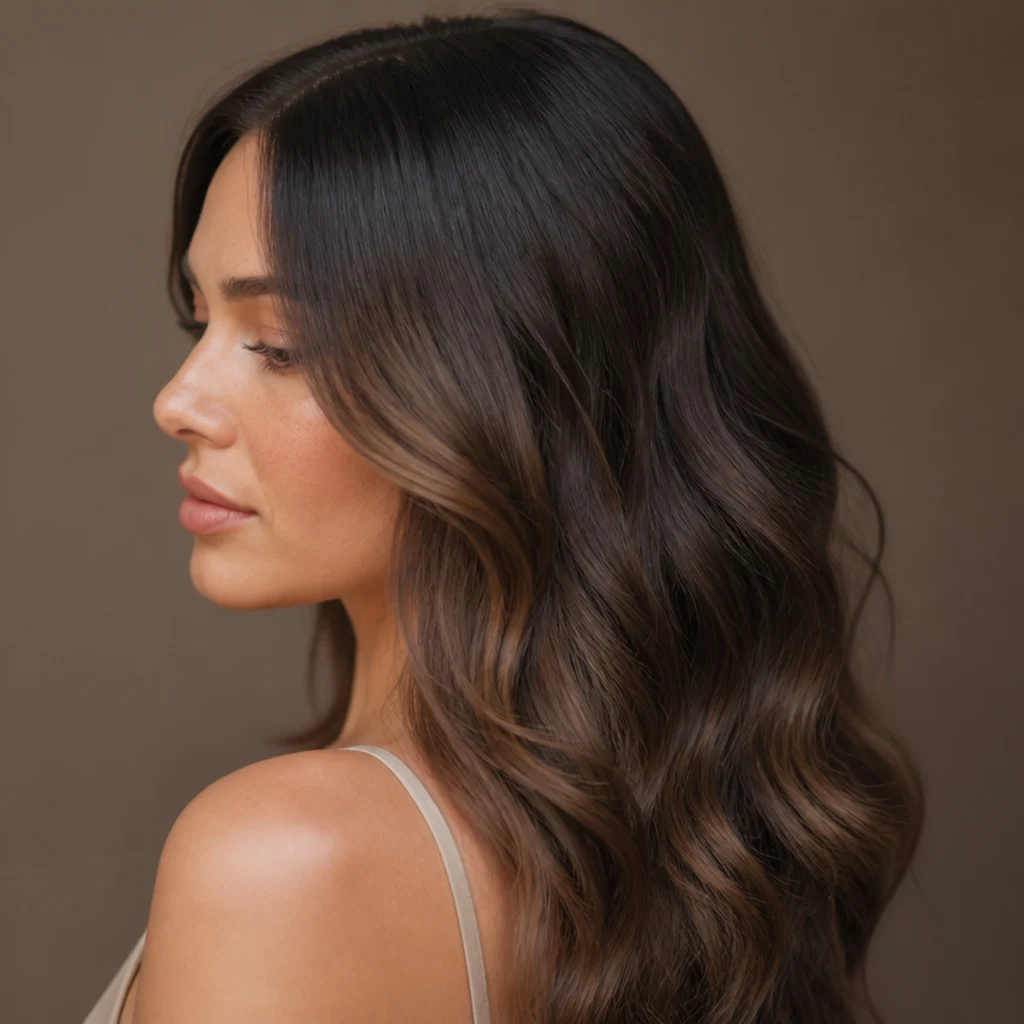
Teasylights sit exactly between foils and balayage: the stylist backcombs the base of each section before applying color, which scatters where the brightness begins so there's no crisp regrowth line, just a soft, diffused start. On deep brunette, this delivers the saturation and reach of foils with the grow-out ease of balayage — good for people who want a little more punch than hand-painting alone gives. Anyone who loved traditional highlights but hated the hard demarcation at week eight should try this, and it works across most textures and medium-to-long lengths. Maintenance is medium but forgiving, easily stretched to 12 weeks because the teased root blurs regrowth. Difficulty is moderate to advanced — the teasing has to be even or the diffusion looks patchy. Pro tip: request the teasylights kept low-contrast and tonal so they extend even further before a refresh is obvious. Ask for "deep brunette teasylights, softly diffused roots, low-contrast tonal brightness."
12Chestnut Balayage on a Long Blunt Cut
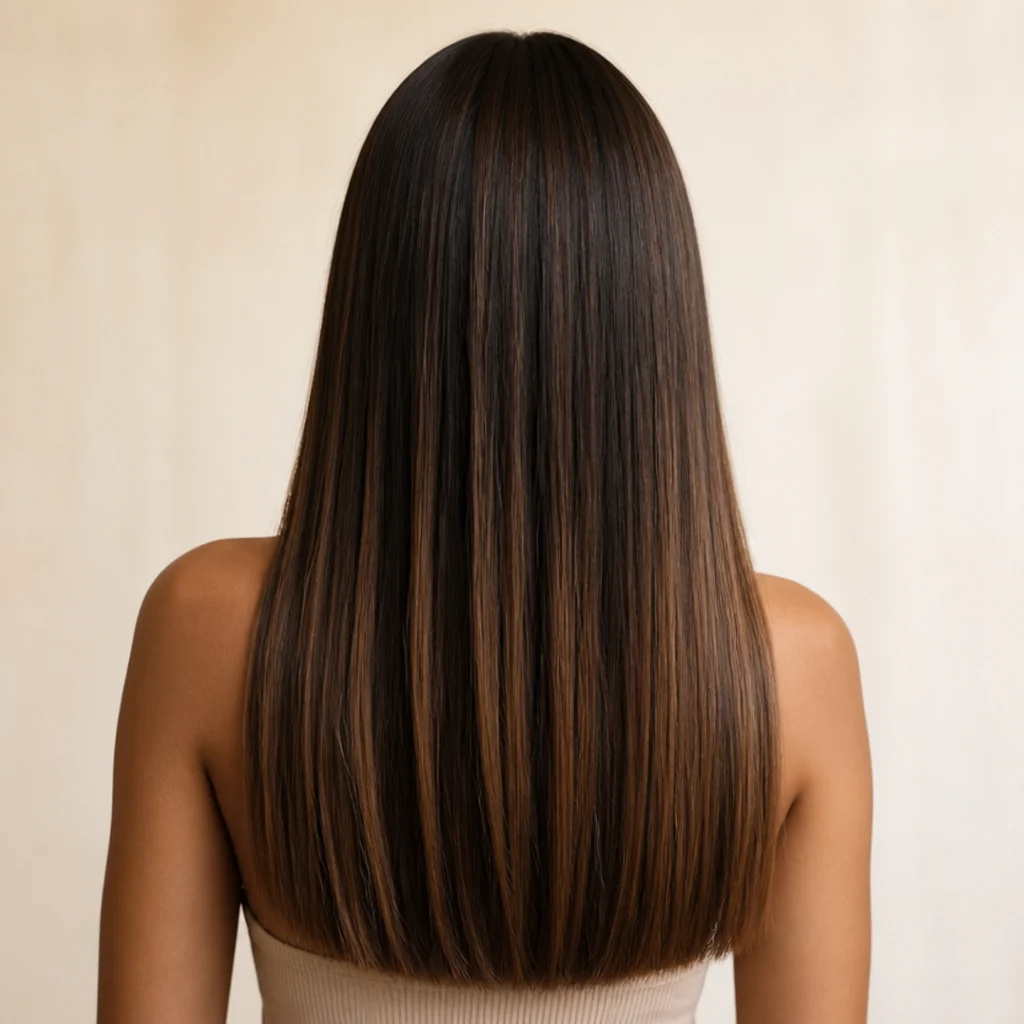
A long, blunt hemline is the ideal canvas for dimensional brunette balayage because the heavy, uninterrupted baseline makes hand-painted chestnut sweeps look intentional and architectural. The contrast stays soft, but the sharp cut gives the color a frame, so the dimension looks designed rather than sun-random. People with thick or dense hair who want visible movement without sacrificing their blunt shape will get the most from this, and it suits warm and neutral undertones. Maintenance is low to medium thanks to the dark root, though the blunt line itself needs trimming every 8 to 10 weeks to stay crisp. Difficulty is moderate. Style it with a straight, mirror-smooth blowout or a subtle underbend to spotlight the hemline. Pro tip: ask the colorist to keep the balayage off the last inch of the ends so the blunt baseline stays deep and heavy — that dark perimeter is what makes the cut look expensive. Ask for a "chestnut dimensional brunette balayage placed to follow the length, kept off the very ends so the blunt line stays crisp and deep."
13Mushroom Brown Dimensional Blend
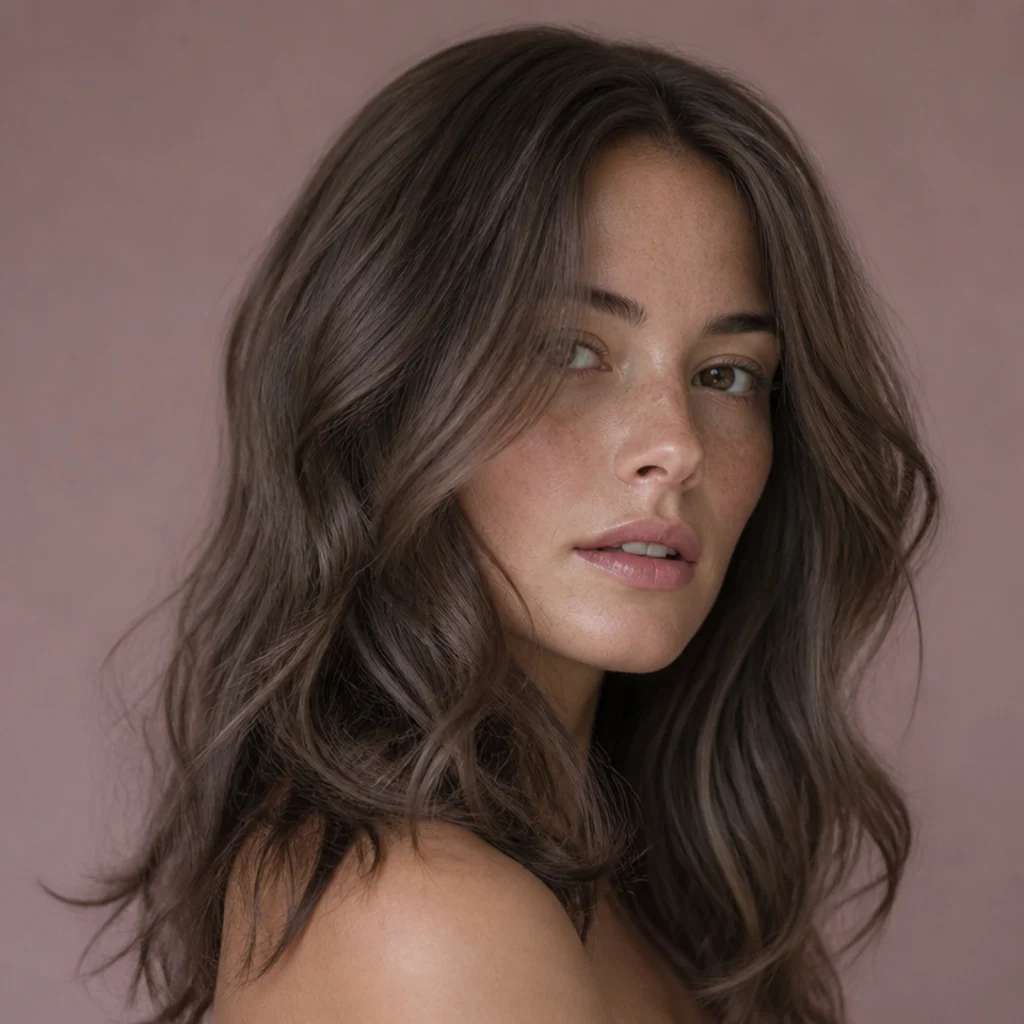
Mushroom brown weaves cool taupe and grey-brown tones into a dark base for a muted, editorial finish that photographs as instantly modern. The dimension is entirely tonal, built by threading smoky mid-tones through a deep brunette base rather than adding any brightness, so it never reads as "highlighted," only as complex. It's an understated choice for cool and neutral undertones and pairs best with fair to medium skin, where the taupe flatters rather than drains. Straight and softly waved hair reveals the tonal layering most clearly. Maintenance is medium to high because those cool tones need a toner refresh every 6 to 8 weeks or the mushroom warms up into ordinary brown. Difficulty is high — balancing cool deposit against warmth without going flat or ashy-grey takes an experienced colorist. Pro tip: go in with clean, product-free hair so the toner grabs evenly. Ask for "a mushroom brown dimensional blend, cool taupe mid-tones over a deep base, matte not brassy."
14Dark Brunette Curtain Bangs with Brightness
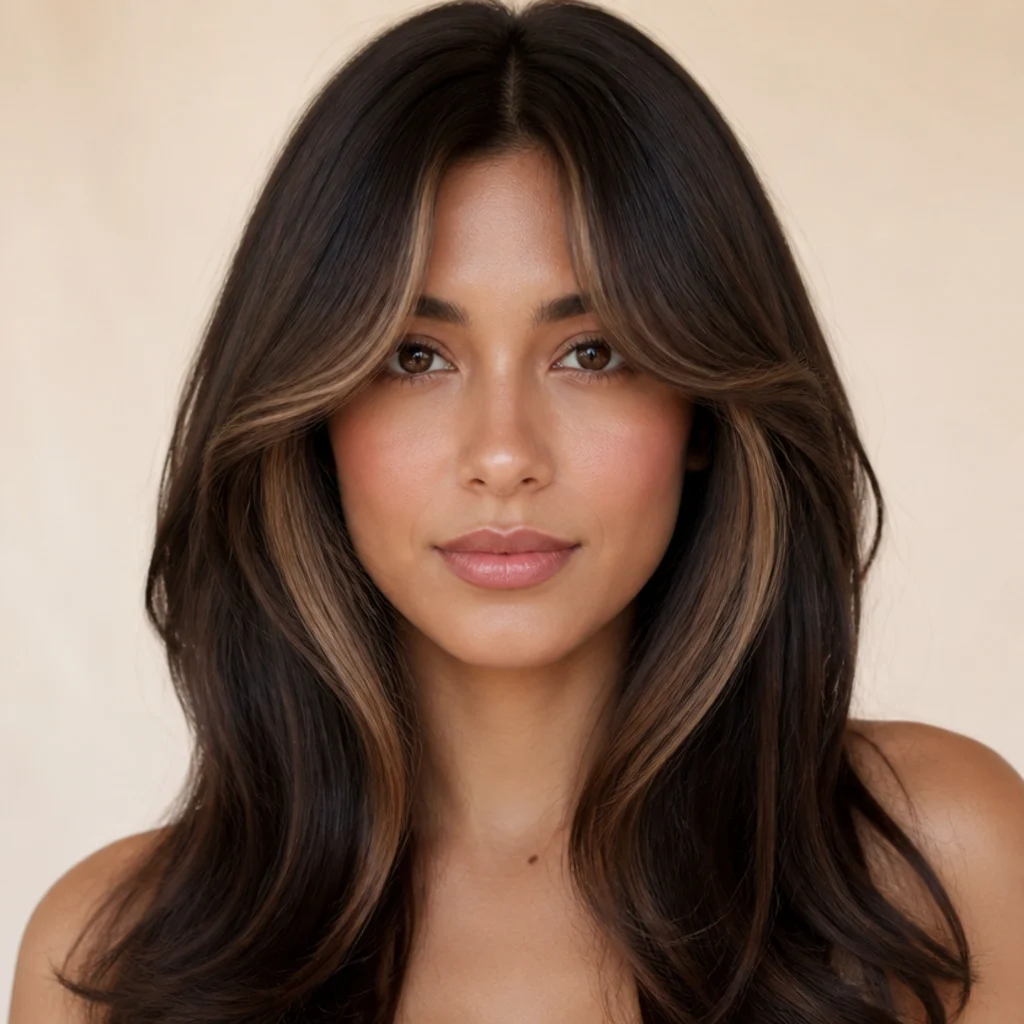
Curtain bangs already frame the face, and a touch of brightness painted along their inner edge amplifies that shaping every time you tuck them back. Against a dark brunette base, soft warm accents on the curtain pieces catch the light on the cheekbone and open up the eyes, doing the visual work of a money piece with a fringe's softness. Anyone with a fringe or curtain layers who wants dimension focused where it flatters most should ask for this, and it works across nearly every face shape because curtain bangs are so adaptable. Maintenance is medium since the front pieces sit in the sun and shampoo path and fade first. Difficulty is low to moderate. Style with a round brush that flicks the curtain outward. Pro tip: ask for the brightness feathered only on the inner edge, not the full fringe, so it reads as a glow rather than a stripe when the bangs fall forward. Ask for "soft warm brightness painted into my curtain bangs and face frame, blended into a dark brunette base, nothing heavy."
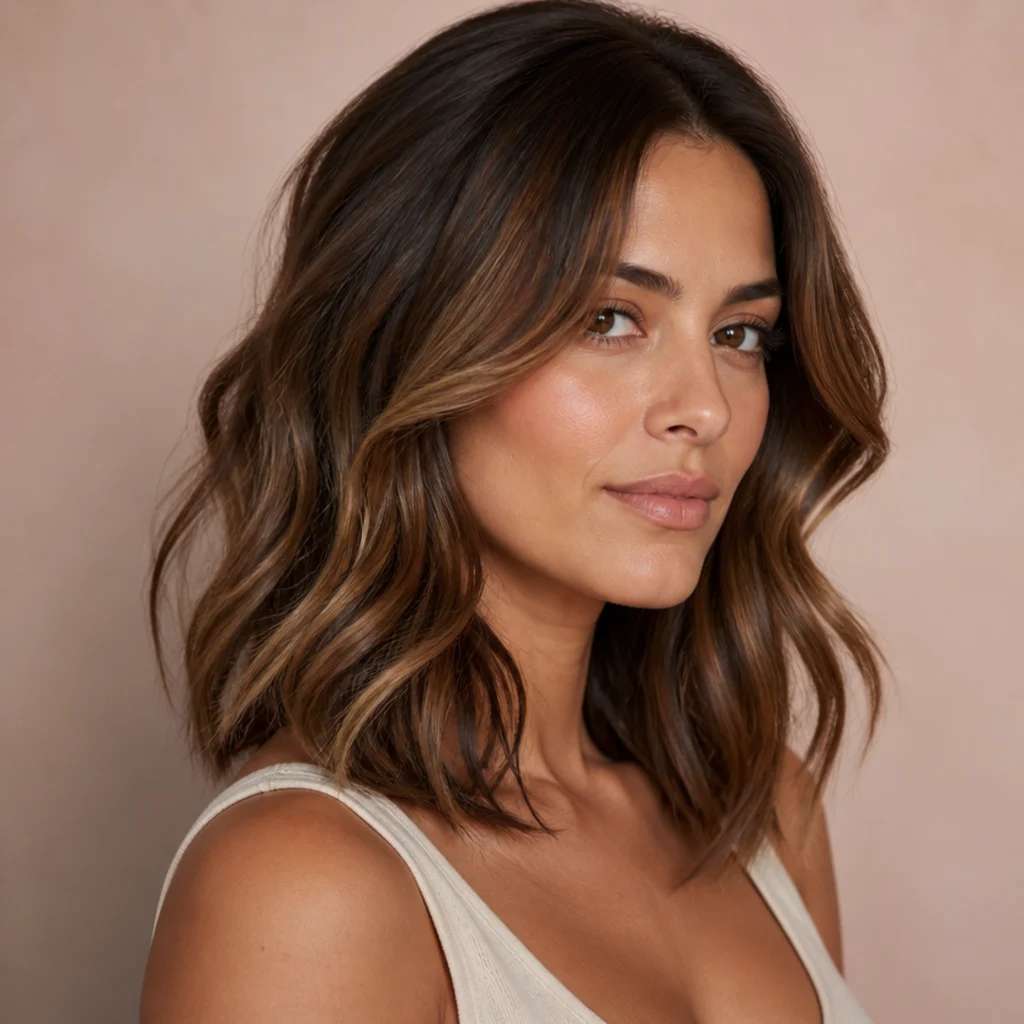
15Cool Espresso Bob with Peekaboo Lights
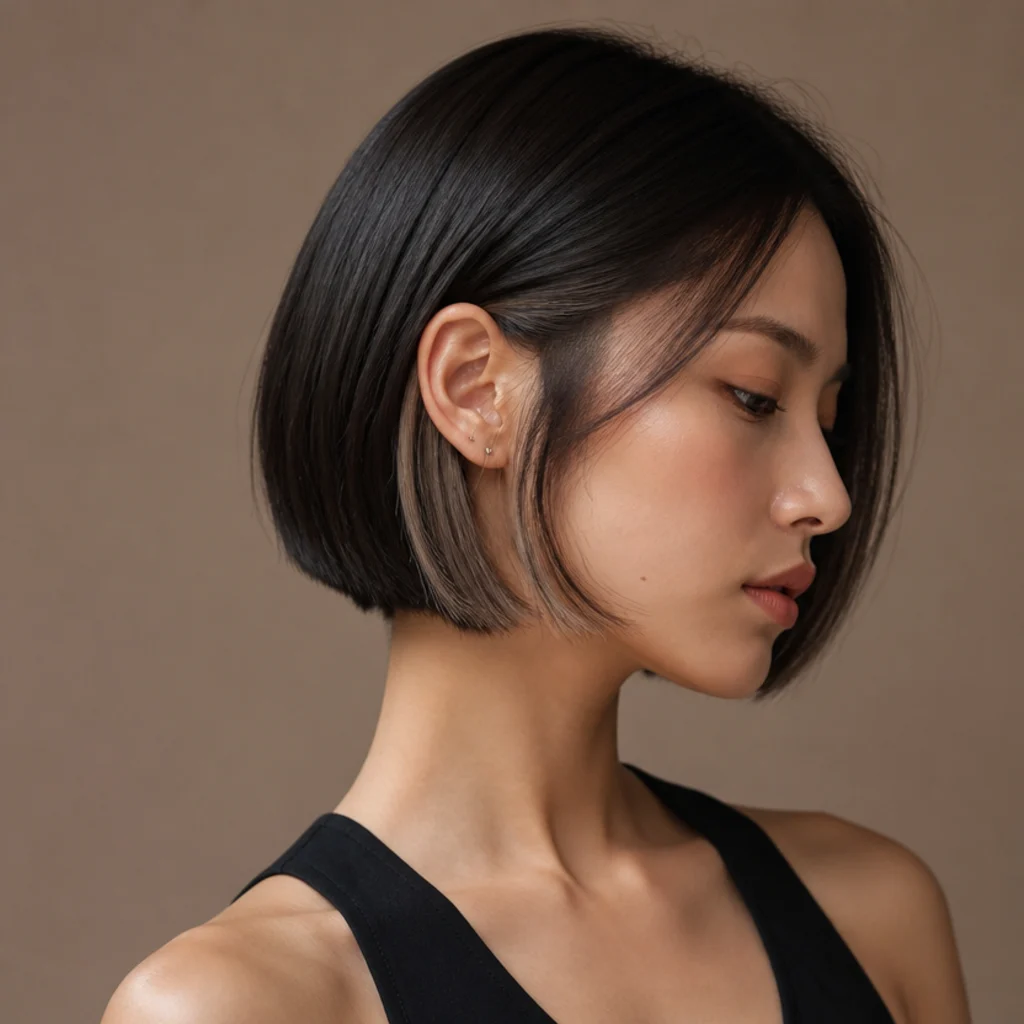
A sharp espresso bob looks sleek on its own, but tucking cool peekaboo lights under the top layer adds surprise dimension that appears when you tuck the hair behind an ear or the bob swings. The surface stays glossy and deep; the interest hides just beneath, so the clean line is never disturbed. People who love a precise short cut and want dimension without compromising the geometry will like this, and it suits cool and neutral undertones where the ashy peekaboo reads intentional. It's especially good on a chin-length or jaw-grazing bob with a slightly stacked back. Maintenance is medium, driven more by the cut than the color — a bob needs shaping every 6 to 8 weeks regardless. Difficulty is moderate. Pro tip: mention exactly how you tuck and style the bob so the colorist hides the lights where your movement will actually reveal them. Ask for "cool peekaboo lights under a chin-length espresso bob, hidden on the surface, revealed with movement."
Save this to Pinterest if a bold bob is on your next-appointment wish list.
16Warm Toffee Root Smudge
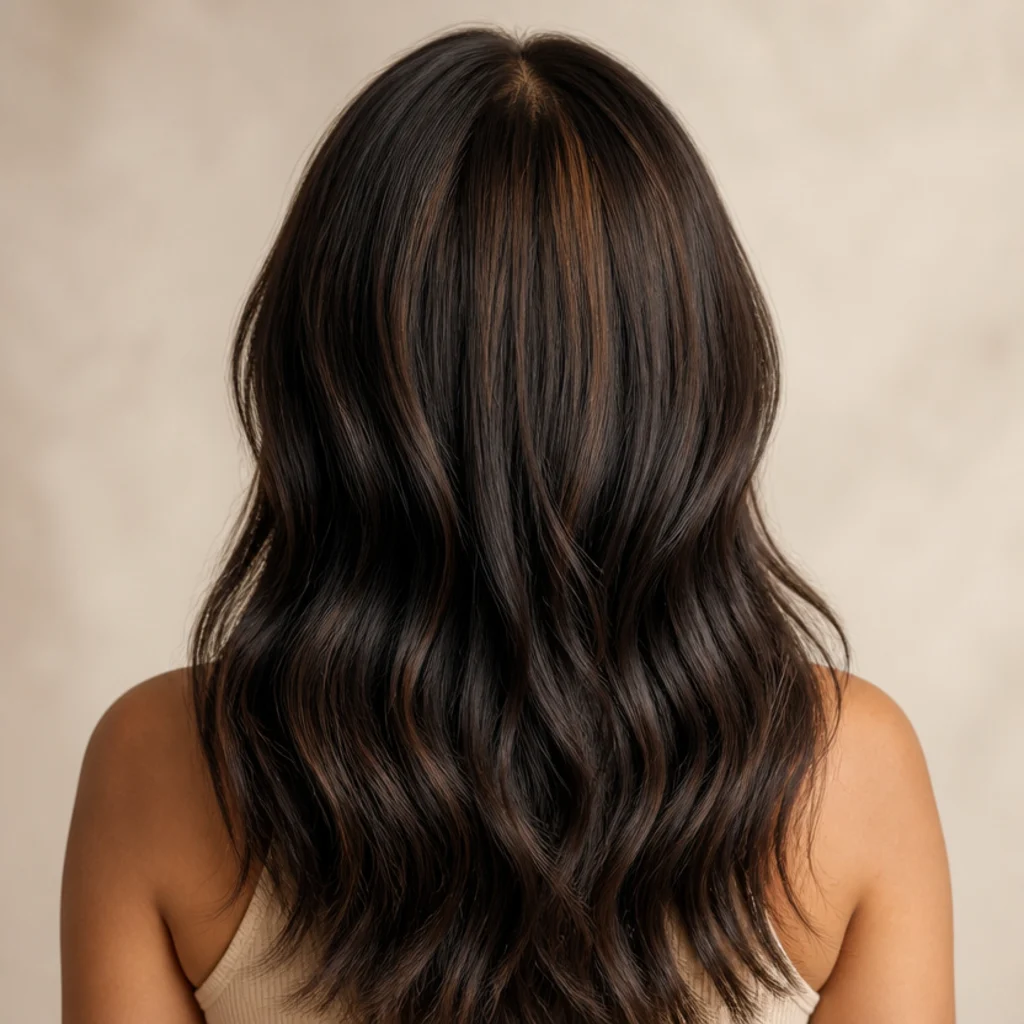
A root smudge blurs the boundary between your natural regrowth and any added color by melting a soft, slightly warmer toffee tone through the root zone. On dark brunette, it makes existing highlights or balayage look grown-in and expensive, and it extends the runway between salon visits, which is why colorists lean on it as a maintenance-saver. Anyone tired of an obvious regrowth line should ask for this, especially people who previously wore brighter highlights and want to transition to something lower-effort; it works on every length and texture. Maintenance is low, which is the whole point — a smudge is often what buys a balayage its four-month lifespan. Difficulty is low to moderate. Pro tip: schedule a root smudge as a standalone service between full color appointments to reset your dimension for a fraction of the time and cost. Ask your stylist to "add a warm toffee root smudge over my dark brunette to soften regrowth and melt my dimension together."
17Dark Chocolate with Copper Ribbons
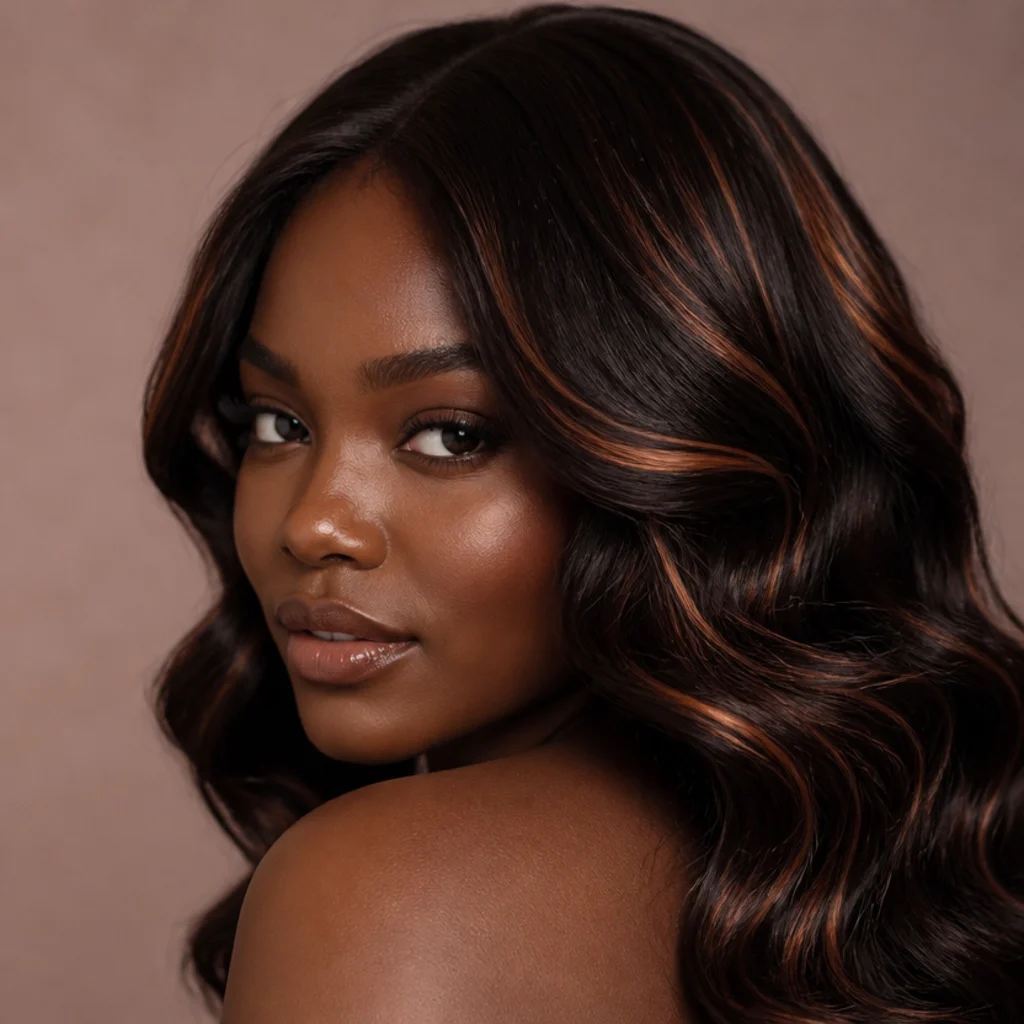
For the boldest warmth on this list, copper ribbons woven through a dark chocolate base bring a fiery glow that stays contained because the base stays deep. The copper fully ignites only in direct light, so indoors it reads as rich, restrained dimension and outdoors it comes alive — restraint and drama in one. Warm, golden, and deep undertones suit it best, and it works for anyone who wants a hint of red-orange without going full copper head. Maintenance is the highest here because copper is a fugitive pigment that fades fast and unevenly, so color-depositing shampoo or a copper-refreshing gloss is essential to keep it from going pale-brassy. Difficulty is moderate to advanced. Style with glossy waves to make the ribbons flare. Pro tip: extend the vibrancy by washing less often, using cool water, and adding a copper-toned conditioning mask weekly. Ask for "copper ribbons on a dark chocolate base, warm and glowing, kept as dimension not allover."
18Sun-Grown Dimensional Brunette
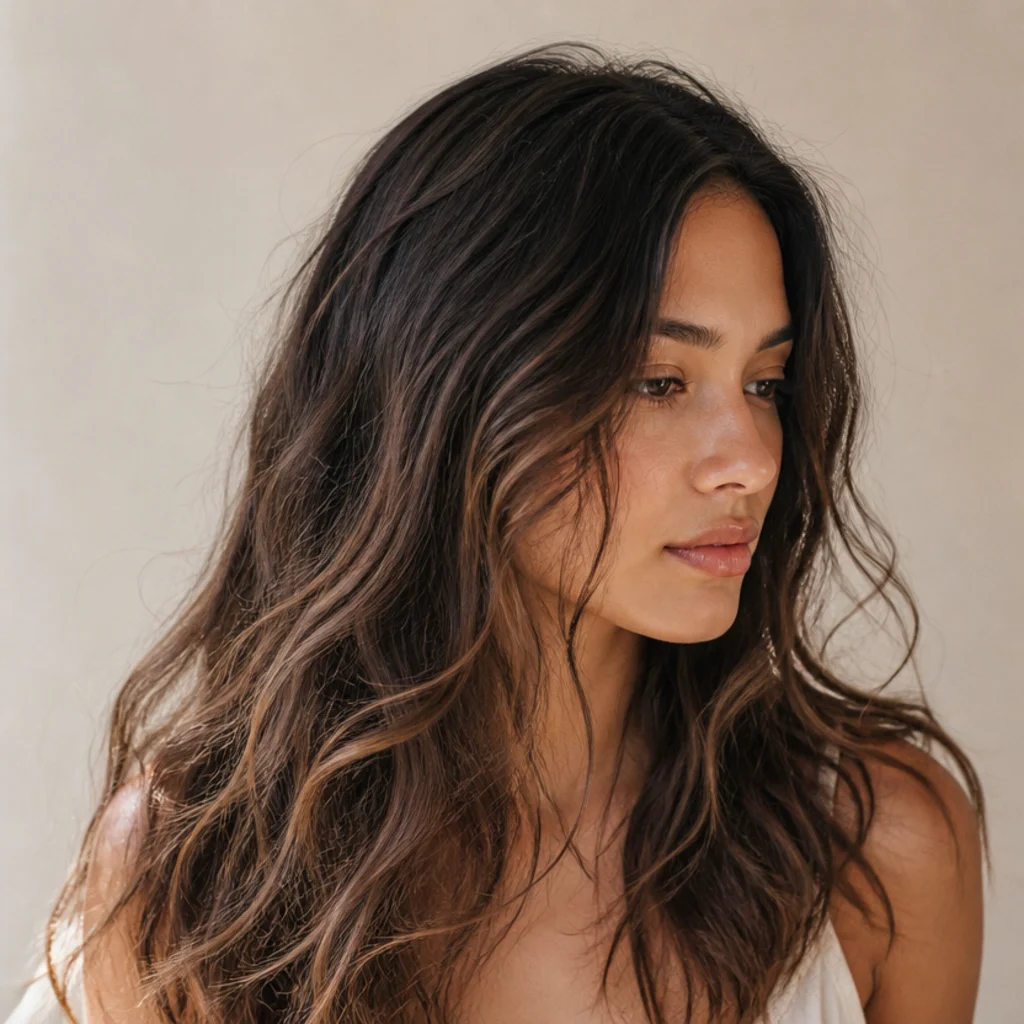
Sun-grown brunette mimics the way hair naturally lightens over a long summer: brightness concentrated toward the ends and around the face, with the roots and interior staying deep. The placement is airy, irregular, and weighted low on purpose, so it looks earned rather than applied — an anti-pattern approach that reads as your best natural hair. Anyone who wants the lowest-effort, most believable version of dimensional brunette highlights should ask for this; it works across textures and lengths. Maintenance is low; the whole design goal is grown-in ease, so refreshing twice a year is plenty. Difficulty is moderate — the artistry is in making randomness look random rather than forgotten. Style with undone, air-dried waves. Pro tip: bring reference photos of childhood or post-holiday sun-lightening so the colorist can echo where your hair would actually brighten. Ask for "a sun-grown dimensional brunette, brightness weighted to the ends and face, deep roots, nothing uniform or striped."
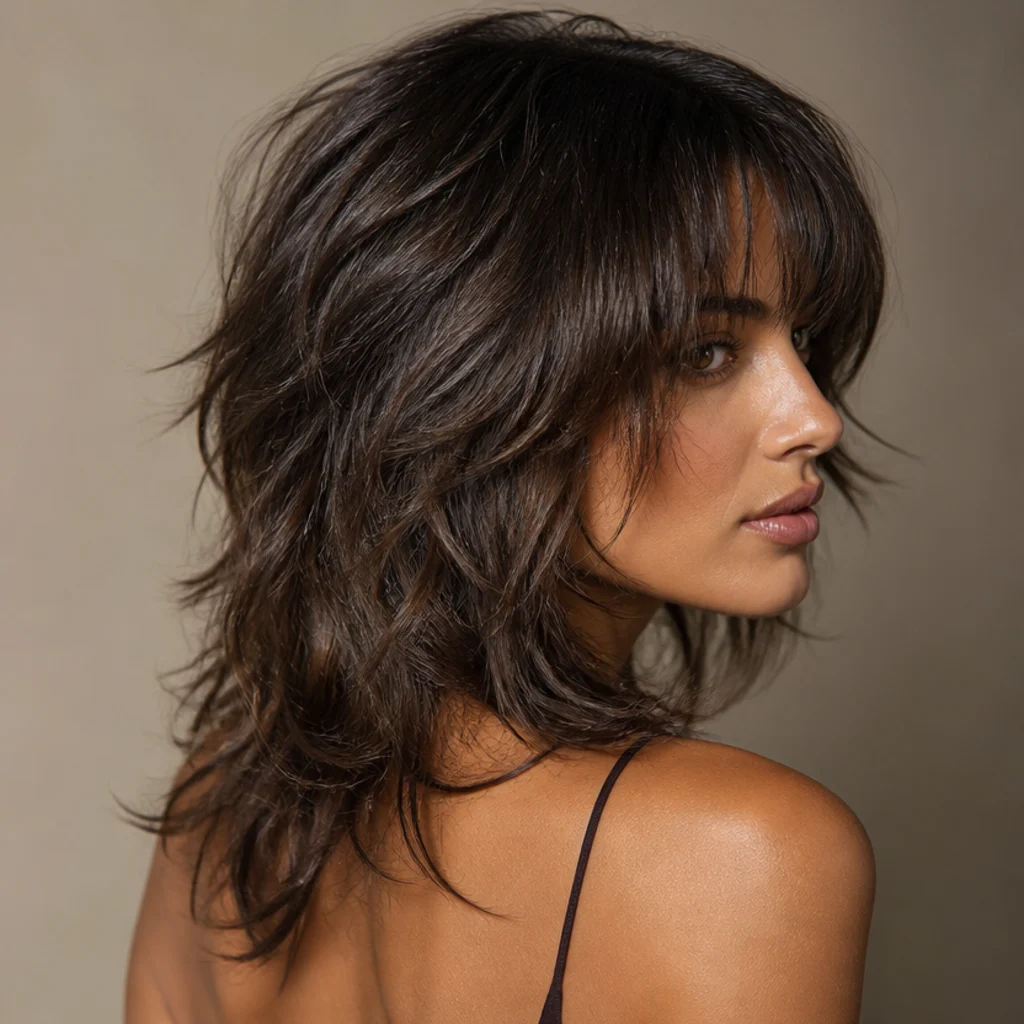
19Deep Brunette Shag with Layered Movement
A shag is built from layers, and dimensional color is what makes those layers legible. On a deep brunette shag, soft brightness painted to follow the layering emphasizes the internal shape and texture, so every flick, curtain piece, and bit of movement catches light and reads separately. People with fine to medium hair who want the illusion of more volume and density will like this, since dimension along the layers fakes depth the cut alone cannot. It suits a lived-in, rock-and-roll aesthetic and pairs with a middle or slightly off-center part. Maintenance is medium, mostly for keeping the shag's layered shape sharp with regular trims every 8 to 10 weeks. Difficulty is moderate. Pro tip: ask the colorist to paint after seeing your cut styled the way you actually wear it, so the brightness lands on the pieces that move. Ask for "dimensional color painted to follow my shag layers, soft and lived-in, on a deep brunette base."
20Glossy Espresso with Baby Highlights
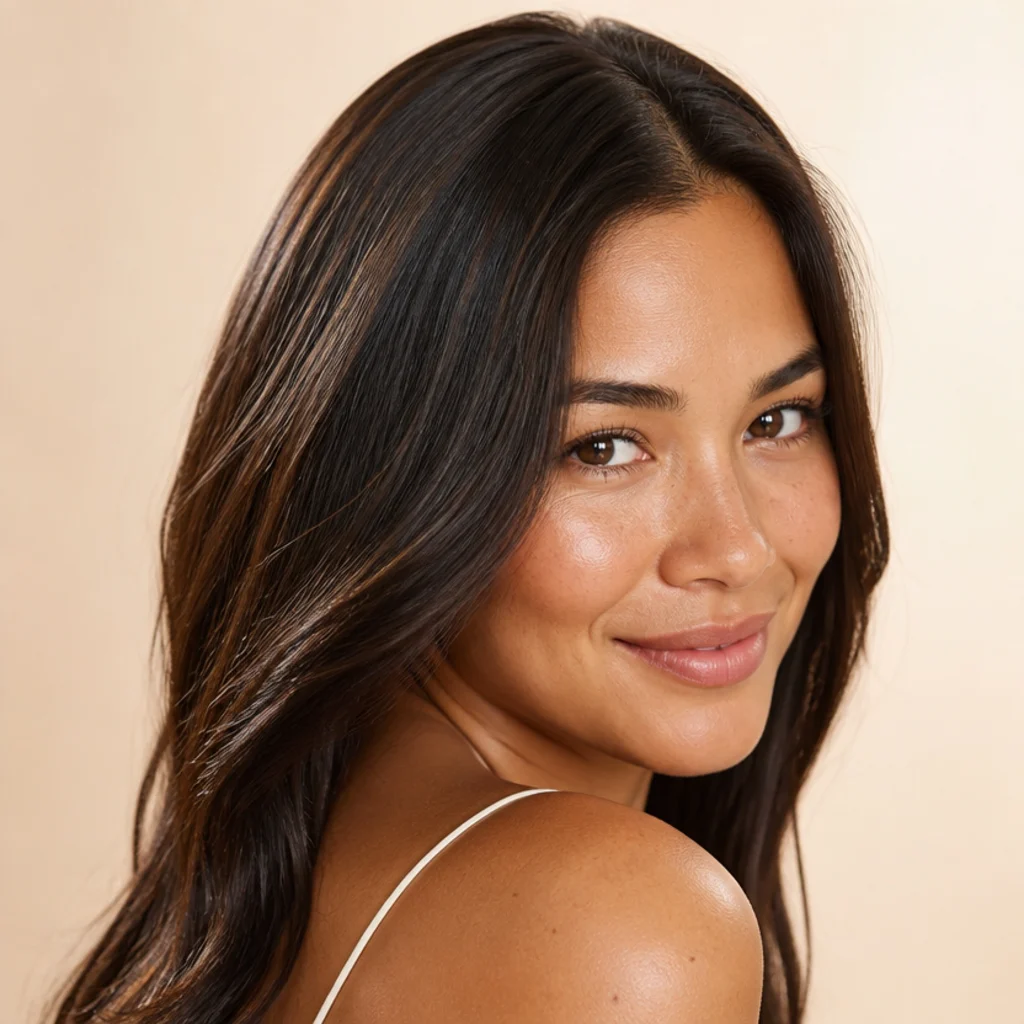
Baby lights are the finest possible highlights, ultra-thin sections that add a whisper of brightness reading purely as shine on a glossy espresso base. There's no visible stripe, only a lit-from-within glow, which makes this the most commitment-shy entry point into soft dimensional brunette. It's a good fit for anyone nervous about color, a first-timer easing off single-process, or someone who just wants their existing dark hair to look richer and more expensive without an obvious change. It suits every skin tone and texture because the effect is tonal, not contrasty. Maintenance is low, since there's no bold line to grow out. Difficulty is moderate to advanced — fineness demands patience and a light, even hand. Pro tip: finish every service, and every few weeks at home, with a clear or tonal gloss, because on this look shine is the entire effect. Ask for "delicate baby lights on a glossy espresso base, tonal, just for shine, no visible contrast."
Save this to Pinterest to remember the most low-key look on the list.
Pro Tips from the Editor
- Book a gloss, not a full color, as your default touchpoint. Placement lasts months, but tone fades in weeks. A standalone gloss every 6 to 10 weeks keeps dark dimensional brunette looking freshly done for a fraction of the chair time and cost.
- Name your level, not just a shade word. "Level 3 with warm chestnut two levels up" gives your colorist a target; "dark brown" does not. Bring your natural level and the level you want the brightness to hit.
- Match the fade risk to your commitment. Red, cinnamon, and copper rinse out fastest, ash and violet-based cools drift next, and warm-neutral browns hold longest. Pick your tone knowing how often you will realistically re-tone.
- Protect against warm brass at home. Cool water rinses, sulfate-free color-safe shampoo, UV-protectant spray, and less frequent washing do more to preserve tone than any single salon service.
- Ask for a root shadow or smudge on any surface placement. It's the single most effective way to soften regrowth and stretch a foiled or money-piece look past the twelve-week mark.
- Bring photos that show the light, not just the color. Two or three images in different lighting help your colorist read the ratio of base to brightness you actually want, since dark dimension looks completely different indoors versus in sun.
- Prioritize bond and moisture care, especially on curls. Dimension only reads as shine when the hair is healthy; dull, dry strands flatten even flawless color.
How to Choose / Get the Look
Start with your base depth. If your natural hair is very dark (levels 2 to 4), you get dimension from contrast placement and shine rather than lightening the whole head — that's why deep-rooted looks like the espresso and chocolate options stay so low-maintenance. Next, decide warm or cool: warm chestnut, caramel, cinnamon, and copper flatter golden and olive undertones, while ash, mocha, mushroom, and violet-based smoky browns suit cool and neutral skin. Then match the technique to your texture and cut. Balayage and teasylights blend well on waves and layers; foiled dimensional brunette highlights suit those who want repeatable, controllable placement; curl-specific painting keeps coils defined; and hidden underlayers or peekaboos work for anyone who needs a professional surface. Factor in effort honestly: red and copper fade fastest, ash and cool tones need the most frequent toning, and a dark root always buys you time. Use the table below to shortlist by priority, then bring two or three saved photos, name your base level, and say "low-contrast dimensional brunette" so your colorist keeps depth instead of lifting you lighter than you want.
| If your priority is… | Best looks to save | Undertone match | Upkeep reality |
|---|---|---|---|
| Lowest maintenance | Chocolate Melt, Root Smudge, Sun-Grown | Warm to neutral | Gloss + trim only, refresh 2x/year |
| Most natural, no line | Soft Balayage, Baby Lights, Teasylights | Any | Medium, stretches to 3-4 months |
| Visible face-lift | Money Piece, Curtain Bang Brightness | Warm to neutral | Medium, front fades first |
| Coolest, no warmth | Cool Mocha + Ash, Smoky Violet, Mushroom | Cool to neutral | Higher, re-tone every 6-8 weeks |
| Bold warmth | Cinnamon Ribbons, Copper Ribbons | Warm, golden, deep | Highest, color-depositing care |
| Hidden or workplace-safe | Caramel Underlayer, Bob Peekaboo | Any | Low, fades where it does not show |
Frequently Asked Questions
What is the difference between dimensional and solid brunette?
Solid brunette is a single, uniform color from root to tip that reflects light evenly and can look flat in photos. Dimensional brunette keeps a deep base but layers in tone-on-tone brightness, ribbons, or lowlights so different strands catch light differently, giving depth, movement, and shine without going lighter overall.
How much does dark dimensional brunette cost and what should I budget for upkeep?
Cost varies widely by salon, region, and how much hand-painting is involved. A partial or money-piece service sits lower, while a full-head dimensional balayage with a gloss runs toward the higher end. The smart budgeting move is to plan for an inexpensive gloss or toner every couple of months and a full re-paint only two or three times a year.
Will dark dimensional brunette damage my hair?
Because the base stays dark and the added brightness is usually low-contrast, the lightening involved is minimal compared with going blonde, so the risk is far lower. Ask for bond-building products during the service and keep up with gloss and weekly conditioning to protect shine and integrity.
How often do I need to touch it up?
Placement generally lasts 3 to 5 months because the deep root blends regrowth invisibly, but tone is the real clock. Cool, ash, and violet-based looks need a gloss every 6 to 8 weeks, red and copper fade fastest of all, and warm, grown-in styles can comfortably go longer.
Can I get dimensional brunette on curly or coily hair?
Yes. On curls and coils the colorist paints dimension to follow and define each curl clump rather than in straight sections, often on dry, stretched hair so placement is accurate. Pair it with bond care, moisture, and a warm gloss to keep curls healthy, defined, and toned.
What should I tell my stylist to avoid going too light?
Say you want a "low-contrast dimensional brunette" with a deep root, and name your natural level. Ask them to keep any brightness within two to three levels of your base and to shadow or smudge the root, so the result stays rich and grows out softly rather than washing out.
Which dark dimensional brunette look is the lowest maintenance?
A warm chocolate melt, a toffee root smudge, or a sun-grown balayage are the easiest to live with, because the root is meant to be dark and any brightness sits low and irregular. All three grow out without a visible line, so you can stretch to a gloss-only refresh and full re-color just twice a year.
How do I keep the color from turning brassy or fading?
Wash less often and in cool water, switch to a sulfate-free color-safe shampoo, and use a UV protectant in strong sun. For cool tones, use a toning product only as your colorist directs; for warm reds and coppers, a color-depositing conditioner or gloss replaces the pigment that rinses out first.
Is dark dimensional brunette a good choice for covering grey?
It can be, because the deep base and woven lowlights camouflage grey more forgivingly than solid color, which shows regrowth as a sharp line. Tell your colorist your grey percentage and where it concentrates so they can build enough base coverage underneath the dimensional brightness.