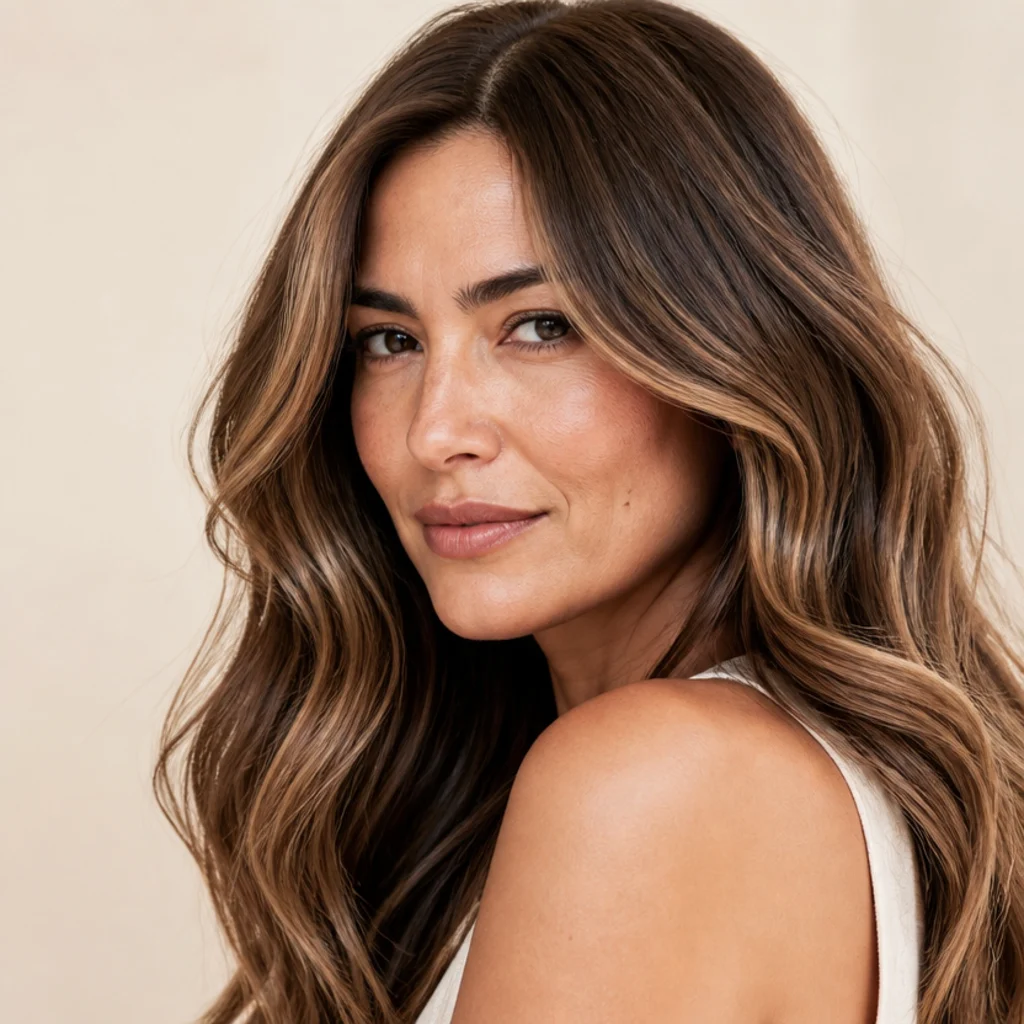
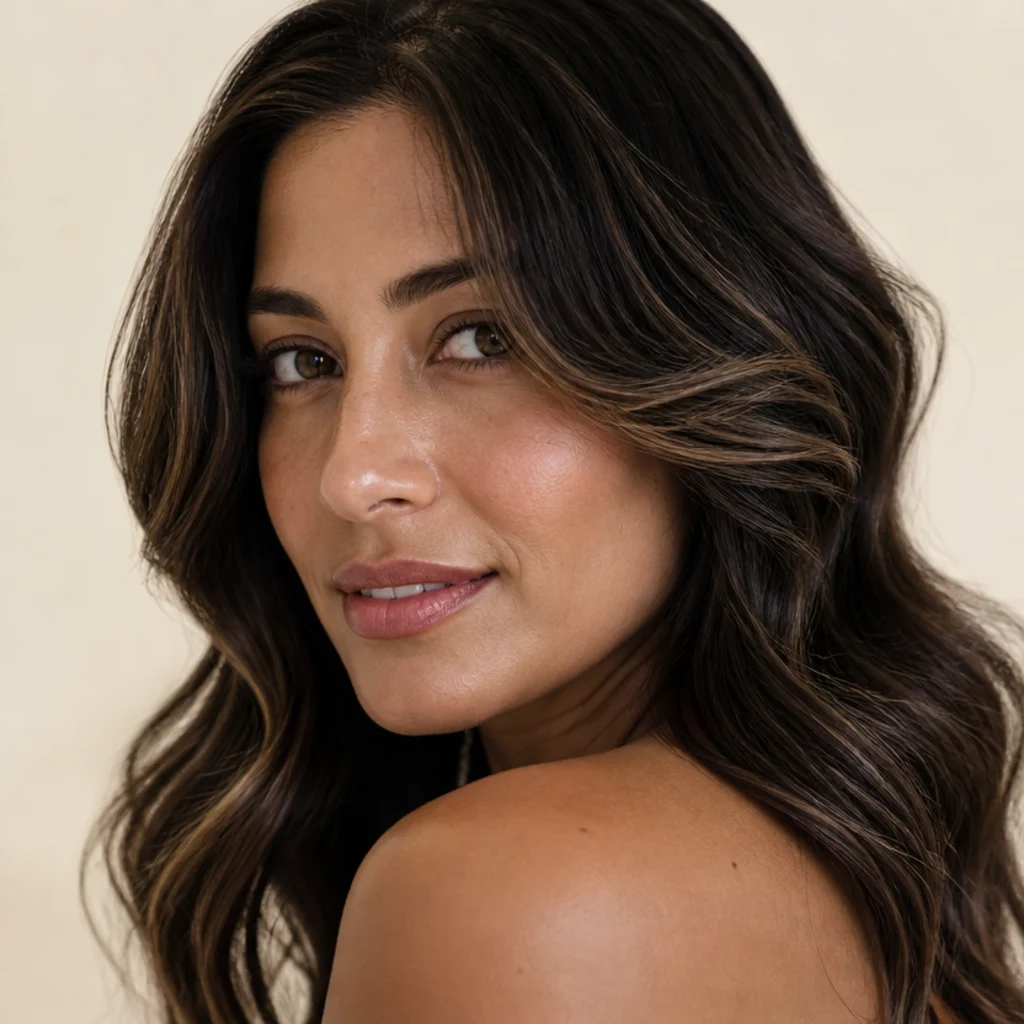
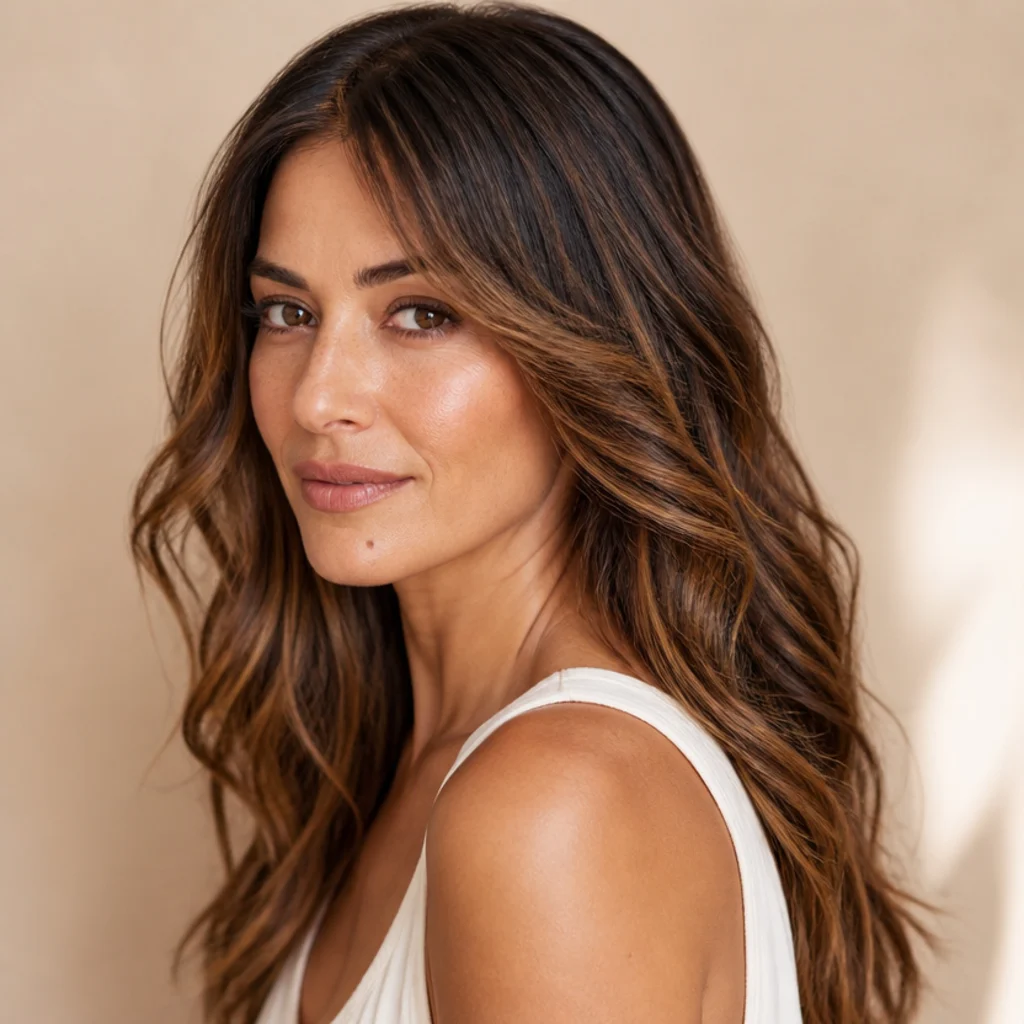
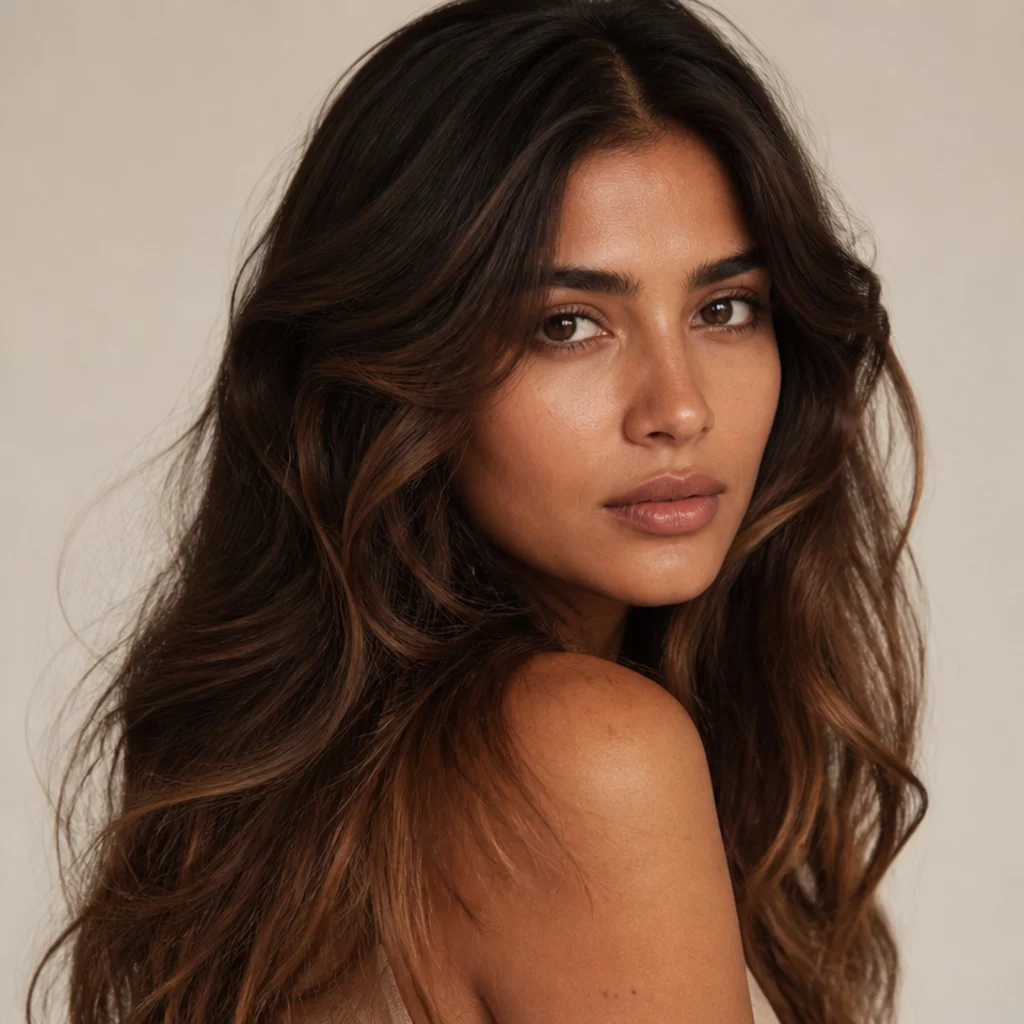
15 Dimensional Brunette Balayage Looks
Balayage is how brunettes buy depth without lifting the whole head. These 15 looks map the full range, from barely-there ribbons to deep mocha melts, with the exact tones, the undertone each one flatters, and the upkeep rhythm it takes to hold it.
 Edited by Lena Rose · Published July 11, 2026 · 25 min read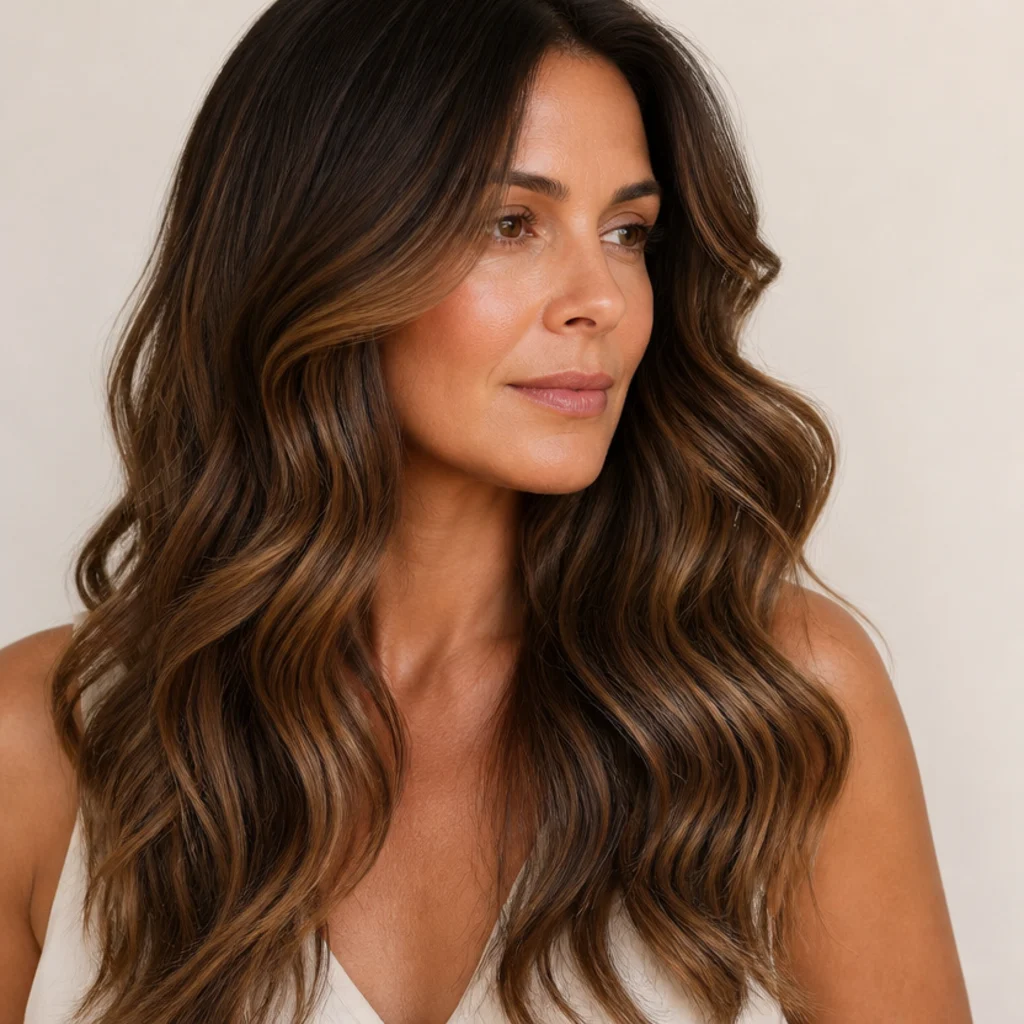
Quick Answer
- Best for: Natural level 3 to 6 brunettes who want visible movement and light-catch without an all-over lift or a hard regrowth line.
- Who might skip it: Anyone at level 8-plus already, hair with heavy uneven box-dye buildup, or people unwilling to gloss between visits and keep pastel-warm regrowth.
- Maintenance: Low to moderate. Placement stretches 10 to 16 weeks; a toning gloss every 4 to 8 weeks holds the tone.
- Difficulty: Salon-recommended. Freehand painting and clean toner selection are hard to control at home and quick to over-warm.
- Cost: Variable. Balayage plus a gloss typically runs in the mid-to-upper range for color services in most metro salons; corrective or two-session lift costs more.
- Wear time / longevity: Paint reads well for 3 to 4 months; tone shifts first, brightness second, cut last.
- Standout variation: Mushroom brown balayage, for its cool, taupe finish that photographs expensive and hides warm regrowth.
- How to ask your colorist: Bring 2 to 3 photos, name the tone you want and the tone to avoid, and state your true home routine.
In This Guide
- Soft Caramel Ribbon Balayage
- Mocha Melt Balayage
- Mushroom Brown Balayage
- Chocolate Chestnut Balayage
- Honey Face-Framing Balayage
- Espresso Root Shadow Balayage
- Toffee Money-Piece Balayage
- Ash Bronde Balayage
- Cinnamon Copper-Kissed Balayage
- Bronze Curly Balayage
- Cool Walnut Balayage
- Sun-Grazed Beachy Balayage
- Dark Dimensional Brunette Balayage
- Pearl-Toned Bob Balayage
- Golden Undone Lived-In Balayage
Intro
Brunette hair reads flat under bad lighting. A single, uniform level absorbs light instead of bouncing it, and that's the dull, one-note look dimensional brunette balayage fixes. A colorist hand-paints strands two to four levels apart instead of dyeing one solid block, so warm and cool pieces sit against the base and the hair seems to move as you do, with brightness gathering where light actually lands: the crown, the front hairline, the tips. The paint is feathered and freehand instead of packed into foils from the scalp, so it grows in as a soft diffusion rather than a hard line — which is why it outlasts traditional highlights between visits.
Placement is the variable that changes everything. Keep the work low and face-framing for a whisper of lift, or weave it higher toward a built-in root shadow for real contrast. Stay deep and cool for that quiet, expensive finish, or warm it up with caramel and honey for a lit-from-within, sun-touched effect. The 15 looks below cover that whole range, from soft dimensional brunette to dark dimensional brunette, and each one names the undertone it flatters, the realistic upkeep rhythm, and the exact phrasing to hand your stylist so you walk out with the tone you pictured instead of a lucky guess.
01Soft Caramel Ribbon Balayage
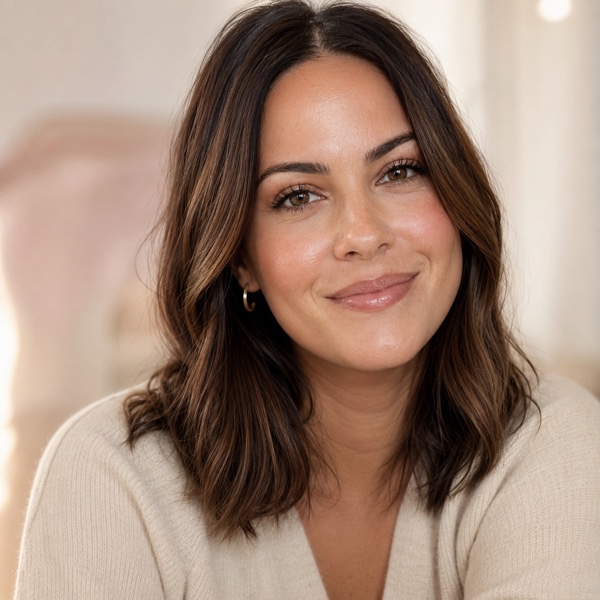
Think of this as the entry point into soft dimensional brunette: fine caramel ribbons instead of thick panels. The base holds your natural level 4 to 5 medium brown while the lightest ribbons sit two to three levels up in a golden-caramel band, so contrast stays gentle and blended. Warm and neutral undertones get the most out of it, and it reads best on straight to loosely waved hair from collarbone length down, where the ribbons have room to travel. Painting starts below the cheekbone and roots are left untouched, so regrowth is nearly invisible — one of the lowest-upkeep options here, with 14 to 16 weeks between full appointments. The caramel band will creep brassy-orange as it oxidizes, so a warm-neutral tinted gloss every 8 weeks keeps it from turning muddy. Ask for the lightest ribbons to be dropped a half-shade cooler than your target, since caramel always warms as it fades. Ask your stylist for "fine, face-framing caramel balayage with an untouched root and heavy blend, nothing chunky."
02Mocha Melt Balayage
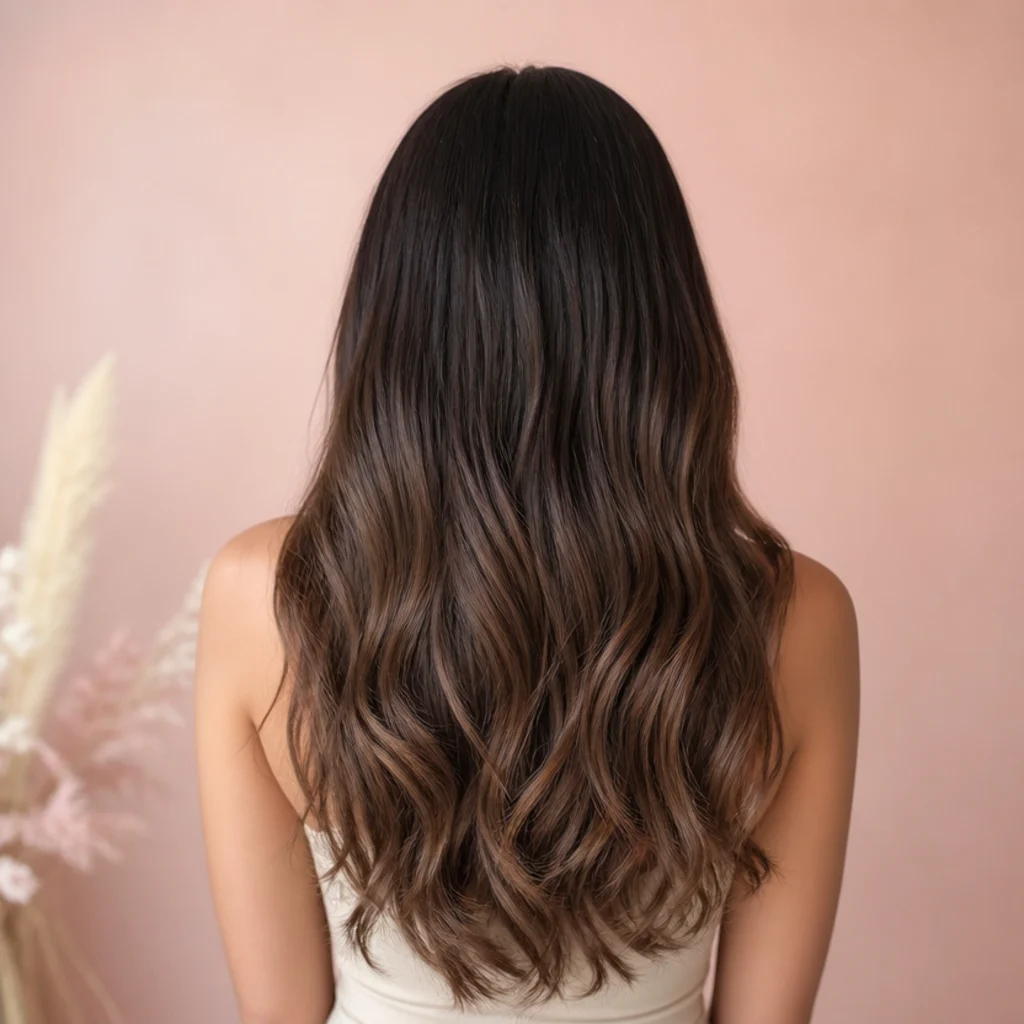
A mocha melt trades ribbons for a vertical gradient, so there are no discrete highlights to spot, only depth that travels. Espresso at the scalp eases into a milk-chocolate mid-brown and finishes a shade warmer at the tips, with no visible start or stop point. Deeper and olive skin tones get the richest payoff, along with anyone who wants richness over brightness, and it looks best on long, dense hair, since the extra length gives the fade room to breathe. Upkeep is easy — there are no bright pieces to tone — though a clear or warm-brown gloss every 8 to 10 weeks keeps the ends glassy instead of porous and dull. The melt also doubles as the smartest reset if you have grown-out foils or faded box color, since it re-blends old lines into one shape. Have your colorist feather the transition zone with a balayage brush instead of a hard color line, so the melt stays smooth as it grows out. Tell your colorist you want a "root-to-tip mocha melt, seamless, no highlights, just depth."
03Mushroom Brown Balayage
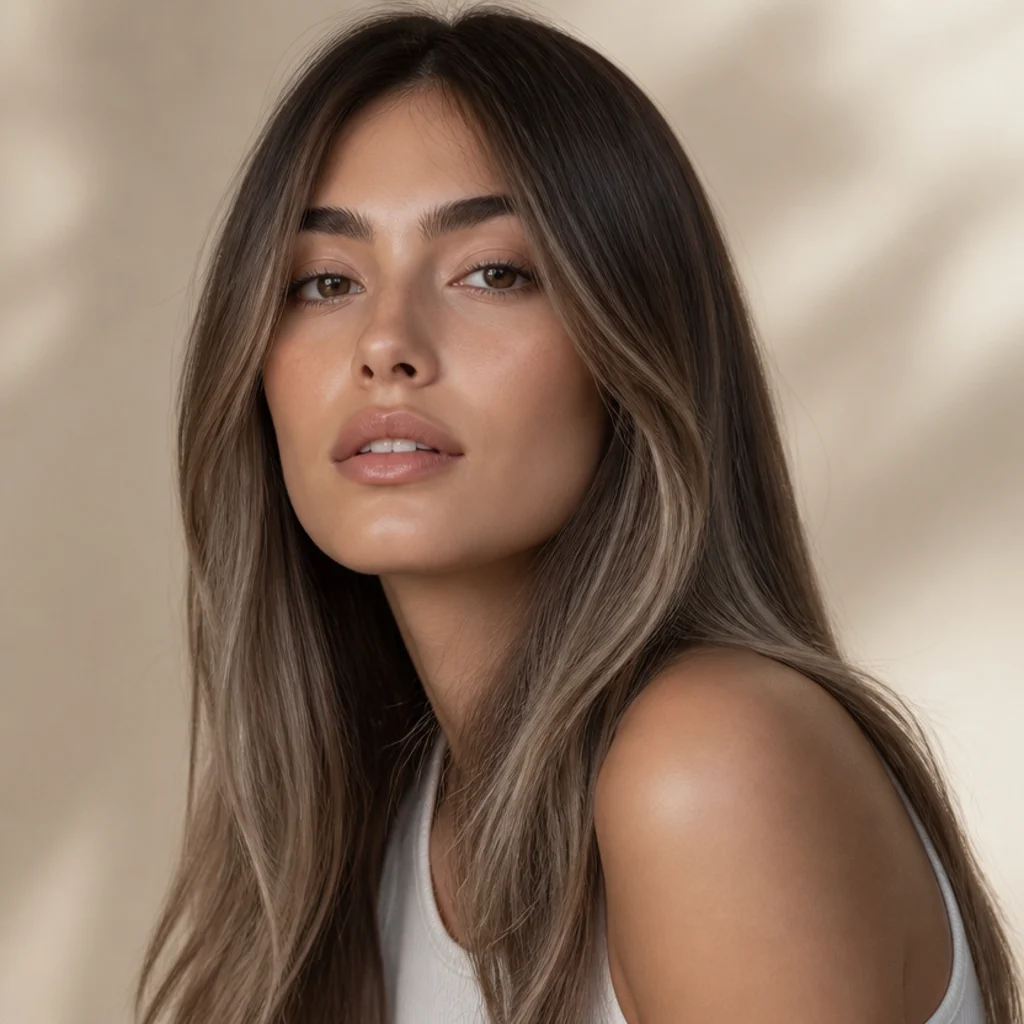
Mushroom brown is the cool-toned favorite: a taupe-leaning brunette with grey-beige pieces woven through so the dimension reads muted instead of golden. That's what gives it the quiet, expensive look on camera. It works for cool and neutral undertones and anyone who dislikes warmth or brassiness outright; sleek, straight styling amplifies the ashy, satin finish. The honest trade-off is toning — cool, ashy results fade warm the fastest, so budget a violet- or blue-based gloss every 4 to 6 weeks to hold the taupe cast, plus a weekly cool-toning shampoo swap. Full paint still stretches 12 weeks, so the gloss is the real commitment here. If your hair pulls warm or red naturally, say so at consultation so your colorist can pre-neutralize with a green or blue base before painting; otherwise the mushroom slides beige-orange within weeks. Ask for "cool mushroom brown balayage, taupe not gold, finished with an ashy toner."
Save this to Pinterest to compare warm caramel against cool mushroom side by side.
04Chocolate Chestnut Balayage
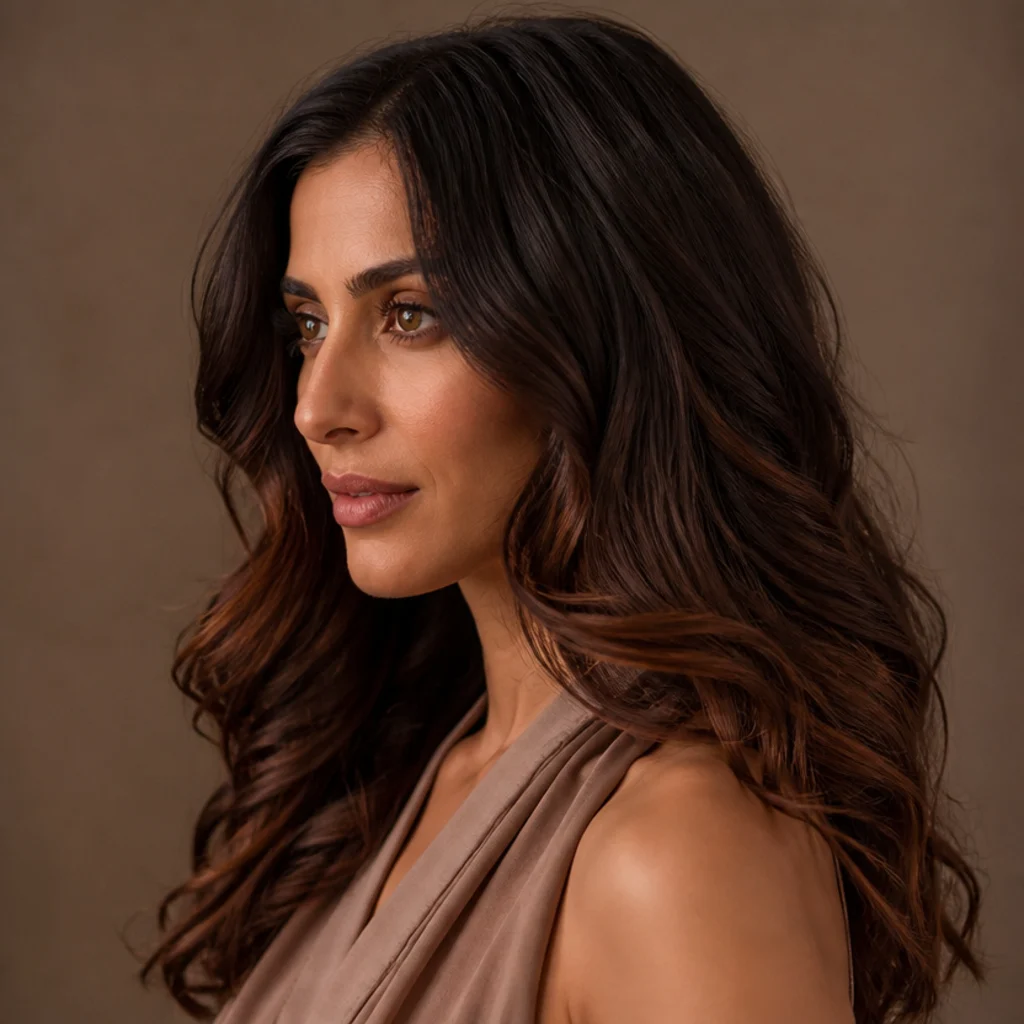
Chestnut sits right on the warm-neutral line: a rich chocolate level 4 base lit with reddish-brown pieces that glow gold-red under warm light. It's close to universally flattering, though especially rich on olive and warm complexions, and the soft red undertone keeps the whole head from flattening out. Loose waves are its natural habitat, since the bend of the curl lets the chestnut surface in layers instead of hiding underneath. Maintenance is moderate — red and copper molecules are the smallest and escape the cuticle first, so the chestnut drifts toward brassy-orange without a chestnut or mahogany gloss every 6 to 8 weeks. Ask for a demi-permanent chestnut gloss rather than permanent; demi deposits tone without further lifting the pieces, so the red stays true instead of going hot. It leans autumnal, so it's a strong fall and winter choice for warmth without committing to full copper. Ask for "a chocolate base with warm chestnut balayage, dimensional but not too light."
05Honey Face-Framing Balayage
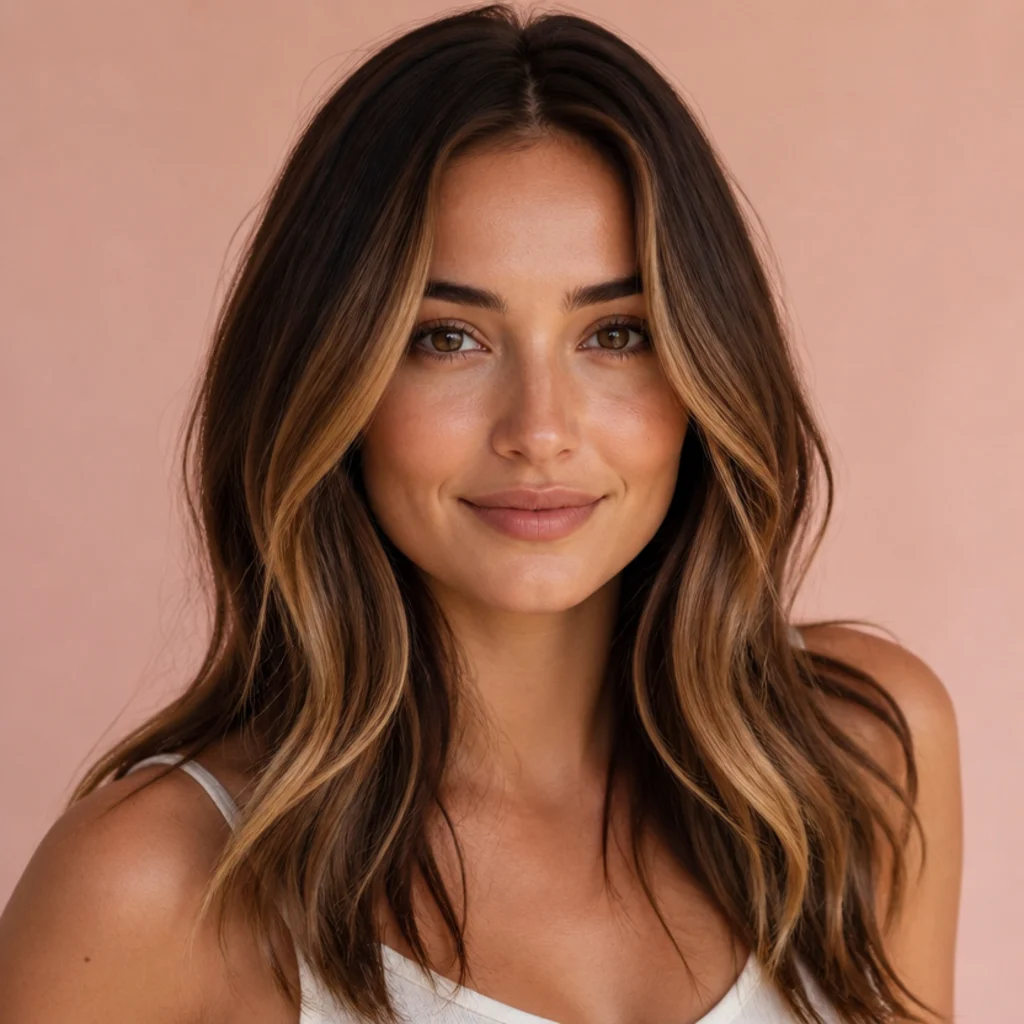
Here brightness is front-loaded on purpose. Honey-toned dimensional brunette highlights cluster around the face and along the part to frame the cheekbones, while the interior and back stay deeper, so the light does its work where it flatters your features first. Warm and neutral undertones suit it best, and it works at any length, though it shines on medium-to-long layers where the framing pieces can cascade. Since the heaviest lift lives up front, touch-ups can focus on that zone while the back rides longer, which keeps chair time and cost reasonable — plan a face-frame refresh around week 8 and full paint around week 14. Honey is a warm mid-tone that fades soft-gold, so a hydrating warm gloss keeps it luminous instead of straw-like. Have the front pieces painted slightly higher and finer near the temple so the frame flatters without reading like a hard stripe. Tell your stylist you want "brighter honey balayage around the face, softer through the back, like a lived-in money piece that blends."
06Espresso Root Shadow Balayage
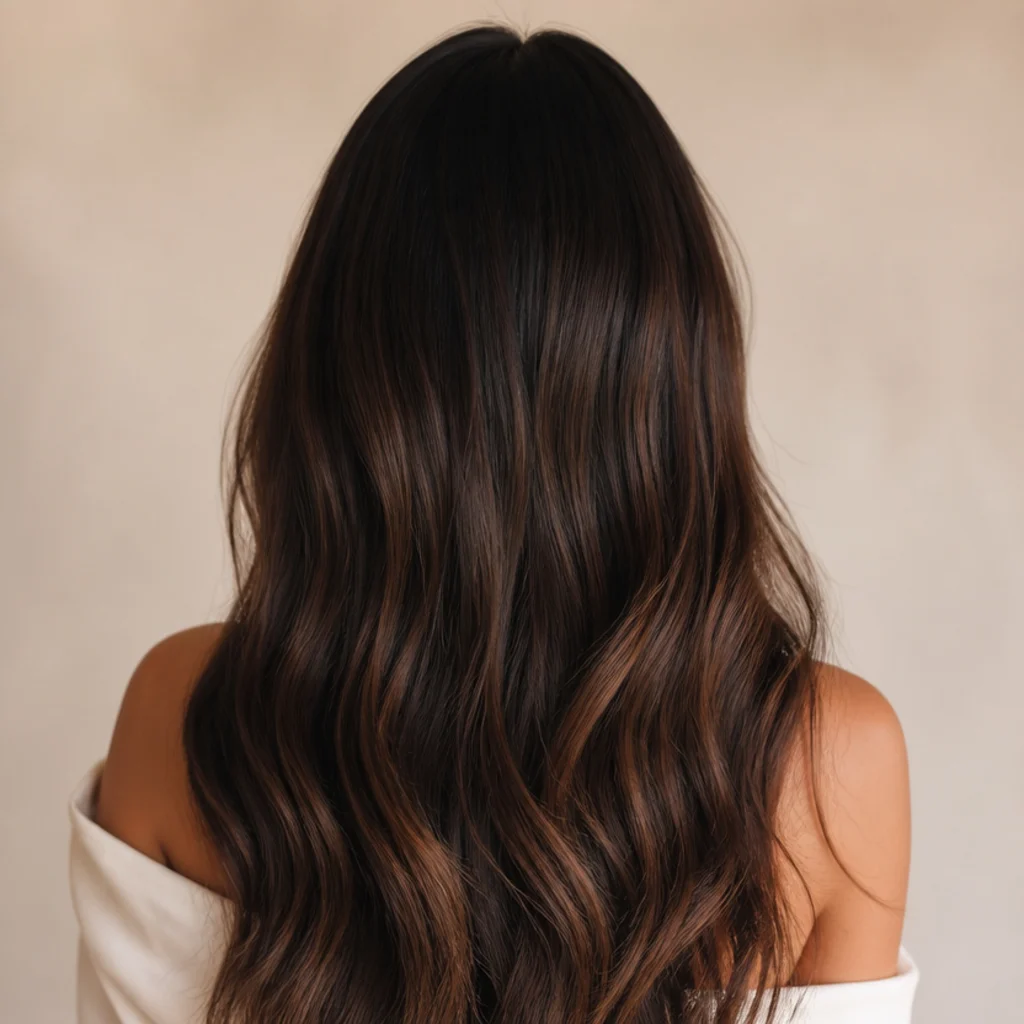
If you love near-black roots but still want movement, an espresso root shadow gives you depth and dimension at once. The colorist deepens the root to a rich level 2 to 3 espresso, then paints only whisper-fine warm-brown pieces through the lengths, so the dimension is felt more than seen. This dark dimensional brunette look flatters cool and neutral deep tones and reads polished under any light. It's low-maintenance because the dark root is intentional — there's no regrowth line to chase, only a gloss to refresh shine every 10 to 12 weeks. Ask that the root shadow be melted down about an inch past the scalp instead of blocked flat, so future regrowth blends into the shadow instead of stacking a second line. It's the ideal bridge if you're moving away from lighter color and want richness without committing to solid, flat black. Ask for "an espresso root shadow with very subtle warm balayage, kept deep."
07Toffee Money-Piece Balayage
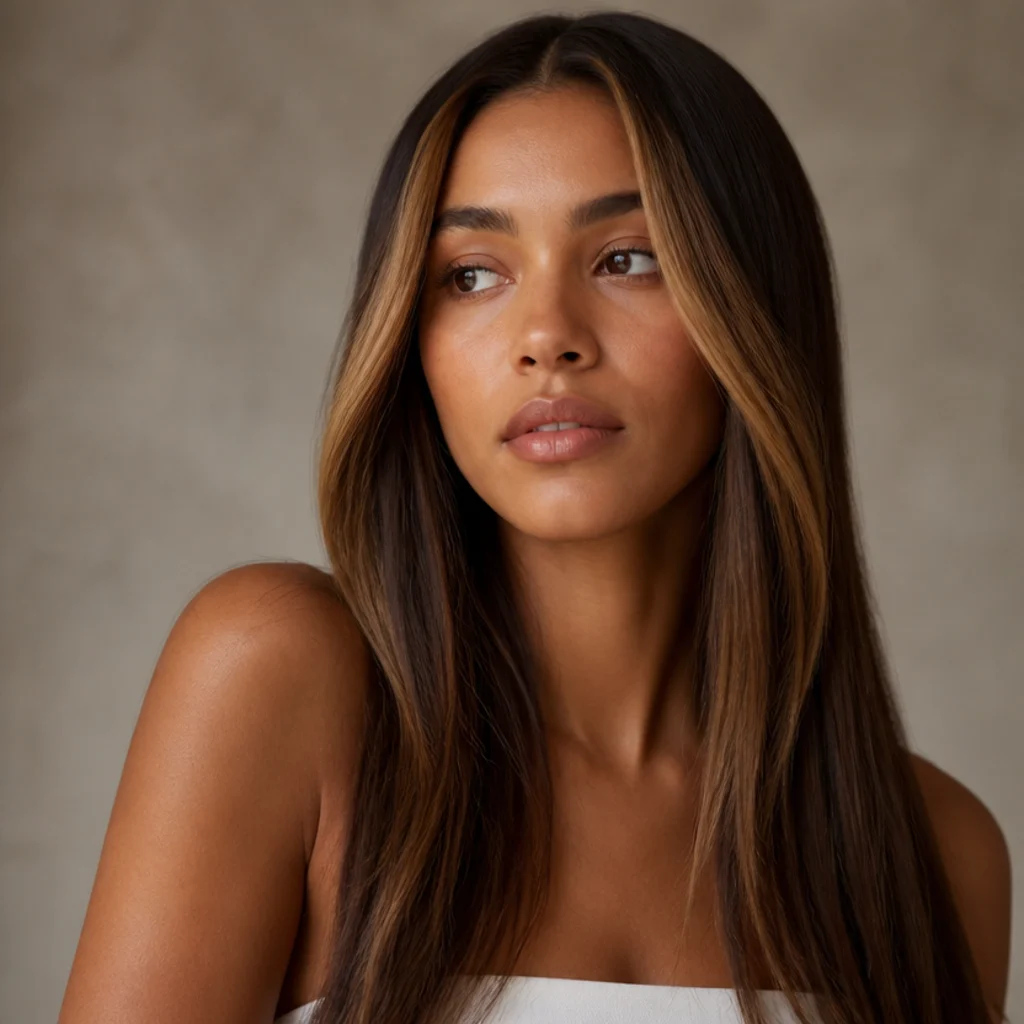
The money piece takes the spotlight here. Two bolder toffee-toned sections sit right at the front hairline, brighter and more defined than the surrounding balayage, for a graphic edge while the interior stays soft and diffused. Warm and neutral undertones suit it, along with anyone who wants a statement without lifting the whole head; straight and sleek styling shows the crisp framing best. Upkeep centers almost entirely on those front pieces — they sit closest to the face, catch the most light, and lift fastest, so they need toning to stay toffee-beige instead of yellow, roughly every 5 to 6 weeks. Keep the money piece one level deeper than pure blonde so it stays a wearable toffee that flatters brunette skin instead of fighting it. It's also the most reversible bold move on this list, since the front sections tuck away or blend back with a gloss whenever you want it quieter. Ask for "a defined toffee money piece with blended balayage behind it."
08Ash Bronde Balayage
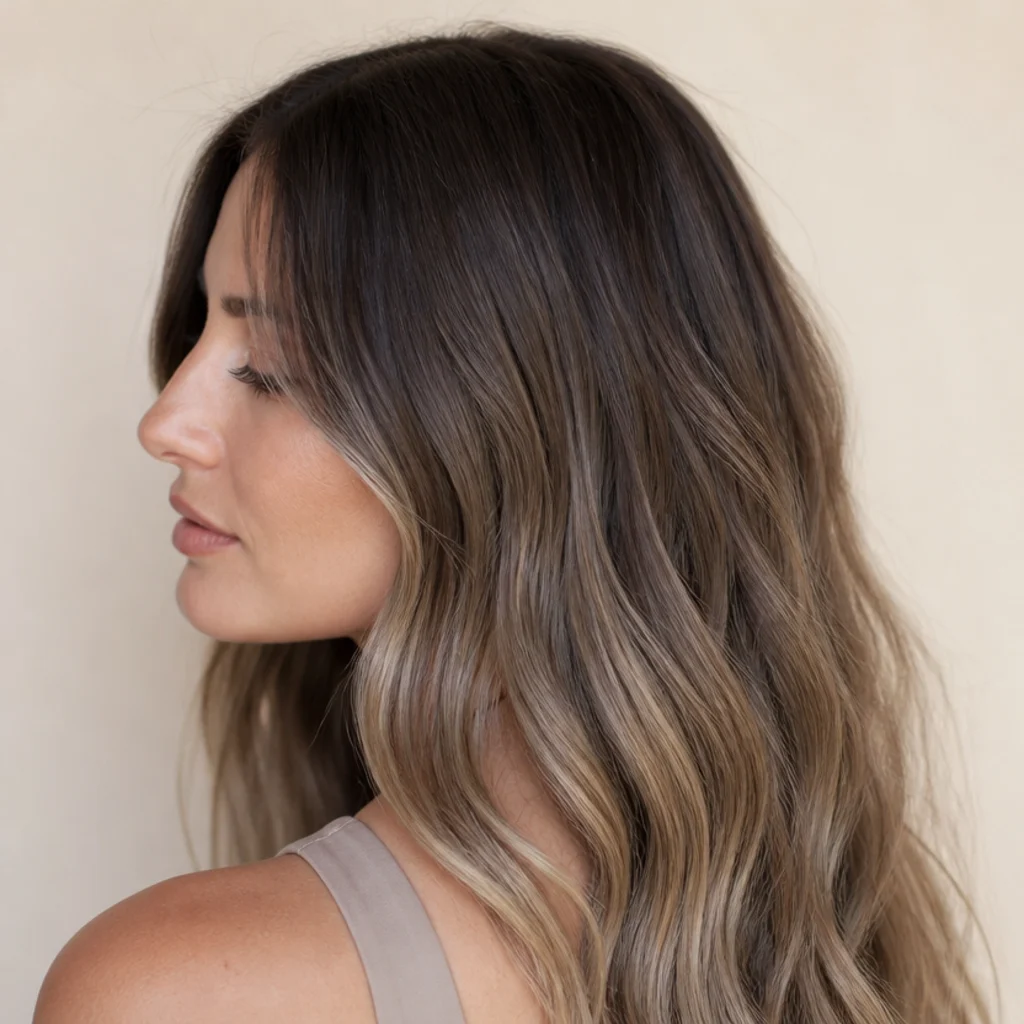
Bronde bridges brunette and blonde, and the ash version keeps it firmly cool. The base holds brown while the balayage lifts three to four levels into a smoky beige, for the strongest contrast on this list while sidestepping gold. Cool and neutral undertones suit it, along with anyone ready for real, noticeable brightness; longer hair carries the gradient most gracefully. Be honest with yourself about upkeep, because more lift means more of everything: a violet gloss every 4 weeks, weekly bond-strengthening care, and a purple shampoo used sparingly so it tones without going dull-grey. Natural depth also dictates the timeline — a level 3 base often needs two sessions to reach cool beige without turning brassy or compromising integrity. Ask for a bond-builder mixed into the lightener, not just applied after, so the cuticle stays intact through a bigger lift. Tell your stylist your natural level and any prior color so they can plan one session or two safely. Ask for "ash bronde balayage, cool and beige, no brass."
09Cinnamon Copper-Kissed Balayage
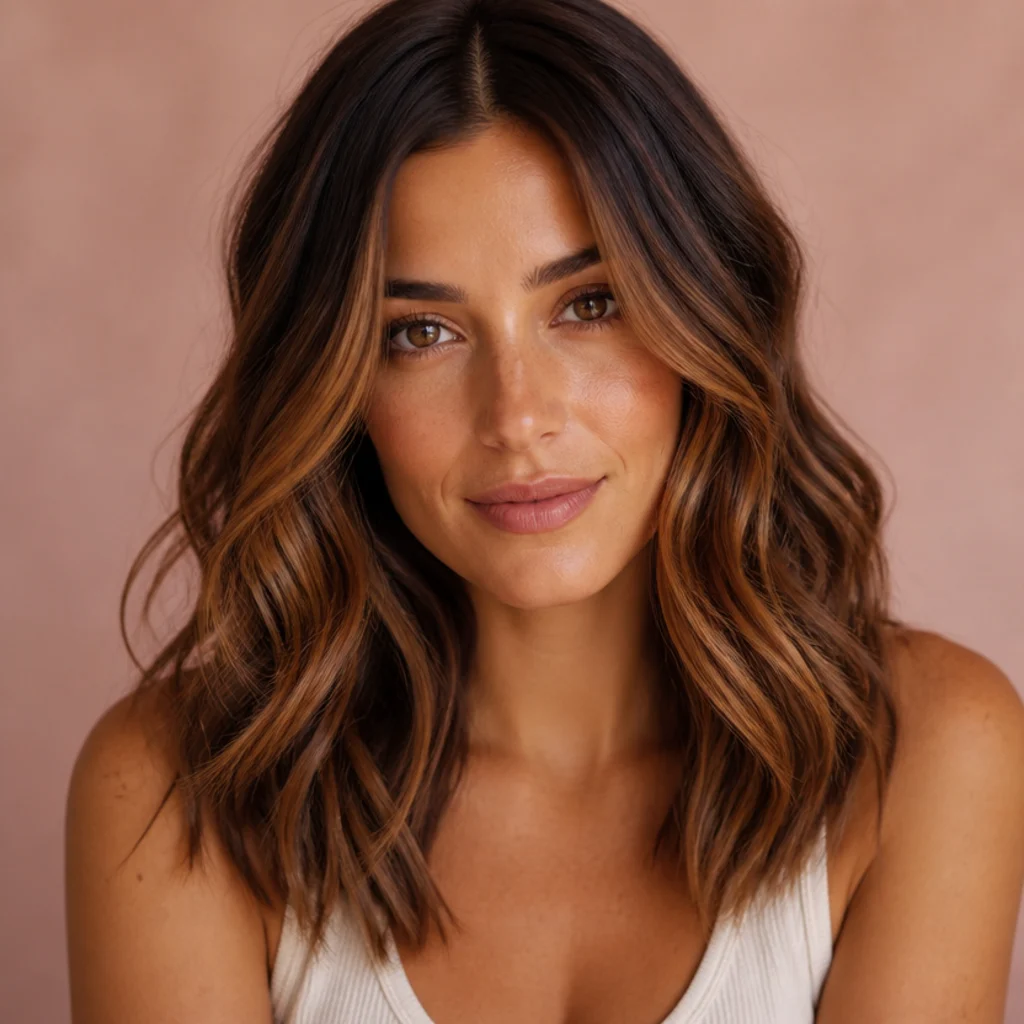
For warmth short of a full red, cinnamon copper-kissed balayage adds a spiced glow to a brown base. The painted pieces carry a soft copper warmth that flashes gold in the light while the head reads brunette overall rather than ginger — dimension with a temperature shift, not a color change. It's rich on warm and olive skin and revives hair that goes flat and sallow in winter; waves and curls make the copper flicker piece to piece. Copper is the fastest-fading tone in the book, so this is the highest-warmth-maintenance choice here: a copper-depositing gloss or a color-refreshing conditioner used weekly keeps it vivid instead of washing out to pale peach. A copper-boosting conditioner at home does most of the work between salon visits, so ask your colorist to match the exact tone so your refresh stays on-key. It's a low-stakes way to test warm color before committing to true red. Ask for "a brunette base with cinnamon-copper balayage, warm but not a full redhead."
10Bronze Curly Balayage
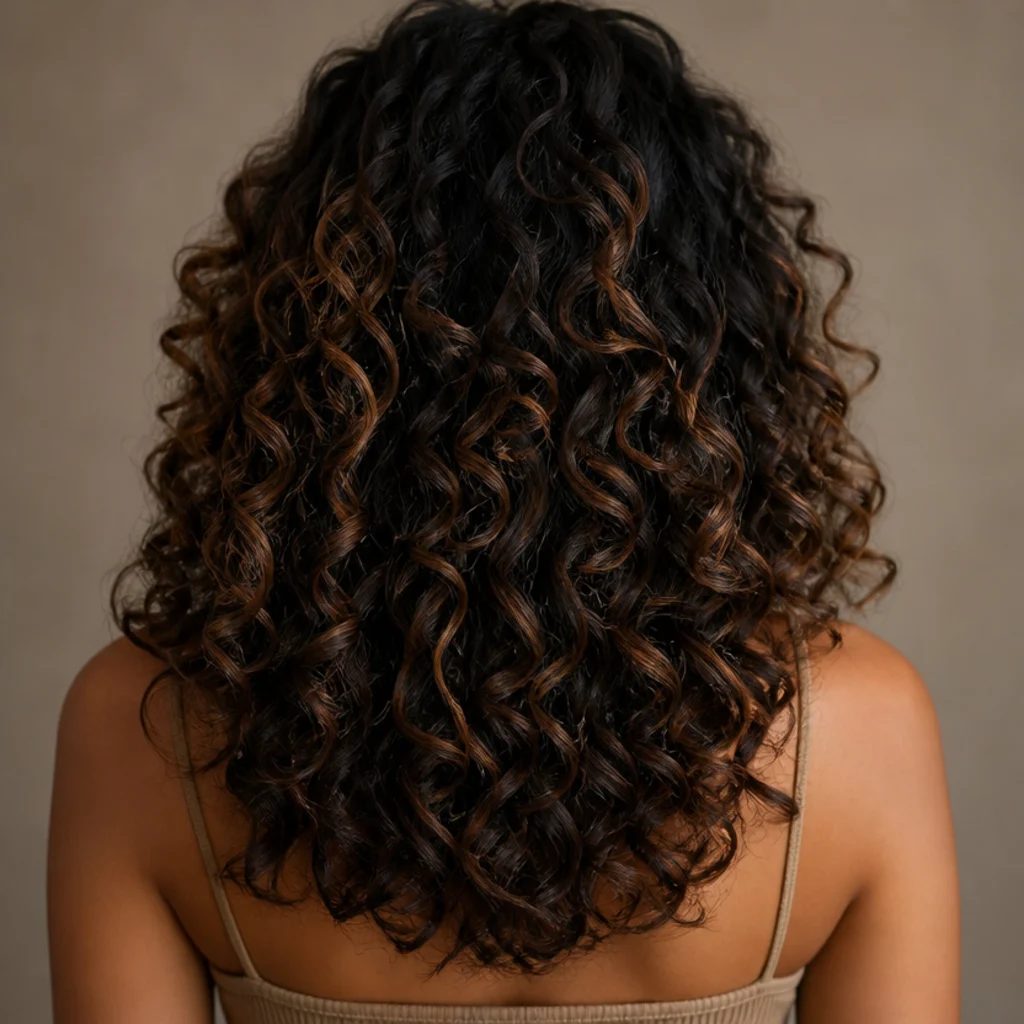
Curly and coily textures need balayage placed for the way they actually move, painted on dry, styled curls so brightness lands on the outer bend where light hits instead of vanishing into the pattern. This bronze version keeps a deep brown base with warm bronze pieces that make coils pop with dimension instead of disappearing. Warm and deep skin tones suit it across every pattern from loose 2C waves to tight 4C coils, and placement matters far more than volume — which is why it's worth seeking out a colorist experienced in cutting and painting curls dry. Maintenance of the tone is gentle, but lightened curls lose moisture fast, so bond-building and deep hydration aren't optional. Ask for the paint to be applied to freshly styled, defined curls so the artist can see the finished shape and place brightness exactly where each coil catches light. Ask for "balayage painted on dry curls, bronze tones, placed to catch the curl."
Save this to Pinterest if you are growing out curls and want color that works with your texture.
11Cool Walnut Balayage
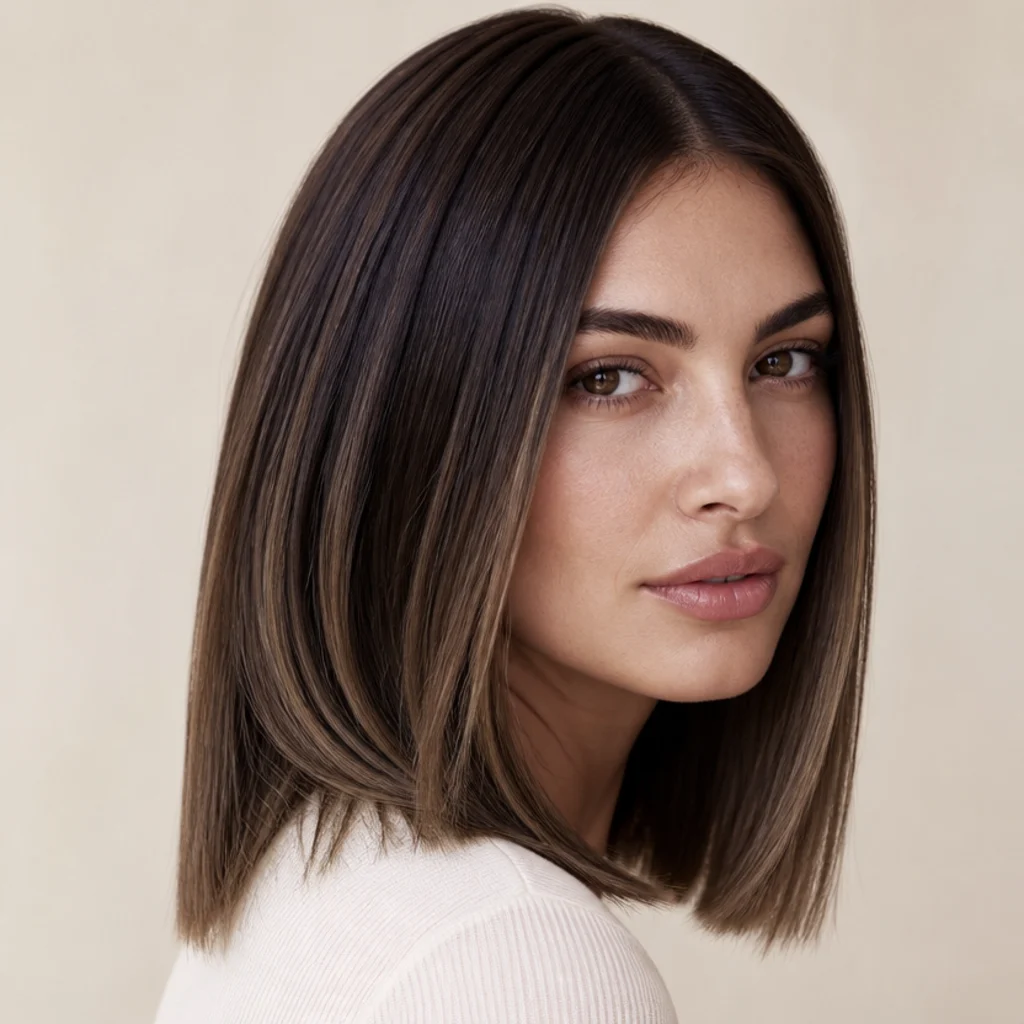
Walnut is a deep, cool brown with a faint grey cast, and its balayage stays muted for a refined, low-key finish — essentially mushroom brown taken a couple of levels darker. You sense the dimension in motion more than you spot it in a still photo. Cool and neutral undertones suit it, along with anyone who wants richness that still reads natural and professional under office lighting; blunt, sleek cuts flatter its smooth depth best. Upkeep is easy since there's little brightness to fade, but the cool cast will warm without maintenance, so a demi cool gloss every 8 to 10 weeks keeps the grey-brown from drifting to plain brown. Walnut sits so deep that it's worth asking your colorist to leave the paint a touch lighter than your target level, so the dimension survives the cool toner, which always darkens as it deposits. It's a smart first balayage when you want real dimension without a dramatic before-and-after. Ask for "deep cool walnut brown with subtle ashy balayage, kept muted."
12Sun-Grazed Beachy Balayage
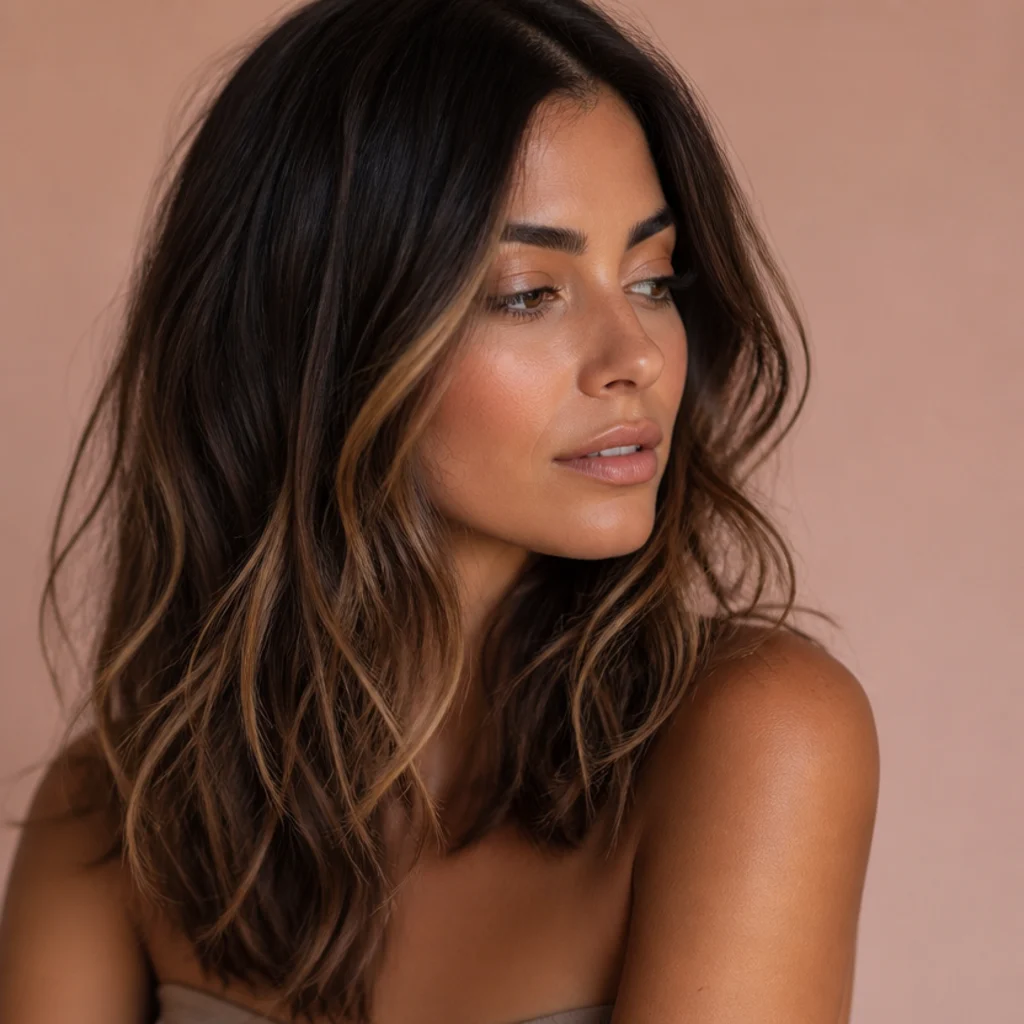
This mimics the way summer naturally lightens hair, with soft, sun-grazed pieces scattered irregularly through the mid-lengths and ends, wherever sun would actually reach, never uniform and never starting high. The effect is undone and beachy, ideal for anyone who wants color that looks like it happened on vacation instead of in a chair. Warm and neutral undertones suit it, and it lives happily on tousled, air-dried waves. Because placement is soft, low, and deliberately random, regrowth is forgiving and salon visits are infrequent, often just twice a year plus the occasional gloss. Ask for varied piece thickness and staggered starting points instead of evenly spaced sections, since the randomness is what sells the natural, wind-and-water look. A texturizing wave spray in your styling keeps the finish looking effortless between appointments. Ask for "natural sun-grazed balayage, soft and scattered, nothing uniform."
13Dark Dimensional Brunette Balayage
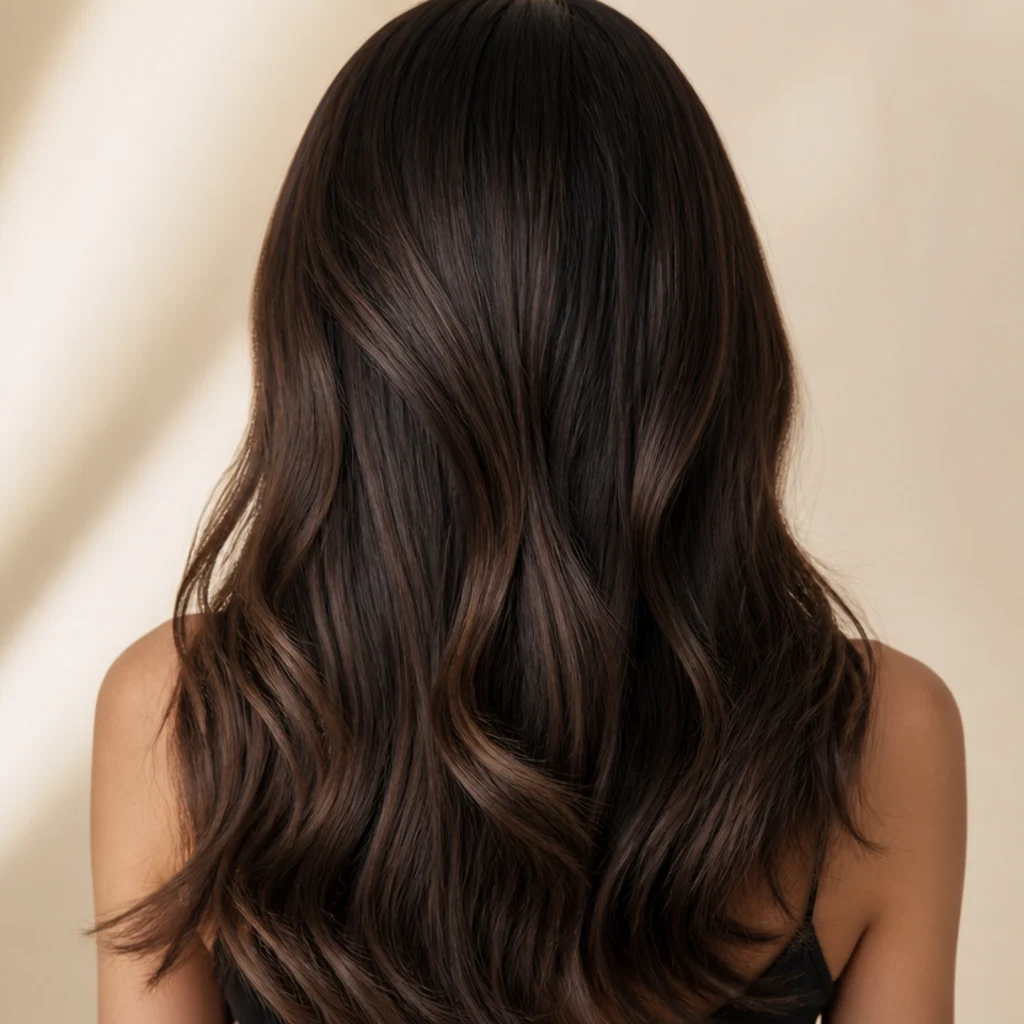
Proof that dark hair can still move, this look holds a genuinely deep level 2 to 3 brunette base and adds only tonal shifts, warm against cool, instead of lightness. The balayage stays dark enough to read solid and glossy in a photo yet worked enough to escape looking like a flat block of dye. It flatters every skin tone and is especially striking on deep, cool complexions, and long lengths give the quiet dimension room to reveal itself in motion. It's the lowest-commitment option here for lovers of dark hair, with almost no fade or regrowth line to chase, only a shine gloss when the ends dull. Ask for the tonal pieces to be placed on the surface layers and around the face where light actually catches, since interior tonal work on dark hair is effort you'll never see. It's dark dimensional brunette at its most wearable and forgiving. Ask for "dark dimensional brunette, tonal depth only, keep it deep, no visible highlights."
14Pearl-Toned Bob Balayage
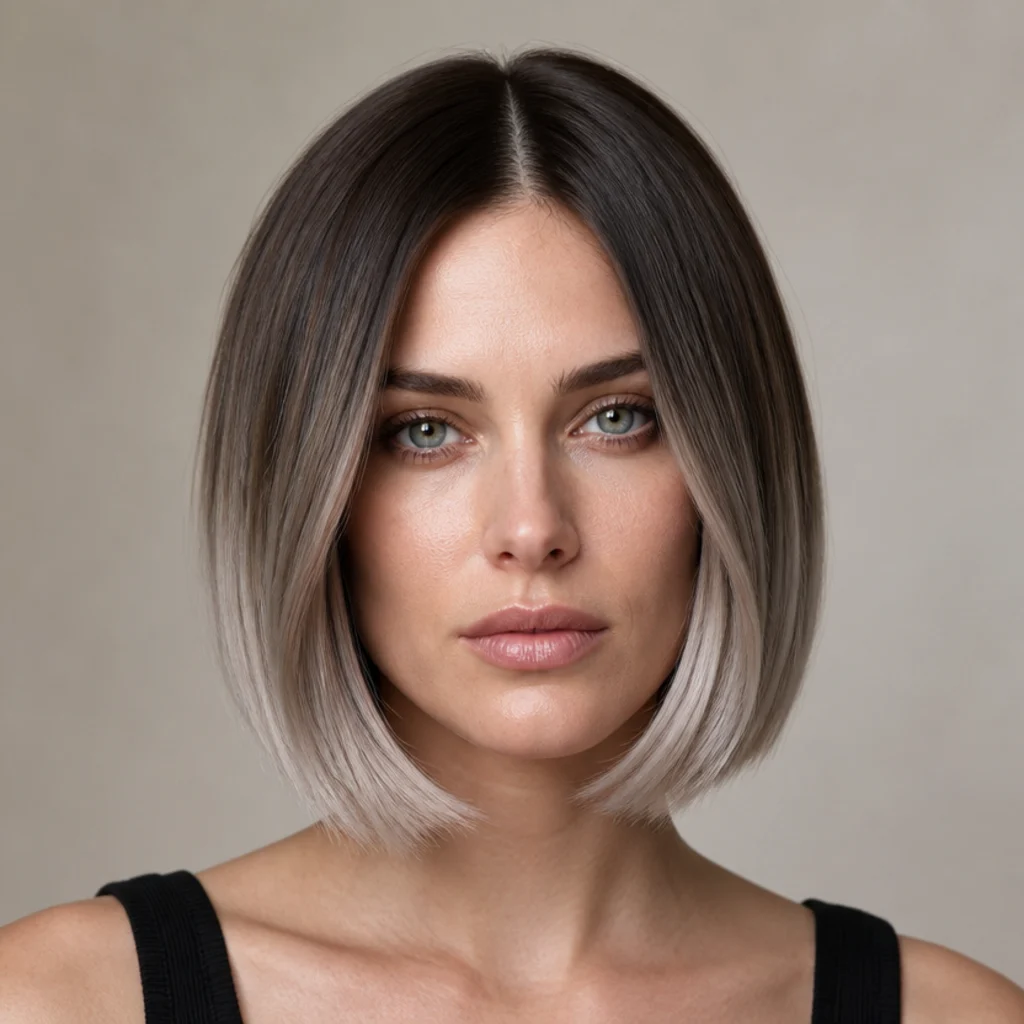
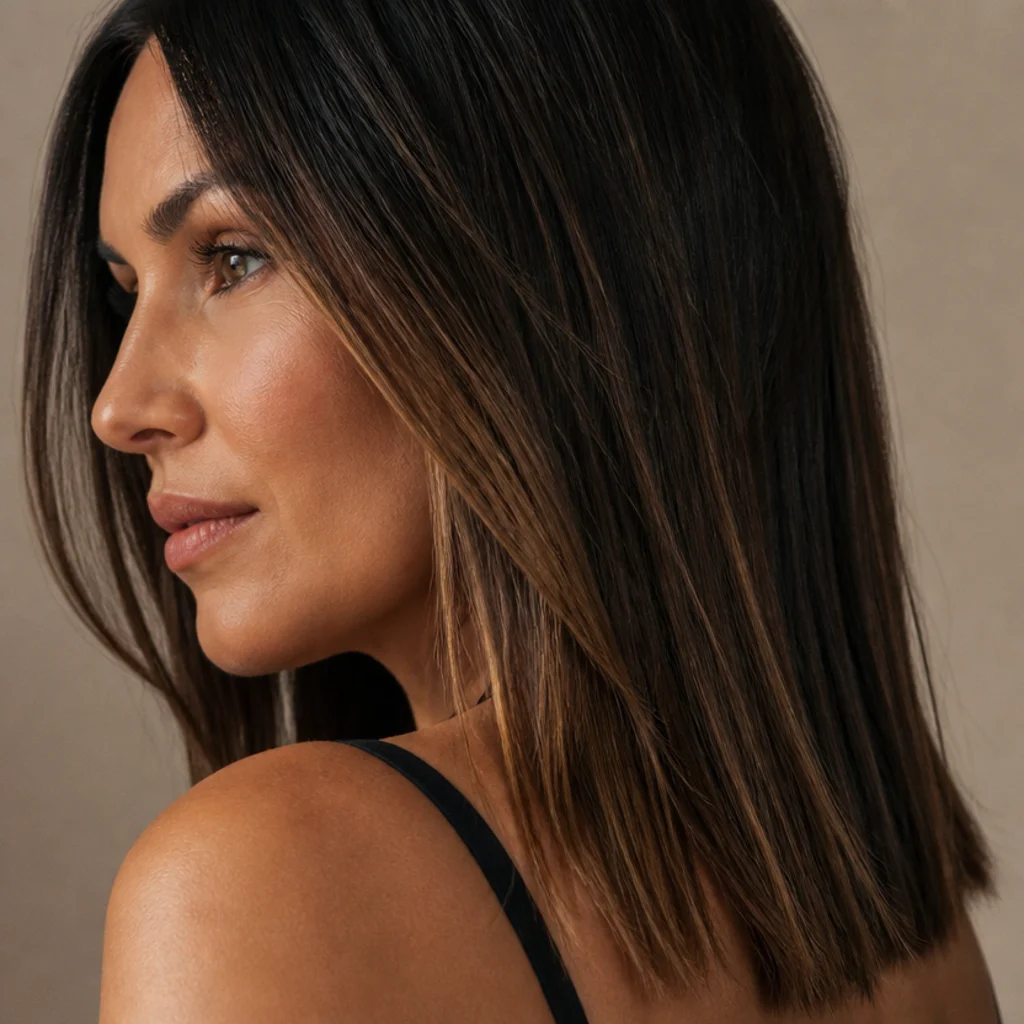
Short hair takes balayage beautifully, and a pearl-toned bob proves it. Cool, luminous pearl pieces brighten the ends of a sharp bob or lob, for a modern, polished glow with zero warmth. Cool and neutral undertones suit it, along with anyone who loves a clean, structured cut, and the placement on the ends draws the eye to the shape of the cut itself. Since a bob gets trimmed every 6 to 8 weeks to hold its line, your color refresh and your shape refresh conveniently sync up, keeping both crisp. Pearl is a cool, delicate tone that fades warm quickly, so a violet gloss and cool-toning shampoo are part of the routine. Ask for the pearl to be kept to the last inch or two of the ends instead of pulled high, so trimming the bob doesn't remove your brightest color and force a full re-paint. It's a smart way to add softness and light to an otherwise graphic haircut. Ask for "pearl-toned balayage on my bob, cool and bright at the ends, blended up."
15Golden Undone Lived-In Balayage
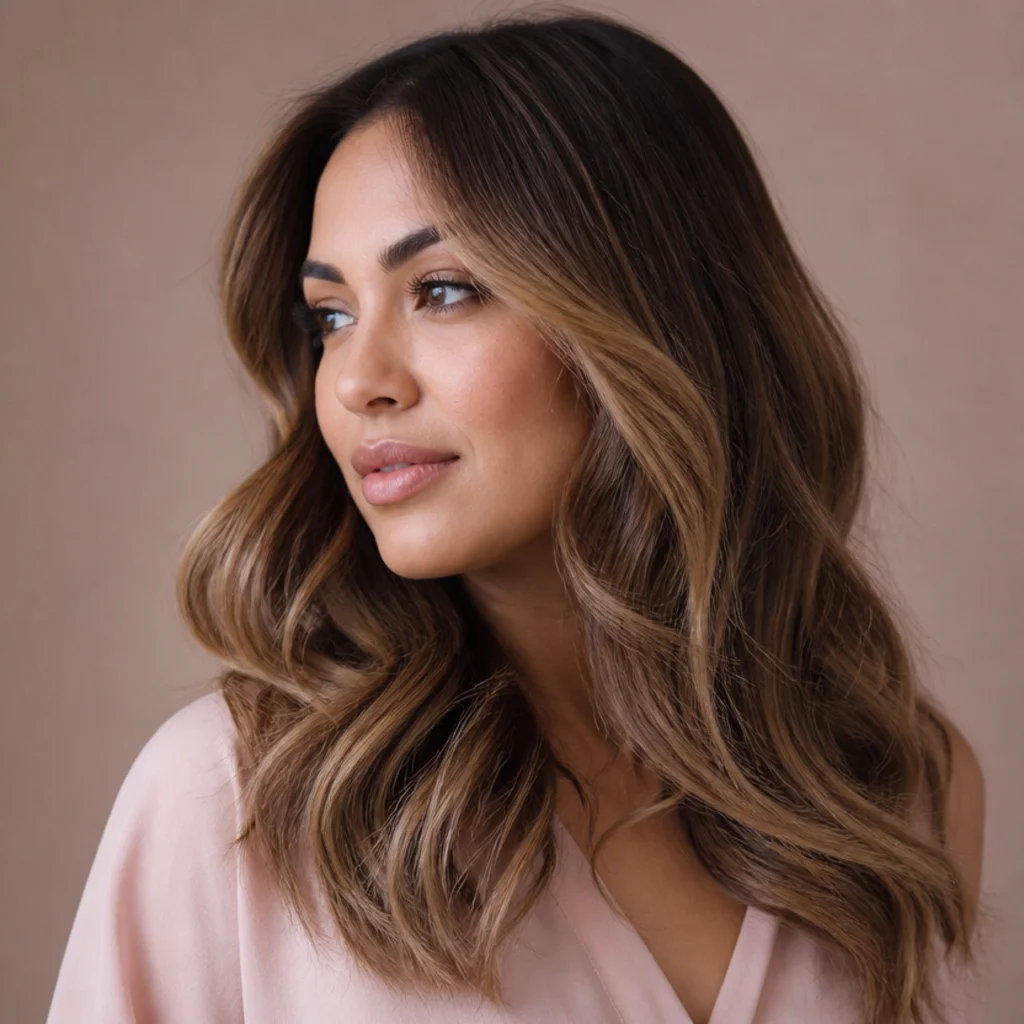
The lived-in look is built to grow out gracefully, and this golden version is the most wearable soft dimensional brunette on the list. Warm golden pieces are hand-painted with a long, feathered blend and a soft root, so there's no line to chase for months — which is why it's the default pick for busy schedules. Warm and neutral undertones suit it, at every length, with loose waves showing the golden depth best. This is the definition of low-maintenance color: a gloss whenever the mood strikes and a full paint just twice a year. Ask for a "shadow root" melted into the base at the same appointment, so even the earliest regrowth reads as intentional depth instead of a demarcation line. It's the forgiving choice for anyone who wants dimension but rarely wants to think about their roots. Ask for "lived-in golden balayage, super blended, made to grow out."
Pro Tips from the Editor
- Bring photos of both hair you love and hair you hate. Naming the tone to avoid (orange, ashy-grey, too-light) does more to guide a colorist than another inspiration pic.
- State your real routine, not your aspirational one. If you're never going to buy purple shampoo, choose a warm look; cool tones fail fast without at-home toning.
- Ask your colorist for your natural level and target level in numbers. It turns a vague "a bit lighter" into a shared, checkable goal.
- Book the gloss, not just the paint. The freehand color lasts months, but tone is the first thing to shift, so schedule a mid-cycle toning gloss before you leave.
- Request bond-builder mixed into the lightener for any look lifting more than two levels, ash bronde especially, so the cuticle survives the process intact.
- On curly or coily hair, insist the paint go on dry, defined curls. Wet painting misplaces brightness the moment the curl springs back.
- Wait to shampoo. Give fresh color 48 to 72 hours before the first wash so the toner sets, then switch to a sulfate-free, color-safe cleanser.
How to Choose / Get the Look
Start with undertone, since it decides warm versus cool before anything else. If your skin and eyes read cool (veins look blue, silver jewelry flatters), lean toward mushroom, walnut, ash bronde, or pearl. If you run warm (veins look green, gold flatters), choose caramel, honey, chestnut, cinnamon, or golden. Neutral undertones can go either direction, which is the lucky place to be.
Next, decide your contrast level, since that sets your maintenance more than the color itself. Use this quick reference:
| Contrast | Example looks | Full paint | Toning gloss | Best for |
|---|---|---|---|---|
| Low | Dark dimensional, lived-in golden, walnut | 4 to 6 months | Optional | Lowest upkeep, subtle depth |
| Medium | Caramel ribbon, mocha melt, honey, chestnut | 3 to 4 months | Every 6 to 8 weeks | Balanced payoff and effort |
| High | Ash bronde, mushroom, toffee money piece, pearl | 3 months | Every 4 to 6 weeks | Bold change, committed routine |
Then weigh length, texture, and cut, since curls, bobs, and long layers each display balayage differently: a bob wants brightness on the ends, curls want it on the outer bend, long hair wants a traveled gradient. Finally, be honest about how often you'll realistically go back in and tone at home. Bring two or three saved photos, name the tone you want and the tone you want to avoid, and ask your colorist directly whether your goal is a one-session or two-session job and how they'll protect your hair getting there.
Frequently Asked Questions
How is balayage different from highlights?
Highlights are saturated in foils packed close to the scalp, giving uniform, higher-contrast stripes and a defined regrowth line. Balayage is hand-painted freehand and left to process in open air, so brightness gets placed softly and diffused into the base. That freehand placement is what gives dimensional brunette balayage its natural, grown-in look and its forgiving grow-out. Many people combine the two — foilyage — using foils to boost lift on painted pieces for extra brightness without losing the soft blend.
How often will I need to touch it up?
Two clocks run at once. The paint itself lasts 3 to 6 months depending on contrast, while tone shifts first, often within 4 to 8 weeks. Low-contrast dark and lived-in looks can stretch four months or more; brighter or cooler looks need a toning gloss every 4 to 6 weeks to stay true even though the placement holds far longer. Budget for the gloss, not just the paint.
Will balayage damage my hair?
Any lightening opens the cuticle and involves some processing, but balayage often uses less product than a full head of foils, which can be gentler on the whole head. The bigger the lift, the more the care matters. Bond-building treatments mixed into the lightener and used after, plus a sulfate-free, hydrating routine and limited heat, keep hair healthy while it holds the color. Ask your colorist to assess your hair's condition before committing to a large lift.
Can I get balayage on dark or curly hair?
Yes to both. Dark hair takes tonal, dimensional balayage well when the goal is depth instead of dramatic lightness, and it can lift brighter over one or two sessions. Curly hair benefits a lot from paint placed on dry, defined curls so brightness catches the outer bend of each coil. Both textures warm up as they lighten, revealing orange and red pigment, so a skilled colorist and the right toner matter most here.
How do I keep the color from going brassy?
Brassiness is warm pigment surfacing as cool tones fade. Use a color-safe, sulfate-free shampoo, limit heat and rinse in cooler water, and filter hard water where you can, since mineral buildup speeds up the warm shift. Add a toning gloss or a violet or blue product matched to your tone: purple neutralizes yellow, blue neutralizes orange. Cool looks brass fastest, so build regular glossing into the routine from day one instead of chasing it later.
Can I go from box dye or old highlights to balayage in one appointment?
Sometimes, but not always. Box dye and old foils leave uneven bands and buildup that lighten unpredictably, so a colorist may need a color correction or a second session to reach an even, healthy result. Be upfront about every product used on your hair, including at-home glosses and henna, which can react badly with lightener. A patient two-session plan protects both the tone and your hair's integrity.
How much does dimensional brunette balayage usually cost?
It varies widely by region, salon level, hair length, and density. Expect balayage plus a gloss to sit in the mid-to-upper range of color-service pricing in most metro salons, with long or dense hair, corrective work, or a two-session lift costing more. Ask for a written quote at consultation, and factor in the maintenance glosses, not just the first appointment, into your budget.
Is dark dimensional brunette worth it if it barely looks lighter?
Yes, if your goal is movement rather than brightness. Dark dimensional brunette adds tonal shifts, warm against cool, that keep deep hair from photographing as a flat block, and it's the lowest-maintenance dimension you can get since there's virtually no regrowth line or fade to chase. If you want obvious lightness, though, you'll be happier with a caramel ribbon or ash bronde instead.
What should I do the week before my appointment?
Come with clean-ish but not freshly washed hair — a day-old wash grips toner and protects the scalp. Do a deep-conditioning treatment a few days out so the hair is in good shape, but skip heavy oils or silicone masks the day before, since buildup can block even lightening. Bring your photos, and if you use any home color or gloss, tell your colorist exactly what and when.