3 Things to Know Before Buying a Dyson Airwrap
It photographs like effortless volume and glass-smooth curls, but the airflow styler rewards specific hair types and routines. Here's how it actually performs on real texture, in a real bathroom, so your money follows your habits, not the highlight reel.
 Edited by Lena Rose · Published July 11, 2026 · 12 min read
Quick Answer
- Best for: Fine-to-medium hair that wants heat-conscious dyson airwrap curls, root volume, and a smooth blow-dry finish from one multi-styler.
- Who might skip it: Anyone wanting tight, crisp, all-day ringlets in minutes, very coarse or tightly coily hair that needs high direct heat, or shoppers who mainly want the aesthetic and rarely restyle.
- Maintenance: Wipe the wand after each use, clear the mesh filter cage every one to two weeks (dust and lint choke airflow), and keep attachments in one contained spot.
- Difficulty: Moderate. Airflow wrapping and the damp-to-nearly-dry sweet spot usually click by the third or fourth session.
- Cost: Premium multi-styler tier, typically several hundred dollars new; refurbished or seasonal bundles run lower. Budget for occasional filter cleaning tools rather than consumables.
- Wear time / longevity: Soft curls hold roughly half a day to a full day with a cool shot and light setting spray; volume and bend outlast defined spiral shape.
- Standout variation: Loose, bouncy, blown-out curls set on damp-to-nearly-dry hair, then broken up with fingers for that lived-in bend.
- How to ask your stylist: Ask for a "soft airflow blowout with root lift and a loose bend, not a tight curl," and request a mirror demo of their sectioning so you can replicate it at home.
In This Guide
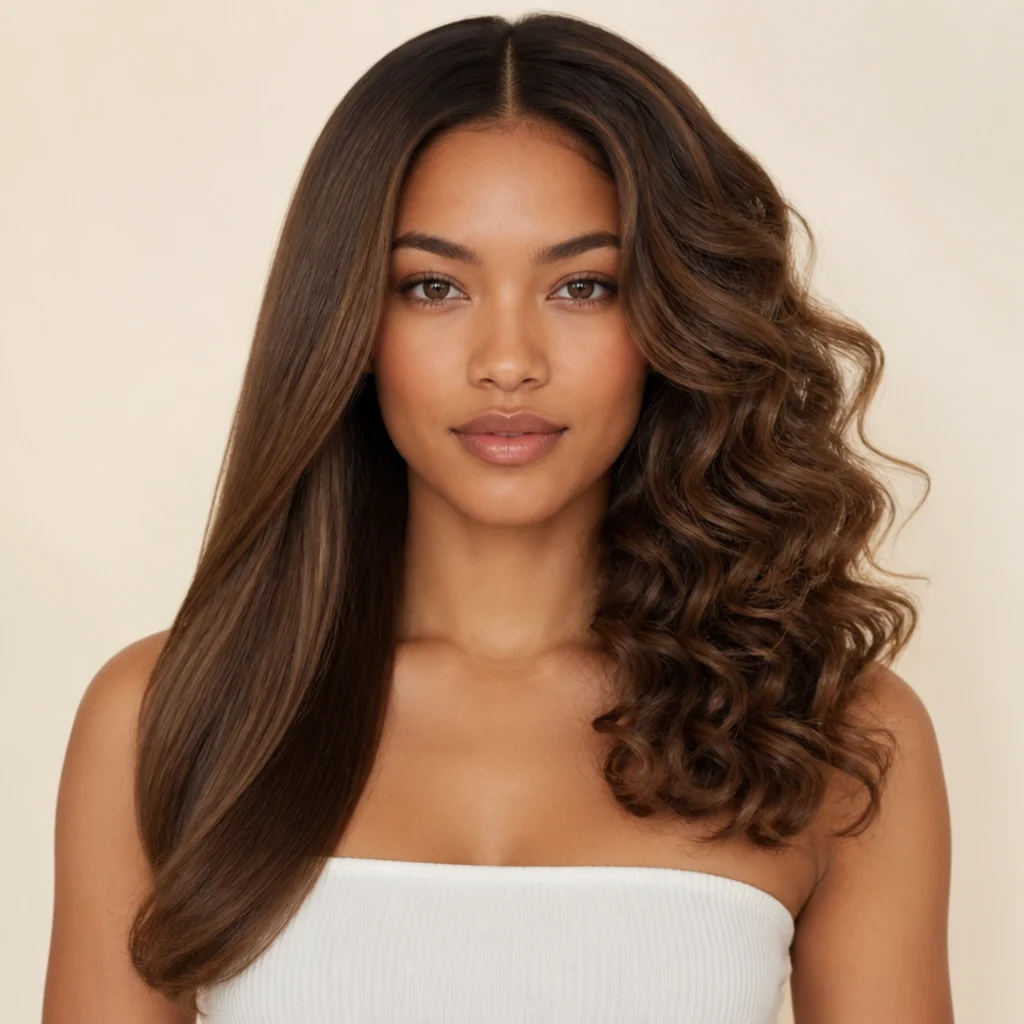
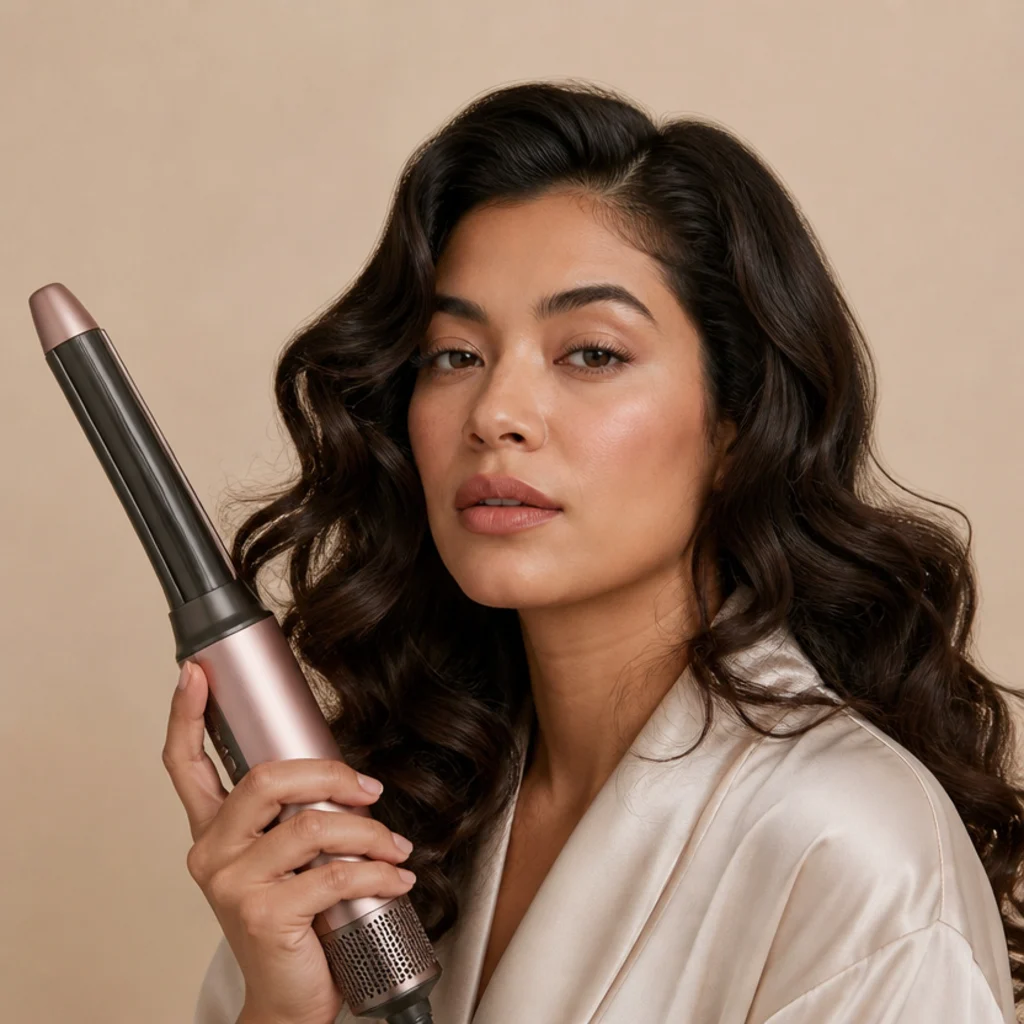
The airflow styler earns its following honestly: it shapes hair with directed warm air and the Coanda effect that wraps strands around the barrel, rather than pressing them against a single scorching plate. That's why it appeals to anyone protective of color, fine strands, or heat-stressed lengths. But it's a serious investment, and the dyson airwrap curls saved across Pinterest are almost always shot on freshly cut, mid-density, curl-friendly hair under studio lighting. Before you buy, it helps to separate that dyson airwrap aesthetic from the Tuesday-morning reality of your own texture and space. This guide covers three things that actually decide satisfaction: whether your specific hair type and density cooperate with airflow styling, how the attachments and dyson airwrap storage fit a real, often shared bathroom, and how the finish honestly stacks up in the dyson airwrap vs curling iron comparison. None of this is meant to talk you out of it — it's meant to help you buy with clear eyes, so the tool matches how you style week after week instead of sitting unused in a drawer.
01Whether Your Hair Type Actually Suits It
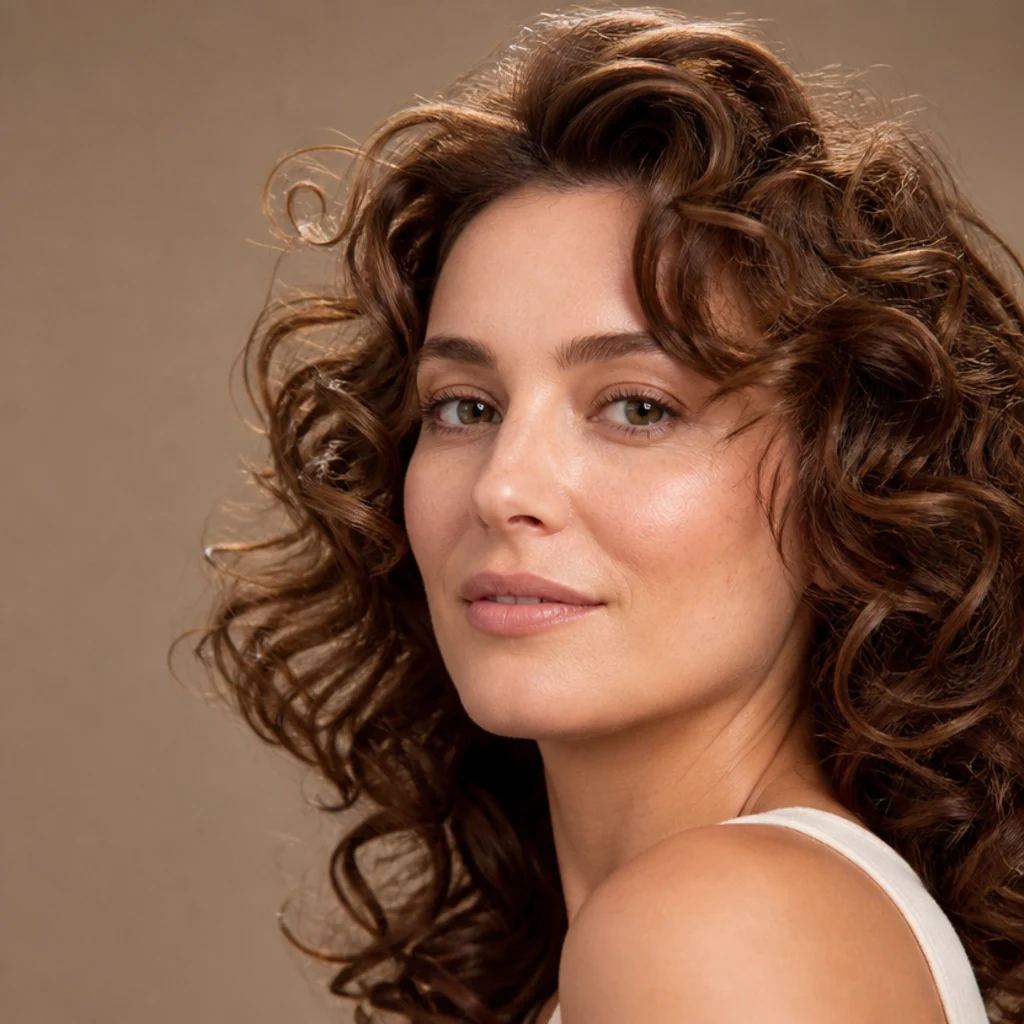
Airflow styling rewards hair that will wrap and set on warm, moving air instead of high static heat, so texture and density matter more than length. Fine and medium strands respond fastest, gaining visible root lift and a soft bend in one or two passes per section. Thick, dense, or coarse hair still curls, but demands smaller, cleaner sections, a thorough rough-dry to about eighty percent first, and more patience per pass. Tightly coily and very resistant hair often finds a fixed hot barrel or flexi-rods more predictable, since airflow shaping can read loose on textures that want a firmer set. Expect curls that lean soft, voluminous, and lived-in rather than tight, glossy, and long-holding. To gauge fit before spending, note how your hair behaves now: if a curl drops within an hour, plan on a cool-shot finish and light setting spray as standard, not extras. One pro move: always aim the airflow slot toward the barrel so strands wrap on the intended side, and mirror the direction on the opposite side for balance. Ask your stylist whether your density and elasticity suit airflow curling or a heat set.
02Storage, Attachments, and the Countertop Reality
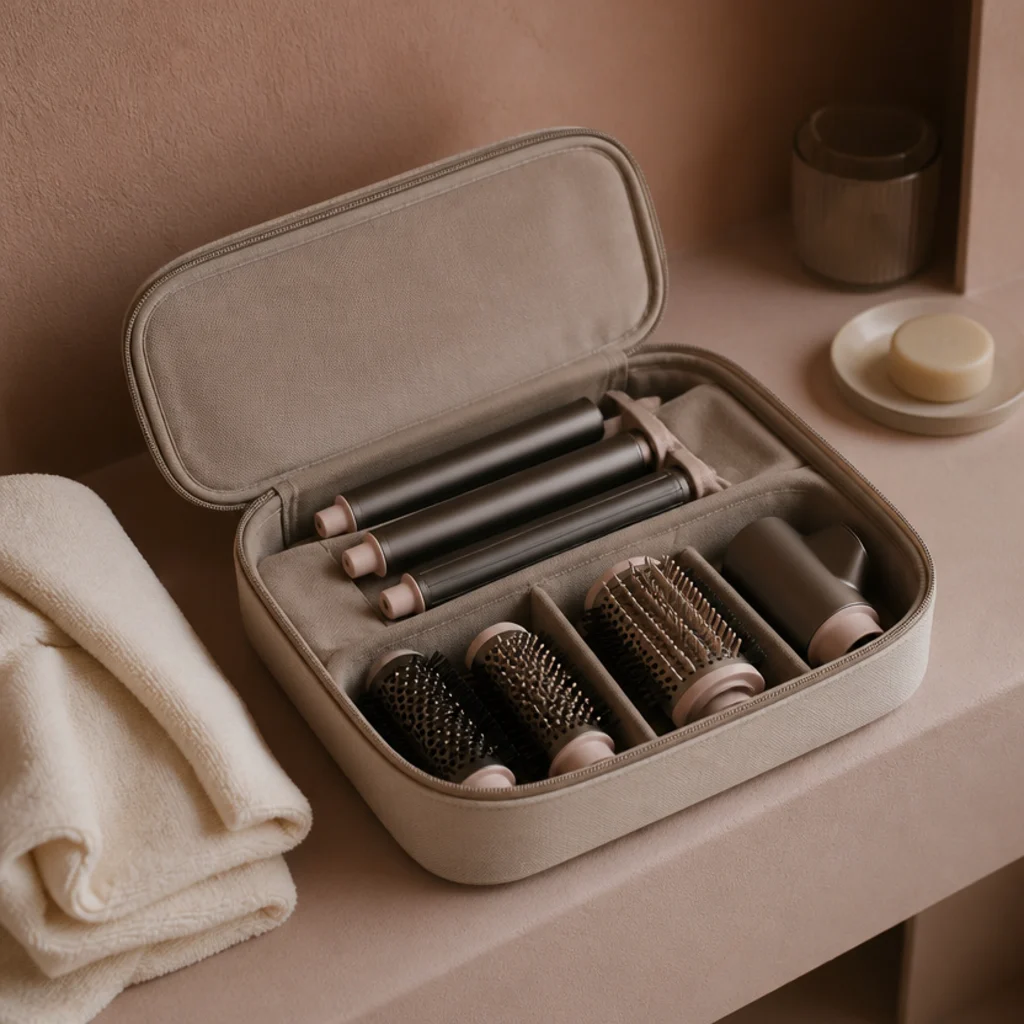
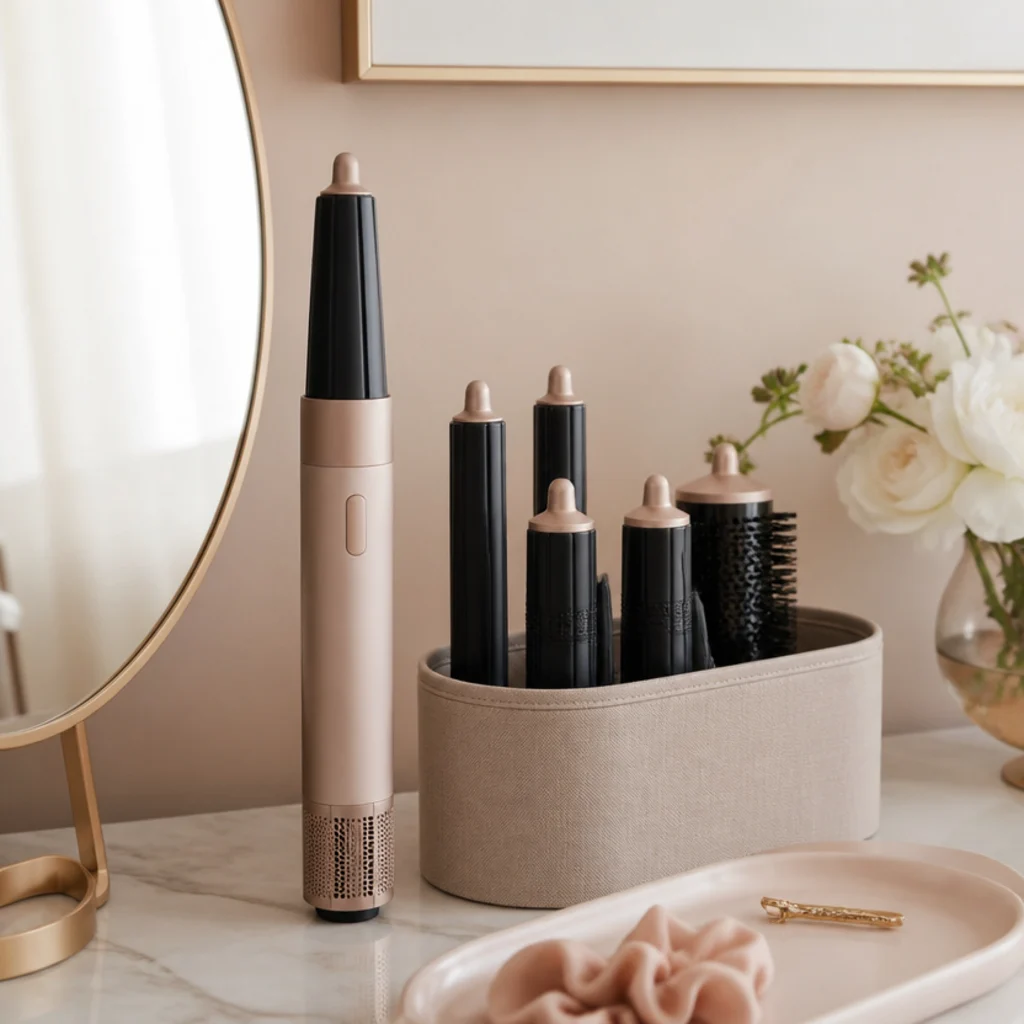
Part of the dyson airwrap aesthetic is how tidy the kit looks staged, but a real set includes a main wand plus several barrels, brushes, and smoothing heads that need a permanent home. Dyson airwrap storage matters more than most buyers expect: curved barrels roll, magnetic tips detach, and loose pieces migrate behind the sink within a week. Owners generally keep the zip case it ships in, add a felt-lined drawer insert, or mount a compact caddy so the whole system stays grabbable and scratch-free. Before you buy, map the practical footprint, not just the counter: confirm a nearby outlet, since the wand pulls meaningful wattage and doesn't love a crowded power strip, and leave clearance so the warm air intake is never pressed against a wall. In a shared or small bathroom, a hanging pouch or a dedicated basket on an open shelf keeps attachments together and the mesh filter accessible for cleaning. A deliberate storage plan also protects the finish on each head and shortens setup, which is often the difference between a tool you use and one you abandon. Ask your stylist which two attachments they reach for most so you can store those front and center.
03How It Compares to a Curling Iron
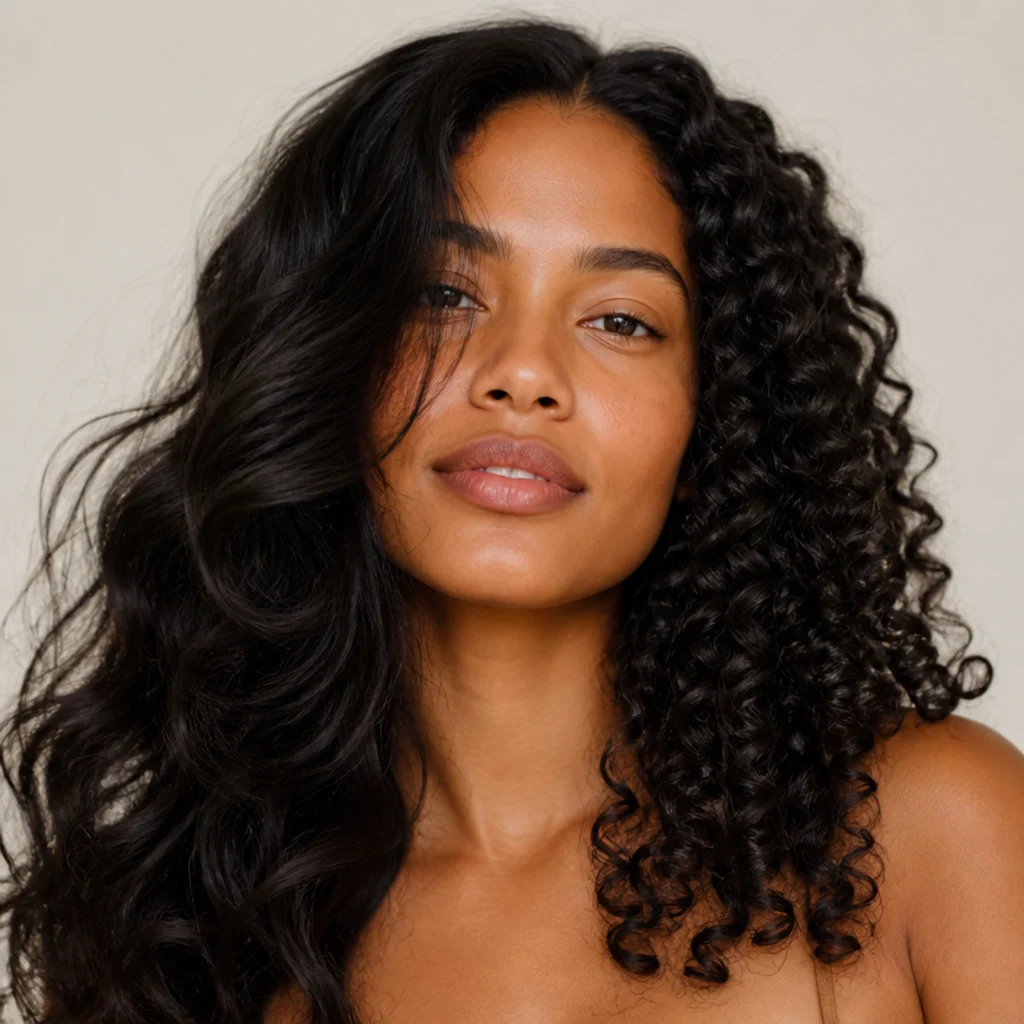
The dyson airwrap vs curling iron question comes down to speed, hold, and how many tools you want to own. A curling iron applies direct, high heat to a fixed barrel, so it curls fast, sets a tight and durable shape, and costs a fraction of the price, but it offers no drying or volumizing and demands more heat-protectant discipline on fragile hair. The airflow styler works at gentler temperatures, builds volume as it curls, and consolidates a rough-dryer, volumizing brush, and smoother into one system, which can retire two or three separate tools and reduce cabinet clutter. The trade-offs are real: it has a learning curve, a premium price, softer curl hold, and it needs damp-to-nearly-dry hair to perform, so it's a styling-from-wet workflow, not a quick touch-up on dry hair. If you want crisp, long-lasting spirals and already love your dryer, an iron likely serves you better. If you prioritize lower direct heat, multitasking, and a soft, blown-out finish, the airflow tool fits. One honest tip: if your current curls fall by lunch with any tool, that's elasticity, not the device, and neither one will fully fix it. Ask your stylist to compare a heat set and an airflow set on your hair side by side.
| Factor | Airflow Multi-Styler | Classic Curling Iron |
|---|---|---|
| Heat approach | Warm airflow, lower direct heat | High direct plate/barrel heat |
| Curl finish | Soft, voluminous, lived-in | Tight, defined, crisp |
| Typical hold | Half to full day with setting spray | Often full day, firmer set |
| Hair state needed | Damp to nearly dry | Fully dry |
| Learning curve | Moderate, a few sessions | Low, fast to learn |
| Also does | Rough-dry, smooth, add volume | Curls only |
| Relative cost | Premium, several hundred | Budget to mid-range |
| Best suited to | Fine-to-medium, heat-cautious | Curl-holding hair wanting speed |
Pro Tips from the Editor
- Style from damp-to-nearly-dry, not sopping or bone-dry: rough-dry to roughly eighty percent first, since soaking sections steam and cool, and fully dry hair won't wrap or set.
- End every barrel section with a two-to-three-second cool shot before you slide it out; letting the curl cool in shape is the single biggest factor in soft-hold longevity.
- Work in clean sections about the width of the barrel and no thicker than two fingers; overloading is the top reason dense hair reads limp and half-dry.
- Clean the mesh filter cage every one to two weeks with the included brush or a soft toothbrush, because trapped lint quietly weakens airflow and pushes you to over-style.
- Curl away from the face on the front sections for a lifted, flattering frame, then break curls apart with fingertips instead of a brush to keep volume and avoid frizz.
- Point the airflow toward the barrel and match wrap direction to the arrow so strands catch on the correct side; fighting the airflow is what makes strands whip loose.
- If curls consistently drop, mist a light setting spray on damp hair before styling rather than drowning finished curls, which flattens the volume you just built.
How to Choose / Get the Look
Start with a two-part honesty check on your hair, then your space, then your habits. First, texture and elasticity: if your hair holds a curl reasonably well and reads fine to medium, airflow styling will likely feel rewarding and fast. If it's thick, coarse, resistant, or drops curl within the hour, plan for smaller sections, a setting spray, and cool-shot finishing, and seriously weigh whether a curling iron or flexi-rods better match your goal of tight, durable curls. Second, map your space before the box ships: measure counter clearance, confirm a nearby dedicated outlet, and choose a dyson airwrap storage solution up front so the attachments never scatter. Third, study the technique itself, not just the finished result, because wrapping damp-to-nearly-dry strands on airflow is a skill that takes three or four sessions to sink in; if you can, try one in person or borrow a friend's to feel the weight and airflow. Finally, be ruthless about routine: a tool you actually reach for twice a week beats a pricier one that lives in a drawer. If you mostly want the dyson airwrap aesthetic for occasional photos, that's a real but different reason to buy, and worth naming honestly before you spend.
Frequently Asked Questions
Are dyson airwrap curls long-lasting?
They tend to read soft and bouncy rather than tightly locked. Expect roughly half a day to a full day of hold; a two-to-three-second cool shot at the end of each section plus a light setting spray on damp hair extends it noticeably. Volume and gentle bend usually outlast defined spiral shape.
Does it work on all hair types?
It suits fine-to-medium hair most easily. Thick or coarse textures need smaller sections and a thorough rough-dry first, while very coily or highly resistant hair often prefers a firmer heat set or flexi-rods for a more predictable result. Elasticity matters as much as thickness.
How should I store the attachments?
Keep the zip case it ships with, or add a felt-lined drawer insert or compact caddy. A dedicated dyson airwrap storage spot keeps the curved barrels from rolling, protects the finish from scratches, and leaves the mesh filter accessible for regular cleaning.
Is it better than a curling iron?
In the dyson airwrap vs curling iron debate, neither wins outright. An iron is faster, cheaper, and holds a tighter, longer-lasting curl; the airflow styler runs cooler, adds volume, and replaces two or three tools. Your priorities on heat, hold, and speed decide it.
Can it dry and curl at the same time?
It's designed to style hair from damp-to-nearly-dry, so it curls and finishes drying together, but it's not built to fully dry soaking hair from scratch efficiently. Rough-dry to about eighty percent first, then style, for the fastest and most reliable set.
Is it damaging to color-treated or fine hair?
Because it relies on warm airflow rather than high plate heat, it tends to be gentler on fragile, fine, or color-treated hair than a hot iron. It's still heat, though, so use the cool setting to finish, avoid repeated passes on the same section, and keep hair healthy with regular trims.
Why do my curls fall out so fast?
Usually it's one of three fixable things: hair was too wet or too dry when styled, the curl was slid off the barrel before cooling, or your hair has low curl retention. Style from damp-to-nearly-dry, cool-shot each section, and add a light setting spray before styling rather than after.
How often does it need cleaning?
Clear the mesh filter cage every one to two weeks, more if you shed or use a lot of product, since lint buildup weakens airflow and makes styling feel slower. Wipe the wand and attachments after each session so residue doesn't bake on and dull the surface.
Is the aesthetic worth the price?
The dyson airwrap aesthetic is appealing, but value hinges on your hair type and how often you'll actually use it. If you restyle weekly and want a cooler, multitasking tool, it can earn its cost; if you mainly want the look for occasional photos, name that honestly before you spend.