15 White Leopard Print Nails for a Chic Look
Animal print doesn't have to shout. Built on a soft white base, leopard rosettes read as quiet and editorial, wearable well past one season. These 15 white leopard print nail ideas break down the exact shades, shapes and placement that keep the look chic at every length.
 Edited by Lena Rose · Published July 11, 2026 · 26 min read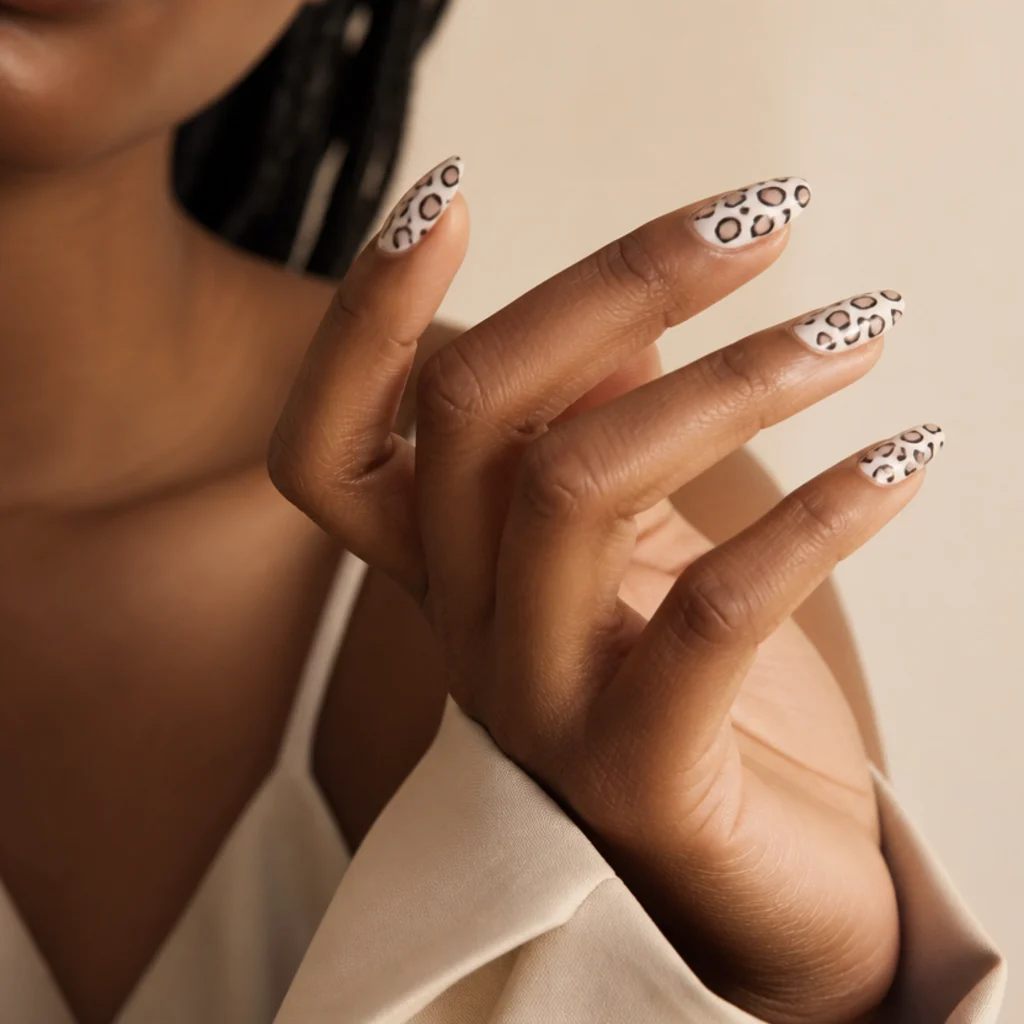
Quick Answer
- Best for: Anyone who loves animal print but wants a soft, neutral-forward finish that pairs with tailoring, denim and eveningwear alike.
- Who might skip it: Fans of high-drama, all-over black bases, or anyone who wants a five-minute polish change at home without detail tools.
- Maintenance: Moderate. A fill every 2 to 3 weeks on gel or acrylic; natural-nail versions need a mid-cycle topcoat refresh to fight tip wear on the pale base.
- Difficulty: Beginner to intermediate. A dotting tool and a fine liner (00 or smaller) cover most looks; chrome, gold linework and half-and-half sets are salon jobs.
- Cost: Roughly a mid-range gel art price up to a premium sculpted-set price, depending on length, extension and how many detailed nails you request.
- Wear time / longevity: About 2 to 3 weeks of clean wear on gel or acrylic; 5 to 7 days on natural nails with polish before the tips start to show.
- Standout variation: A single white leopard accent nail set against classic black leopard print nails for a two-tone contrast.
- How to ask your nail tech: Name the base color, the outline color (black, tonal or gold), the shape, and request "open" placement with two to three rosettes per nail and breathing room between clusters.
In This Guide
- Classic White and Black Leopard
- Soft Taupe Spot Milky White
- Short Squoval White Leopard
- White Leopard French Tips
- Gold-Outlined Ivory Leopard
- White Leopard Acrylic Almond
- Two-Tone White and Black Accent
- Sheer Milky Micro Spots
- White Leopard on Coffin Nails
- Matte White Leopard
- Blush and White Leopard Mix
- Chrome-Accented White Leopard
- White Leopard Negative Space
- Short Round White Leopard
- Caramel and White Half-and-Half
Animal print earns its place as a nail-art staple because a real leopard rosette is broken and irregular, never a tidy ring, and that imperfection is what makes it read as intentional instead of fussy. A white base is what quietly modernizes it: instead of the high-contrast punch of black leopard print nails, a milky or ivory ground scatters the spots in a lighter register that works in an office, at a wedding, or on vacation. The trick most people miss is contrast control. The wider the gap between your base and your spots, the louder the print, so a bright white with jet-black outlines shouts while an ivory with warm greige spots whispers. This guide moves through 15 distinct white leopard print nails, from sheer milky micro-spots to structured leopard print acrylic nails, with notes on the shape, length, undertone and finish that suit each one. You'll also find short leopard print nails for anyone who works with their hands, negative-space and French-tip variations that grow out gracefully, and two-tone ideas that borrow the drama of classic black leopard print nails without committing every finger to a dark base. Save what fits your routine and bring the images straight to your nail tech.
01Classic White and Black Leopard
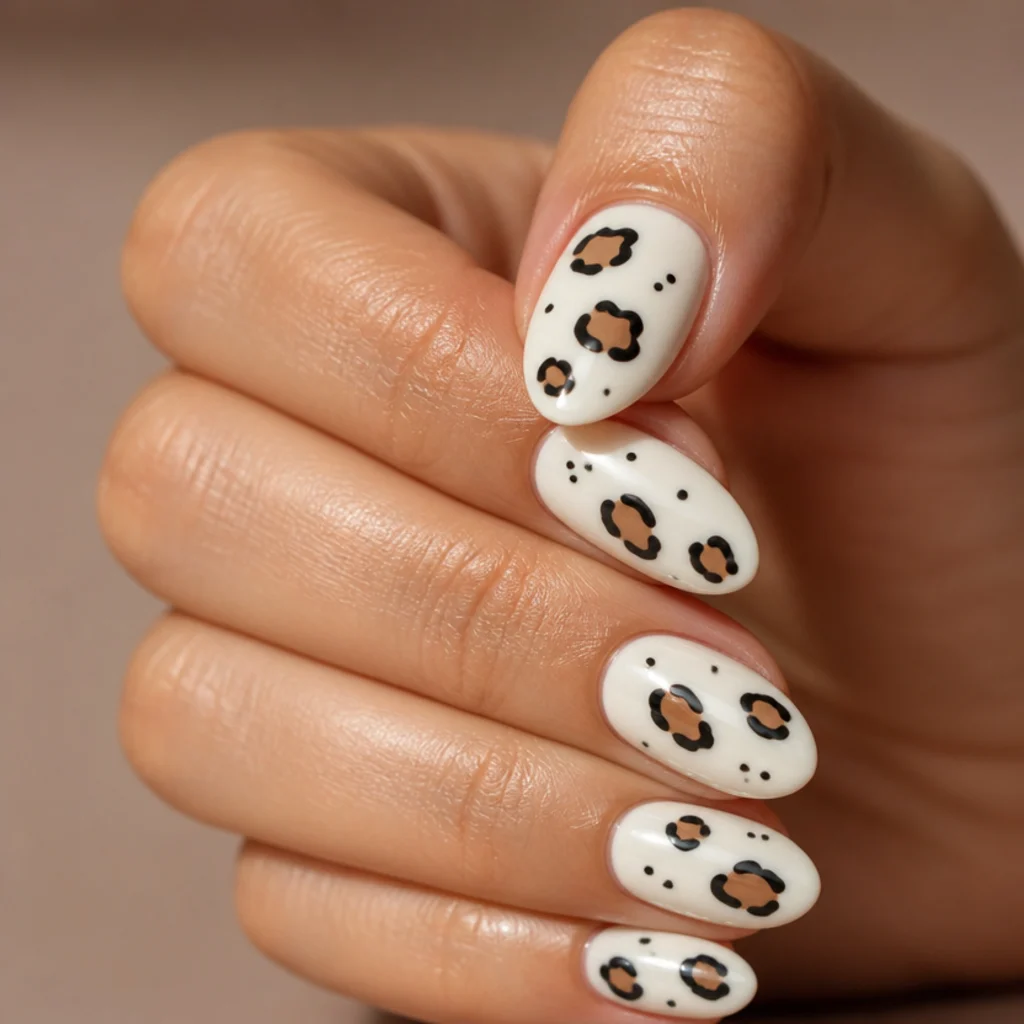
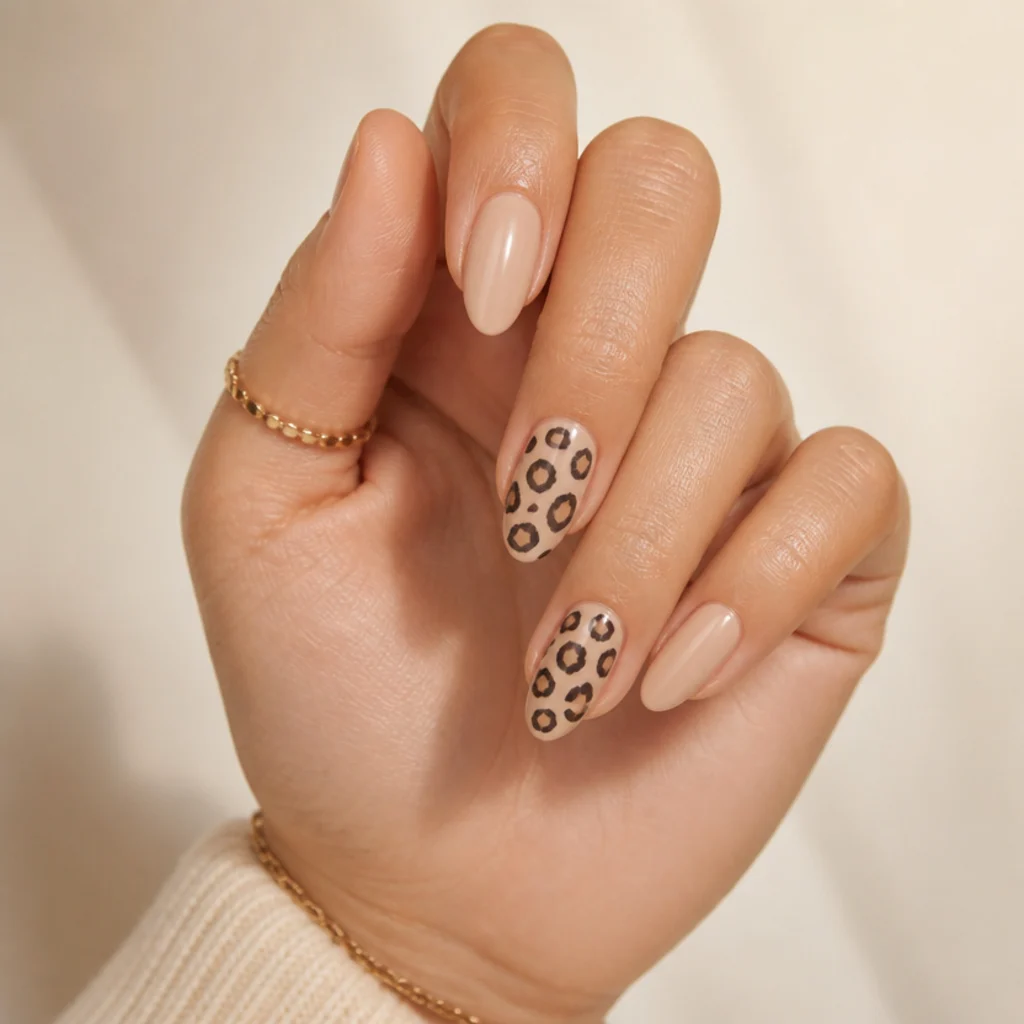
This is the reference point for the whole set: a bright, opaque white base with broken black rosettes and small solid dots filling the gaps between them. Build each rosette as an incomplete C or comma shape rather than a closed circle, then let a warm tan or caramel sit inside the outline so the print looks dimensional instead of flat. The jet-black linework keeps it graphic and legible, so it photographs well and reads as deliberate animal print rather than a smudge. It suits medium almond or squoval nails, where there's enough surface to space two to three rosettes evenly with air between clusters — crowding is what tips leopard from chic into busy. Warm and neutral undertones carry the bright white best; very cool skin may prefer a softer ivory instead. Pro tip: paint the tan fill first, then outline in fragments. A continuous ring is the single most common reason home leopard looks cartoonish. When you book it, ask for "open" placement with the outlines left intentionally broken. Upkeep is forgiving here, since crisp black lines hide minor tip wear better than pale prints do.
02Soft Taupe Spot Milky White
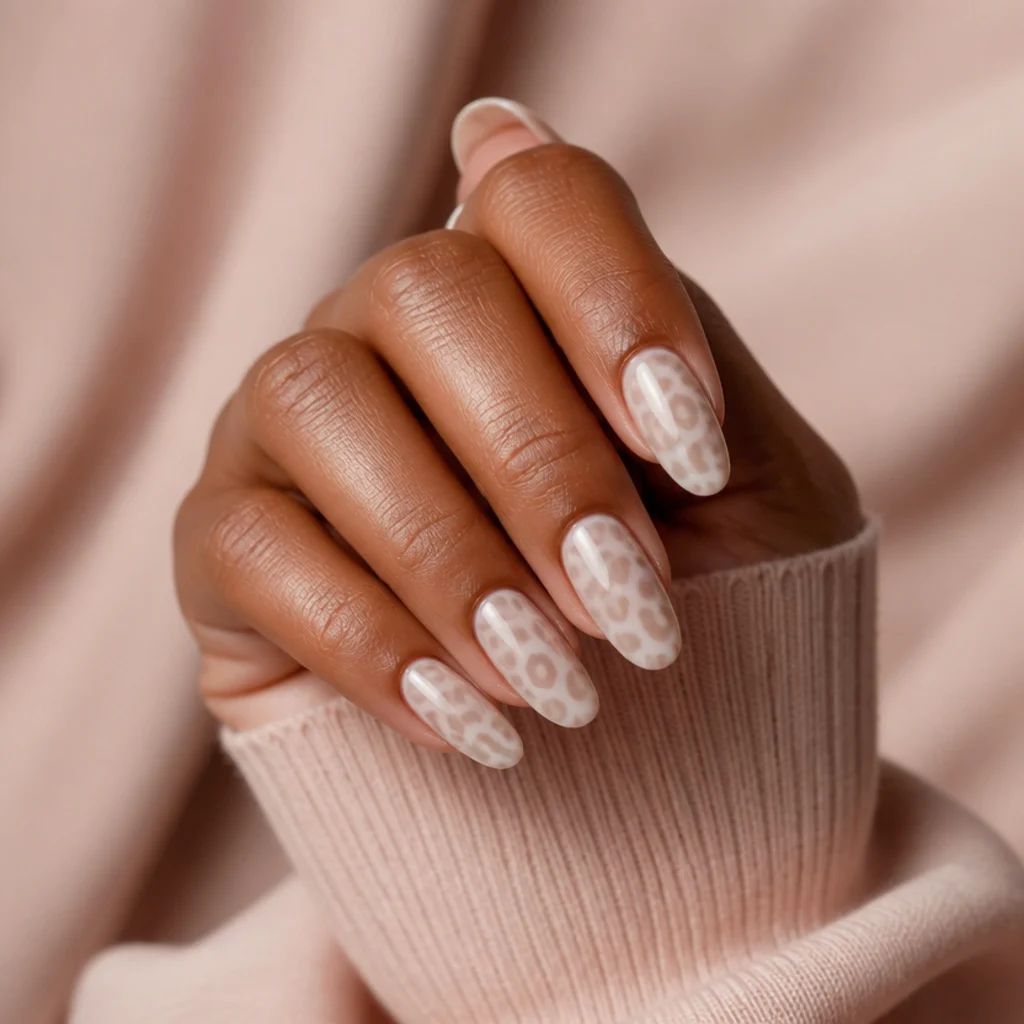
For a quieter take, drop the black entirely and build the print from taupe and warm greige layered over a milky, slightly sheer white. Because the base and spots sit close in value, the pattern blurs into a soft textured neutral from arm's length and only resolves into leopard up close. That's what flatters cool and neutral undertones without ever tipping into costume territory. Keep two tones in play, a lighter greige for the fill and a deeper taupe for the broken edge, so the spots still carry some depth. It works especially well on shorter nails, since the low contrast keeps the hand calm and elongated. Maintenance is easy, but a milky base shows grime along the free edge faster than a saturated color, so plan a topcoat refresh around day seven to ten. Pro tip: thin the taupe with a touch of clear gel or top coat before placing it — that softens the edges into an expensive-looking tonal blur. Ask for a "no-outline tonal leopard" and confirm your tech will keep the spots within one or two shades of the base.
03Short Squoval White Leopard
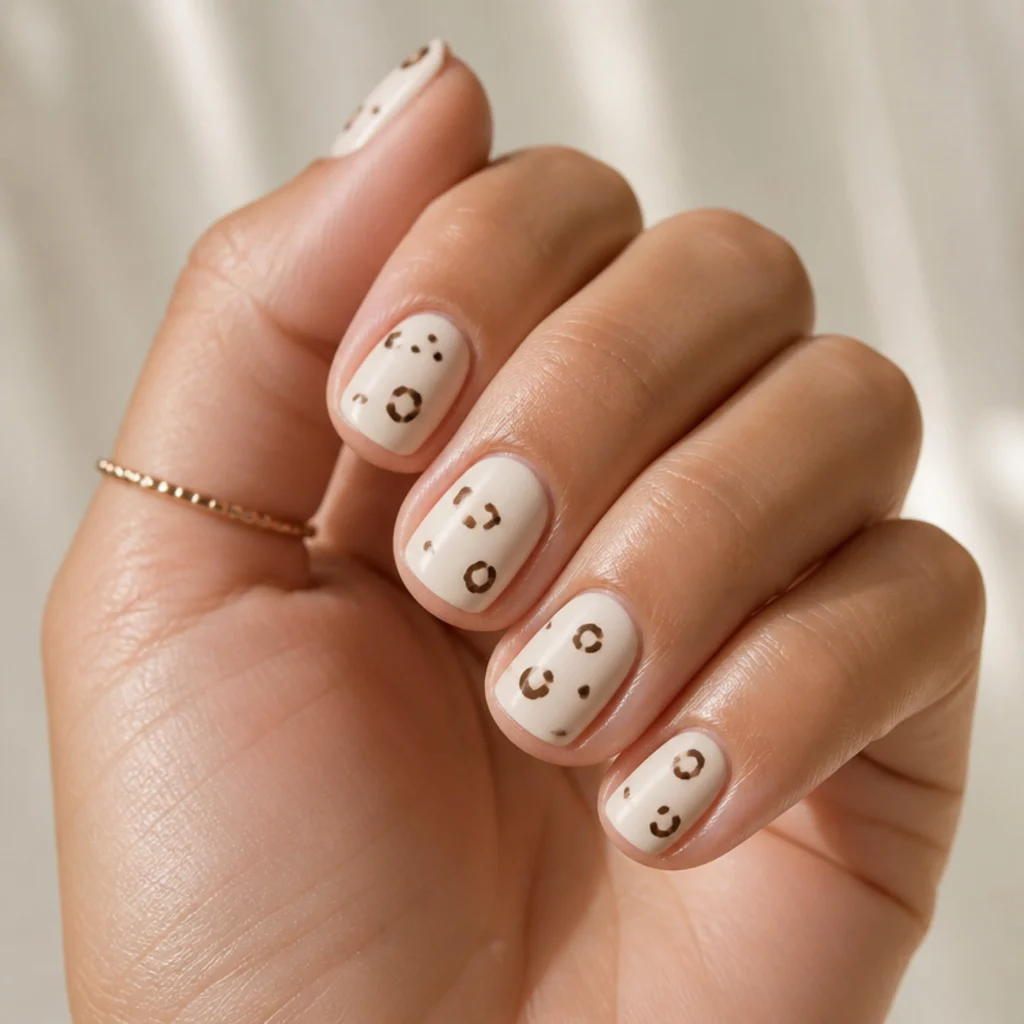
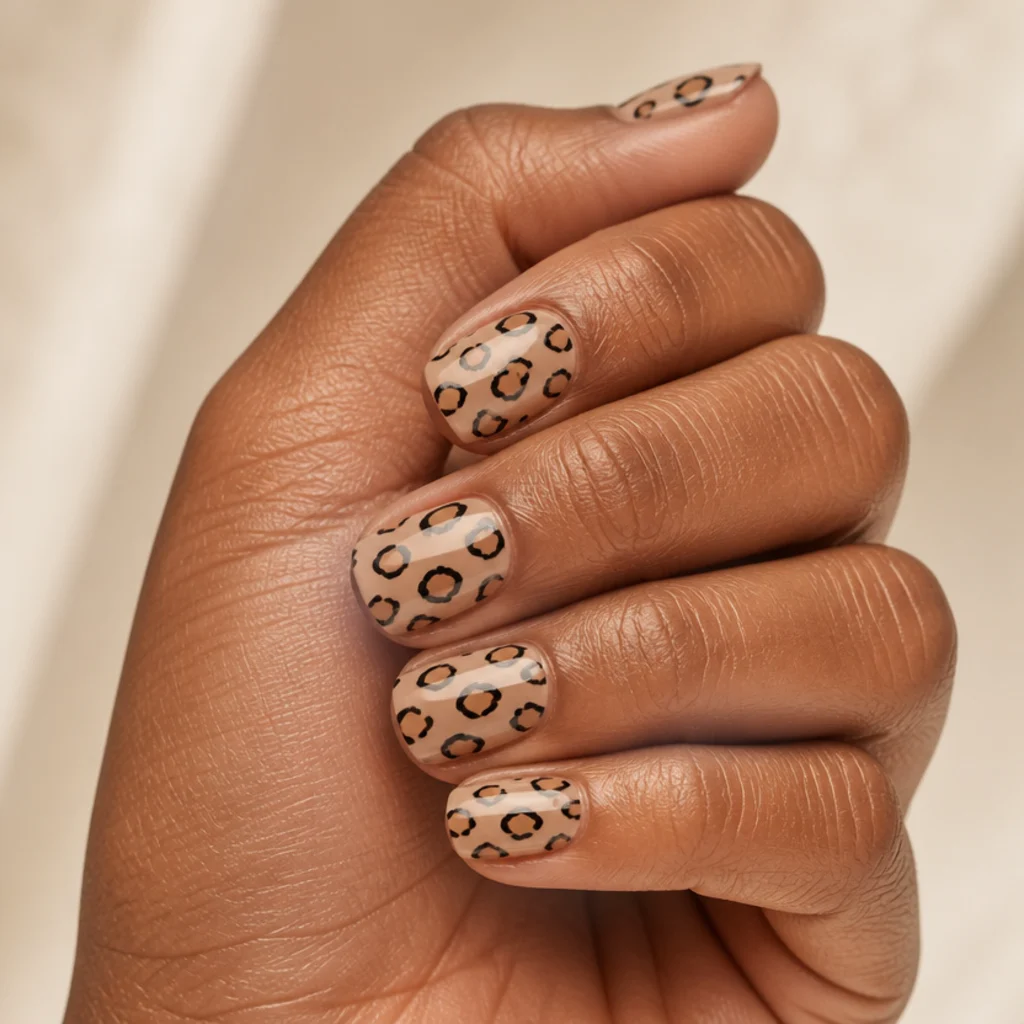
Short leopard print nails prove the look never needed length to feel finished, just correct scale. On a short squoval, shrink every element: two compact rosettes and a couple of dots per nail keep the pattern proportional to the surface, and a squoval's straight sidewalls give the spots a clean grid to sit in. A creamy, slightly warm white flatters warm skin tones and camouflages regrowth, a real bonus if you stretch three or four weeks between appointments. This is the practical pick for anyone who types, cooks, lifts or works with their hands, since the short free edge simply has less leverage to catch and lift. Seal the tip and a sliver of the underside with a glossy topcoat to fight chipping where squoval corners take the most abuse. Pro tip: cap the free edge (brush topcoat along the very tip) at every step to roughly double chip resistance. To recreate it at home, a fine dotting tool and two brown shades are all you need. Ask your nail tech to keep the print "micro-scaled" so nothing crowds the small plate.
04White Leopard French Tips
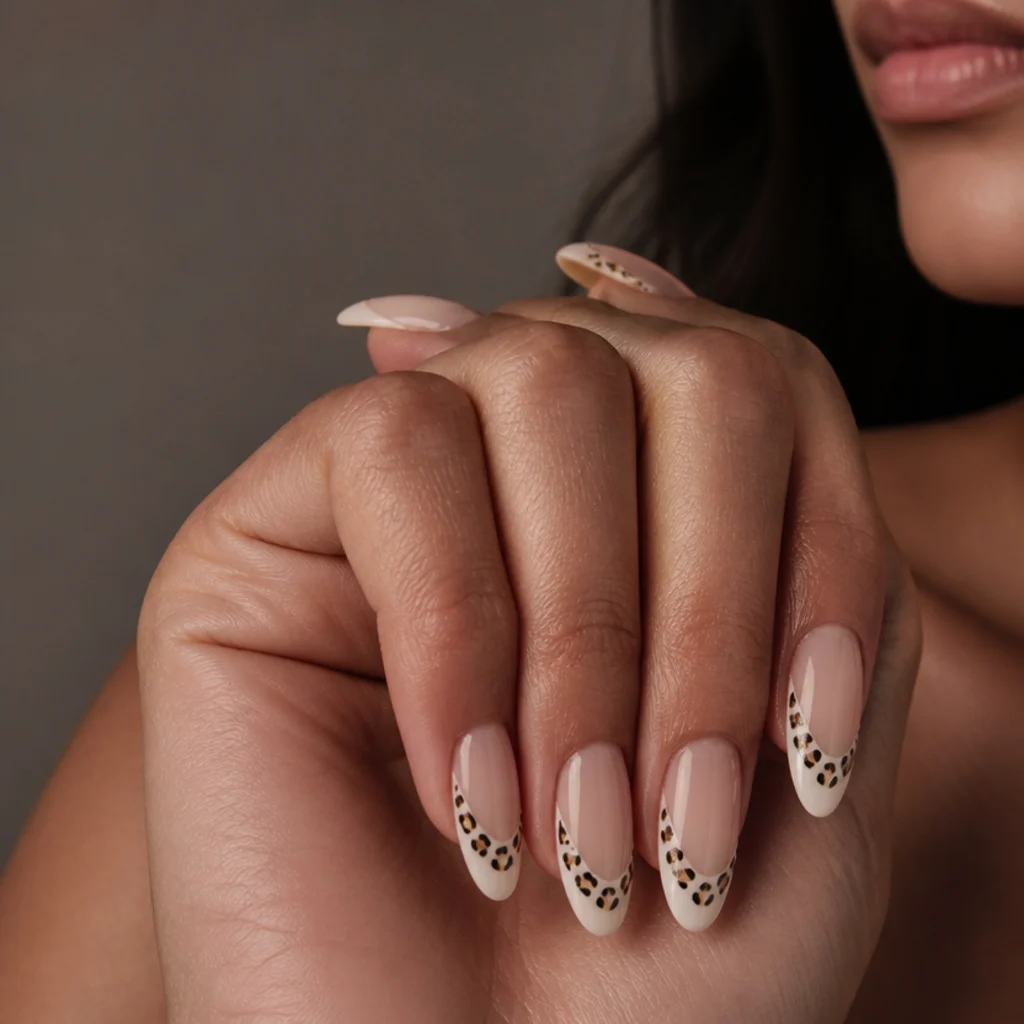
Here the leopard lives only on the tip. A sheer, skin-matched nude grounds the nail while a white French tip carries a scatter of small spots, giving you a classic French with a playful, editorial twist. Because the art sits above the smile line, regrowth stays nearly invisible — one of the lowest-maintenance options in the lineup, and a smart pick if you book every four weeks. It suits longer almond and oval shapes, where the extended tip has room to show two or three spots without cramming them at the very edge. Match the nude to your own undertone: warm beige for golden skin, rosy or soft cocoa for deeper tones, so the base reads as a natural extension of the finger. Pro tip: have the smile line set slightly deeper than a standard French so the printed zone doesn't feel like an afterthought. Ask for a "micro-leopard French" and bring a reference photo so the spots stay small and evenly spaced instead of clustered on the edge.
05Gold-Outlined Ivory Leopard
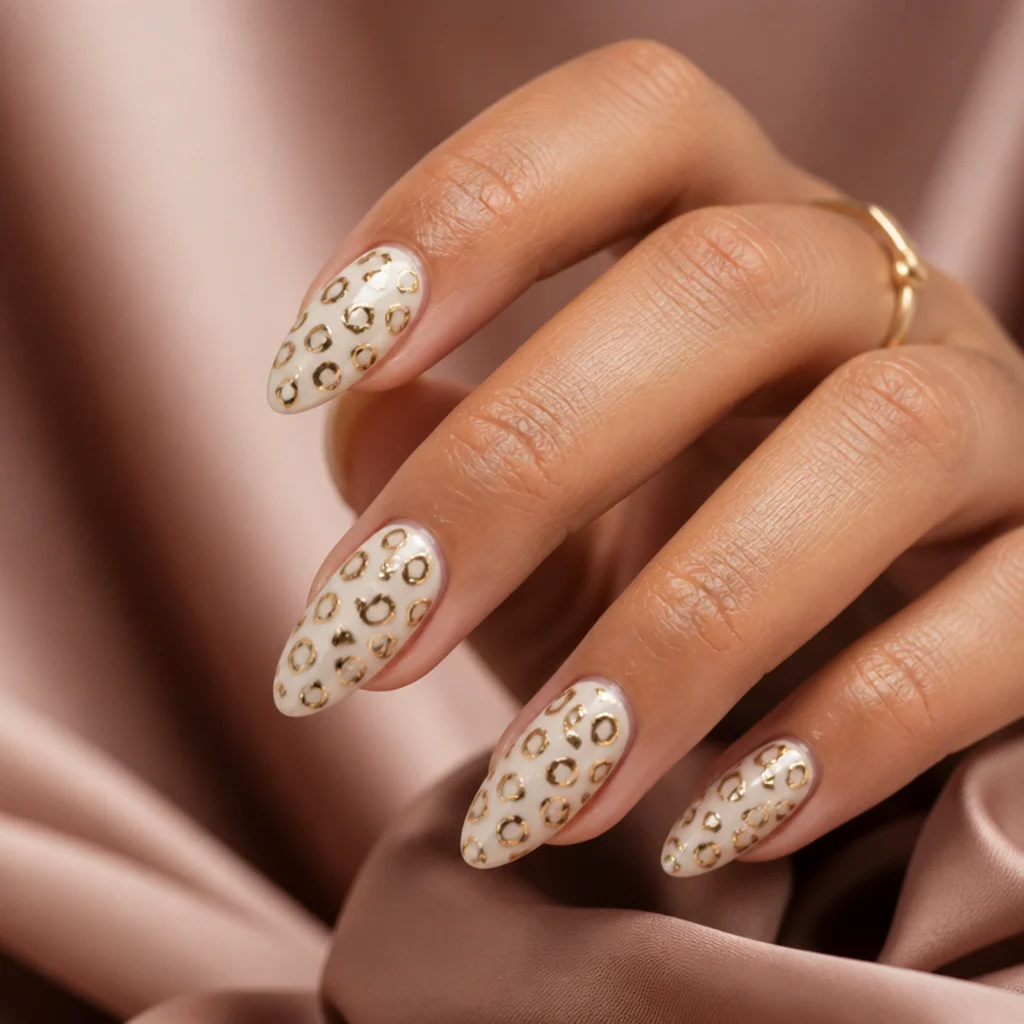
Swap the usual black outline for fine metallic gold and the whole look shifts from casual to occasion-ready. On a warm ivory base, thin gold linework fragmented around each rosette catches the light and gives the print a jewelry-like finish suited to weddings, holidays and events. The warmth of the ivory is what makes it work — a stark cool white can turn gold slightly green, while ivory lets the metal glow. It pairs naturally with yellow-gold rings, brass hardware and champagne tones in a wardrobe. This one demands a steady hand or a gel liner pen with real gold pigment (not a yellow lacquer), so it's better booked with a detail-oriented tech than attempted as a first solo try. Pro tip: apply the gold as broken dashes rather than a closed loop, then seal it within the same session so the pigment doesn't oxidize dull. Ask for "true metallic gold linework" and a high-shine gel topcoat, since unsealed gold fades faster than standard polish.
Save this to Pinterest to keep the gold-outlined version handy for event season.
06White Leopard Acrylic Almond
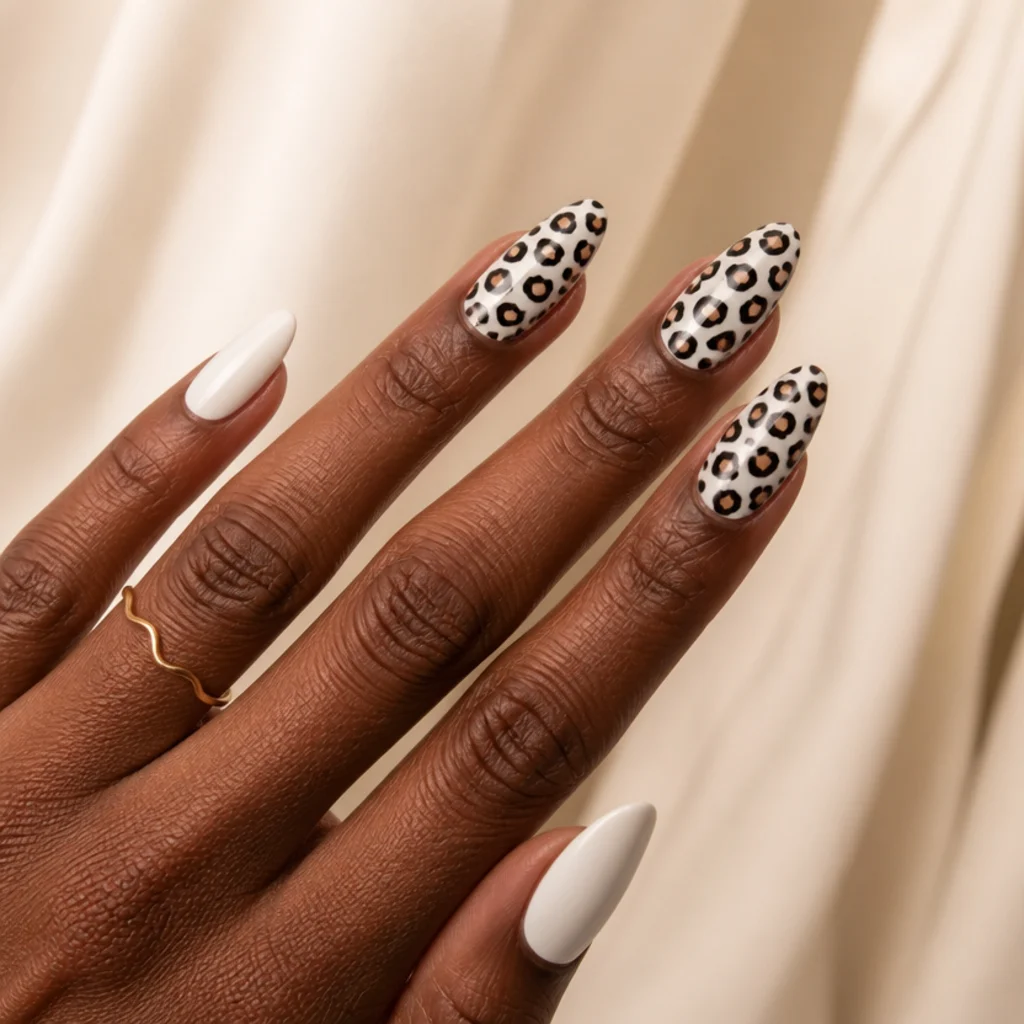
If you want length with durability, leopard print acrylic nails deliver both. A sculpted almond extension in white gives the print a long, tapered canvas, and acrylic holds crisp rosette edges far better than a thin natural nail that flexes with every keystroke. Choose almond over stiletto for the drama of length while keeping daily tasks manageable — the softer point is stronger and snags less. Plan a fill every two to three weeks and treat the apex and free edge gently; longer levers mean more force at the stress point if you catch a nail. Structure matters here, so ask that the apex sit correctly to prevent lifting. Pro tip: request that a few nails stay deliberately simpler, one or two spots only, so a long, full set reads considered instead of frantic. Warm and medium undertones carry the bright acrylic white easily; very fair cool skin may prefer a softened white to avoid a chalky contrast. Ask for a "balanced leopard layout" across the set rather than the same density on every finger.
07Two-Tone White and Black Accent
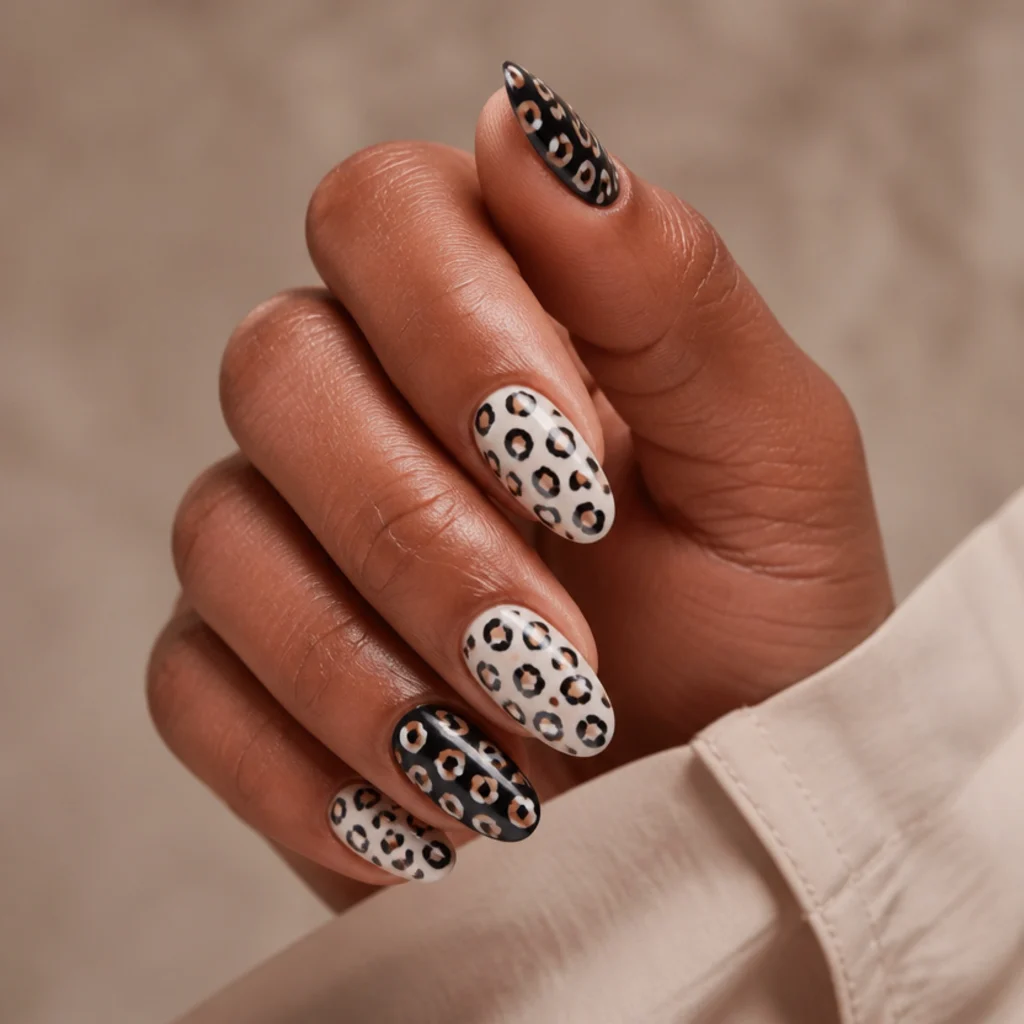
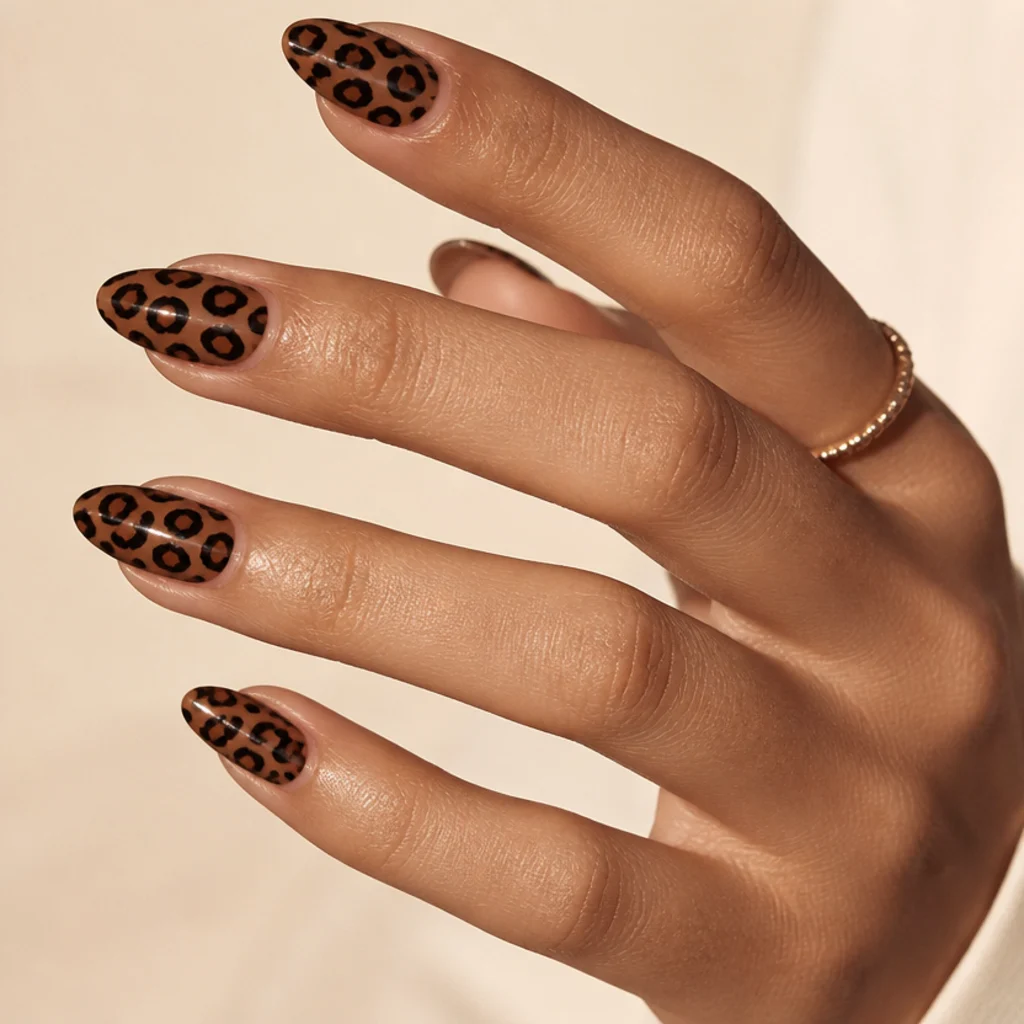
Contrast is the whole point here. Most nails wear the soft white leopard while one or two accent nails flip to classic black leopard print nails with white and tan spots, so the set plays light against dark and gains a rhythm a single print can't manage alone. It's the smartest way to enjoy bold black leopard print nails without committing every finger to a dark base, which reads heavier and shows regrowth sooner. The detail that keeps it looking intentional rather than mismatched is spot consistency — use the same rosette style and scale on both bases so the eye reads one print in two colorways. Place the black accents on the ring finger, or the ring and index, for the most balanced spacing across the hand. This works on any medium-to-long shape. Pro tip: on the black nails, keep the spot fill warm cream rather than stark white so it echoes the softer nails instead of fighting them. Ask your tech to "mirror the spot style" across both bases.
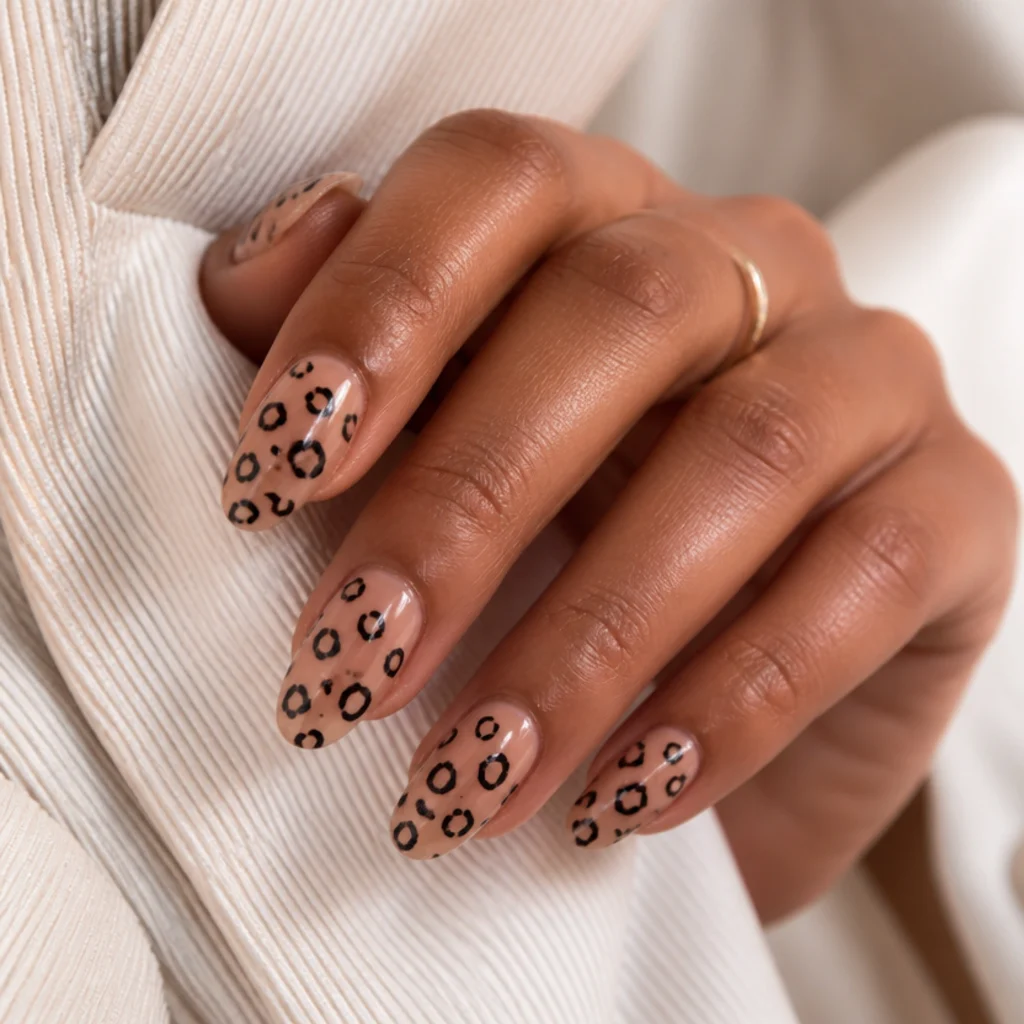
08Sheer Milky Micro Spots
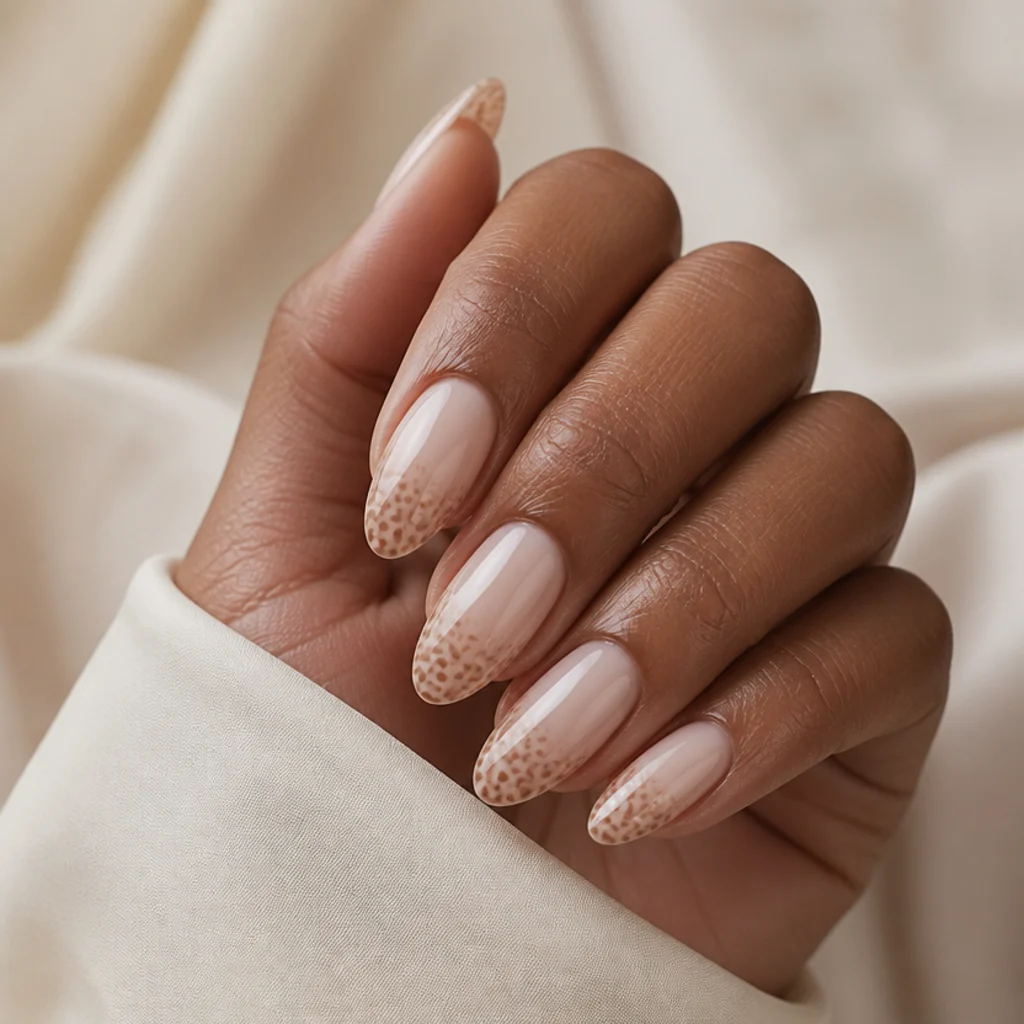
This is the most understated look in the guide, and the one that reads most expensive from a distance. A sheer, milky base lets your natural nail glow through slightly, and the leopard is shrunk to delicate micro-spots in soft brown, so from across a room it looks like a clean milky manicure while the print becomes a close-up reward. The near-invisible contrast flatters every skin tone because it never competes with the hand, and it grows out gracefully enough to suit anyone who books infrequently. Concentrating the micro-spots toward the tips creates a subtle gradient that draws the eye up the nail and elongates shorter fingers. Pro tip: build the milky base in two thin coats rather than one thick one — that keeps the lit-from-within glassiness instead of a streaky, opaque wall. Finish with a high-shine gloss topcoat, which is what makes milky nails feel costly. Ask for a "sheer milky base with tip-weighted micro leopard" so the placement stays intentional.
09White Leopard on Coffin Nails
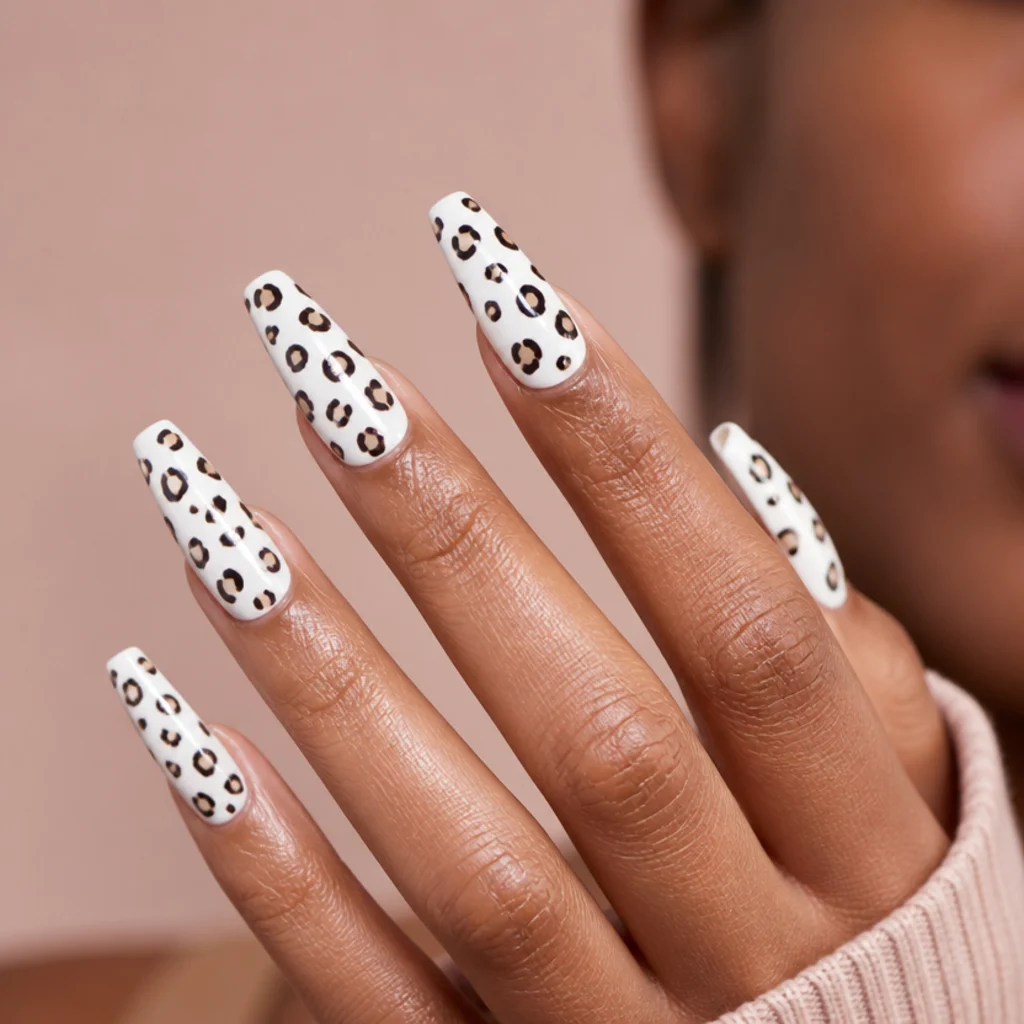
The coffin, or ballerina, shape gives leopard a wide, flat canvas that shows the pattern off in full, so this is the set to choose when you want the print to be the headline. On a bright white base, bolder rosettes with defined dark centers earn the extra real estate, and the tapered-then-squared silhouette frames each spot cleanly. It's a statement set, best suited to anyone who enjoys a longer nail and accepts the upkeep that comes with it. Because coffin tips are squared, the corners are the classic catch-and-lift point, so a durable gel or acrylic build with a properly sealed edge is worth the investment. Pro tip: ask for medium length rather than extra-long. You keep the drama of the shape while cutting the leverage that snaps a corner during everyday tasks. Space the bolder spots so at least one clear area of white breathes on each nail — that's what stops a big canvas from looking overloaded. Ask for "structured coffin with capped edges" to get the most wear out of it.
10Matte White Leopard
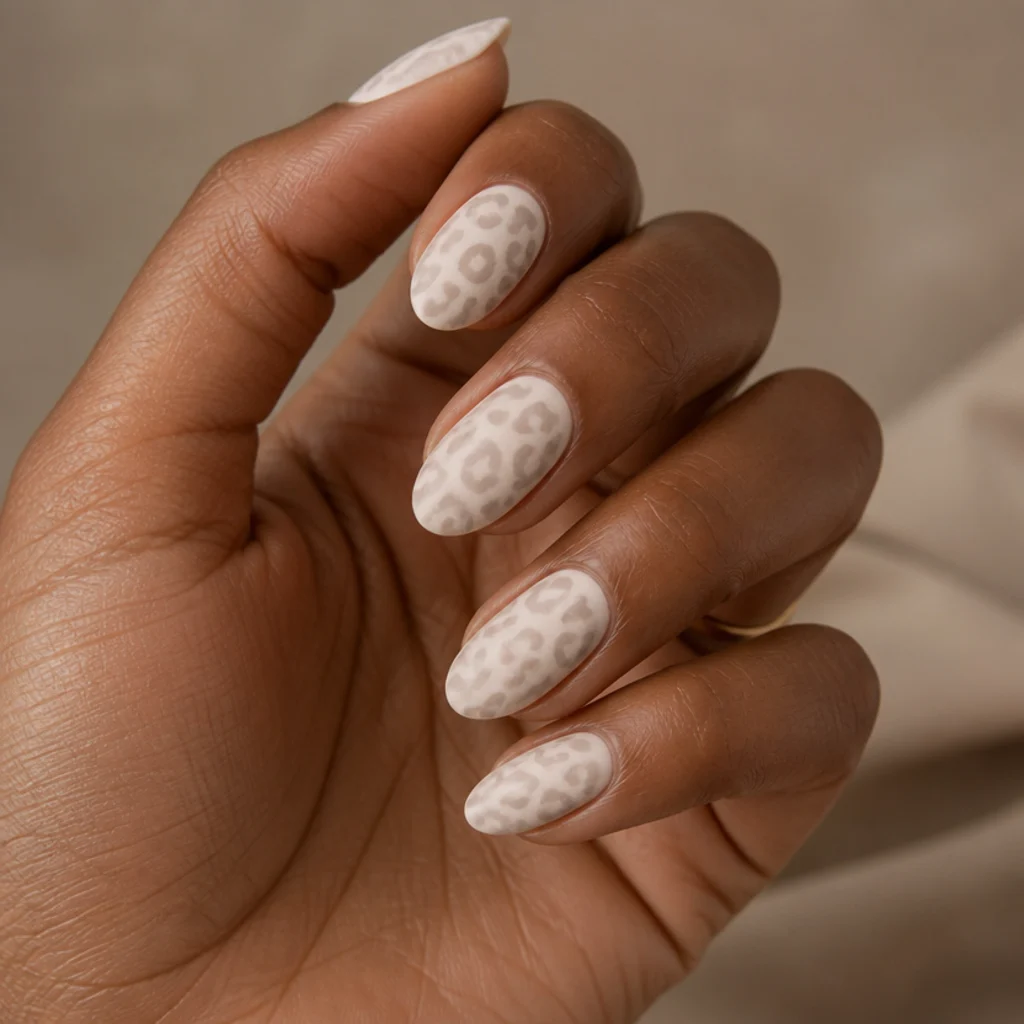
A matte topcoat completely changes the mood of white leopard. The velvety, no-shine surface reads modern and slightly moody, and because matte scatters light, it softens the visual contrast of the spots for a muted, editorial feel that suits cooler months, knitwear and neutral wardrobes. It looks especially chic on a medium almond, where the tapered shape keeps the flat finish from feeling heavy. The trade-off: matte finishes show oils and fingerprints, so the print can look smudged if you skip cuticle oil discipline. Keep oil off the surface and buff with a fresh matte topcoat mid-cycle to restore the even velvet. Pro tip: leave the leopard outlines in a glossy topcoat while the base stays matte — that matte-and-shine contrast makes the spots quietly pop without adding any color. If you love the print but find high gloss too playful, matte is the fastest way to make leopard feel grown-up. Ask for a "true matte topcoat" and confirm it's a durable gel matte rather than a quick-fade lacquer.
Save this to Pinterest if matte neutrals are more your speed than high shine.
11Blush and White Leopard Mix
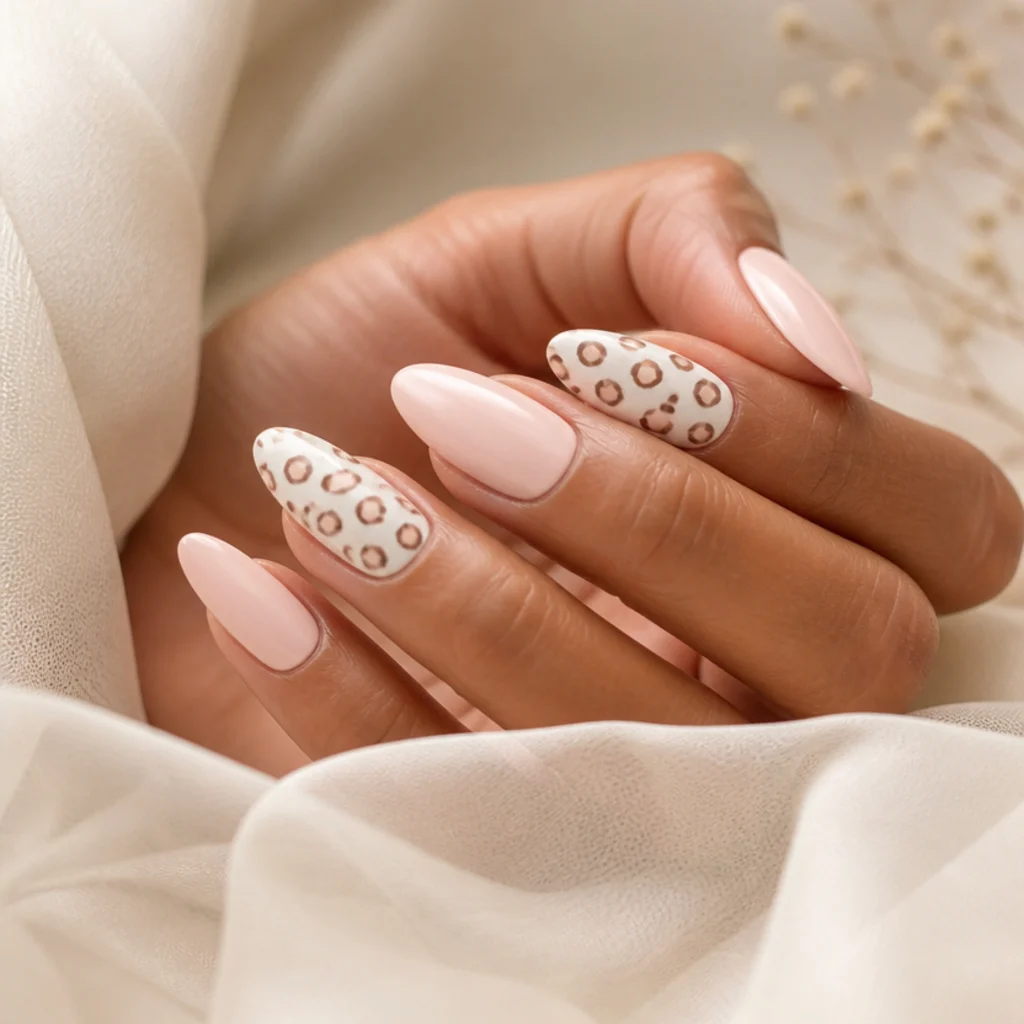
Alternate a soft blush base with the white leopard for a warm, romantic set that trades detail work for color rhythm. The pink nails stay solid or wear only the faintest spots while the white nails carry the fuller print, so the two tones hand off across the fingers and neither dominates. It flatters warm and medium skin tones, feels fresh for spring and summer, and is one of the more forgiving options for an at-home attempt, since the blush nails give you a rest from precision. The one rule that keeps it cohesive is temperature: hold the leopard spots in warm browns rather than cool grays so they harmonize with the pink instead of muddying it. Pro tip: choose a blush with a peach or rosy warmth over a cool baby-pink — a cool base can read chalky next to warm brown spots. Keep the print restrained on the white nails so the effect stays gentle without tipping into overly sweet. Ask for a "warm-toned alternating blush and white leopard."
12Chrome-Accented White Leopard
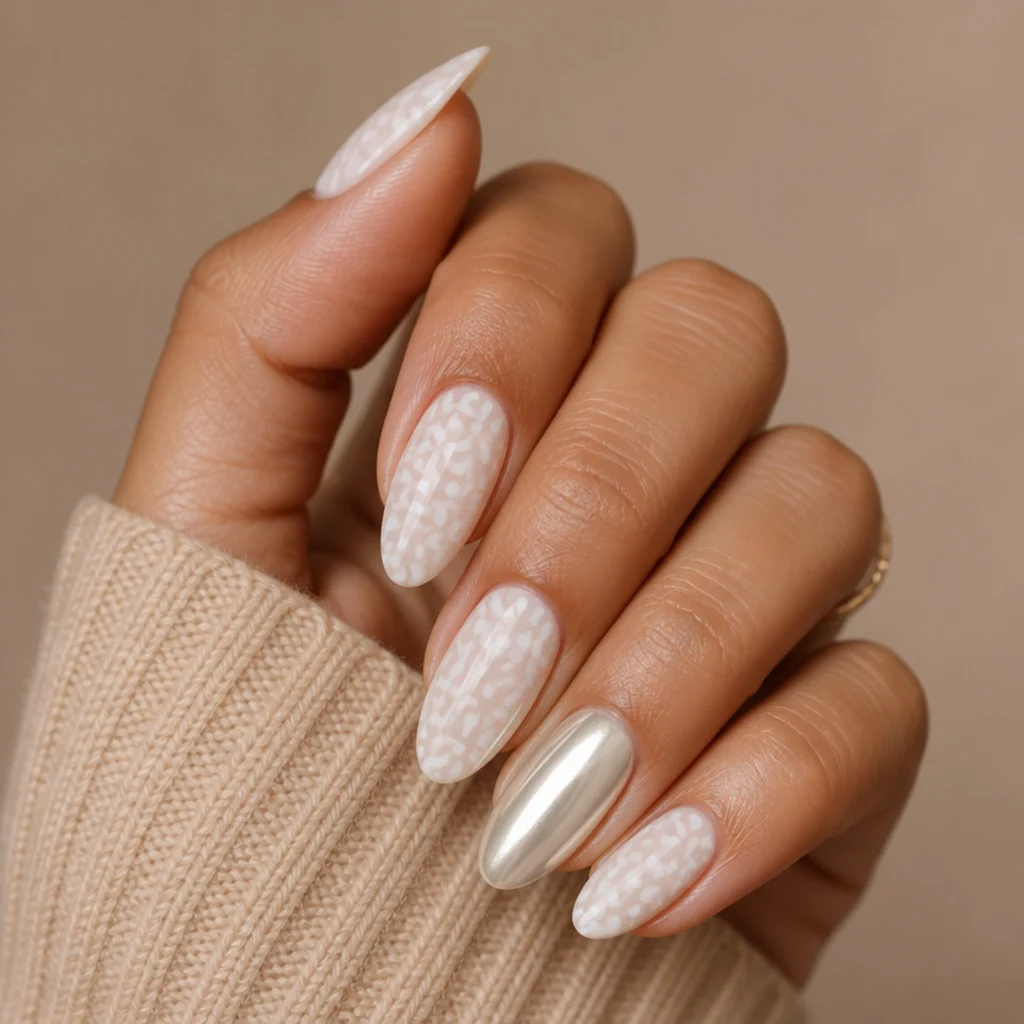
Add a single mirror-chrome accent to a white leopard set and the look turns instantly futuristic. Most nails wear the soft print while one finger is finished in silver, pearl or champagne chrome, bouncing light against the softer spots so the eye keeps moving between organic pattern and liquid metal. That tension is the appeal: the irregular leopard and the flawless mirror flatter each other precisely because they're opposites. Chrome is a technical finish that needs a gel base, chrome powder buffed over a no-wipe topcoat, and a sealing layer to lock it in, so this is a salon look rather than a beginner project. Choose pearl or champagne chrome for warmth against ivory, or cool silver for a sharper, edgier read. Pro tip: put the chrome on the ring finger and keep that nail print-free, letting the metal stay clean while the leopard does the storytelling elsewhere. It's a simple way to update classic leopard for anyone who already loves a metallic moment. Ask for a "sealed chrome accent" so the powder doesn't cloud within days.
13White Leopard Negative Space
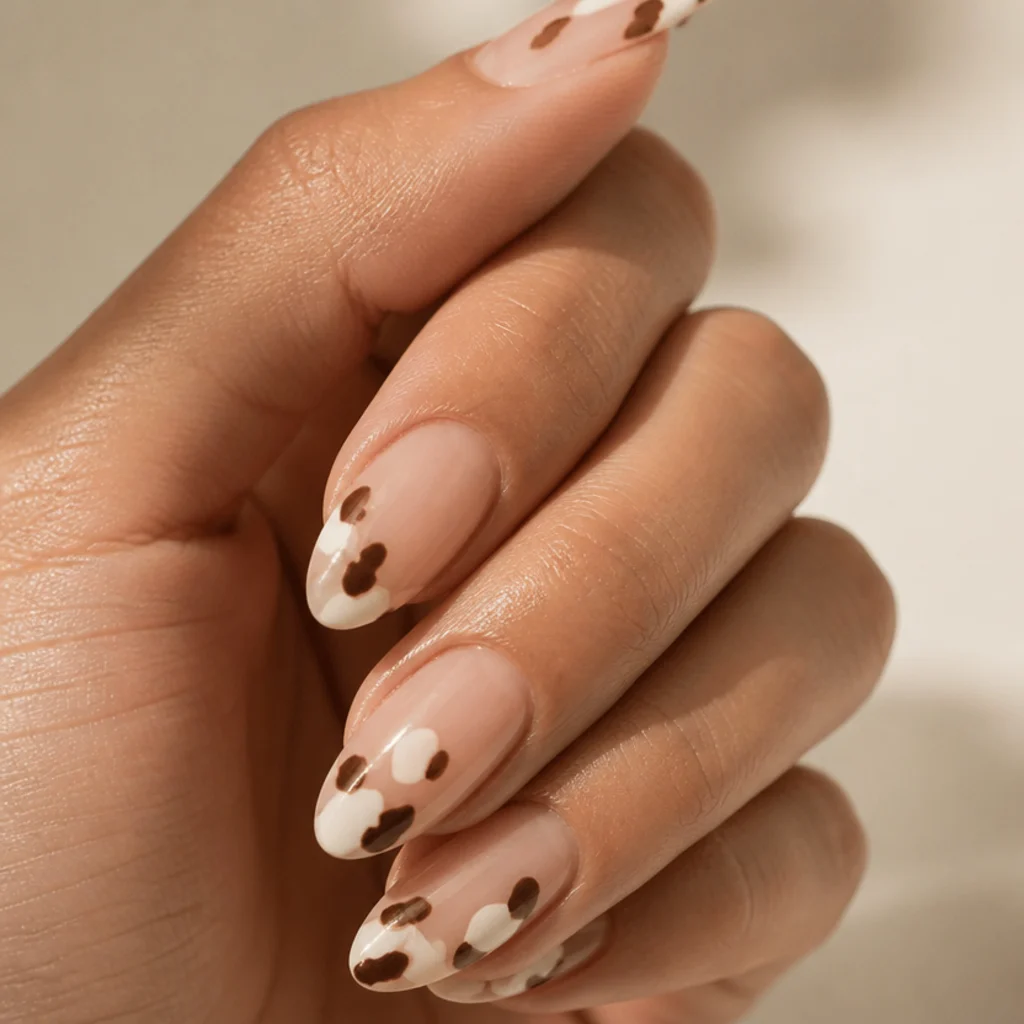
Negative space leaves part of the natural nail bare while the leopard floats across the open area, so instead of a full white base you get white patches and brown spots sitting directly on the buffed nail. The result is airy and minimal, grows out almost invisibly, and suits anyone who wants a barely-there manicure with a twist. Because the bare nail is on full display, the health of the plate becomes part of the design — buff lightly, hydrate, and keep the skin around it tidy so the exposed areas look intentional rather than unfinished. This look rewards a precise hand and clean edges, so it's best booked with a tech who actually does fine detail work, not one who tacks it onto a quick set. Pro tip: keep the design asymmetric, spots weighted to one side or the tip, since perfectly centered negative space can look accidental. Commit to daily cuticle oil so the natural nail stays glossy and cared-for between visits. Ask for "negative-space leopard on the natural nail" and confirm your tech will seal the bare areas with clear topcoat for shine and protection.
14Short Round White Leopard
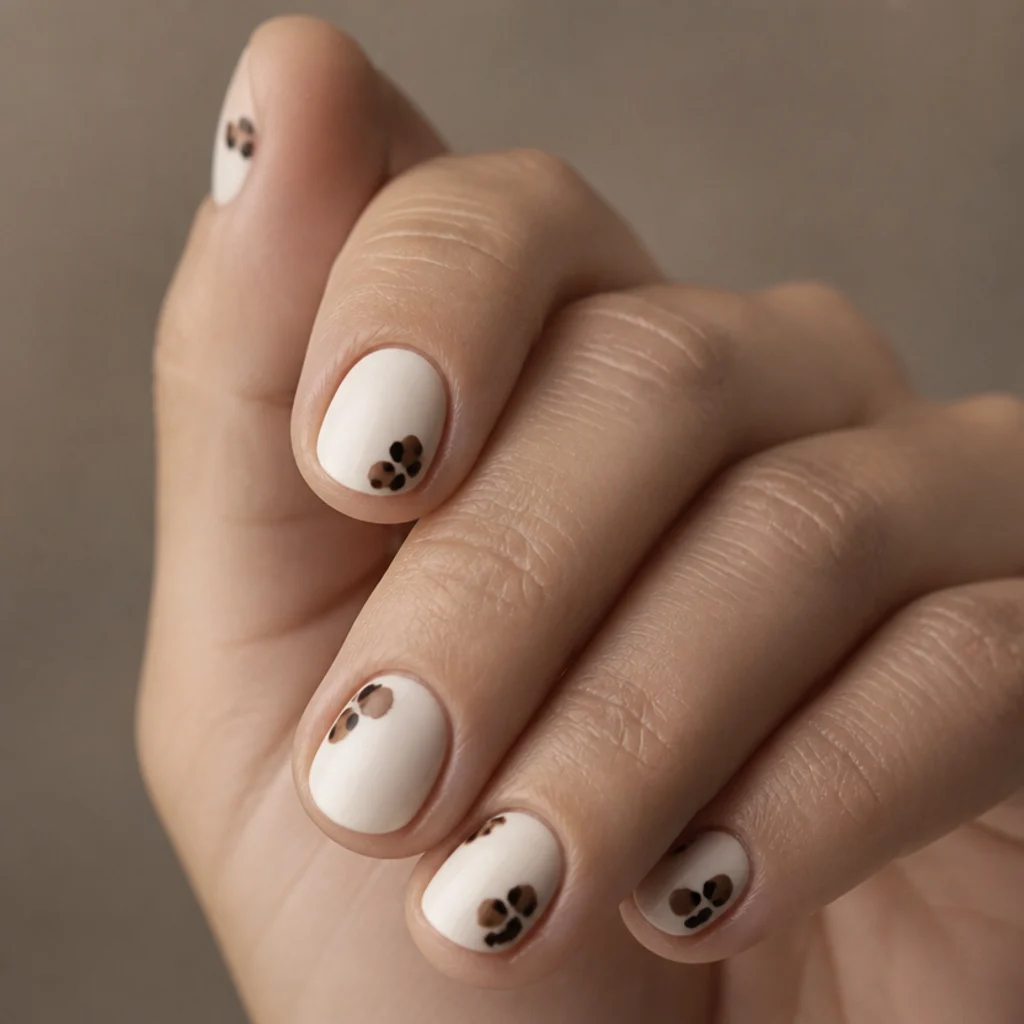
Round short leopard print nails are the most classic and comfortable option here, and quietly the most flattering. The round shape mirrors the natural fingertip, so it wears evenly, resists catching, and stays tidy as it grows — that's why it's the easiest set to maintain and the most office-appropriate. On a soft white base, a small, restrained scatter of one or two spots per nail keeps everything proportional to the short length and stops the plate from ever looking crowded. A round tip also widens and softens the fingertip visually, so it flatters shorter or wider fingers by keeping attention off the free edge. Pro tip: file to a gentle round that follows your own cuticle curve rather than a dramatic arc; it reads more natural and grows out cleaner. This is the most reliable everyday choice in the guide and the friendliest for an at-home attempt, since fewer spots means fewer chances to overwork the design. Ask for a "soft round with minimal leopard" if you want low fuss with a chic finish.
15Caramel and White Half-and-Half
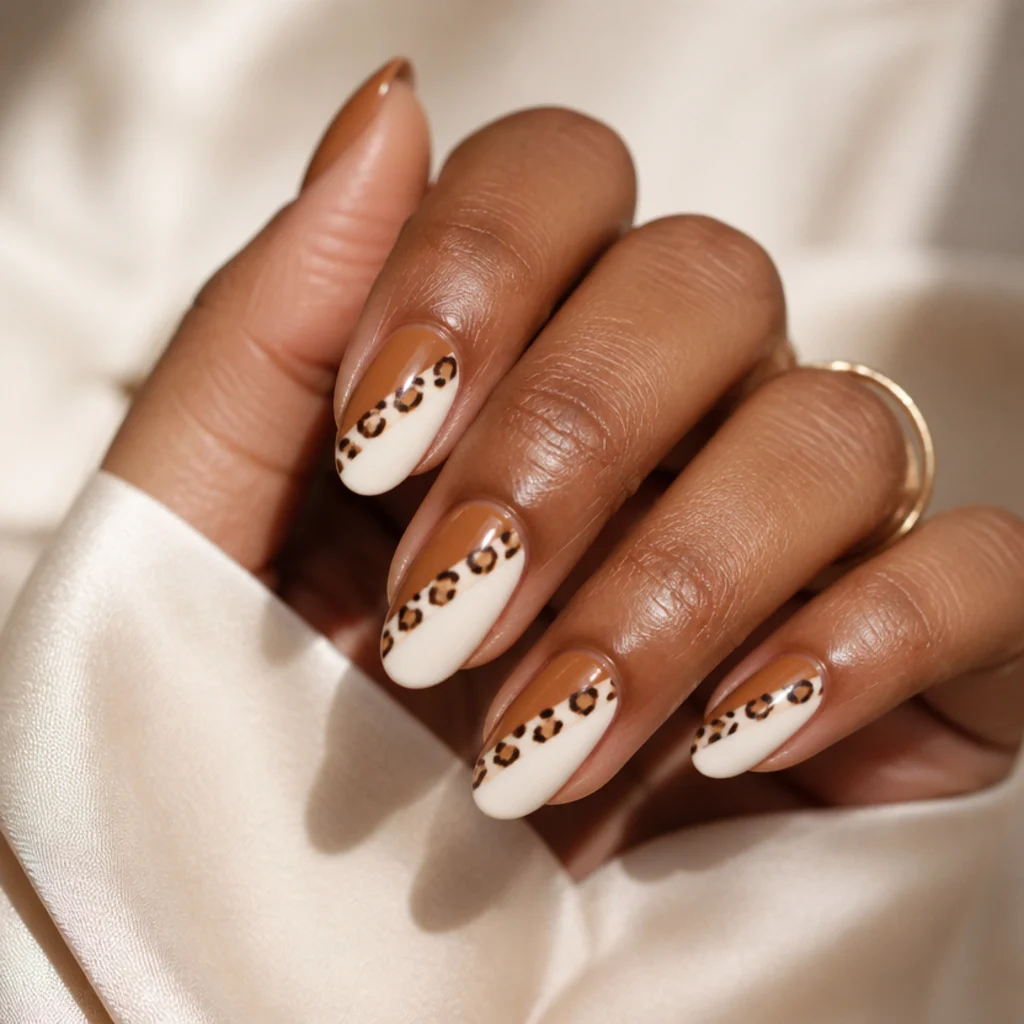
Finish the lineup with a color-blocked idea: each nail is split, half warm caramel and half white, with leopard spots scattered across the divide so the print stitches the two halves together. The two-tone base adds depth, and the caramel echoes the golden ground of a real leopard coat for a rich, autumn-ready warmth. It suits medium-to-long almond or squoval nails, where the diagonal has room to sit cleanly without pinching at a short tip. This is the most advanced look here because everything hinges on the color line — a crisp, straight diagonal reads luxe while a wobbly one looks unfinished, so it's best left to a tech who can tape or freehand a sharp edge. Pro tip: have a few spots deliberately straddle the seam, half on caramel and half on white. That's the detail that makes the divide feel designed rather than just two colors meeting by accident. Ask for a "diagonal caramel-and-white split with leopard crossing the line."
Pro Tips from the Editor
- Break every rosette. A real leopard spot is a fragmented C or comma, never a closed ring. Paint the tan fill first, then add broken outline fragments around it; the single biggest tell of amateur leopard is a continuous circle.
- Control contrast, not just color. The gap in value between base and spots sets the volume. Bright white plus jet black shouts; ivory plus warm greige whispers. Pick your loudness before you pick your shades.
- Cap the free edge at every stage. Brushing base, color and topcoat along the very tip is the cheapest durability upgrade there is and roughly doubles chip resistance on pale bases.
- Weight placement toward the tips. Concentrating or gradating spots up the nail elongates the hand and looks more intentional than an even all-over scatter.
- Keep density uneven across the set. Let a few nails stay simpler than the rest. A uniform full print on every finger is what tips leopard from editorial into busy.
- Match spot temperature to the base. Warm browns on warm ivory, caramel and blush; save cool greige for cooler milky whites so the spots never look muddy.
- Book art in the right lane. Chrome, true gold linework and half-and-half splits are salon jobs. Tonal taupe, micro-spots and simple black-outline looks are the realistic DIY tier.
How to Choose / Get the Look
Work through four decisions in order and the booking almost writes itself.
1. Set your contrast. Decide how loud you want the print before anything else — the base-to-spot value gap controls the whole mood. Want it to disappear into a neutral wardrobe? Choose a milky or ivory base with tonal taupe spots and no outline. Want it to read clearly and photograph well? Keep the crisp black lines of classic black leopard print nails, or isolate the drama in a single black accent nail.
2. Match shape and length to your life. Short leopard print nails in round or squoval are the most durable, the most office-friendly, and the best DIY candidates. Long leopard print acrylic nails in almond or coffin give you a bigger canvas and more impact, at the cost of fills every two to three weeks and gentler handling.
3. Tune shades to your undertone. Warm and medium skin carries bright and creamy whites and warm-brown spots easily. Cool or very fair skin usually looks softer in ivory or milky bases with greige spots, which avoids a chalky, high-contrast edge.
4. Budget the maintenance honestly. Pale bases show tip wear sooner than dark sets, so plan a mid-cycle topcoat refresh around day seven to ten on natural nails, and a fill every two to three weeks on enhancements.
| Look | Best shape | Base color | Spot style | Upkeep | DIY-friendly |
|---|---|---|---|---|---|
| Classic black-outline | Medium almond / squoval | Bright white | Black + tan, broken | Moderate | Yes |
| Tonal taupe milky | Short to medium | Milky / ivory | Greige, no outline | Easy | Yes |
| Gold-outlined ivory | Almond | Warm ivory | Broken gold linework | Higher (metallic fades) | No |
| Acrylic almond | Long almond | Bright white | Structured black/brown | Fills 2 to 3 wks | No |
| Chrome accent | Almond | White + 1 chrome | Soft print + mirror nail | Salon | No |
| Half-and-half caramel | Medium-long almond | Caramel + white split | Spots across the seam | Higher | No |
When you book, bring a saved image and state the base color, the outline color, the shape, and roughly how many rosettes per nail. Ask for "open" placement with breathing room between clusters, keep cuticles oiled so the finish looks polished from every angle, and confirm your tech will cap the free edge for wear.
Frequently Asked Questions
Are white leopard print nails harder to keep clean than darker sets?
Slightly. Pale bases show tip wear and grime sooner than black leopard print nails, since there's less color to hide it. A glossy topcoat, a free edge capped at every layer, and a quick mid-cycle refresh around day seven to ten keep them looking fresh between appointments.
Can I get leopard print on short nails?
Yes — short leopard print nails are among the most flattering versions. The key is scale: shrink to one or two small rosettes per nail so the pattern stays proportional and never crowds the plate. Round and squoval shapes suit short lengths best and grow out tidily.
Should I choose gel or acrylic for this look?
Gel suits natural nails and shorter lengths and stays flexible, while leopard print acrylic nails are stronger for added length and hold crisp rosette edges under daily stress. Both show detailed print well as long as the apex is built correctly and the edge is properly sealed.
How do I ask my nail tech for the right look?
Bring a saved photo and name four things: base color, outline color (black, tonal or gold), shape, and roughly how many spots per nail. Ask for open placement with space between clusters, and say whether you want a uniform look or a balanced set where a few nails stay simpler.
What colors work best for the leopard spots?
Warm browns, tan and taupe read as natural and chic on white and suit most undertones. Black keeps the print graphic and photogenic; gold linework dresses it up for events. Match spot temperature to your base — warm spots on warm bases — so the print never looks muddy.
How do I keep white leopard nails from looking cheap or costume-y?
Three habits fix almost every case: keep the rosettes broken rather than closed rings, leave breathing room instead of packing every nail, and control the base-to-spot contrast so the print is as loud or quiet as you actually want it. Tonal, well-spaced leopard almost always reads expensive.
How long do white leopard print nails last?
On gel or acrylic, expect about two to three weeks of clean wear before a fill. On natural nails with polish, count on five to seven days before the pale tips start to show, which a topcoat refresh can extend a few days.
Can I recreate white leopard nails at home?
The simpler looks, yes. Tonal taupe spots, micro-spots and basic black-outline leopard need only a fine dotting tool, a liner brush and two brown shades. Leave chrome, true metallic-gold linework and sharp half-and-half splits to a salon, since those depend on specialty products or a very steady freehand line.
Do white leopard print nails suit every skin tone?
Pretty much, once you tune the base. Warm and medium skin carries bright and creamy whites well, while cool or very fair skin tends to look softer in ivory or milky bases with greige spots. Low-contrast tonal versions are the most flattering across the board, since they never fight the hand.