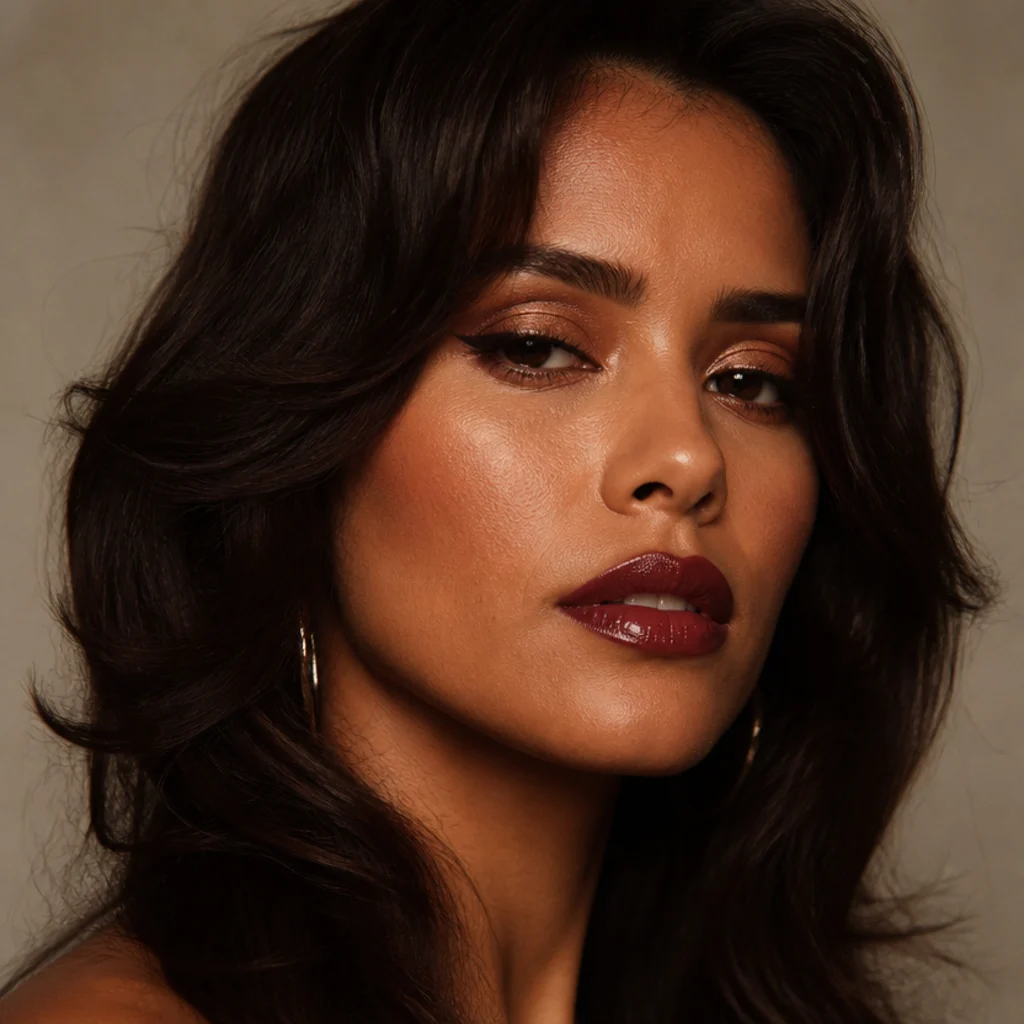
20 Creative 70s Inspired Makeup Looks
The 1970s handed beauty its warmest, most experimental decade — bronzed skin, sun-toned lids, and a glow lit from within. These 20 looks decode the exact shades, textures, and placement so you can recreate each one with intention, not guesswork.
 Edited by Lena Rose · Published July 11, 2026 · 32 min read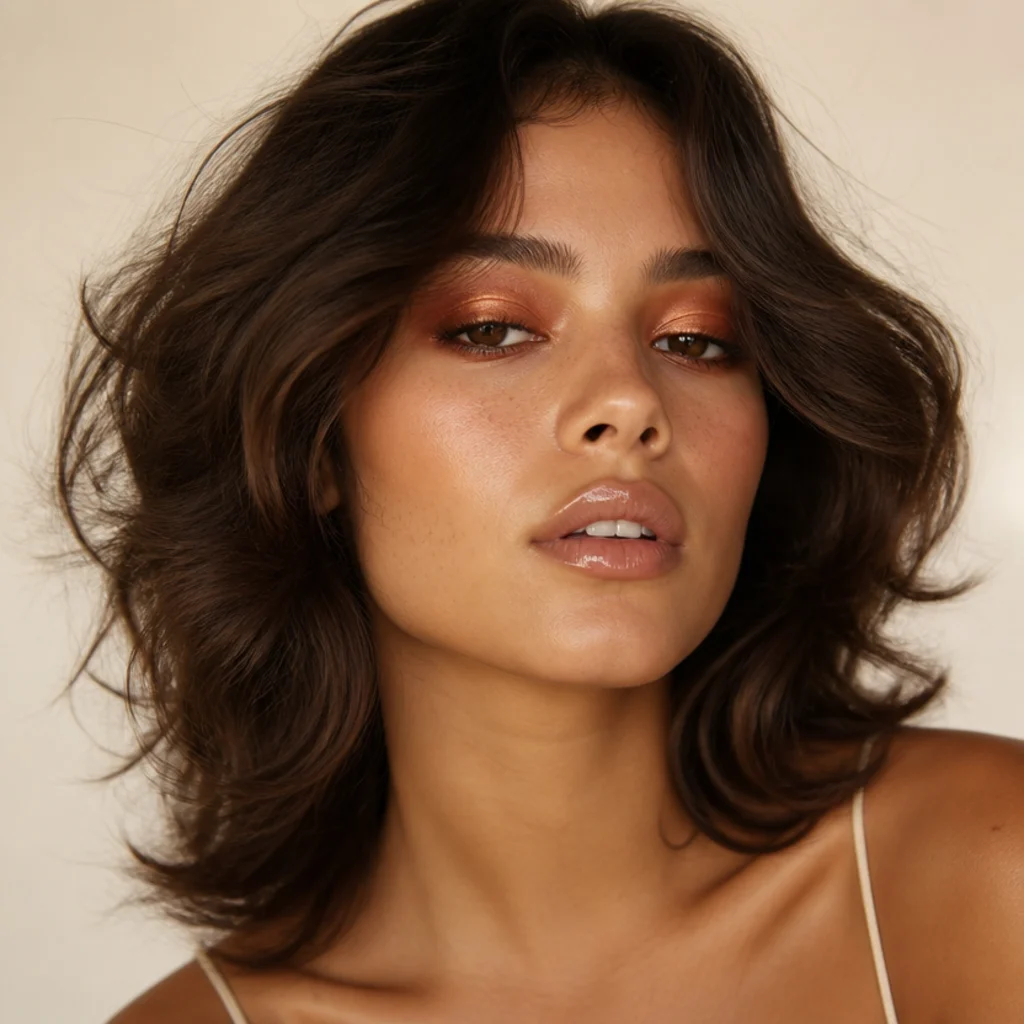
Quick Answer
- Best for: Warm, glowy makeup lovers. The terracotta-to-gold palette flatters every skin tone once you match the undertone.
- Who might skip it: Anyone who prefers cool-toned, matte, or minimalist "clean girl" makeup; the era leans warm and shimmery by definition.
- Maintenance: Low to medium. Cream and matte formulas hold; foiled and glossy finishes need a mid-day touch-up.
- Difficulty: Beginner to intermediate; graphic liner and layered lashes reward practice.
- Cost: Achievable on a drugstore budget; a warm neutral palette, cream bronzer, and one gloss cover most looks, with falsies and duochromes the pricier extras.
- Wear time / longevity: 6–10 hours from cream and matte looks with primer; 4–6 for glosses and foiled shimmer before a refresh.
- Standout variation: The Cher-inspired lash-and-liner eye: dramatic, photogenic, and endlessly copied.
- How to ask your makeup artist: Name the finish and reference, e.g. "diffused seventies bronze glow, dewy skin, no harsh edges — warm not orange."
In This Guide
- Bronzed Disco Glow
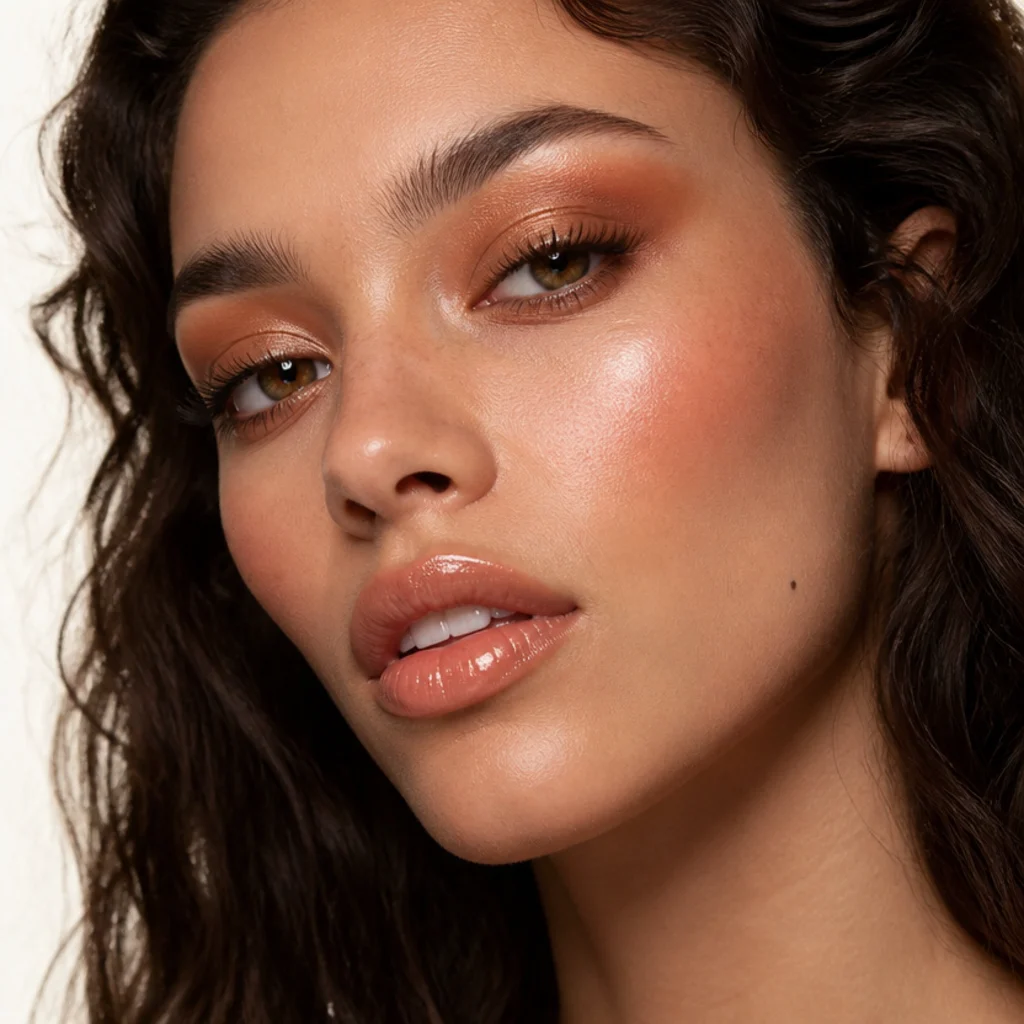
- Terracotta Wash Lids
- Cher-Inspired Lashes and Liner
- Frosted Lilac Eyeshadow
- Golden Studio 54 Shimmer
- Warm Russet Smoky Eye
- Peachy Cream Blush Flush
- Bold Blue Cut Crease
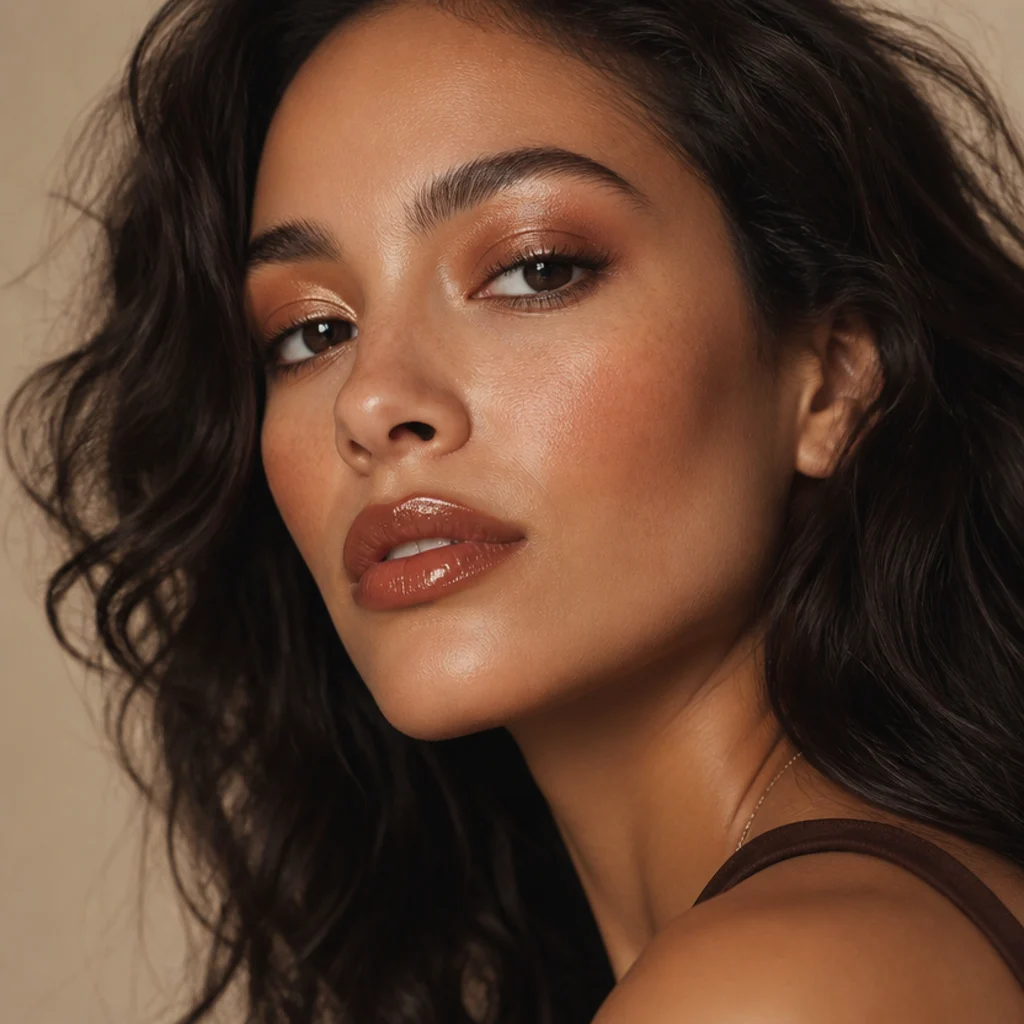
- Glossy Brown Lip
- Soft Focus Matte Rust
- Copper Foil Halo Eye
- Feathered Full Brows
- Amber and Gold Duochrome
- Rosewood Monochrome
- Bronze Sun-Drenched Skin
- Emerald Disco Liner
- Apricot Diffused Blush
- Warm Taupe Socket Definition
- Bohemian Bronze and Kohl
- Champagne Highlight and Nude Lip
The seventies rewrote glamour. Earlier decades prized polished, structured faces; this one leaned into warmth, shimmer, and a sun-kissed ease that still reads as modern the second you put it on. That's why 70s glam makeup keeps resurfacing on runways, editorial shoots, and your feed. It flatters real, textured skin, photographs well in warm light, and scales from a two-minute wash to a full disco statement. The palette runs on golden warmth: terracotta, copper, russet, amber, and antique gold, with the occasional frosted pastel or graphic pop of color to keep it from going one-note. Each of the 20 looks below comes with the exact shade family, finish, and placement that makes it work, who it flatters by undertone and eye shape, a realistic upkeep timeline, and the phrasing to hand a makeup artist. Want something wearable to brunch, disco shimmer for a night out, or a cut crease bold enough to be seen? It's all here, no vintage costume energy required.
01Bronzed Disco Glow
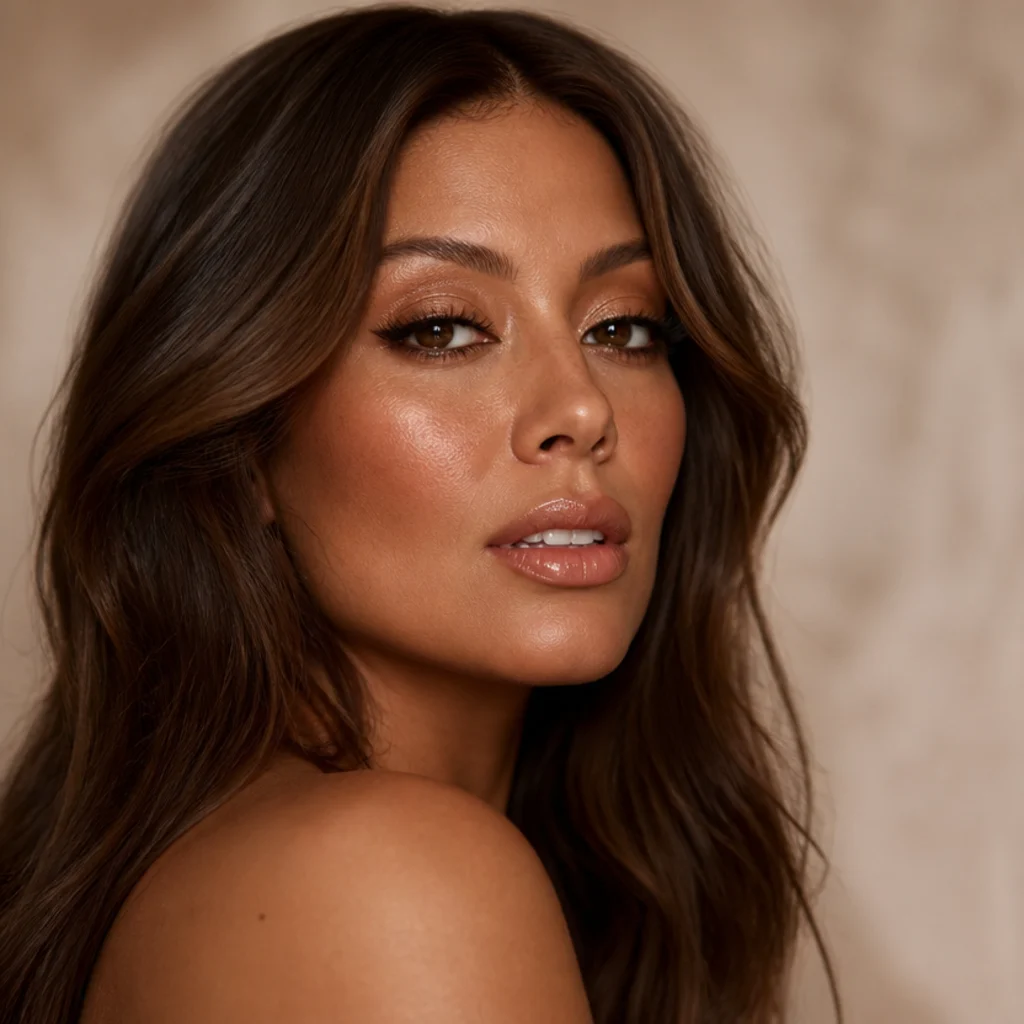
This is the anchor of 70s glam makeup: a warm bronze sweeping the lid, luminous skin, and a deliberately neutral lip so the eyes and cheekbones lead. Start with a cream bronzer in a golden-brown, one to two shades deeper than your base, pressed onto the high points where the sun would naturally hit. Layer a copper or antique-bronze shimmer over the mobile lid with a flat fingertip. Skin warmth grabs the pigment and pushes reflectivity further than a brush ever could. Deep complexions look richest in terracotta-bronze; fair, cool skin stays clean in soft champagne-bronze rather than orange copper. Cream over cream flexes with the face, so it wears comfortably for 8-plus hours, though shimmer migrates on oily lids, so tap on a thin layer of concealer and translucent powder first. It's beginner-friendly and flattering across eye shapes. Pro tip: press, don't sweep, the shimmer. Dragging a brush scatters fallout. Ask your makeup artist for a "diffused bronze glow, dewy finish, warm not orange, no harsh edges."
02Terracotta Wash Lids
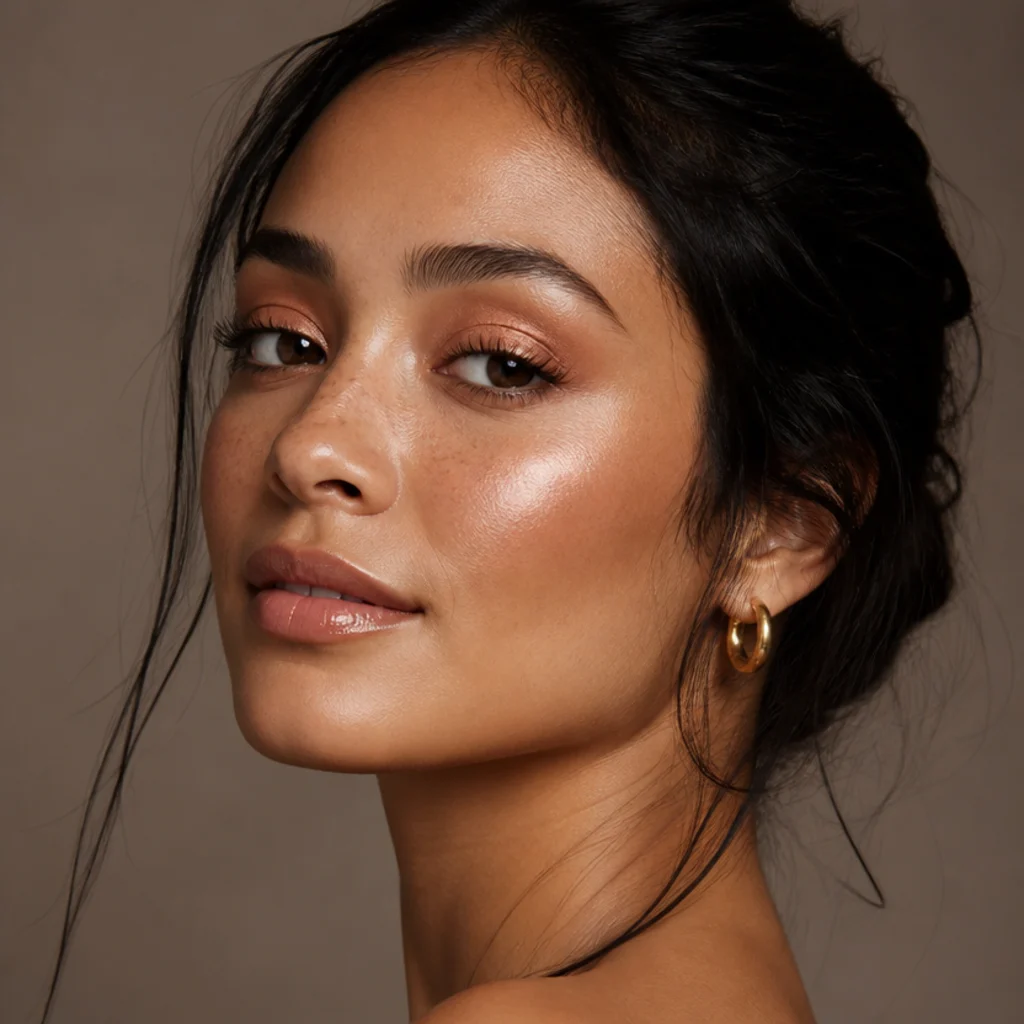
A terracotta wash is the easiest entry point into 70s inspired makeup, and the technique behind it, placement and diffusion with one shade, underpins half of this list. Choose a warm brick-orange in a matte or soft-satin finish, load a fluffy blending brush lightly, and buff from the lash line up toward the crease, then echo a whisper along the outer lower lash line to wrap the eye. Because it's monochrome, it forgives uneven hands, which is why it suits beginners and time-pressed mornings. Terracotta flatters warm, olive, and tan undertones best, and its brick warmth makes green and hazel eyes look brighter through complementary contrast. A matte formula lasts a full workday without creasing over primer. On hooded eyes, keep the densest color hugging the lash line and take only a soft haze above the crease so it stays visible when the eye is open. Pro tip: tap excess off the brush before the first pass. You can always build more, but terracotta is hard to lift once you've overdone it. Ask your makeup artist for a "monochrome terracotta wash, softly diffused, no hard crease line."
03Cher-Inspired Lashes and Liner
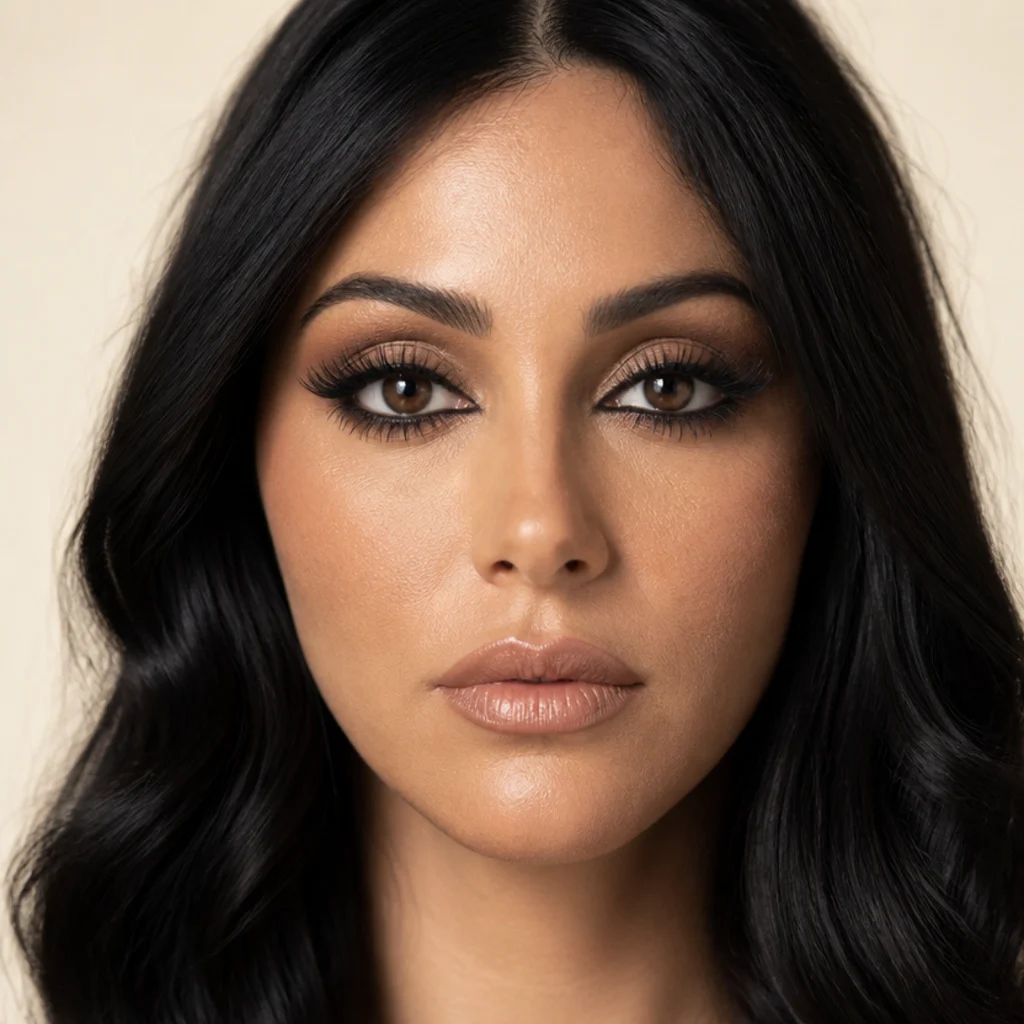
No seventies retrospective is complete without a nod to cher makeup 70s: sky-high fanned lashes, a deeply carved crease, and liner that lengthens the eye horizontally outward. Build depth first with a warm mid-brown floated through the socket and pulled slightly past the outer corner to pre-shape the elongation. Then layer lashes top and bottom: a spiky, criss-cross top band for the fanned drama, and short individual lower lashes placed sparingly toward the outer third rather than a full strip. Line the waterline in deep espresso brown, not jet black, to stay soft and era-accurate. The look flatters almond and round eyes outright, and it can visually open smaller eyes when lower lashes stay minimal. It's the highest-maintenance option here: falsies demand placement practice and secure glue at the band ends, so budget real rehearsal time before an event. Pro tip: let the lash glue turn tacky for 30 seconds before setting the band. Wet glue slides. Ask your makeup artist for a "seventies siren eye, layered lashes, elongated outer corner, espresso not black."
04Frosted Lilac Eyeshadow
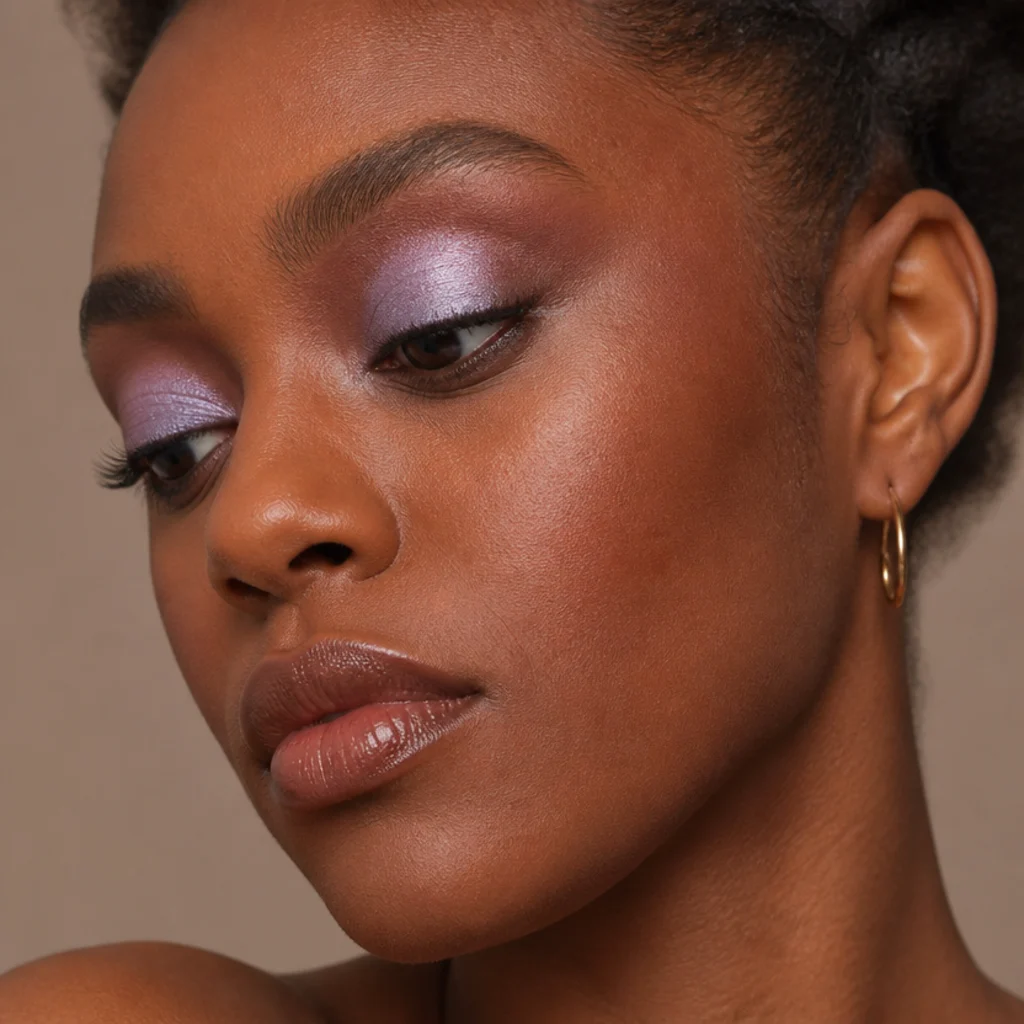
The seventies loved a frosted pastel, and lilac is the most wearable of the family: cool enough to feel nostalgic, soft enough for daylight. Press a cool-toned lilac frost across the mobile lid with a fingertip or flat shader, then anchor it with a diffused dusty-mauve in the crease so the frost has a shadow to sit against rather than floating. Keep the skin fresh and semi-matte; competing glow anywhere else turns the effect cheap. Lilac flatters brown, tan, and deep skin tones especially well, where its cool violet lifts against warm undertones and makes brown eyes read richer by contrast. On very fair or cool complexions, temper it with a taupe transition so it stays modern. Frosted formulas crease on oily or hooded lids, so a gripping lid primer isn't optional if you want it to last past a few hours. Pro tip: a spritz of setting spray on the brush before packing on the frost intensifies the metallic payoff. Ask your makeup artist for a "frosted lilac lid over a diffused mauve socket, cool-toned."
05Golden Studio 54 Shimmer
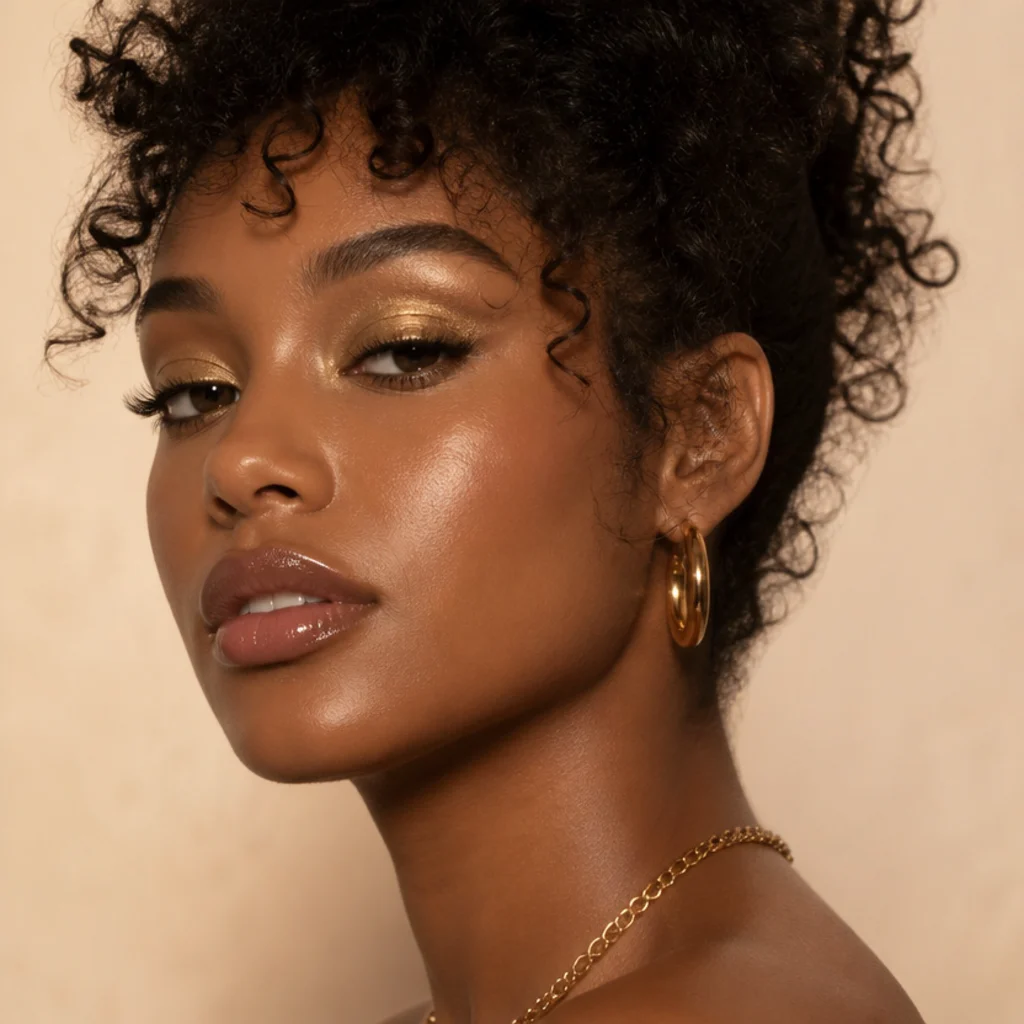
This is disco distilled: liquid gold on the lids, glassy skin, and a lip glossed to catch every light source in the room. Pat a densely pigmented gold onto the center of the lid, clean yellow-gold for fair skin, antique or bronze-gold for deep tones, and drag it outward, then light the inner corner and brow bone so the whole eye reflects as it moves. It's built for evening and looks best under warm, low light where the shimmer reads as liquid rather than glitter. Gold flatters almost everyone; the only miss is a too-cool white-gold on very warm skin, which greys out. Upkeep runs medium because loose glitter falls onto the cheek, so the professional move is to do the full eye first and clean fallout before laying foundation. Pro tip: a dab of cream gold under the powder gold doubles intensity and stops patchiness. Ask your makeup artist for a "high-shine gold disco eye with luminous, glassy skin."
Save this to Pinterest — the golden looks are the ones you'll want on hand for party season.
06Warm Russet Smoky Eye
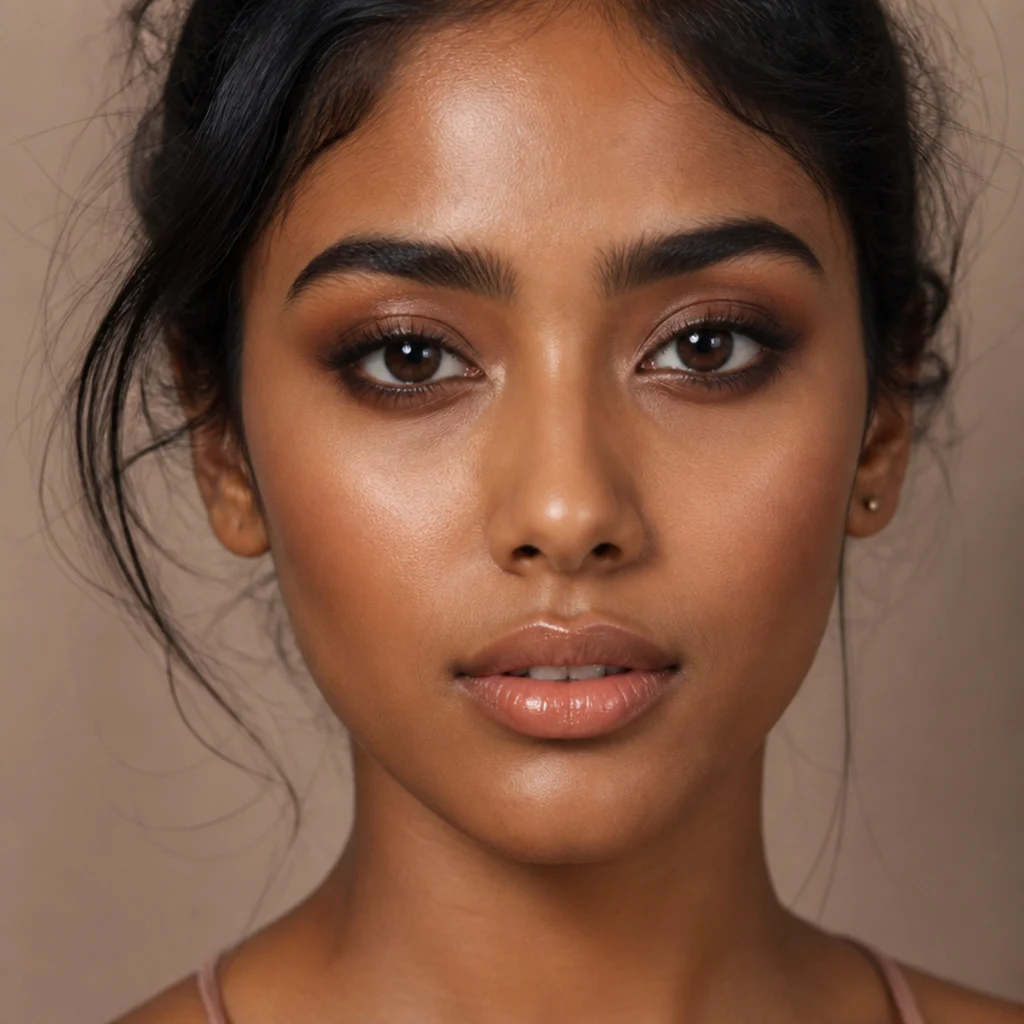
Trade the cool grey-black smoky eye for its seventies-correct sibling, built entirely on warm reddish-browns. Layer from a mid russet through the crease to a deeper brick or mahogany at the outer V and lash line, blending outward until the edges dissolve into bare skin for a soft, lived-in intensity. This is arguably the most flattering smoky eye of all, because warm brown mimics the eye's own natural shadow and never turns harsh or ageing the way black can. It suits every eye shape; on hooded eyes, set the darkest point slightly above the natural crease so it stays visible with the eye open, and carry a touch onto the lower lash line to balance. Maintenance is moderate: smoky eyes benefit from a blend-out touch-up after five or six hours. Intermediate, since diffusion is the entire game. Pro tip: build in thin layers on a dry, then progressively less-loaded brush; one heavy deposit is impossible to soften. Ask your makeup artist for a "warm russet smoky eye, seventies not nineties, blended soft."
07Peachy Cream Blush Flush
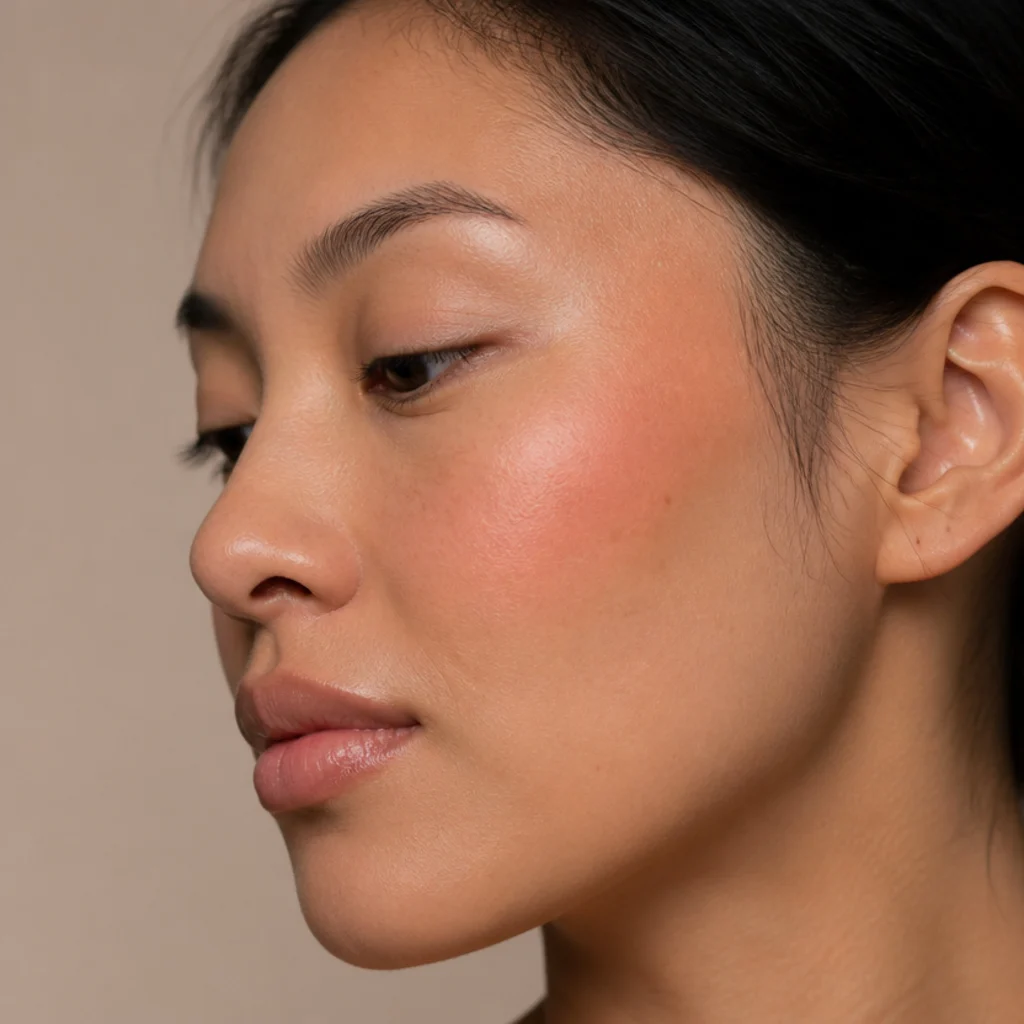
Seventies blush sat high and warm, that windswept, just-off-the-boardwalk flush rather than a low doll-like circle. Press a peach cream blush onto the apples and blend up and back toward the temple along the cheekbone so the color follows the bone, not the smile. Cream over a dewy or freshly moisturized base blends in easily, which is exactly why it suits dry, mature, and textured skin better than powder, which can cling to fine lines. Peach flatters light-to-medium tones; deep complexions should reach for a warm coral-peach or terracotta-rose that actually shows against richer skin instead of vanishing. Upkeep is low and forgiving; reapply with clean fingertips, no brush required. Beginner-level, and it pairs with nearly every eye in this guide. Pro tip: apply cream blush before powder-setting the face; laying it over powder drags and patches. Ask your makeup artist for a "diffused peach cream flush blended high toward the temples."
08Bold Blue Cut Crease
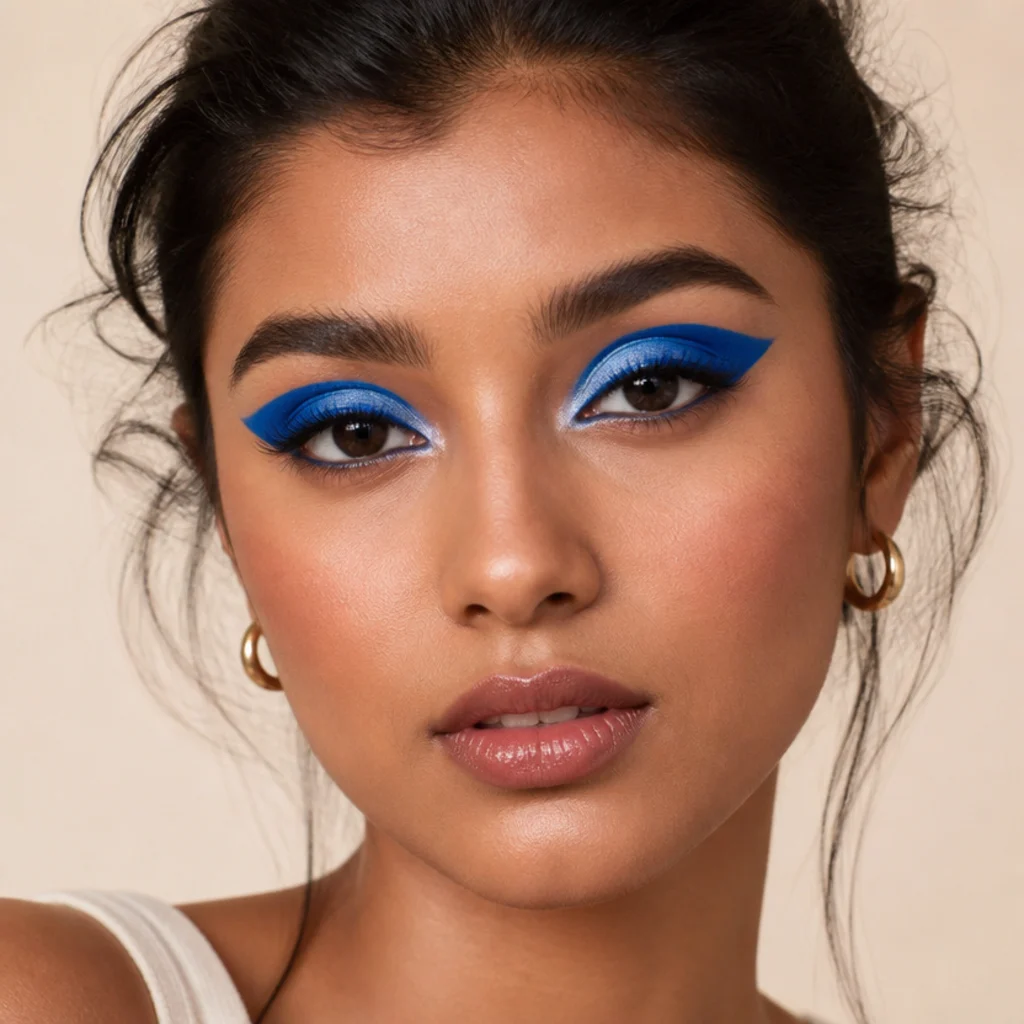
For the era's daring, dance-floor side, an electric blue cut crease channels disco energy with a graphic edge. The cut crease carves a clean, concealer-sharpened line where the mobile lid meets the socket, then a saturated blue fills the lid below so the color reads deliberate and high-contrast. It rewards patience and a steady hand, which puts it at the top of the difficulty scale here. Structurally, it's a gift for monolids and almond eyes, because the drawn crease manufactures a defined socket and adds lift; on very hooded eyes, map the cut with the eye open so the line lands where it will actually show. Upkeep is medium: cut creases can transfer onto the brow bone, so set the lid with a matching pressed blue shadow patted over the cream base. Pro tip: carve the crease line with a small flat brush and concealer, not by wiping. Precision comes from the shape you paint, not from cleanup. Ask your makeup artist for a "clean cut crease with a saturated blue lid, sharp inner-to-outer line."
09Glossy Brown Lip
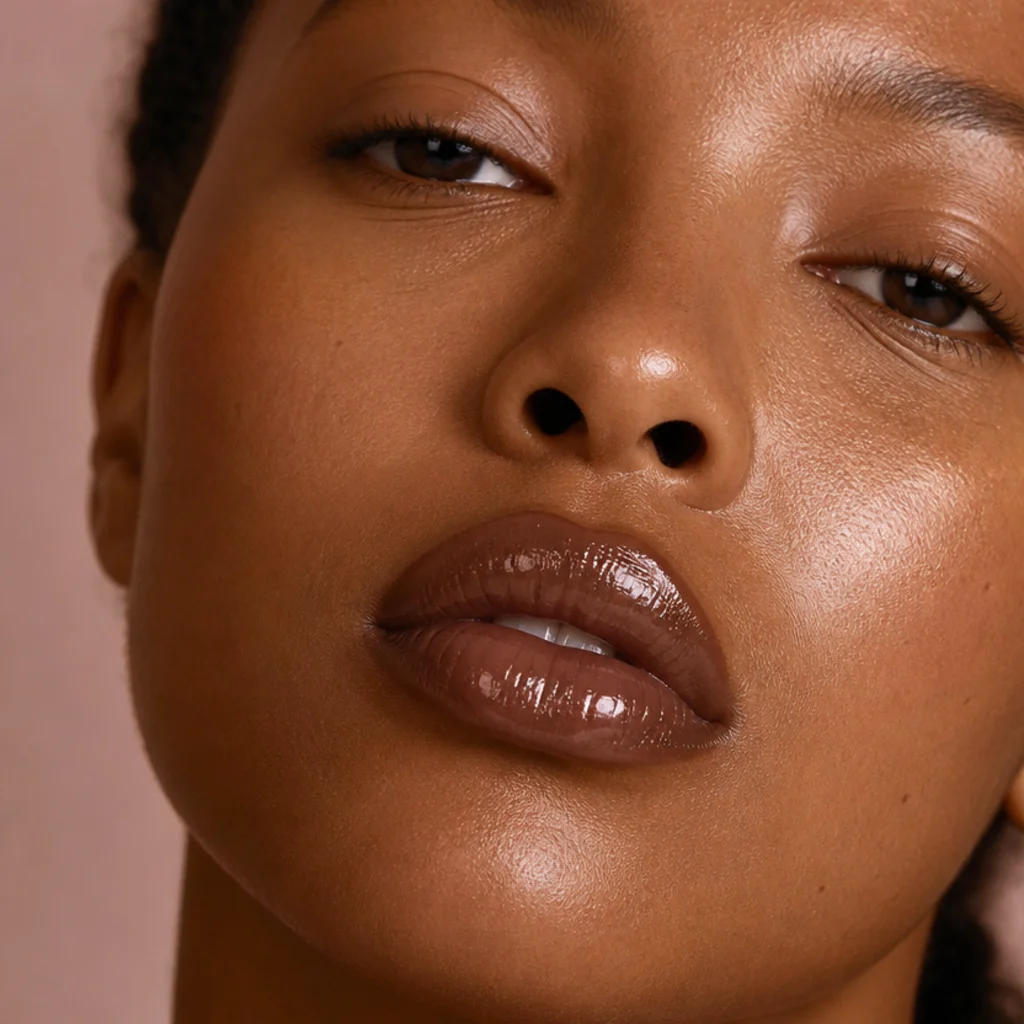
The brown lip is a seventies signature, and the glossy version feels current rather than costume. Line the lip with a warm brown pencil slightly outside the natural edge for subtle fullness, fill fully with a chocolate, cocoa, or caramel shade chosen for your depth, then top the center with a clear or amber-tinted gloss for a wet, reflective finish. Undertone matching is everything: golden and caramel browns for warm complexions, cool cocoa and taupe-brown for neutral to cool, and rich espresso for deep skin. Pair it with bare or single-wash eyes so the lip leads. Maintenance is medium: gloss fades faster than the pencil, so the lined base holds the shape while you refresh only the shine. Beginner-friendly once the liner is confident. Pro tip: blot the pencil base and re-line before glossing so pigment survives the first drink or meal. Ask your makeup artist for a "glossy seventies brown lip matched to my skin's undertone."
10Soft Focus Matte Rust
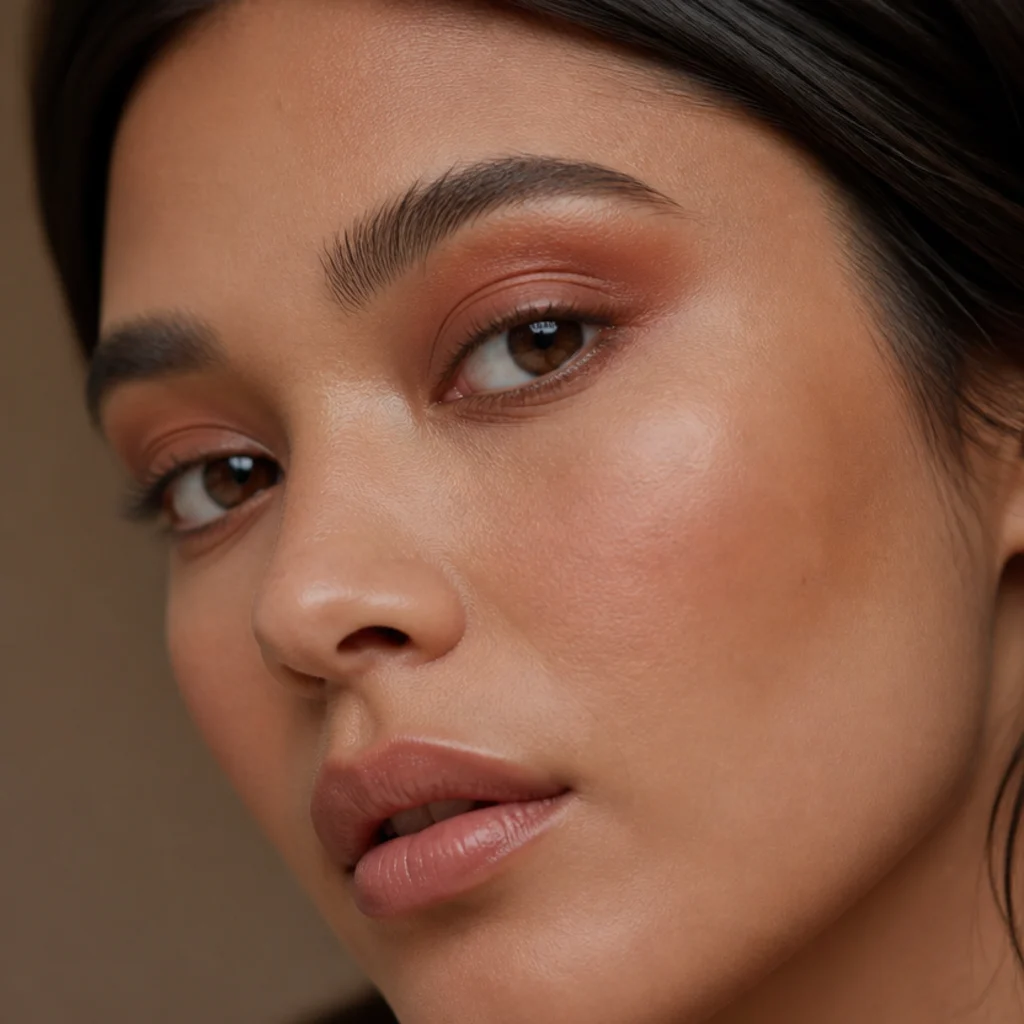
If shimmer isn't your language, matte rust delivers the full seventies palette in a soft-focus, velvety finish that reads quietly expensive. Buff a dusty rust through the crease and a touch above it, keeping the lid itself nearly bare so the effect is dimension rather than color-blocking, elegant in daylight and entirely office-appropriate. Matte shades are the most forgiving to blend and the longest-wearing on the list, comfortably an 8-hour look with minimal creasing. Rust flatters warm and neutral undertones and makes blue and green eyes pop through warm-cool contrast; on cool skin, choose a rust with more brown than orange so it stays soft. Keep the rest of the face fresh and skin-like so the matte eye holds focus. Beginner to intermediate. Pro tip: lay a neutral transition shade in the crease first. Rust blended straight onto bare skin grabs and looks blotchy. Ask your makeup artist for a "diffused matte rust crease with a soft-focus, seventies finish."
Save this to Pinterest so your everyday and evening ideas live in one place.
11Copper Foil Halo Eye
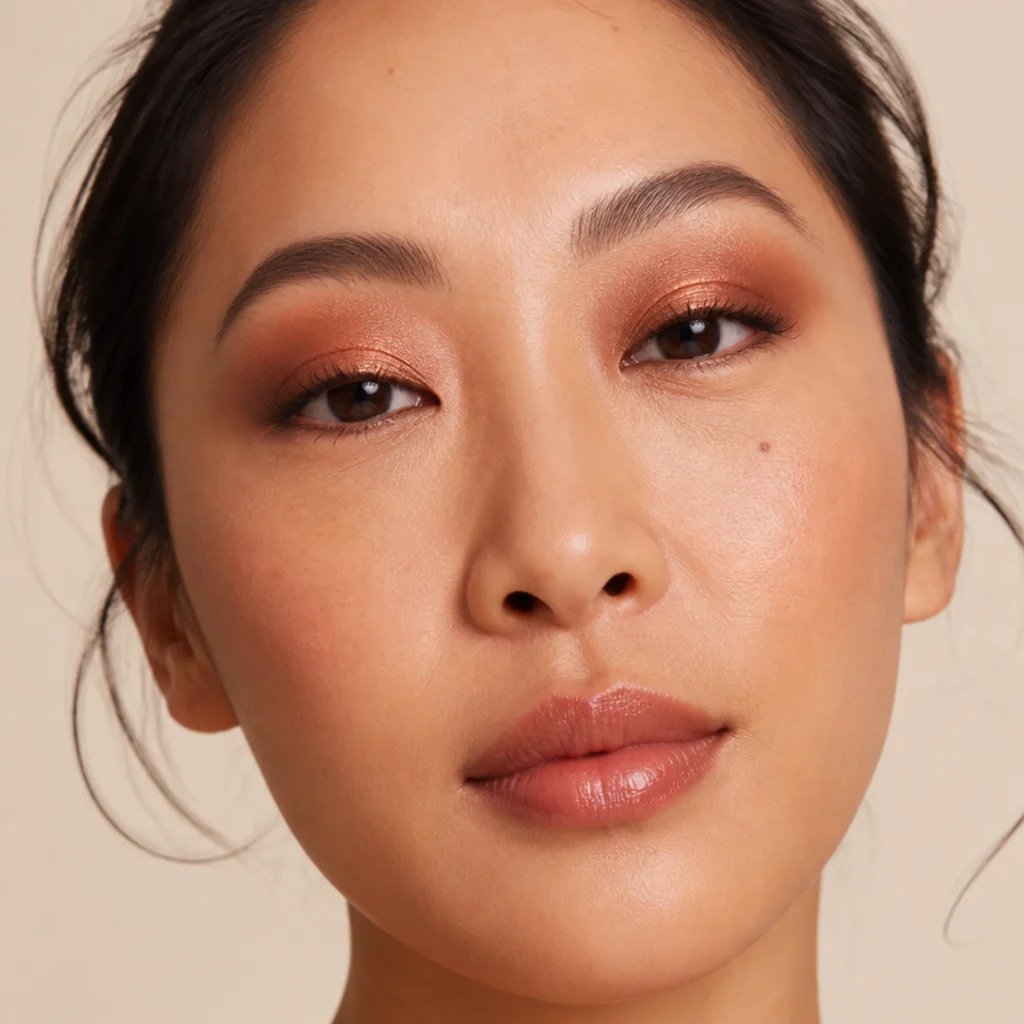
A halo eye concentrates the brightest, most metallic shimmer at the center of the lid while deeper shades pull the inner and outer corners in, and copper is the definitive seventies foil for it. The pooled light at the center makes eyes look rounder and more awake, which is why it flatters almond, downturned, and slightly hooded shapes especially well. Press the copper foil on with a flat, lightly dampened synthetic brush for wet-metal intensity, then buff a warm brown into both corners to frame the shine. Copper sings on warm and deep skin; cooler complexions can shift to a rose-copper that avoids looking rusty. Upkeep is medium because foiled textures transfer onto the brow bone as the eye moves. Intermediate. Pro tip: a sticky glitter primer or a swipe of cream base under the foil is the difference between mirror-shine and dull patchiness. Ask your makeup artist for a "copper halo eye, foiled center, warm diffused corners."
12Feathered Full Brows
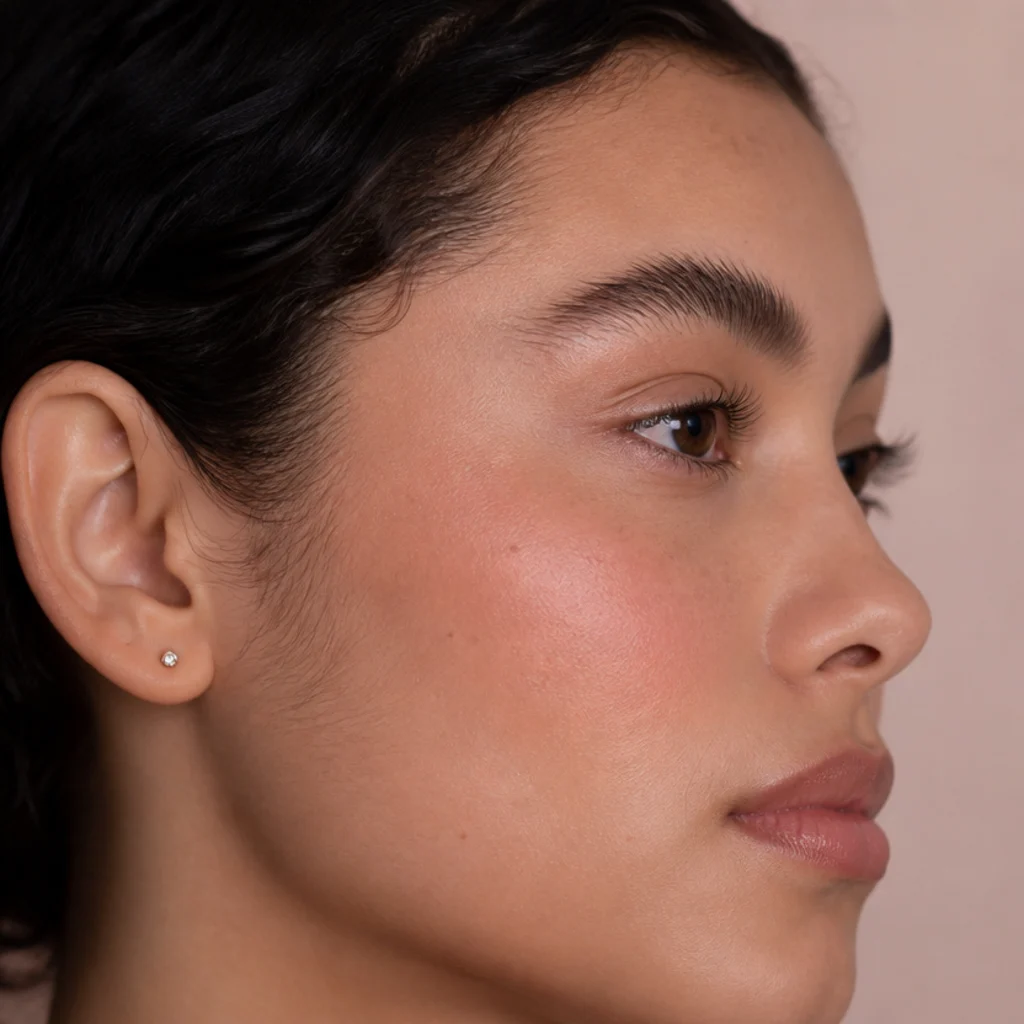
Makeup is only half the story. 70s makeup and hair both leaned natural, and the brow followed suit. Instead of a sharp, drawn-on shape, the era favored full brows brushed straight up with the hairs left soft and feathery. Brush the hairs upward and outward with a spoolie, set the shape with a clear or lightly tinted brow gel, then fill only the truly sparse gaps using light, hair-like flicks in a shade slightly cooler and lighter than the hairs so nothing reads blocky or drawn. This suits anyone with medium-to-full natural brows; sparser brows can build density gradually over weeks with a growth serum and restrained filling. Maintenance drops to near-zero once you stop over-plucking and let the tails grow back. Beginner-level. Pro tip: a tiny amount of clear gel goes far. Overloading the spoolie clumps hairs into spikes instead of a soft brush-up. Ask your makeup artist for "fluffy, feathered brows, natural upward brush, not a carved shape."
13Amber and Gold Duochrome
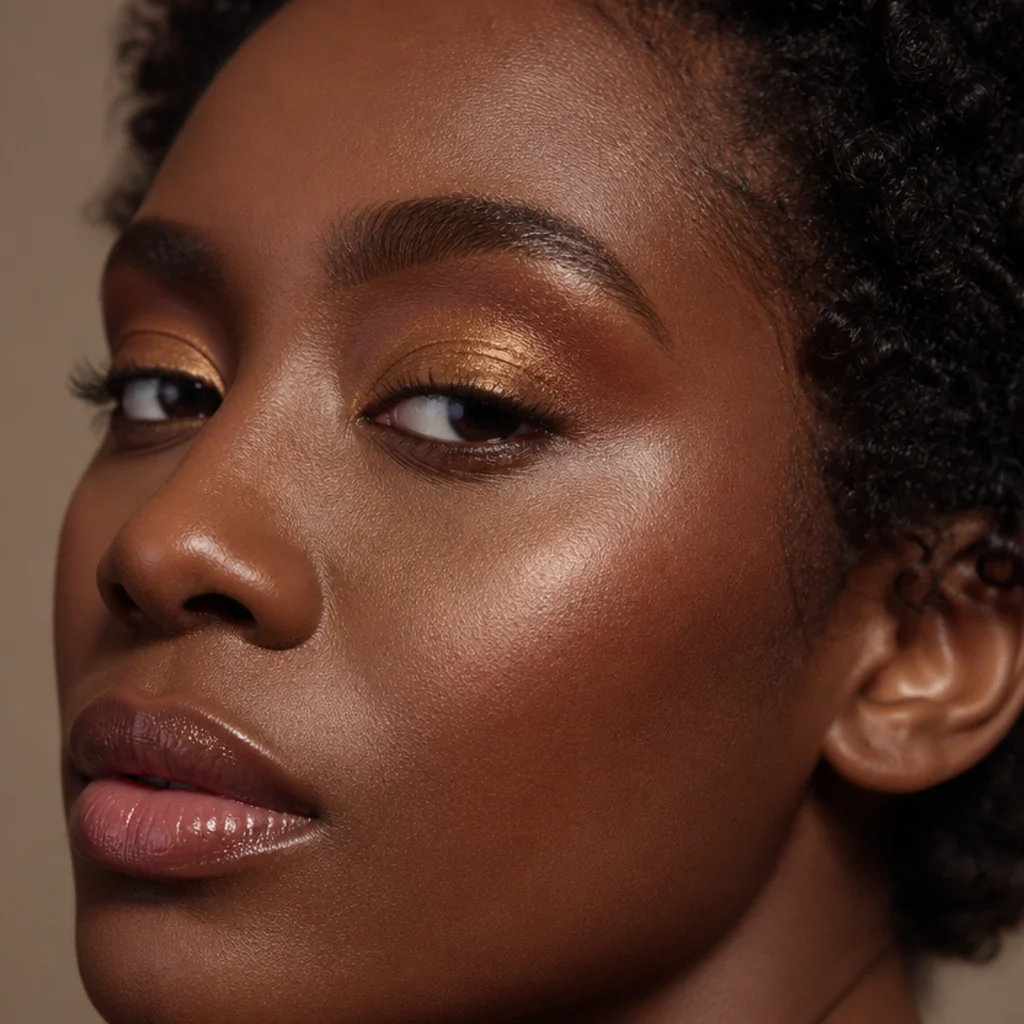
Duochrome shadows shift between two tones as light and angle change, and an amber-to-gold version captures the seventies glow with a dimension a flat shade can't touch. Pressed over a sticky base (a cream shadow, a dab of setting spray, or a purpose-made glitter glue), the flakes catch and travel as you blink, flashing amber in shadow and gold in direct light. It flatters everyone, but reads most dramatically on deep and tan skin where the color shift has richness to bounce against. Keep the lower lash line clean and matte so the top-lid shift stands alone and isn't muddied. Maintenance is medium; the effect lives entirely on that tacky base staying put, so skip powder over the top. Intermediate. Pro tip: apply duochrome with a firm, patting fingertip. Brushes disturb the flake alignment that creates the shift. Ask your makeup artist for an "amber-gold duochrome lid pressed over a tacky base for full color travel."
14Rosewood Monochrome
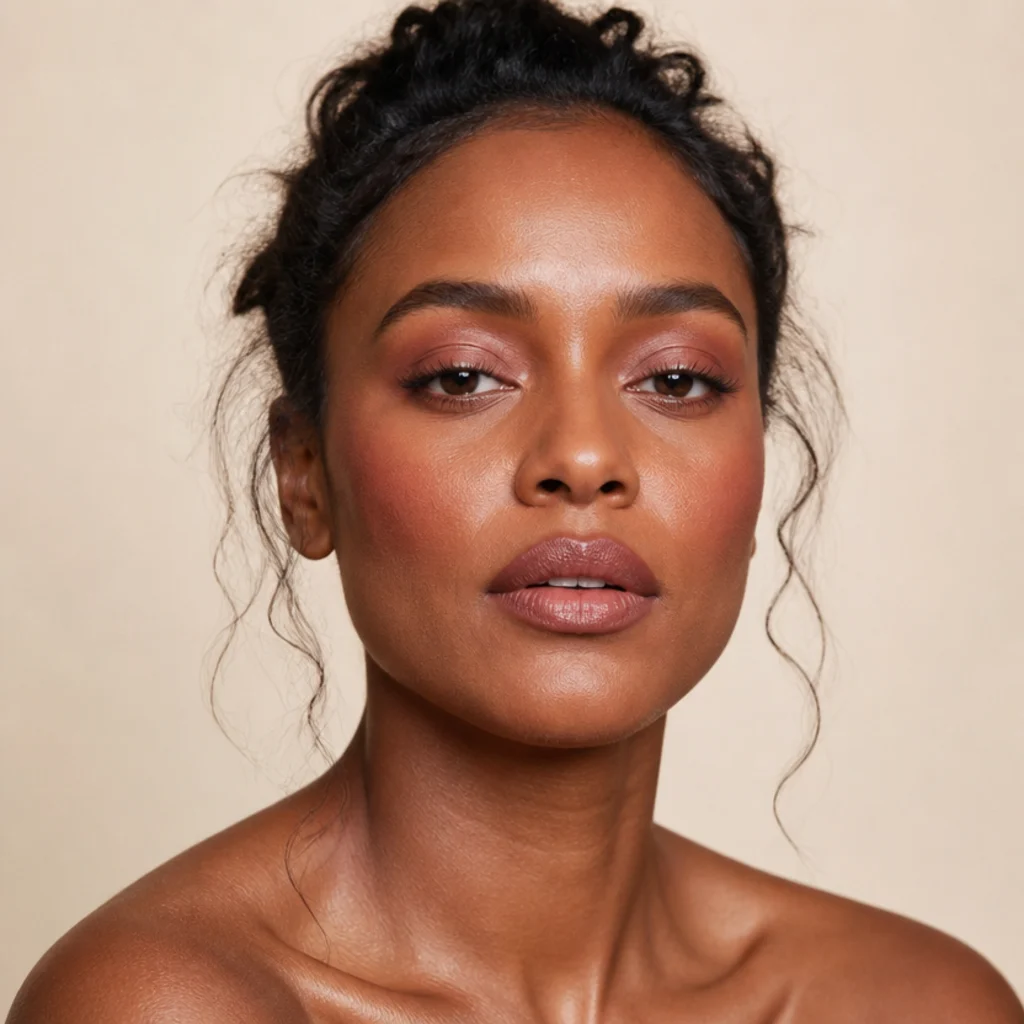
Monochrome makeup, one shade family carried across eyes, cheeks, and lips, was a quiet seventies staple, and rosewood is its most flattering incarnation. This dusty pink-brown ties the whole face into a cohesive, tonal wash that takes minutes and looks intentional rather than rushed. Use a single cream product across all three zones so the textures match and the finish stays soft and skin-like; a cream stick or a rosewood cream blush doubling as shadow and lip is the efficient move. Rosewood adapts to nearly every skin tone by adjusting depth: lighter dusty rose for fair skin, deeper mauve-brown or brick-rose for rich complexions. Maintenance is low, and touch-ups are trivial since one product refreshes everything. Beginner-level and travel-friendly. Pro tip: build the lip in two thin layers and press with a fingertip so it wears down evenly instead of leaving a harsh ring. Ask your makeup artist for a "rosewood monochrome look, cream textures on eyes, cheeks, and lips."
15Bronze Sun-Drenched Skin
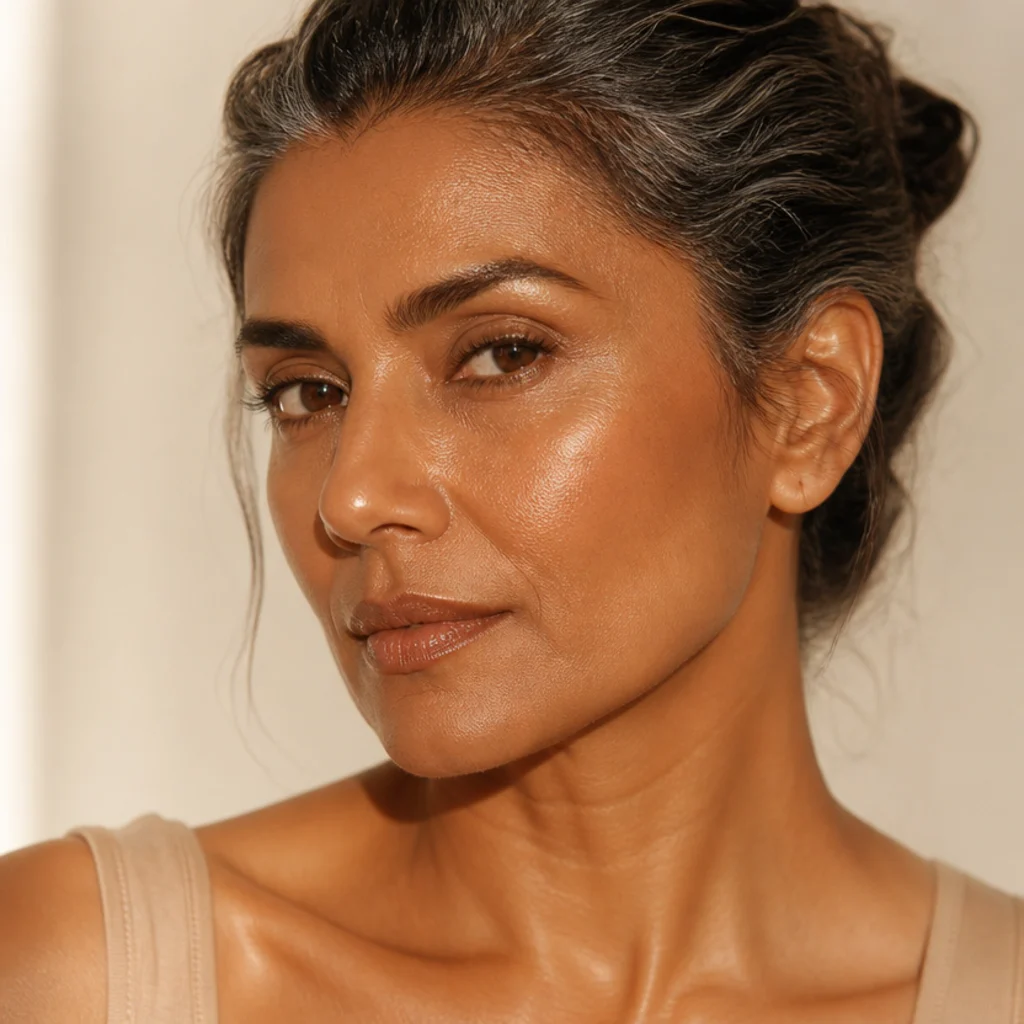
The seventies practically invented the sun-drenched face: warm bronze sculpting, glowy highlight, and skin that looks fresh off the coast. Place a cream bronzer only where the sun would naturally land (the perimeter of the forehead, the tops of the cheekbones, the bridge of the nose, and a whisper on the chin), then layer a liquid highlight on the very high points for wet-looking dimension. Match the bronzer one to two shades deeper than your base with a truly warm, not muddy-grey, undertone; the wrong undertone is what turns bronzing dirty. This flatters every skin tone and quietly warms up sallow or flat complexions. Maintenance is low and it photographs beautifully in warm light. Beginner to intermediate, since the only skill is placement restraint. Pro tip: apply bronzer with a damp sponge in pressing motions. A brush drops it in the wrong places and demands more blending. Ask your makeup artist for "sun-drenched, warm bronzed skin with a lit-from-within glow, no muddy edges."
16Emerald Disco Liner
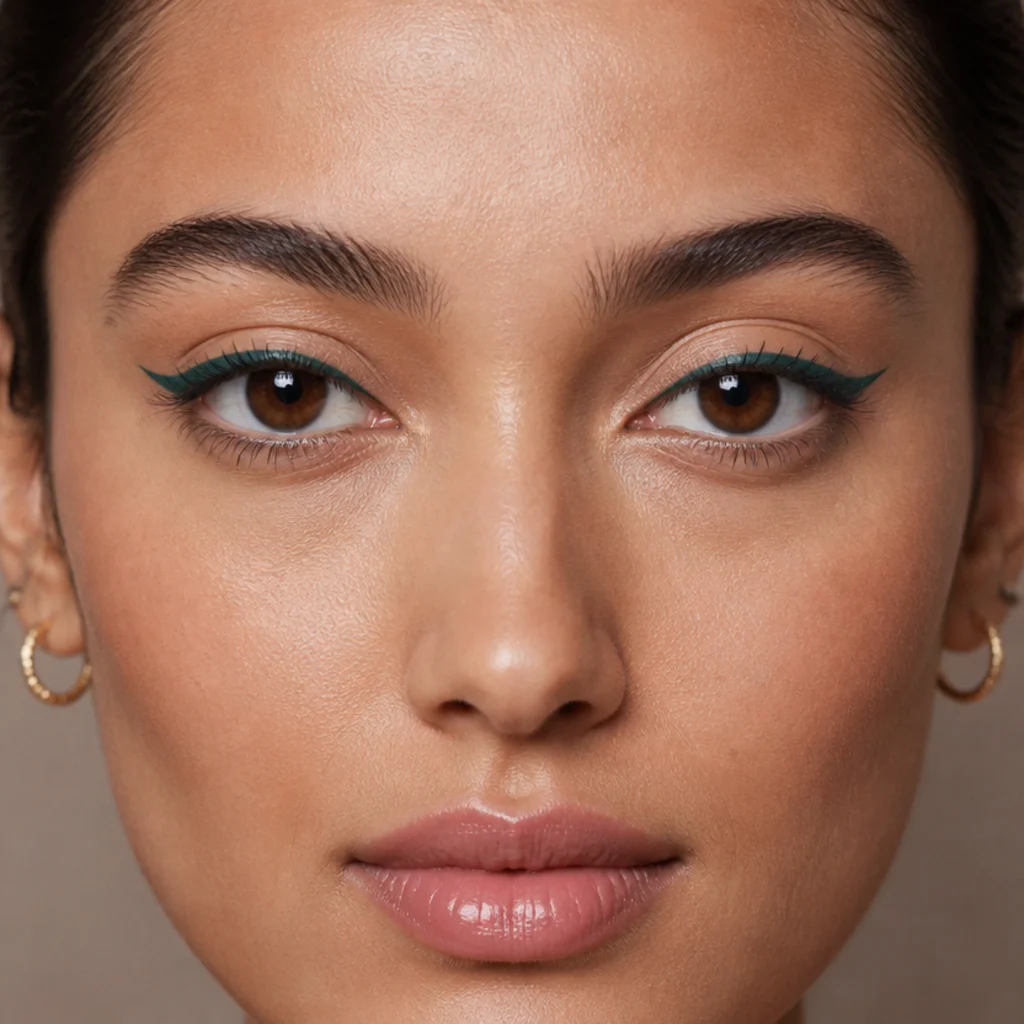
For unexpected color without committing the whole lid, a graphic emerald liner nods to disco boldness while staying wearable. Trace a crisp line of true green tight along the upper lash line and flick it outward into a short, clean wing, letting the color do all the talking against bare or lightly glossed lids. Emerald flatters warm brown, amber, and hazel eyes through complementary contrast (green liner makes those irises look markedly warmer) and reads fresh on every skin tone. Maintenance is medium: the thin outer flick is the first thing to fade or smudge, so reach for a gel or liquid formula that sets and stays rather than a soft pencil. Intermediate, because the line needs a steady, confident hand. Pro tip: anchor your elbow on a hard surface and draw the wing in short connected dashes toward the tail, then thicken. One nervous continuous stroke wobbles. Ask your makeup artist for a "graphic emerald wing along the lash line with a clean, glossy lid."
17Apricot Diffused Blush
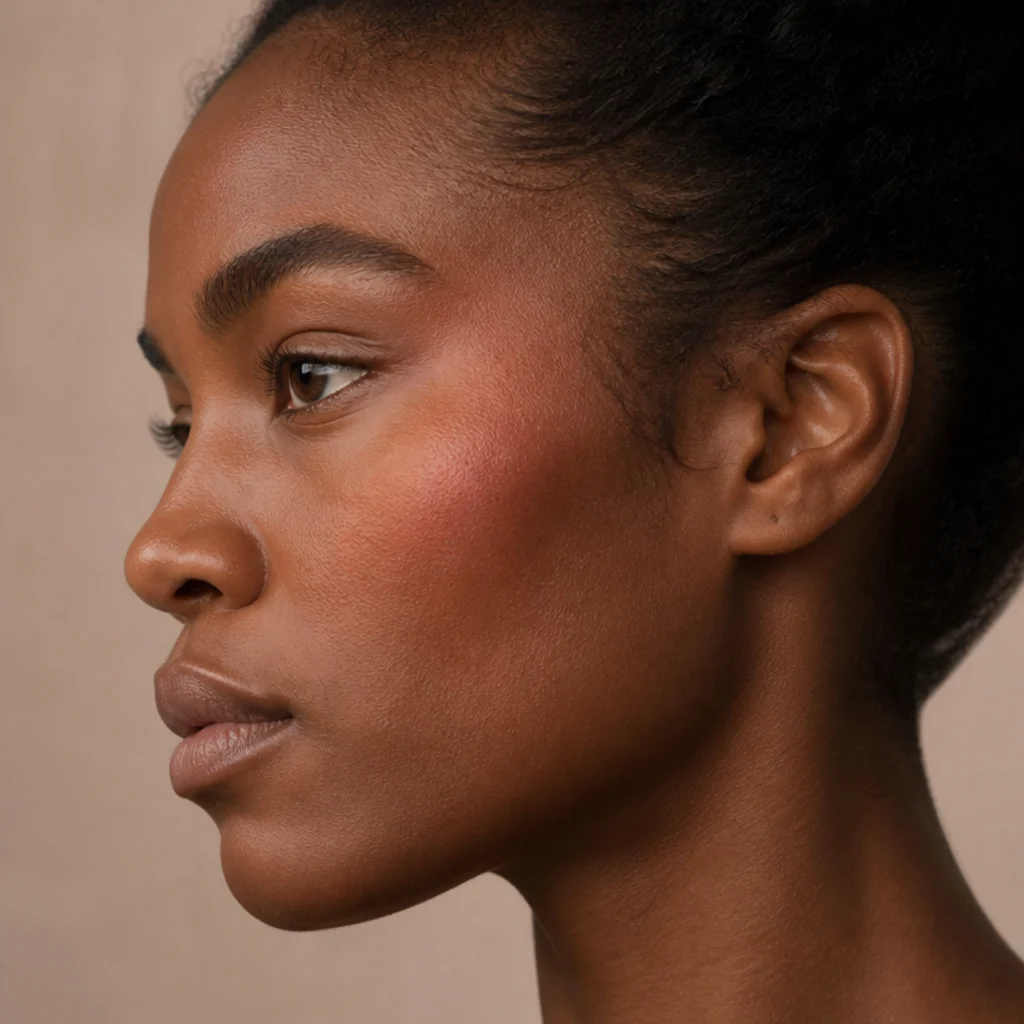
Apricot sits between peach and coral, and diffused high on the cheek it gives a warm, healthy flush that's distinctly seventies, sunny rather than sweet. Blend it outward toward the temple and up onto the cheekbone with no hard edge, letting the color fade into skin the way real warmth does after a walk. Apricot is a chameleon that flatters light to deep tones just by adjusting saturation: a sheer veil on fair skin, a richer, more built-up apricot-coral on deep complexions so it reads at full strength. It pairs with nearly every eye look in this guide, which makes it a reliable default. Maintenance is low; cream suits dry skin, powder suits oily, and both wear well. Beginner-level. Pro tip: map the blush with a small smile so you place it on the cheekbone, then relax the face and blend the edge up. This keeps it high and lifting rather than dragging the face down. Ask your makeup artist for an "apricot blush diffused high and soft toward the temples."
18Warm Taupe Socket Definition
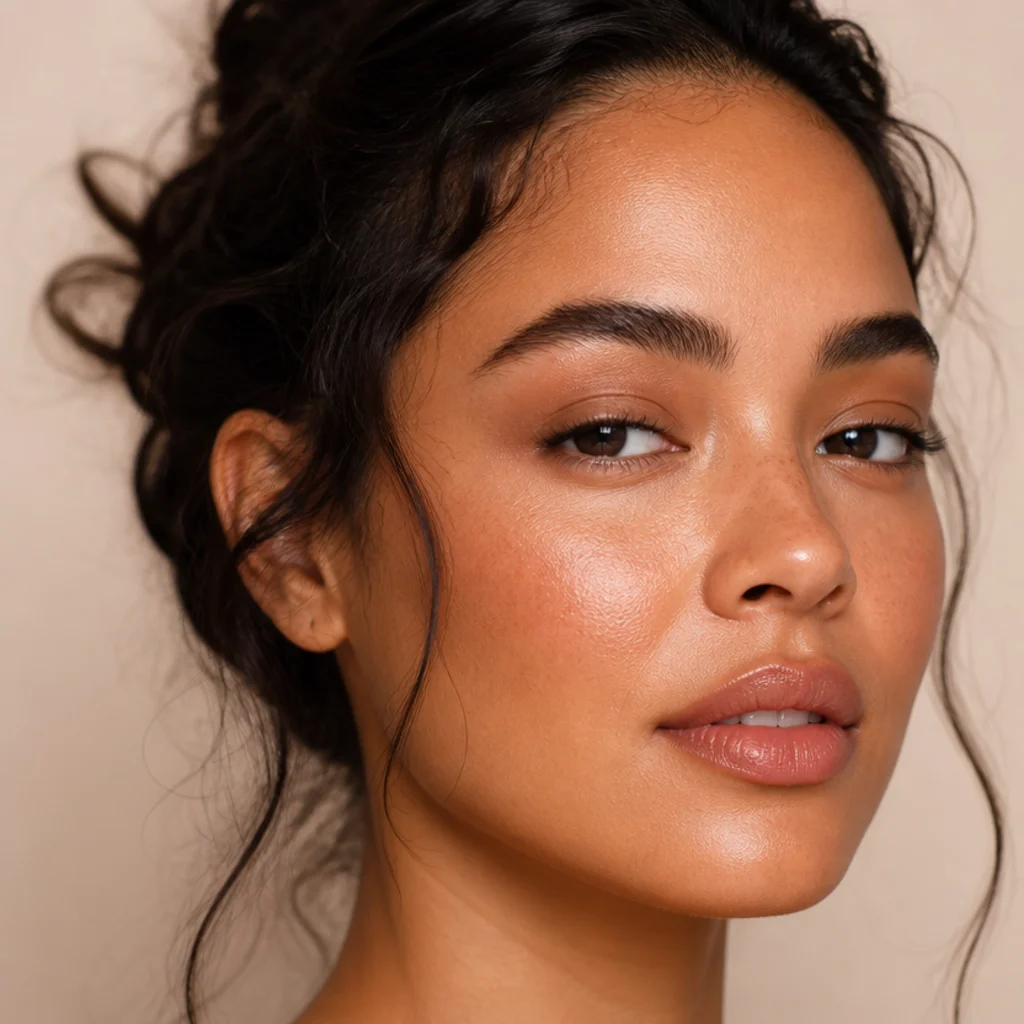
Sometimes the seventies look is a single, perfectly placed shadow. A warm taupe worked into the socket line gives natural depth and lift without any color statement, which makes it the most versatile technique here, and the most useful one to master. Float the taupe along the crease with a fluffy blending brush and buff the top edge until it fades to nothing, keeping the lid itself clean. Because it mimics a real shadow, it defines the eye subtly and flatters hooded and mature eyes especially, sitting exactly where it creates the illusion of a deeper socket. Neutral and matte, it wears all day and belongs in any professional setting. Maintenance is low and difficulty is beginner; this is the foundational skill the smoky eye, cut crease, and halo all build on. Pair it with a coat of mascara and a nude lip for instant polish. Pro tip: choose a taupe a touch cooler than your skin so it reads as shadow, not sludge. Ask your makeup artist for a "warm taupe socket definition, soft and diffused, nothing graphic."
19Bohemian Bronze and Kohl
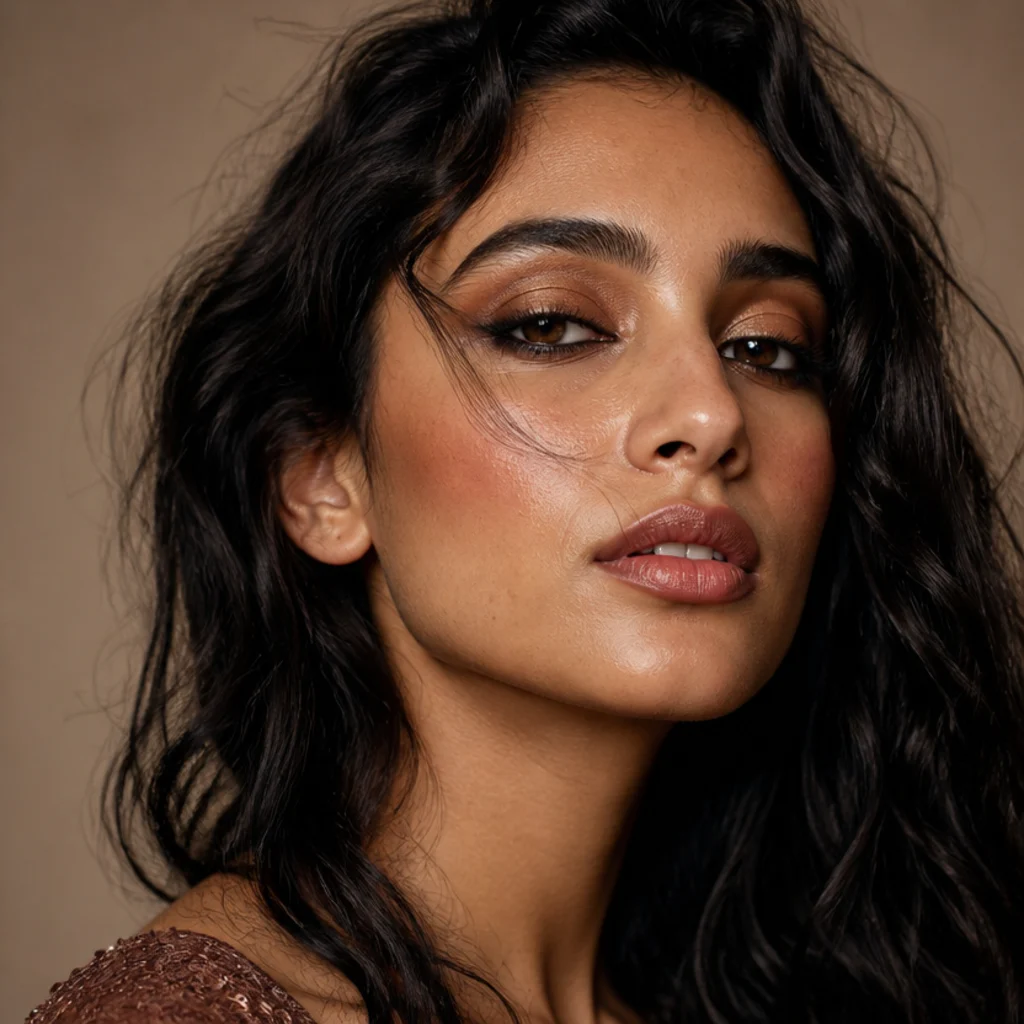
The bohemian, festival-field side of the seventies married bronze shimmer with soft, smudged kohl for an undone, lived-in eye. Wash a warm bronze over the whole lid, then run a brown or black kohl along the upper and lower lash lines and immediately smudge it out with a smudger brush or fingertip so nothing stays sharp. This relaxed finish is forgiving by design; imperfection is the entire aesthetic, so it suits beginners and shaky hands alike, and it flatters every eye shape. It sits perfectly alongside 70s makeup and hair styled in loose, undone waves and a center part. Maintenance is low; the smudged kohl actually looks better as it softens and blurs through the day rather than degrading. Beginner-level. Pro tip: set the smudged kohl with a matching brown or bronze powder pressed over it. This locks the shape so "lived-in" doesn't slide into raccoon by hour six. Ask your makeup artist for a "bohemian bronze eye with smudged, lived-in kohl."
20Champagne Highlight and Nude Lip
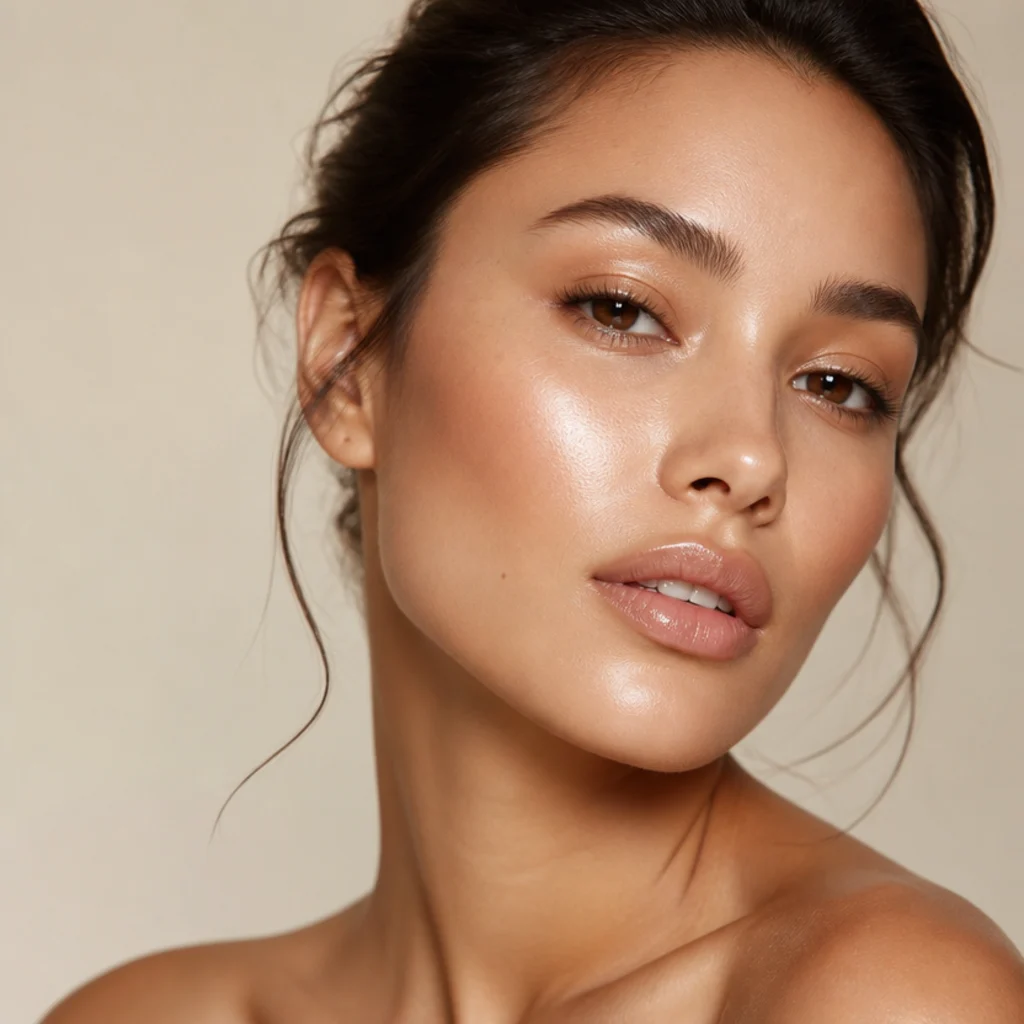
To close, understated seventies glamour built on champagne highlight and a creamy nude lip: glow over color, for anyone who wants radiance without a statement. Sweep a champagne highlight along the tops of the cheekbones, the brow bone, the inner corners, and the cupid's bow so the face catches and throws light as it moves, then keep the lip neutral and lightly glossy. It suits every skin tone once you match the highlight's warmth (champagne for fair-to-medium, warmer gold-champagne for deep skin) and the nude's undertone to your own so it doesn't ghost or turn ashy. Maintenance is low, which makes it a solid long-day and event option. Beginner-level, and the fastest route to looking polished and radiant with minimal product. Pro tip: apply cream or liquid highlight before powder for a skin-like glow, then tap powder highlight only on the very peaks if you want extra intensity for photos. Ask your makeup artist for a "champagne glow with a skin-matched nude lip and soft radiant finish."
Pro Tips from the Editor
- Warm up the whole face, not just the eyes. The seventies signature is tonal warmth top to bottom. A cool-toned foundation under a golden eye is the single most common thing that makes a look read costume instead of current. Match your base undertone to the palette.
- Primer is the difference between 3 hours and 9. Frosted, foiled, and duochrome shimmers slide and crease on bare lids. A gripping lid primer or a thin cream base isn't optional here; it's the whole reason these looks last.
- Press shimmer, buff matte. Metallic and foiled shades hit peak reflectivity when patted on with a fingertip or flat synthetic brush; matte shades need a fluffy brush and circular buffing. Using the wrong motion is why shimmer looks dull or matte looks patchy.
- Do the eyes before the base for any glitter or foiled look. Fallout is inevitable with gold, copper, and duochrome. Laying the full eye first lets you wipe the cheeks clean before foundation instead of ruining a finished face.
- Espresso brown reads more seventies than black. Swapping jet black for deep brown on liner, waterline, and smoky edges instantly softens a look into the era and flatters far more people, especially over 40 and on lighter eyes.
- Match pigment intensity to skin depth. Deep complexions should reach for the more saturated, built-up versions: antique gold, terracotta-bronze, brick-rose, so color reads true rather than chalky or sheer. Sheer-washing a bright shade only works on fair-to-medium skin.
- Set cream where it moves, leave it where it glows. Cream blush and bronzer on high points can stay dewy, but anything on the lid or in a crease needs a translucent set or matching powder over the top, or it migrates within hours.
How to Choose / Get the Look
Start with your comfort level. If you're new to 70s inspired makeup, begin with the wearable neutrals: the terracotta wash, warm taupe socket, or peachy cream flush all deliver the era's warmth with almost no risk, and they teach the placement everything else builds on. Once those feel automatic, layer in shimmer with the bronzed disco glow or golden Studio 54 eye, then graduate to graphic color like the blue cut crease or emerald liner when you want to be seen.
Match undertones, not just shades. The seventies palette is warm at its core, so cream bronzers, russet shadows, and brown lips should lean golden on warm skin and stay balanced-neutral on cool skin to avoid looking muddy. Deeper complexions can and should push pigments richer, antique gold, terracotta-bronze, deep mauve-brown, so colors read at full strength rather than disappearing.
Then filter by occasion and skin type using the quick reference below. When booking a makeup artist, always name the specific look and finish rather than just "seventies," say "diffused bronze glow" or "seventies siren eye," so you both picture the same result.
| Look | Difficulty | Finish | Best occasion | Wears best on |
|---|---|---|---|---|
| Terracotta Wash | Beginner | Matte | Everyday / work | Warm, olive undertones |
| Warm Taupe Socket | Beginner | Matte | Work / minimal | Hooded, mature eyes |
| Peachy / Apricot Blush | Beginner | Cream or powder | Everyday | Dry to normal skin |
| Rosewood Monochrome | Beginner | Cream | Errands / travel | All tones, adjust depth |
| Bronzed Disco Glow | Beginner | Shimmer | Day-to-night | All tones |
| Warm Russet Smoky | Intermediate | Soft matte-satin | Dinner / evening | All eye shapes |
| Copper Foil Halo | Intermediate | Foiled | Evening / photos | Almond, downturned |
| Amber-Gold Duochrome | Intermediate | Multi-shift | Evening / photos | Deep, tan skin |
| Emerald Disco Liner | Intermediate | Gel / liquid | Night out | Warm brown, hazel eyes |
| Golden Studio 54 | Intermediate | High-shine | Party / evening | All, shift gold depth |
| Bold Blue Cut Crease | Advanced | Saturated satin | Statement nights | Monolid, almond |
| Cher Lashes & Liner | Advanced | Dramatic | Events / photos | Almond, round eyes |
Frequently Asked Questions
What defines 70s glam makeup?
It centers on warmth and glow rather than structure: bronzed, dewy skin, sun-toned eyes in terracotta, copper, russet, and gold, blush placed high on the cheekbone, soft feathered brows, and often a brown, rosewood, or nude lip. Shimmer and a lit-from-within finish are what separate it from the cooler, matte, heavily-contoured looks of later decades. Even the bold moments, a blue cut crease or emerald liner, sit against warm, glowy skin rather than a flat matte base.
Is 70s makeup hard for beginners?
Not at all. It's one of the more forgiving eras to start with. The terracotta wash, warm taupe socket, rosewood monochrome, and cream blush flush each use one or two products and reward soft, diffused blending rather than precision, so mistakes disappear into the look. Save the graphic pieces, the blue cut crease, emerald wing, and layered Cher lashes, for once the neutral placement feels automatic, since those demand a steady hand and real practice.
How do I recreate Cher's 70s makeup?
Focus everything on the eyes. Build a warm mid-brown crease and pull it slightly past the outer corner, apply both top and bottom false lashes for height and a fanned spike, line the waterline in deep espresso rather than black, and elongate the eye with soft liner extended horizontally past the outer corner. Keep skin bronzed and glowy and the lip neutral so the eyes unmistakably lead. Let lash glue go tacky before setting the band, and rehearse the falsies before any event.
What hair pairs with 70s makeup looks?
For a cohesive result, 70s makeup and hair both go natural and textured. Think loose, undone waves, a soft blowout with flipped ends, center-parted volume, or a bohemian tousle with face-framing pieces. The relaxed, effortless finish complements the era's glowy, warm makeup far better than a sleek, structured style, which can make the whole look feel mismatched. A center part in particular reads instantly seventies alongside bronze and kohl.
Which 70s look suits deeper skin tones best?
Nearly all of them adapt beautifully, but frosted lilac, antique gold shimmer, copper foil, and amber-gold duochrome are standouts because they glow with real dimension against warm, rich undertones. The key is intensity: choose the more pigmented, built-up versions and press them on with a fingertip so the color reads at full saturation rather than sheering out. Terracotta-bronze, brick-rose, and deep mauve-brown are the neutral shades that show up truest on deep skin.
How do I keep 70s shimmer eyeshadow from creasing?
Creasing comes down to base and oil control. Prime the lid with a gripping eye primer or set a thin layer of concealer with translucent powder, then press, never sweep, the shimmer on with a fingertip or flat synthetic brush so the pigment adheres in a dense layer. For foiled and duochrome shades, a sticky glitter primer underneath holds them longest, and you should skip powder over the top since it dulls the metallic finish. Oily lids benefit from a mid-day blot before any touch-up.
What's the difference between 70s and 60s makeup?
The sixties were graphic and cool: stark cut creases, heavy black liner, pale or nude lids, and a doll-like, high-contrast eye. The seventies softened and warmed all of it: matte and shimmering earth tones replaced the graphic black, skin went bronzed and dewy instead of pale and powdered, blush moved high and warm, and brows relaxed from a defined shape into a feathered brush-up. In short, sixties makeup was about sharp lines; seventies makeup is about warm, diffused glow.
Can I wear 70s makeup to the office?
Absolutely. Several looks here are built for it. The warm taupe socket, matte rust crease, terracotta wash, and a peach or apricot cream flush all read polished and professional because they add warmth and definition without shimmer or bold color. Keep the lip neutral, the skin natural rather than heavily glossed, and swap any falsies for a single coat of brown-black mascara. Save the foiled halo, disco gold, and graphic liner for evenings and events.
Do I need special products for a 70s makeup look?
No. Most of the palette lives in a single warm neutral eyeshadow palette, a cream bronzer, a peach or apricot blush, a brown lip liner, and a clear gloss, all available at drugstore prices. The only real extras are situational: false lashes for the Cher eye, a duochrome or foiled shadow for the disco looks, and a gel liner in blue or emerald for the graphic options. Start with what you own in the terracotta-to-bronze family before buying anything new.