15 70s vs 80s Makeup Looks Compared
Two decades, two opposite beauty philosophies. The 70s ran warm, sun-touched and tonal; the 80s ran saturated, high-contrast and graphic. Here is exactly where they split — shade by shade, technique by technique — so you can recreate the right one.
 Edited by Lena Rose · Published July 11, 2026 · 26 min read
Quick Answer
- Best for: Anyone drawn to retro beauty who wants to understand the technical difference before recreating a look, and match the right era to their features
- Who might skip it: If you only ever wear a five-minute neutral face, the full 80s color story will feel like a lot; borrow one accent instead
- Maintenance: 70s glow forgives fading and needs little upkeep; 80s color shows every smudge and usually wants a mid-day touch-up
- Difficulty: 70s glam is beginner-to-intermediate (soft blending); 80s color work is intermediate-to-advanced (clean edges, sharp wings)
- Cost: Low if you own warm neutrals for the 70s; moderate for the 80s, where a few saturated brights and a long-wear setting product do the heavy lifting
- Wear time / longevity: A dewy 70s face reads well for 6–8 hours and ages softly; a properly set 80s look holds bright color 8-plus hours but needs prep to avoid creasing
- Standout variation: The Cher-inspired 70s glam eye versus the electric-blue 80s smoke
- How to ask your makeup artist: Name the era plus one keyword — "warm and diffused" for 70s, "bright and graphic" for 80s — and bring a reference photo
In This Guide
- Overall Vibe: Warm Glow vs Bold Color
- Eyeshadow Palette: Earth Tones vs Neon
- The Cher 70s Glam Eye vs 80s Rock Smoke
- Eyeliner: Soft Smudge vs Graphic Wing
- Lashes: Fluttery vs Spidery Drama
- Brows: Soft Arch vs Bold and Full
- Blush: Bronzed Warmth vs Bright Stripe
- Lips: Nude Sheen vs Statement Matte
- Skin Finish: Dewy Bronze vs Matte Powder
- Everyday Wear: Disco Soft vs Neon Play
- The Disco Glow vs the Club Kid
- Color Blocking: None vs Everything
- Hair Pairing: 70s Makeup and Hair vs 80s Volume
- Difficulty and Product Load Compared
- Which Era Suits You Best
Retro beauty is firmly back in rotation, and the two eras people reach for most are the warm, sunlit seventies and the electric eighties. From across a room they blur together as "vintage," but up close they follow opposite rules. 70s glam makeup is built on warmth and low contrast: bronzed lids, terracotta cheeks, softly diffused liner, and a lit-from-within finish that flatters almost every skin tone and eye shape. The 80s took the inverse path — saturated color, matte skin, hard edges, and contrast engineered to read at a distance. Knowing which techniques belong to which decade is what keeps a 70s inspired makeup look from tipping into costume, and what stops an 80s attempt from turning muddy. This guide breaks down 15 specific points, from eyeshadow formula and liner shape to blush placement, lip finish, and hair. By the end you'll know the exact shades, textures, and placements behind each look, plus which one suits your features, undertone, and the occasion you're dressing for.
01Overall Vibe: Warm Glow vs Bold Color
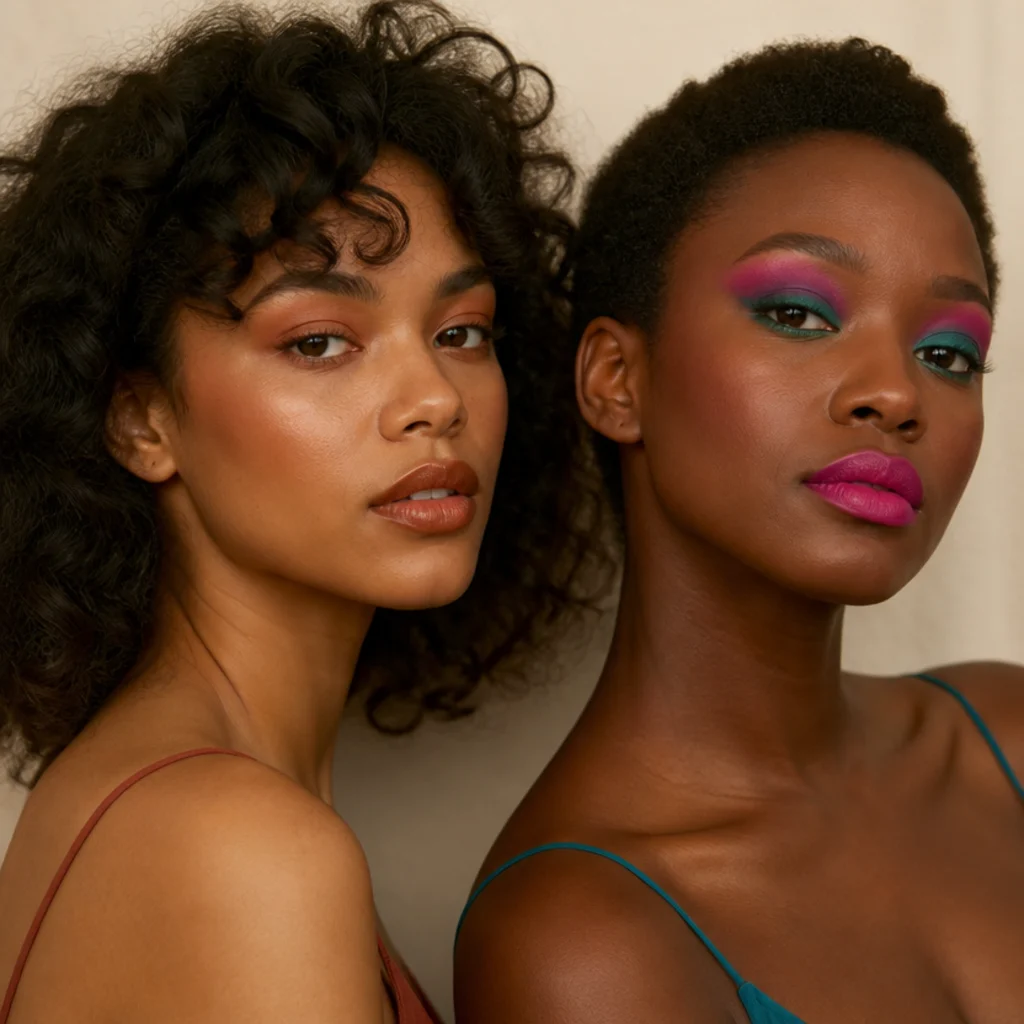
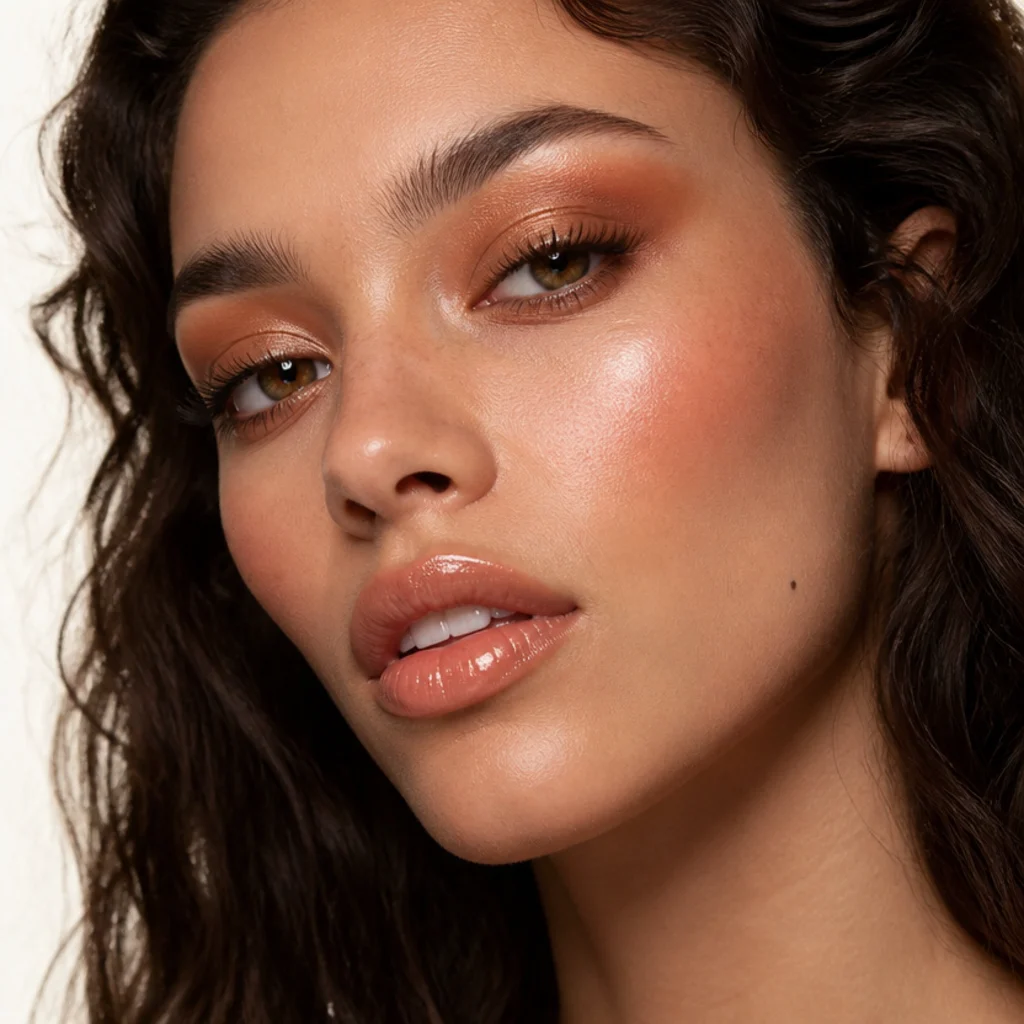
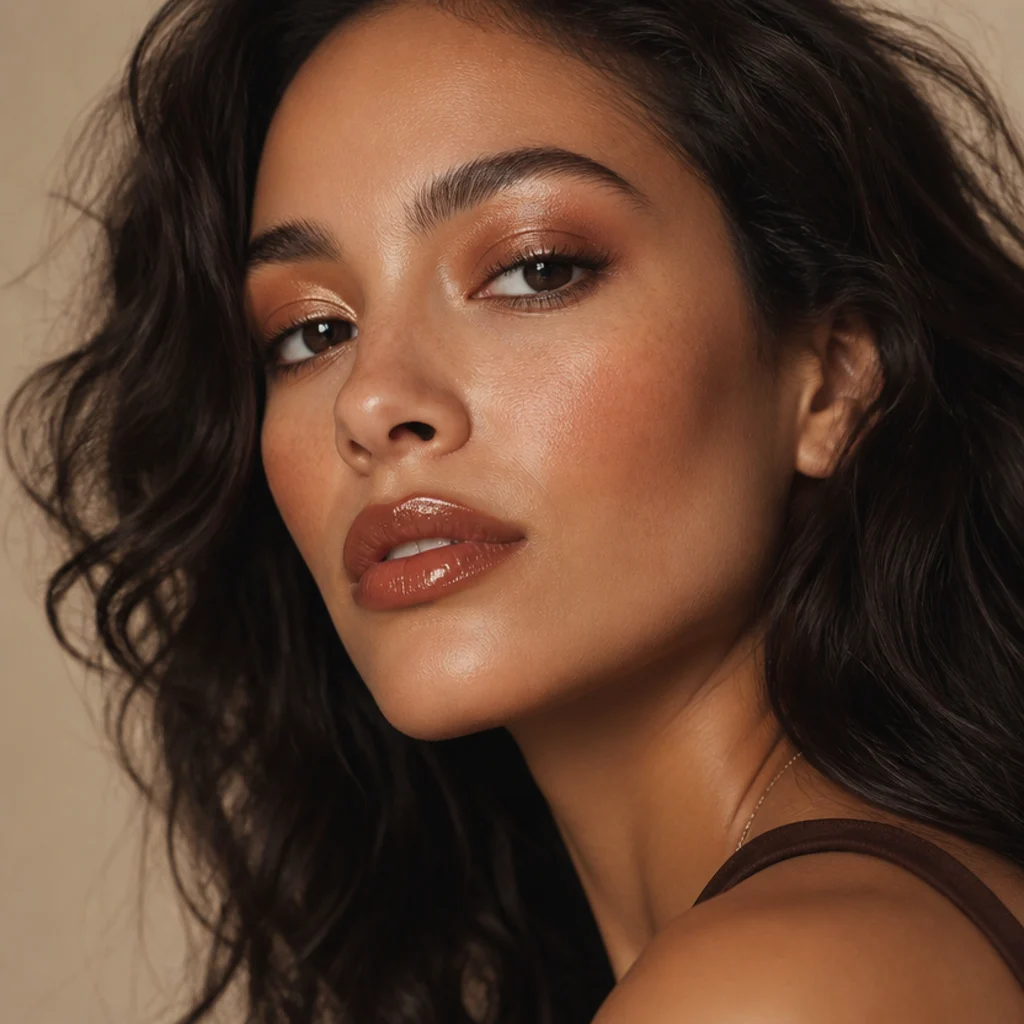
The fastest way to date a look is to read two things: temperature and contrast. The 70s sits warm and low-contrast: bronze, terracotta, ochre and gold melt into the skin with no visible edge, for a slightly blurred, sun-touched finish. The 80s sits cool-to-bright and high-contrast, setting electric shades against a flat matte base so every color stays legible. Warm and deep skin tones light up instantly in the 70s palette because the pigments echo the skin's own undertone. Cooler undertones, and anyone who wants a graphic statement, gravitate to the 80s, where contrast does the work. Upkeep diverges accordingly: the soft 70s glow forgives fading across a workday and only softens as it wears, while bold 80s color telegraphs every smudge and typically needs a mid-afternoon touch-up. Pro tip: decide temperature before you touch a brush — pull warm bronzes for 70s, jewel or neon brights for 80s — and the rest of the face falls into place. Ask your makeup artist to "keep it warm and low-contrast" or "cool, bright and graphic" to set the direction in one phrase.
02Eyeshadow Palette: Earth Tones vs Neon
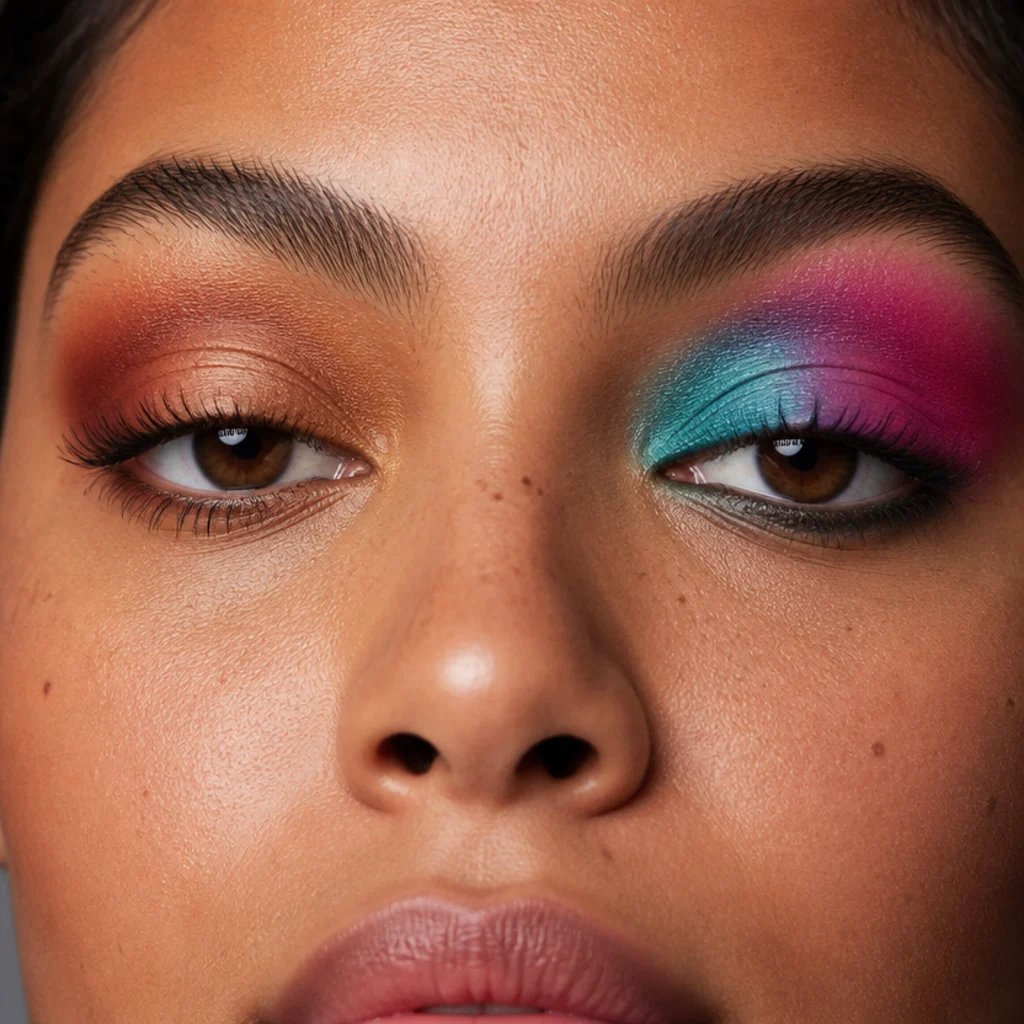
Eyeshadow is where the decades separate most clearly. The 70s lived in earth tones — rust, copper, burnt sienna, ochre, moss green and warm cocoa brown — layered in sheer washes that follow the natural crease and diffuse upward with a fluffy blending brush. The effect is tonal and wearable, and that's why it works so well for beginners and everyday makeup. The 80s reached for neon and jewel brights — cobalt, electric teal, fuchsia, violet — often packed on with a flat shader in solid blocks that stretch toward the brow bone, sometimes over a white base to force the pigment louder. Placement should track your eye shape: hooded eyes benefit from the 70s soft-crease wash, which keeps color visible when the eye is open, while round and almond eyes carry the 80s brow-bone sweep without swallowing it. Pro tip: for saturated 80s color, tap a cream base or concealer down first — it grips powder pigment and stops patchiness. Ask your makeup artist to "keep it warm and diffused" for the 70s or "high-saturation and graphic" for the 80s.
03The Cher 70s Glam Eye vs 80s Rock Smoke
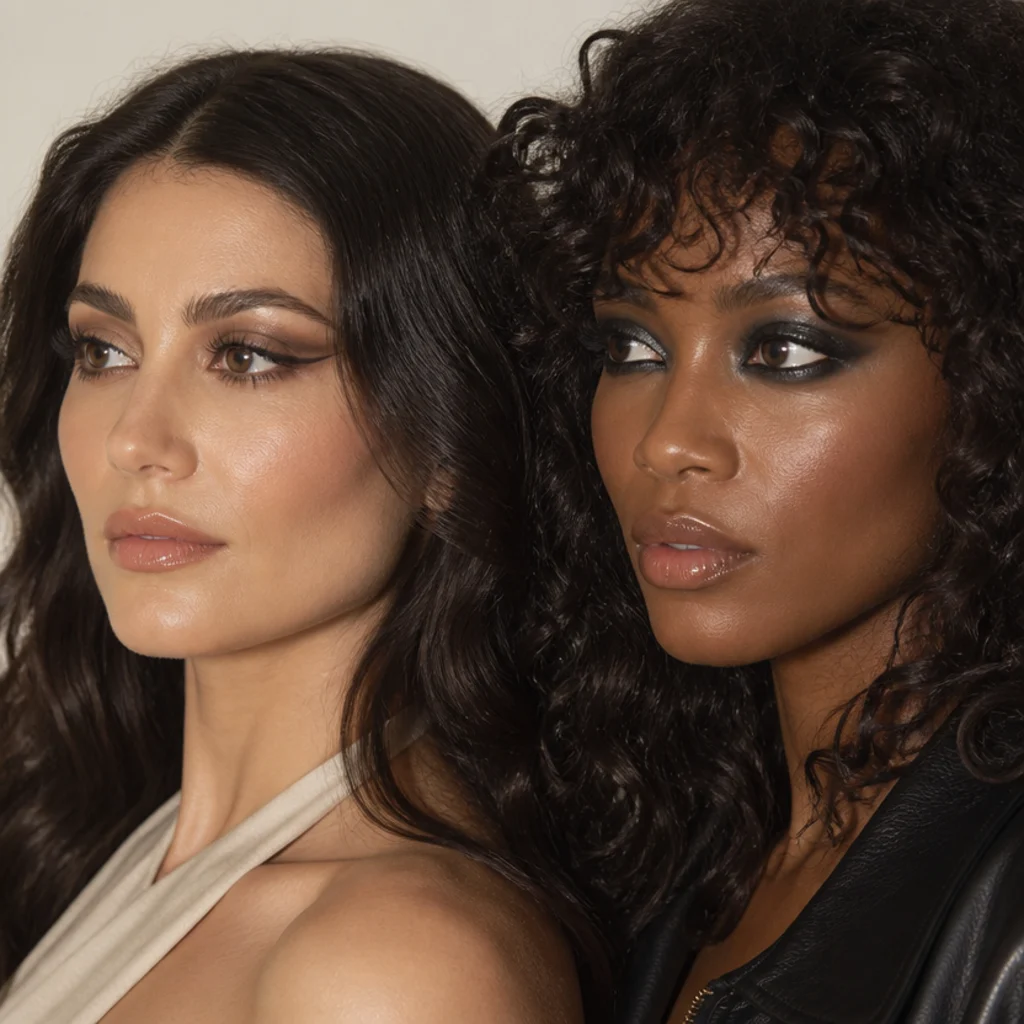
This is the marquee matchup. Cher makeup 70s style means a long, sculpted eye: a soft cut crease extended slightly outward past the socket, warm bronze and taupe blended into infinity, feathered lashes top and bottom, and glossy, bronzed skin. It reads glamorous but stays tonal: the elongated shape, not the color, does the work. That's what separates it from a standard smoky eye. The 80s rock smoke goes darker and deliberately messier: black packed into the lash line, metallic silver or gunmetal pressed onto the center of the lid, then smudged under the lower lash line for a lived-in, late-night edge. The Cher look flatters almond and downturned eyes because the outward extension visually lifts them; the rock smoke suits deep-set eyes, where the smudge adds depth without closing the eye in. Both are intermediate, but the smoke is far more forgiving of imperfect blending. Pro tip: blend the Cher crease with a clean windshield-wiper brush before the color sets — once bronze dries down it is hard to soften. Ask your makeup artist for a "long, lifted cut crease" or a "smudged silver-and-black smoke."
04Eyeliner: Soft Smudge vs Graphic Wing
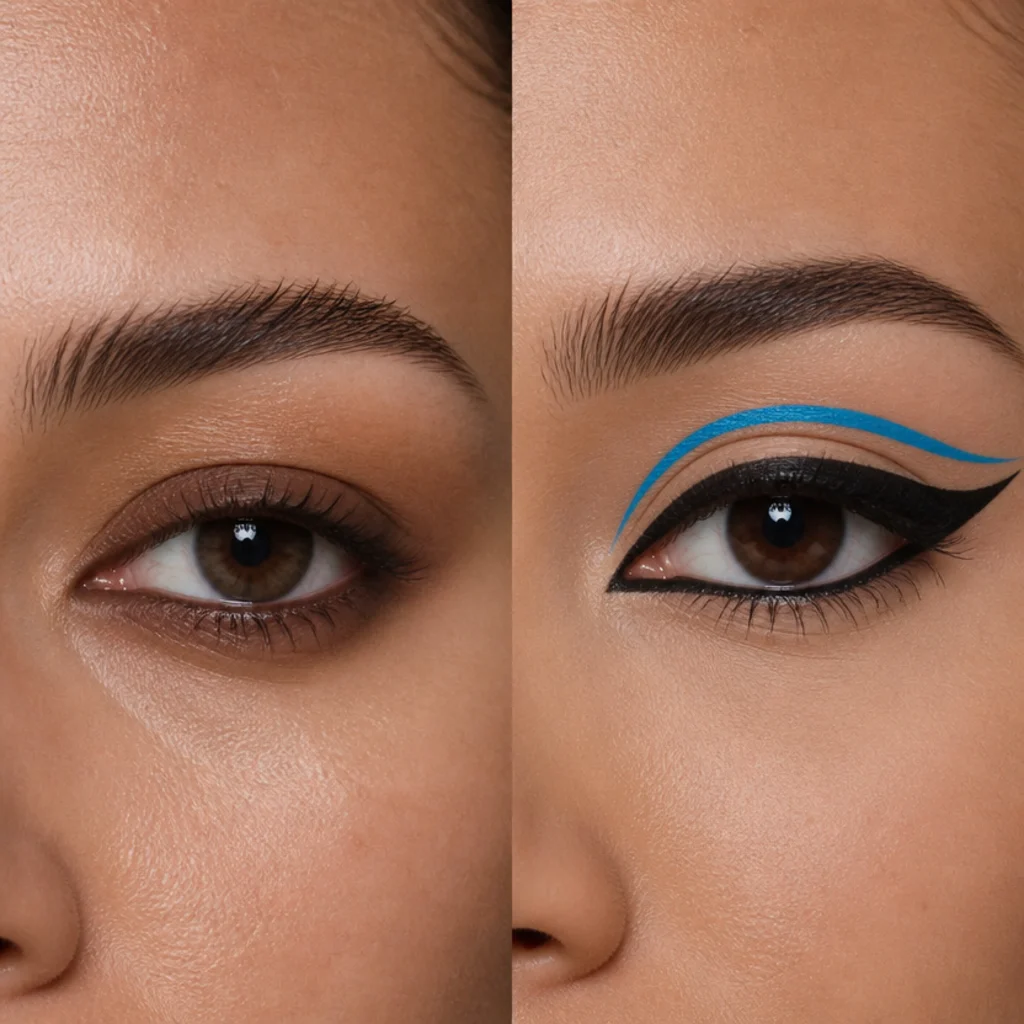
Liner dates a look before anything else on the face. The 70s used liner softly — a smudged brown or bronze pencil worked into the upper lash line and lower waterline, then blurred with a smudger or fingertip so it reads as depth rather than a line. It's quick, and nearly impossible to mess up. The 80s made liner a graphic event: jet-black liquid wings, bright liner floated through the crease, or a contrasting shade traced along the lower lash line for a double-liner effect. A crisp wing rewards even, symmetrical lid space and a steady hand; on hooded eyes the sharp flick can vanish into the fold, where the soft 70s smudge stays visible with the eye open. Pro tip: for an 80s wing on hooded lids, draw the shape with the eye open and follow the lower lash line's natural angle outward, not the crease. Ask your makeup artist to "keep the liner soft and smudged" for 70s, or to "tape-guide a sharp wing and float color in the crease" for 80s so it shows head-on.
05Lashes: Fluttery vs Spidery Drama
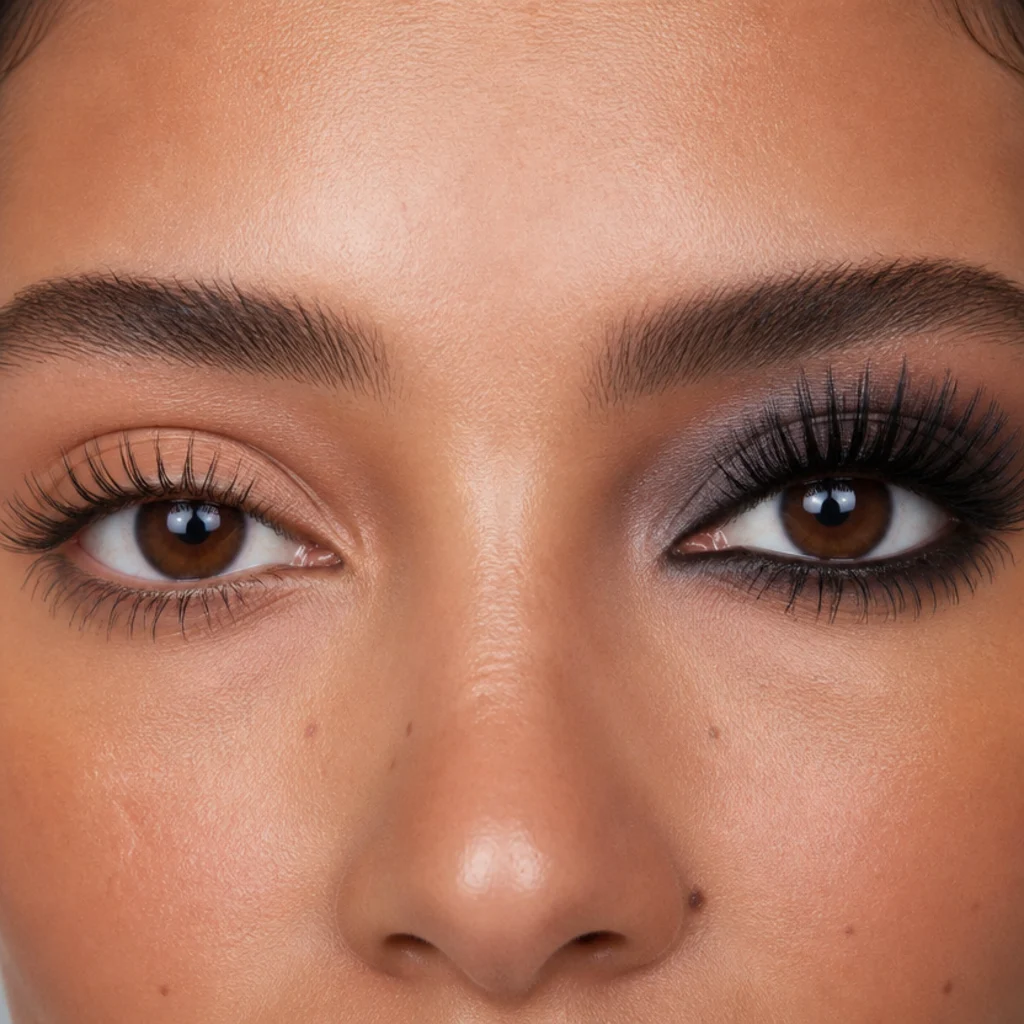
Lashes tracked the mood of each era. The 70s favored a fluttery, separated lash — often with a few lower lashes drawn or applied for a doe-eyed effect. It stayed soft rather than heavy, romantic and daytime-ready. The 80s piled it on: thick, clumped, near-spidery lashes built from layered mascara or stacked strip lashes for maximum volume against bright shadow. Match the density to your natural fringe — sparse lashes gain length without weight from the 70s separated approach, while fuller lashes can carry the 80s drama without looking overloaded. Formula matters too: a lengthening mascara with a fine comb wand suits the 70s, while a volumizing formula on a fat brush builds the 80s clump. Pro tip: heavy layered mascara flakes faster than a single coat, so the 80s look wants a spoolie and a clean lash comb in your touch-up kit if you're out all evening. Ask your makeup artist for "separated, fluttery lashes" or "stacked, dramatic volume."
Save this to Pinterest — pin this lash comparison so you can match the density to your natural lashes.
06Brows: Soft Arch vs Bold and Full
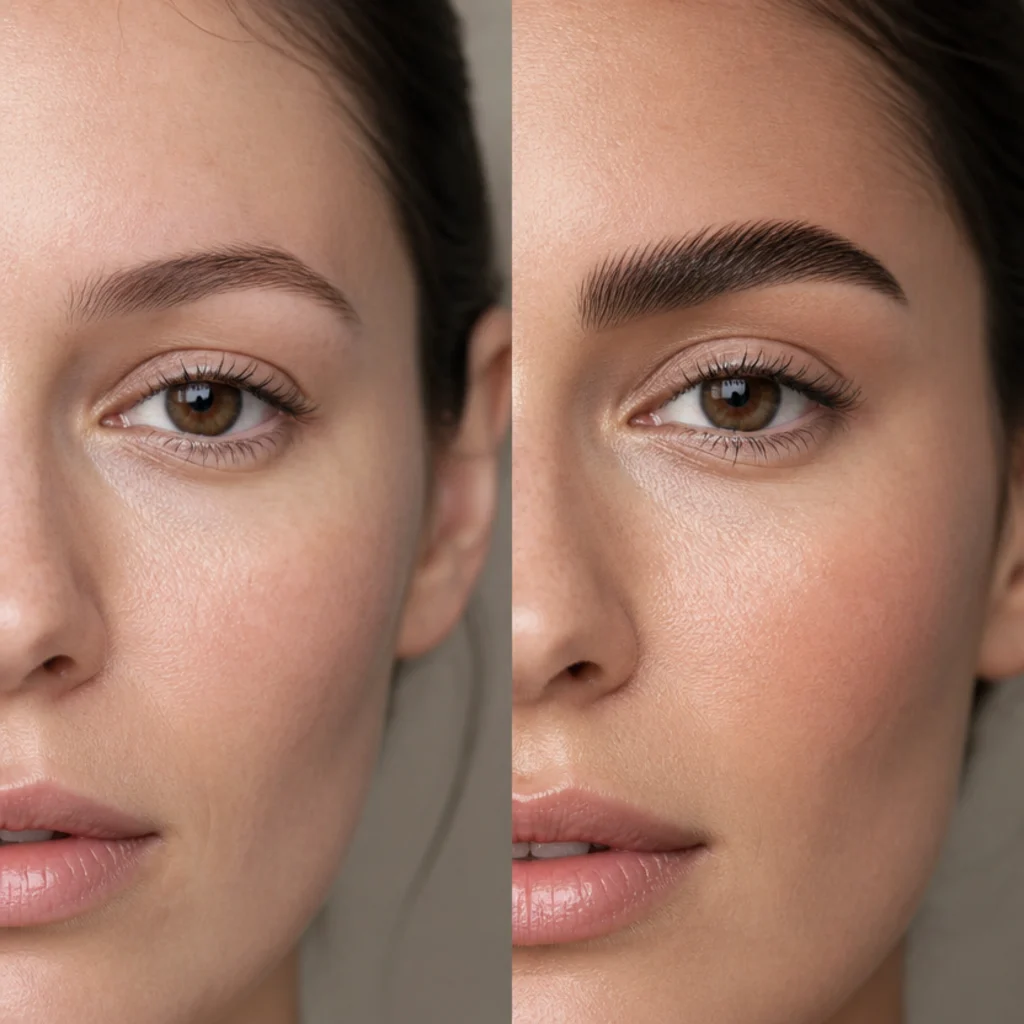
The brow anchors the whole face, and each era shaped it differently. The 70s kept brows soft and lightly arched — groomed but natural, brushed up and lightly filled so the eye makeup leads. Early-to-mid 80s brows grew bolder and fuller, more defined and occasionally squared off at the front — structure to balance the strong color above. Neither era went pencil-thin, and that's what keeps both flattering by modern standards. Read your own brow to choose: naturally sparse brows are easier to fake with the 70s soft arch, using light feathery strokes in a shade close to your hair; dense, straight brows carry the 80s definition without looking drawn-on. Pro tip: set either shape with a clear or tinted gel — a soft 70s arch still needs hold to stay lifted, and a bold 80s brow reads sharper when the hairs are locked in one direction. When booking, ask your makeup artist for a "soft, natural arch" for 70s or a "fuller, more defined brow" for 80s, and bring a reference photo so the shape expectation is unambiguous.
07Blush: Bronzed Warmth vs Bright Stripe
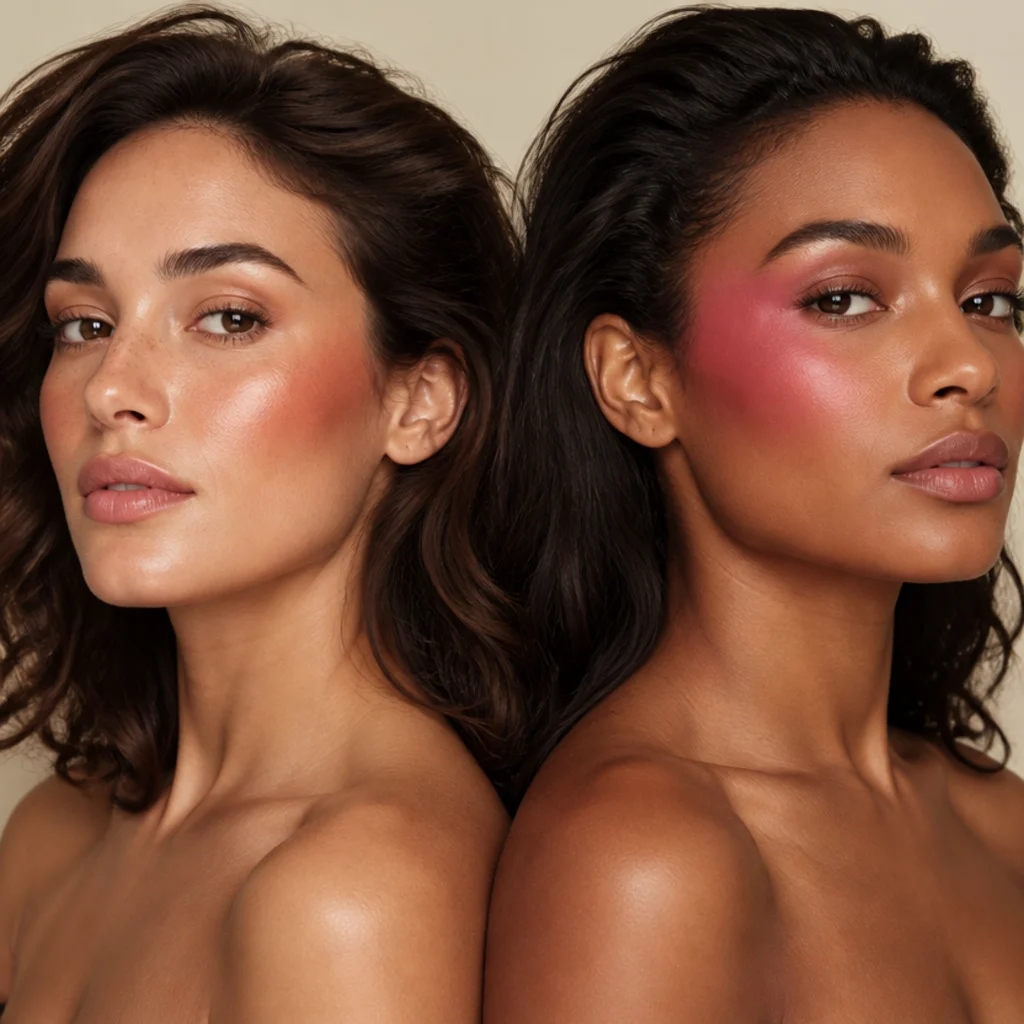
Blush placement is a dead giveaway. The 70s bronzed the cheeks with warm peach, terracotta and a dusting of bronzer swept low along the cheekbone and diffused outward so it mimics a natural tan with no visible start or stop. It sculpts softly and suits nearly every face shape. The 80s swept bright blush — hot pink, coral or fuchsia — high and dramatically up toward the temple, sometimes with the edges left visible on purpose as part of the statement. That angled stripe elongates round faces but can overwhelm a narrow or long face, so drop the placement lower and soften it if your face is already elongated. Formula reinforces the era: cream and liquid blush melt into skin and read 70s, while bright pressed powders sit on top and read 80s. Pro tip: for the 70s, layer blush over the same bronzer so there is no dividing line; for the 80s, tap off excess and build the stripe in thin passes so it stays bright without going blotchy. Ask your makeup artist to "diffuse it low and warm" or "sweep it high and bright."
08Lips: Nude Sheen vs Statement Matte
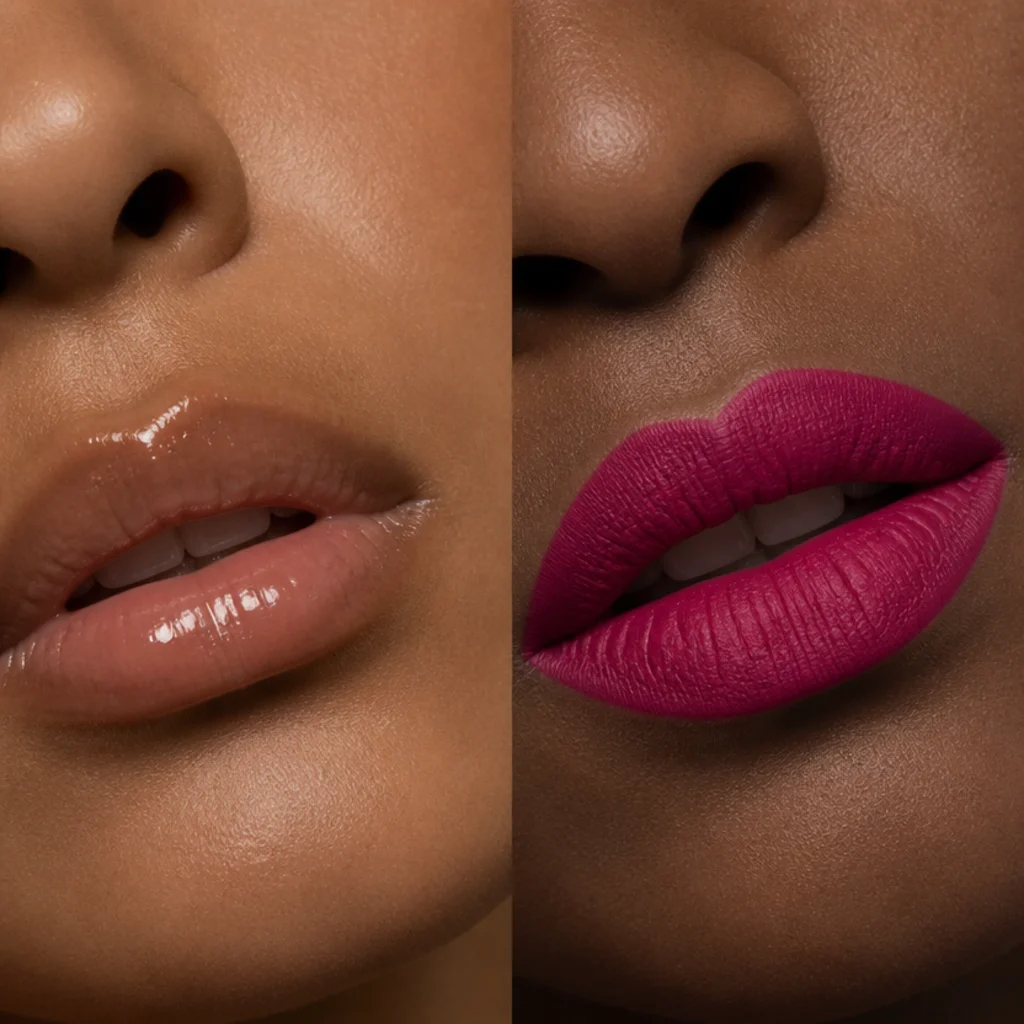
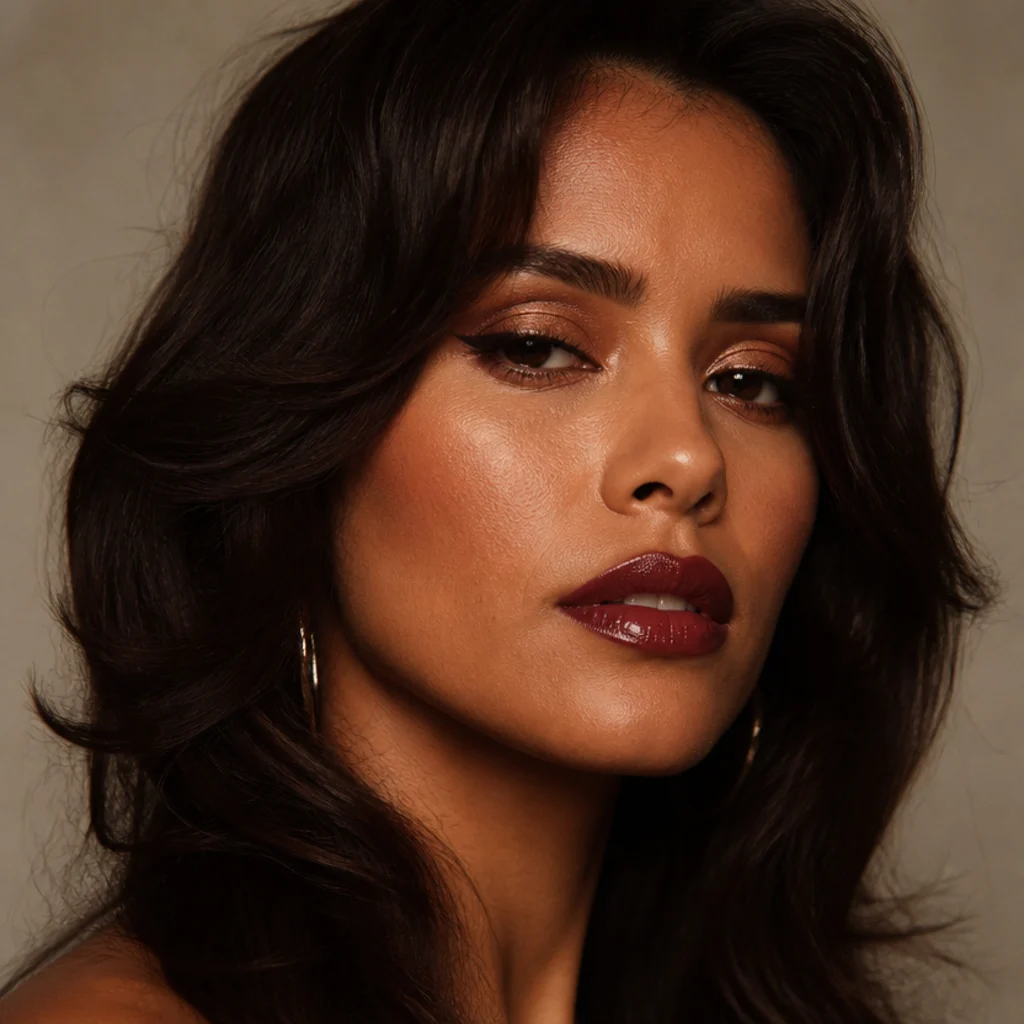
Lips balanced the rest of the face in each decade. The 70s kept lips quiet — warm nudes, soft caramel browns and sheer berry with a wash of gloss — so the bronzed eye and cheek could lead. It's forgiving and needs almost no precision. The 80s made lips a statement of their own: bold matte reds, fuchsias and corals with crisply defined edges, often paired with an equally loud eye for full-contrast drama. Balance is the rule — if your eye look is busy, a 70s nude keeps the face from competing with itself; if the eye is neutral, an 80s matte lip becomes the whole point. Matte formulas telegraph dryness and settle into lines, so prep with balm, blot, then apply. Pro tip: line and lightly fill the whole lip with a matching pencil before an 80s matte — it sharpens the edge, deepens the payoff, and stops the color bleeding as it wears. Skip liner entirely for the effortless 70s sheen. Ask your makeup artist for a "sheer warm nude" or a "bold matte statement lip with a clean edge."
09Skin Finish: Dewy Bronze vs Matte Powder
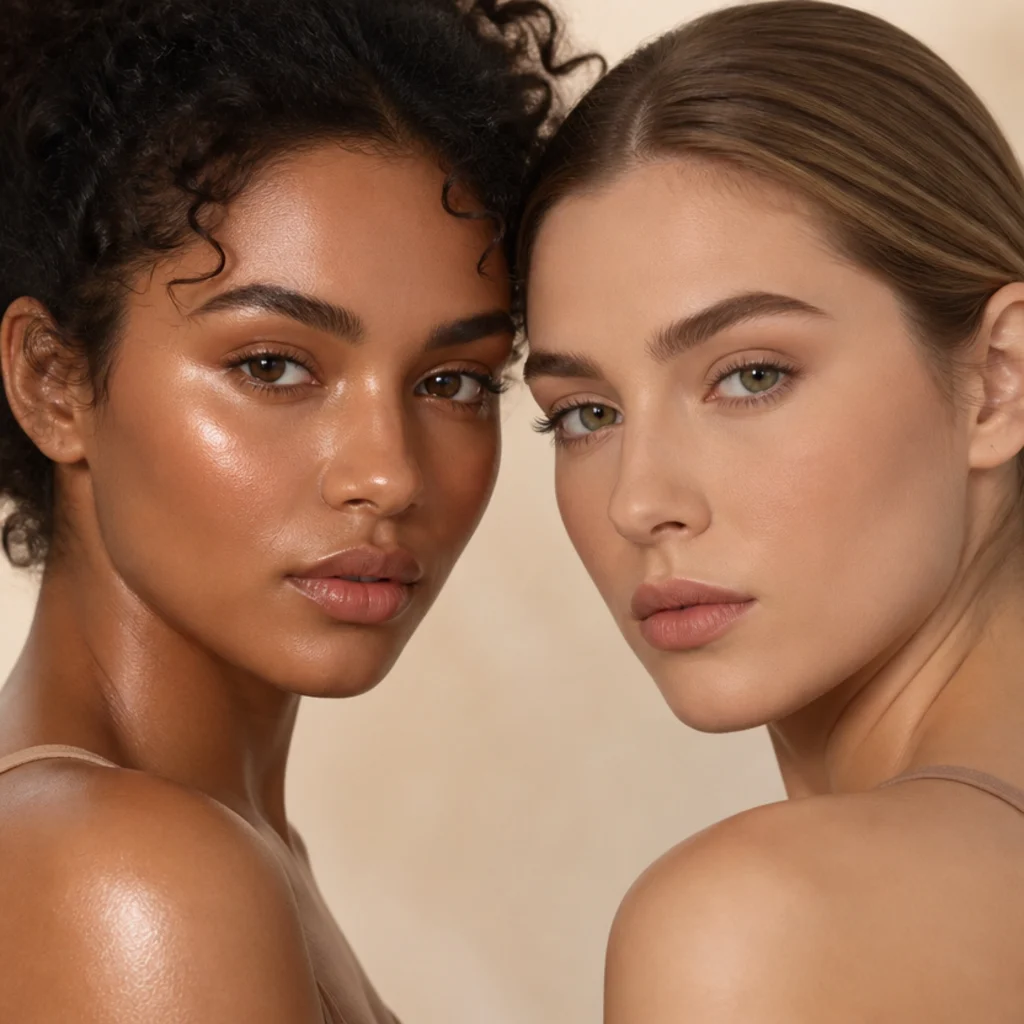
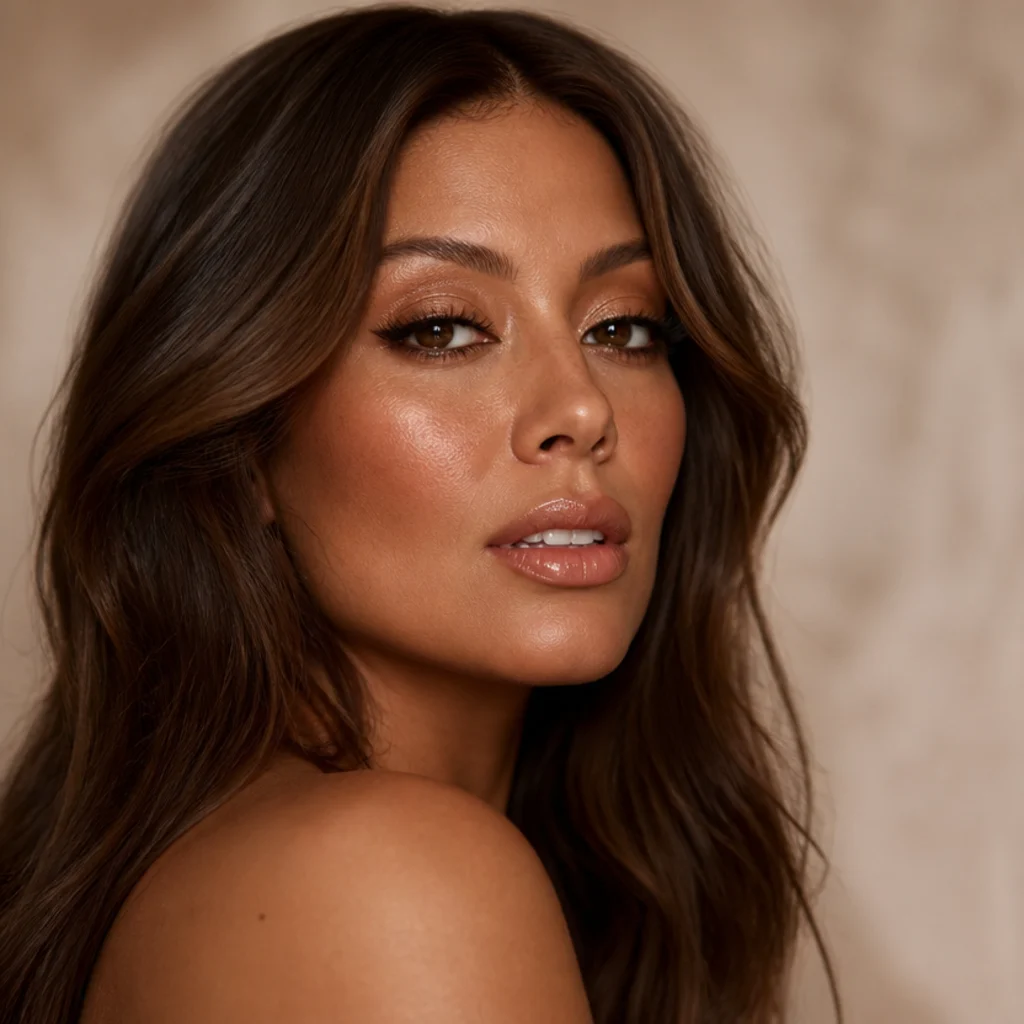
The base sets the entire mood, and the eras start from opposite finishes. The 70s glow is dewy and bronzed — a warm-toned foundation or skin tint, cream highlight pressed onto the high points, and a lit-from-within sheen that looks sun-kissed rather than made-up. It flatters mature, dry and normal skin especially well because it never goes flat or cakey. The 80s leaned matte and powdered — a fuller, more uniform base that gives bright color a stable canvas to sit on without slipping or mixing. That matte finish suits oily skin and long wear, but it can emphasize texture and dry patches, so exfoliation and a hydrating primer underneath matter more here than anywhere else. Pro tip: for 70s skin, mix a drop of liquid highlighter into your foundation and set only the T-zone; for 80s skin, set the whole face with a translucent powder and lock it with a setting spray so hours of bright color stay put. Ask your makeup artist for a "dewy, skin-like base" or a "full matte base built to hold color."
10Everyday Wear: Disco Soft vs Neon Play
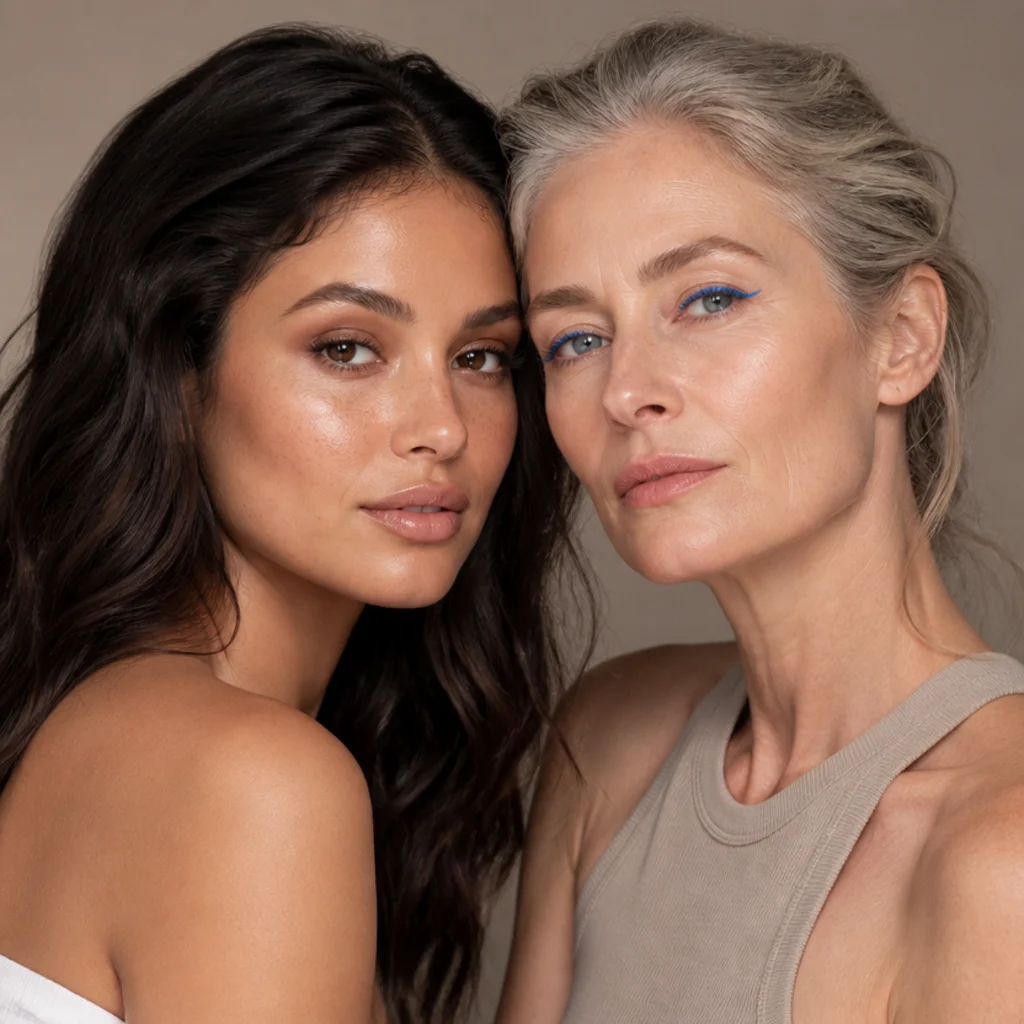
Not every retro look belongs at a party, and this is where the 70s wins for daily life. A pared-back 70s inspired makeup look — bronzed lid, soft smudged liner, nude gloss, a low diffused cheek — translates straight to work or brunch without reading as a costume, because it's just warm, well-blended neutrals. The 80s can go everyday too, but only in measured doses: a single pop of cobalt liner, or a fuchsia lip against otherwise clean makeup, keeps the reference without the full theatrical load. The trick is one loud element, everything else quiet. Pro tip: if you want retro you can actually wear on a Tuesday, build the 70s glow and add exactly one 80s accent — bright liner or bold lip, never both at once. If you're dressing for a themed event, commit fully to the 80s color story and let it be loud; half-measures there just look unfinished. Ask your makeup artist for "everyday 70s with one bright accent" versus "full 80s color for an event."
Save this to Pinterest — bookmark this everyday-versus-event breakdown for your next getting-ready session.
11The Disco Glow vs the Club Kid
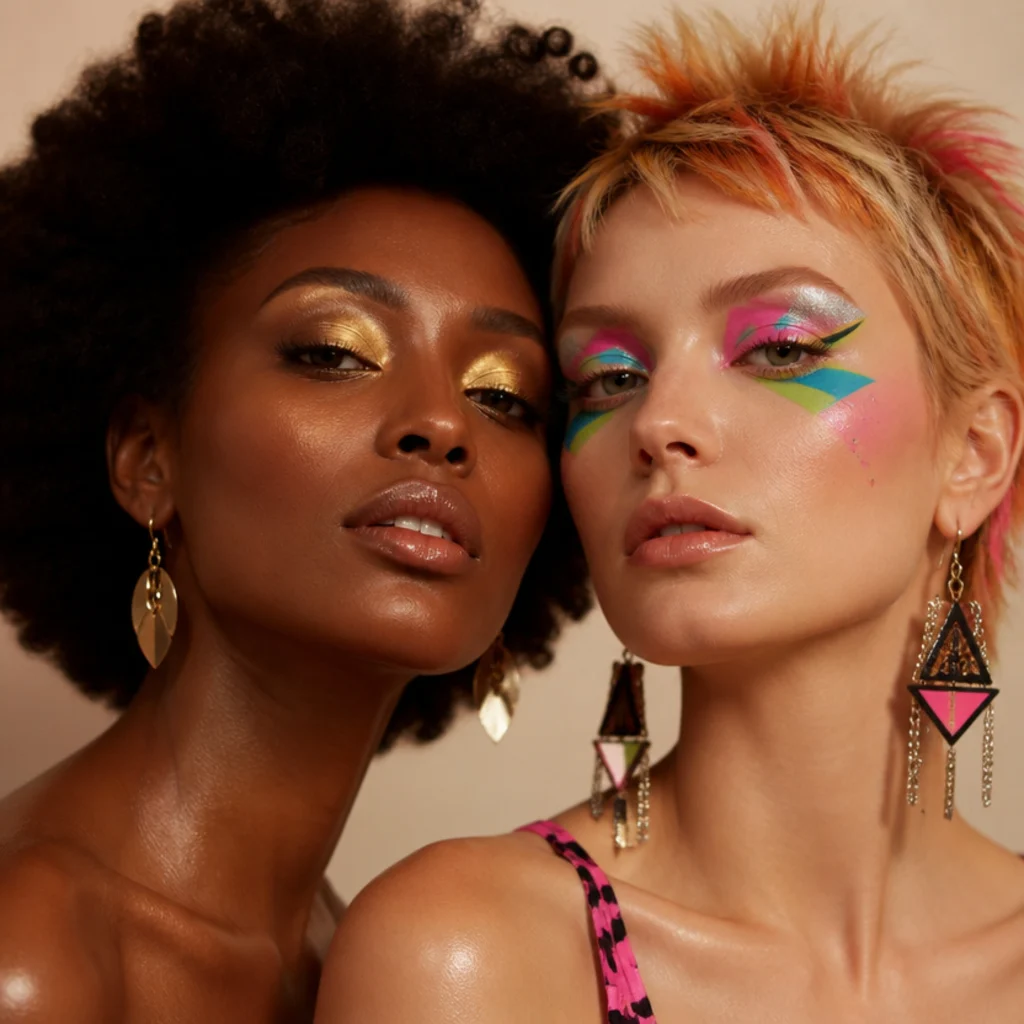
Both decades had a nightlife face, and they couldn't be more different. The 70s disco glow was all shimmer and warmth — gold and bronze on the lids and high points, a bronzed cheek, glossy skin engineered to catch light on the dance floor. It's glamorous yet still relatively wearable, closer to "turned up" than transformed. The 80s club kid pushed into experimental territory: clashing neons, geometric placement, and glitter used as a graphic element rather than a soft sheen, sometimes with color extended past the eye entirely. The disco glow suits anyone who wants sparkle without commitment; the club-kid look rewards those who treat makeup as art and don't mind the extra time and product. Lighting flatters them differently, too — warm shimmer glows under low, golden light, while saturated neon pops hardest under cool or club lighting. Pro tip: press shimmer on with a fingertip or flat brush rather than sweeping it, and use a glitter glue base for any 80s sparkle so it stays on the lid and off your cheeks. Ask your makeup artist for a "golden disco shimmer" or a "graphic club-kid look with glitter."
12Color Blocking: None vs Everything
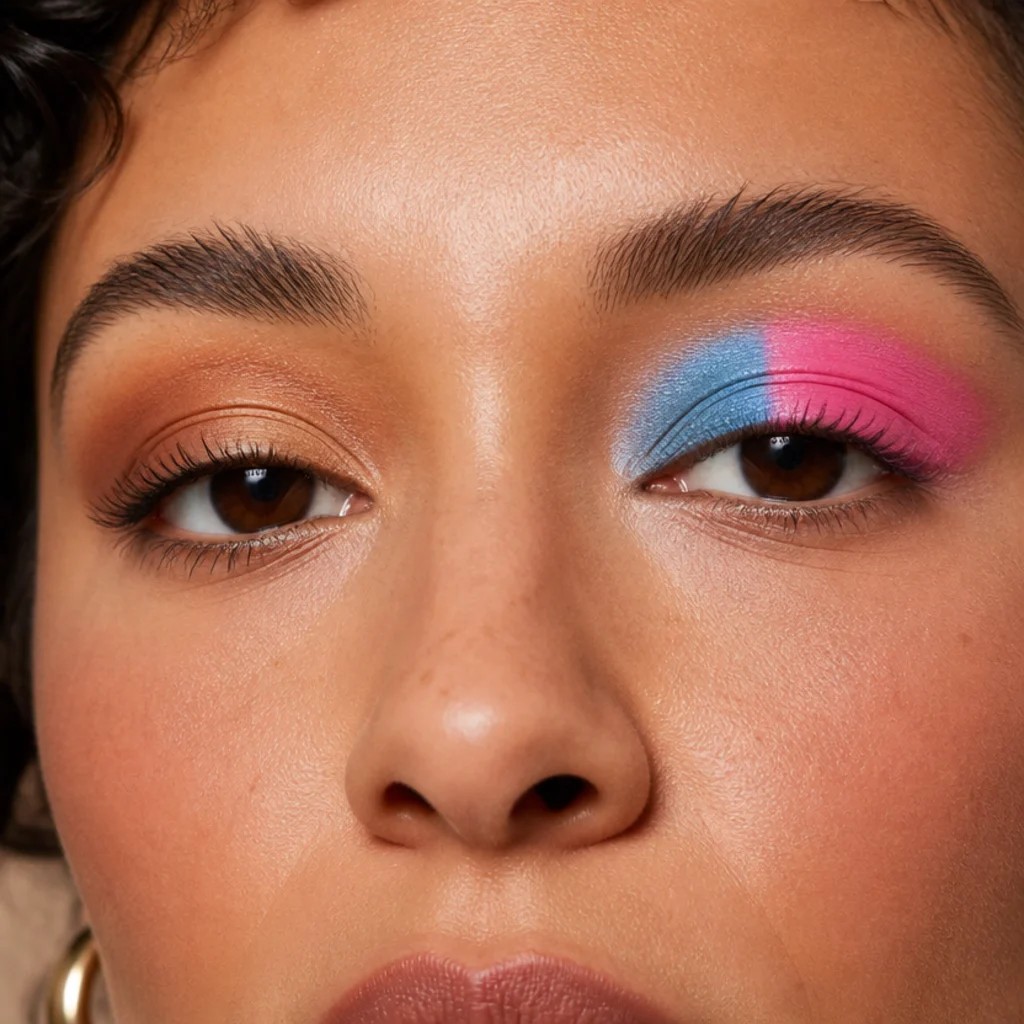
Blending philosophy separates the eras at a purely technical level. The 70s is anti-color-block: everything melts together tonally, no hard edges anywhere, which is why it feels soft and cohesive even when several shades are in play. The 80s embraced color blocking — distinct patches of contrasting color sitting side by side with edges intact, sometimes split right down the center of the lid. Blocking is the harder skill because it demands clean edges, deliberate placement, and colors that stay put without bleeding into each other. If you're newer to eyeshadow, the forgiving 70s blend is the place to build confidence; once you can control a brush and keep a line crisp, 80s blocking opens up. Pro tip: map the blocks first with a light nude pencil, pack each color with a small flat brush, and clean the dividing edge with a concealer-dipped angled brush so the two shades stay crisp instead of muddying at the seam. Ask your makeup artist to "keep it fully blended and tonal" or to "block clean, contrasting color."
13Hair Pairing: 70s Makeup and Hair vs 80s Volume
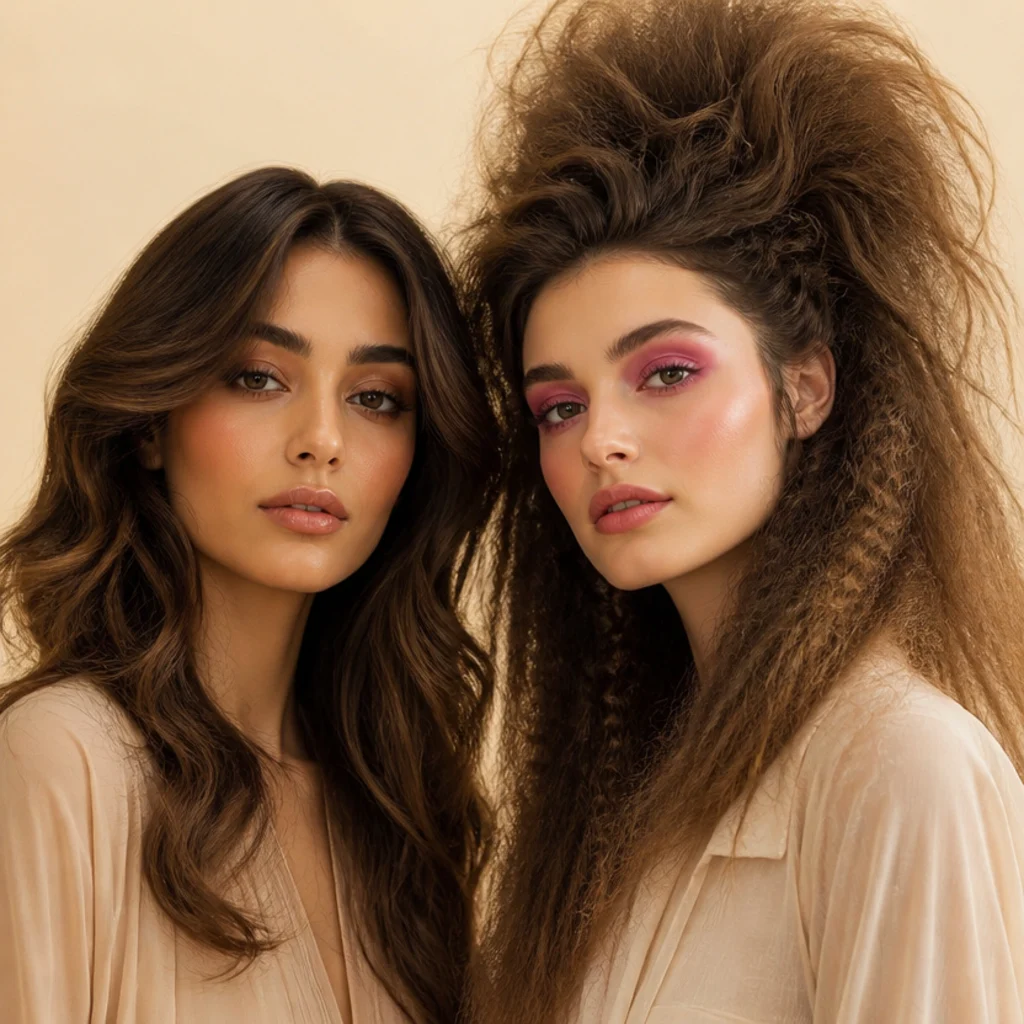
Makeup rarely travels alone, and the right hair completes the era. The classic 70s makeup and hair pairing is feathered, center-parted and soft — loose waves and face-framing layers that echo the sunlit glow, worn with minimal heat and a natural finish. It suits most textures and lengths and asks very little of fine hair. The 80s answer was volume in every direction: teased crowns, big curls, crimped sections, and height built with mousse and backcombing to match the bold color. That volume takes more product and time and can stress finer or color-treated hair, so heat protection and a light hand are non-negotiable. Pro tip: for the look without the commitment, a soft blow-out with a center part reads 70s instantly, while a root-lift powder plus a few crimped face-framing pieces signals 80s without teasing your whole head. Match effort to hair health — dense, coarse hair holds 80s volume far better than fine strands, which flatten within the hour. Ask your stylist for "soft 70s feathering" or "80s root volume with a few crimped sections."
14Difficulty and Product Load Compared
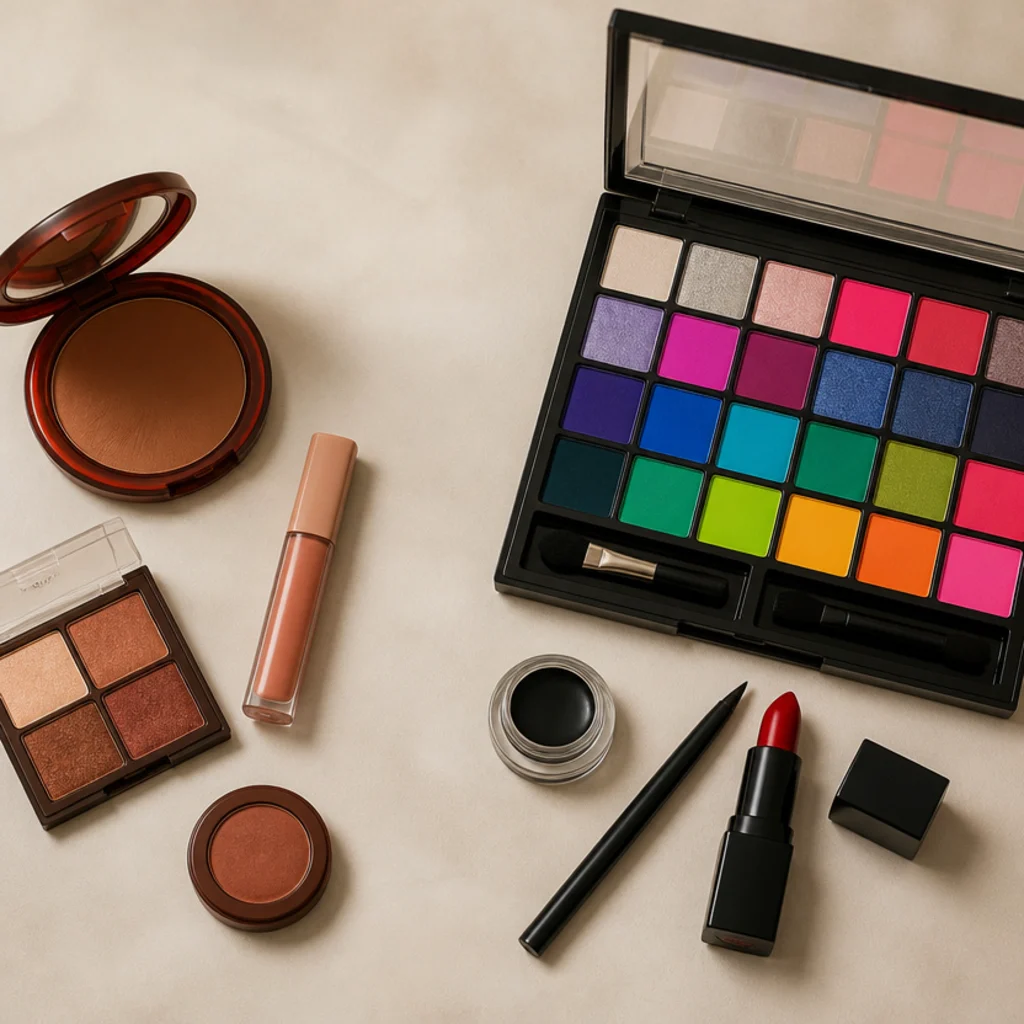
Here is the practical bottom line in one place. The table sums up how the eras compare on the factors that actually decide which look you'll reach for and wear. Cost varies widely by brand and by how much you already own, so treat product load as relative, not a fixed figure — the 70s often uses warm neutrals you have, while the 80s tends to need a few dedicated brights and a reliable setting product.
| Factor | 70s Glam | 80s Bold |
|---|---|---|
| Difficulty | Beginner–Intermediate | Intermediate–Advanced |
| Product load | Lighter | Heavier |
| Everyday-friendly | Yes | In small doses |
| Touch-ups needed | Fewer | More |
| Best skin finish | Dewy | Matte |
| Signature feature | Bronzed glow | Bright color |
| Core technique | Soft, tonal blending | Clean edges and color blocking |
| Typical wear time | 6–8 hrs, ages softly | 8-plus hrs when properly set |
| Flatters | Warm–deep undertones, hooded eyes | Cool undertones, open lid space |
The 70s wins on ease and wearability; the 80s wins on impact and drama. Choose by the occasion and by how much time and product you actually want to invest on the day.
15Which Era Suits You Best
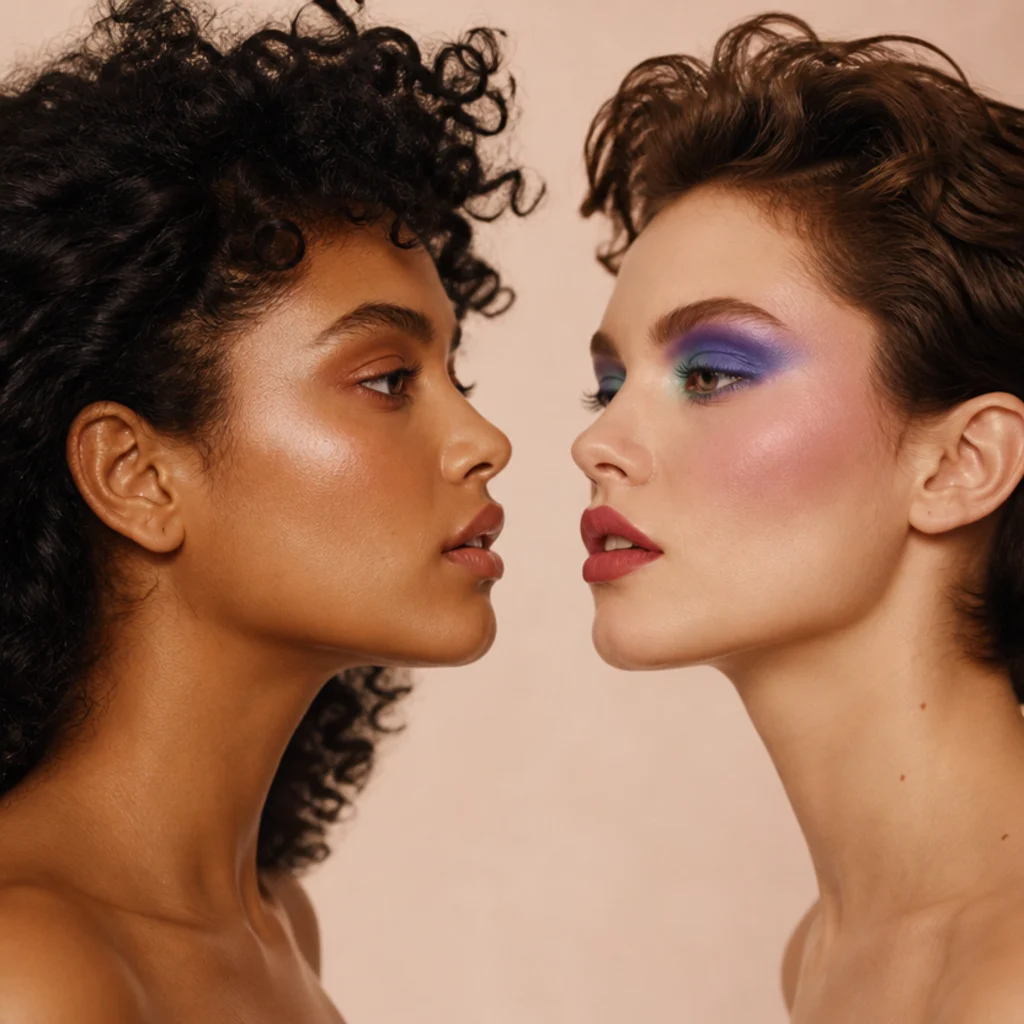
There is no single winner — only the right match for your features, undertone and mood. Reach for 70s glam makeup if you love warmth, want something forgiving and everyday-ready, or have warm-to-deep skin that lights up in bronze and terracotta; it's also the safer starting point while you're still building blending confidence, and the kinder choice for dry or mature skin that dulls under heavy matte. Reach for the 80s if you love saturated color, high contrast and makeup as a statement, have the lid space to carry a bold sweep, or are dressing for a themed night where more is the whole point. Cool undertones and anyone who enjoys graphic technique will have the most fun there. And many people land happily in the middle: a warm 70s base with a single bold 80s accent gives you real retro character that still reads as you. Pro tip: when in doubt, let your undertone pick the palette and let the occasion pick the intensity.
Pro Tips from the Editor
- Prep dictates the era. A dewy, hydrated base is non-negotiable for the 70s glow; a matte, well-set base is essential for holding 80s color. Get the finish right before you touch a single shade.
- Warm bronzes forgive, bright pigments punish. If you're still learning to blend, start in the 70s — its tonal wash hides mistakes. Save color blocking and sharp wings for when your edges are reliable.
- Grip your pigment. A cream base or concealer under 80s brights makes powder read twice as saturated and stops mid-lid patchiness. Skip it and even good shadow looks weak.
- Read the eye shape before you place color. Hooded eyes want the 70s soft-crease wash and a smudged liner that shows with the eye open; a crisp wing or brow-bone block can disappear into the fold.
- One loud element, not three. For wearable retro, pick a single hero — bright liner or bold lip — and keep everything else quiet. Stacking statements is what tips a look into costume.
- Set what needs to move. Lock 80s color with a fine translucent powder and a setting spray; touch-ups will be about pressing, not rebuilding. For the 70s, set only the T-zone so the glow survives.
- Match density to your features. Bolder lids, lashes and blush belong on faces with the space to carry them. Softer, lighter placement flatters smaller lid space and sparse lashes — the technique adapts, the era doesn't have to shrink.
How to Choose / Get the Look
Start with the occasion, then let your features fine-tune the intensity. For everyday retro, build the 70s base first: a warm, slightly dewy foundation or skin tint, cream highlight on the high points, and a bronzed cheek blended low with no hard edge. Add a soft wash of copper or taupe on the lid, smudge a brown or bronze liner into the lash line, separate the lashes, and finish with a nude gloss. It's quick, forgiving, and flatters most skin tones and eye shapes. For an 80s statement, flip the order: set a matte base thoroughly, prime the lid, then pack a bright color across it — a flat brush and a cream base underneath keep it saturated — sharpen a black wing, block or float a second contrasting shade if you want it, and finish with a lined bold matte lip. Prep matters more here, so exfoliate, hydrate, powder and set. Then adjust to your features: softer and lighter if you have hooded eyes, sparse lashes, or a narrow face; bolder if you have open lid space and the density to carry it. Undertone picks the palette, occasion picks the intensity — that pairing rarely steers you wrong. When booking a pro, bring a reference photo and name the era plus one keyword: "warm and diffused" for 70s, "bright and graphic" for 80s. That single phrase gets you closer than any product list.
Frequently Asked Questions
What is the main difference between 70s and 80s makeup?
The 70s is warm, soft and low-contrast — built on bronze, terracotta and a dewy glow that melts into the skin. The 80s is bright, matte and high-contrast — built on saturated color and graphic placement that stays legible across a room. Temperature and edges are the two quickest tells: warm and blurred means 70s, cool-bright and hard-edged means 80s.
Is 70s glam makeup good for beginners?
Yes. 70s glam makeup relies on soft, diffused blending with no hard edges, so small mistakes disappear into the wash instead of showing as lines. It uses warm neutrals most people already own, needs little precision, and is one of the most forgiving retro looks — a natural starting point before you attempt 80s color blocking or a sharp wing.
What makes the Cher 70s makeup look distinctive?
Cher makeup 70s style features a long, sculpted eye: an outward-extended soft cut crease, warm bronze and taupe blended into infinity, feathered top-and-bottom lashes, and glossy bronzed skin. The elongated, lifted shape — not the color — is what sets it apart from a standard smoky eye, which builds depth in a rounder, darker socket.
Can I wear 80s makeup for everyday?
In small doses, yes. A single bright liner or a bold matte lip against otherwise neutral makeup keeps the 80s reference without the full theatrical load. The rule is one loud element and everything else quiet. The complete high-color, color-blocked look reads best for events and themed nights, where the drama has somewhere to go.
How do I match 70s makeup and hair?
Pair a bronzed, glowy 70s face with feathered, center-parted, softly waved hair and face-framing layers. It needs little heat, suits most textures and lengths, and echoes the sunlit, low-effort mood of the makeup. A simple center-part blow-out reads 70s instantly — you don't need heavy styling to sell the era.
Which era suits cool undertones versus warm undertones?
Warm and deep undertones light up in the 70s palette because bronze, terracotta and gold mirror the skin's own tone. Cool undertones tend to look sharper and more balanced in 80s brights — cobalt, fuchsia and electric teal — where contrast, not warmth, carries the look. If you're neutral, either works, so let the occasion decide the intensity.
What are the best eyeshadow colors for each decade?
For the 70s, reach for rust, copper, burnt sienna, ochre, warm brown and moss green in a diffused wash. For the 80s, reach for cobalt, electric teal, fuchsia, violet and silver, packed on in saturated blocks, ideally over a cream base or white base so the pigment reads at full strength.
How do I keep 80s bright eyeshadow from looking patchy?
Prime the lid, then tap a cream base or concealer over it and let it get tacky before pressing powder on top with a flat shader brush. Build in thin layers rather than one heavy sweep, and clean the edges with a concealer-dipped angled brush. The cream underneath grips the pigment so it stays even and vivid instead of sheer and blotchy.
Which era is easier to keep on all day?
The 70s is lower-maintenance — its soft glow fades gracefully and only needs the occasional blot and lip refresh. The 80s holds longer once properly set, but demands more upfront prep (matte base, powder, setting spray) and a small touch-up kit for the lip and lashes, since bright color and heavy mascara show every smudge as the night goes on.