20 Hair Tinsel Ideas That Are Simply Stunning
Hair tinsel is the lowest-commitment way to add real sparkle to any color or texture, no bleach and no regrowth line to manage. This guide breaks down 20 distinct looks by shade, undertone, placement, and occasion, with the upkeep timeline and the exact phrasing to bring your stylist. Pick the one or two that actually suit your hair, then save them for your next appointment or DIY session.
 Edited by Lena Rose · Published July 11, 2026 · 33 min read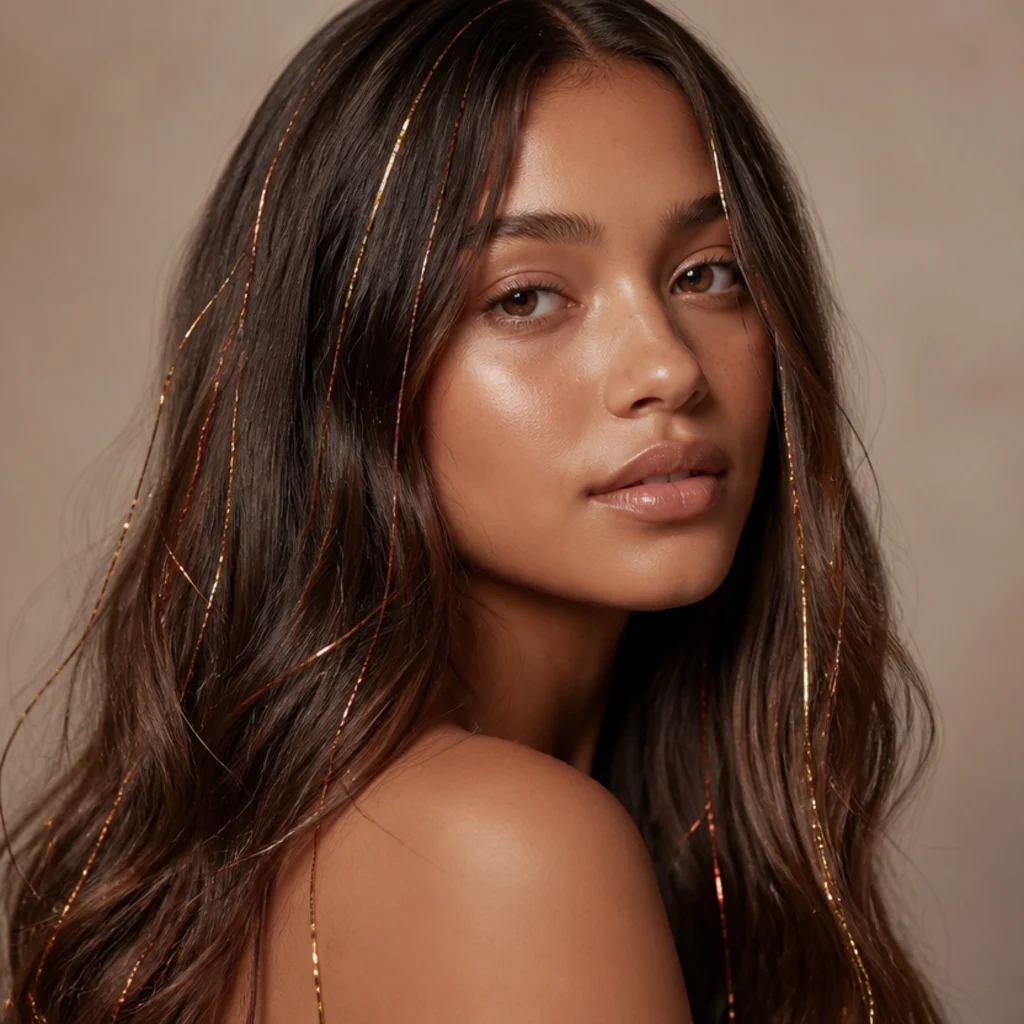
Quick Answer
- Best for: Anyone who wants shine, dimension, or a color trial without dye, bleach, or damage; works on every length past the chin and every texture from bone-straight to tight coils.
- Who might skip it: Very short crops under two inches where strands have nothing to anchor to, and anyone who flat-irons daily and would repeatedly clamp over the coating.
- Maintenance: Gentle wash two to three times a week, smooth pillowcase at night, no direct heat on the strands; expect to re-tie a few face-framing pieces around week three.
- Difficulty: Beginner-friendly for a handful of tie-in strands at home; moderate for a full shimmer install or heat-bonded application best left to a pro.
- Cost: Low if you DIY a bead-and-hook kit; salon installs scale with strand count, from a small face-frame add-on to a premium full-shimmer appointment.
- Wear time / longevity: Tie-in strands, roughly four to six weeks; strands installed into braids last as long as the braids; heat-bonded strands last longest but need pro removal.
- Standout variation: A face-framing gold cluster reads elegant on nearly every complexion and photographs beautifully in any light.
- How to ask your stylist: Name the shade family (warm gold vs cool pearl vs jewel tone), the density (scatter, cluster, or full shimmer), and the placement (face-frame, money piece, peekaboo, or allover).
In This Guide
- Subtle Gold Scatter for Brunettes
- Iridescent Silver on Jet Black Hair
- Rose Gold Face-Framing Strands
- Full Shimmer on Platinum Blonde
- Hot Pink Tinsel on Dark Hair
- Holographic Rainbow Peekaboo
- Copper Tinsel for Auburn Hair
- Tinsel Woven Into a Fishtail Braid
- Curly Tinsel Halo on Natural Coils
- Champagne Strands for Ash Blonde
- Deep Red Tinsel on Black Hair
- Pastel Lilac Tinsel Accent
- Tinsel Money Piece at the Part
- Sparkle Ponytail for an Event
- Baby Blue Tinsel on Balayage
- Gold Tinsel in a Half-Up Style
- Emerald Green Tinsel for Bold Looks
- Tinsel Threaded Through Box Braids
- Mixed-Metal Tinsel for Short Hair
- Festival Tinsel with Space Buns
Hair tinsel, also called fairy hair or tinsel hair, is one of the few trends that changes how your hair looks without touching its length or color. These fine reflective filaments tie or bond onto a small section of your own hair, catch the light when you move, and slide out or grow out once you're done with them. Because the effect sits entirely on the surface, it works for anyone who wants color or shine without the cost, commitment, or regrowth line of a full dye job. The trick to making it look intentional instead of costumey comes down to three things: matching the shade to your undertone, the density to the occasion, and the placement to how you actually wear your hair. A tone-on-tone gold on a warm brunette reads like an expensive highlight; a cool silver on jet black reads as deliberate contrast. The looks below are sorted by hair color, texture, placement, and occasion, from a Tuesday coffee run to a black-tie wedding. Read the who-it-suits and upkeep notes under each idea, pick your two or three favorites, then use the decision framework and FAQ at the end to work out placement, longevity, and safe removal.
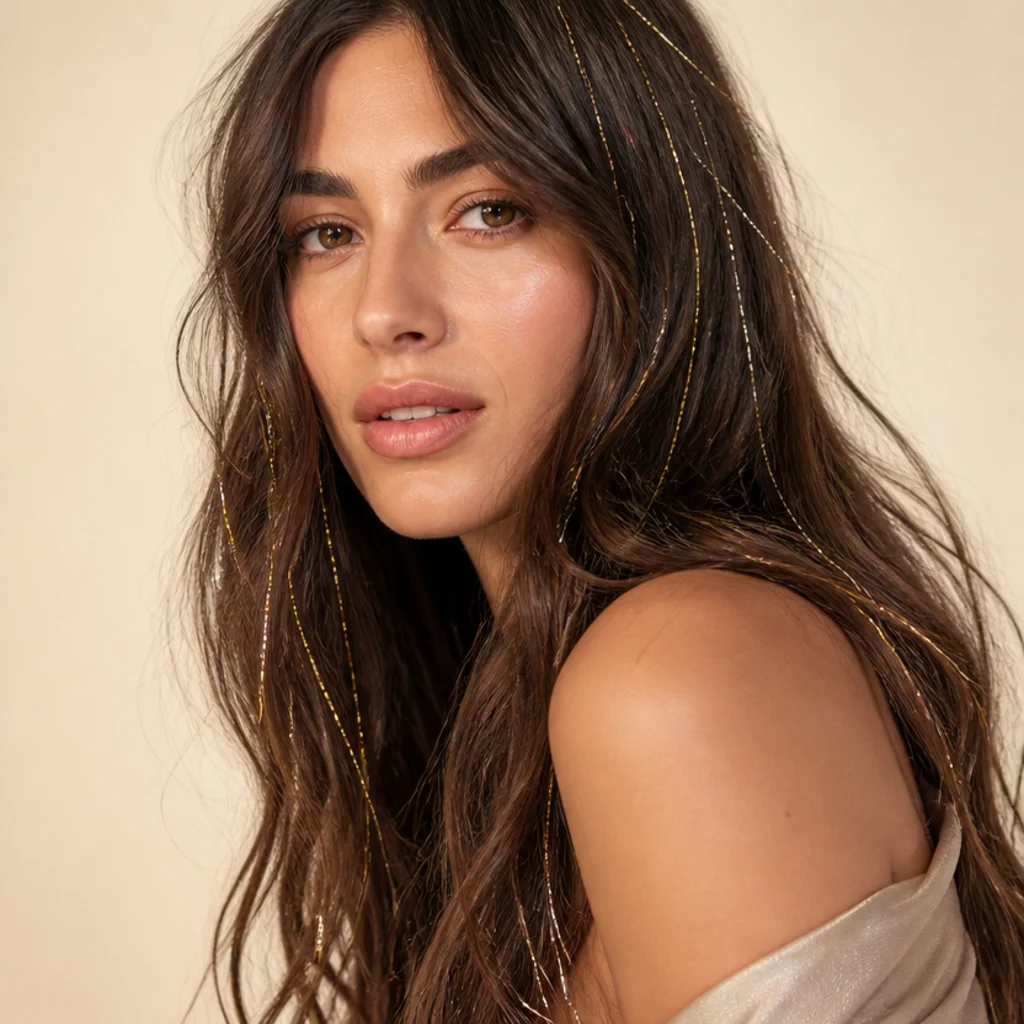
01Subtle Gold Scatter for Brunettes
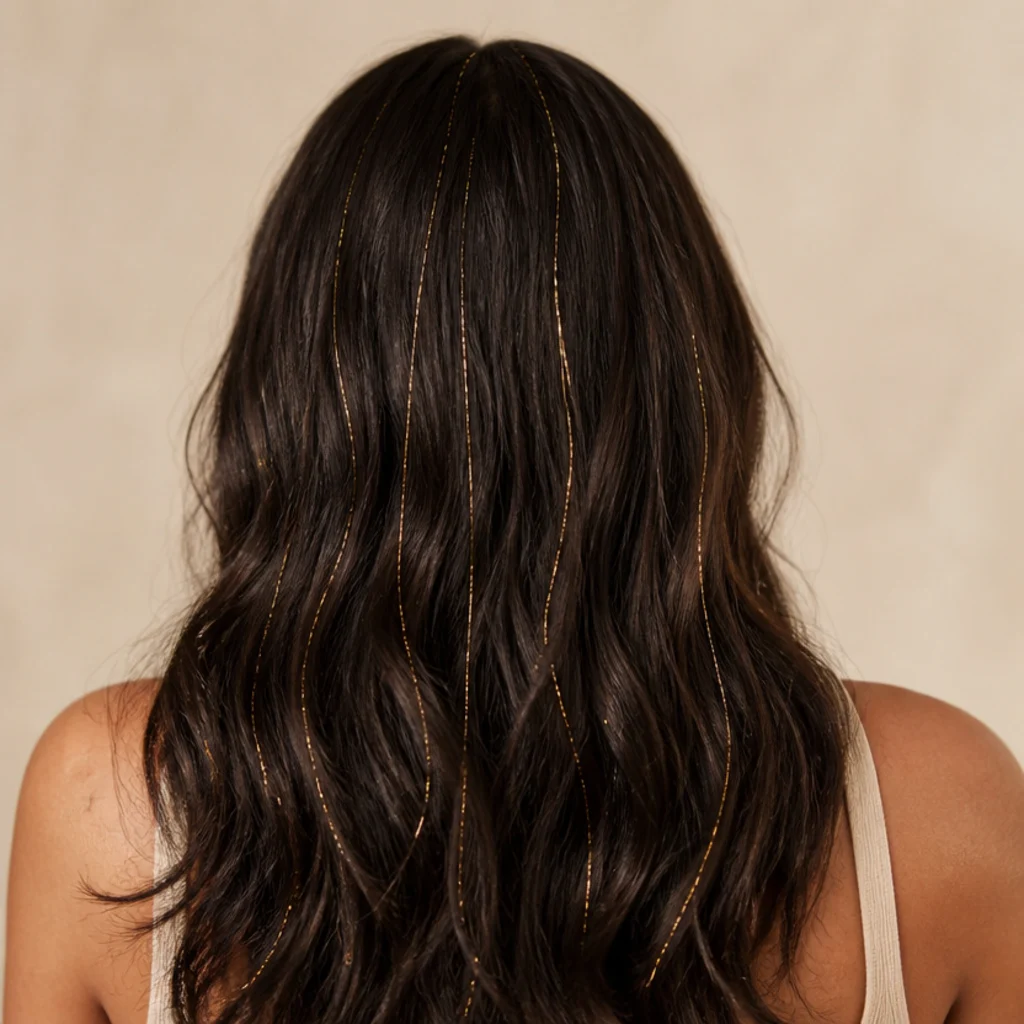
Gold tinsel on brunette hair is the gateway look, and for good reason — warm metallic filament reads as a sun-caught highlight, not a costume piece. Ask for a light scatter of 15 to 20 fine strands from the crown to mid-length, weighted toward the top layers where daylight lands first, so the shimmer only shows up when you move. Warm and neutral brunettes get the most out of it, since true gold echoes the honey and caramel already in the hair. If your base runs cool espresso, edge toward a paler antique gold so it doesn't go brassy on you. Tie-in strands sit flat and stay invisible at the root, so upkeep is minimal for four to six weeks — mostly gentle washing and a smooth pillowcase. Pro tip: have your stylist mirror the placement of your natural face-framing pieces so the tinsel follows your existing dimension instead of fighting it. Ask for a "barely-there warm gold shimmer, dispersed not clustered, weighted to the top," and skip ironing directly over the strands, which dulls the coating.
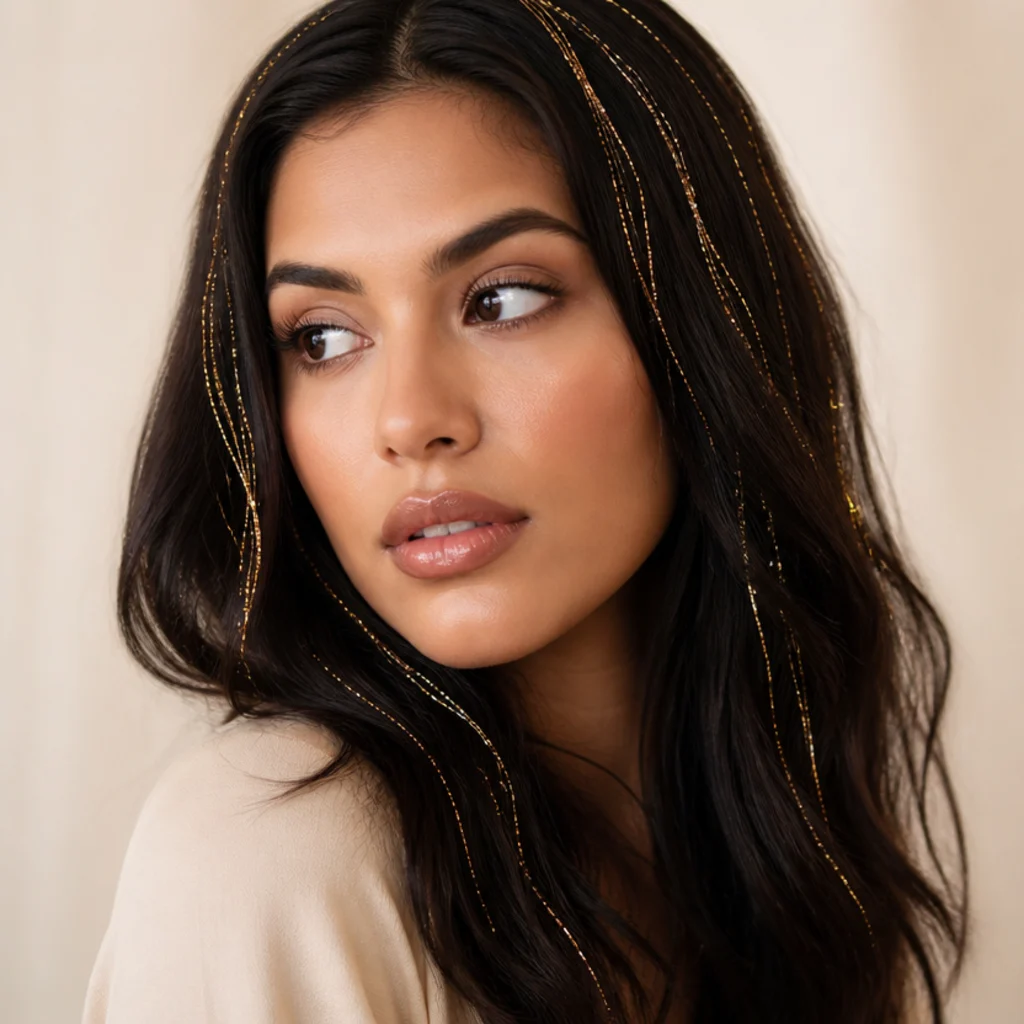
02Iridescent Silver on Jet Black Hair
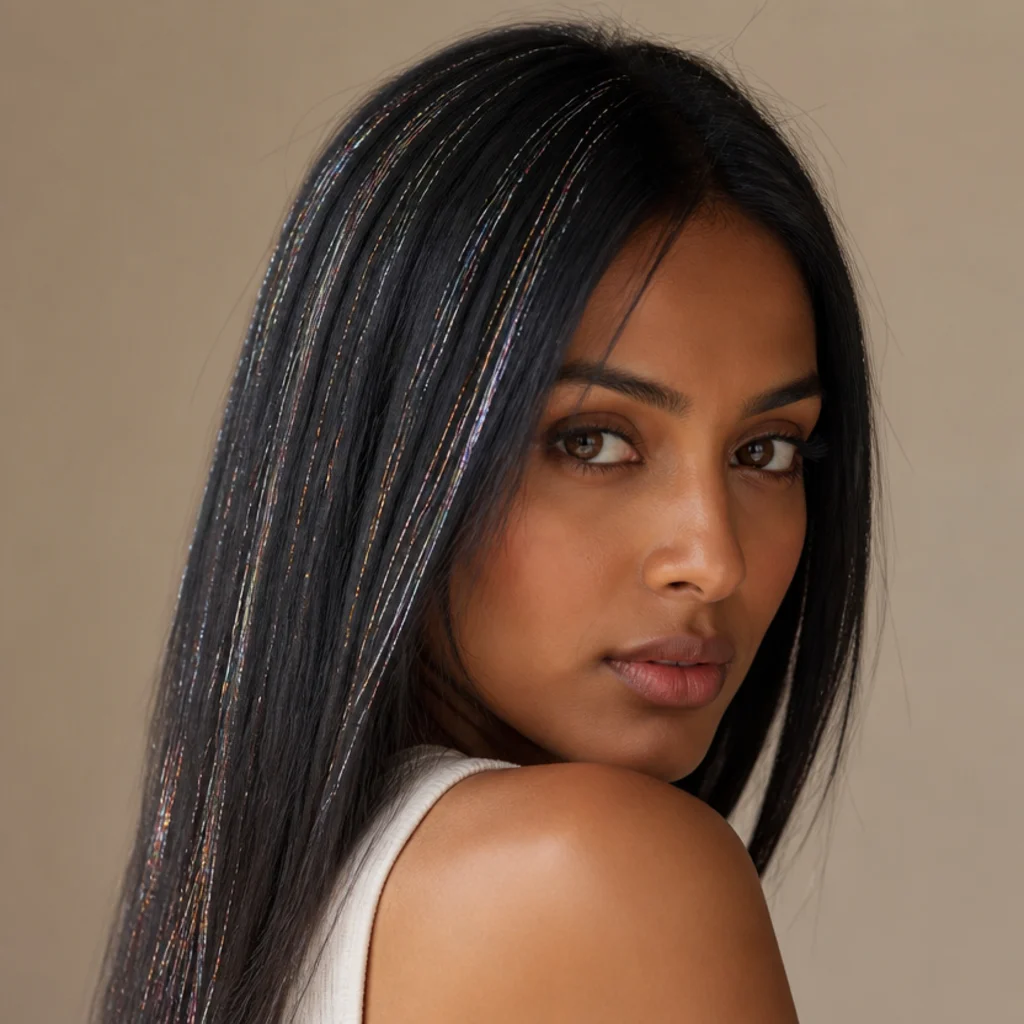
Silver and iridescent tinsel gives you the highest contrast against jet black hair, which is why it reads so deliberate. The dark base soaks up so much light that even a modest amount of hair tinsel on black hair looks like intentional sparkle instead of stray shine. Concentrate strands through the top two layers so the shimmer sits where light hits first, and go for a true cool silver or a clear iridescent that flashes blue and violet — a warm pewter will just muddy against black. Straight, silk-pressed, and blown-out textures show it best, since strands lie flat and trace a clean line of reflection. Tie-in application is damage-free, and strands hold for roughly a month with careful washing. Pro tip: keep daytime density restrained, around 15 to 25 strands, then have more added for an event — black hair magnifies contrast, and a heavy hand tips theatrical fast. Tell your stylist you want "cool-toned iridescent, concentrated up top, tight to my part," and save the denser version for stage or party lighting.
03Rose Gold Face-Framing Strands
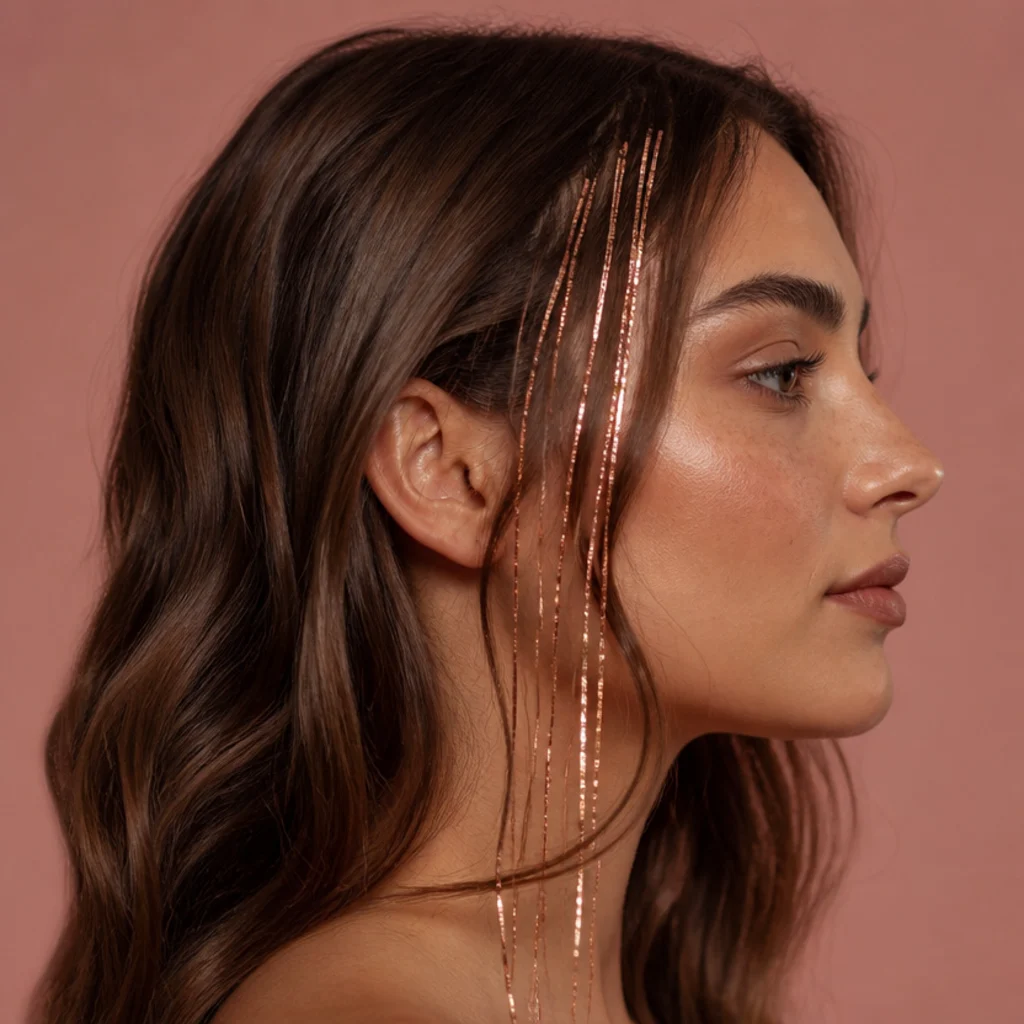
Concentrating tinsel around the front hairline is the most flattering placement for photos, full stop, and rose gold happens to be the rare shade that warms almost every complexion, fair to deep. A cluster of eight to twelve strands framing the face sits exactly where the light and the lens find you, casting a soft glow near the cheekbones like a subtle highlighter. Anyone who wears their hair parted and down most days benefits, and it's especially kind to cool and neutral undertones that can look sallow under straight yellow-gold. These strands live at the very front, so they take the most touching, tucking, and brushing — expect a few to loosen by week three and plan a quick re-tie. Pro tip: ask for the strands to be anchored a half-inch back from the hairline rather than right at the edge, so they stay secure but still swing forward into frame. Ask your stylist for "rose gold face framers, both sides of the part, set back from the hairline," and pair it with a soft bend that lets the strands weave in and out of view.
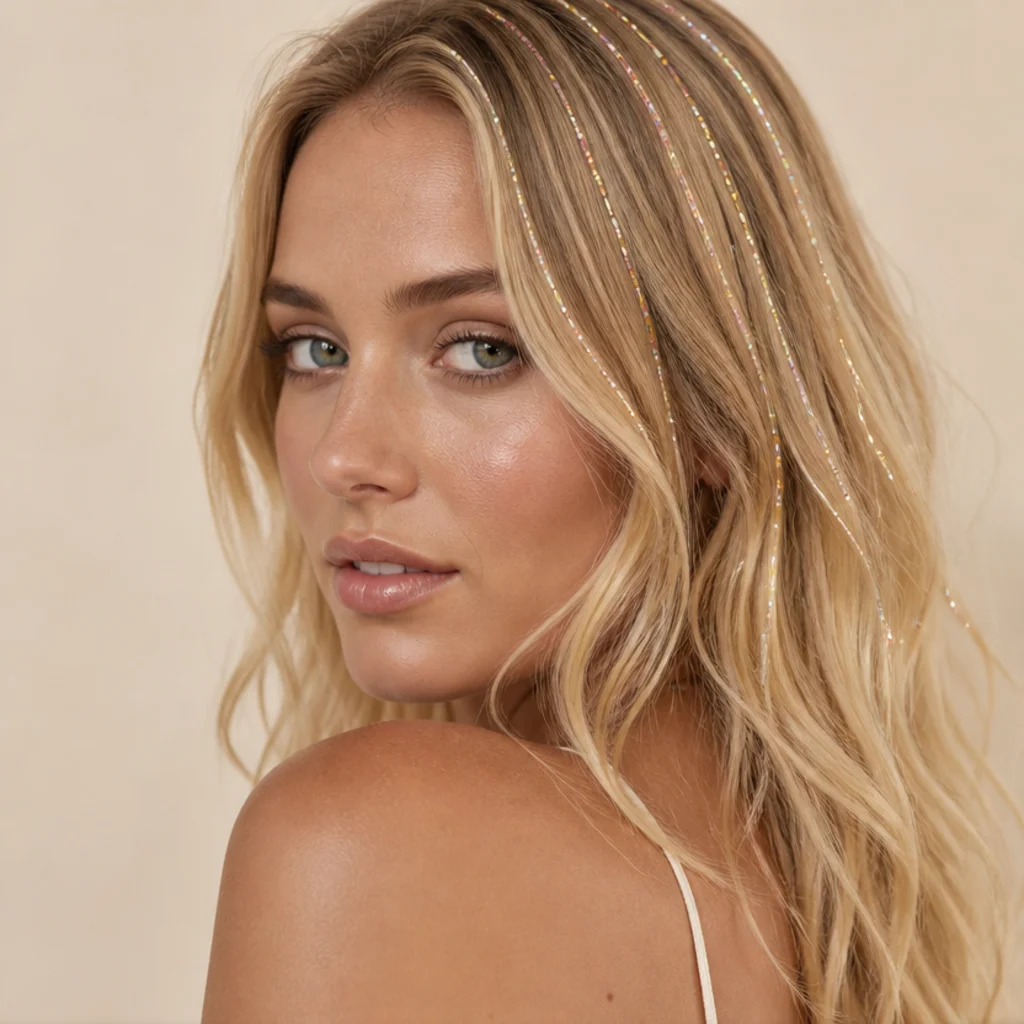
04Full Shimmer on Platinum Blonde
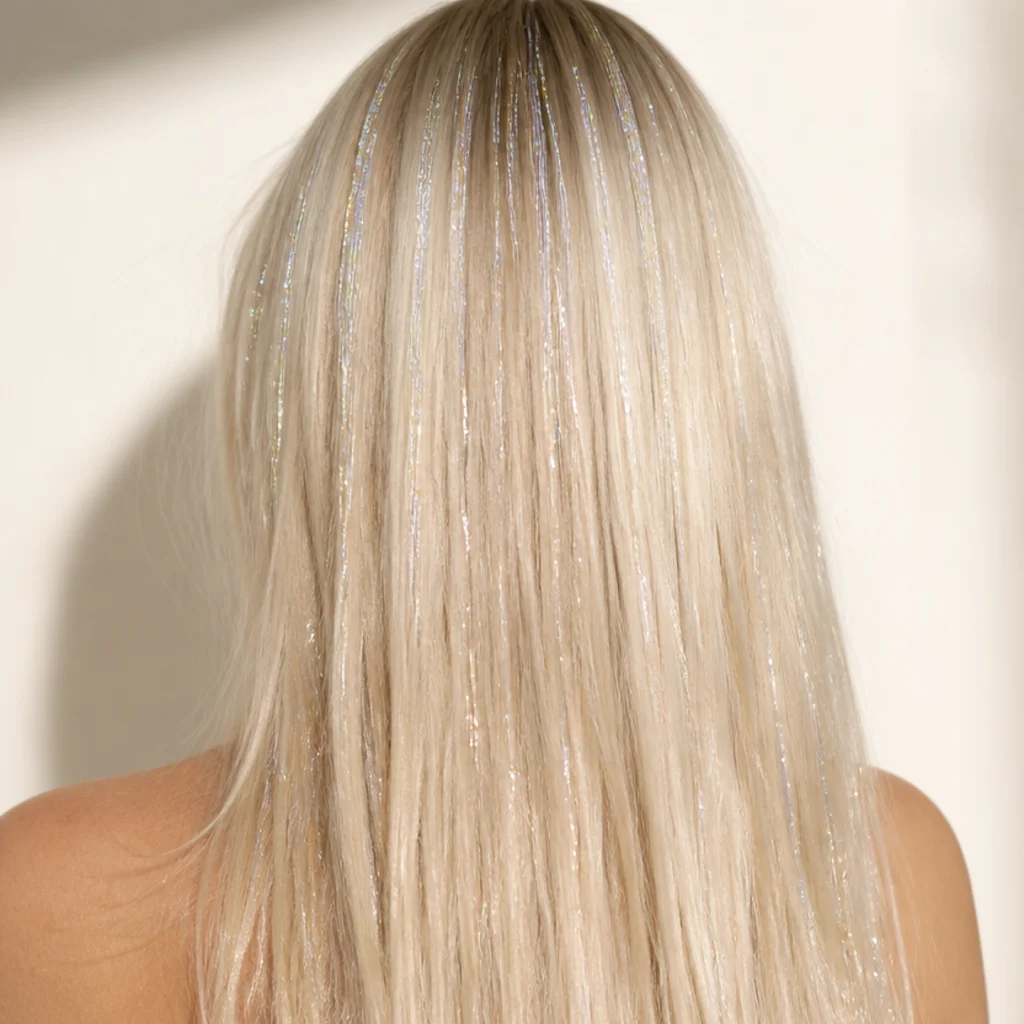
A dense install reads as continuous shimmer rather than countable strands, which is what you want for a true allover effect. On platinum, icy, and cool blonde hair, choose pearl, pale champagne-gold, or clear iridescent so the tinsel dissolves into the base and glows instead of striping. Warm gold on true platinum can pull the whole head yellow, so keep it cool to match. This is the look for hair tinsel blonde fans chasing maximum sparkle — it photographs like spun light under any flash. Plan on 60 to 100 strands, which means a longer appointment and a higher price tag, so budget for it. Upkeep centers on preventing tangles at the ties: brush gently from the ends up and sleep on silk or satin. Pro tip: on fine or bleach-fragile platinum, ask your colorist to spread the ties across more sections so no single anchor point carries too much weight. Tell your stylist you want a "full shimmer install, tone-matched cool to platinum, ties spread out," and save the densest versions for events rather than everyday wear.
05Hot Pink Tinsel on Dark Hair
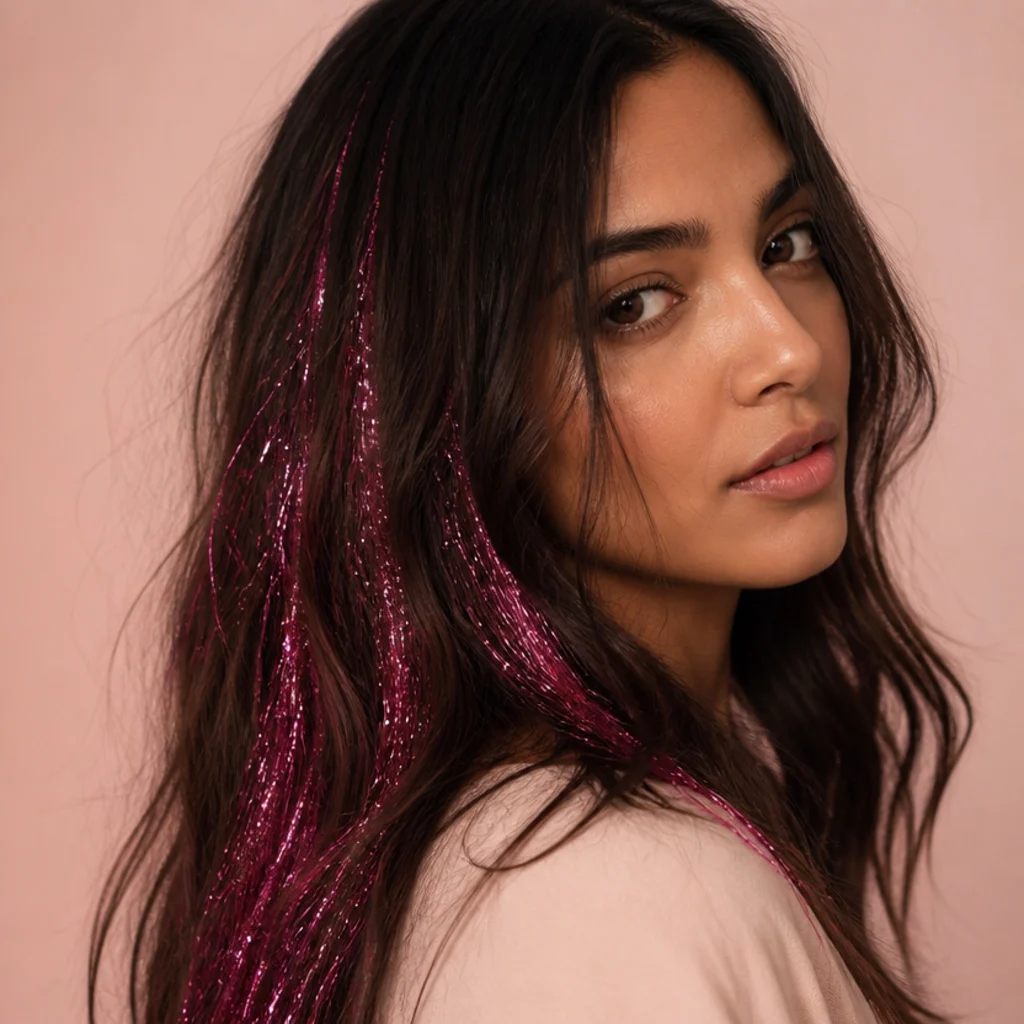
Pink hair tinsel is the easiest way to test a bold color with zero bleach and zero commitment. On dark brown and black hair, a true hot magenta pops with real saturation, because the deep base lets the color read as pure pigment — a softer bubblegum pink can disappear on very dark hair, so go vivid if you want it seen. Cluster the strands through the mid-lengths and ends where movement shows them off, rather than scattering them thin where they vanish. It's a good fit for anyone curious about a pink streak but not ready for the upkeep and root-blur of dyed fantasy color, and it's a repeat favorite for concerts, birthdays, and Pride. Tie-in strands mean no damage and same-day removal: slide the bead down and comb it out. Pro tip: cluster the color slightly off-center toward your dominant side so it frames your face in selfies instead of hiding at the back. Ask your stylist for "vivid hot pink, clustered low and toward the front," and keep heat tools well clear of the strands to protect the coating.
Save this to Pinterest to build your tinsel mood board.
06Holographic Rainbow Peekaboo
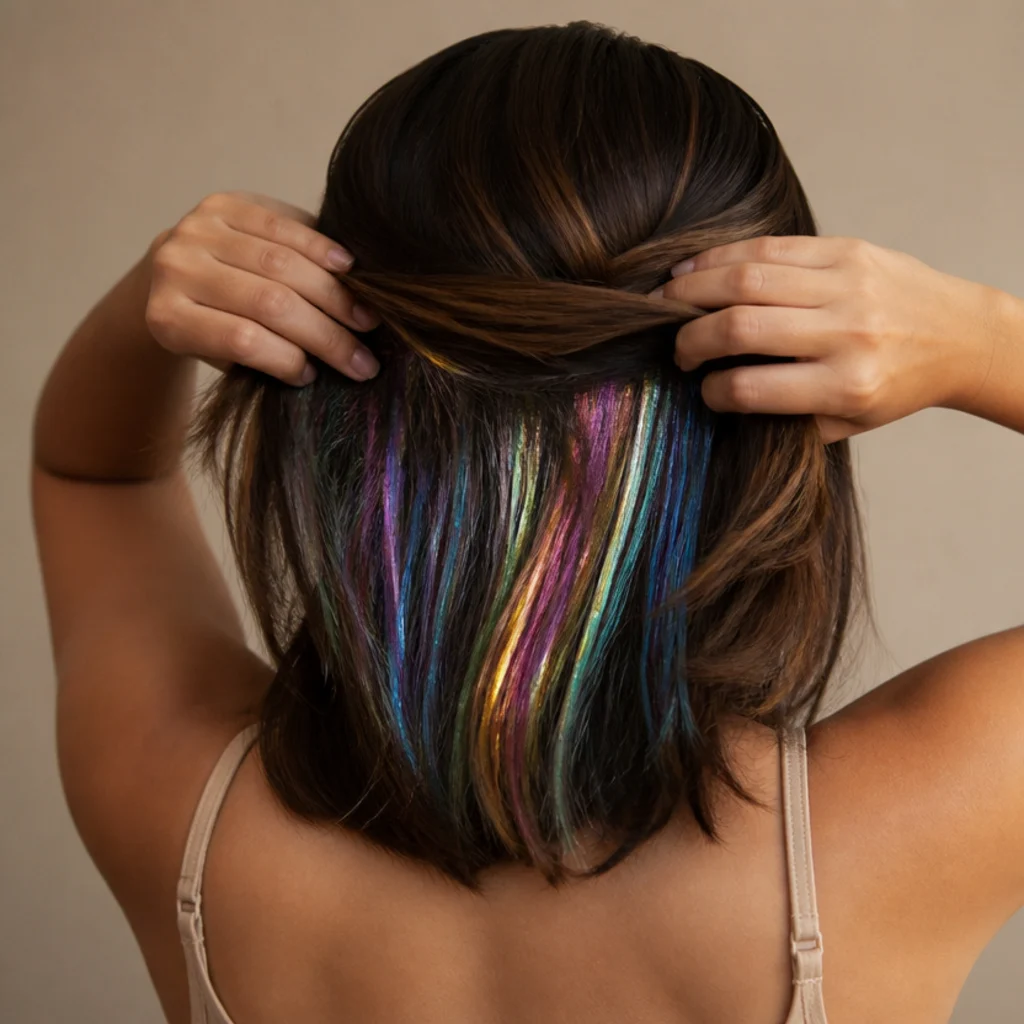
A peekaboo placement tucks multicolor tinsel into the under-layers so it flashes only when you flip your hair, tie it up, or the wind catches it. Holographic rainbow strands shift hue as they move, which keeps them feeling iridescent and modern instead of themed or juvenile. It's ideal if you need a polished, professional front for work but want a private surprise underneath — and it works across every base color, since the top stays entirely natural. Because the strands are sheltered in the lower layers, away from brushing and styling, they tend to survive the full six weeks with little loosening. Pro tip: have the tinsel set in the nape and just below the occipital bone, the zone that lifts into view when you sweep your hair over one shoulder, so the reveal feels deliberate rather than random. Tell your stylist you want "holographic rainbow in the underneath section only, set low at the nape." You'll need enough length to layer over the strands, so roughly shoulder length and down.
07Copper Tinsel for Auburn Hair
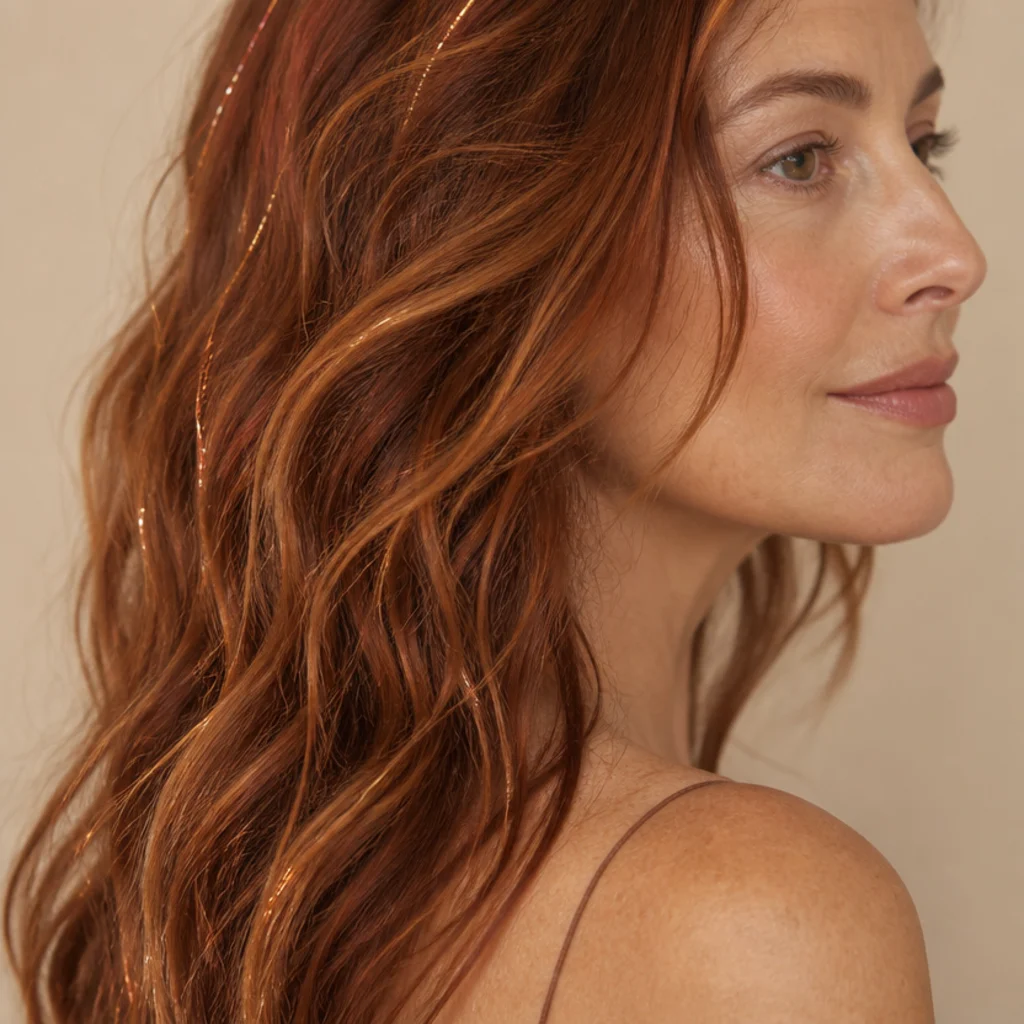
Copper and bronze tinsel is the tone-on-tone move for red, auburn, and ginger hair — it amplifies the warmth already there instead of adding a contrasting note. Blended through the waves, it looks like the sun singled out a few strands rather than anything added. Warm-toned natural redheads, copper balayage, and anyone with a ginger gloss get extra dimension from it without more color processing. Against cooler mahogany reds, edge toward a rosier bronze so it doesn't read orange. A medium scatter of 20 to 30 strands gives glow without tipping into obvious sparkle, which keeps it wearable in daylight and at the office. Pro tip: mix two adjacent shades, a lighter copper and a deeper bronze, so the tinsel reads as a multi-tonal highlight rather than one flat metallic line. Upkeep is the usual: gentle wash, no direct heat on the coating. Describe it to your stylist as "copper and bronze tinsel to match my red, dispersed for dimension" — it's the smartest pick if you want tinsel that still passes as natural in daylight.
08Tinsel Woven Into a Fishtail Braid
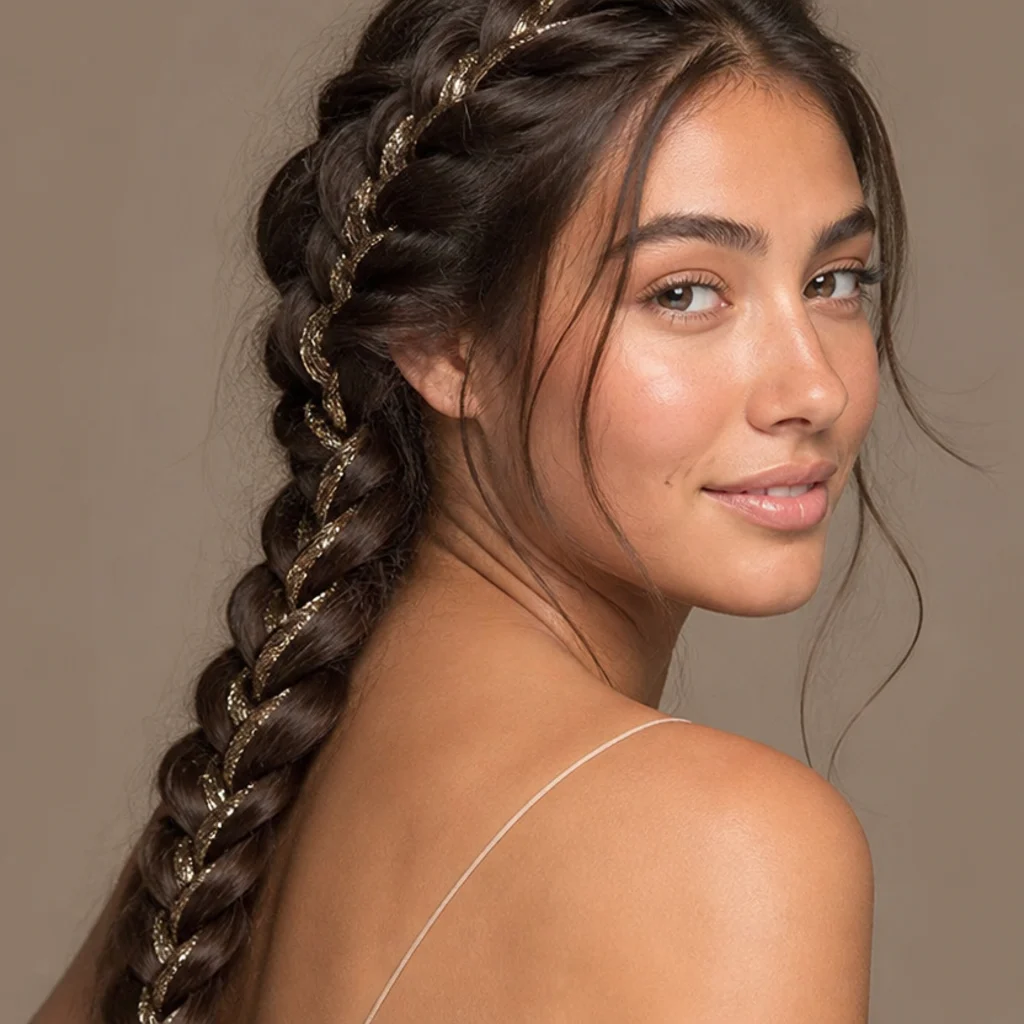
Weaving tinsel into a braid turns a simple plait into something intricate, since the strands trace the pattern and outline every crossing. A loose fishtail with gold or champagne tinsel worked through each pass shows the shimmer as a defined ribbon of light rather than a random scatter. Anyone with hair long enough to braid can wear this, and it dresses up beautifully for weddings, festivals, or a dressier day at the office. Temporary clip or tie-in strands let you braid them in fresh each time and take them out that night; bonded strands just follow the braid whenever you create one. Pro tip: gently pancake the braid, easing each loop outward once you finish, so the plait widens and exposes more of the woven tinsel instead of burying it in a tight rope. Ask your stylist for a "tinsel-friendly fishtail with strands worked into each section, then loosened," and keep the braid airy and slightly undone so light can actually reach the strands.
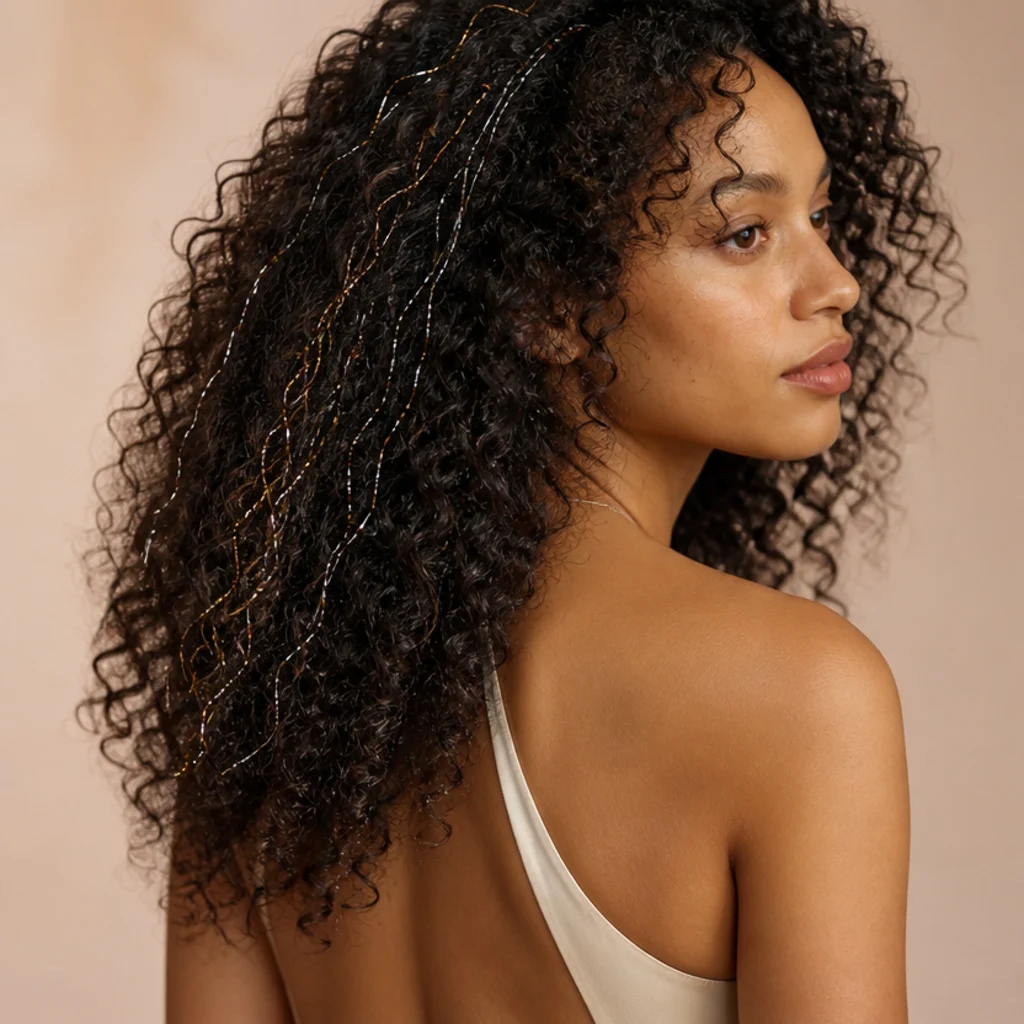
09Curly Tinsel Halo on Natural Coils
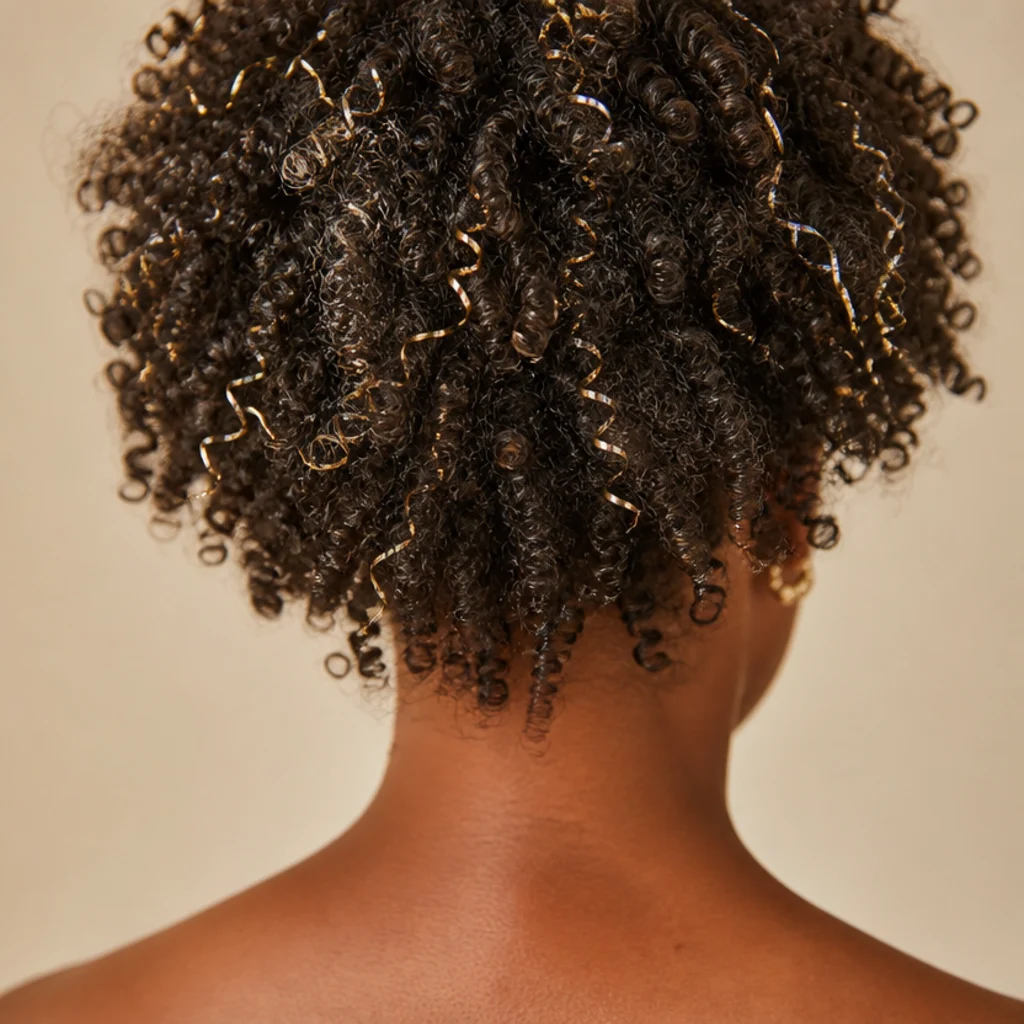
Curly hair tinsel needs a different strategy than straight hair. Because coils spring up and travel, strands get tied at the root and left long so they coil along with your natural pattern and peek through the texture instead of hanging limp. A crown-focused halo of gold or iridescent strands catches light at the top, where curls sit densest and the shine has the most surface to bounce off. It works on every curl and coil pattern, from loose 3A waves to tight 4C, adding glimmer without weighing the pattern down or disrupting definition. Stick with tie-in application at the base so wash day, refresh, and scrunching stay exactly as they were. Pro tip: place tinsel on dry, stretched hair so the strand length matches your curl shrinkage — a strand cut to length on wet hair can end up far too long once the coil bounces back. Tell your stylist you want "tinsel tied at the root so it curls with my hair, focused at the crown," then scrunch and refresh as usual. The strands move with you.
10Champagne Strands for Ash Blonde
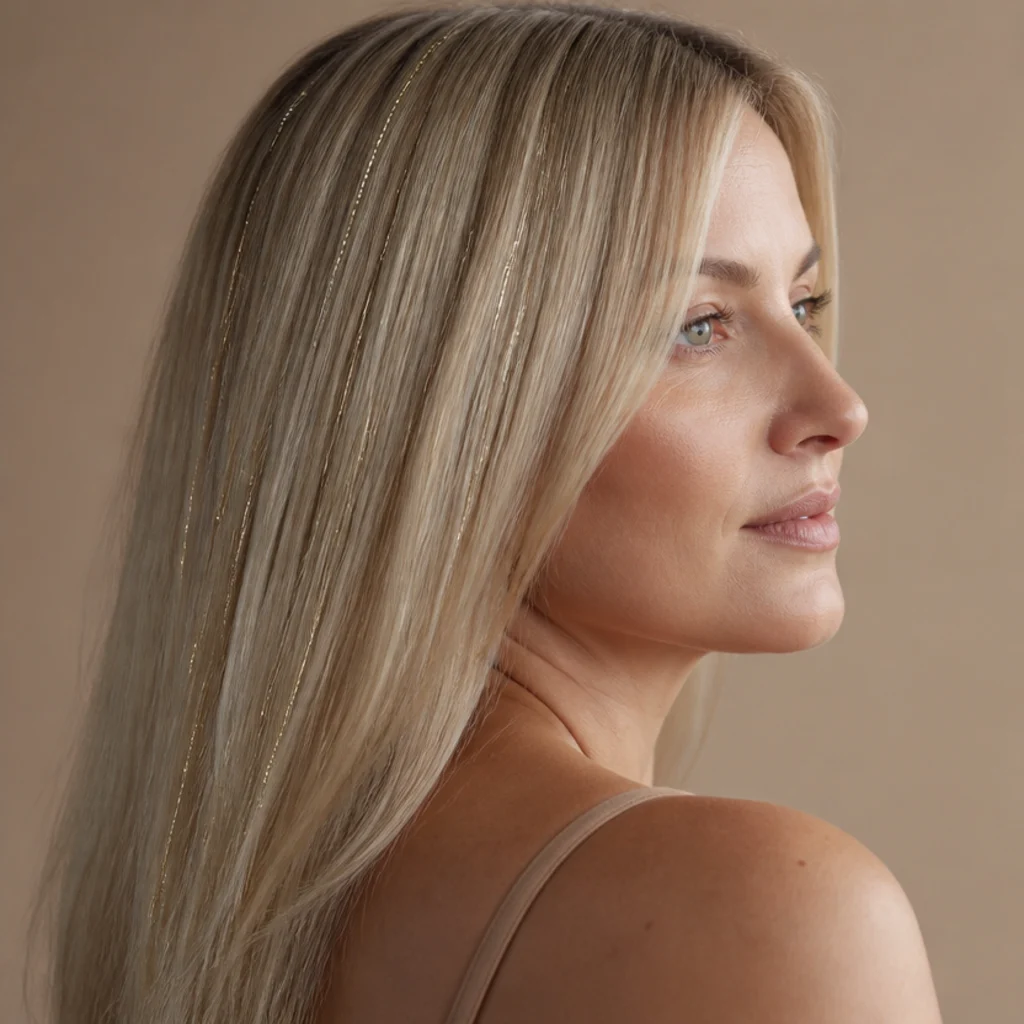
Not every blonde wants warm gold, and forcing it onto an ash base is the fastest way to look brassy. Champagne and cool pearl tinsel stays inside the same tonal family as ash, beige, and mushroom blonde, so it glows without pulling yellow. Blended evenly through the lengths, it gives a soft-focus sheen that reads expensive and understated, more lit-from-within than sparkly. Cool and neutral blondes who want their tinsel to whisper will like this, and it flatters fair, pink-toned skin that warm gold can overwhelm. A light-to-medium amount keeps it office-appropriate and easy to maintain across a month or so. Pro tip: if your ends are lighter than your roots, ask for slightly denser placement through the lengths and ends so the tinsel follows your existing gradient instead of sitting heaviest at the darker top. Ask your stylist for "cool champagne tinsel, tone-matched to ash, evenly dispersed with weight toward the ends" — it's one of the most versatile picks here, reading as a genuine highlight in almost any light.
Save this to Pinterest and note which shade matches your base.
11Deep Red Tinsel on Black Hair
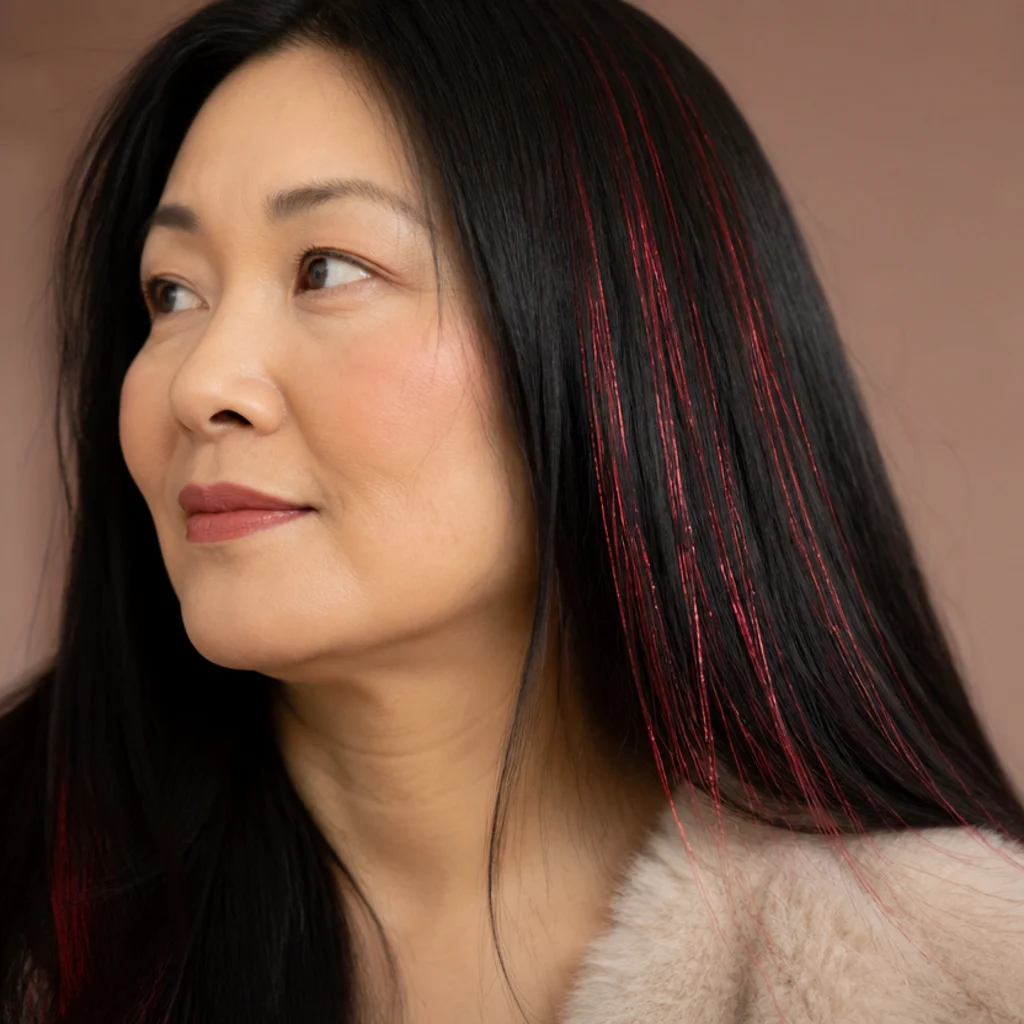
Deep ruby and burgundy tinsel gives black hair a rich, moody flash of color that feels more sophisticated than any bright shade. The dark base lets the red glow through only when light hits it, so it stays quiet and near-invisible indoors, then ignites under warm lamps and evening light. It's a beautiful option for hair tinsel black hair looks that lean elegant rather than playful, and it suits autumn and holiday dressing especially, pairing well with jewel-tone knits and deep lip colors. Cluster the strands through the mid-lengths, where they catch against motion instead of sitting dormant at the crown. Tie-in application leaves the natural hair completely untouched. Pro tip: choose a wine-red or oxblood with a blue undertone rather than a tomato red — the cooler red stays refined against black hair, while a warm red can veer costume. Tell your stylist you want "deep oxblood tinsel, clustered, a tone that flashes not shouts," and keep the count moderate, around 20 strands, so it stays luxe rather than loud.
12Pastel Lilac Tinsel Accent
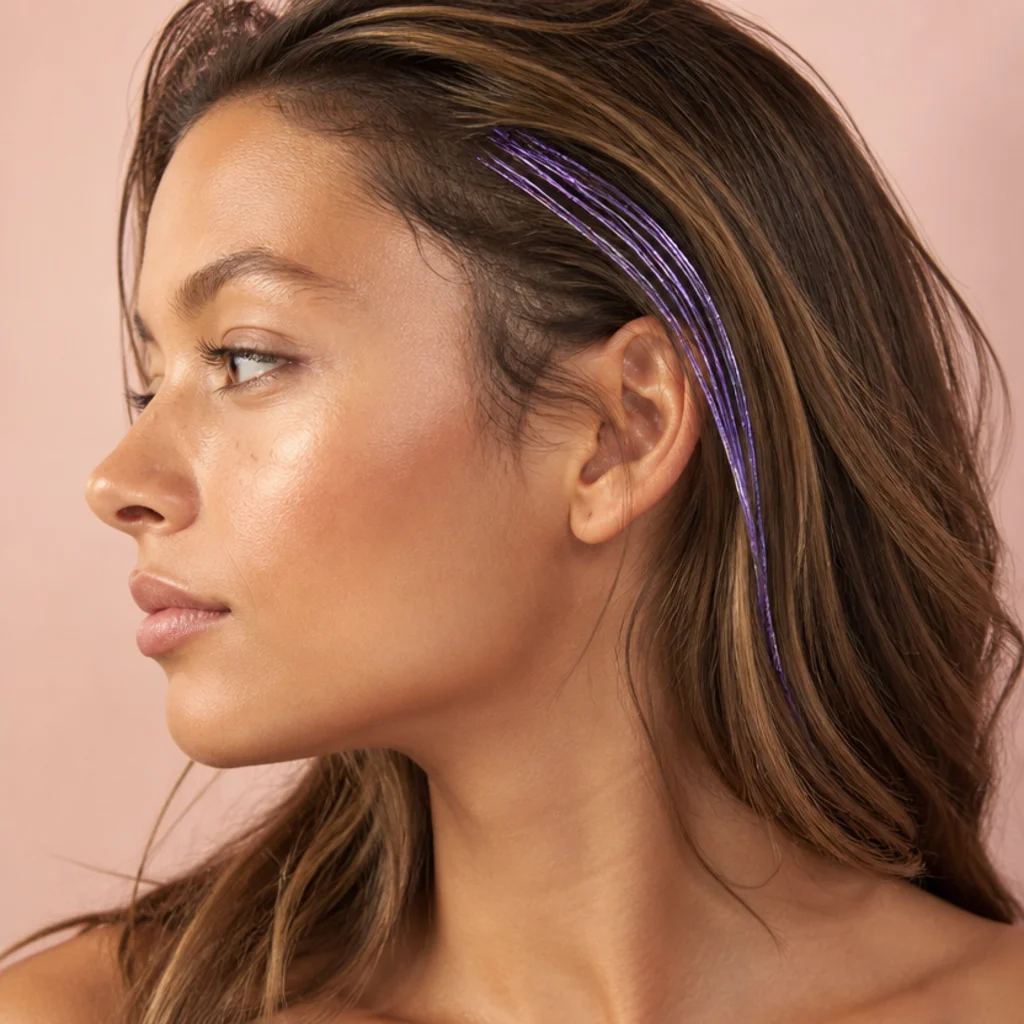
A small pastel accent is the gentlest entry into color tinsel, and the lowest-stakes way to find out if you like color near your face at all. A few lilac strands at the temple or tucked behind one ear cast a soft wash of color that suits light brown, blonde, and already pastel-dyed hair, where the pale base lets the lavender read true. It's a modest cluster of five to eight strands, which makes it the most beginner-friendly at-home application and the cheapest to place, DIY or in the chair. It's also the easiest to conceal: sweep a section over it whenever you want it gone before you formally remove the strands. Pro tip: on darker bases where pastels tend to vanish, either double the cluster density or switch to a lilac with a metallic or holographic finish so it reflects light and stays visible. Ask for or apply "a few lilac accent strands at the temple, behind the part" — pastel tinsel always shows best against lighter hair, so plan density around your base.
13Tinsel Money Piece at the Part
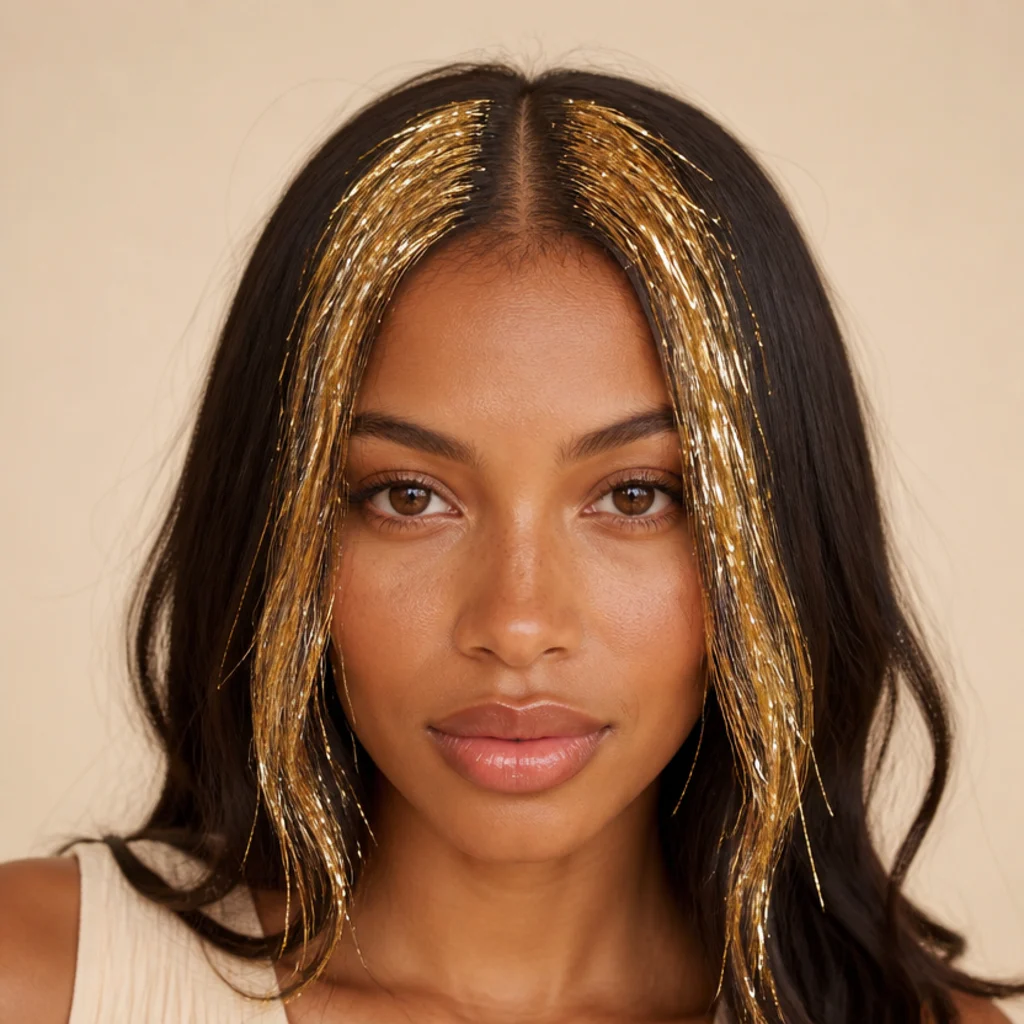
Borrowed from the money-piece concept in color trends, this concentrates a bold stripe of tinsel on the two front sections framing the face at the part. It reads graphic, modern, and unmistakably intentional, with the sparkle parked exactly where you and the camera look first. It works best on a defined center or deep side part, for anyone after an editorial, high-impact effect rather than a subtle scatter. These strands sit at the very front and take the most handling, so expect to re-tie a couple as the weeks pass — the same way a bleached money piece needs the most toning. Pro tip: match the tinsel's metal to your jewelry and usual makeup: gold if you wear warm gold and bronzey tones, silver if you lean cool and platinum, so the whole face reads coordinated instead of clashing. Describe it to your stylist as "a tinsel money piece, dense on the two front panels at the part." Both metals work — gold for warmth, silver for a cooler, high-fashion edge.
14Sparkle Ponytail for an Event
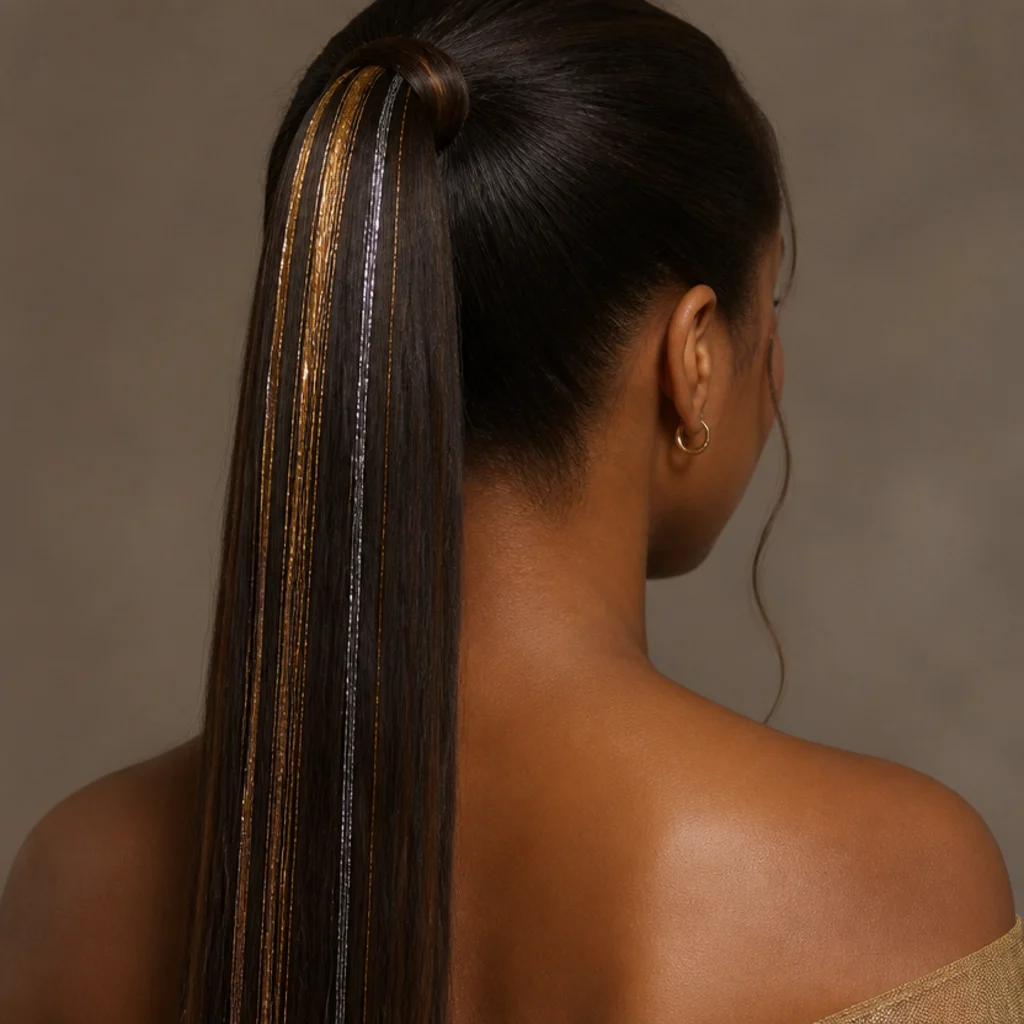
A high, sleek ponytail shows tinsel off naturally, because every strand hangs in one clean, visible sweep instead of disappearing into layers. Run mixed gold and silver strands through the length of the tail for a finish that swings and shines all night under moving light. It's an event-first style, built for parties, performances, red-carpet moments, and nights out, and it works on any hair color since the sparkle itself carries the look. Clip-in tinsel extensions attached at the ponytail base give you the full effect for one evening with nothing to remove afterward, which makes it a commitment-free option. Pro tip: wrap a small section of your own hair around the elastic to hide it, then anchor the clip-in tinsel just beneath that wrap so the strands blend into your hair's starting point instead of visibly clipping on. Ask your stylist for "tinsel run through a high pony, mixed metals, clip anchored under the wrap," and smooth the base with a boar-bristle brush so the strands fall in a clean vertical line.
15Baby Blue Tinsel on Balayage
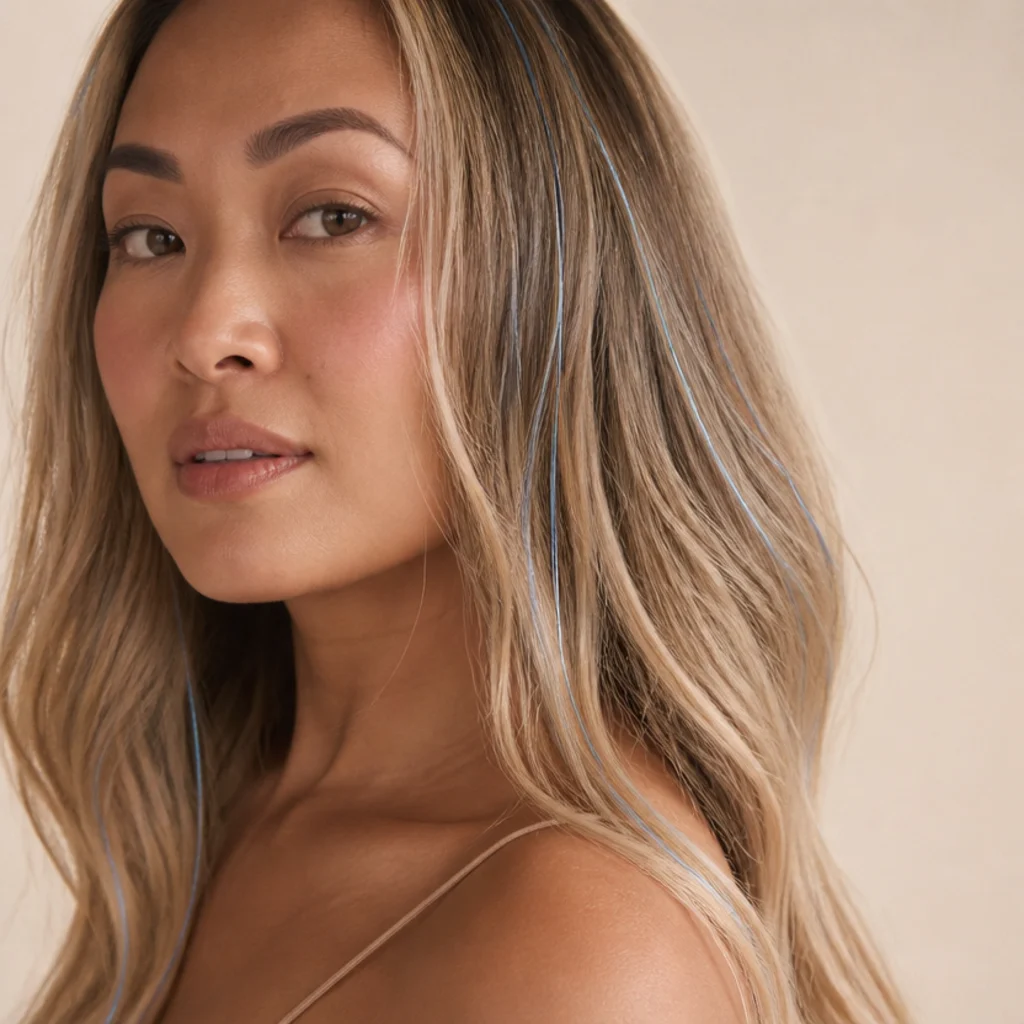
Soft baby blue tinsel plays beautifully against warm blonde and balayage, striking a cool contrast that feels fresh and sorbet-bright for spring and summer. Scatter the strands through the lightened ends, where the balayage is palest, so the blue reads clearly instead of muddying against darker regrowth up top. Blondes and lightened brunettes who want a whisper of fantasy color, without committing to a full pastel dye and the purple-shampoo upkeep it demands, will like this. A medium scatter keeps it wearable for daytime, and because the ends are so light, even a handful of strands register. Pro tip: cool blue can clash with a warm golden balayage in photos, so ask for a powder or sky blue with a slightly gray, dusty cast rather than a bright primary blue — the softer tone bridges warm and cool. Tell your stylist you want "dusty baby blue tinsel through the balayage ends, dispersed." It's a nice alternative if you like the idea of pink or lilac but want something cooler and less sweet.
Save this to Pinterest to compare color options side by side.
16Gold Tinsel in a Half-Up Style
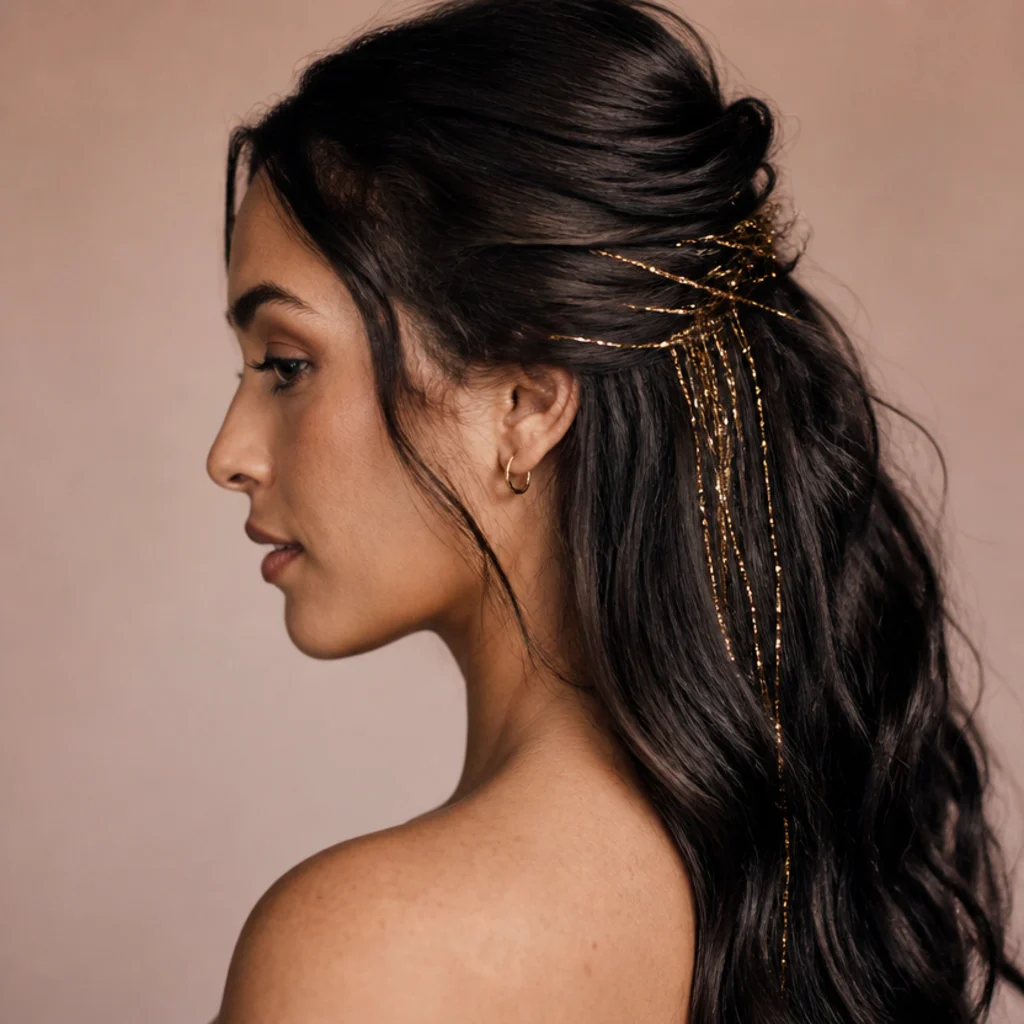
A half-up style gathers tinsel into the top section so the strands cascade down into the loose hair below, doubling the visible sparkle right where the two meet. Gold strands here look polished and pretty, at home for a bridesmaid role, a garden party, or a daytime celebration. It suits medium to long hair and anyone who likes their hair off the face but not fully pinned up. Tie-in strands placed through the crown fall naturally into the half-up gather, so the placement does double duty whether you wear it up or down. Pro tip: set the strands slightly above where you'll clip or tie the half-up, so the tinsel spills over the gathered section like a waterfall instead of getting buried inside the knot. Ask your stylist for "gold tinsel through the crown so it shows both down and in a half-up," and leave the lengths in soft, undone waves so the strands thread visibly through the movement below the clip.
17Emerald Green Tinsel for Bold Looks
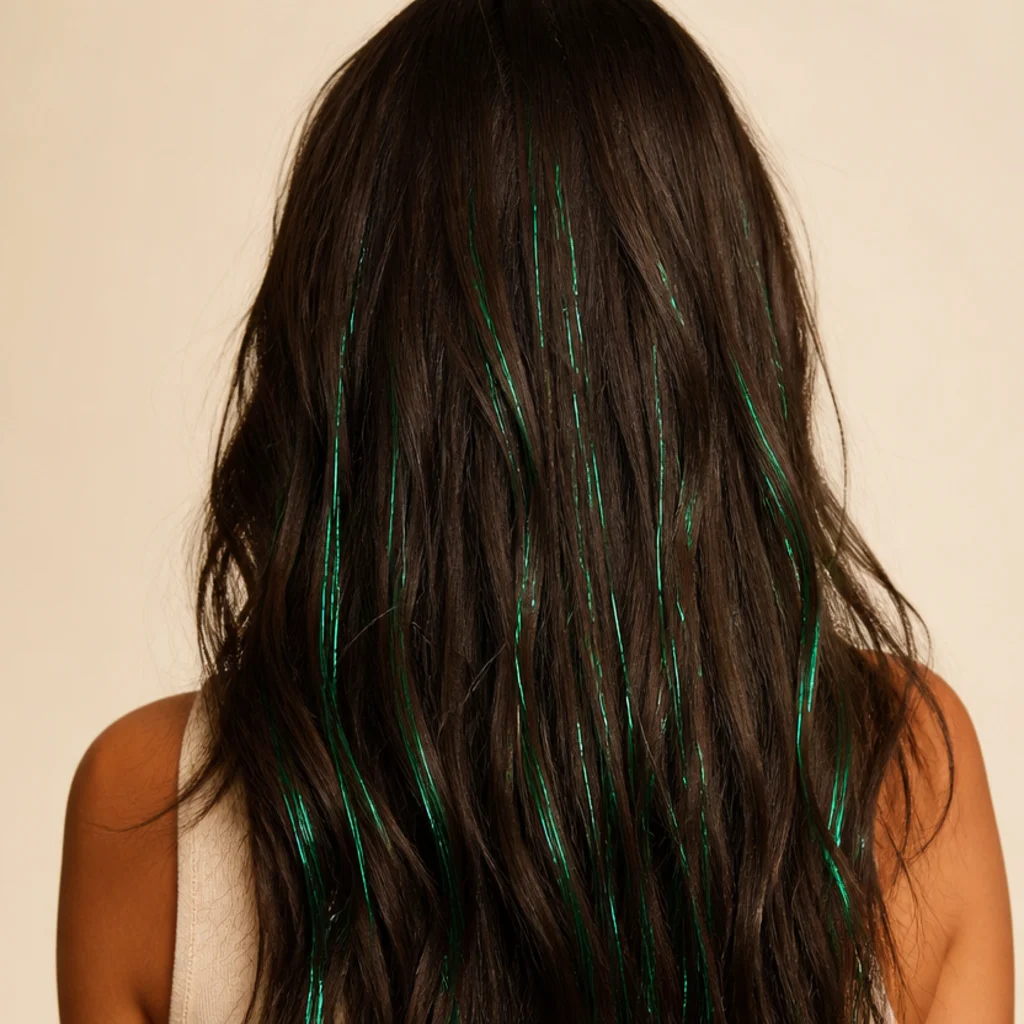
Emerald and jewel-green tinsel is for anyone who wants a color that feels rich and gemlike rather than neon or novelty. On dark brown and black hair the green glows with real depth, like light through a stone; on lighter blonde and brown bases it reads brighter and more playful, so calibrate density to the effect you're after. Cluster the strands rather than scattering them — jewel tones look most intentional and expensive when they're concentrated in one deliberate zone. It suits confident dressers, holiday-season looks, and anyone building a maximalist outfit around one hero color. Pro tip: let the emerald be the only statement. Keep makeup and accessories quiet, or echo it with a single green element like an earring, so the tinsel leads instead of competing. Tell your stylist you want "emerald jewel-green tinsel, clustered for saturation," and as with every colored tinsel, keep flat irons and wands away from the coated strands to preserve the shade.
18Tinsel Threaded Through Box Braids
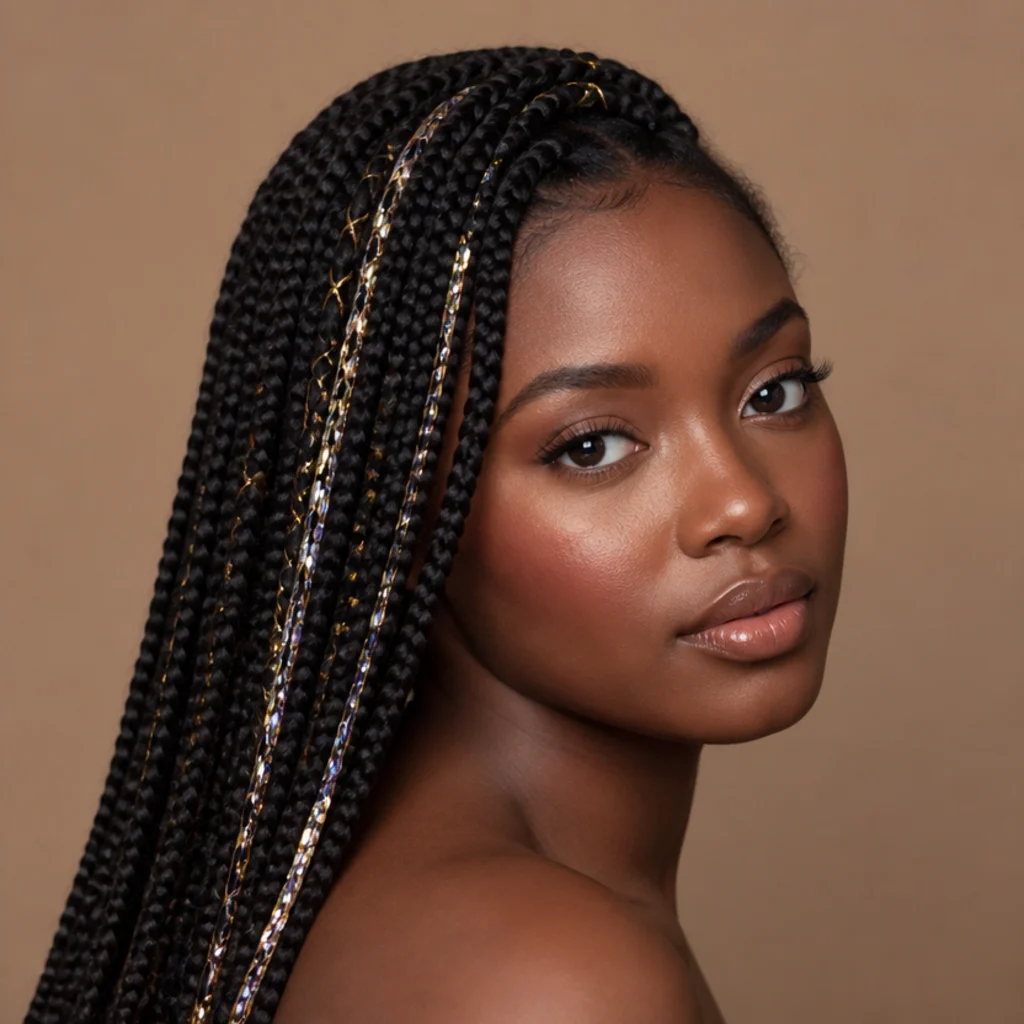
Threading tinsel into box braids or knotless braids adds shimmer that lasts exactly as long as the protective style, since the strands get wrapped in as each braid is installed rather than added afterward. Fine gold or iridescent tinsel run down a selection of braids gives a scattered, moving sparkle that swings with them and reflects beautifully in the sun. It's one of the longest-wearing ways to enjoy tinsel, holding for the full multi-week life of the braids with essentially no daily upkeep beyond your normal scalp and edge routine. Pro tip: decide the density before installation and spread the tinsel braids evenly across the whole head rather than concentrating them in one patch, so the shimmer distributes naturally as you part, gather, or style up. Ask your braider to "wrap tinsel strands into a scattered selection of braids as you install, spread evenly." You can control the look from a subtle few to a heavily shimmered set just by choosing how many braids get it, and it photographs especially well swept over one shoulder.
19Mixed-Metal Tinsel for Short Hair
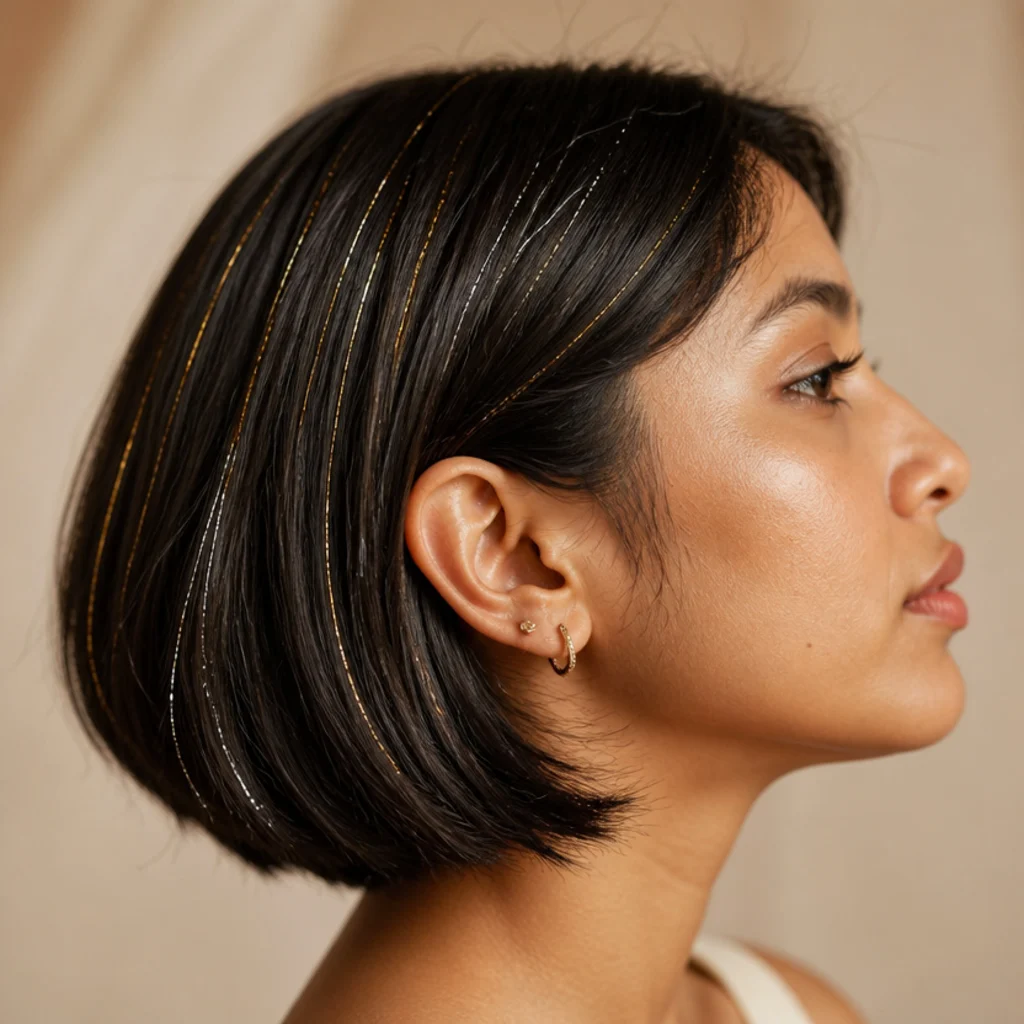
Short hair holds tinsel just as well as long hair; the placement just shifts up to the top layers, where a bob, lob, or grown-out pixie shows off its movement. A mix of gold and silver strands through the crown of a chin-length cut throws light every time you tuck a side behind your ear, and the two metals keep it from looking like one flat stripe. If you assumed tinsel demanded length, this proves otherwise, and it flatters both warm and cool complexions precisely because the metals are mixed. Keep strands in the upper sections, since anything placed underneath gets lost in the shorter interior layers and never sees light. Pro tip: on a blunt bob, place the strands to fall along the perimeter line where the hair swings, so the sparkle traces the shape of the cut rather than sitting static at the roots. Ask your stylist for "mixed gold and silver tinsel through the top of my bob, following the perimeter." Short hair gets styled often, so stick with tie-in strands and just avoid clamping the iron over them.
20Festival Tinsel with Space Buns
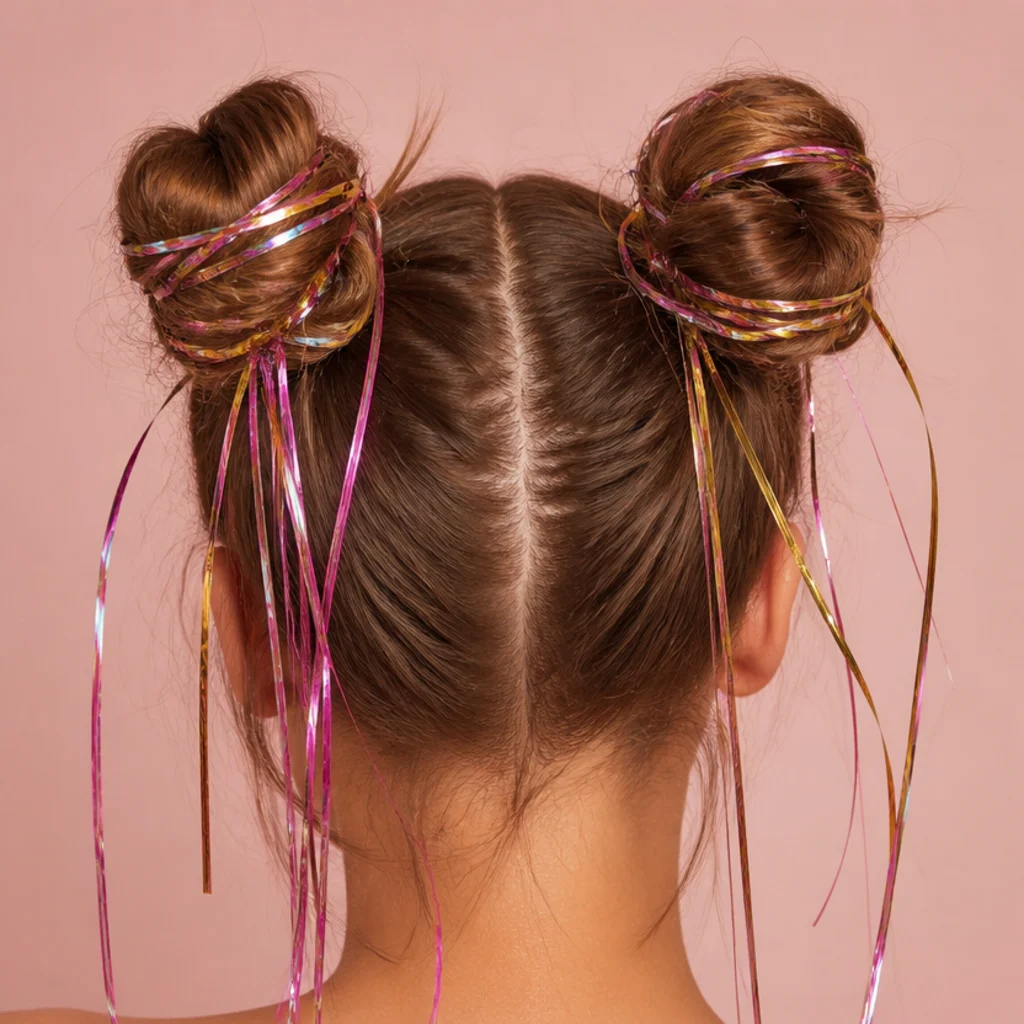
For full festival energy, wrap colorful tinsel around double space buns so the strands coil across each bun and trail loose, catching light with every turn of your head. Mix pink, gold, and holographic strands for a playful, maximalist finish built for concerts, festivals, raves, and themed parties. It works on any hair long enough to gather into two buns, and it's the ideal use for temporary clip-in or wrap-in tinsel you take out the same night, so there's nothing to maintain afterward. Form and secure the buns first, then wind the strands around the base of each and tuck the ends so a few tails hang free and move. Pro tip: anchor the wrapped tinsel with two small bobby pins crossed into each bun, and leave the trailing pieces slightly different lengths so they read as intentional streamers rather than stray strands. Ask for or DIY "space buns with tinsel wrapped at the base and trailing in mixed lengths." It's the most costume-forward look here, so lean fully into the color and volume.
Pro Tips from the Editor
- Match the metal to your undertone first, the color second. Warm skin and honey, caramel, or copper hair glow with gold, copper, and bronze; cool skin and ash, platinum, or blue-black hair stay clean with silver, pearl, and iridescent. Get this right and even a bright color reads intentional.
- Density is a dial, not a switch. Start with 15 to 25 strands for everyday wear. You can always add more for an event, but you can't un-see an over-shimmered head, so book a light install first if you're unsure.
- Protect the coating from heat. The reflective and colored finishes dull or scorch under direct iron and wand contact. Style your hair first, then place the tinsel, or work the hot tool around the strands and never over them.
- Sleep smart to hit the full six weeks. A silk or satin pillowcase and a loose braid or low pony at night keep the ties from tangling and loosening early, especially for face-framing strands.
- Wash gently and let strands air-dry when you can. Cool-to-lukewarm water, a sulfate-free shampoo worked at the scalp, and blotting instead of rough towel-drying all extend wear and keep the shine bright.
- Photograph in side or backlight. Tinsel is designed to reflect, so it reads flat in dull front light and dazzles when a window or lamp sits to the side or behind you — good to know before you shoot the look.
- Remove by sliding the bead, never by pulling. Whether at home or in the chair, the strand should come out by opening or sliding the bead down the section. Yanking risks taking your own hair with it.
How to Choose / Get the Look
Choose by your base color. Your natural or dyed shade decides which tinsel actually shows up. Gold, copper, and champagne behave like natural highlights and suit brunettes, redheads, and blondes chasing subtlety. Silver, iridescent, deep red, and jewel tones give the strongest contrast on black and dark hair. Bright pink, blue, green, and pastels are your no-bleach color trial — they punch hardest against dark bases and stay softer, though still visible, on light ones.
Choose by placement and feature. Face-framing and money-piece styles maximize sparkle in photos and flatter the cheekbones. Peekaboo and nape placements keep it discreet for work. Crown-focused halos suit curls and coils, and a full-shimmer install is an event piece, not a daily one. Round faces gain from vertical face-framers that lengthen, while a defined part flatters a money piece.
Prep and application. Tie-in strands are the beginner-friendly, damage-free choice you can do at home with a micro-bead and a small crochet hook, and they last four to six weeks. Heat-bonded strands last longer but should be placed and removed by a professional. Start on clean, dry, detangled hair, and match colored-tinsel length to your curl shrinkage if your hair is textured.
Longevity and when to see a pro. For maximum wear, avoid direct heat, use a silk pillowcase, and expect front strands to loosen first. See a professional for full-shimmer installs, heat-bonded application, any braided or protective-style placement, and removal you're not confident doing yourself. Undecided on density? Start light — adding is easy, subtracting is tedious.
| Placement | Density | Difficulty | Wear time | Best for |
|---|---|---|---|---|
| Subtle scatter | Light (15-25) | Beginner | 4-6 weeks | Everyday shine, natural highlight effect |
| Face-frame / money piece | Medium, concentrated | Beginner-Intermediate | 3-5 weeks (front loosens first) | Photos, cheekbone glow, editorial edge |
| Peekaboo / nape | Light-medium, hidden | Intermediate | Full 6 weeks | Work-friendly, private color |
| Full shimmer install | Heavy (60-100) | Advanced / pro | 4-6 weeks | Events, weddings, performance |
| Braided / protective style | Your choice | Pro (at install) | Life of the braids | Longest wear, low daily upkeep |
| Clip-in / wrap-in | Your choice | Beginner | One evening | Parties, festivals, zero commitment |
Frequently Asked Questions
How do you put tinsel in hair at home?
The most common at-home method is the tie-in. Fold a single strand in half over a small section of hair near the root, thread both strand ends and the hair through a tiny micro-bead with a crochet hook, slide the bead up close to the scalp, then clamp it flat with pliers. Many people add a small overhand knot in the strand for extra hold. It needs no heat and no glue, so it's beginner-friendly, though a mirror-and-clip setup or a friend's hands helps for anything at the back.
How long does hair tinsel last?
Tie-in strands typically last four to six weeks, loosening gradually as your hair grows and you wash it. Strands installed into braids last as long as the braids themselves, often several weeks. Heat-bonded strands last longest of all. Front and face-framing strands loosen first because they get the most brushing and touching, so those are the ones you'll re-tie or remove earliest.
Does hair tinsel damage your hair?
Tie-in tinsel is generally considered gentle, since it clamps around a small section with a micro-bead rather than using heat or adhesive, and it slides out for removal. The main things to avoid are ironing directly over the strands and pulling them out instead of sliding the bead down — both stress the hair. Heat-bonded application involves more, so have a professional handle placement and removal. This is general styling information, not medical or dermatological advice.
Can you use hair tinsel on curly or black hair?
Yes to both. On curly and coily hair, strands are tied at the root and left long so they coil along with your natural pattern, usually focused at the crown — placing them on dry, stretched hair helps you match the length to your shrinkage. On black and dark hair, high-contrast shades like silver, iridescent, deep red, and jewel tones show up best, while pale pastels tend to disappear. Both textures take tinsel beautifully.
How do you remove hair tinsel?
For tie-in strands, locate the bead, gently crimp or slide it back open, slide it down the section and off, then comb the strand free. If you knotted the strand, loosen the knot first. Working over a light-colored towel makes the fine strands easier to see as they come out. Never yank — sliding the bead is what protects your natural hair. For heat-bonded strands, see the professional who installed them.
How much does hair tinsel cost?
Cost scales almost entirely with strand count and whether you DIY. A reusable bead-and-hook kit for at-home tie-ins is inexpensive and covers many strands. In the salon, a small face-frame or money-piece add-on sits at the low end, while a full-shimmer install of 60 to 100 strands is a longer appointment at a premium price. Braided-in tinsel is usually priced as an add-on to the braiding service. Pricing varies by region and salon, so ask for a per-strand or flat add-on rate when you book.
Can you swim, shower, and wash your hair with tinsel in?
Yes. Tinsel is designed to stay put through normal washing, showering, and swimming. To protect both the strands and their wear time, use cool-to-lukewarm water, work a gentle sulfate-free shampoo at the scalp rather than scrubbing the lengths, and blot instead of rough-drying. Rinse well after chlorinated or salt water, and avoid wringing or piling wet hair on top of your head, which tangles the ties.
Can you use heat tools with hair tinsel?
You can heat-style your hair, but keep flat irons and curling wands off the strands themselves. Direct high heat dulls the reflective metallic finish and can scorch or discolor colored coatings. The reliable workaround is to curl or straighten your hair first and place the tinsel afterward, or weave the hot tool carefully around the strands. A cool blow-dry setting near the strands is fine.
Is hair tinsel appropriate for weddings or professional settings?
Yes, as long as you scale it to the setting. For weddings, a tone-matched gold, champagne, or pearl in a face-frame or half-up placement reads elegant and photographs like fine highlights. For the office, keep density light and lean on peekaboo or nape placements, or a subtle metallic scatter that passes as dimension. Save dense full-shimmer installs and bright fantasy colors for parties, festivals, and events where the look is meant to lead.