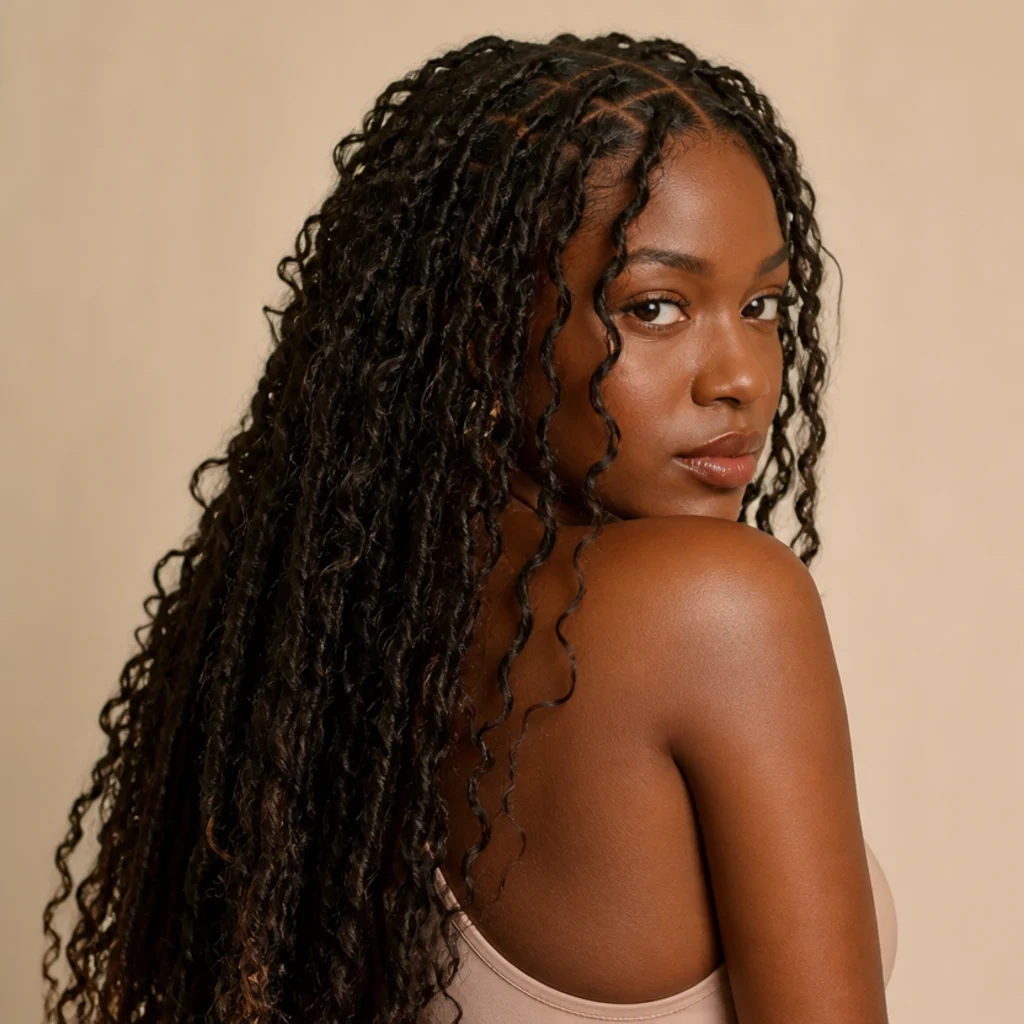
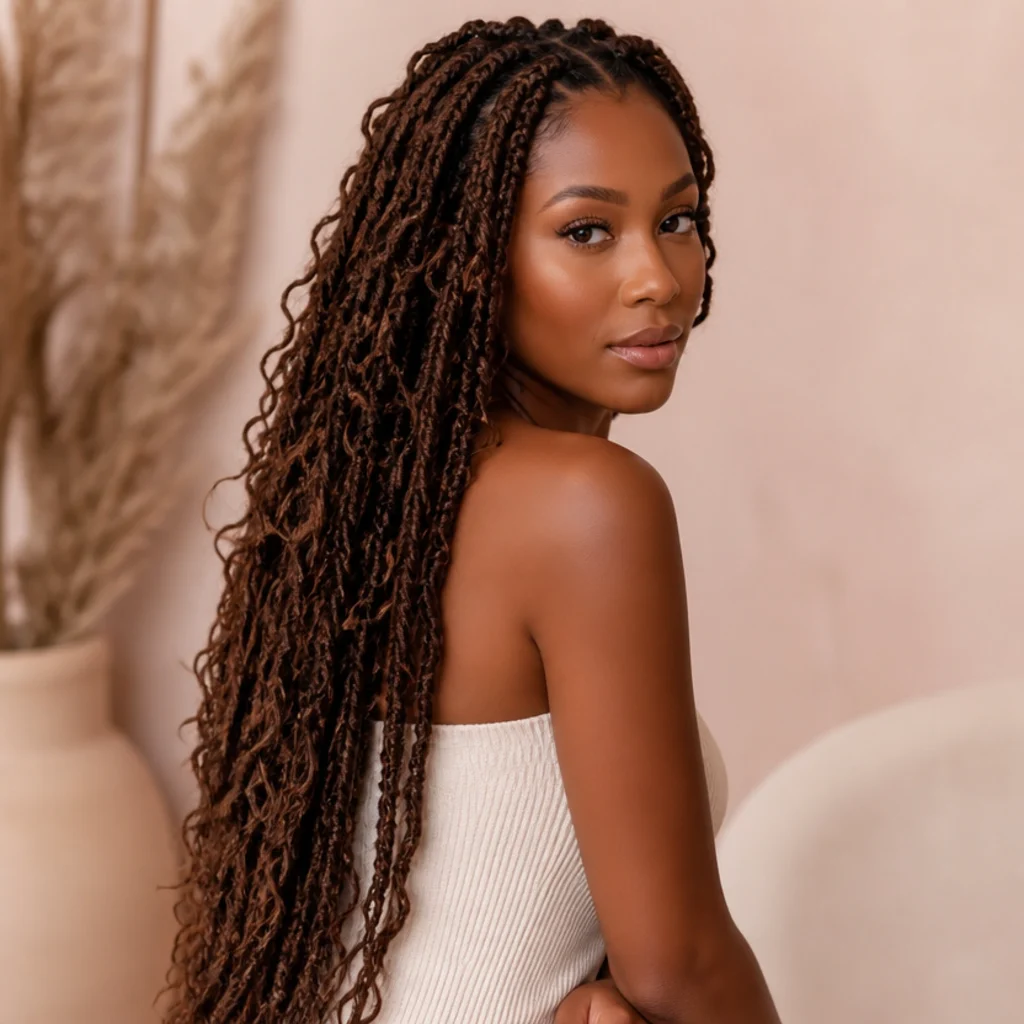
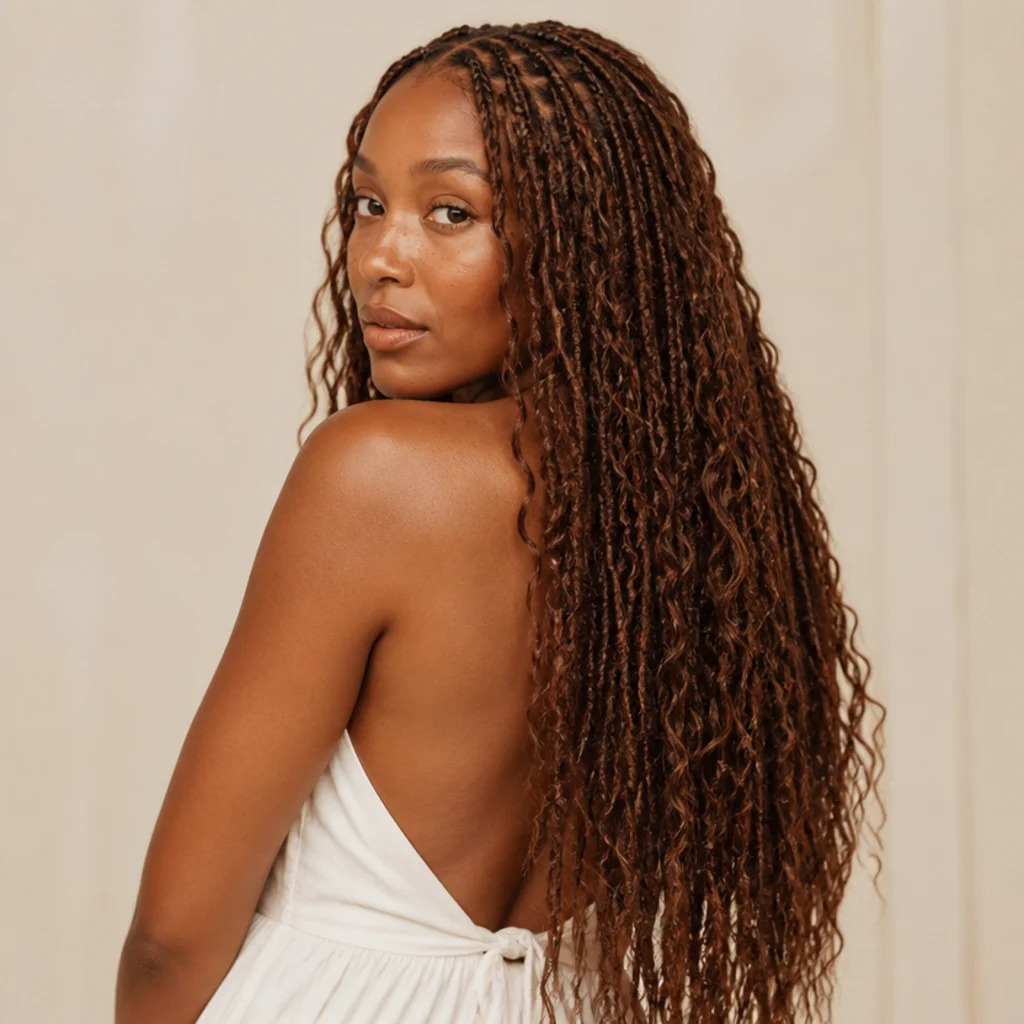
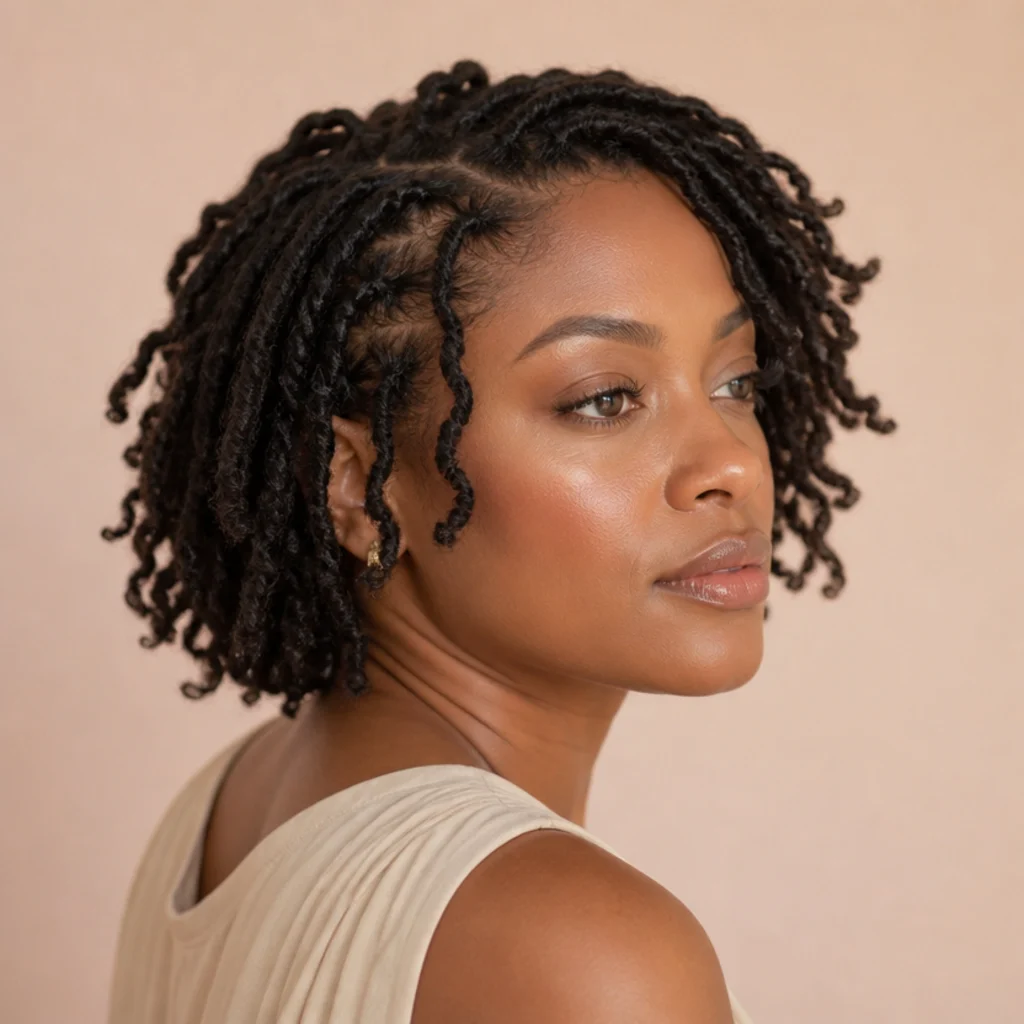
20 Blonde Butterfly Locs Looks That Stun
From sun-warmed honey to icy platinum, the shade you pick rewrites the whole mood of butterfly locs. Here are 20 tone-and-length combinations, each mapped to a face shape, an undertone, an exact color code, an upkeep window, and the precise words to bring to your appointment.
 Edited by Lena Rose · Published July 11, 2026 · 36 min read
Quick Answer
- Best for: Anyone who wants a lightweight, boho protective style with real color payoff and no need to bleach their own hair. The wrapped-loc build reads soft on 3C-4C textures and relaxed hair alike — base tension, not curl pattern, does the anchoring.
- Who might skip it: Anyone with fragile edges, traction-prone temples, or a scalp condition that flares under tension, plus anyone who wants a true wash-and-go, since the loose loops and curly pieces need periodic re-dipping and refreshing.
- Maintenance: Low day-to-day, medium over the cycle. Nightly satin bonnet or pillowcase, a weekly light-oil pass on the loops, a diluted sulfate-free cleanse every 2-3 weeks, and a curl re-dip every couple of washes on boho versions.
- Difficulty: Intermediate-to-advanced install (wrap or crochet method). Most people book a loctician or braider; a full DIY head is a long, arm-tiring project best split across sessions.
- Cost: Mid-to-upper range for protective styles, driven mostly by loc size, length, and hair grade. Micro and waist-length installs sit at the top; jumbo and bob at the lower end. Boho curls, pre-toned hair, and cuffs add on.
- Wear time / longevity: Roughly 6-8 weeks. Rooted and darker blondes stretch toward 8; bright platinum and ash photograph best refreshed nearer 6, before lint and brass surface.
- Standout variation: Honey-to-platinum ombre boho butterfly locs with curly ends, depth at the root and brightness at the tips without an all-over light commitment near the face.
- How to ask your braider: Name the loc size (micro, medium, or jumbo), the exact tone or color code (for example "#27 honey" or "shadow-rooted #613 platinum"), the length in inches or by landmark (chin, bra-strap, waist), the wrap density, and whether you want distressing and curly ends.
In This Guide
- Classic Honey Blonde Butterfly Locs
- Platinum Ice Butterfly Locs
- Honey-to-Platinum Ombre Locs
- Short Bob-Length Blonde Locs
- Boho Butterfly Locs With Loose Curls
- Golden Butter Blonde Locs
- Rooted Dark-Blonde Shadow Locs
- Waist-Length Sun-Kissed Locs
- Ash Blonde Butterfly Locs
- Blonde Locs With Curly Ends
- Chunky Jumbo Blonde Locs
- Micro Blonde Butterfly Locs
- Half-Up Blonde Loc Bun
- Strawberry Blonde Butterfly Locs
- Caramel and Blonde Highlighted Locs
- Blonde Locs With Beads and Cuffs
- Face-Framing Money-Piece Locs
- Bra-Strap Boho Blonde Locs
- Peekaboo Blonde Under Layer
- Champagne Blonde Wedding Locs
Butterfly locs get their name from the airy, looped texture that gives them a deliberately undone, distressed finish, and blonde is where that texture really shows up. Each loc is built by wrapping water-wave or spring-twist braiding hair around a cornrowed or twisted base, so the color lives entirely in the added hair, not your own. You can wear platinum or honey without lifting a single strand of your own hair, which makes blonde butterfly locs one of the lowest-commitment ways to try a lighter shade while your natural hair stays tucked away and protected. The wrapped construction is gentle on the scalp too: base tension carries the loc, so the style suits looser 3C curls and dense 4C coils equally well instead of depending on curl pattern. One thing worth knowing up front — blonde extension hair is pre-processed and can't be re-toned at home the way your own hair can, so getting the shade right at install matters more than usual. The 20 looks below run from chin-grazing bobs to waist-skimming lengths, and from cool platinum and ash to warm honey, caramel, and strawberry. For each one, you'll find who it flatters by face shape and undertone, an exact color reference, a realistic upkeep window, one pro tip, and the exact words to bring to your appointment. Whether you lean toward boho curls or a sleeker uniform finish, there's a blonde here worth saving, and a plan for wearing it well.
01Classic Honey Blonde Butterfly Locs
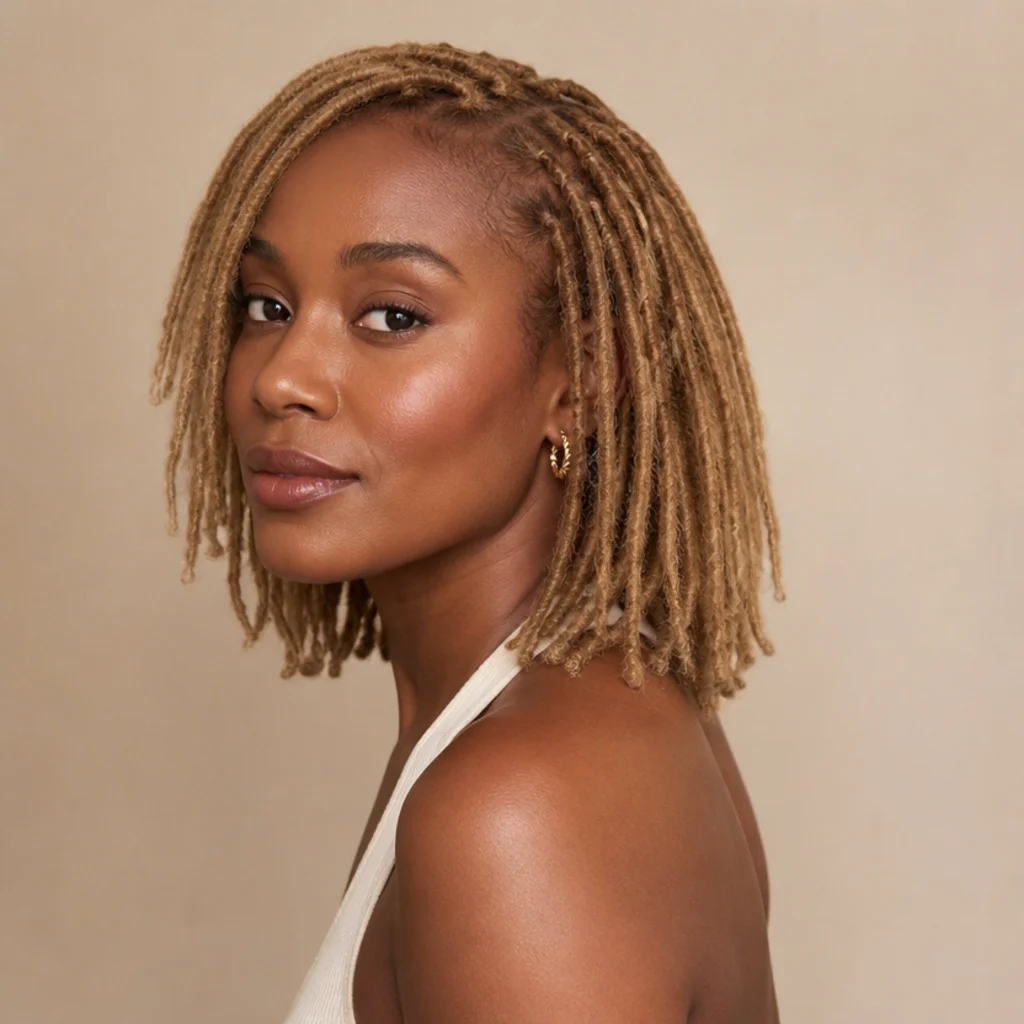
Honey blonde, the warm golden-brown that reads as #27 on braiding-hair charts, is the easiest entry point into blonde locs. Its gold-forward undertone flatters deep, medium, and olive complexions and camouflages regrowth far better than a stark cool shade would. The undertone leaning gold rather than orange is what keeps honey from oxidizing toward brass as the loops age. Shoulder length in a medium loc diameter gives real movement without much weight, so it's comfortable to sleep on and gathers cleanly into a low bun or half-up. Neutral-to-warm undertones and almost every face shape work here, since shoulder length neither widens a round face nor elongates an oblong one. Refresh loose loops with a pea of lightweight oil, keep manipulation minimal, and wrap nightly in satin. Pro tip: ask your braider to distress the loops slightly looser from the ear down, so the butterfly effect concentrates where it photographs best and the crown stays smooth instead of frizzy. Ask your braider for a medium loc in a #27 honey or #27/#30 blend with softly distressed ends, and plan clean wear around 6 weeks before the roots ask for attention.
02Platinum Ice Butterfly Locs
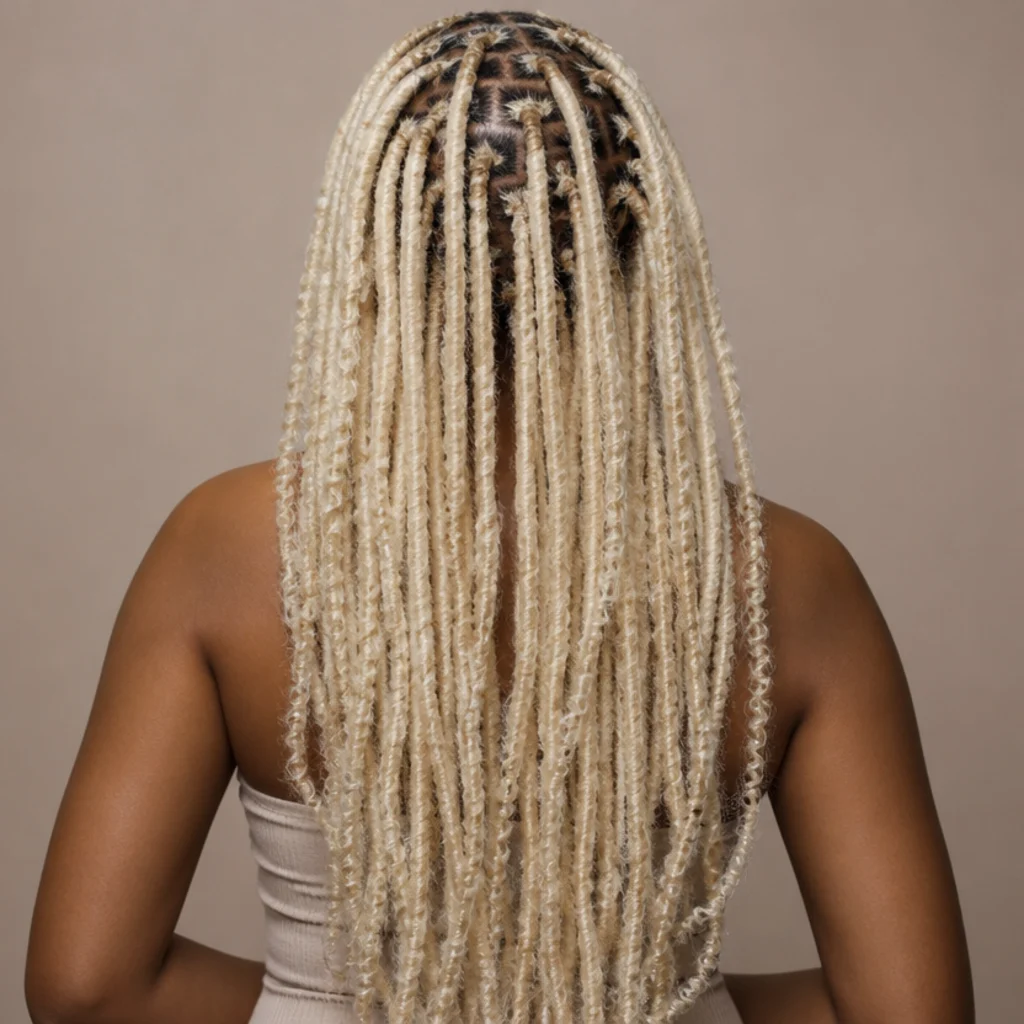
Platinum, roughly a #613 pushed cool, is the boldest blonde on this list and the one that photographs like a statement: a near-white with silver or violet undertones that reads editorial against deep melanin. Pre-lightened platinum braiding hair is processed further than warmer packs, so it tends to feel coarser and drier straight out of the bag — a conditioning co-wash or an acidic (apple-cider-vinegar-diluted) rinse at install softens the loops and cuts the squeak. This shade also shows lint, dark-clothing transfer, and product buildup faster than any warm blonde, so satin surfaces and gentle diluted cleansing actually matter here. It flatters cool and neutral undertones best; if you run warm, a whisper of #1B or #2 shadow root keeps platinum from washing you out. A medium-to-large loc size lets the color read as a clean sheet rather than a busy field. Pro tip: keep a purple-tinted shine spray on hand and mist weekly from week three — it neutralizes the yellow that creeps in as the hair oxidizes. Ask your braider for a uniform #613 platinum with minimal rooting and a conditioning rinse at install, and refresh nearer 6 weeks for the cleanest ice effect.
03Honey-to-Platinum Ombre Locs
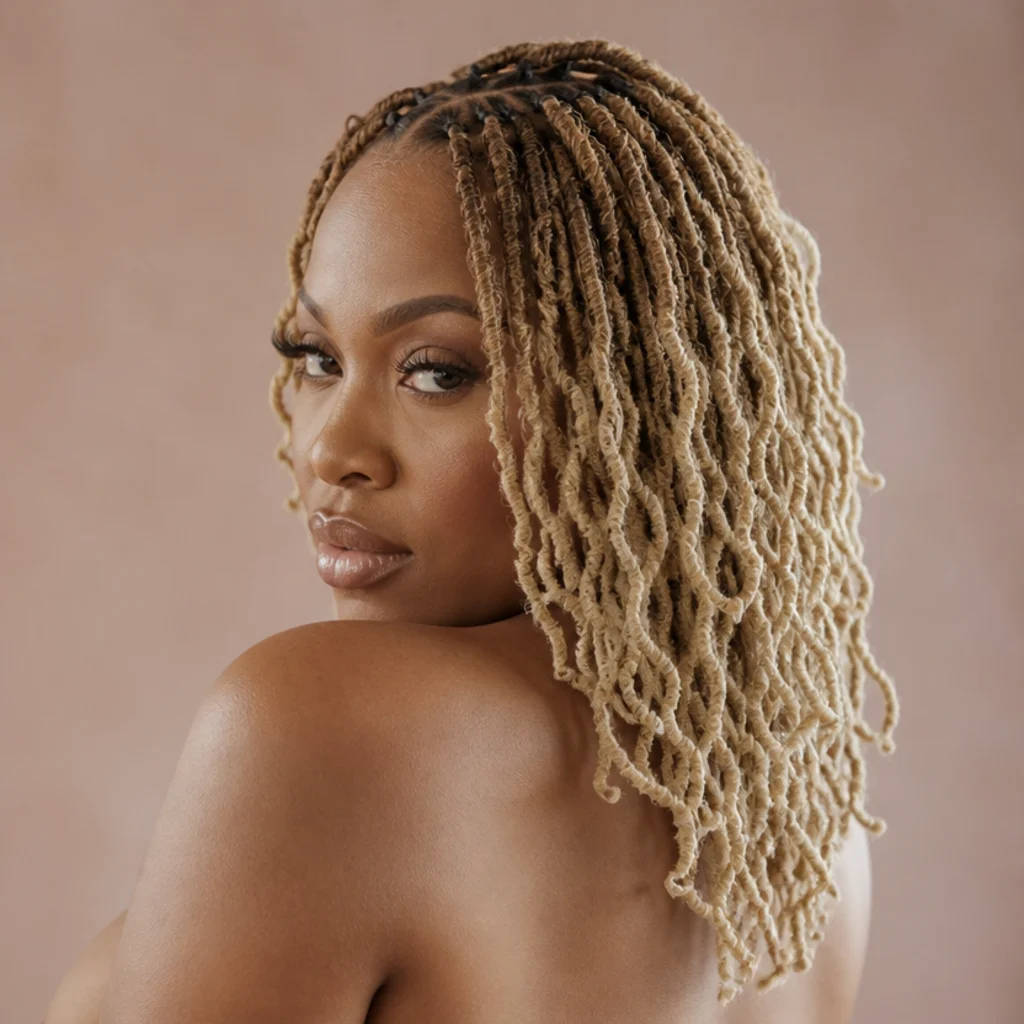
Can't choose between warm and cool? Ombre gives you both on one head. A dark honey or bronze root (think #27 or #12) melts into brighter platinum or pale blonde toward the ends, softening regrowth while building real vertical dimension. It's a forgiving option for anyone nervous about bright color right at the face, since the deeper root grounds the complexion while the luminous ends carry the drama. It wants medium-to-long length so the gradient has room to travel — on anything shorter than shoulder-grazing, the transition compresses and reads muddy instead of melted. Every undertone works here, because you're effectively wearing two blondes at once: warm up top, cool below. Pro tip: bring a photo where the blend begins at your chin, not your ears. Most people picture the fade lower than a braider defaults to, and a reference photo settles that judgment call in seconds. Ask your braider for a rooted or shadow-root install fading from #27 into #613, with the transition zone starting around chin level, and expect wear near the longer 8-week end since regrowth disappears into the dark root.
Save this to Pinterest to compare ombre placement before you book.
04Short Bob-Length Blonde Locs
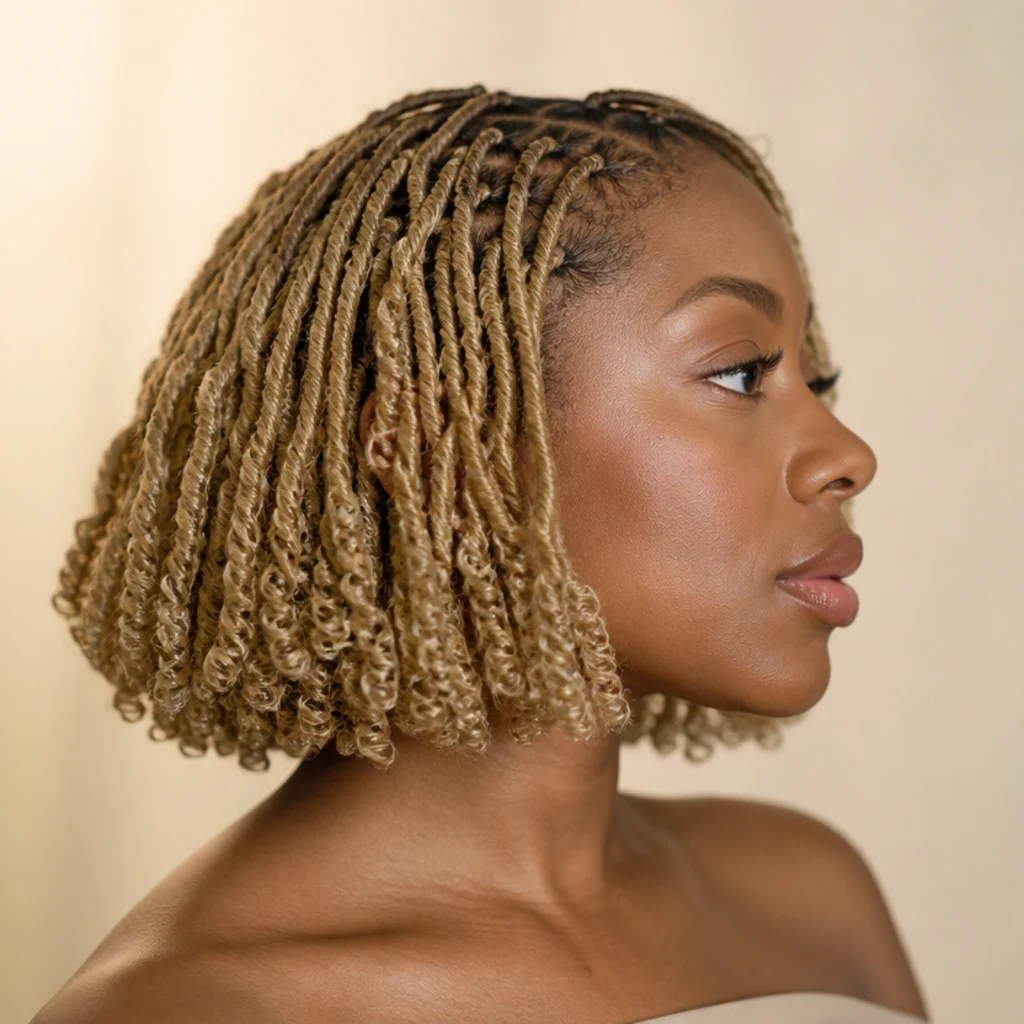
Short butterfly locs cut to chin or jaw length feel modern and light on the neck. A blonde bob pulls the eye straight to the cheekbones and jaw, so it flatters round and heart-shaped faces that want added structure and a defined perimeter. Fewer inches mean a shorter install and easier daily handling, and the reduced weight lowers scalp tension — a real advantage if your edges are delicate or you've worn tight styles recently. It works well for anyone who runs warm or simply dislikes heavy hair, and it reads crispest in warm honey or butter tones (#27 or #24) that keep a short cut from looking severe. Trim stray loops as they loosen to hold the silhouette through week five or six. Pro tip: ask for the ends wand-set into a soft curl rather than blunt-sealed. A rounded end keeps the bob looking soft as it grows, while a blunt short loc telegraphs every millimeter of regrowth. Ask your braider for a bob-length butterfly loc in #24 or #27 with lightly curled ends and a rounded, not squared, perimeter.
05Boho Butterfly Locs With Loose Curls
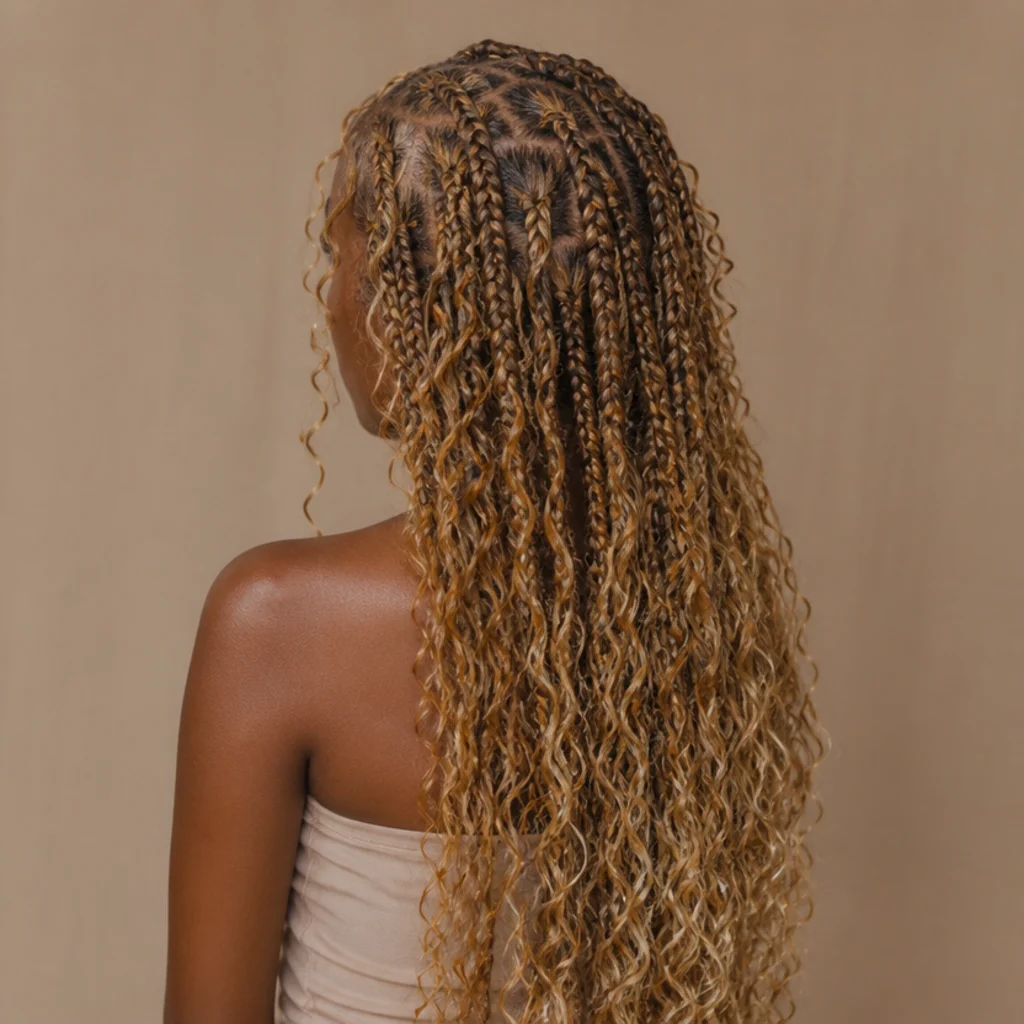
Boho butterfly locs with curls thread wispy, loose spiral pieces throughout the install for a lived-in, free-spirited finish. In blonde the effect turns dimensional, because the shiny curls catch light differently than the matte loc body. This look suits anyone drawn to romantic softness over a sleek uniform shape, and it flatters longer, oval, and square faces, since the escaping curls blur a strong jaw and break up length. The trade-off is upkeep: the loose curls relax after a few washes and need re-dipping in hot water (around 70-80C from a kettle, poured over the curl held in a mug) or a curl-refresher spray to spring back. Medium-to-long lengths work best, giving the curls room to move without looking cramped. Pro tip: specify curl density as light, medium, or heavy up front. "Boho" alone can mean anything from a few face-framing wisps to a full head of curl — the two look completely different, take different install time, and cost different amounts. Ask your braider for boho or goddess butterfly locs with blonde curly hair added at your chosen density, and confirm whether the curl hair is included in the quote.
06Golden Butter Blonde Locs
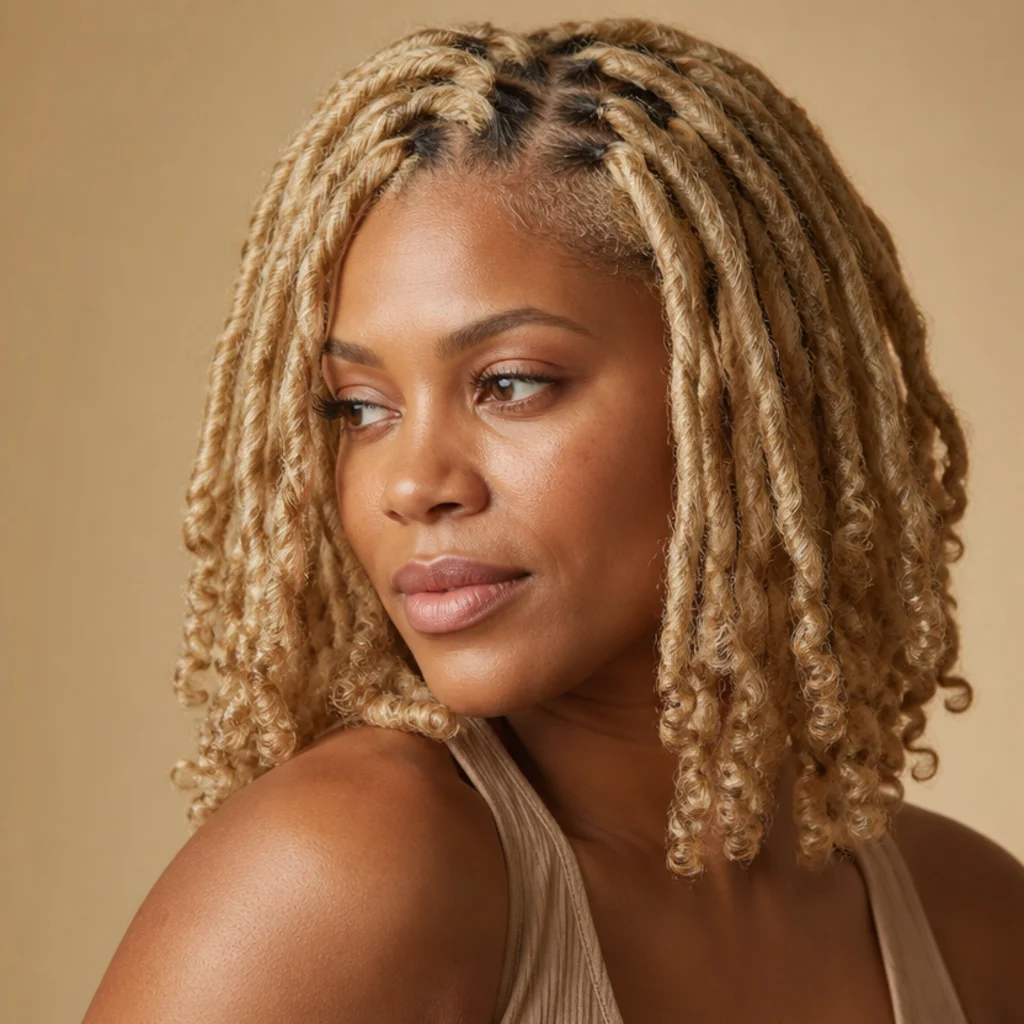
Butter blonde sits between honey and platinum: a creamy, low-warmth gold (close to #24) that looks warm without tipping brassy. It might be the most universally flattering blonde on this list, since it keeps just enough warmth to complement deeper undertones while still reading distinctly light — the middle path when platinum feels like too much upkeep and classic honey feels too safe. Medium length keeps the color the clear focus and stays easy to bun or half-up. Neutral and warm undertones suit it best, and it works on every face shape at this length, with the bonus that its soft warmth hides early regrowth better than any cool blonde. Maintenance mirrors the others: satin at night, minimal manipulation, a light oil for shine. Pro tip: if your braider's blonde pack skews acid-yellow, ask them to blend in a few strands of a cooler beige loc (#22) to mute the tone toward true butter rather than banana. Roughly one cool strand to every four warm is usually enough. Ask your braider for a butter or champagne-gold blend (#24, optionally cut with #22) at a medium loc size, and plan standard 6-to-8-week wear.
07Rooted Dark-Blonde Shadow Locs
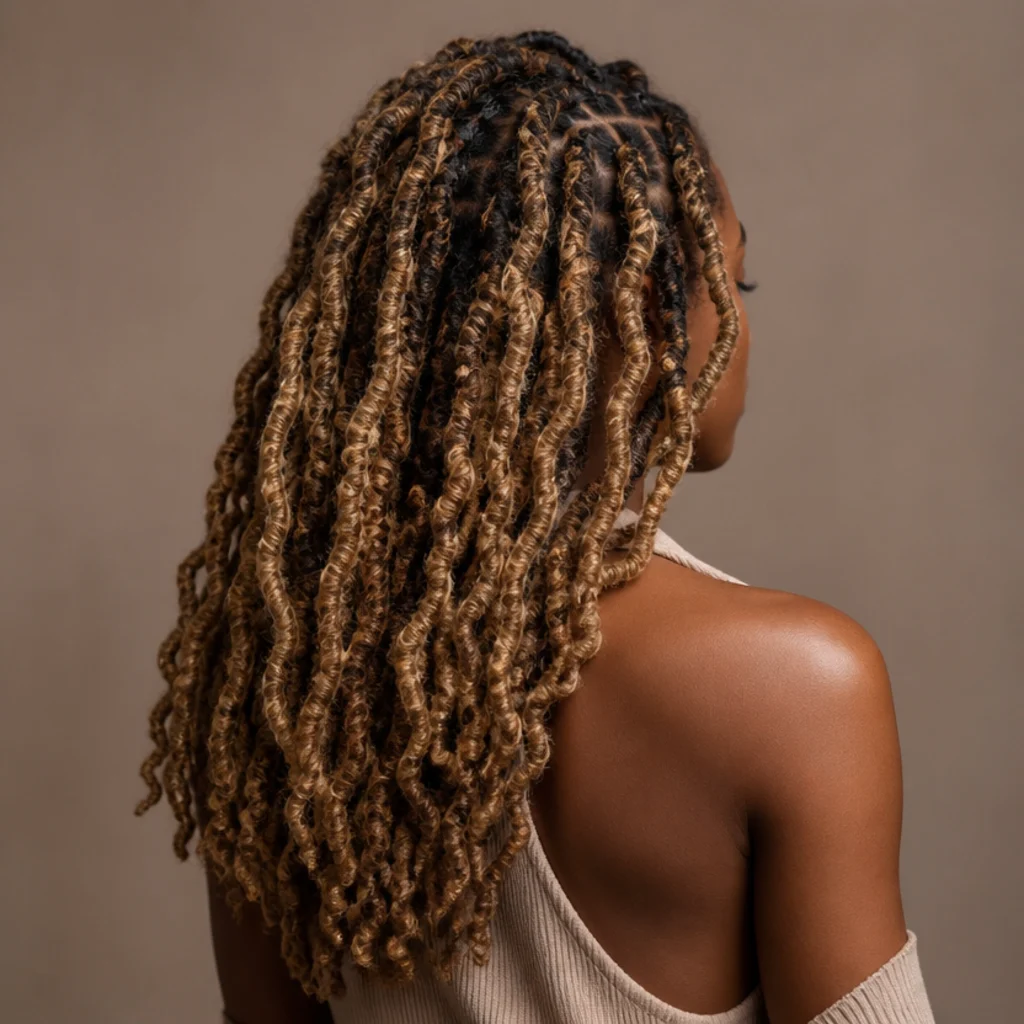
A shadow root keeps your natural dark color at the scalp and melts it into a dark-blonde or bronde body (a #1B or #4 root into #12 or #27) — the payoff is the lowest maintenance on this list. As edges and roots grow, the transition stays intentional instead of showing an obvious demarcation line. This is the most office-friendly blonde here and a smart first try for anyone testing lighter color, since the darkness near the face reads grounded and grown-up. Every undertone works with it, because the deepest tone anchors the complexion no matter your skin tone. Length is flexible, though it looks most considered from shoulder to bra-strap, where the fade has room to breathe. Pro tip: the deeper and longer the shadow root, the further you can stretch between refreshes. Ask for the root pulled a full three to four inches down rather than sitting only at the scalp, and wear pushes toward the 8-week end easily. A longer root also disguises the small amount of natural regrowth that would otherwise peek through a high bun. Ask your braider for a rooted or shadow-root butterfly loc in dark blonde or bronde with a soft, blended melt rather than a hard color block.
08Waist-Length Sun-Kissed Locs
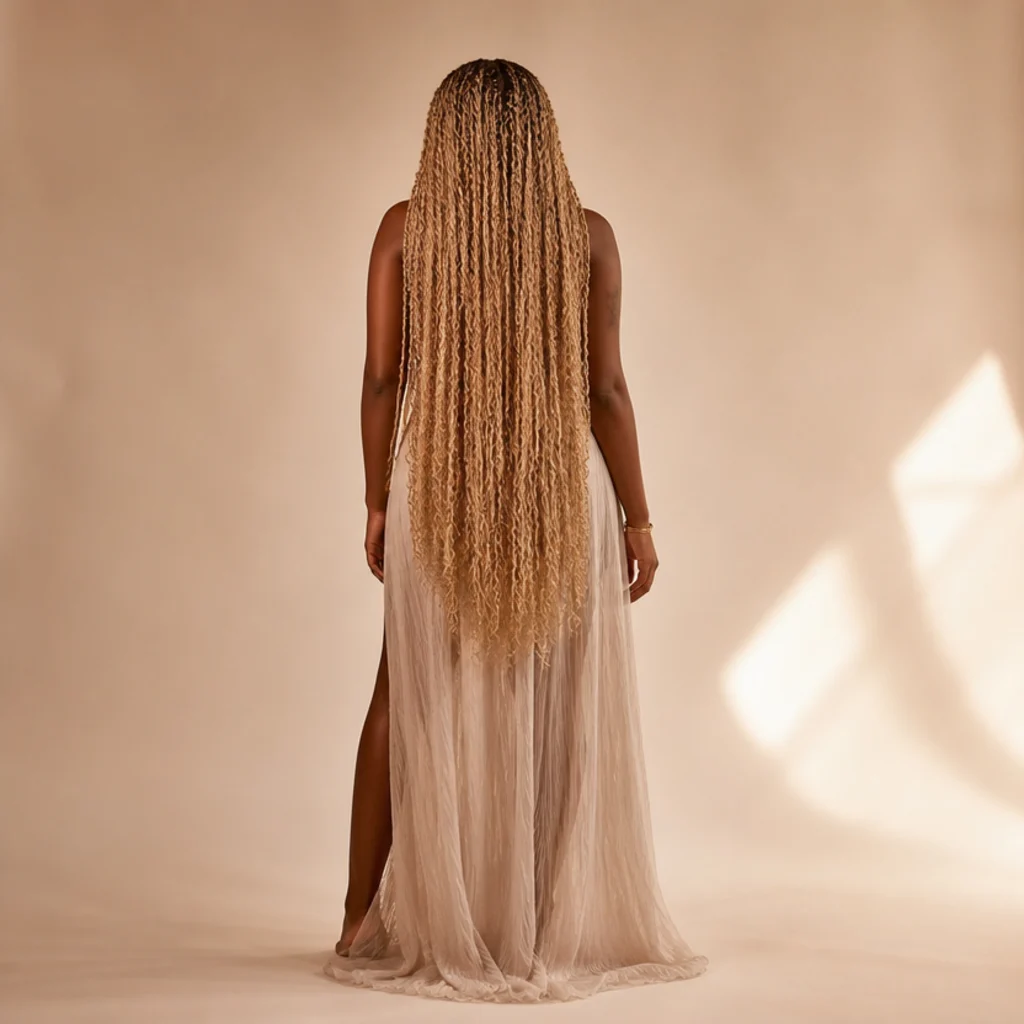
For maximum drama, waist-length locs deliver sweep and movement that shorter styles can't touch. A sun-kissed blonde, warm and gently multi-tonal (a #27 base with #16 and #24 woven through), keeps all that length from reading flat — a single opaque color over that many inches can look like a curtain rather than hair. This length rewards taller frames and anyone who loves the swing of long hair, but be honest about the weight: longer, heavier locs pull harder on the scalp and can strain the hairline over a six-to-eight-week wear cycle. Most undertones work in a warm-neutral blonde, and it looks most balanced with a lightly layered length, so the ends aren't a blunt, heavy hem. Pro tip: ask for a slightly smaller loc size than instinct suggests. More, finer locs distribute weight across the scalp far better than fewer thick ones at this length, easing tension where it matters most. Sleep with the length loosely gathered inside a large satin bonnet to prevent overnight tangling and matting at the nape. Ask your braider for waist-length butterfly locs in a warm multi-tonal blonde with caramel woven through for depth, and request a finer loc size for comfort.
09Ash Blonde Butterfly Locs
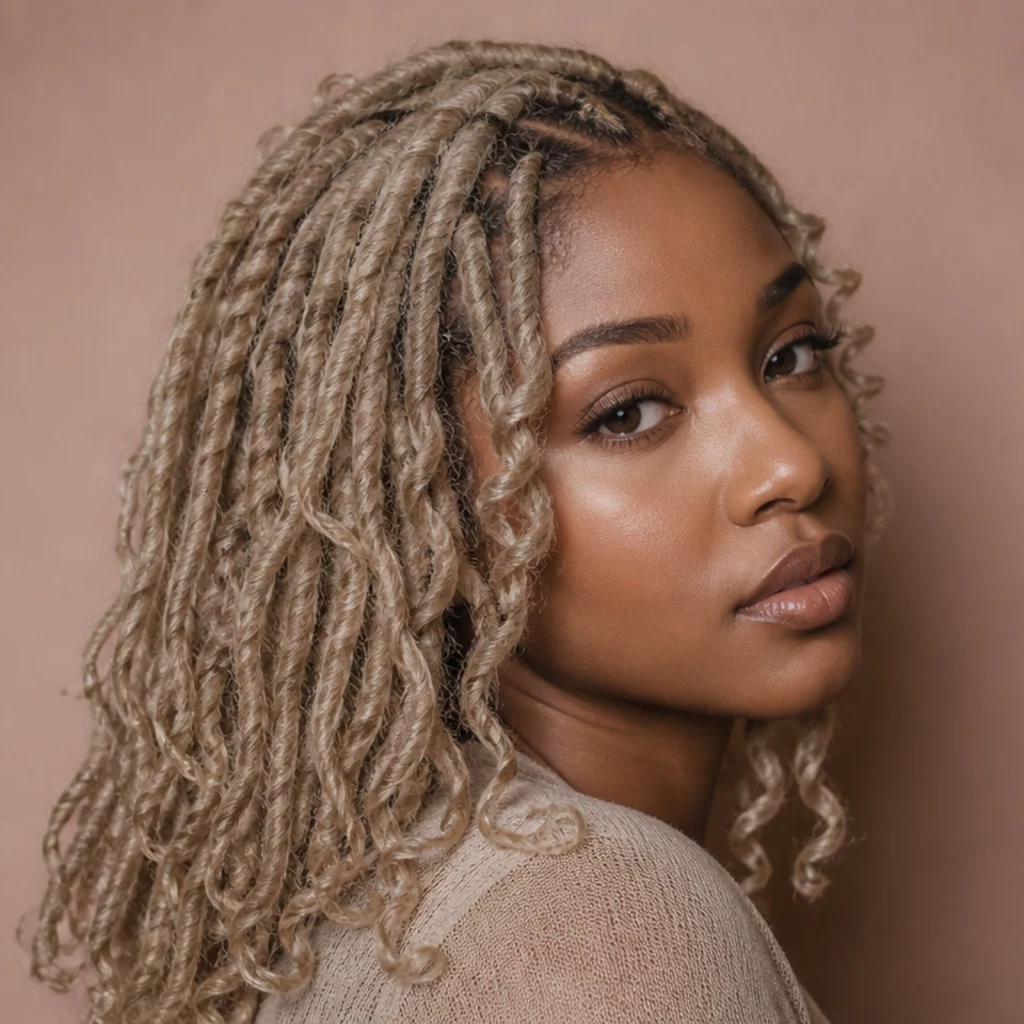
Ash blonde swaps warmth for a cool, smoky beige (roughly #22) — modern, muted, and the deliberate antidote to brass. It reads striking against cool and neutral undertones and gives an almost matte finish that photographs expensive. Cool blondes can look dull without deliberate shine, so a lightweight gloss or shine oil on the loops isn't optional — it's what keeps ash from tipping grey-flat. Confirm the hair your braider is using is actually cool-toned; many "blonde" packs skew warm straight out of the bag and will fight the ash you asked for from the first wash. Medium length works best, keeping the tone light rather than heavy, and it pairs cleanly with silver cuffs and cool-toned accessories. Pro tip: ask to hold the actual pack against your jaw in daylight before install. Warm and cool blondes look nearly identical under warm salon bulbs and completely different in your bathroom mirror at home, so the daylight check saves a regret later. Ask your braider for an ash or beige-blonde blend (#22) confirmed cool-toned, and refresh nearer 6 weeks since cool tones show buildup and lint sooner.
10Blonde Locs With Curly Ends
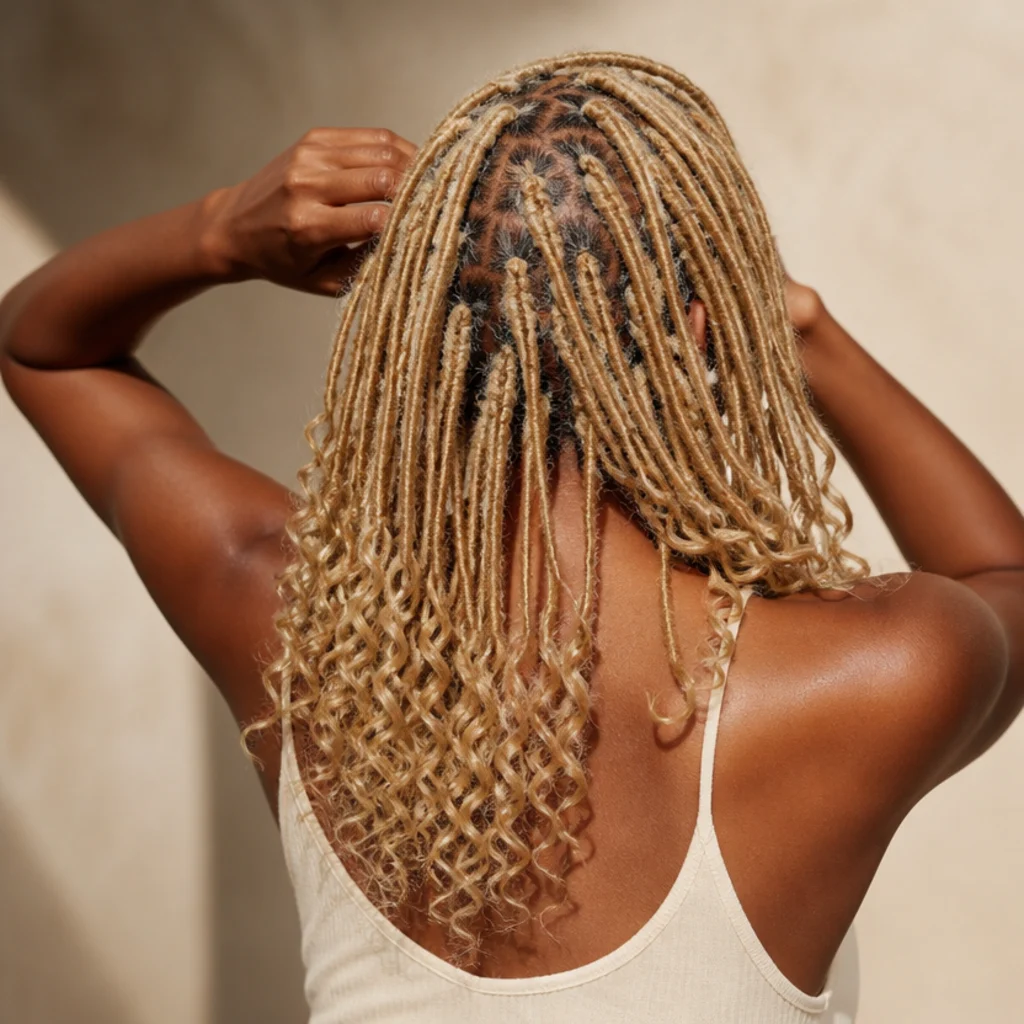
Leaving the ends curly instead of sealed is a small construction change with a big effect. The springy, curly tips soften the whole silhouette and flatter rounder and heart-shaped faces by drawing the eye downward and out, away from the widest part of the face. Curly ends also disguise the natural length differences between locs that show up as they grow, so the style keeps looking intentional for longer. Refresh the curls with hot water and a little mousse when they relax, usually every couple of washes. Any length works, though the effect shows up most from shoulder down, where the curls have room to spring. Pro tip: specify exactly how much curl to leave out. A half-inch to an inch reads elegant and finished, while three or four inches reads full bohemian — and once the loc is sealed above the curl, you can't add more without redoing the entire end. Decide before the braider seals it. Ask your braider for blonde butterfly locs with wand-curl or spring-curl ends left out at your chosen length, and state the curl allowance in inches so there's no guessing.
Save this to Pinterest if curly ends are calling your name.
11Chunky Jumbo Blonde Locs
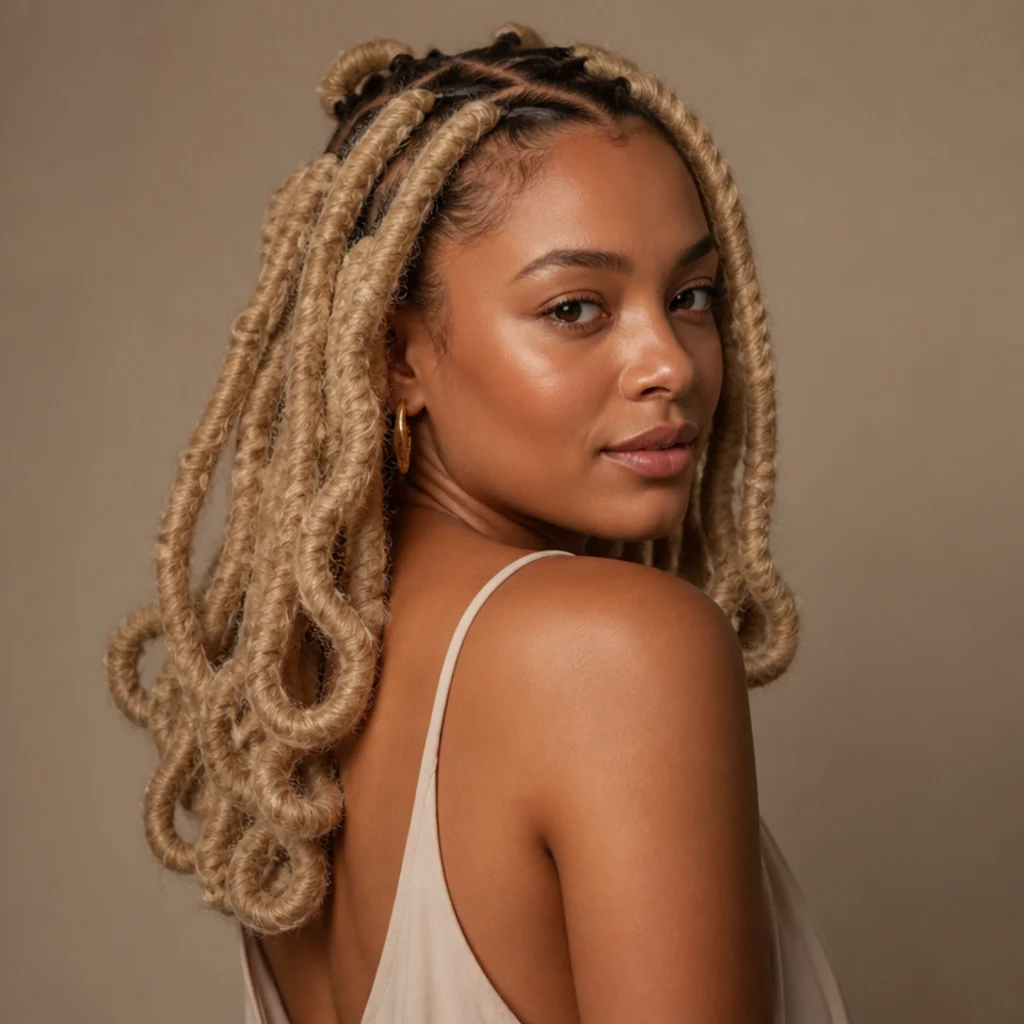
Jumbo locs use a larger loc diameter, meaning fewer, thicker locs and a much faster install, often half the chair time of a medium set. In blonde, the chunky scale turns each loc into a bold graphic element, ideal when you want impact with minimal time and a lower tolerance for long sits. Busy schedules and anyone who tenses through marathon appointments will appreciate it most. The trade-offs are real: fewer parts mean more visible scalp, so clean, even parting matters, and thicker locs carry more weight per strand, so root tension needs to be comfortable, not just tolerable. It flatters bolder personalities and square or oval faces that can carry the scale without looking overwhelmed. Pro tip: ask for a zigzag or brick-lay parting pattern rather than straight box parts. The offset rows hide scalp far better on a jumbo set, where any gap shows most under bright color. A rooted shade also helps disguise the wider parts. Ask your braider for jumbo or large butterfly locs in your chosen blonde with a scalp-concealing brick-lay parting pattern, and confirm comfortable tension before the second row.
12Micro Blonde Butterfly Locs
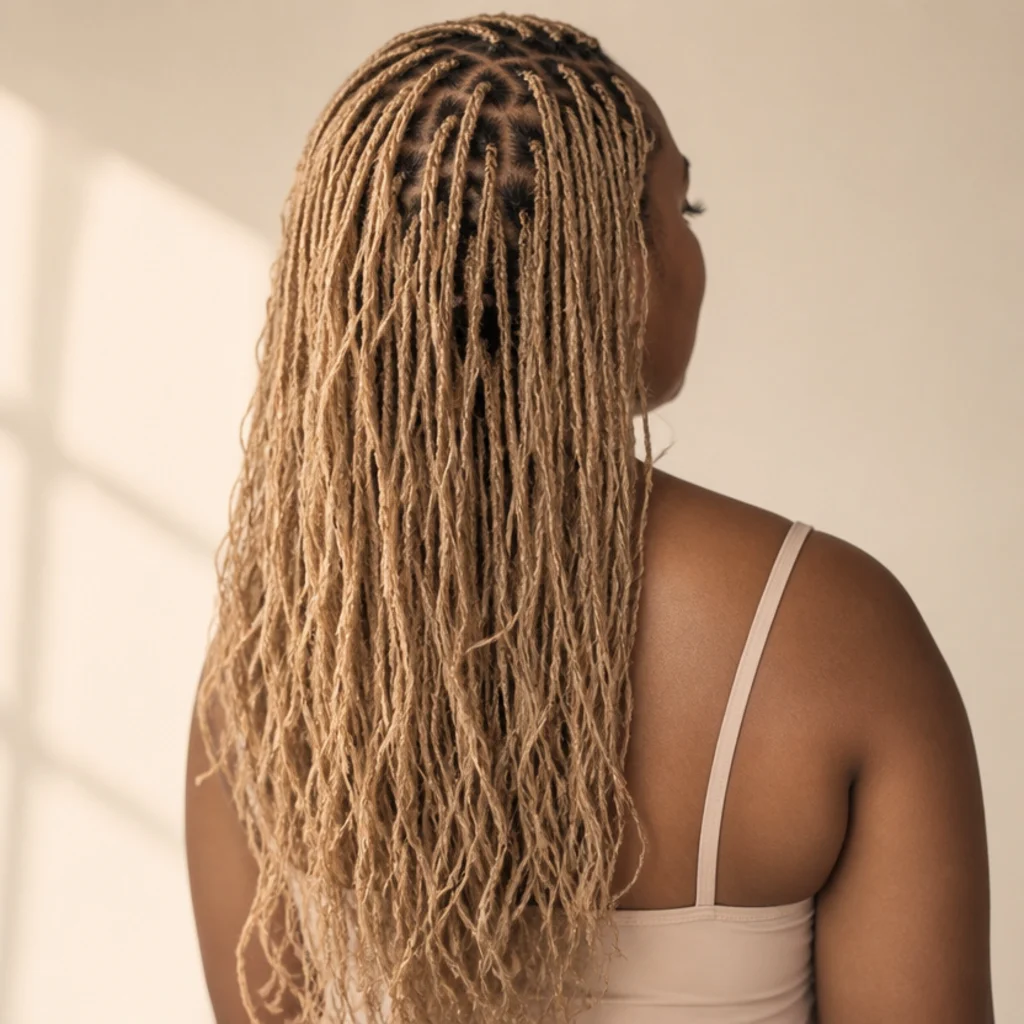
At the opposite end, micro locs are thin and numerous, giving a delicate, densely textured finish that moves almost like natural hair. Blonde micro locs read intricate and refined, but be realistic about the commitment: this size takes the longest to install, often a full day or split across two sessions, and sits at the top of the cost range because it's priced by the hour and the count. The reward is real versatility — fine locs braid, updo, and half-up cleanly without bulk, and their light per-loc weight stays comfortable across the full wear cycle without straining the hairline. Detail lovers and anyone whose scalp tolerates many small parts better than a few heavy ones will get the most from it. Pro tip: eat a real meal, hydrate, and clear your whole day before a micro install. Ask whether your braider offers a two-day option — a rushed micro set at hour nine is exactly where parting gets sloppy and tension creeps up. Bring a phone charger and headphones; comfort over a long sit protects both your patience and your edges. Ask your braider for micro or small butterfly locs in blonde and confirm the total session length and count up front.
13Half-Up Blonde Loc Bun
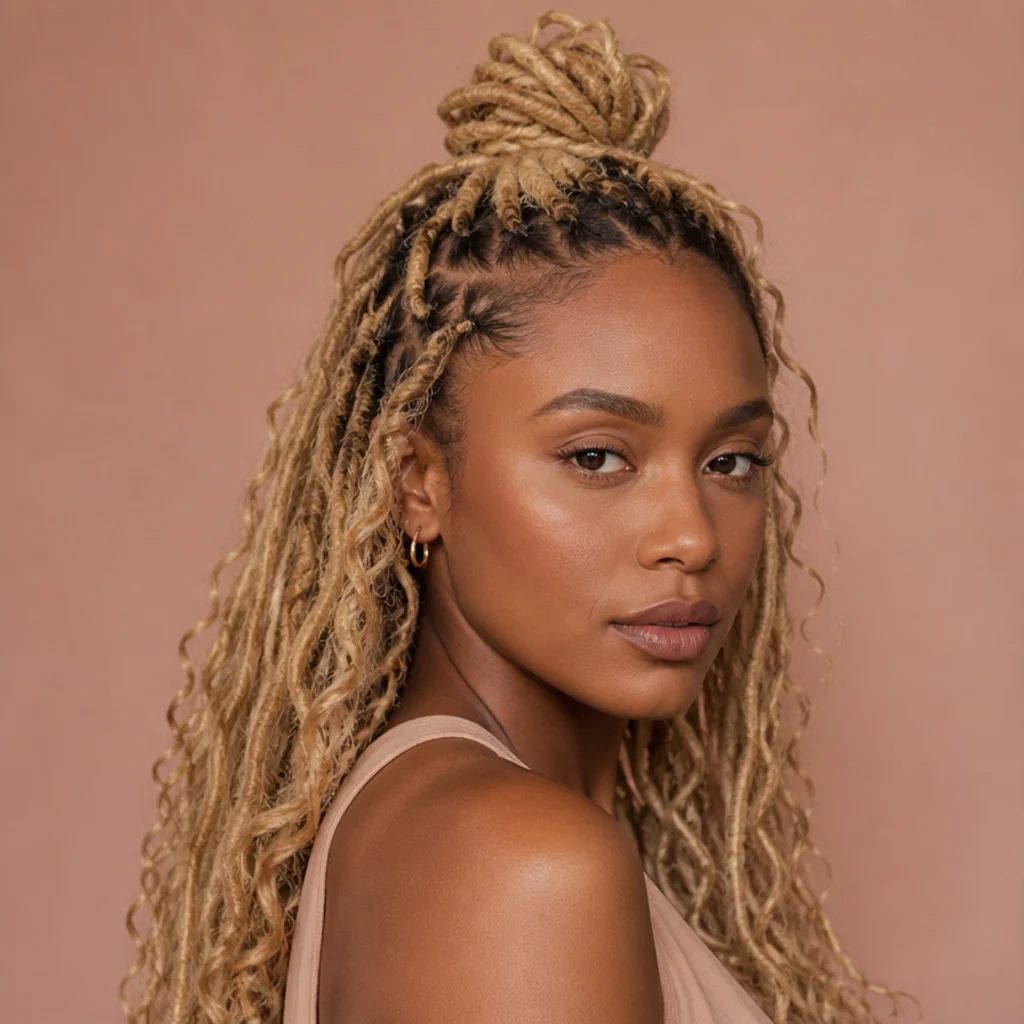
This is less a color than a styling idea, and it shows how versatile a finished blonde install can be. Gathering the top half into a loose crown bun lifts hair off the face for warm days, workouts, or a quick polish, while the rest falls free and shows off the color and loops. The blonde bun draws the eye to the crown and instantly reads intentional instead of thrown-together. It works on every face shape and any length past the shoulder, and needs no special upkeep beyond a snag-free spiral or soft fabric elastic and gentle handling so you don't stress the edges. Pro tip: at install, ask your braider to leave the front hairline parts slightly looser and to show you which sections flex cleanly into a bun. Knowing your best grab points means you can restyle in seconds later without dragging on tight temples. Avoid pulling the bun high and tight every day — alternating placement keeps consistent tension off any one spot. Ask your braider to walk you through two or three updo options before you leave the chair, and to point out which sections move freely.
14Strawberry Blonde Butterfly Locs
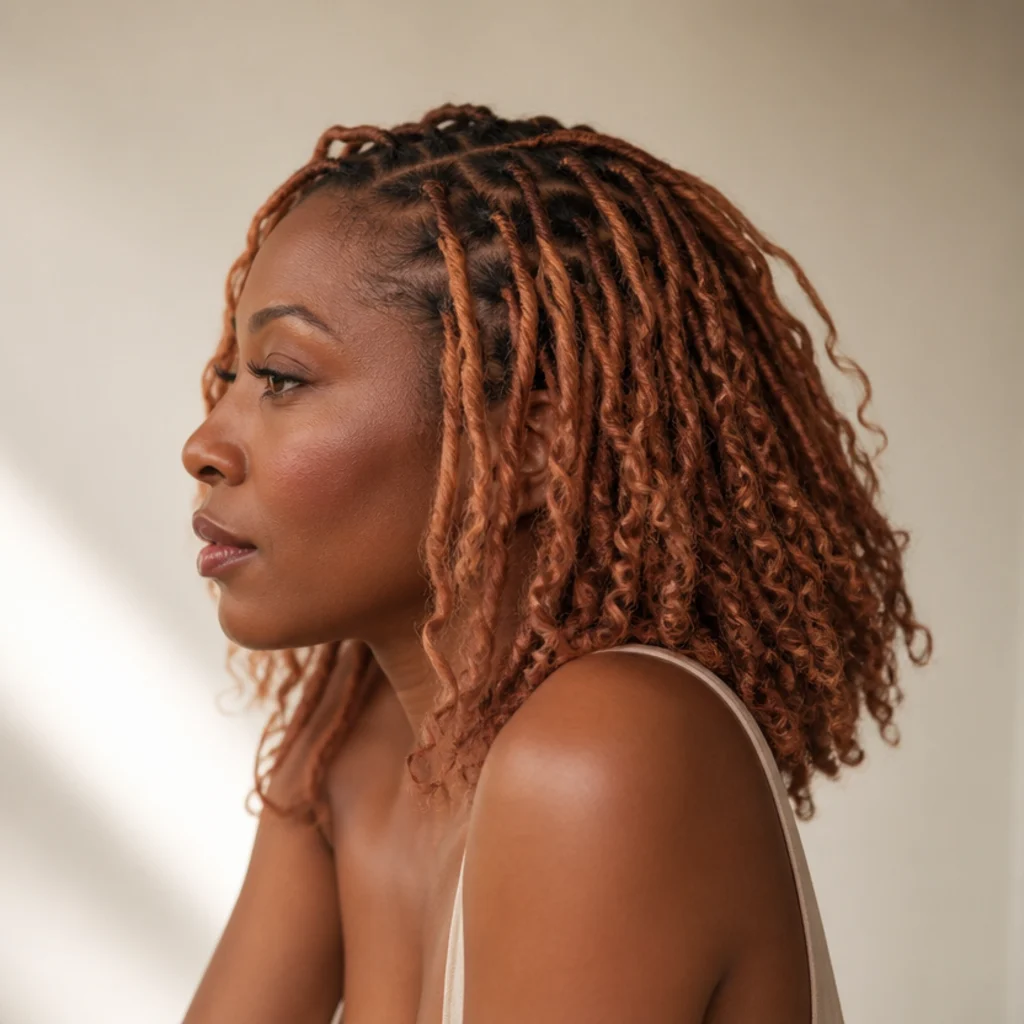
Strawberry blonde brings a warm, rosy-gold cast that lives between blonde and copper (think #27 warmed toward #350) — soft and unexpectedly flattering against warm and golden undertones. It's the middle ground for anyone who finds true blonde too cool but wants something lighter and less saturated than red. A real advantage: warm rose-gold tones fade toward peach rather than turning muddy or brassy the way cool blondes can, so the color ages well between installs and still looks intentional at week seven. Warm and neutral-warm undertones suit it especially well, and medium length shows the tint without letting it overwhelm the face. Pairing it with loose boho curls leans further into the romantic, sun-warmed feel. Pro tip: strawberry looks best over a soft shadow root in auburn or light brown (#30 or #12). An all-over rose-gold straight from the scalp can read costume, while a rooted version reads considered and modern. Ask your braider for a strawberry-blonde or rose-gold blend (#27 with a touch of #350), ideally rooted in #30, at a medium loc size.
15Caramel and Blonde Highlighted Locs
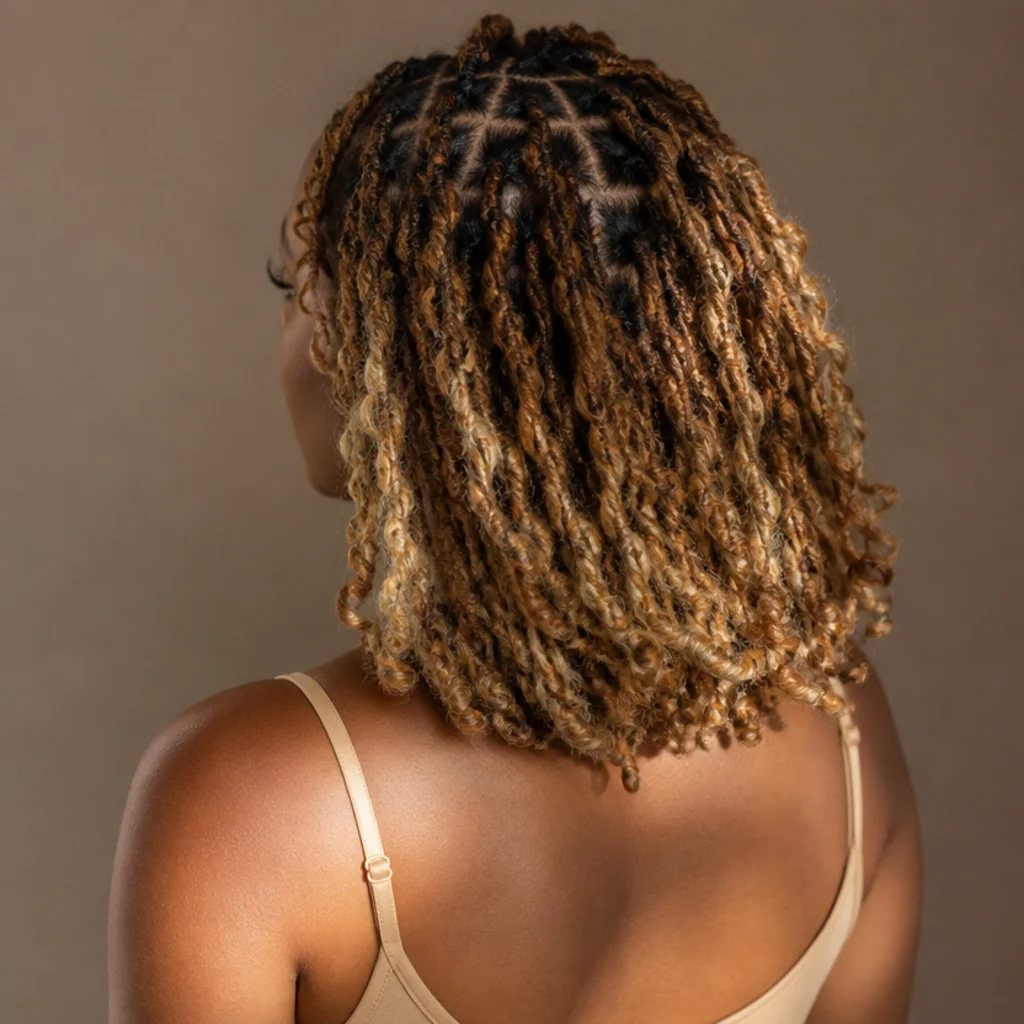
Mixing two or three tones — caramel, honey, and pale blonde (#12, #27, and #613) — creates a highlighted, sun-lit effect that looks far more natural than a single flat color, because the varied tones bounce light and suggest movement even when the hair is still. The dimension flatters everyone, and it's the gentlest way into blonde: the caramel keeps things grounded, so an all-over light shade never has to touch your face. Regrowth blends almost invisibly thanks to the darker ribbons, and upkeep is standard satin-and-oil with no toning fuss. It works at any length and reads especially rich from shoulder down. Pro tip: ask your braider to weave the lightest blonde pieces around the hairline and part, and keep the deepest caramel underneath and at the nape. This front-loaded placement brightens the complexion right where it counts while the darker underlayer adds depth without visible bulk. A roughly 60-percent caramel to 40-percent blonde ratio reads natural rather than striped. Ask your braider for a highlighted or multi-tonal caramel-and-blonde blend with the brightest pieces concentrated at the face.
Save this to Pinterest to show your braider the exact tone mix.
16Blonde Locs With Beads and Cuffs
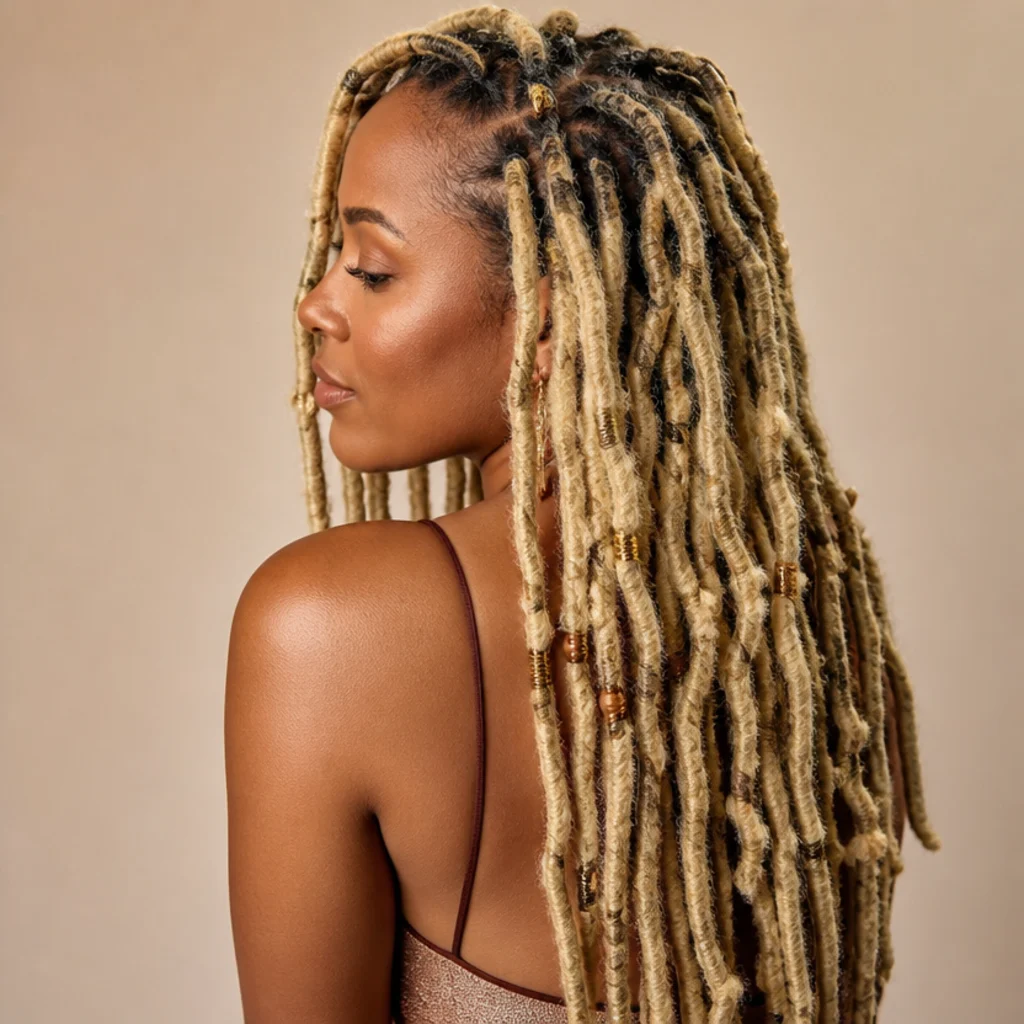
Accessories turn a simple blonde install into something personal. Against blonde specifically, gold cuffs and warm wooden beads sit in the same tonal family, so they read cohesive rather than clashing. Thread wraps, gold spirals, and a few strategic beads add texture and low-key shine, and it's the easiest way to refresh a style you've already worn a few weeks without redoing a single loc. Anyone who loves a little adornment will like this, and it works at every length, though longer locs give more room to place and space pieces. The one discipline: keep beads on a handful of locs rather than every one. Over-accessorizing reads heavy and can weigh down delicate edges over time. Pro tip: place cuffs at least an inch or two down from the scalp, never at the root — a cuff sitting right at the base tugs the parting and can stress the hairline across weeks of wear. Match the metal to the tone: gold for warm blondes, silver for ash and platinum. Ask your braider to add a few gold cuffs at install, or buy your own to slide on and reposition freely as the style grows.
17Face-Framing Money-Piece Locs
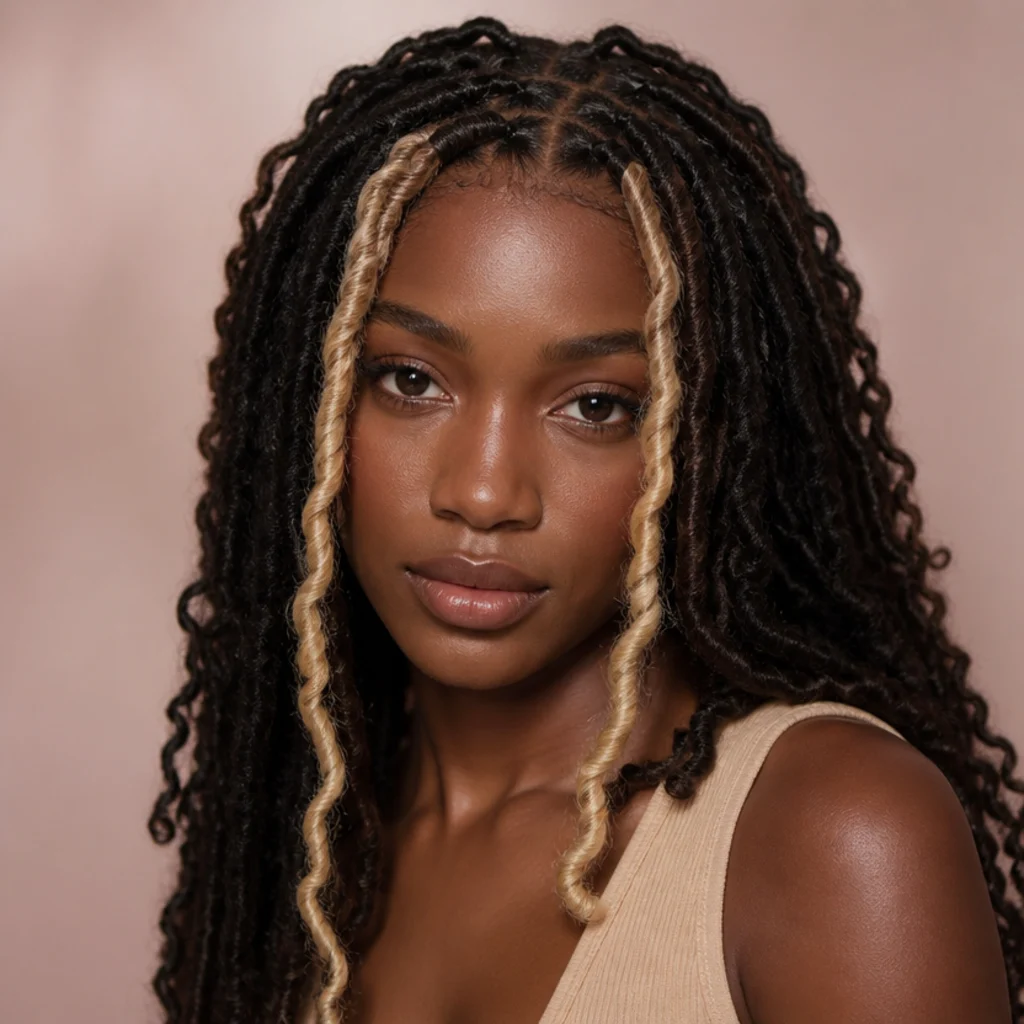
A money piece places the brightest blonde right at the front, framing the face with two or four lighter locs while the rest of the install stays deeper — a low-commitment way to wear blonde, since the bulk of your head stays dark. The contrast draws the eye up and brightens the complexion instantly, so it flatters every face shape and looks especially sharp over a rooted or dark-blonde base (#1B or #4 with #613 or #27 at the front). It's one of the most requested, most beginner-friendly ways to add blonde, and the easiest to walk back if you decide it's not for you, since only a few locs carry the color. Pro tip: place the money-piece locs to start just behind your natural part rather than dead-center. An off-center bright section frames the face more flatteringly and looks less like a headlight stripe. Two locs per side reads subtle; four reads bold. Ask your braider for a money-piece or face-framing section in your lightest blonde with the surrounding locs kept darker, and specify exactly how many locs on each side.
18Bra-Strap Boho Blonde Locs
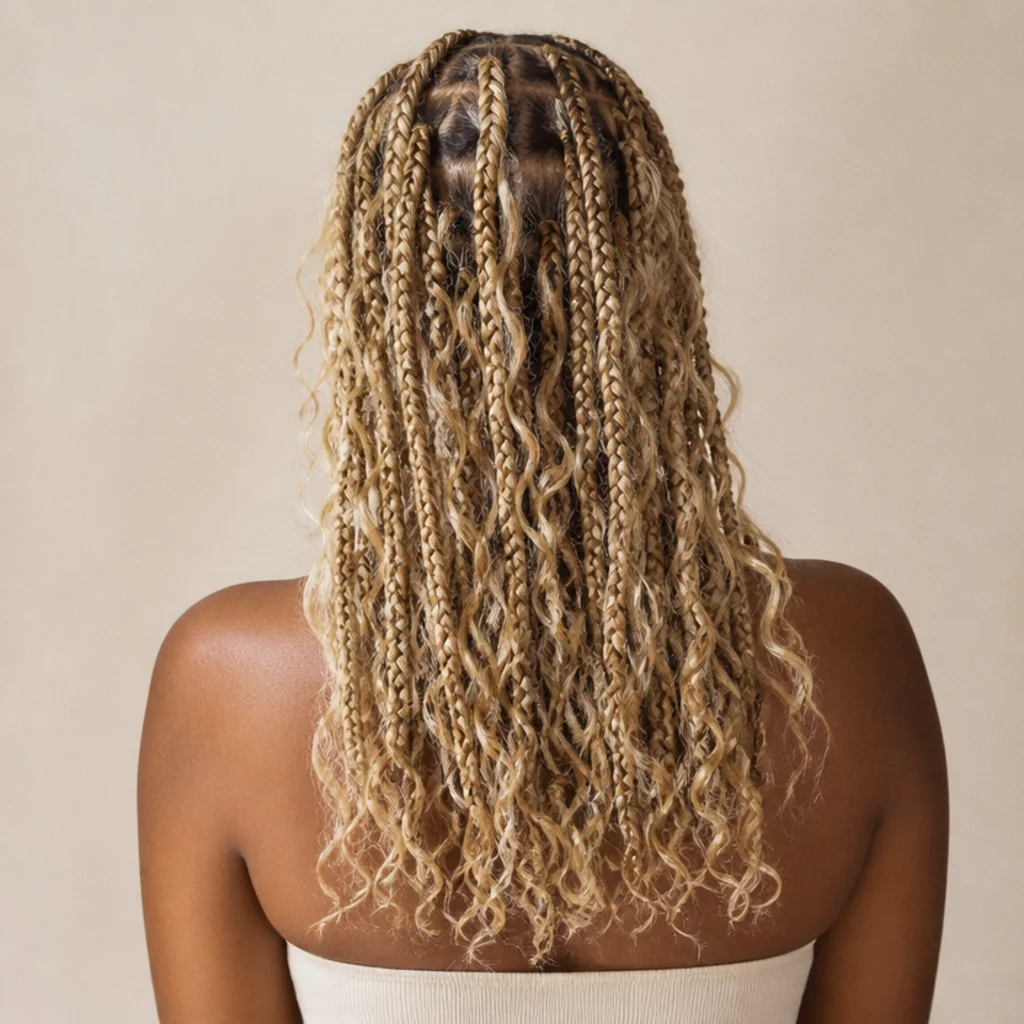
Bra-strap length is the sweet spot between short and waist-length: long enough to feel dramatic and swing when you move, light enough to stay comfortable through a full six-to-eight-week wear cycle without straining the hairline. In a boho blonde finish with wispy curly pieces throughout, this length has beautiful movement and real everyday wearability, which is why braiders default to it so often. Most heights, undertones, and lifestyles suit it, and it stays versatile enough for buns, half-ups, and braids without feeling unwieldy or heavy at the nape. Upkeep matches other boho styles: refresh the loose curls with hot water or a spray every couple of washes, and protect the length in a bonnet at night to prevent tangling. Pro tip: bra-strap is the length where a lighter loc size pays off most. It keeps the total weight manageable, so the boho curls read airy and buoyant instead of dragging the whole style down over the weeks. A warm multi-tonal blonde also keeps this everyday length from looking flat. Ask your braider for bra-strap-length boho butterfly locs in blonde with light distressing and a comfortable, lighter loc size.
19Peekaboo Blonde Under Layer
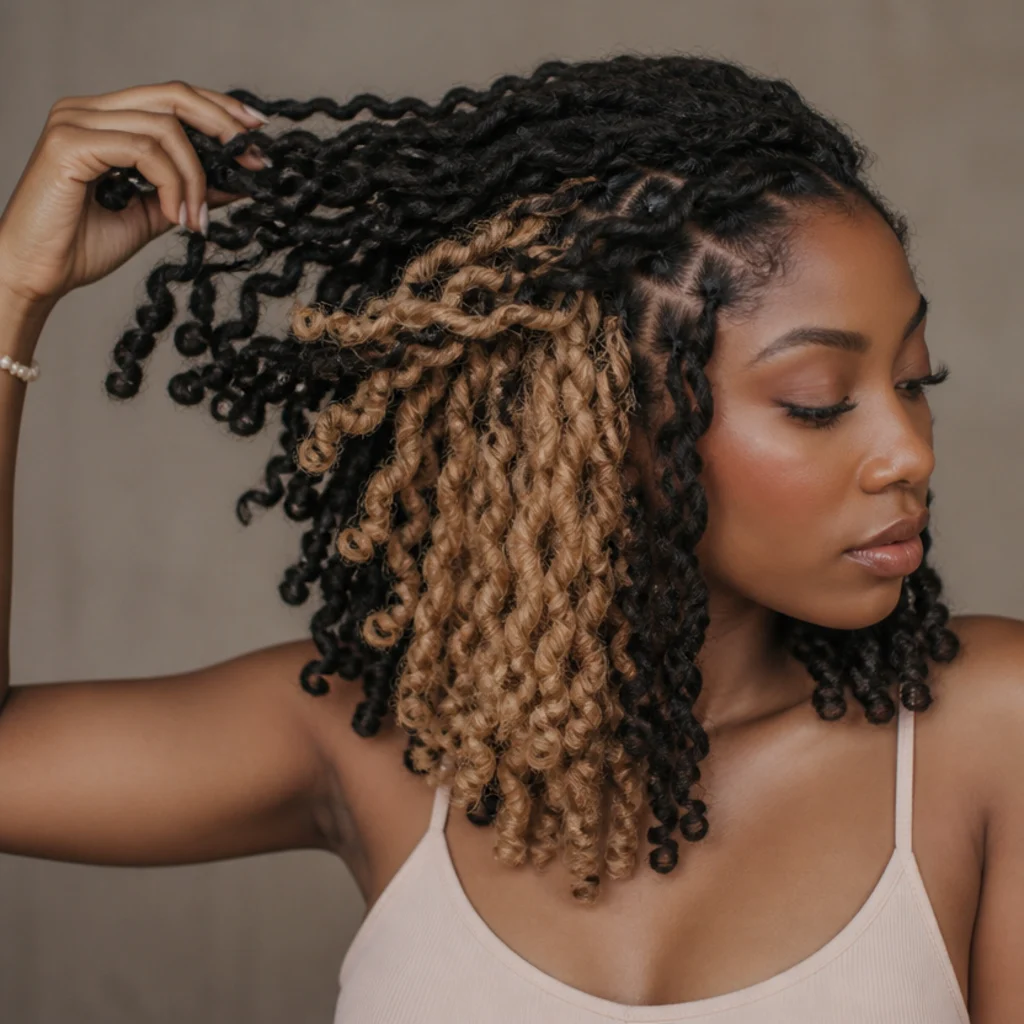
A peekaboo hides bright blonde on the lower or under layer so it flashes only when you move, sweep the hair up, or part it — dark and understated on top, a bright surprise underneath. It's the choice for anyone who wants blonde but needs a more conservative everyday look, whether for a workplace, a personal preference, or just the flexibility to hide it on any given day. All face shapes work here, because the color sits away from the face, and the dark top layer means zero brightness near the complexion when you want none. Pro tip: tell your braider exactly how you part and wear your hair day to day. If the bright section is placed for a center part but you always wear a side part, the peekaboo will hide in the wrong spot and never show — this one lives or dies entirely on placement mapping. Have your braider mark the reveal zone while your hair is in its usual style. Ask your braider for a peekaboo or hidden blonde under layer with darker locs on top (#1B or #4), the bright layer in #613 or #27, mapped precisely to your usual part.
20Champagne Blonde Wedding Locs
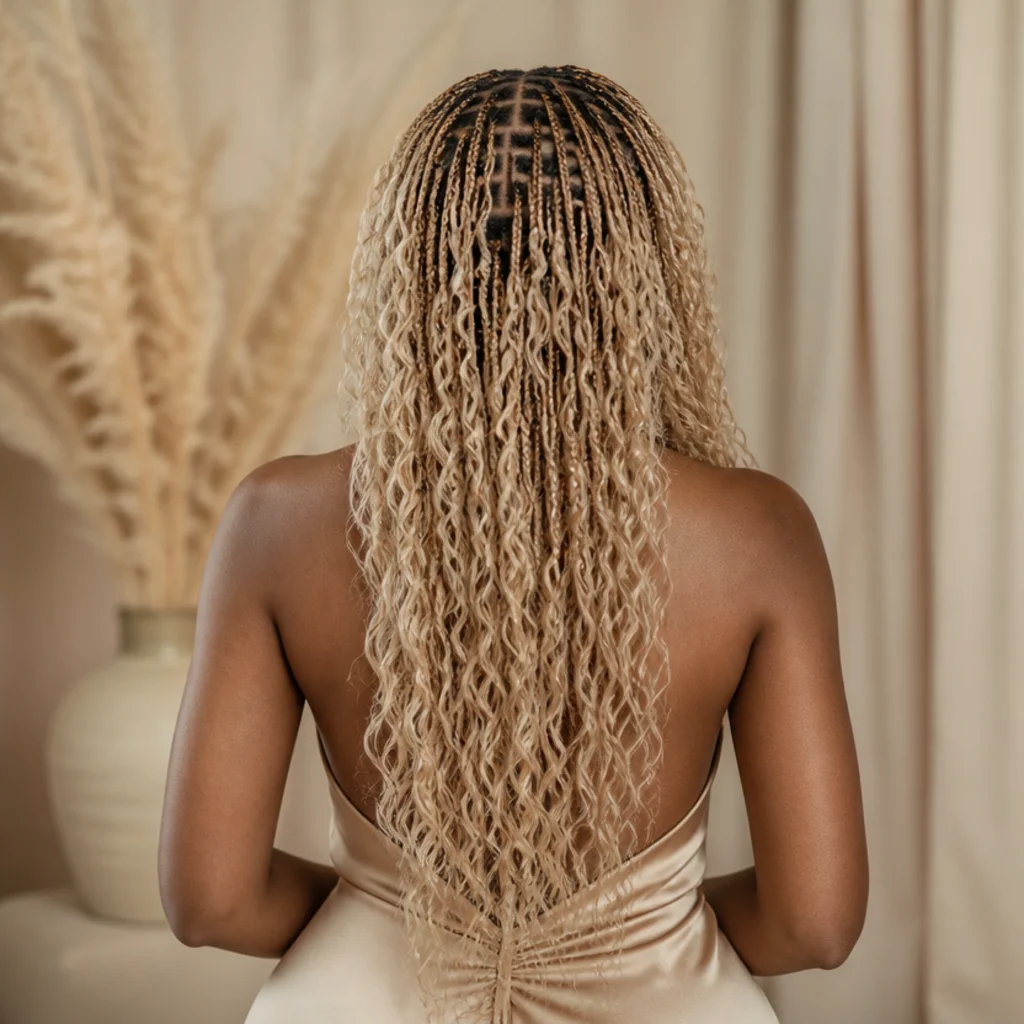
Champagne blonde, a pale, slightly warm neutral with a soft luminous quality (a toned-down #613 leaning beige), feels dressed-up and event-ready, which is why it's a favorite for weddings, milestone shoots, and special occasions. The tone photographs beautifully under both warm reception lighting and cool daylight, and it pairs cleanly with gold and silver jewelry alike, so it never fights the metals in your look or your rings. Long length styled into loose loops, soft waves, or a romantic half-up gives a bridal, ethereal finish that holds up through a long day. Because it's a lighter, warmer-neutral shade, plan the install a few days ahead so the loops settle and any install frizz calms before the event. Neutral and warm-neutral undertones suit it especially well. Pro tip: do a hot-water dip or gentle styling session two days before, never the morning of, so the shape has a full night to relax into place. Wear a satin bonnet the night before to keep the loops crisp and frizz-free for photos. Ask your braider for a champagne or pale-neutral blonde and bring your outfit and jewelry so they can suggest a complementary finish and updo.
Pro Tips from the Editor
- Match the metal to the tone: cool blondes (platinum #613 cool, ash #22) sit best with silver and cool-toned cuffs; warm blondes (honey #27, butter #24, caramel #12, strawberry) glow with gold. Mixing against the grain is the fastest way to make a good install look cheap.
- Cleanse the scalp, not the loops. Dilute a clarifying or gentle sulfate-free shampoo with water in an applicator bottle, aim it at the roots, and let the runoff rinse the length. Scrubbing the loops directly frizzes the wrap and shortens the style's life.
- Cool blondes show every speck of lint and dye transfer, so retire dark, fuzzy scarves and hoodies for the run of the style, or line your hood with satin. This single habit does more for platinum and ash than any product.
- Bring a reference photo of the fade or placement, not just the color. Ombre start point, money-piece position, and curl density are all judgment calls your braider will otherwise default on, and a photo settles them in seconds.
- Protect edges from day one: ask for comfortable root tension (you should be able to raise your eyebrows freely), keep cuffs and beads an inch or more off the scalp, and skip tight high buns in the first week while everything settles.
- Refresh warm blondes with a sheer gloss oil and cool blondes with a purple-tinted shine spray. Warmth needs shine; coolness needs neutralizing, and using the wrong one is why a fresh blonde can look tired by week four.
- Re-dip loose boho curls in hot water from a kettle poured over the curl held in a mug rather than reaching for a hot tool — extension hair can singe or melt, and the hot-water set is safer, cheaper, and holds longer.
- Let the loops dry fully before bed. Damp locs sealed under a bonnet overnight can develop mildew and a musty smell at the roots; air-dry completely, then wrap.
How to Choose / Get the Look
Work the decision in this order: tone, then length, then texture, then size. Tone sets your maintenance ceiling. If you want low upkeep and invisible regrowth, lean warm and rooted: honey (#27), butter (#24), caramel highlights (#12), strawberry, or a shadow-root dark blonde all blend as your hair grows and forgive week-six roots. If you want maximum impact and don't mind more fuss, platinum (#613) and ash (#22) deliver the coolest, most editorial payoff, but they show lint and buildup faster and want refreshing nearer six weeks than eight. Length sets comfort and drama: short and bob styles feel light and brighten the face (best for round and heart shapes wanting structure), bra-strap is the comfortable all-rounder for most lifestyles, and waist-length is pure drama at the cost of real scalp tension. Texture sets the mood: smooth sealed ends read polished and modern, while boho locs with curls or curly ends read soft and free-spirited but need curl refreshing every couple of washes. Size sets time and weight: jumbo installs fast and reads graphic but shows more scalp; micro takes a full day but styles like natural hair; medium is the safe default.
Here is a quick way to line the choices up before you book:
| If you want... | Choose | Suggested color code | Upkeep window | Watch for |
|---|---|---|---|---|
| Lowest maintenance | Shadow-root dark blonde, honey, caramel highlights | #1B into #12 / #27 | 7-8 weeks | Keep the root deep and long for the longest stretch |
| Boldest statement | Platinum or ash | #613 / #22 | ~6 weeks | Lint, dye transfer, brass at week 4 |
| Softest, most forgiving | Butter, strawberry, honey-to-platinum ombre | #24 / #27+#350 | 6-8 weeks | Blend and fade placement, bring a photo |
| Lightest to wear | Bob or micro | #24 / #27 | 5-6 weeks (bob), full cycle (micro) | Micro install is a full-day sit |
| Most drama | Waist-length sun-kissed | #27 + #16 + #24 | 6-8 weeks | Scalp tension, ask for a finer loc size |
When you book, bring two or three saved photos and state four things plainly: loc size (micro, medium, or jumbo), the exact blonde tone (name it and, if you can, the code — "#27 honey," "cool ash #22," "shadow-rooted #613 platinum"), the length by landmark or inches, and whether you want distressing and curls, and how much. Ask about comfortable tension, especially for longer or heavier styles. Confirm the hair being used is actually the tone you asked for by checking it against your skin in daylight, and plan for 6-8 weeks of wear with edge care and satin protection every night.
Frequently Asked Questions
How long do blonde butterfly locs last?
Most people wear butterfly locs for about 6 to 8 weeks. Rooted and darker blondes stretch toward the longer end, since regrowth blends into the deep root, while bright platinum and ash usually look best refreshed nearer six weeks, once loose loops appear and lint or brass start to show. Past eight weeks the wrap loosens and new growth can create tension at the scalp, so treat eight weeks as an outer limit, not a target to push past.
Are blonde butterfly locs damaging to natural hair?
The color itself isn't, because it lives entirely in the wrapped extension hair — your own strands are never lifted or bleached. The real risks are mechanical: tension at the scalp during wear and careless removal. Ask for comfortable root tension at install, keep the style no longer than about eight weeks, and unravel gently (or have your braider remove it) with plenty of slip from a conditioner or detangler, so you never snap your own hair at the roots. A clarifying wash and a deep conditioning treatment after takedown helps restore the scalp.
Can I get butterfly locs with curls in blonde?
Yes. Boho butterfly locs with curls add wispy curly pieces throughout, or leave the ends curly, using blonde extension hair — either way, the shine of the curls makes blonde look extra dimensional. Tell your braider how heavy you want the curls (light, medium, or full), since more curl means a fuller, more bohemian shape and a higher price. Plan to refresh the curls with a hot-water dip or refresher spray every couple of washes; loose curls relax faster than any other element in the style.
Do short butterfly locs work in blonde?
Yes. Short butterfly locs at bob or chin length are light, face-brightening, and quicker to install, and blonde in a shorter shape pulls the eye straight to the cheekbones and jaw. They flatter round and heart-shaped faces especially, adding definition without weight. Ask for curled rather than blunt-sealed ends so the shape stays soft and disguises regrowth, and trim loosening loops around week five to keep the perimeter crisp instead of fuzzy.
How do I keep blonde locs from looking dull?
Cool blondes especially can flatten out without deliberate shine. Sleep on satin, run a lightweight gloss oil over the loops for warm blondes or a purple-tinted shine spray for cool ones, and cleanse the scalp gently with diluted shampoo so lint and buildup don't dim the color. Retiring dark, fuzzy fabrics that shed onto pale hair makes a bigger difference than most people expect — lint reads as instant dullness on platinum and ash.
How do I stop platinum or blonde locs from turning brassy?
Brassiness is warm pigment surfacing as the hair ages and oxidizes. For platinum and ash, use a purple-tinted or blue-tinted shine spray every week or two to neutralize the yellow, and rinse with cool rather than hot water when you cleanse, since heat opens the hair and speeds up the shift. Because the color is locked into the extension hair rather than your own, you can't re-tone it the way you would natural hair, so gentle care and avoiding buildup are the only real prevention.
Can I wash blonde butterfly locs, and how often?
Yes, but gently, and no more than every two to three weeks. Dilute a sulfate-free shampoo with water in an applicator bottle, focus it on the scalp, and let the runoff cleanse the length instead of scrubbing the loops, which frizzes the wrap. Squeeze, don't wring, press out water with a microfiber towel, and let the locs air-dry completely before bed — damp locs held in a bonnet overnight can mildew and develop odor at the roots.
Which blonde shade is most beginner-friendly?
A shadow-rooted dark blonde or a caramel-and-blonde highlight is the gentlest first step. Both keep deeper color at and around the face, blend regrowth invisibly, and never commit you to bright color right at the hairline. A face-framing money piece is the other easy entry: it adds just two to four bright locs at the front while the rest stays dark, so it's simple to wear day to day and simple to walk back if bright blonde turns out not to be for you.
How much do blonde butterfly locs cost?
Pricing varies widely by region, artist, hair quality, and the specifics of your install, so treat any figure as a range rather than a quote. Loc size and length are the biggest drivers: micro and waist-length installs sit at the top because they take the most hours and hair, while jumbo and bob sit lower. Boho curls, premium or pre-toned hair, and accessories all add to the total. Always confirm what the price includes — hair, curls, cuffs, takedown — before you book, so there are no surprises in the chair.
Butterfly locs vs faux locs in blonde, which should I pick?
Both are protective extension styles, but they wear differently. Butterfly locs use a distressed, looped wrap that reads airy and boho and installs faster, while faux locs are smoother, more uniform, and usually heavier and longer-lasting. For a soft, undone blonde with movement and curls, butterfly locs win; for a sleek, polished blonde you want to keep in for eight-plus weeks, faux locs may suit better. Blonde looks great on both, so let texture preference and wear time decide.