3 Things to Know Before Getting Jumbo Box Braids
Jumbo braids read as effortless, but the section size quietly dictates everything: how long you sit, how the install feels on your scalp, how long it holds, and how you care for it. Understand these three levers and you book with intention instead of guessing.
 Edited by Lena Rose · Published July 11, 2026 · 12 min read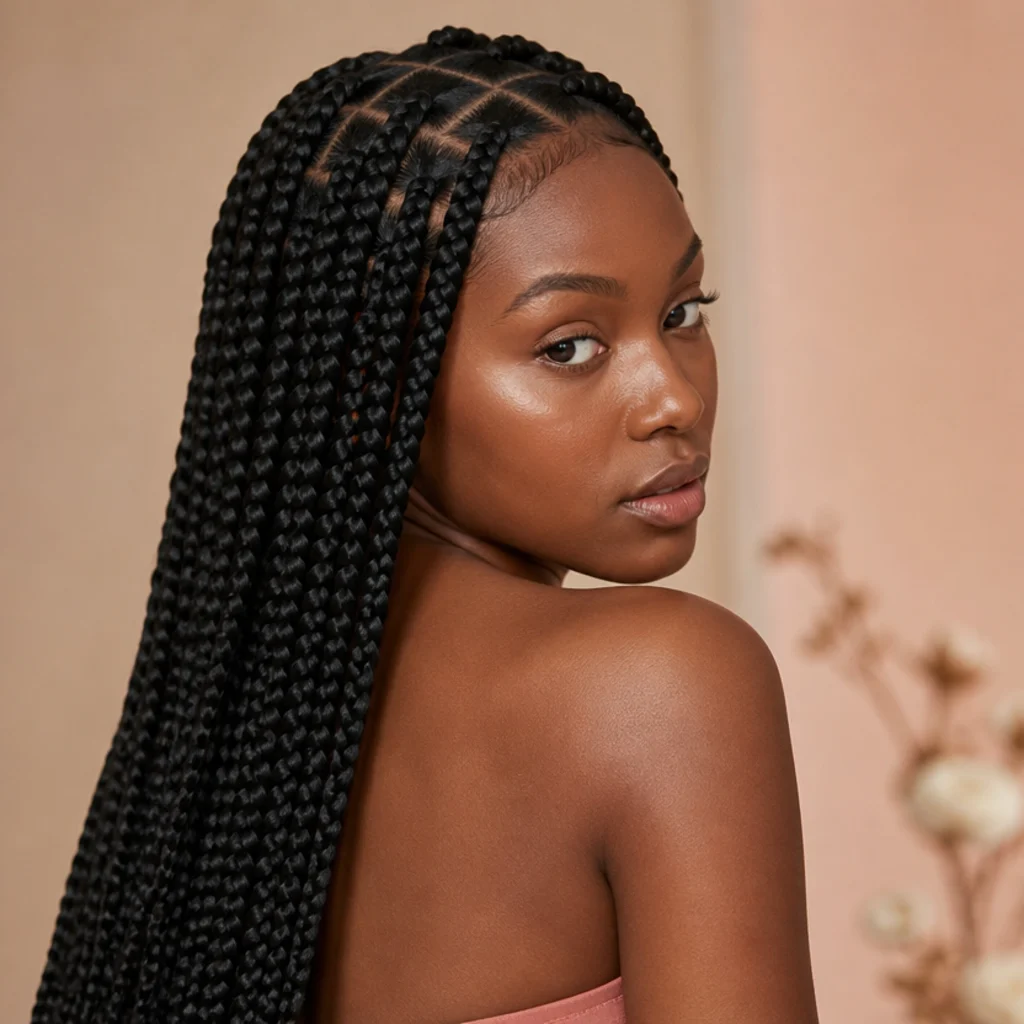
Quick Answer
- Best for: Anyone who wants a bold, low-part-count protective style with a fast install, easy wash-day access, and a lightweight root, especially in the knotless version.
- Who might skip it: Very fine, fragile, or actively shedding hairlines, and anyone with a history of traction tension who needs smaller, lighter sections instead.
- Maintenance: Low day to day: satin at night, scalp oiled once or twice weekly, diluted cleanse as needed. Budget one edge and root refresh mid-wear.
- Difficulty: Easy to sit through; the parting, tension control, and feed-in rhythm are expert work best left to an experienced braider.
- Cost: Variable by region, length, and hair brand. Jumbo often lands at the lower-labor end of the braid menu because it installs fast, though premium or waist-length work costs more.
- Wear time / longevity: Roughly 4-6 weeks looking crisp; medium-jumbo can stretch a little longer before frizz and slippage set in.
- Standout variation: Jumbo knotless box braids — a flat, weightless root and a softer hairline than knotted installs.
- How to ask your braider: "I'd like jumbo knotless box braids, feed-in from the root, a looser perimeter around my edges, and [length] — can we match section size to a reference photo?"
In This Guide
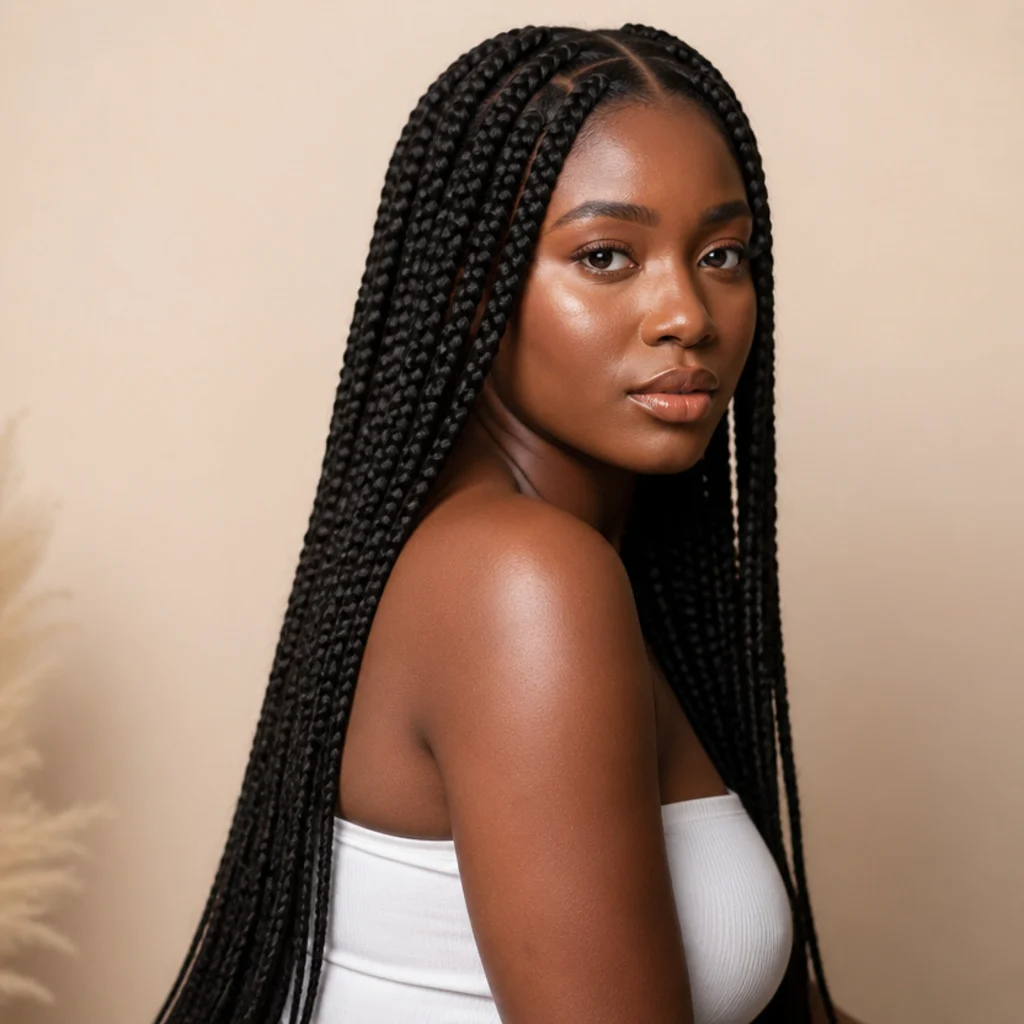
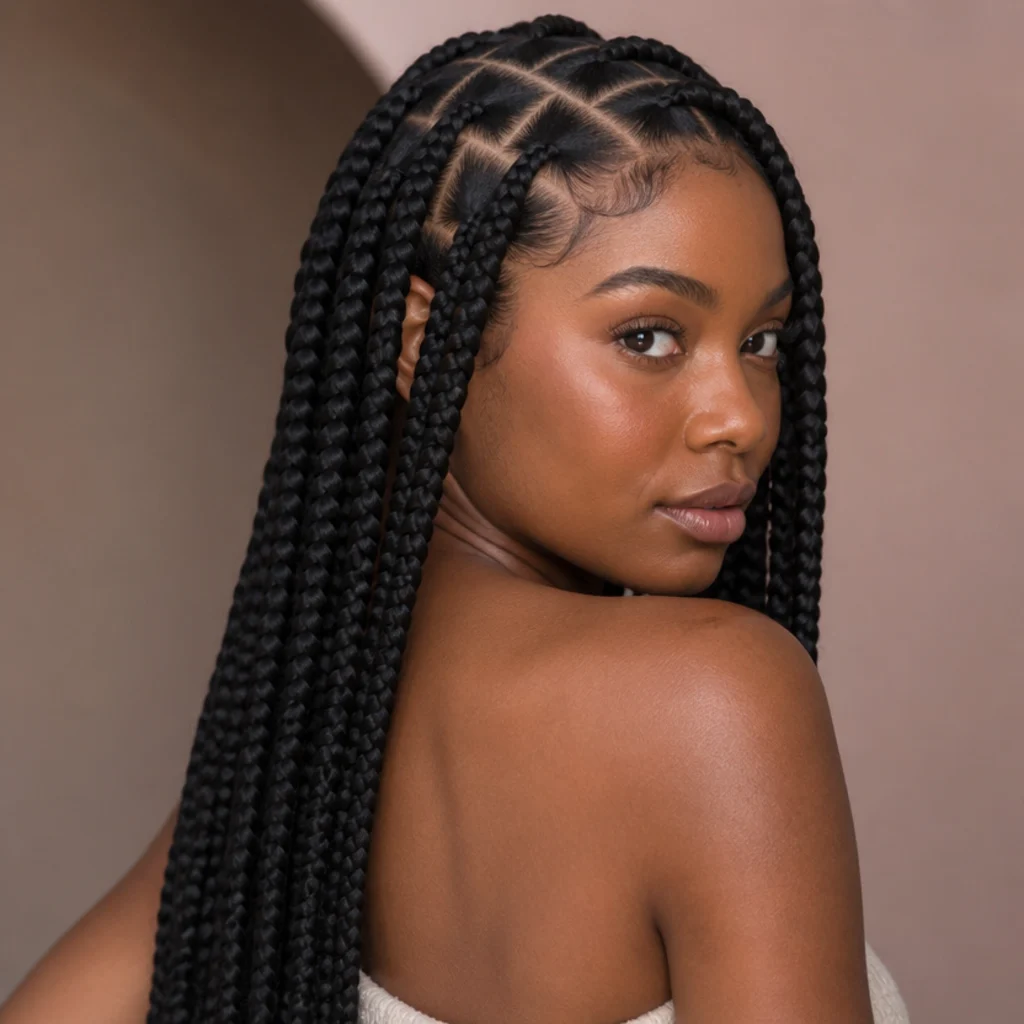
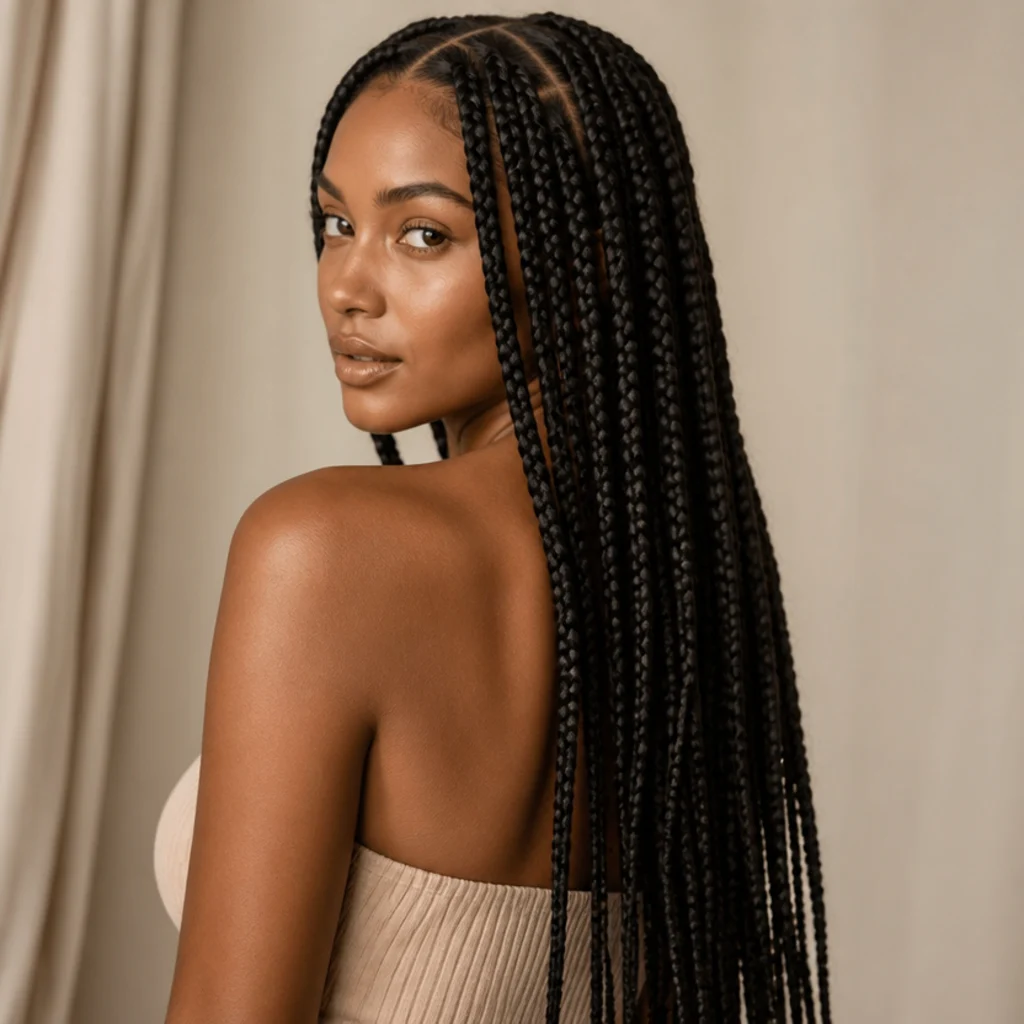
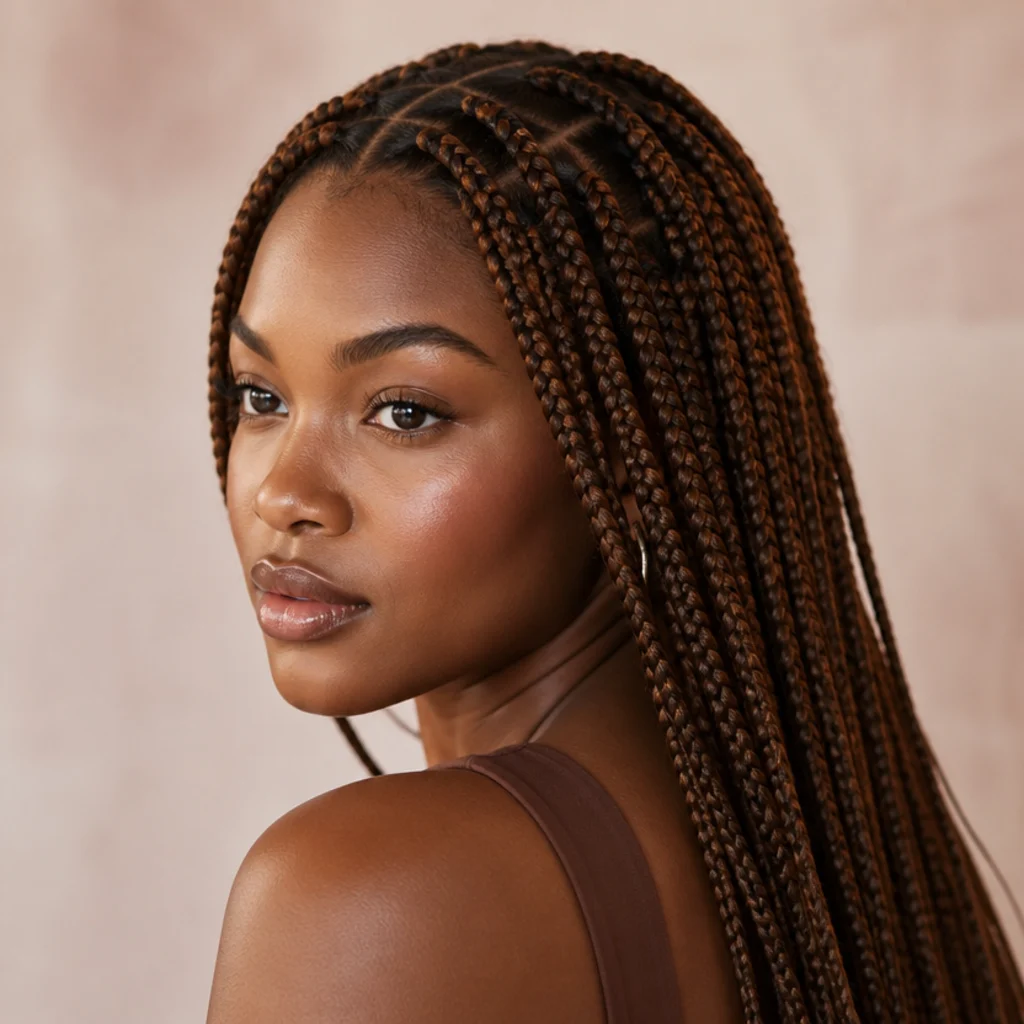
Jumbo box braids are the fastest route to a full head of protective braids, which is why they dominate booking day. The sections run large — often two to three centimeters across the part — so your braider covers a whole head in a fraction of the time a micro or small install takes, and the knotless version feels especially light at the root since the hair feeds in gradually instead of anchoring on a knot. That speed is the appeal, but bigger parts come with real trade-offs worth weighing first. Section size drives three things at once: how long the style stays crisp, how much strain your perimeter and edges absorb, and how the braids hold up through wash days and restyles. Whether you're leaning toward medium jumbo knotless box braids for a balance of speed and staying power, or full jumbo box braids with beads for a statement finish, knowing these trade-offs means you walk in with accurate expectations and walk out happy with the result. Here's what actually matters, and what to raise before the first section gets parted.
01The Size Trade-Off: Speed vs. Longevity
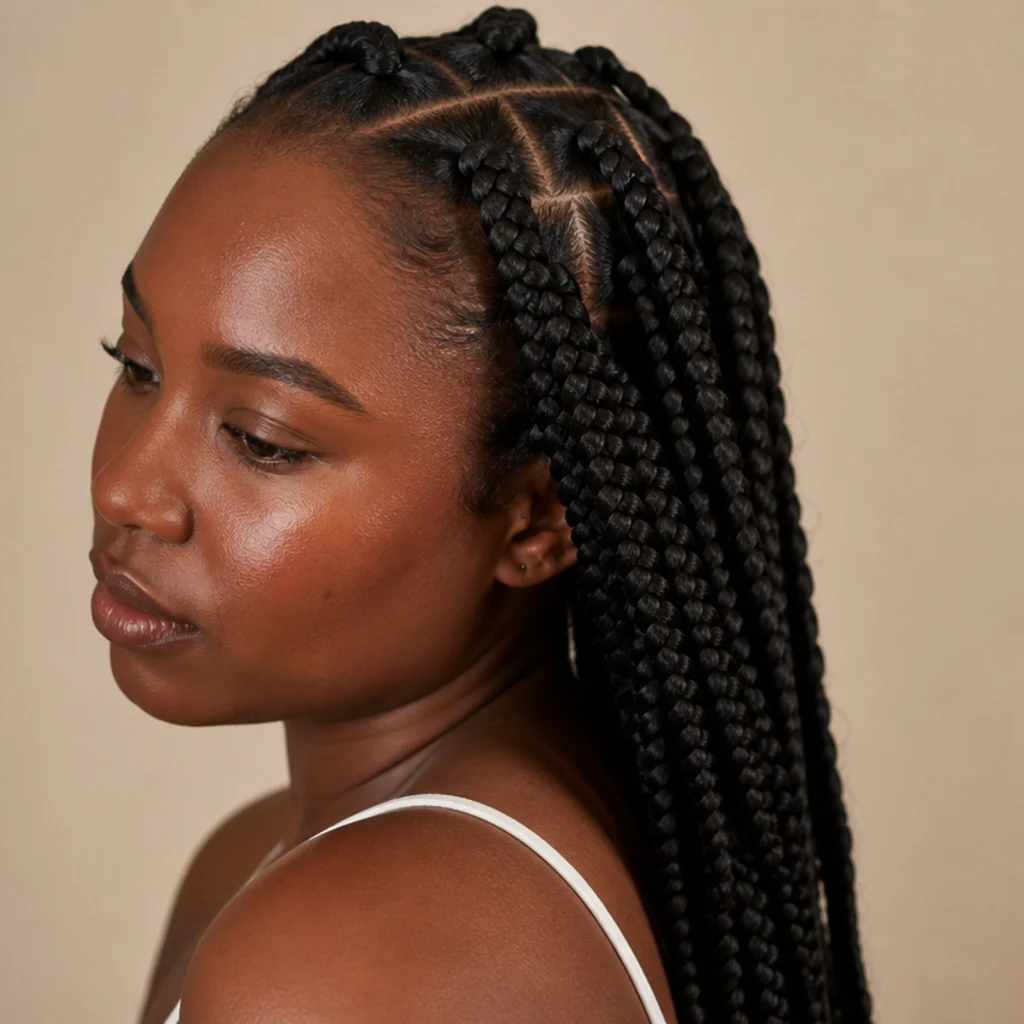
The headline benefit of jumbo braids is speed. Fewer, larger sections mean many people leave the chair in two to four hours rather than the six-plus a small install can run. That's a genuine draw if sitting all day isn't realistic. The trade-off is longevity and refinement: larger parts hold less structural grip, and heavier braids swing more, so they loosen, halo, and frizz sooner. Expect four to six crisp weeks rather than eight-plus. Size also shifts the look. True jumbo reads chunky and statement, while medium jumbo knotless box braids split the difference: quicker than small braids, tidier and slightly longer-lasting than full jumbo. Density matters too; sparse jumbo parts expose more scalp, which some love and others don't. Pro tip: bring two reference photos, one showing part width and one showing overall fullness, because "jumbo" spans a wide range between braiders. Ask your braider to walk you through their sizing on your own head before they start, so the section count matches the look you're picturing.
02Tension, Weight, and Your Hairline
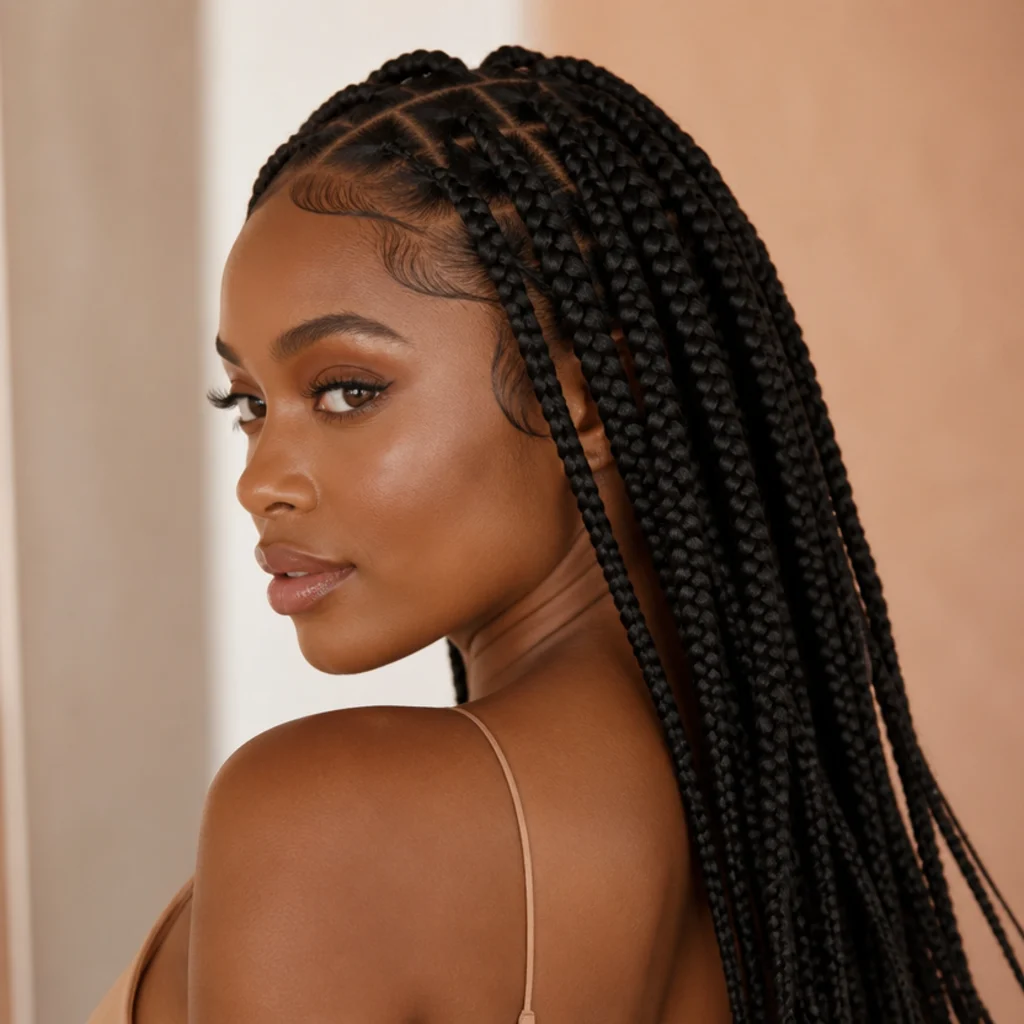
Jumbo braids pack more added hair per section, so each part carries more downward weight, and the perimeter and hairline absorb most of it. Knotless installs change this in a real way: because the extension feeds in gradually instead of anchoring on a tight root knot, jumbo knotless box braids sit flatter, distribute pull across the length, and spare delicate edge hairs the concentrated strain a knot creates. Still, weight is weight, and length multiplies it, so waist-length pulls noticeably harder than shoulder-length. The tension rule is simple and non-negotiable: if a braid stings, throbs, raises small bumps, or makes it hard to relax your forehead, it's too tight. Say so during the install, not days later when it's too late to loosen. A skilled braider will lighten the perimeter, avoid over-packing the temples and nape, and keep baby hairs out of the tension. Fine, fragile, or previously stressed hairlines often do better in medium than full jumbo. Ask your braider for a deliberately looser perimeter and feed-in edges to protect your hairline.
03Upkeep and How to Style Them
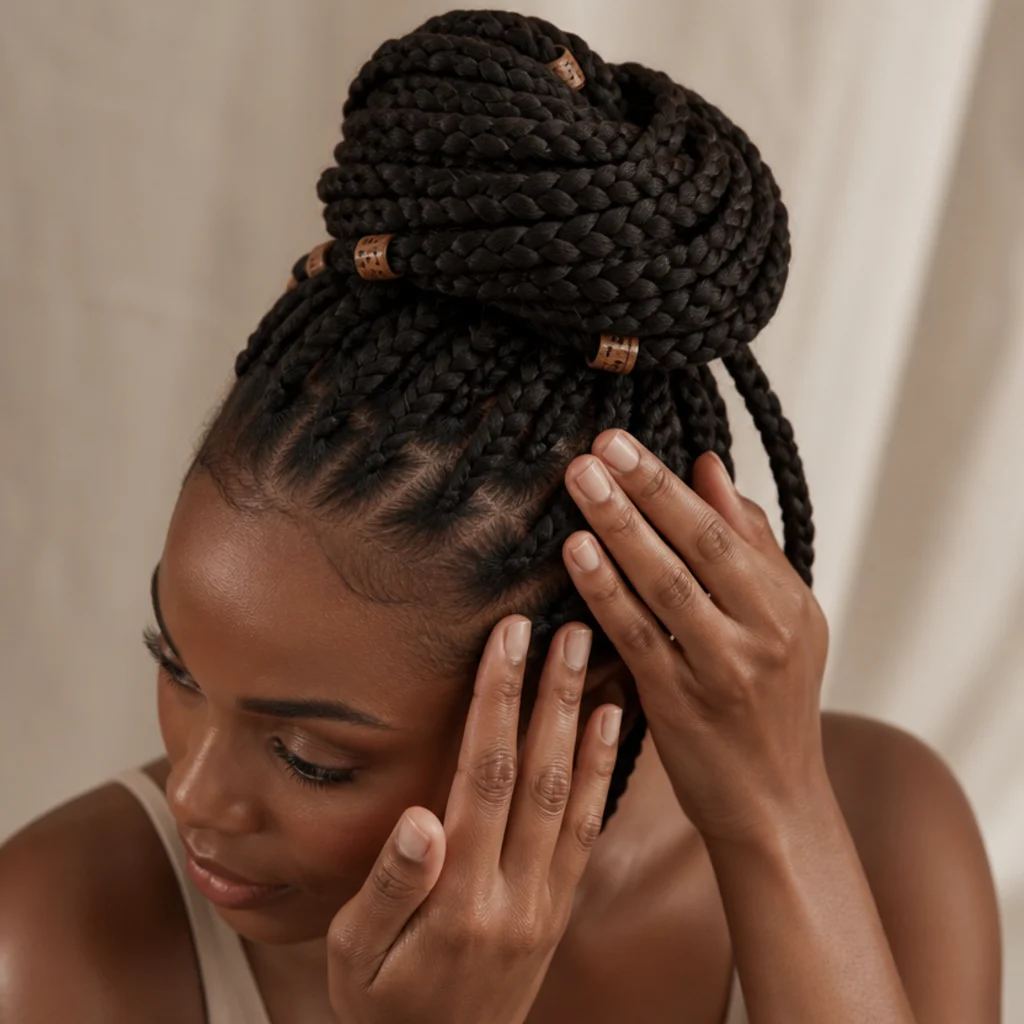
Day-to-day upkeep is refreshingly light. Tie the braids down with a satin scarf or bonnet nightly to cut friction and frizz, oil your scalp once or twice a week with a lightweight blend (jojoba, grapeseed, or a thin scalp oil rather than heavy butters that build up), and cleanse with diluted shampoo in a squeeze bottle every one to two weeks, focusing on the scalp and letting suds rinse down the length. Because the braids are chunky, they gather well, which is the real advantage when you think about how to style jumbo box braids: a loose low bun, a half-up with the rest draped, a deep side part, or a single shoulder sweep all read as intentional with almost no effort. For a decorative finish, jumbo box braids with beads add rhythm and movement. Just choose lightweight beads and keep them off the very ends so they don't tug. Pro tip: refresh only the frizziest roots with a drop of gel and a soft boar brush rather than re-doing the whole hairline, which overworks your edges. Ask your braider whether your ends are sealed by burning or banding so you know how to wash without unraveling.
Pro Tips from the Editor
- Match section size to your density, not just the trend. On finer or lower-density hair, true jumbo can look sparse and expose scalp; sizing down to medium jumbo often reads fuller and lasts longer.
- Weight is the hidden variable. Choose length and bead load together. A waist-length install with heavy beads is a very different scalp experience from shoulder-length with none. Start lighter if it's your first jumbo set.
- Feed-in edges are worth requesting by name. Ask specifically for knotless, feed-in perimeter braids so the hairline hairs carry almost no anchoring tension.
- Pre-wash and stretch your hair, don't just detangle. Clean, blow-stretched, moisturized hair grips the extension better, speeds the install, and reduces mid-braid slippage at the root.
- Don't sleep on a dry root. Chunky parts trap product and sweat; a weekly scalp cleanse and thorough dry (cool blow-dryer at the roots) prevents mildew smell and itch under jumbo sections.
- Cap the wear at the frizz line, not the calendar. Taking jumbo braids down at four to six weeks — before heavy slippage and matting at the new growth — protects your natural hair far more than stretching to eight.
- Photograph your edges on install day. A quick before-and-after of your hairline makes it easy to spot if a style is costing you edge health over successive installs.
How to Choose / Get the Look
Start with two honest answers: how long you can realistically sit, and how long you need the style to hold. If speed and low chair time win, full jumbo is your friend. If you want a tidier finish that stays crisp closer to six weeks, ask for medium jumbo knotless box braids. Then layer in the details below and bring reference photos, because "jumbo" means different things to different stylists.
| Factor | Full Jumbo | Medium Jumbo | Best if you... |
|---|---|---|---|
| Install time | ~2-4 hrs | ~3-5 hrs | Can't sit long → full jumbo |
| Crisp wear | ~4-5 weeks | ~5-6 weeks | Want it to last → medium |
| Scalp weight | Higher | Moderate | Have a sensitive hairline → medium |
| Look | Bold, chunky | Tidy, versatile | Want a statement → full jumbo |
| Fullness on fine hair | Can look sparse | Reads fuller | Have lower density → medium |
Ask specifically for a knotless install if you want to protect your edges, and flag any past tension, breakage, or traction so the braider can lighten the perimeter. Discuss length and weight as one decision. Waist-length looks striking but pulls more, so pick a length your scalp will carry comfortably for weeks. If you want jumbo box braids with beads, confirm bead weight and placement upfront and keep them off the ends. Arrive with clean, detangled, stretched, moisturized hair, and give yourself two or three days to adjust to the added weight before it feels like your own.
Frequently Asked Questions
How long do jumbo box braids last?
Most people wear jumbo box braids for about four to six weeks. The larger parts hold less grip than small braids and loosen faster, so plan a takedown before heavy frizz, slippage, or matting at the new growth sets in. Pushing much past six weeks usually costs more in detangling than the extra wear is worth.
Are jumbo knotless box braids better for your edges?
Generally, yes. Knotless installs feed the hair in gradually and skip the tight root knot, so jumbo knotless box braids distribute tension along the length rather than concentrating it at the scalp. That makes them lighter at the root and gentler on the hairline than knotted versions, though a too-tight knotless install can still stress edges, so tension still matters.
How long does it take to install jumbo box braids?
Because the sections are large, many installs run roughly two to four hours, depending on length, hair density, and your braider's speed. That's noticeably faster than small or micro box braids, which can take a full day. Medium jumbo sits slightly longer than full jumbo because there are more sections to part and feed.
Can I add beads to jumbo box braids?
Yes. Jumbo box braids with beads are a favorite finishing touch that adds movement and personality. Choose lightweight beads, keep placement modest, and avoid loading the very ends, since extra weight there adds strain over weeks of wear and can accelerate loosening.
What's the difference between medium and jumbo braids?
Section size. Medium jumbo knotless box braids use smaller parts than full jumbo, so they take a bit longer to install but often look tidier, read fuller on finer hair, and hold their shape slightly longer. Full jumbo prioritizes speed and a bolder, chunkier look.
Do jumbo box braids damage your hair?
Not inherently — the risk comes from tension and length of wear, not the braids themselves. Excess weight, an over-tight perimeter, or leaving them in too long can stress edges and cause breakage. Choosing knotless, keeping the perimeter loose, moisturizing your scalp, and taking them down on time keep jumbo braids a protective style.
How much hair do I need for jumbo box braids?
Jumbo braids typically use fewer packs than small styles because there are fewer, larger sections, often around three to five packs depending on length and desired fullness. Your braider can give an exact count once they see your density and target length; buying one extra pack is smart insurance.
How do I keep the frizz down on jumbo braids?
Sleep in satin nightly, avoid over-touching, and spot-smooth only the frizziest roots with a drop of gel and a soft brush rather than redoing the whole hairline. A weekly scalp cleanse plus a light oil keeps the roots tidy, and a quick edge refresh mid-wear buys you cleaner-looking weeks without stressing your natural hair.
Can I wash jumbo box braids, and how often?
Yes. Cleanse every one to two weeks with diluted shampoo in a squeeze bottle aimed at the scalp, then rinse thoroughly and dry the roots well (a cool blow-dryer helps) to avoid odor or itch under the chunky sections. Ask your braider how your ends are sealed so you wash without unraveling them.