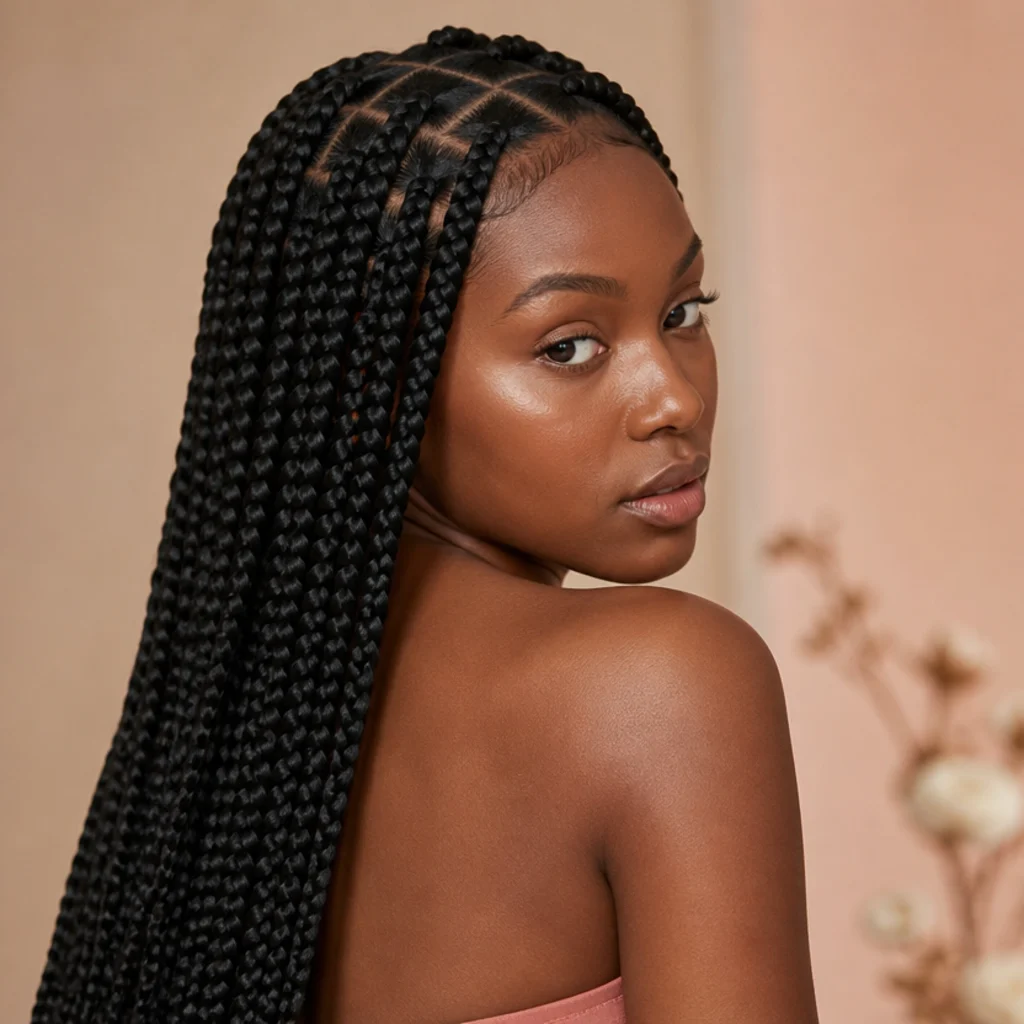
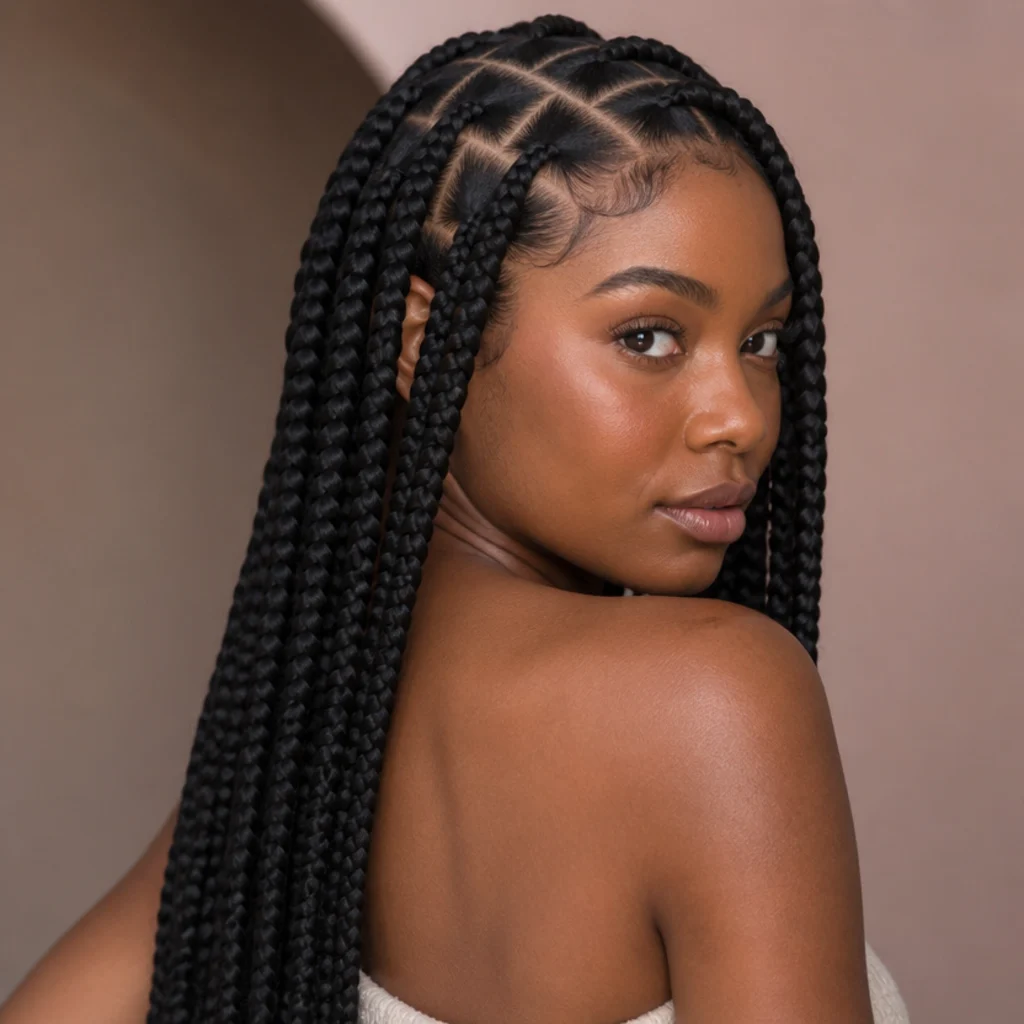
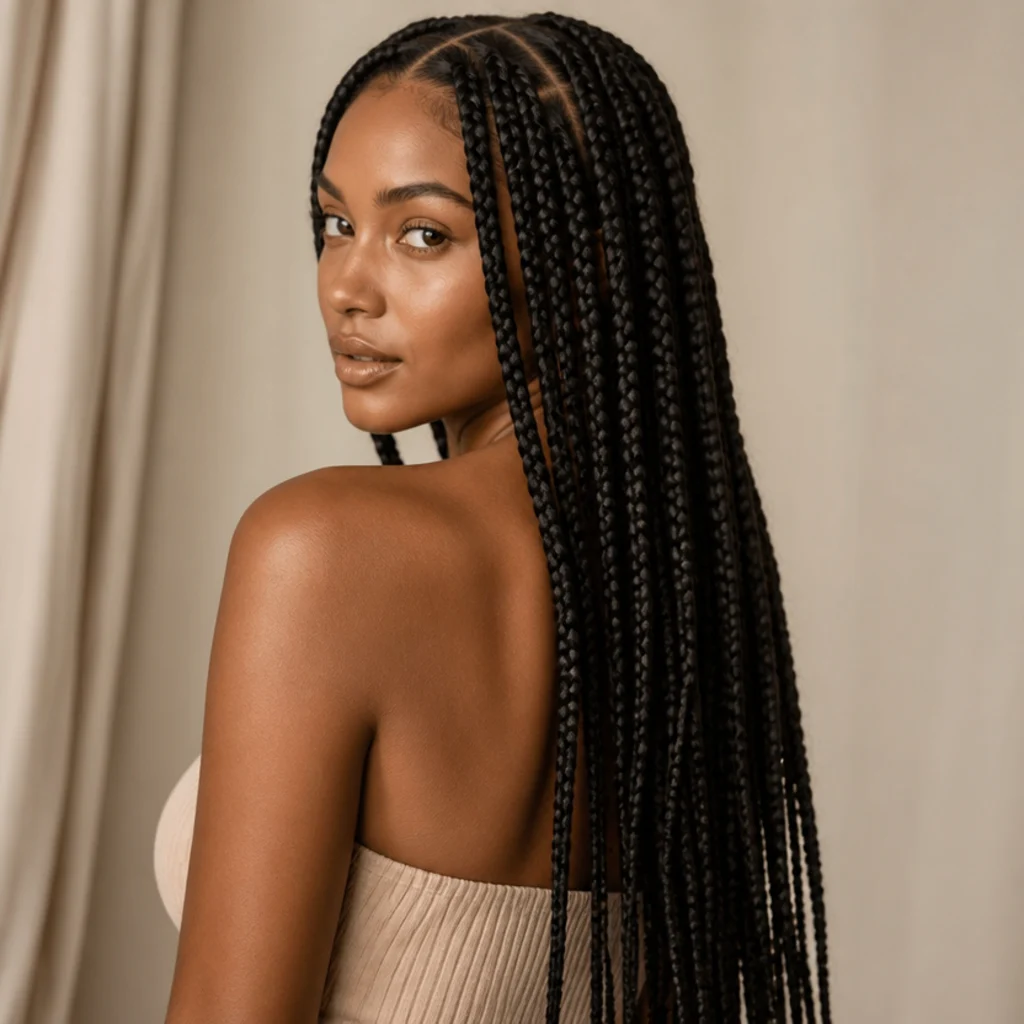
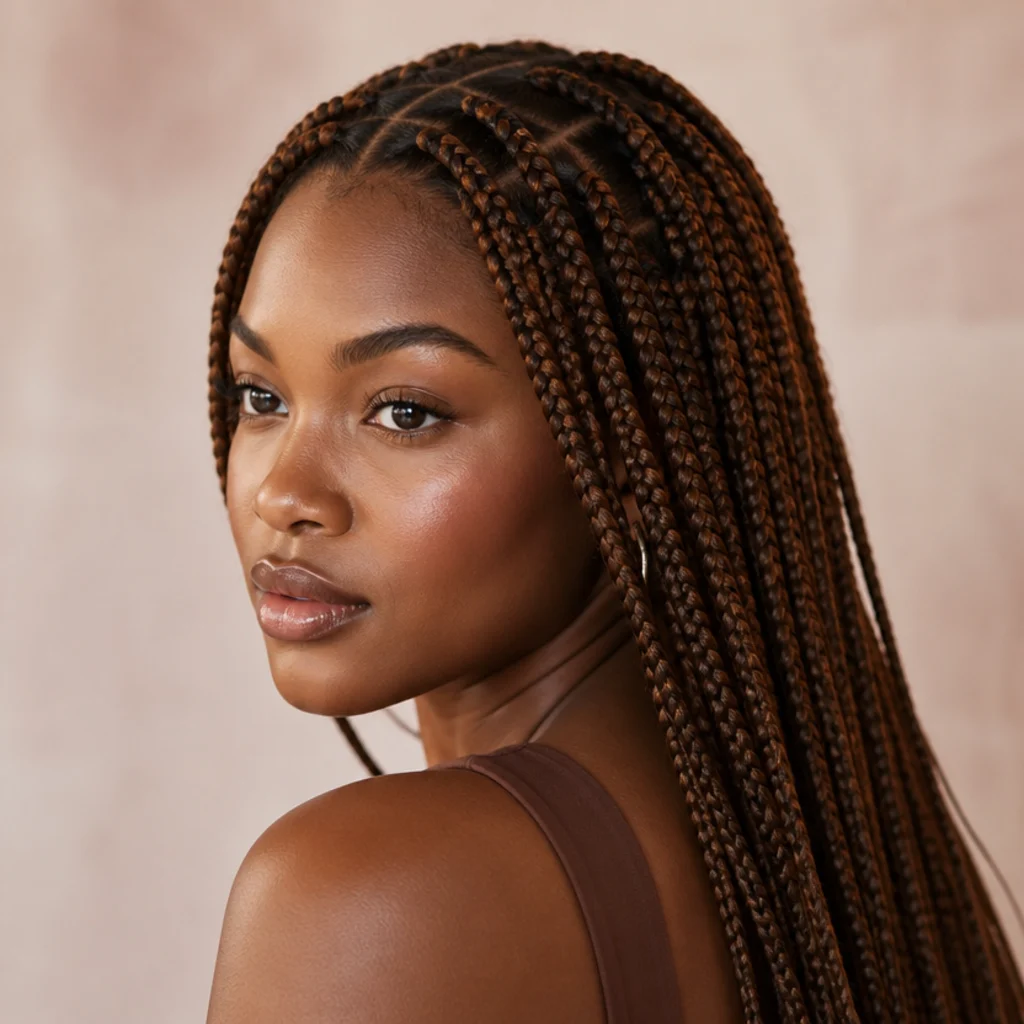
20 Jumbo Box Braids Before and After Looks
Think of this as a subtle-to-bold progression, not a set of client photos. Each look is an original, illustrative example, moving from soft and natural toward statement-making, so you can watch one protective style stretch across moods, lengths, undertones, and finishes without ever leaving the knotless family.
 Edited by Lena Rose · Published July 11, 2026 · 32 min read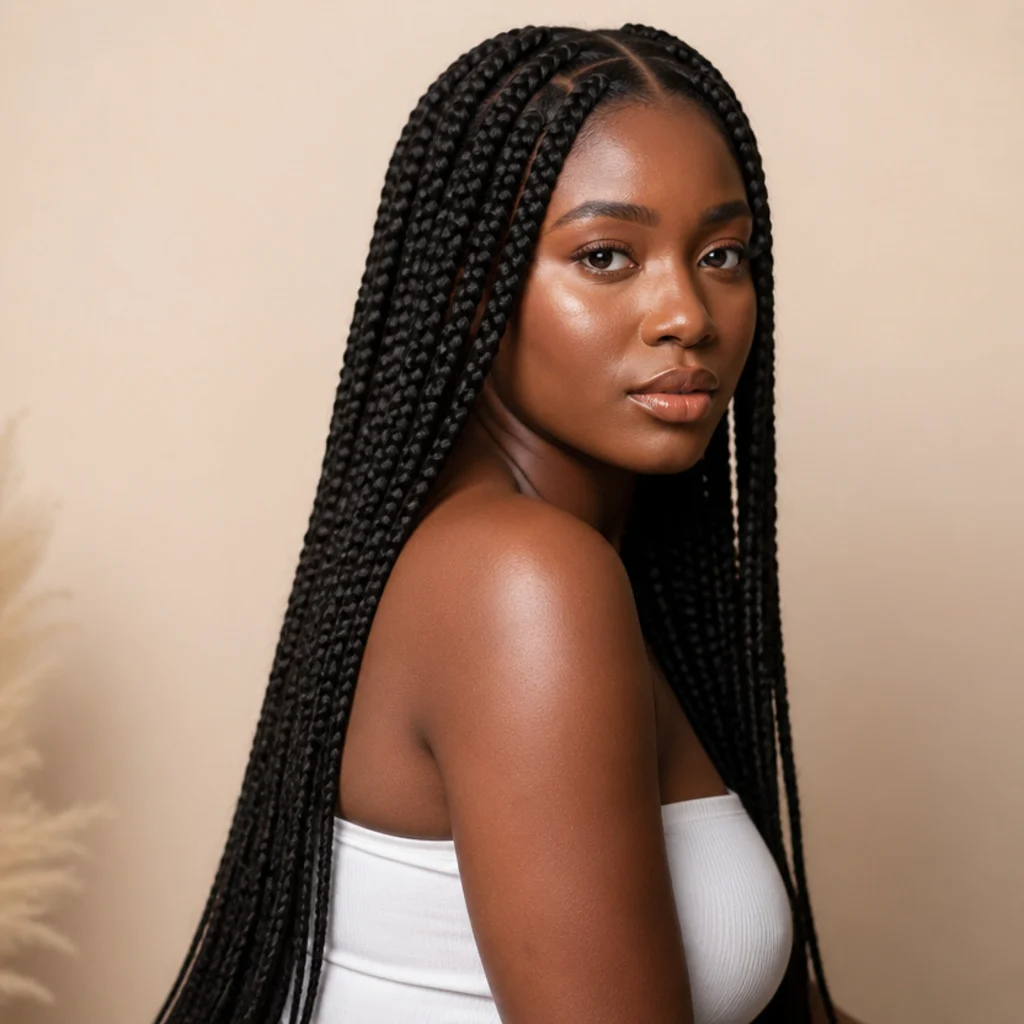
Quick Answer
- Best for: Anyone wanting a lightweight, low-tension protective style with big visual payoff and a fast, 3-5 hour install instead of a full day in the chair.
- Who might skip it: Very fine or fragile hairlines that struggle with any added length-weight, and anyone who dislikes bulk on top for a few days while the roots settle.
- Maintenance: Nightly satin scarf or bonnet, edge oil 2-3 times weekly, diluted-shampoo scalp cleanse every 1-2 weeks, and a re-tighten or takedown by week 6.
- Difficulty: Medium-to-advanced to install (best left to a braider); easy to maintain once it's set.
- Cost: Widely variable by region, length, and braider experience; longer, beaded, and boho-blend versions sit at the higher end because they use more hair and chair time.
- Wear time / longevity: 4-6 weeks is the sweet spot; new growth and edge frizz, not the braids, set the deadline.
- Standout variation: Bold Fulani-inspired beaded ends (Look 20) for a finish that photographs cleanly from three-quarter and back angles.
- How to ask your braider: Request "jumbo knotless, low tension at the hairline," name your length in inches, and bring 2-3 reference photos for size, color, and part pattern.
In This Guide
- Soft Natural Shoulder-Length Start
- Sleek Center-Part Everyday
- Warm Chestnut Balayage Braids
- Medium Jumbo Knotless, Waist Length
- Honey-Blonde Money Piece
- Half-Up, Half-Down Everyday Style
- Sculpted Braided Bun Updo
- Side-Swept Over One Shoulder
- Jumbo Box Braids With Beads
- Cuffed Ends With Gold Rings
- Boho Curly-End Braids
- Burgundy Ombre Statement
- High Braided Ponytail
- Bohemian Loose-Wave Blend
- Copper-Red Color Pop
- Extra-Long Dramatic Length
- Double Braided Buns
- Braided Crown Halo Wrap
- Two-Tone Peekaboo Color
- Bold Fulani-Inspired Beaded Finish
Jumbo knotless box braids sit right between drama and comfort: chunky enough to make a statement, light enough to spare your edges the anchored pull of a heavy knot. The extension feeds in gradually along the first inch of the braid, so the base lies flatter against the scalp, the parts read cleaner, and the whole install runs faster than traditional knotted box braids. That's why they're a favorite for a first protective style, a low-effort vacation look, or a quick reset between color appointments.
Size matters more than most beginners expect. "Jumbo" means fewer, larger braids and a shorter install, but each braid carries more weight, so length and hairline health need to be part of the conversation before you sit down. The 20 looks below aren't a ranking; they're arranged as a progression, opening with the softest, most natural finishes and building toward bold color, beadwork, and sculptural parting. Treat them as a mix-and-match menu. Every entry names who it flatters by face shape and undertone, gives a realistic upkeep timeline, and tells you exactly what to say in the chair, so you leave with the look you pictured instead of a rough approximation.
01Soft Natural Shoulder-Length Start
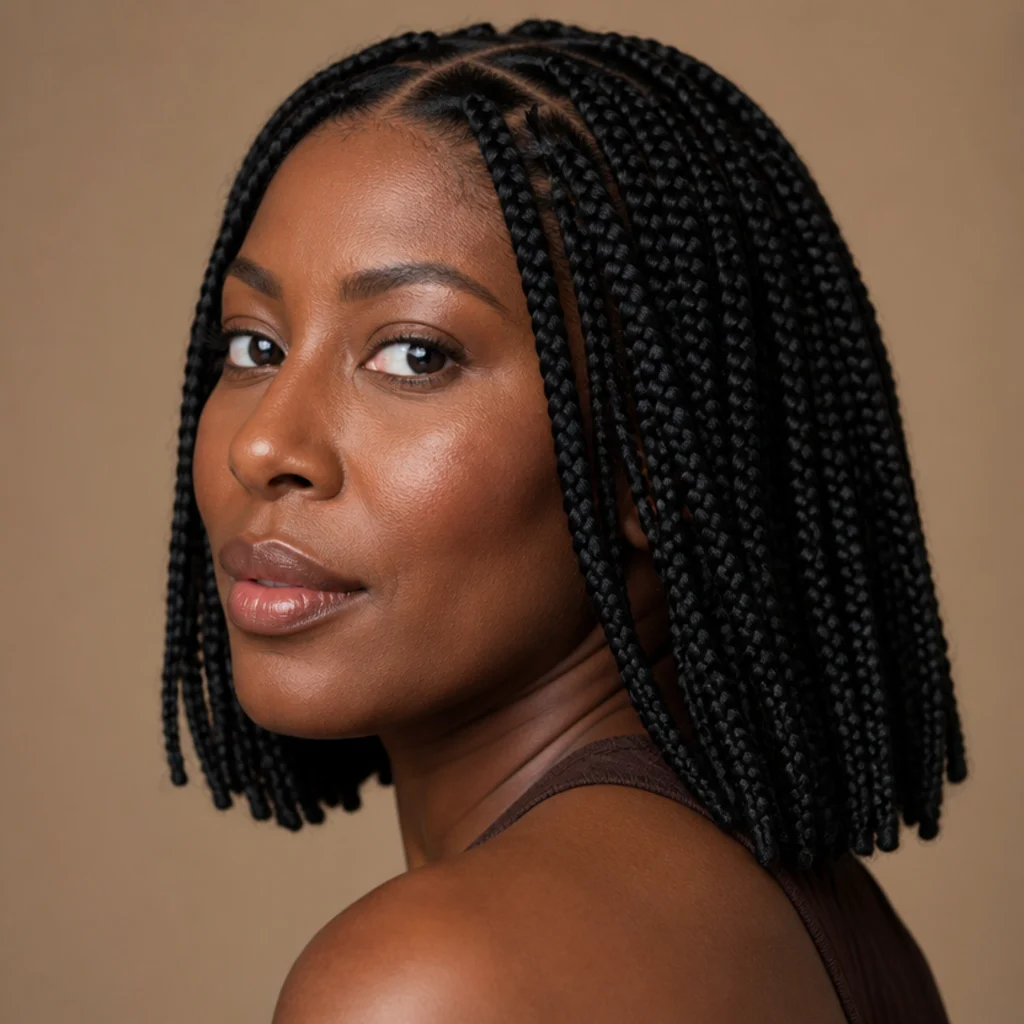
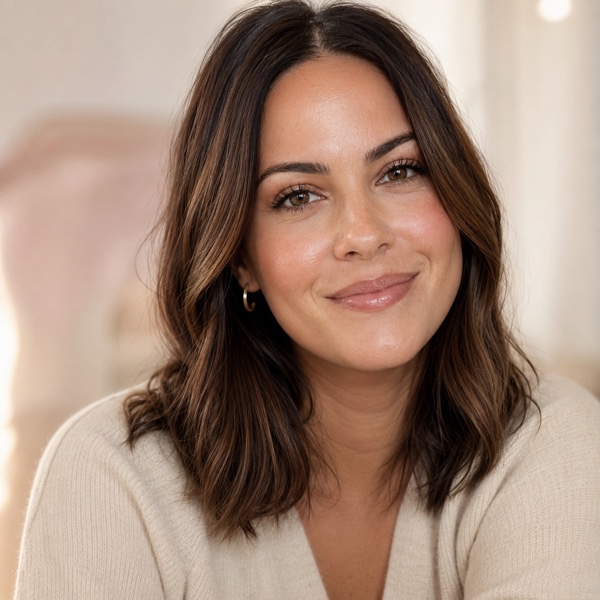
The gentlest entry point: shoulder-grazing jumbo knotless braids in a color matched to your own root, usually a natural off-black (1B) or soft espresso rather than a flat jet black, which can look heavy against warm skin. The length is short and the weight minimal, so tension on the hairline stays low; this is the smartest trial run if you've never worn a protective style this size. Rounded and full faces read especially balanced here, since ends that stop at the collarbone visually lengthen the jaw; medium partings keep the scalp from looking sparse. Upkeep is simple: a satin bonnet nightly, a light edge oil twice a week, and the shorter braids dry within a couple of hours after cleansing. Expect a comfortable 4-6 weeks before frizz at the root calls for a refresh. Ask your braider for a natural off-black tone, medium box partings, and a knotless feed-in kept loose at the temples.
02Sleek Center-Part Everyday
A laser-straight center part is the quiet upgrade that makes jumbo braids look intentional instead of thrown together. Here the braids sit smooth and glossy, split down the exact middle with even, mirror-matched boxes on each side, the detail that separates a polished install from a rushed one. This is the everyday workhorse: professional, symmetrical, and flattering on oval and heart-shaped faces, because the central line draws the eye vertically and slims a wider forehead. Keep the part crisp by running a rat-tail comb along the scalp line and smoothing a pea-sized amount of edge control every two or three days; over-applying builds white flaking on camera. It pairs with any neckline and reads clean on video calls, where a wandering part shows immediately. Maintenance is standard knotless care, roughly 5-6 weeks of wear. When you book, say you want a "straight center part with consistent box sizing," and have your braider check the symmetry from the back before finishing the crown.
03Warm Chestnut Balayage Braids
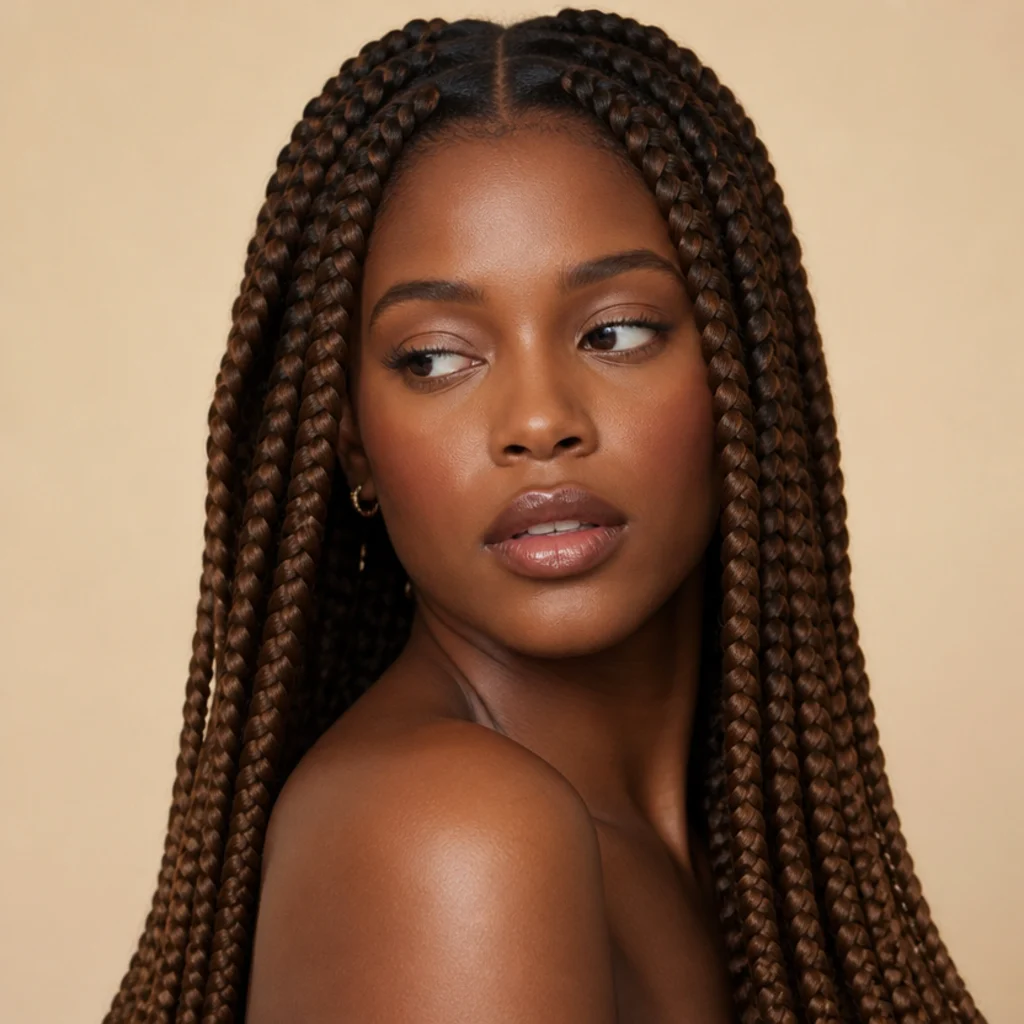
Now a whisper of dimension. Swapping flat black for a warm chestnut balayage, deep at the root and warming toward the ends, adds movement without shouting. The gradient catches light as the braids swing, giving a lived-in, sun-warmed effect that flatters warm and neutral undertones and reads beautifully against medium-to-deep skin. The color is pre-blended into the extension fiber, so none of your own strands get chemically processed: no regrowth line, no color commitment. The one maintenance catch is that lighter ends dry out faster, so seal them with a drop of lightweight oil and skip heavy waxes that dull the warmth. Expect the same 4-6 week window as any knotless style. For a believable melt, ask for a "root-melt to chestnut, low-contrast" blend rather than a hard two-tone, and bring a reference so the warmth lands where you want it, since chestnut ranges from cool taupe-brown to almost auburn depending on the fiber.
04Medium Jumbo Knotless, Waist Length
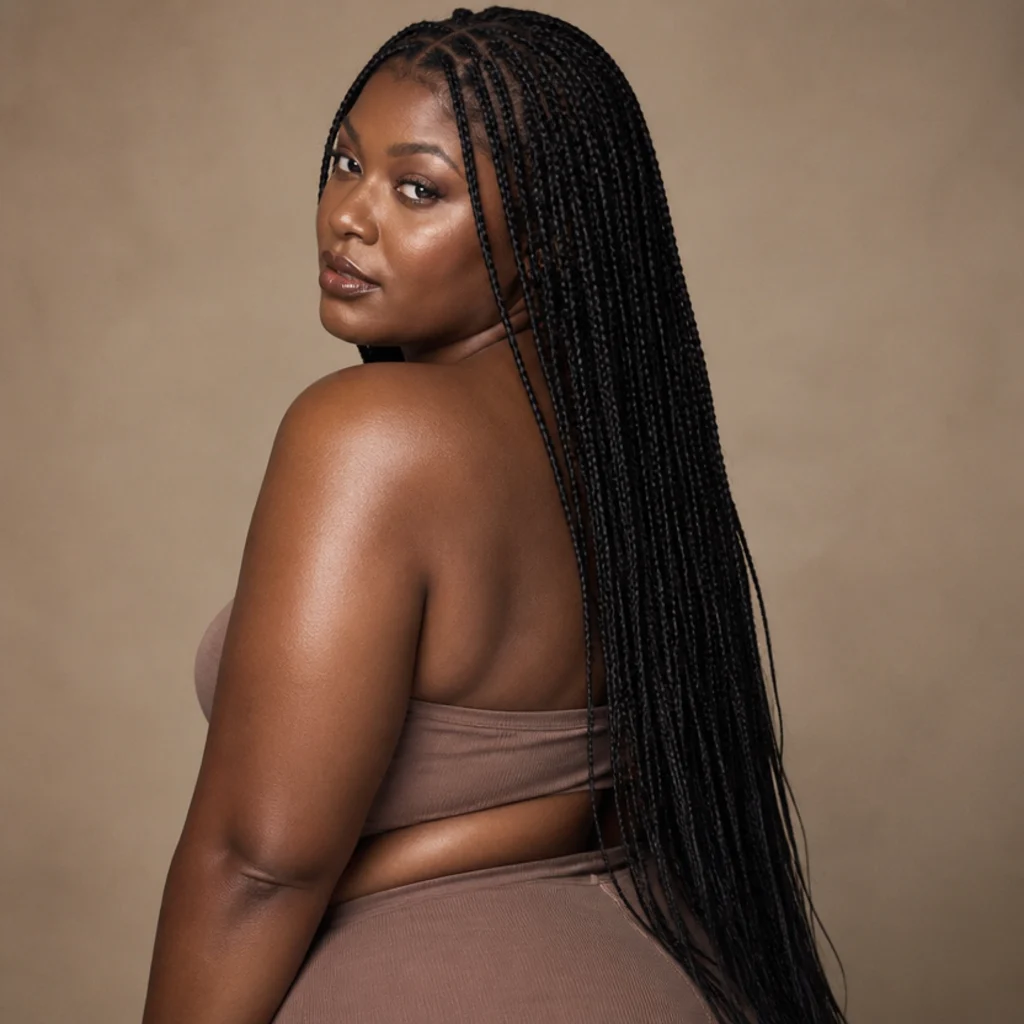
Here's serious length. Medium jumbo sits between classic jumbo and standard medium braids, so you get fullness and a lush, dense look without the heaviest weight, dropped to the waist for elegant movement. The mid-size means more braids overall, which keeps the parts discreet and the coverage even, a flattering choice if your scalp shows more with the largest jumbo size. Longer lengths do add drag on the roots, so a lightweight, pre-stretched fiber and a deliberately not-too-tight install aren't optional here; a low hairline should be braided especially loose. This length suits taller frames and anyone who lives in ponytails and buns, since there's enough braid to wrap and stack. Gather the length loosely into a bonnet at night so the ends don't tangle on the pillow. Ask for "medium-jumbo knotless, waist length, lightweight fiber," and confirm the finished weight feels comfortable across the crown before your braider seals the top.
Save this to Pinterest to compare lengths side by side.
05Honey-Blonde Money Piece
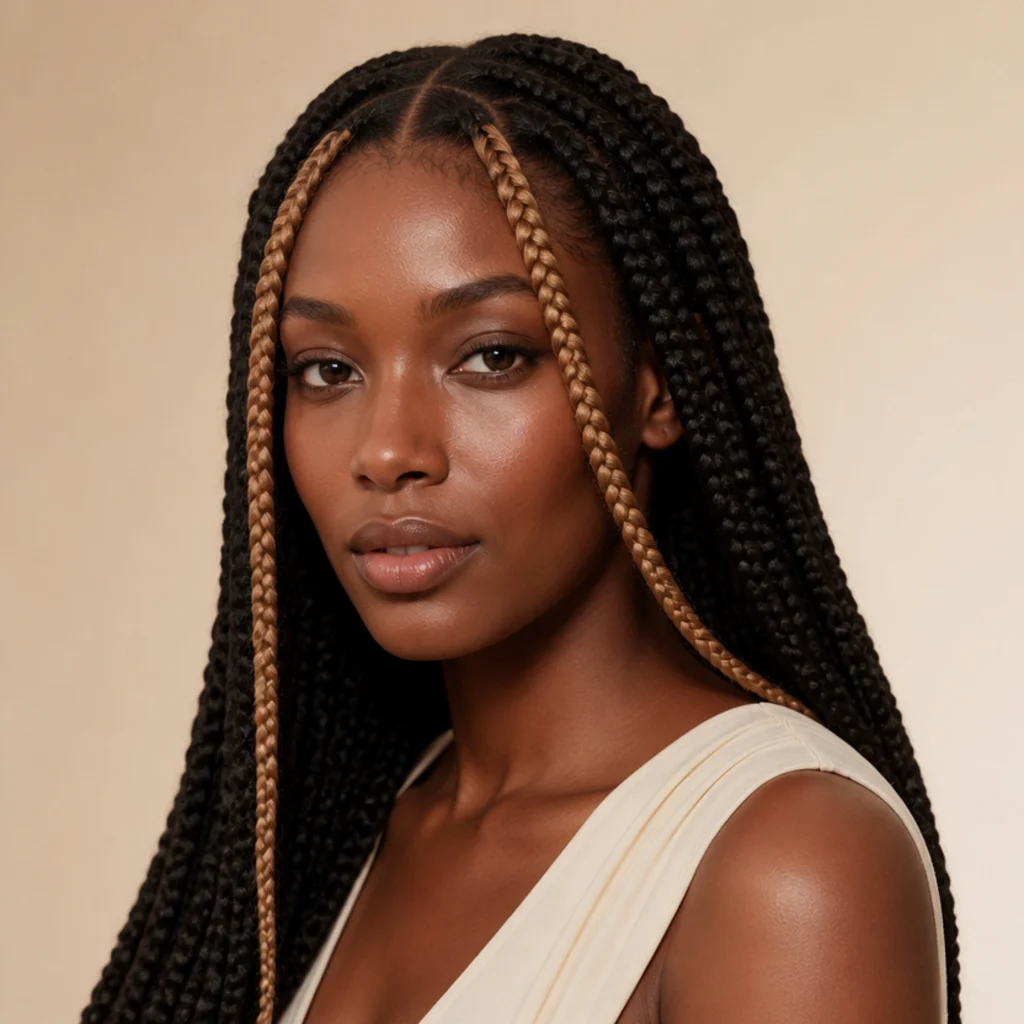
A "money piece" frames the face with two lighter braids at the front while the rest stays your base depth. In honey blonde against a deep espresso or off-black body, it brightens the complexion and lifts the eye to the cheekbones, a reliably flattering trick on deep and medium skin with warm or golden undertones. It's the lowest-commitment way to test lighter color, since only two front sections change and there's no bleach anywhere near your own hair. Those framing braids are also the most-seen, so keep them smooth and tuck them deliberately in front of or behind the shoulder instead of letting them frizz. For cooler undertones, ask for a beige-honey rather than a brassy gold so the piece reads intentional, not warm-orange. Upkeep matches any knotless style, about 5 weeks. Tell your braider you want a "honey-blonde money piece on the two front braids, base kept in my natural depth," and check the blonde shade against your skin before install.
06Half-Up, Half-Down Everyday Style
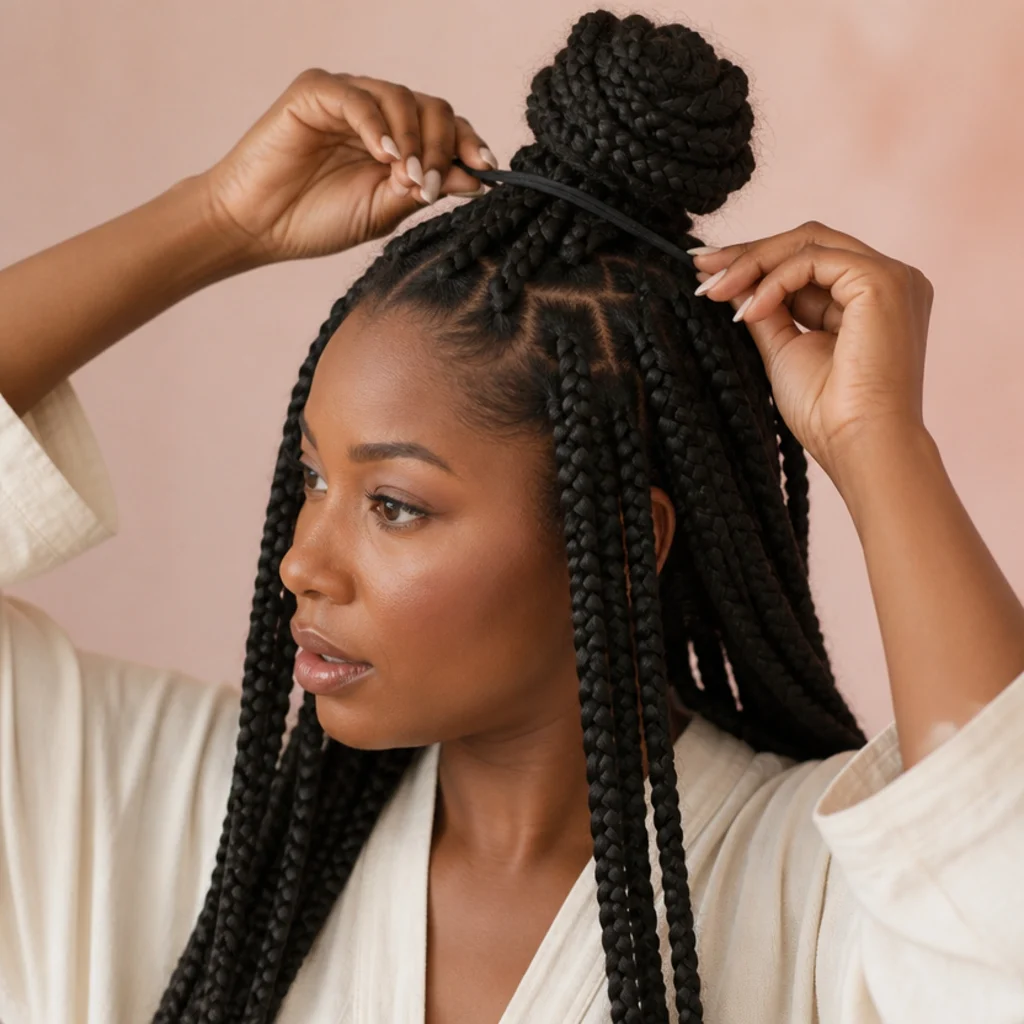
This is where styling versatility begins, and it directly answers how to style jumbo box braids for daily wear. Gathering the top third to half into a loose bun or ponytail while the rest falls free is the fastest way to switch up your look with zero salon time. It keeps hair off the face for workouts and errands and shows off both the crown parting and the length below, so the install's best details stay visible. It flatters almost every face shape because you control the height: add lift at the crown to lengthen a round face, or keep it low and soft to balance a longer one. The only real rule is about tension: use a snag-free spiral or fabric band and vary the gather point day to day so one spot on your hairline isn't always bearing the pull. This one is entirely yours to experiment with at home, no appointment required, and it's the everyday default most people reach for by week two.
07Sculpted Braided Bun Updo
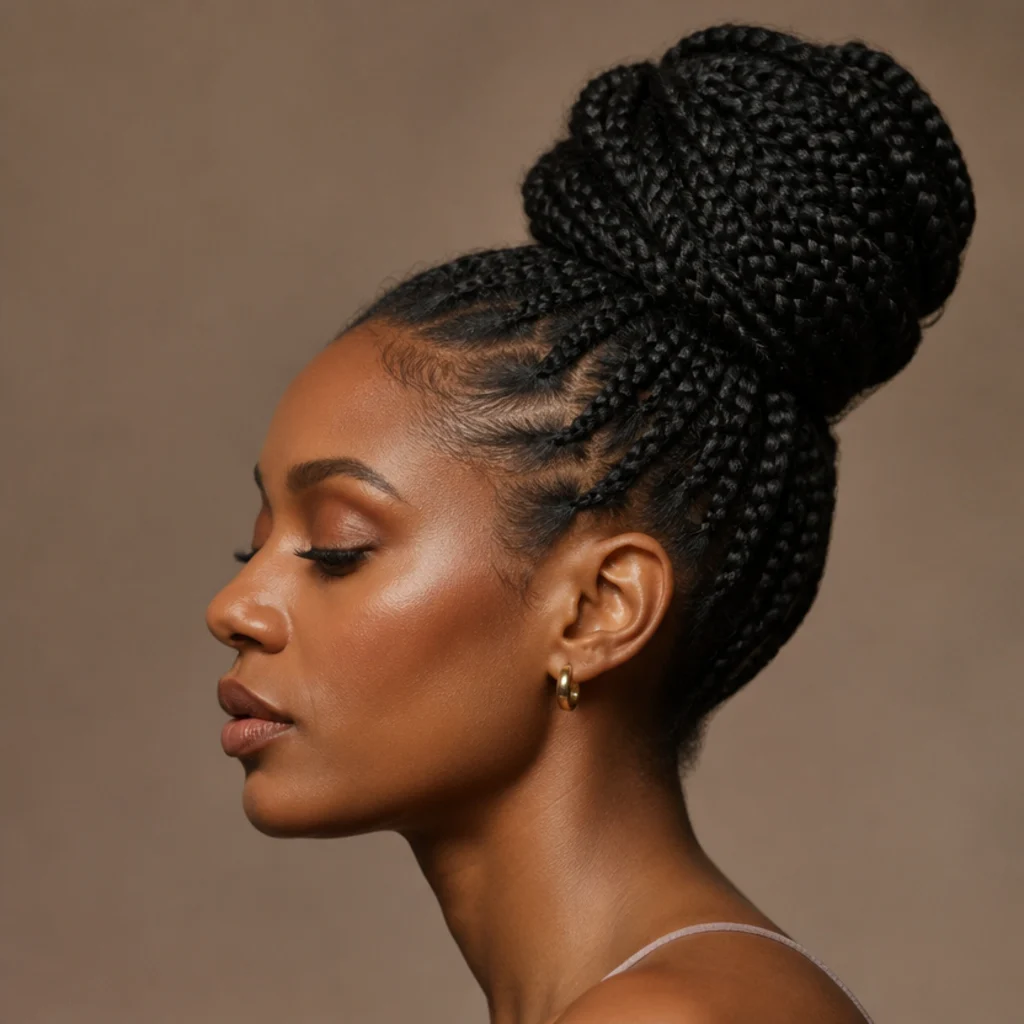
Sweeping every braid into a high, sculpted bun turns jumbo braids into an event-ready silhouette. The chunky texture builds natural volume, so the bun looks full without a doughnut form or padding underneath, and lifting the length off the neck feels cool and elegant for warm-weather weddings or formal nights. It flatters long and oval faces and puts statement earrings, a bare neckline, and jawline on full display. All the weight collects at the crown, which is where tension headaches start, so keep it loose enough to slide a finger under the base and set the perimeter with a scarf-smoothed edge rather than a tight pull. One pro tip: coil the braids in one direction and pin against the natural fall of the bun, tucking ends inward so nothing works loose mid-event. You can build this yourself once braids are installed, or have your braider demonstrate a secure, comfortable wrap at your appointment so you can repeat it.
08Side-Swept Over One Shoulder
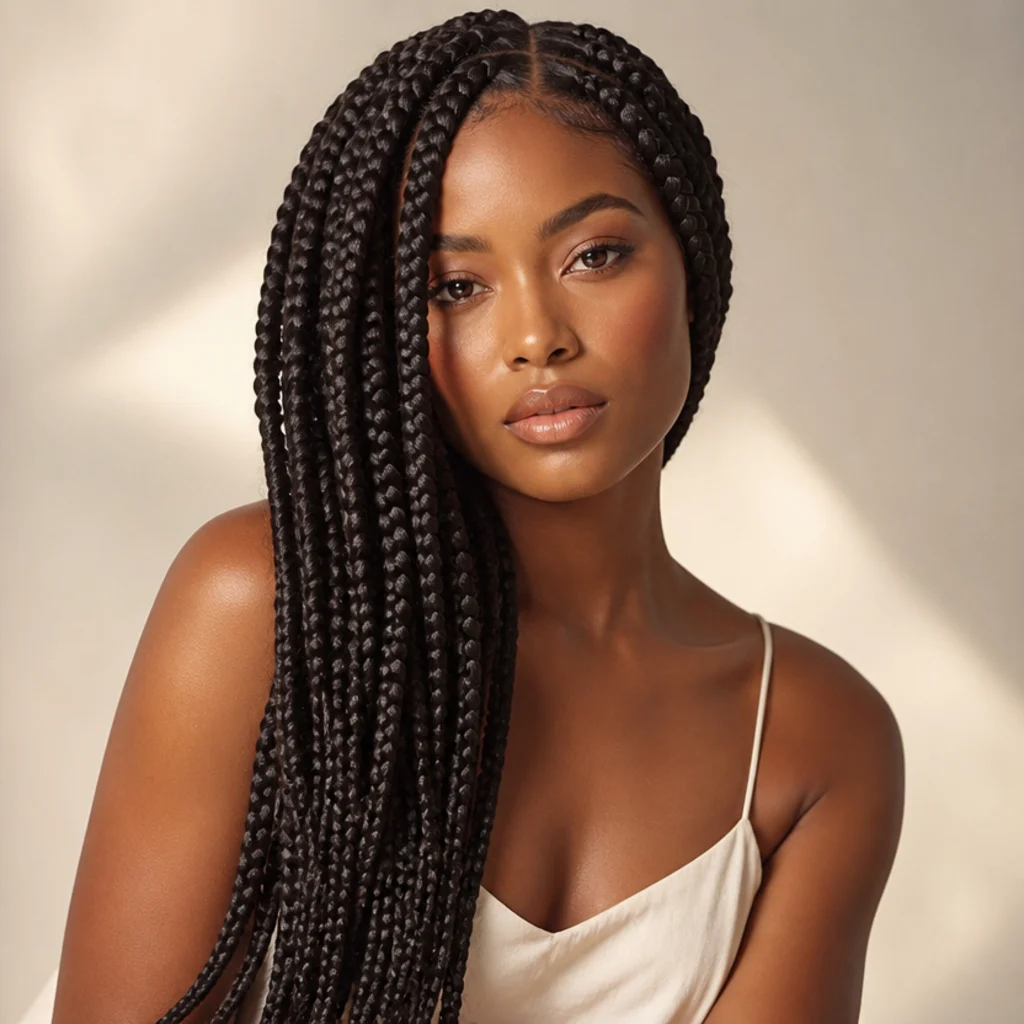
A single directional change reads as red-carpet polish: sweep the full length forward over one shoulder and let it cascade down the front. That asymmetry softens an angular or square jawline and adds a relaxed, glamorous mood to the exact braids you wear to work. It's a go-to for photos because it keeps the fullness visible and frames the face on one side while opening the other. The move works at any length but looks most striking from the waist down, where the drape has room to fall. To keep the sweep from sliding back through a long evening, anchor two or three braids near the crown on the opposite side with a discreet matte pin, then let the rest fall free over the chosen shoulder. It's purely a styling decision, so there's no extra chair time; just ask your braider to keep the crown smooth enough to part cleanly to either side.
09Jumbo Box Braids With Beads
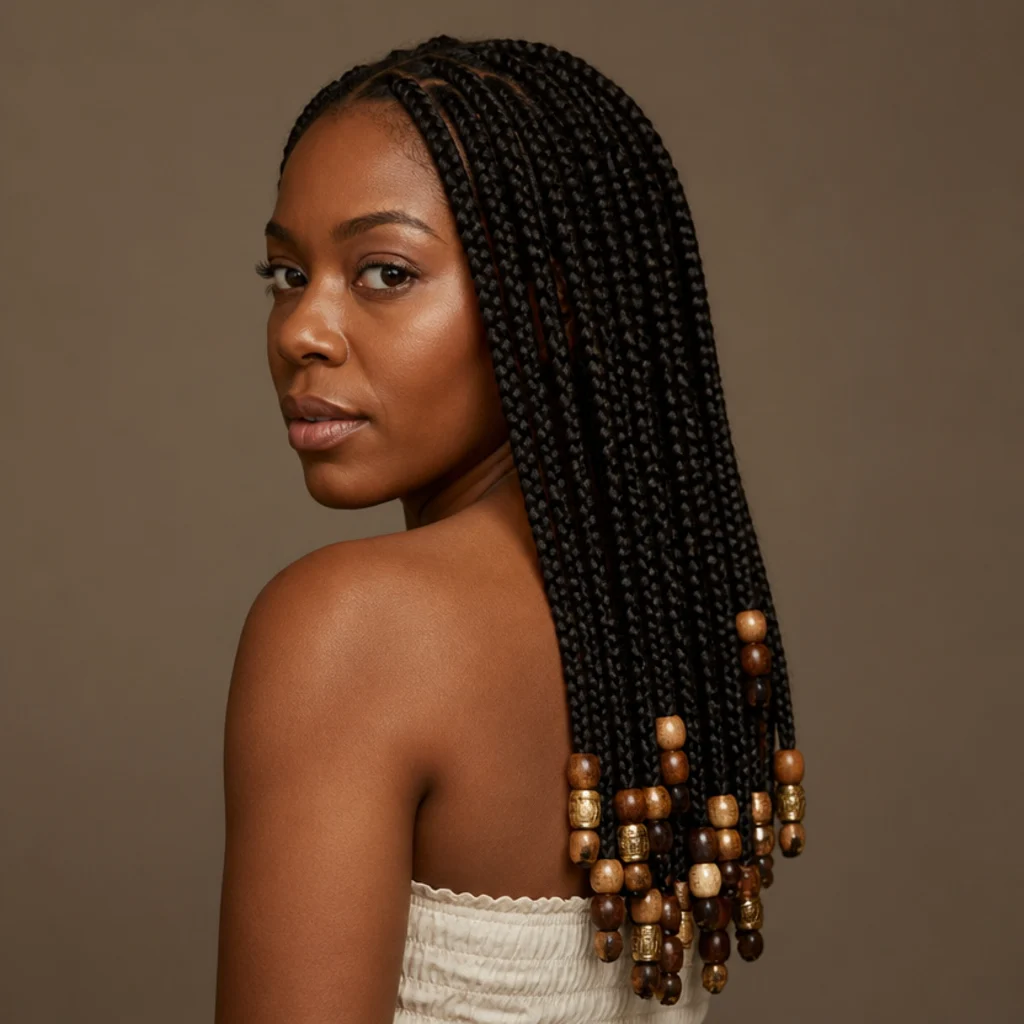
Now the looks turn bold. Threading wooden or matte-metal beads onto the ends of jumbo box braids with beads adds gentle weight, a soft click of sound, and a handcrafted finish that nods to generations of adornment traditions. Beads suit every length and are the easiest way to personalize color without touching the braid fiber, so you can shift the whole mood by swapping palettes. Choose a handful of accent braids for a subtle version, or bead throughout for full impact. The trade-off is weight at the ends, so distribute beads evenly, keep them off the delicate front sections near your edges, and use a bead cuff or a knotted thread stopper rather than a rubber band that can snag. One pro tip: match bead undertone to your accessories, warm woods and brass with gold jewelry, matte black or gunmetal with silver. Ask your braider for "bead-friendly ends" and either bring your preferred colors or have them pick a palette that reads with your skin tone and wardrobe.
10Cuffed Ends With Gold Rings
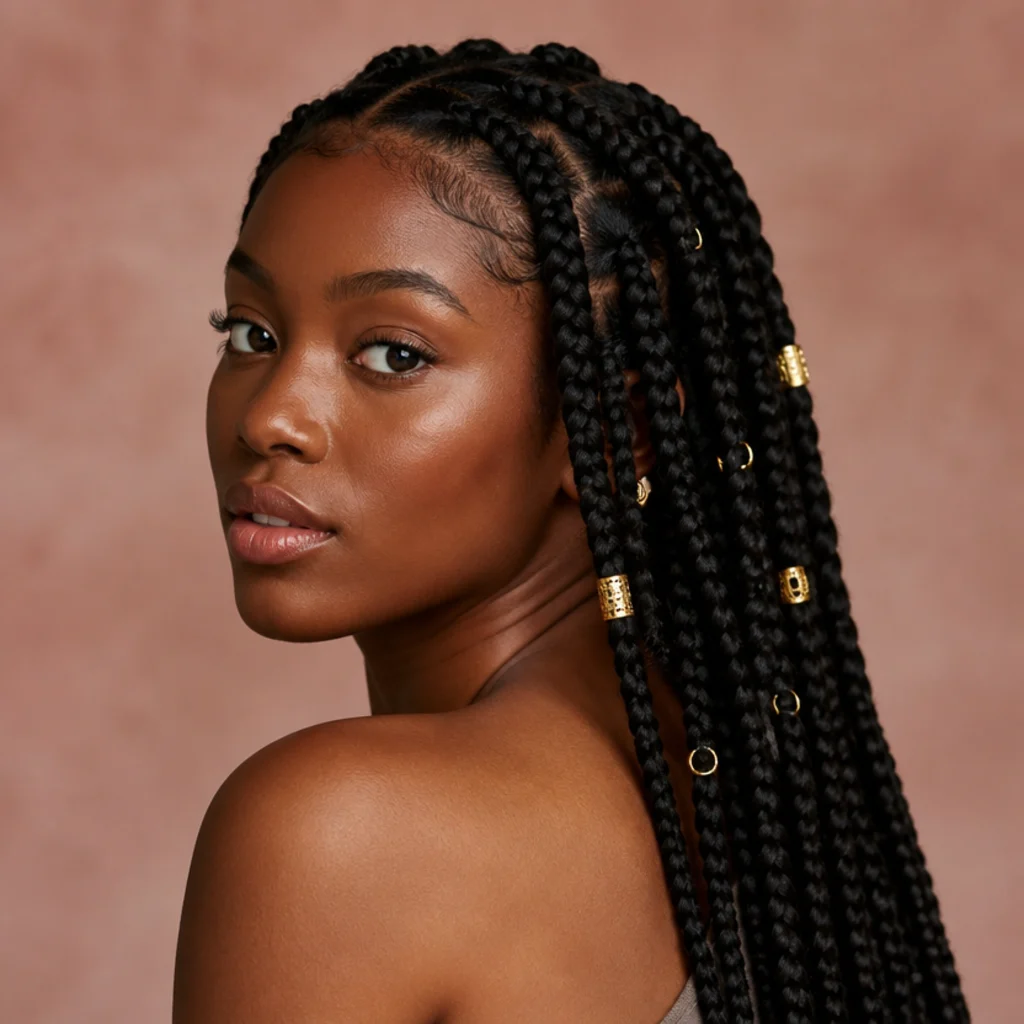
A step up in shine: metallic cuffs and gold rings clipped along select braids catch light and add an editorial, adorned feel. Unlike beads that anchor at the ends, cuffs can sit anywhere along the braid, so you can scatter them mid-length for a deliberately styled finish instead of a bottom-heavy one. Gold flatters warm and deep skin tones and reads rich; silver and gunmetal skew cooler and more modern, a better match for neutral undertones or an all-black outfit. This is one of the quickest ways to dress braids up for an event and slide them off afterward with zero damage, since nothing is braided in. The key detail is fit: cuffs should sit snug enough not to slide off but loose enough to move by hand, never crimped so tight they dent the braid or pinch. Count them as you go so both sides stay balanced. Ask your braider for "adjustable metal cuffs placed evenly across the crown and lengths," and specify metal tone up front.
Save this to Pinterest before you plan your accessory palette.
11Boho Curly-End Braids
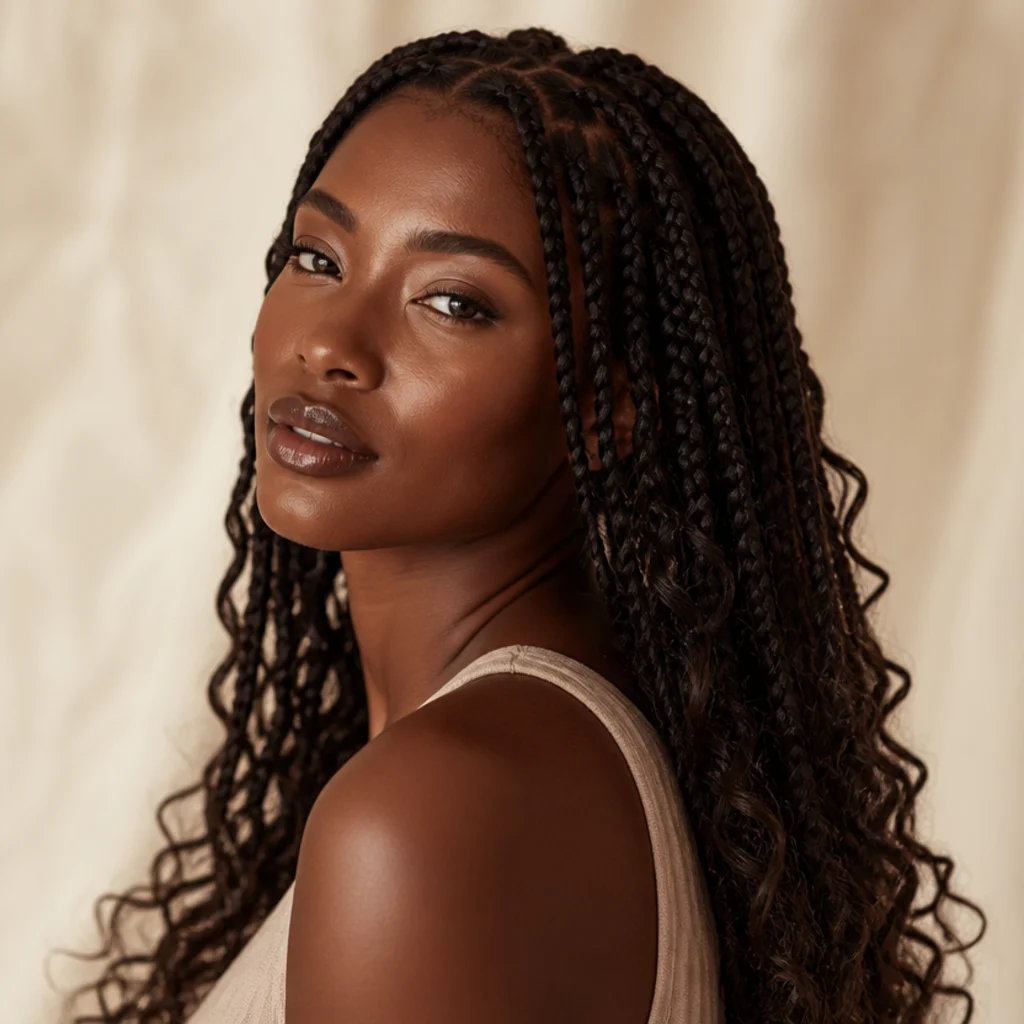
Leaving the last few inches unbraided and curly softens the whole style into a bohemian, beachy mood. The braided length keeps the protective benefit intact while the loose, wavy ends add romance and movement, a look that flatters soft, round, and heart-shaped faces by breaking the rigid vertical line of the braids. The curl pattern, usually a pre-textured water-wave or French-curl fiber, can be revived between wash days with a spritz of water and a dime of mousse scrunched into the ends. The catch is that unbraided sections tangle more easily than sealed ones, so finger-detangle the ends nightly and never brush them dry. Decide the reveal carefully: two to four inches of curl reads everyday-wearable, while more starts to look like a half-out style and needs real upkeep. Expect a slightly shorter comfortable window, around 4-5 weeks, before the loose ends fatigue. Ask for "boho knotless with curly ends," and name the exact inches you want left out.
12Burgundy Ombre Statement
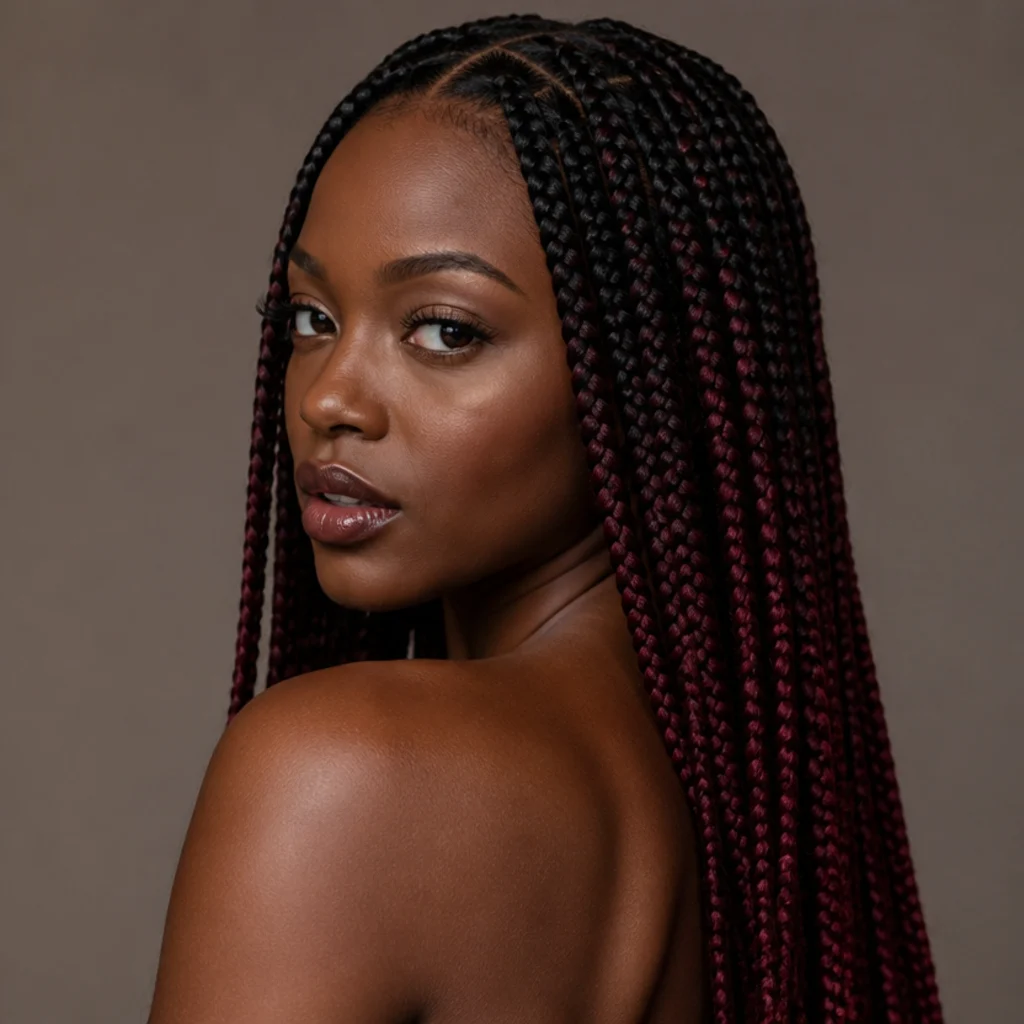
Color takes the lead here. A burgundy ombre fades from a dark, near-black root into a rich wine tone toward the ends, delivering depth and drama without committing to full-length bright color. Deep reds flatter cool and neutral undertones especially, and read luxe against deeper skin in low, warm lighting. The transition is built into the extension fiber, so your natural strands stay untouched and there's no regrowth to chase. The payoff is a moody, seasonal look that shifts from bold in daylight to elegant by candlelight. To keep the wine ends from oxidizing dull, cleanse with a gentle sulfate-free formula, rinse thoroughly, and skip piling on heavy oils that grey the tone over time. One pro tip: the higher the color break sits, the bolder the effect, so an ombre starting at the ear reads dramatic while one starting mid-length reads subtle. Ask your braider for a "black-to-burgundy ombre" and point to exactly where you want the color to begin.
13High Braided Ponytail
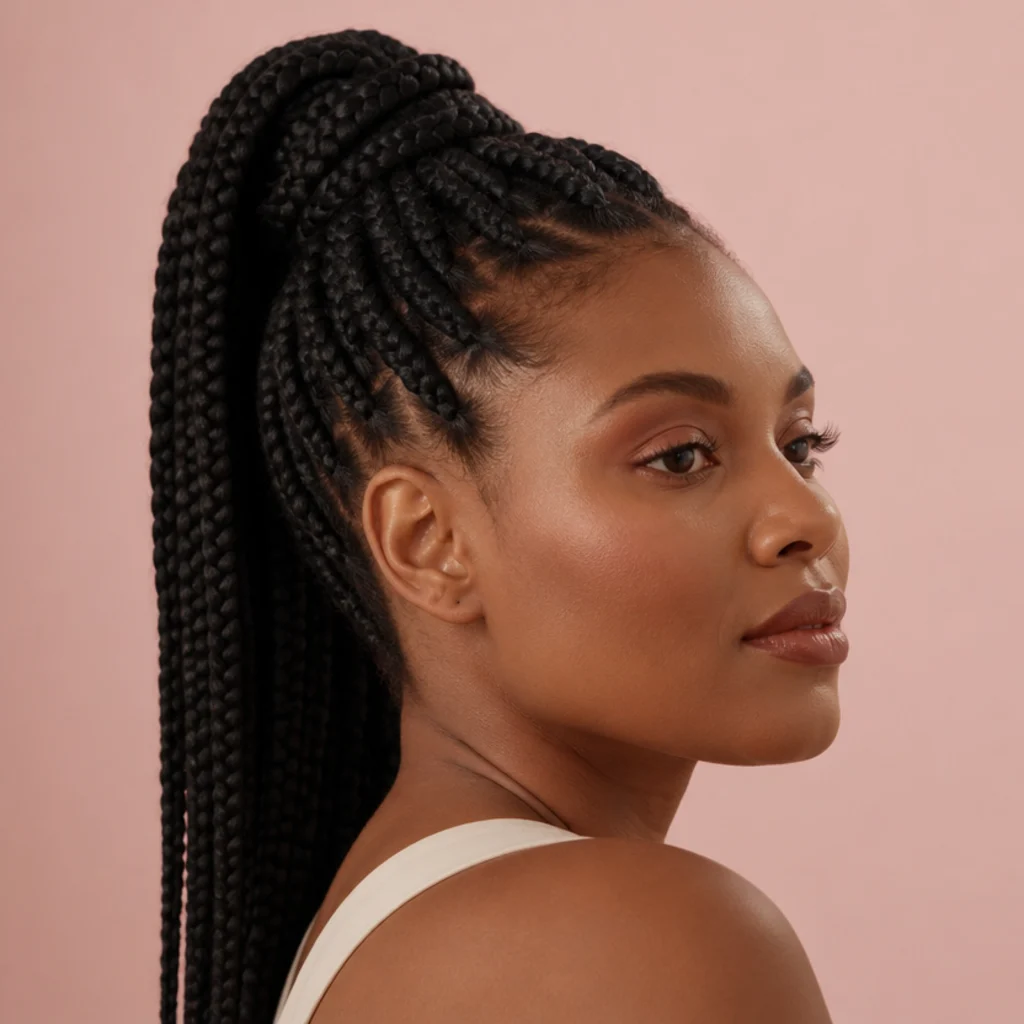
Gathering jumbo braids into a high ponytail is instant attitude: sleek and smooth at the crown, full and swinging below. It's one of the most-requested ways to style jumbo box braids because it flatters nearly everyone and shifts the mood from laid-back to lifted in under a minute. The height opens the face, elongates a rounder shape, and shows off the jawline and neck, which is why it photographs so well. Wrap a single braid around the base and pin the tail to hide the tie for a clean, finished look. The real caution is tension: a very high, very tight ponytail concentrates pull right at the fragile front hairline, so keep the placement comfortable, alternate high and mid days, and give your edges scheduled rest. Use a large snag-free band rather than a thin elastic that digs in. This is a self-styling win that needs no appointment, but if your edges feel sore, drop the height immediately; soreness is the early signal of tension you don't want to ignore.
14Bohemian Loose-Wave Blend
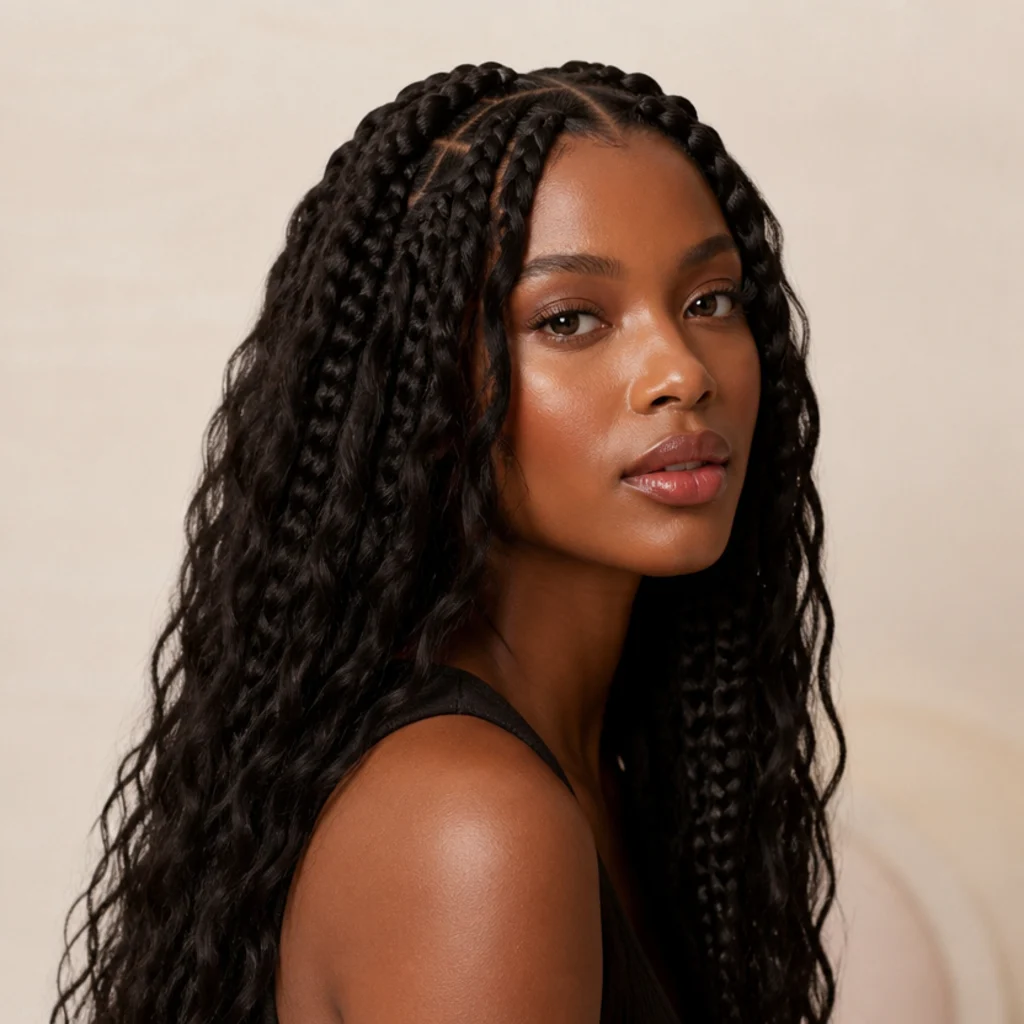
Blending loose, wavy "human-blend" hair between the braids creates a half-braided, half-free texture that feels airy and undone. The waves fall in the gaps between the jumbo braids, so the style looks fuller and softer, a favorite for festivals, vacations, and anyone chasing braids with a romantic edge. It flatters most face shapes and adds welcome volume for finer natural hair that can look sparse in a strict braid-only install. The trade-off is real upkeep: loose sections tangle and need gentle daily detangling with fingers or a wide-tooth comb plus a light leave-in to stay smooth and defined. Sun, saltwater, and chlorine roughen the wave faster, so rinse and re-condition after a beach day. Talk through the ratio with your braider: more loose hair means a softer, boho look but noticeably more maintenance and a slightly shorter fresh window, while less loose hair holds neater longer. Ask for "boho jumbo braids with loose wave" and settle the braided-to-loose ratio before they start.
15Copper-Red Color Pop
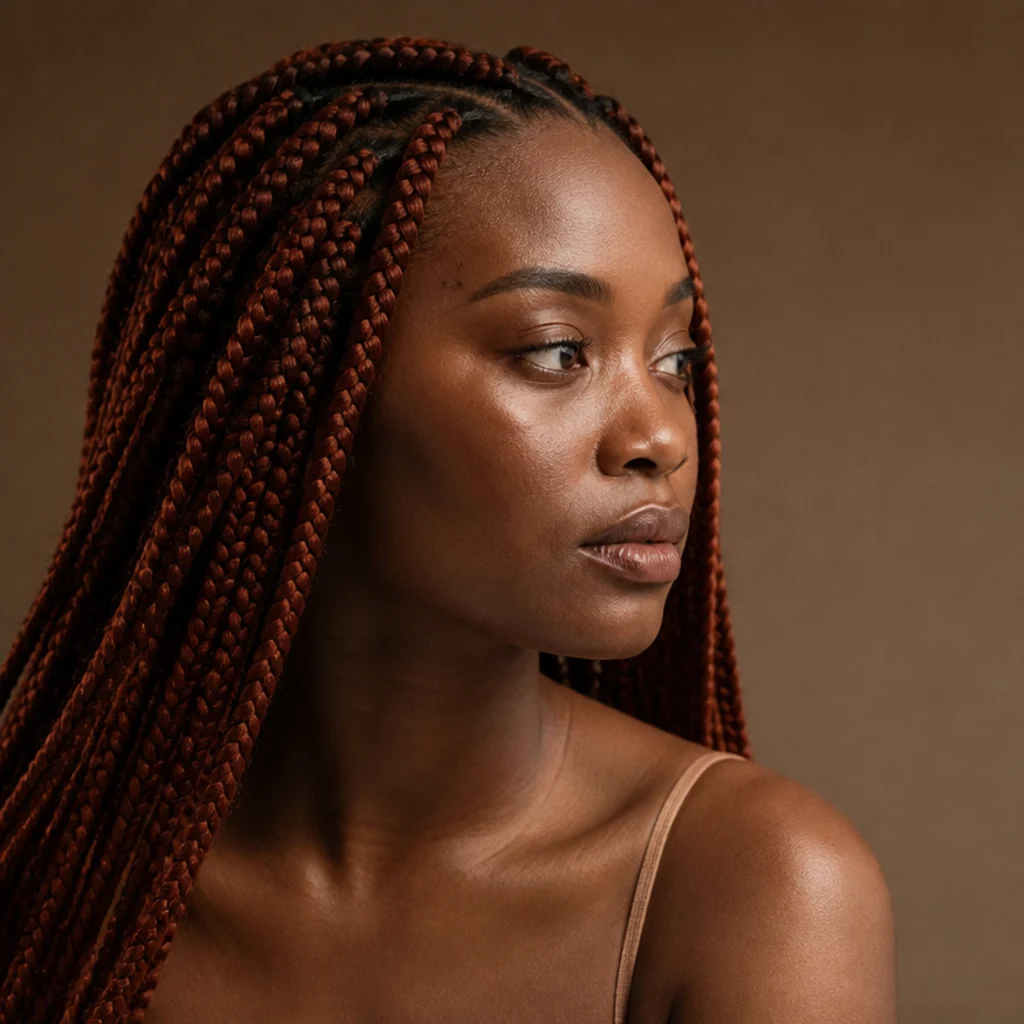
A full copper-red brings real boldness. Unlike the subtle balayage earlier in this progression, this is all-over warm color that reads vivid in sunlight and flatters warm and golden undertones across deep and medium skin. Copper is a striking way to wear a bright hue without dyeing a single strand of your own hair, since the color lives entirely in the extension fiber, ideal if you want the drama on the weekend and your natural color back at takedown. It photographs saturated and lively, so it's a fun pick for a season you want to stand out or a trip you'll document. Keep the tone rich by avoiding heavy oils and butters that can film over and mute the vibrancy at the ends. One pro tip: "red" spans everything from muted auburn to neon ginger, so bring a precise reference and confirm the exact fiber shade against your skin on install day, ideally in natural light, before any braiding begins. A mismatched copper is the most common regret with this look.
16Extra-Long Dramatic Length
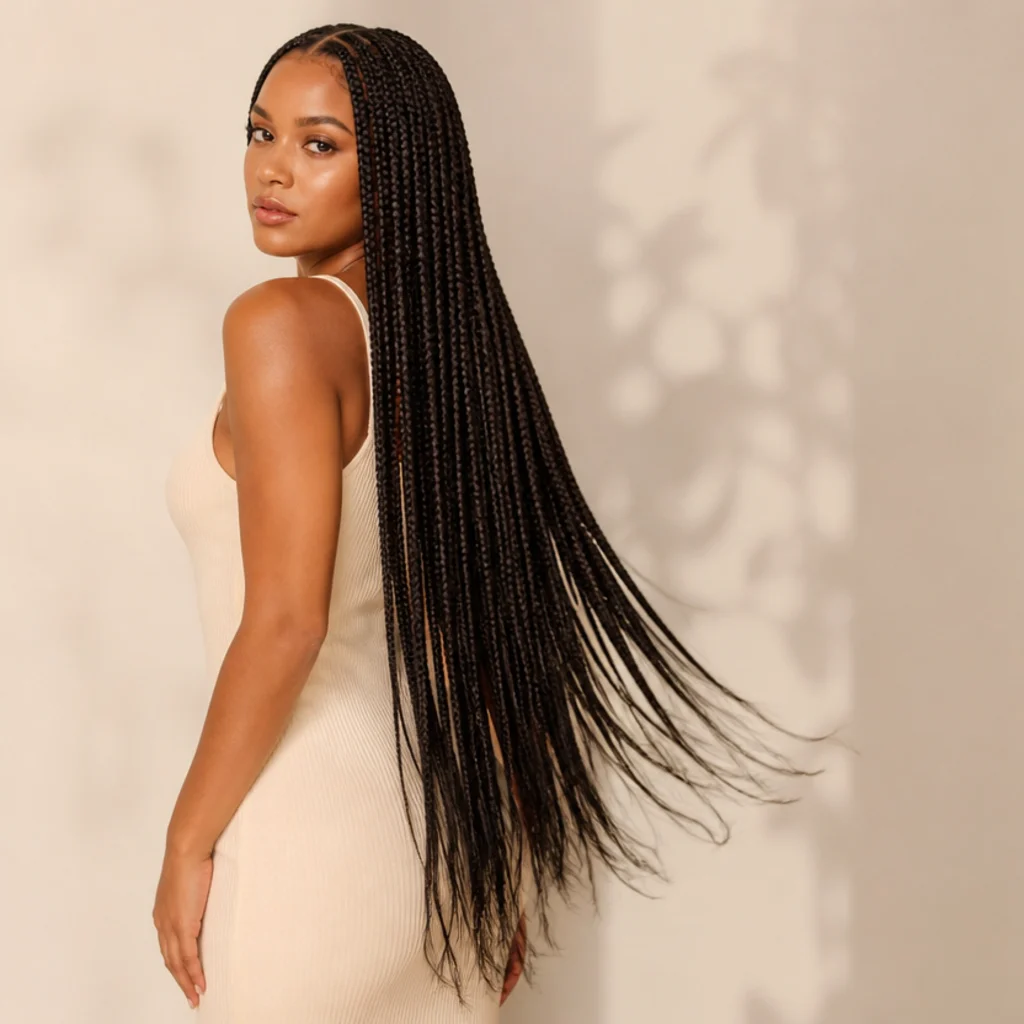
Length as the entire statement: jumbo knotless braids taken well past the waist toward the hip for maximum drama and movement. Long braids sway and drape, giving a goddess-like silhouette that suits taller frames and anyone who loves the theatrical. The unavoidable trade-off is weight, so a lightweight, pre-stretched fiber and a deliberately comfortable install aren't optional; this isn't the length to test a fragile hairline on. Gather the braids loosely at night, either in a high loose pineapple or a soft plait, so the ends don't tangle and drag while you sleep. For daytime manageability, a low bun, a single braid-of-braids, or a loose side plait keeps the length under control without adding crown tension. Be candid with your braider about comfort: going even a few inches shorter meaningfully reduces pull on your edges while keeping the dramatic effect. Ask specifically for a "lightweight extra-long knotless," and do a comfort check at the crown before the top sections are sealed, while shortening is still easy.
17Double Braided Buns
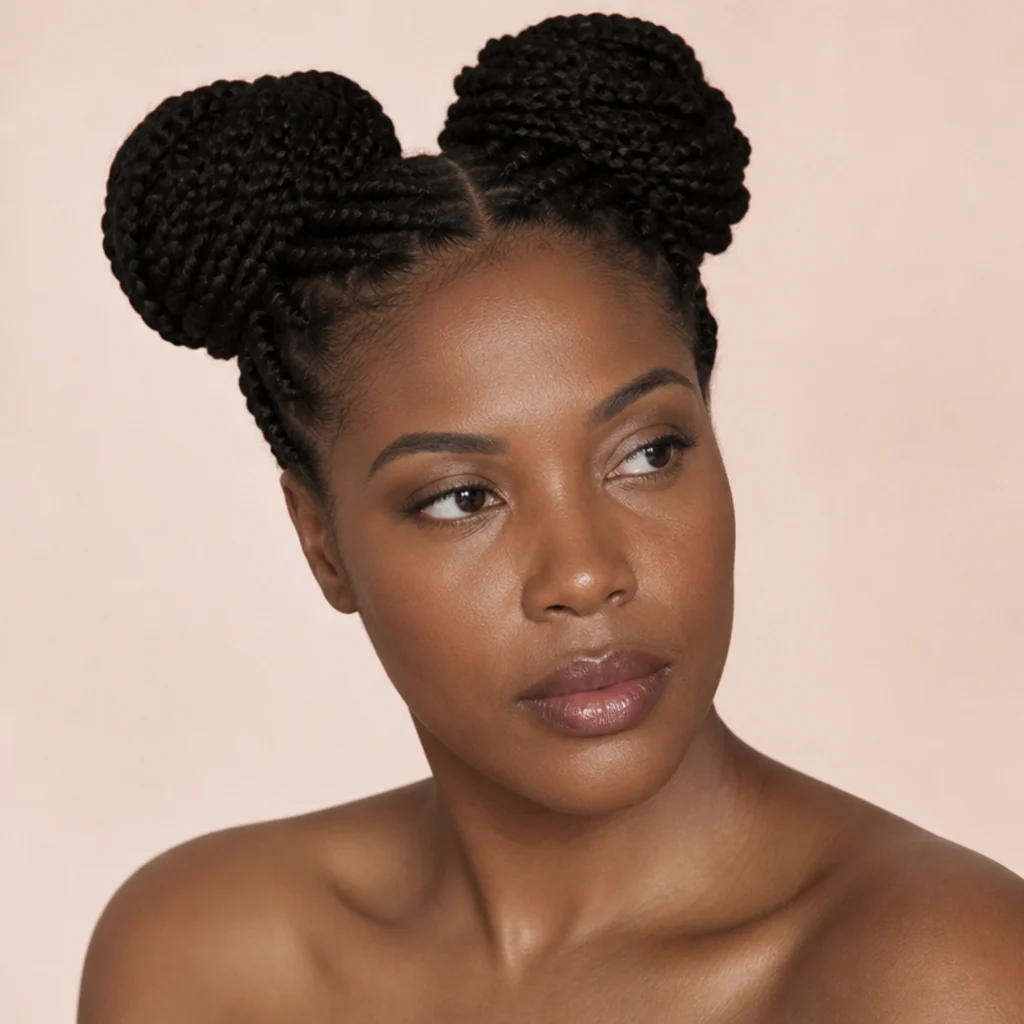
Two high buns bring a playful, youthful energy to jumbo braids. Splitting the hair down a clean center line and coiling each half into a bun shows off the parting work and creates a symmetrical, fun silhouette that suits festivals, workouts, and easy weekends. The chunky braids give each bun real volume, so they hold their shape without a form or padding, and the whole style lifts everything off your neck on a hot day. This is a purely self-styled look, no appointment needed, and a great way to get a second day of wear out of a slept-in install. Keep both gathering points loose and even: uneven tension left and right is where a lopsided, sore-edged result comes from. For extra hold, tuck the ends into the base and pin discreetly rather than wrapping the braids tightly around themselves. Rotate the exact bun placement a little each time you wear it so the same two spots on your hairline aren't repeatedly stressed.
18Braided Crown Halo Wrap
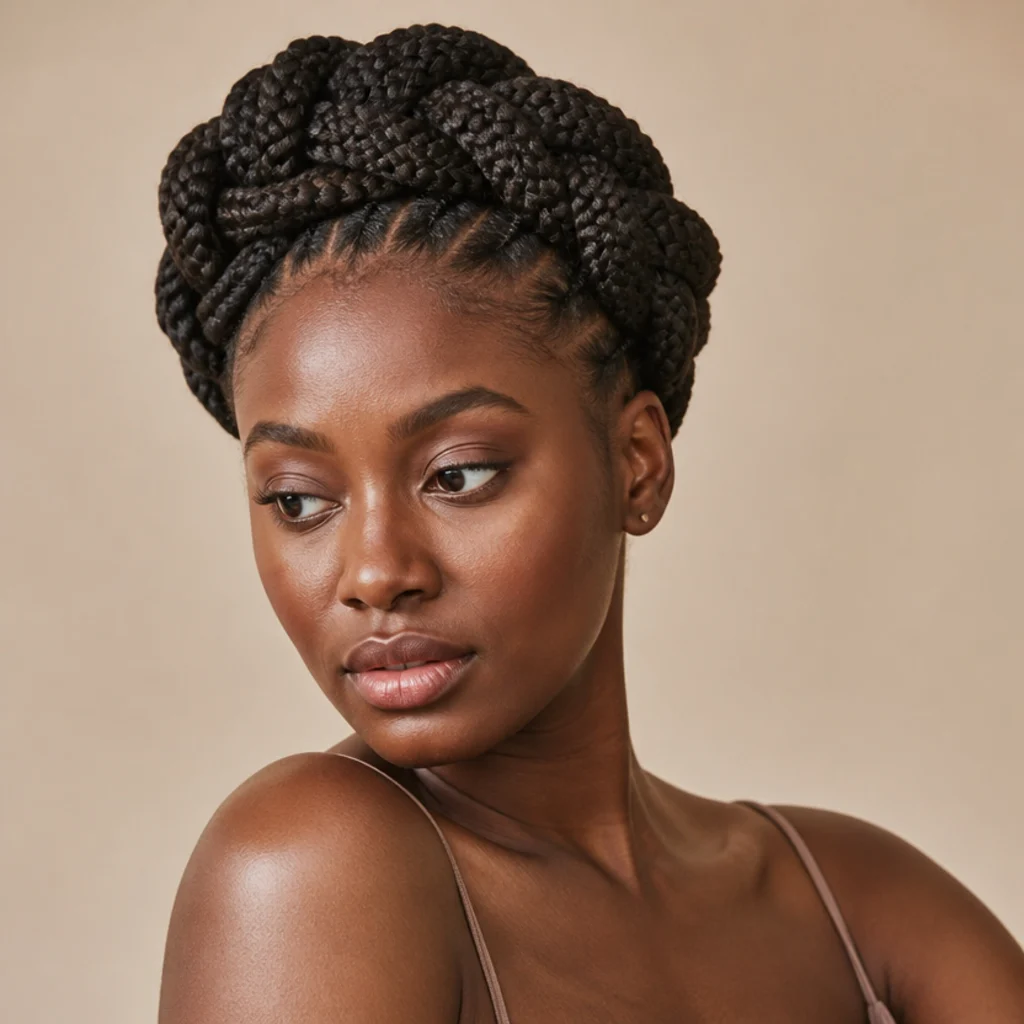
Wrapping the braids around the head into a crown, or halo, is an elegant, face-framing updo built for weddings and formal events. The braids circle the hairline like a woven band, lifting the full length off the shoulders and showing off the cheekbones, neck, and earrings. It flatters oval and heart-shaped faces and delivers a regal, composed finish that reads expensive in photos. A quiet advantage: because the weight distributes evenly around the head rather than pulling to one gathered point, a halo can feel comfortable through a long ceremony where a tight bun would ache. Secure it with U-pins placed against the braids, sliding in parallel to the wrap rather than yanking across it, so nothing tugs the roots. One pro tip: mist the braids lightly and smooth with a scarf for five minutes before pinning to tame flyaways for the camera. Your braider can set this for a special occasion, or you can practice the wrap-and-pin yourself a few times at home before the day itself.
19Two-Tone Peekaboo Color
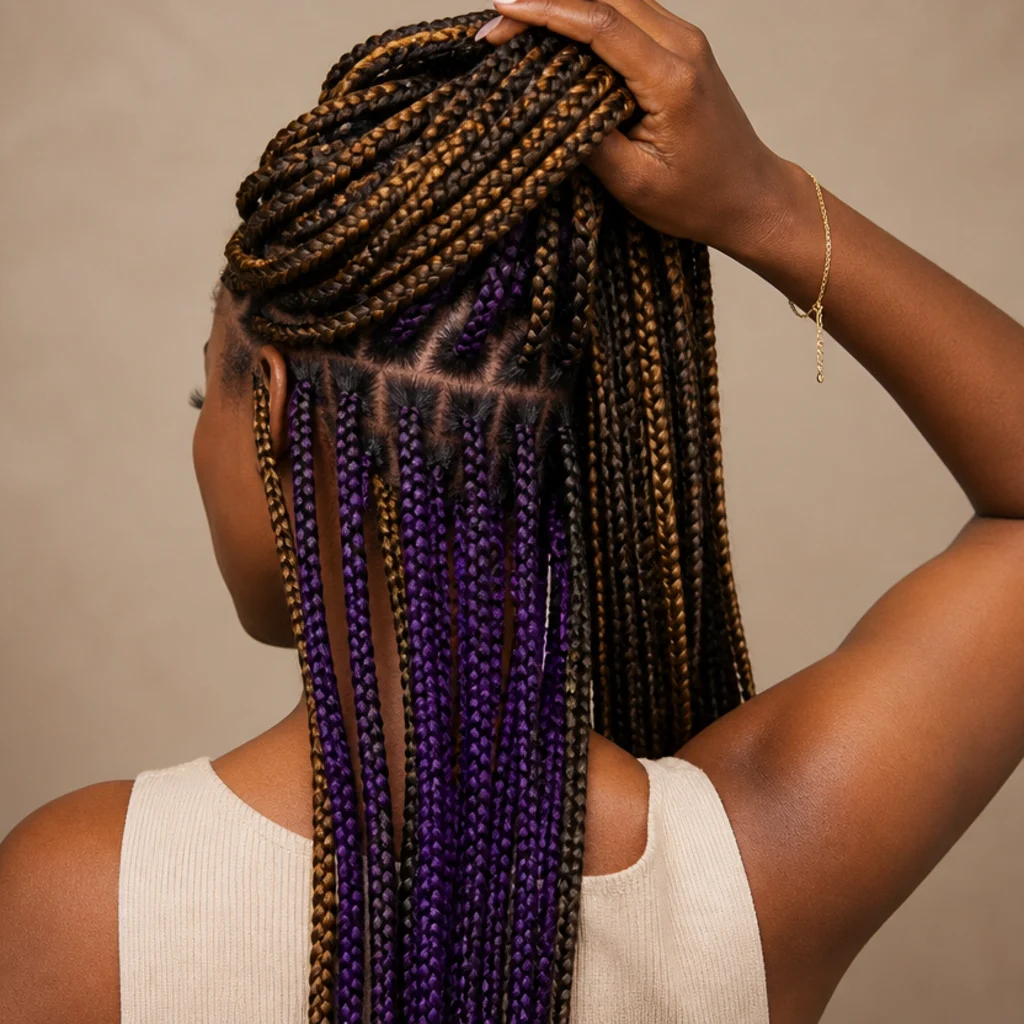
A peekaboo effect hides a second color in the under-layers so it flashes only when you move, lift, or pull the braids up. Pairing a natural base with a surprise pop, teal, violet, or bright copper tucked underneath, is bold but wearable, since the vivid tone stays concealed until you choose to reveal it. It suits anyone who wants a statement they can dial up for a night out and hide for a meeting, which makes it a favorite for workplaces with a conservative dress code. Because the color lives in the lower and back sections, your face-framing braids stay classic and professional at all times. The amount of colored underlayer is the lever: a few braids give a subtle wink, while a full underside creates a dramatic reveal when you flip into a ponytail or bun. Ask your braider for a "peekaboo underlayer" in your chosen shade, and decide together how much of the underside to color and how high the reveal line should sit.
20Bold Fulani-Inspired Beaded Finish
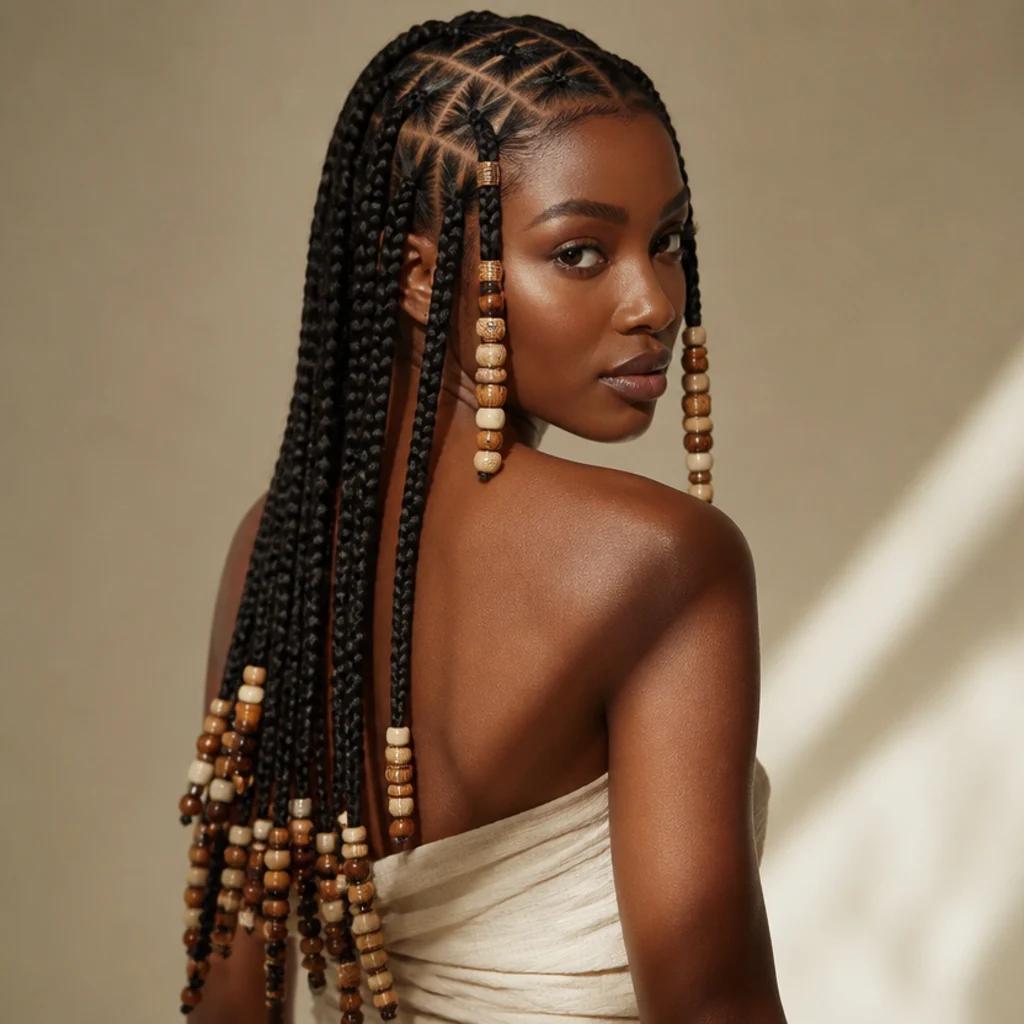
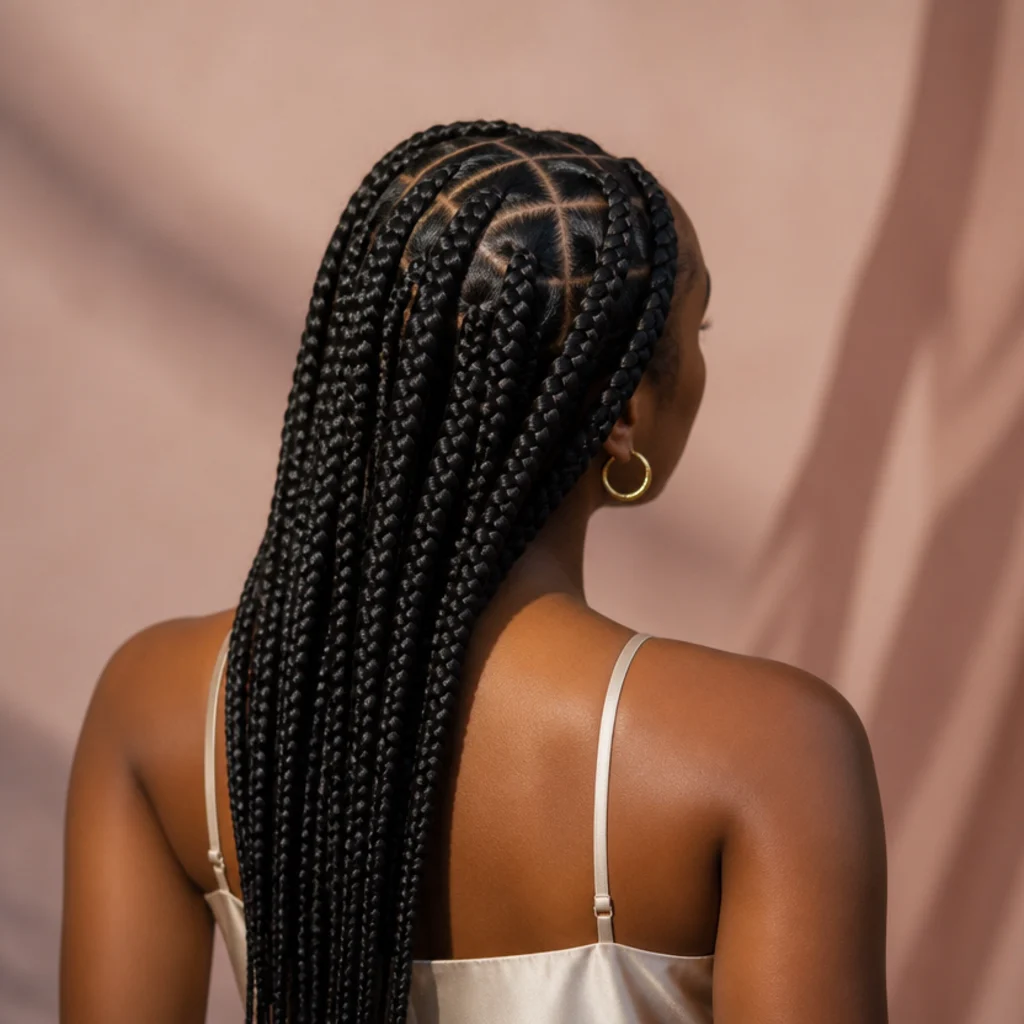
The boldest finish in the progression pulls everything together: sculptural partings, a center cornrow detail feeding into the box braids, and generous beadwork inspired by Fulani styling traditions. Beads, cuffs, and a mix of lengths create an adorned, head-turning look that photographs beautifully from three-quarter and back angles, where the parting geometry and beadwork read best. This is the full statement, ideal for events where you want the braids themselves to be the outfit. It rewards a skilled artist, so book someone experienced in decorative parting and beadwork specifically, ask to see their portfolio of Fulani-style work, and allow extra chair time and budget. Distribute the beads to keep the weight balanced side to side and protect the front edges, since the temple sections are the most vulnerable to decorative overload. One pro tip: photograph the exact parting pattern you want from the back, not just the front, since that's the angle the style lives at. Ask for a "Fulani-inspired jumbo style with beaded accents" and share those references.
Pro Tips from the Editor
- Judge tension in the first hour, not the mirror. Real comfort is set at the hairline while braiding; if your temples throb or your eyes feel pulled, say so before the crown is sealed, when your braider can still loosen without redoing the whole head.
- Match fiber weight to your length goal. Ask for a lightweight, pre-stretched braiding hair for anything past the waist. The same length in a heavy fiber is the difference between comfortable wear and edge strain by week three.
- Cleanse the scalp, not the length. Dilute a gentle sulfate-free shampoo in an applicator bottle, target the roots and parts, and let suds rinse down the braids. Scrubbing the braid bodies is what causes frizz and unravelling.
- Book a mid-cycle refresh for the front. Around week three, a quick re-tighten or edge re-braid of just the hairline and part lines buys you a cleaner second half of wear without a full takedown.
- Cap the wear at six weeks. Past that, new growth mats at the root, takedown gets painful, and shed hair can wrap and tug at your own strands. A timely takedown protects length far better than stretching an extra week.
- Seal color and curly ends with a single drop of oil. Lighter balayage, wine ombre, and unbraided boho ends dull and dry first; a whisper of lightweight oil on the ends only keeps tone rich without weighing braids down or attracting lint.
- Rotate your styling stress points. Alternate high ponytails, low buns, and half-up days so the same patch of hairline is never bearing the pull two days running, and keep at least one low-tension day each week.
Quick Comparison: Size, Weight, and Upkeep
| Braid size | Look & coverage | Relative weight | Typical install time | Best for |
|---|---|---|---|---|
| Standard jumbo | Boldest, fewest braids, scalp shows more | Heaviest per braid | Fastest (approx. 2-4 hrs) | Short-to-mid lengths, statement wear, quick installs |
| Medium jumbo | Fuller, more braids, discreet parts | Moderate | Moderate (approx. 3-5 hrs) | Longer lengths, everyday wear, more coverage |
| Beaded / boho ends | Adorned or softened finish | Adds end weight | Longest (extra finishing time) | Events, photos, personalized detail |
Times and weight are general guidance and vary by braider, fiber, and length; use them to frame your booking conversation, not as fixed figures.
How to Choose / Get the Look
Start with an honest read on two things: your goal for the look and the health of your scalp and edges. If this is your first jumbo protective style, begin near the top of this list with a shorter, natural-toned install, and graduate to bolder color, length, and beadwork once you know how your hairline responds to the weight. Prioritize knotless over knotted and say the word explicitly, since knotless feeds the extension in gradually and places far less immediate tension at the base; add "low tension at the hairline" so your temples are braided loose. Bring two or three reference photos instead of describing color and length in words, because "jumbo," "long," and "red" mean different things to different artists, and a copper reference in natural light prevents the most common color regret. Lock the specifics before the crown is sealed: braid size, total length in inches, part pattern, and finished weight are all easy to adjust early and nearly impossible to change once the top is done, so do a comfort and length check while your braider can still act on it. Weigh the upkeep honestly: longer, beaded, and loose-wave styles need more nightly detangling and gentler cleansing than a shoulder-length natural look, so choose a version that fits the effort you'll actually give. Finally, protect the investment: satin bonnet nightly, diluted scalp cleanses every one to two weeks, edge oil a few times a week, and real rest days for your edges between installs. Treat this progression as a menu, not a mandate: the right combination of size, length, color, and accessory is entirely personal.
Frequently Asked Questions
How long do jumbo knotless box braids last?
Most people keep them in for four to six weeks. The braids themselves can hold longer, but new growth at the roots and frizz along the hairline usually set the real timeline. Refresh your edges and cleanse your scalp on schedule, and take the braids down before they start to mat at the root, since an overdue takedown is harder on your natural hair than a timely one.
Are jumbo knotless box braids better for your edges than knotted box braids?
Knotless installs place less immediate tension at the base because the extension feeds in gradually instead of being anchored in a knot at the scalp. That generally makes them gentler on the hairline, but comfort still depends on the install being done without excessive pulling and the length-weight staying reasonable. Speak up during braiding if anything at your temples feels tight; that's the moment to fix it.
How much hair do I need for jumbo box braids with beads?
Beads slide onto the ends, so you need enough length past where the bead will sit to secure it, usually a few inches, then a bead cuff or a knotted thread stopper to hold it. Distribute beads evenly and keep them off the front sections near your edges, since concentrated end-weight there is what strains a delicate hairline over time.
What is the difference between medium jumbo and regular jumbo braids?
Medium jumbo knotless box braids sit between standard jumbo and medium sizes. You get more braids and fuller, more even coverage than the largest jumbo, with slightly less weight per braid, which many people find more comfortable at longer lengths while still keeping the chunky, statement feel. If your scalp shows more than you like with the biggest jumbo size, medium jumbo is usually the fix.
How do I style jumbo box braids without damaging them?
Reach for low-tension options: half-up styles, loose ponytails and buns, and side sweeps that don't pull hard at the roots. Use soft, snag-free bands, avoid very tight high placements every day, and rotate where you gather so one spot on your hairline isn't always stressed. Refresh with a light water spritz instead of heavy product buildup, and keep at least one low-tension day each week.
Can I wash jumbo knotless box braids, and how often?
Yes, and a clean scalp is part of keeping them looking fresh. Cleanse every one to two weeks with a diluted, sulfate-free shampoo in an applicator bottle aimed at the roots and parts, let the suds rinse down the length, and skip scrubbing the braid bodies, which causes frizz. Squeeze out excess water, and make sure the roots and any beaded or loose-wave ends dry fully to prevent odor.
How much do jumbo knotless box braids usually cost?
Cost varies widely by region, braider experience, length, and any added color, beadwork, or loose-wave hair. As a rule of thumb, shorter natural-toned installs sit at the lower end, while extra-long, beaded, boho-blend, and Fulani-inspired styles cost more because they use more hair and significantly more chair time. Ask for a quote that itemizes hair, length, and finishing details before you book so there are no surprises.
Do jumbo box braids give you more length faster than smaller braids?
Not more actual length, but they install dramatically faster, often in a fraction of the time of small or medium box braids, because there are far fewer braids to part and plait. The trade-off is weight and coverage: fewer, larger braids show more scalp and carry more weight each, which is exactly why fiber choice and a low-tension install matter more as you go longer.
How do I keep the ends of colored or boho braids from looking dry?
Lighter balayage, burgundy ombre, and unbraided curly ends dull and roughen first. Seal them with a single drop of lightweight oil on the ends only, skip heavy waxes and butters that film over and mute color, and finger-detangle loose ends gently instead of brushing. Rinse and re-condition after saltwater or chlorine, which accelerate dryness and can shift bright tones.