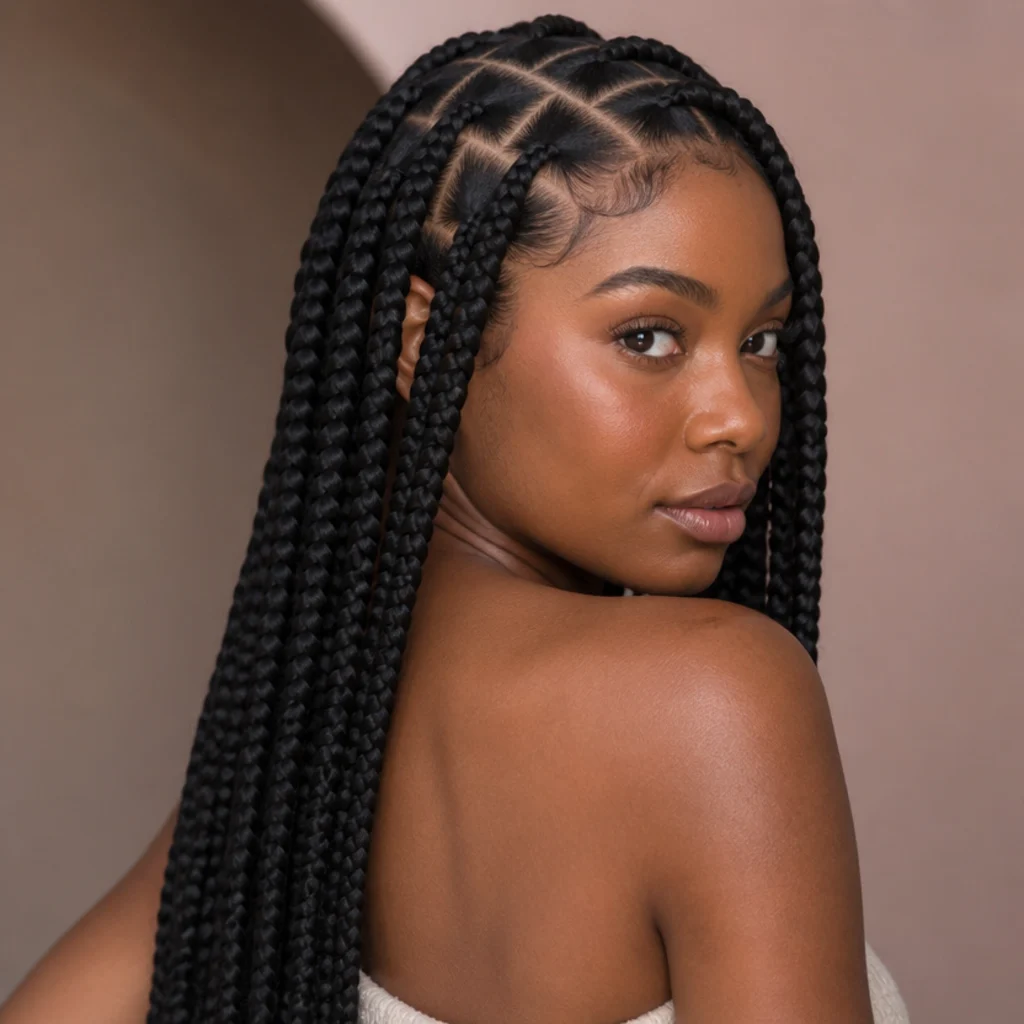
15 Jumbo vs Knotless Box Braids Compared
Classic jumbo braids give you a fast, bold, high-impact protective style. Knotless trades a bit of that install speed for a flatter root, gentler day-one tension, and a hairline that lies flat against the skin. This guide lines them up across 15 real-world decision points, from crown weight to color payoff, so you walk into your appointment already knowing which one fits your scalp, schedule, and length goals.
 Edited by Lena Rose · Published July 11, 2026 · 25 min read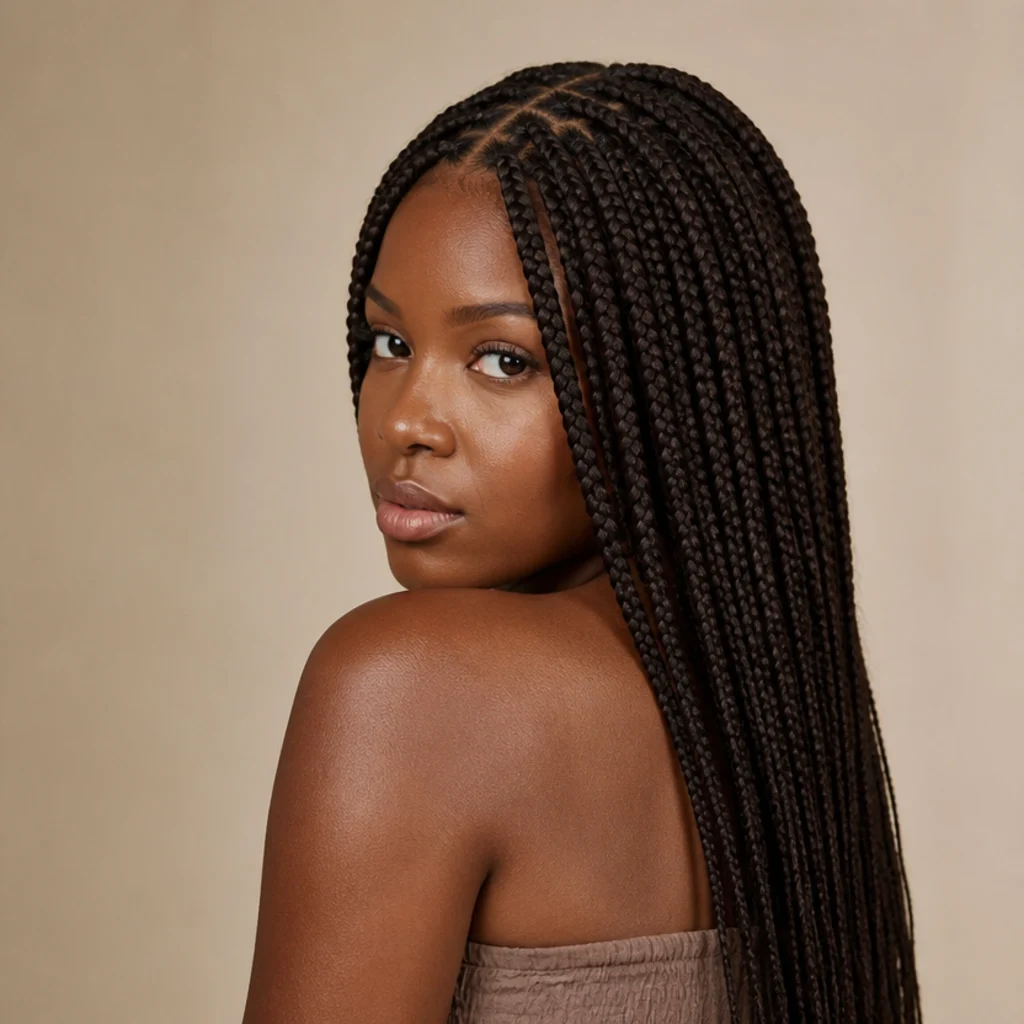
Quick Answer
- Best for: Anyone who wants big, statement braids and is weighing scalp comfort against time in the chair.
- Who might skip it: Fine or thinning density that needs smaller sections for camouflage, and anyone with active edge loss who should rest the hairline before any large-section install.
- Maintenance: Low day to day; expect a light root refresh weekly and a possible mid-run touch-up on knotted around week three to four.
- Difficulty: Knotted jumbo is faster and more forgiving to install; knotless needs a steadier hand for even, tension-matched feed-ins.
- Cost: Variable by region and length; knotless usually carries a premium over knotted for the added technique and chair time. Ask for a written quote before booking.
- Wear time / longevity: Commonly four to six weeks with good care; knotless often holds a tidy root a touch longer.
- Standout variation: Medium jumbo knotless box braids, the middle ground that flatters the widest range of faces and densities.
- How to ask your braider: Request your section size in inches, a specified length, "comfortable, no-headache tension," a soft perimeter, and confirm whether you want a knotted or knotless root up front.
In This Guide
- The Core Difference at a Glance
- Root and Scalp Feel
- Install Time and Effort
- Hairline and Edge Impact
- Weight and All-Day Comfort
- Medium Jumbo: The Middle Ground
- Long Jumbo Knotless Drama
- Bob-Length for Low Commitment
- Jumbo Box Braids With Beads
- Color and Highlight Options
- Parting Patterns Compared
- How to Style Jumbo Box Braids
- Longevity and Upkeep
- Budget and Timing Trade-Offs
- Which One Should You Pick
Deciding between jumbo knotless box braids and their classic knotted cousin comes down to two honest questions: how does your scalp feel on day one, and how much chair time can you spare? Both styles start with large partings, typically an inch or more across, so you get a bold, sculptural silhouette with far fewer braids than a small or medium install — often 40 to 70 on a full head instead of a couple hundred. The real fork is in how each braid begins. Classic jumbo anchors with a small knot at the root, which grips fast and firm. Knotless feeds the extension in gradually with your own hair, so the braid lies flatter and blends into your hairline. That one structural choice affects tension, edge stress, crown weight, styling range, and how long the style stays comfortable rather than just wearable. Jumbo sizing has become the go-to for anyone who wants a protective style that photographs boldly and installs fast. The 15 points below show where each option wins, who it flatters, and how to brief your braider for the result you actually want.
01The Core Difference at a Glance
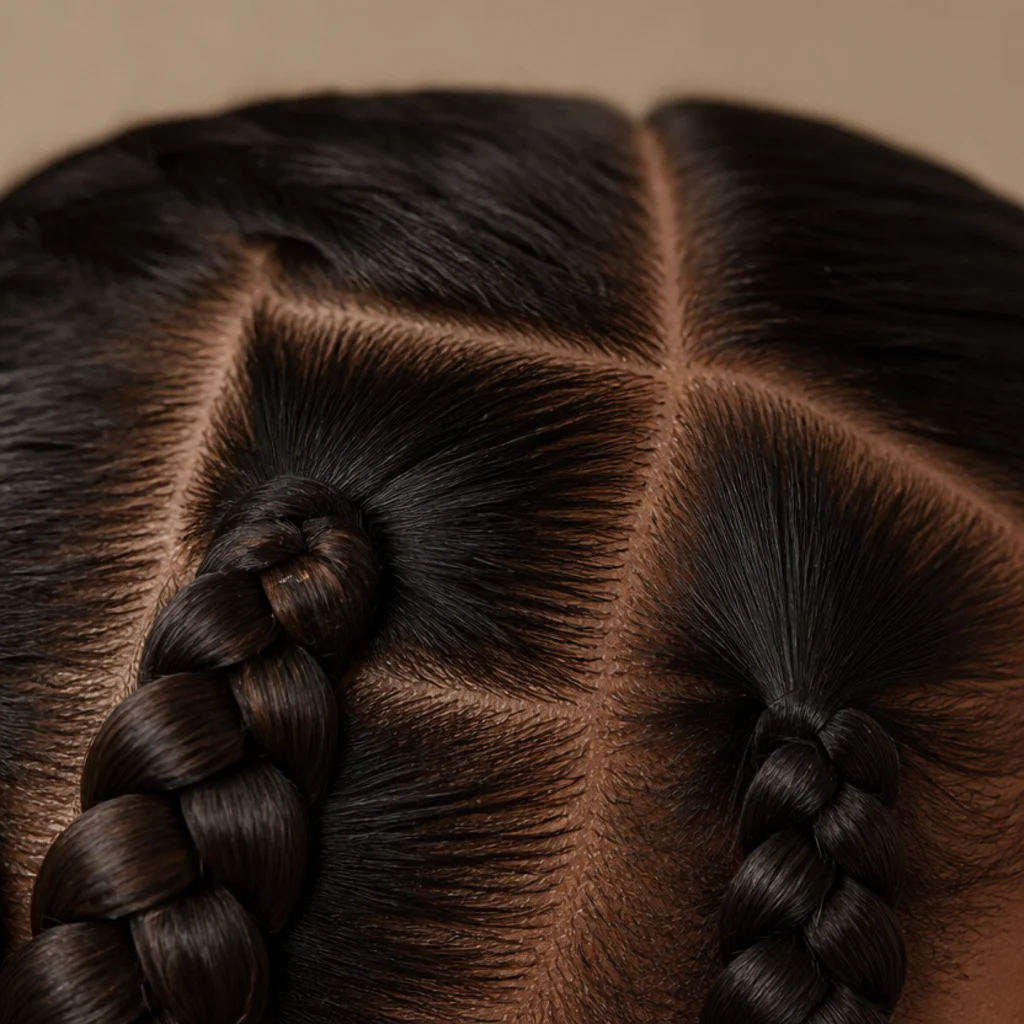
The gap between these two starts right at the root. Classic jumbo box braids begin with a small anchoring knot that locks the extension in place, so they install fast and grip firmly through weeks of movement. Jumbo knotless skips the knot: the braider works two or three passes of your natural hair first, then feeds extension in gradually so the base tapers from thin to full. That taper is why knotless lies flat and natural at the scalp, while knotted jumbo shows a slightly raised, defined start — some people actually prefer that structured look. Neither wins outright; they just trade off different things. Knotted gives you speed, grip, and a bolder root. Knotless gives you a low-profile hairline and gentler tension on day one. If you flip your part often or wear sleek pulled-back styles, the flat knotless base hides better under scrutiny. Before you commit, ask to see both root types in your braider's own portfolio so the finish matches what's in your head.
| Factor | Classic Jumbo | Jumbo Knotless |
|---|---|---|
| Root look | Small visible knot | Flat, seamless |
| Install speed | Faster | Slower |
| First-day tension | Firmer | Gentler |
| Hairline feel | More grip | More natural |
| Best pulled-back styles | Good | Excellent |
| Typical cost | Lower | Slight premium |
02Root and Scalp Feel
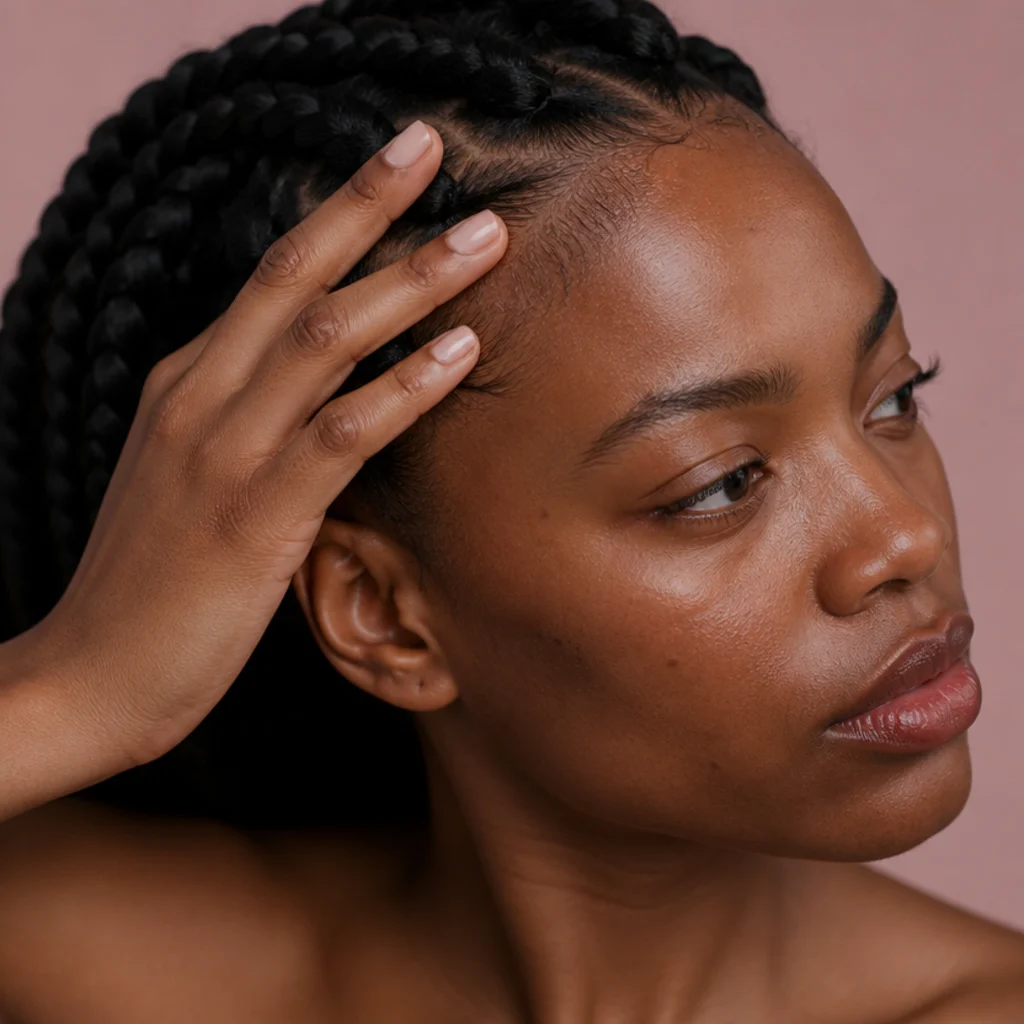
Scalp comfort is usually what settles the decision, and the physics behind it are simple. Knotted jumbo concentrates the full extension weight at one point the moment the knot ties off, which can feel tight for the first day or two, especially across the crown and around the occipital ridge. Knotless spreads that same weight along the feed-in, so the pull covers more root and tends to settle faster, often by the first evening. If you're tender-headed, prone to tension headaches, or coming off a style that already stressed your scalp, knotless is the kinder starting point. A skilled braider can still keep knotted jumbo comfortable by choosing lighter pre-stretched hair and avoiding over-tight crown sections. If you feel stinging or a pulled-taut sensation at the temples during install, say something right then, not after you get home — ask your braider to loosen that perimeter row specifically, since that's where discomfort tends to concentrate.
03Install Time and Effort
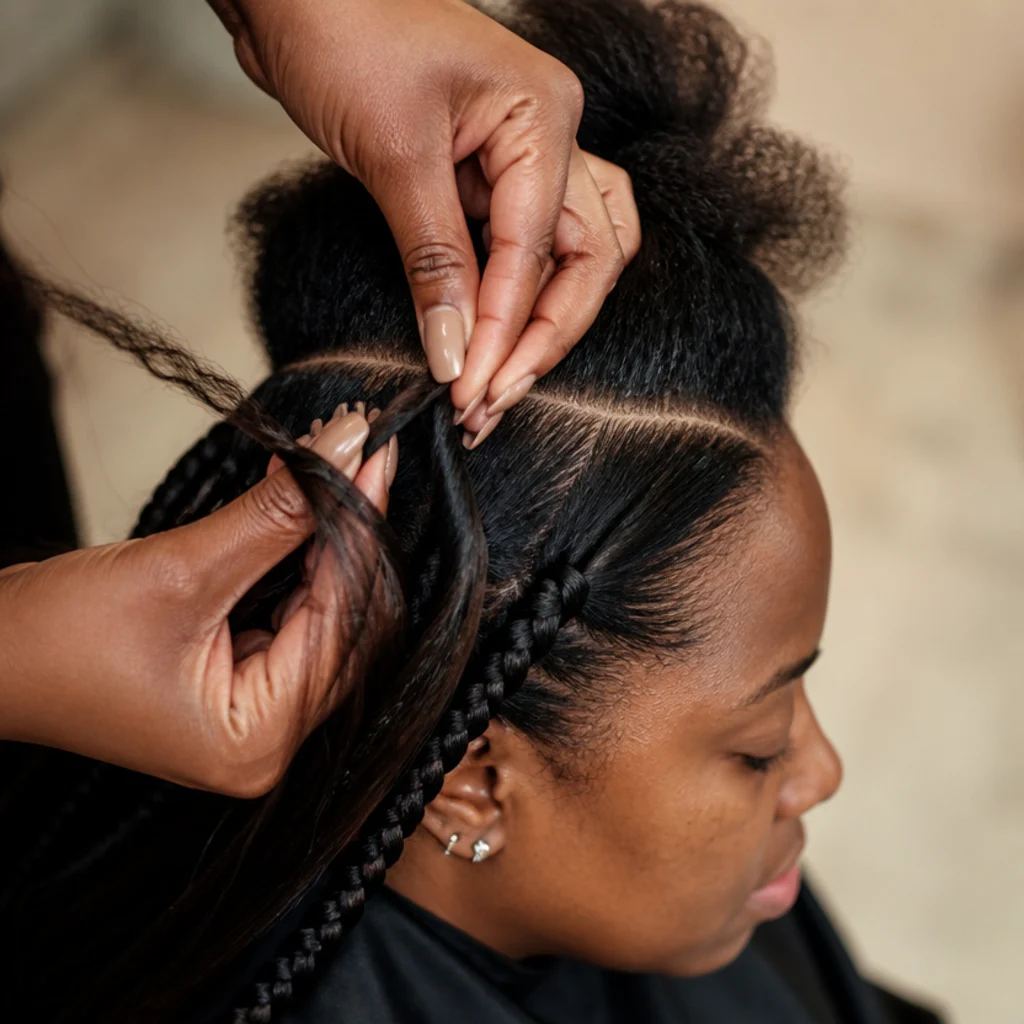
Chair time is a real factor, and jumbo sizing already works in your favor here. Because the partings are large, both styles run faster than small or medium braids, but knotted jumbo is generally the quicker of the two. The knot anchors instantly, so the braider sets each root in one motion and moves on — a full knotted jumbo head can land in roughly two to four hours depending on length and density. Knotless needs a controlled feed-in at every root, layering extension in stages, and those extra minutes per braid add up to an hour or more across a full head. Want in-and-out efficiency? Classic jumbo wins outright. Want the flatter finish? Knotless is worth the wait. One thing that shortens either appointment: show up with hair freshly washed, fully detangled, and blow-dried straight, since a braider working through tangles or damp roots loses real time. Ask for a realistic hour estimate when you book so you can plan the rest of your day.
04Hairline and Edge Impact
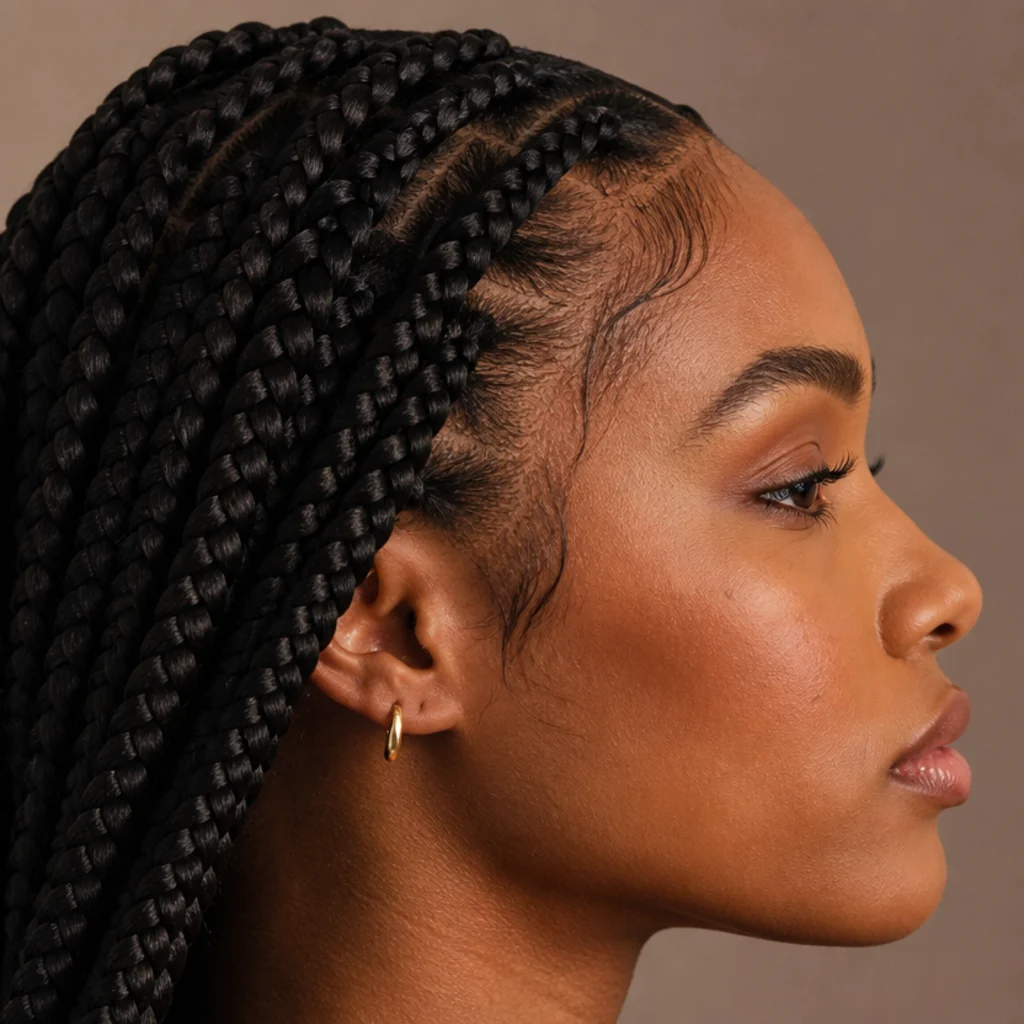
Edges need deliberate protection with any large braid, since bigger sections put more concentrated pull on each part than a small braid would. Knotless has the clear edge here: the gradual feed-in softens the immediate yank on fine, fragile hairline hairs, and the technique lets a braider taper the front row featherlight. Knotted jumbo can still be edge-friendly, but only if the braider keeps the perimeter sections lighter, looser, and smaller than the interior ones. If your edges are fine or already stressed, knotless is almost always the better call. Whichever base you pick, insist your hairline and nape get braided gently, leave a soft fringe of baby hairs out instead of slicking every strand back, and don't accept a headache-level pull at the temples as normal — that's not something you should have to live with. Skip tight, high, pulled-back styles for the first week while everything settles, and ask your braider to keep the front two rows loose enough that you can comfortably raise your eyebrows.
05Weight and All-Day Comfort
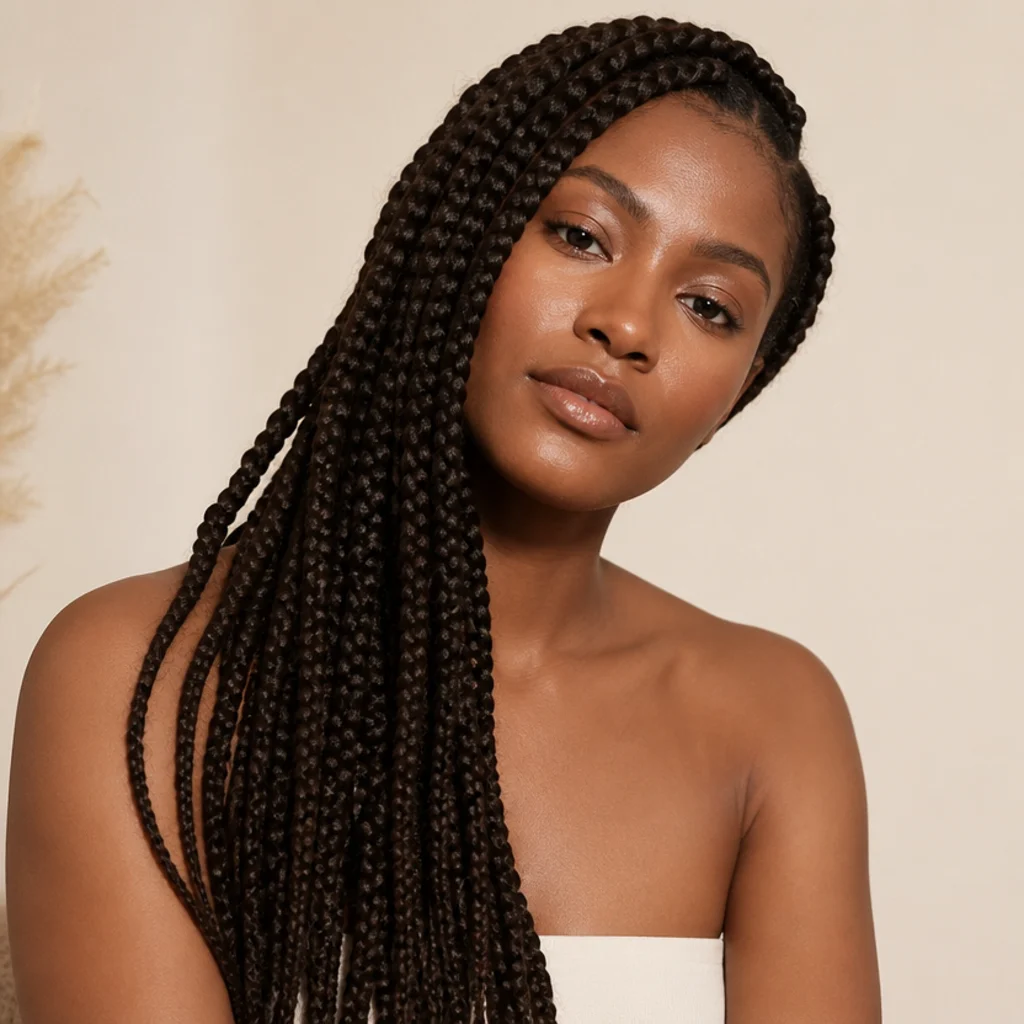
Big braids carry real physical weight, and it climbs fast at longer lengths. Knotted jumbo front-loads that weight at the root, so a long, dense install can feel heavy early on, especially when you lie down or gather everything into one style. Knotless spreads the same load along the length of each braid, and most people find that easier to sleep, exercise, and move in. Two things control comfort more than anything else: the length you pick and the extension hair itself. Lighter pre-stretched fibers and a shoulder-to-mid-back length keep either style light, while waist-length or floor-skimming drama compounds the pull. If you love long lengths, knotless plus a lightweight hair choice is the pairing that keeps things comfortable. For the first few nights, gather braids into two loose sections instead of one heavy pile so the weight balances across your head, and ask your braider to recommend a lighter hair brand if you know weight bothers you.
Save this to Pinterest to remember which style feels lighter for long lengths.
06Medium Jumbo: The Middle Ground
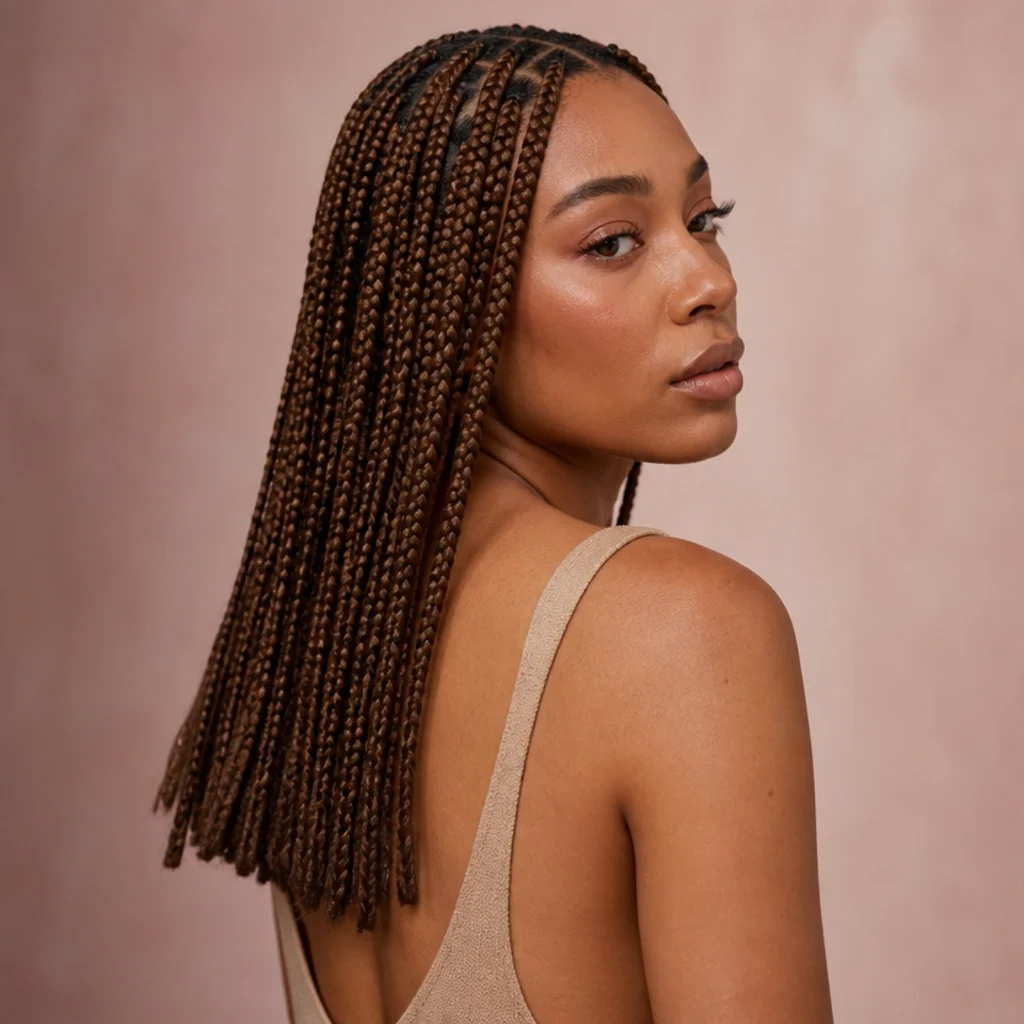
If full jumbo feels too bold and standard box braids feel too fussy, medium jumbo knotless box braids land right in the sweet spot. The partings stay large enough to keep install time reasonable and the silhouette sculptural, but fine enough to bend into buns, half-up styles, and updos without looking bulky. This size flatters the widest range of faces because it frames without swallowing your features, and it suits medium to thick density well while still working on finer hair when the braider keeps sections tidy. The knotless root keeps the hairline natural, and the moderate weight means comfort rarely becomes an issue even at mid-back length. It's the size I recommend most often for a first jumbo experience — dramatic enough to register instantly, manageable enough to live with for a month. Bring a photo showing the braid diameter next to a coin so size expectations are unambiguous, and ask your braider for "medium jumbo, roughly finger-width sections" to anchor the scale.
07Long Jumbo Knotless Drama
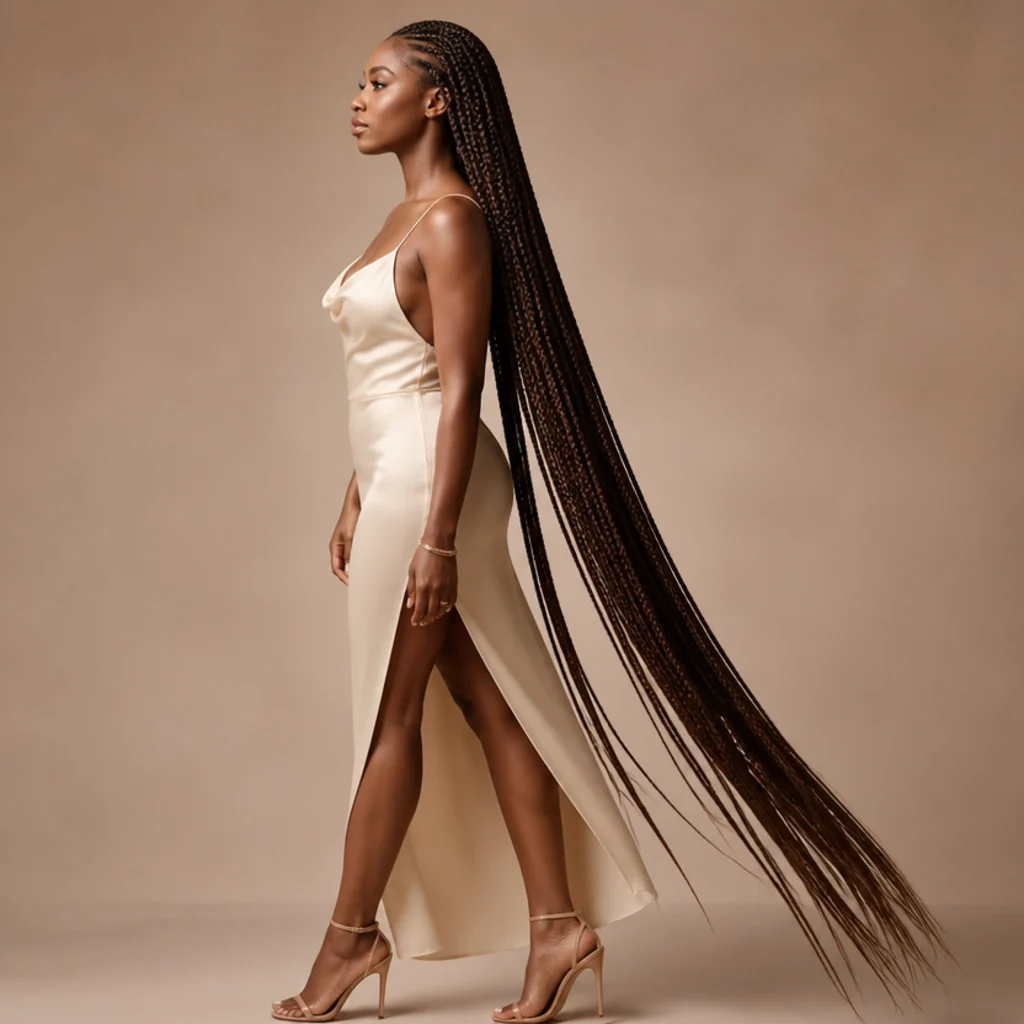
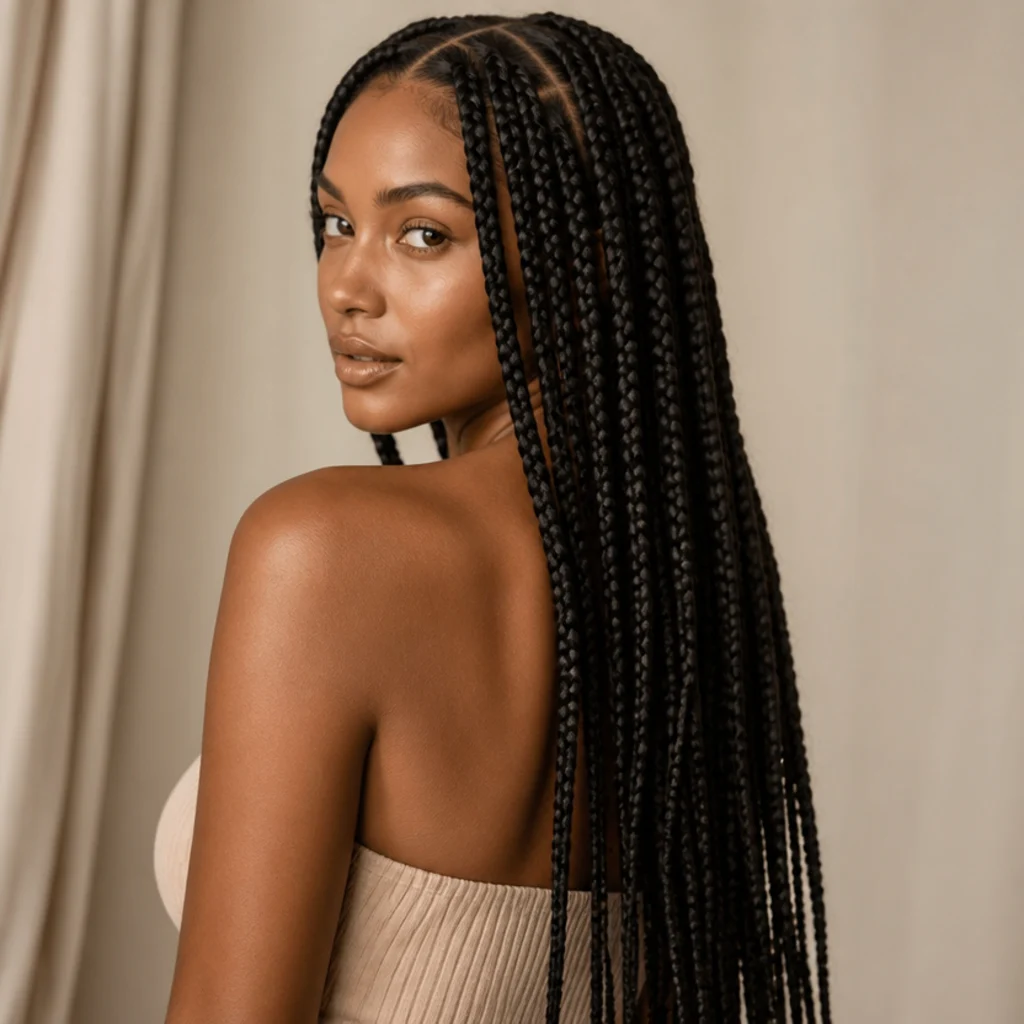
For maximum impact, long jumbo knotless box braids deliver sweeping, editorial-level drama with surprisingly few braids, since the large sections let extreme length read clean and intentional instead of busy or stringy. Knotless is the smarter base for anything past mid-back: the flat, distributed root handles the extra length with noticeably less scalp strain than a knotted start, where all that weight hangs from one anchor point. On proportion, tall frames and anyone who wants a statement can carry floor-skimming lengths, while petite frames may prefer waist-length so the braids don't overwhelm. Deep espresso, jet, and brown tones make long lengths look especially polished. The trade-off is honest: longer means heavier, pricier, and more upkeep, so plan on securing the braids at night and staying gentle at the roots as the weeks pass. Sleep with the length loosely braided into one or two plaits inside your bonnet to prevent tangling, and ask your braider how much extra hair the length requires before you commit.
08Bob-Length for Low Commitment
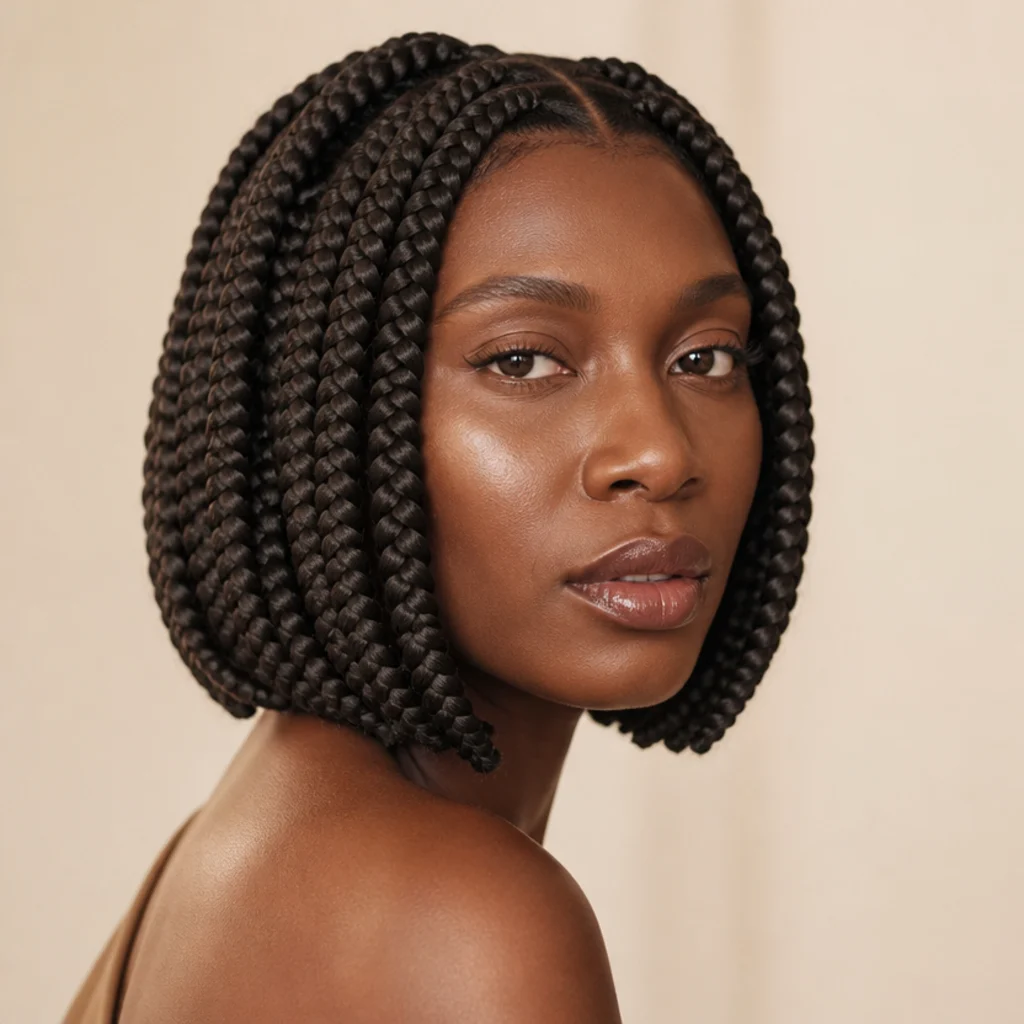
Not ready to commit to length? A jumbo braid bob is the low-commitment entry point and a good trial run. Chin-to-shoulder length keeps total weight minimal, which makes both knotted and knotless comfortable and easy to style with almost no adjustment period. A bob also adds structure around the jaw, so it flatters round and heart face shapes especially well by drawing a clean line at the chin, while a slightly longer, angled bob elongates fuller faces. With far less hair to manage, this is the smartest way to test whether jumbo sizing suits your features and lifestyle before booking a longer, pricier install. Knotless still gives you the cleaner root and better pulled-back styling, but the short length keeps knotted jumbo comfortable too, so either base works at this scale. A blunt or softly graduated bob looks the most deliberate, so avoid random uneven ends — ask your braider for a "collarbone-grazing jumbo bob with a clean baseline."
09Jumbo Box Braids With Beads
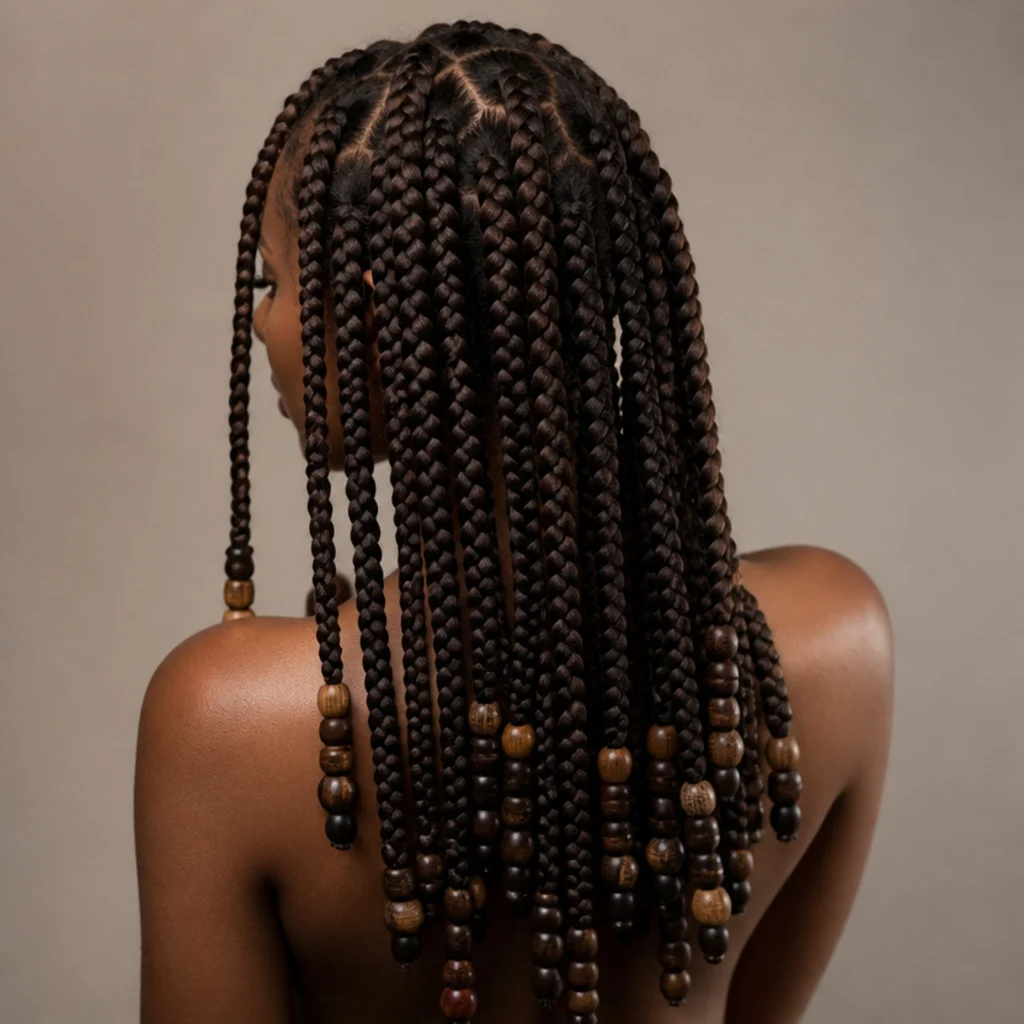
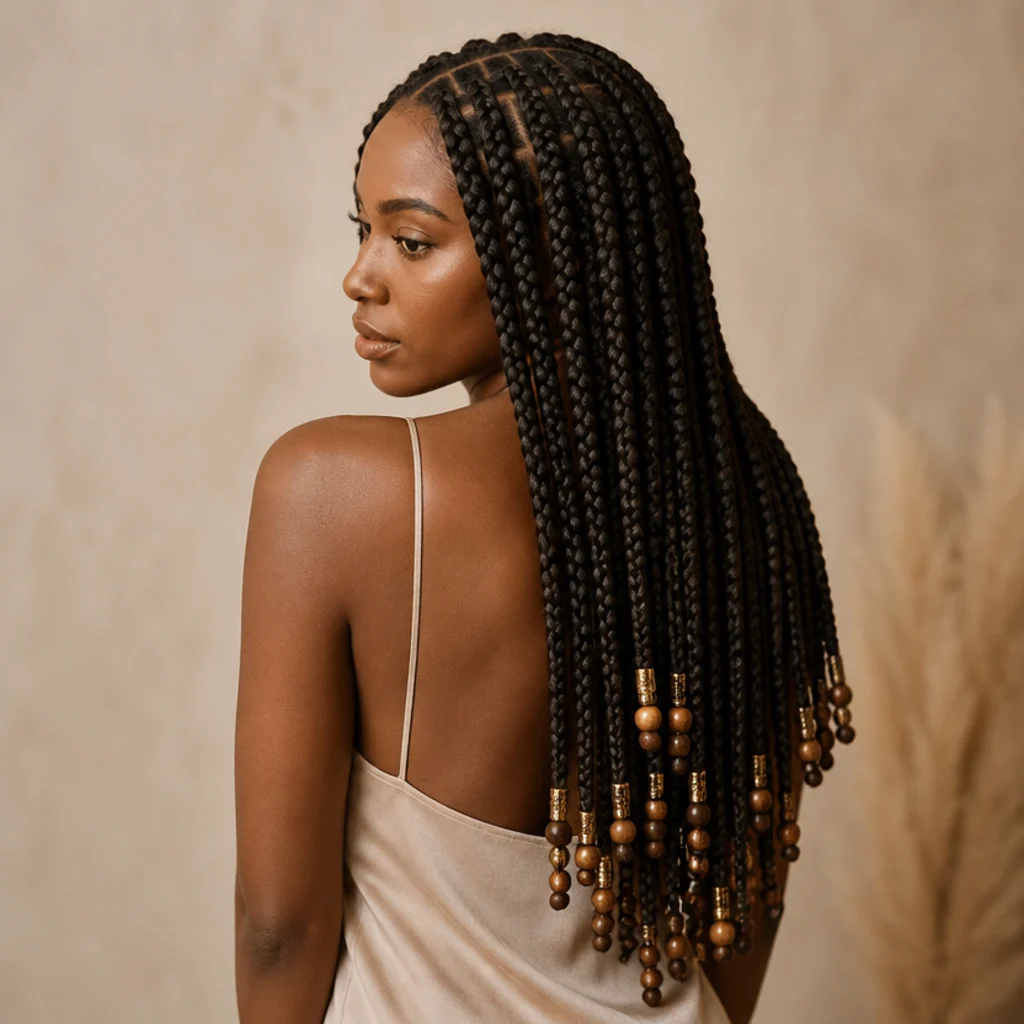
Accessorizing is where personality shows, and jumbo box braids with beads add rhythm, texture, and a nod to tradition that thinner braids can't match. The generous diameter gives each bead a bold, secure anchor, and the chunkier base can carry heavier wooden, matte ceramic, or metallic beads that would drag a fine braid down. Cowrie shells and cuffs look good against large braids too. There's a catch, though: beads add real weight, so keep placement toward the lower third of each braid to avoid extra pull near the scalp, and don't overload every single one. Beads work equally well on knotted and knotless bases — the only requirement is that each one is secured so it can't slide off or creep upward. A dab of clear elastic or a small rubber band below each bead locks placement without looking bulky, and asking your braider to bead selectively around the face and ends rather than uniformly gives a more intentional, less heavy result.
10Color and Highlight Options
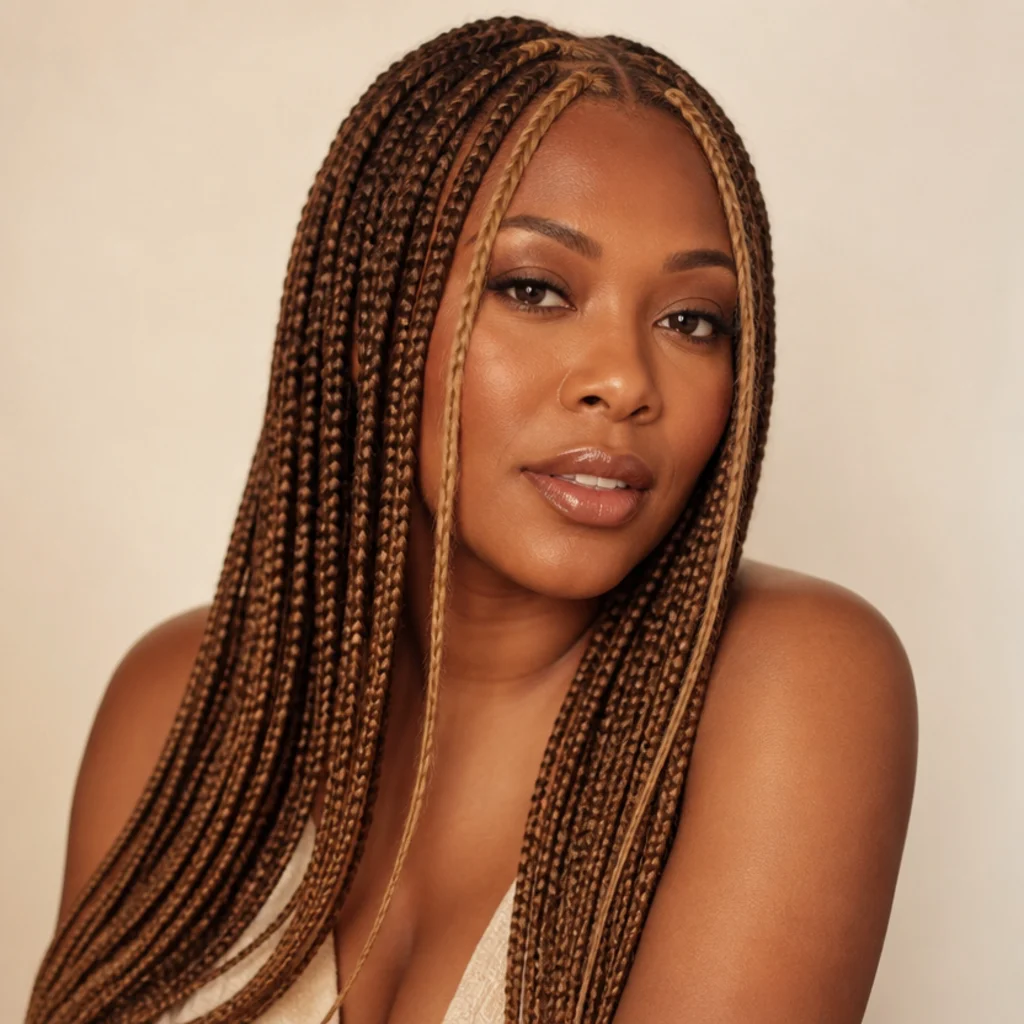
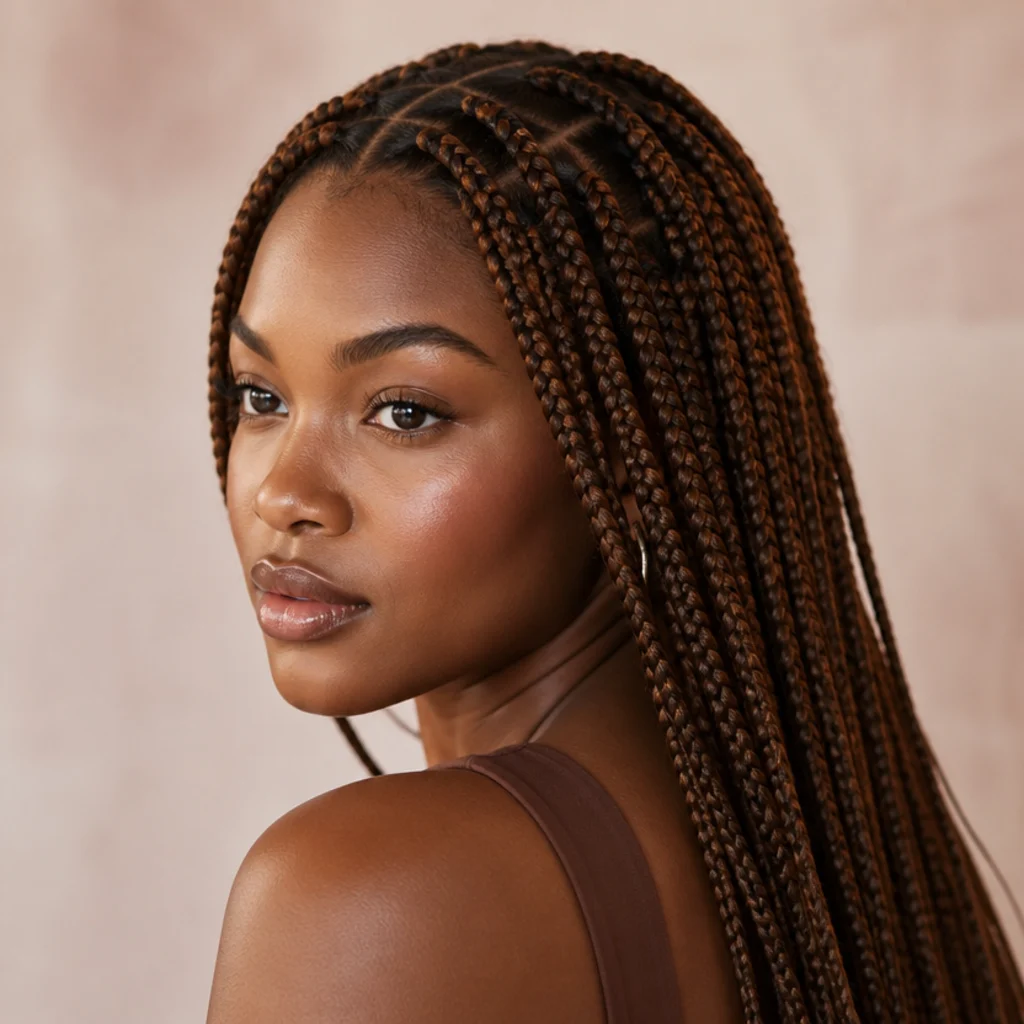
Color changes the entire mood without touching your natural hair. Because jumbo partings are large, each braid shows color in generous, uninterrupted ribbons, so ombre, money-piece framing, peekaboo panels, and subtle highlights all land with real impact. Undertone is the key to getting it right: warm honey, caramel, and copper flatter deep and medium skin with warm or neutral undertones, while cool ash browns and smoky tones read best against fair or cool-toned complexions. Knotless makes color blends look especially clean, since there's no knot to interrupt the transition from your roots into the added shade. For a face-brightening effect, concentrate the brighter tones around the front and part. Mixing two or three coordinating braid colors instead of one flat shade adds dimension that photographs well. Pre-stretched color hair varies between brands, so buy an extra pack in each shade to avoid a mid-install dye-lot mismatch, and ask your braider to dry-lay your chosen colors against your skin before braiding.
Save this to Pinterest to bookmark your favorite jumbo color combos.
11Parting Patterns Compared
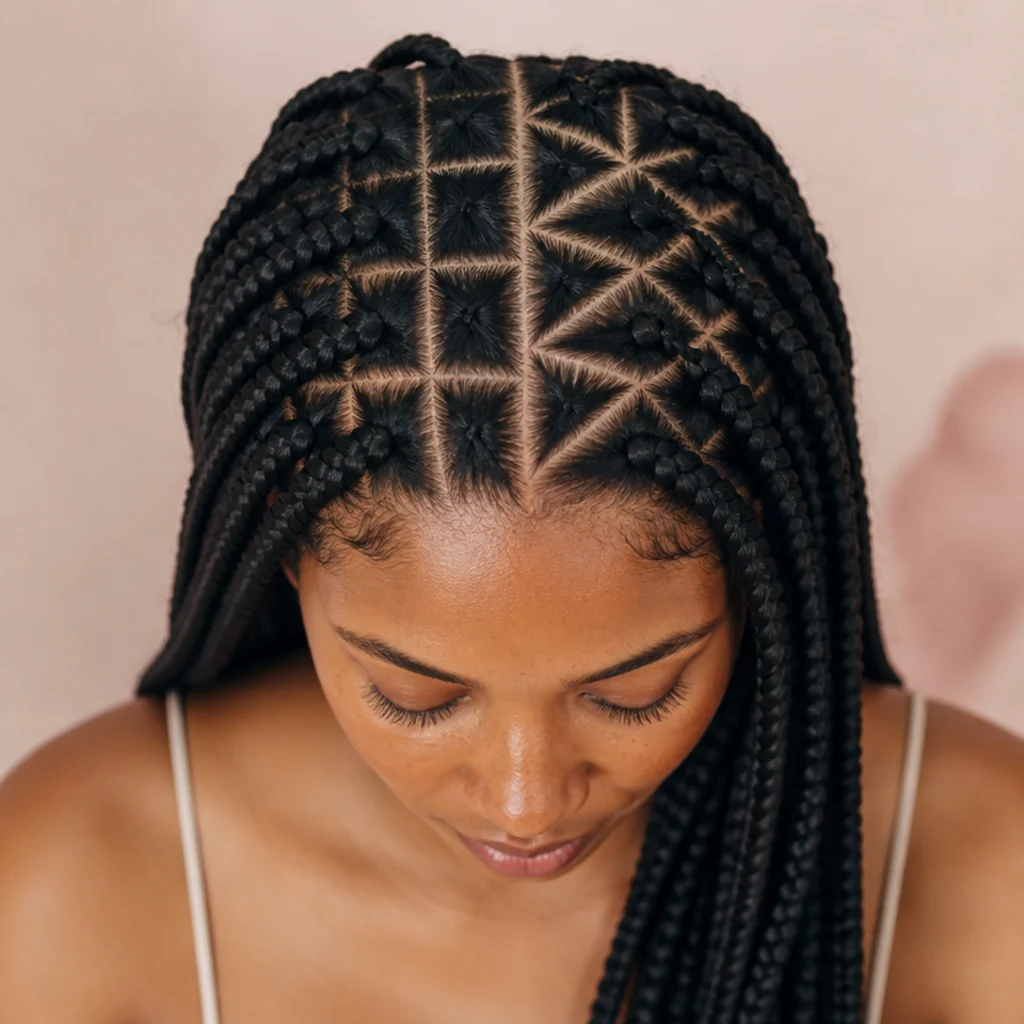
Parting shapes the whole style more than most people expect, especially on jumbo braids. Classic square or rectangular parts give a clean, uniform grid that looks polished from every angle. Triangle parts add a modern, geometric edge and help braids fan out nicely when gathered into an updo, since the wedge shape lets them radiate from the crown. Because jumbo sections are so large, the parting lines themselves are highly visible, so precise, ruler-straight parts aren't optional for a crisp finish — a wobbly part shows instantly at this scale. Both knotted and knotless take any parting pattern equally well, so choose based on the look you want rather than the root type. If you plan to wear high buns and ponytails often, directional parts that angle toward the crown let the braids gather smoothly without lumps. A center part suits symmetrical faces, while a deep side part adds softness and flatters a longer face — ask your braider for the specific part layout with a reference photo.
12How to Style Jumbo Box Braids
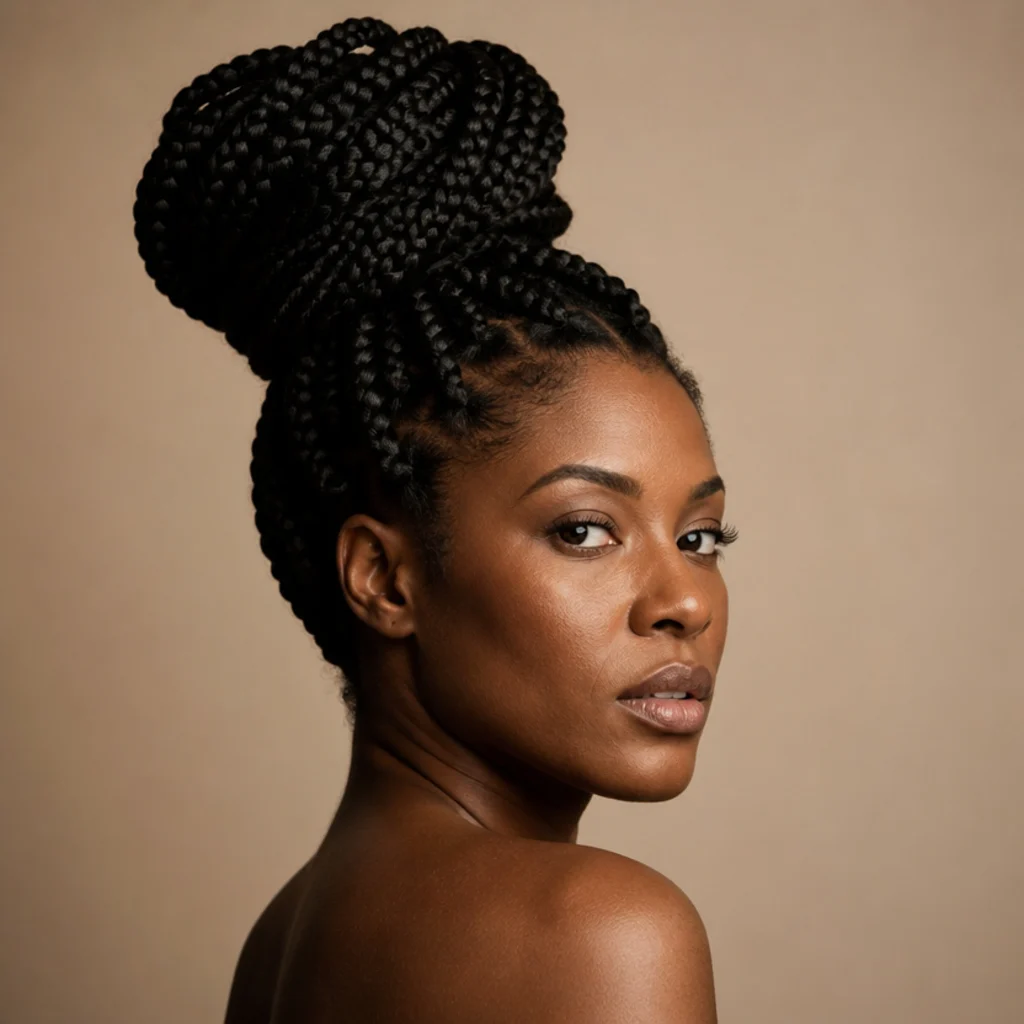
Knowing how to style jumbo box braids is what keeps the look fresh across a full month. High buns, half-up half-down styles, low draped ponytails, and face-framing twists all show off the chunky texture, and jumbo sizing makes an oversized sculptural bun easy to pull off because you need so few braids to build volume. Protect the style while you wear it: gather braids with a soft scarf or spiral hair tie rather than tight snap elastics that dent and stress the root, and support long lengths with a few large bobby pins instead of one strained band. Since the braids are heavy, favor styles that spread weight evenly across the crown rather than yanking it all to one high point day after day. Refresh roots with a light water-and-leave-in mist, and smooth flyaways with a small amount of edge control worked in with a soft brush. Rotate your "up" style placement every few days so the same sections aren't repeatedly stressed, and at night, loosely pineapple the braids or wrap them under a satin bonnet to protect the ends and cut frizz.
13Longevity and Upkeep
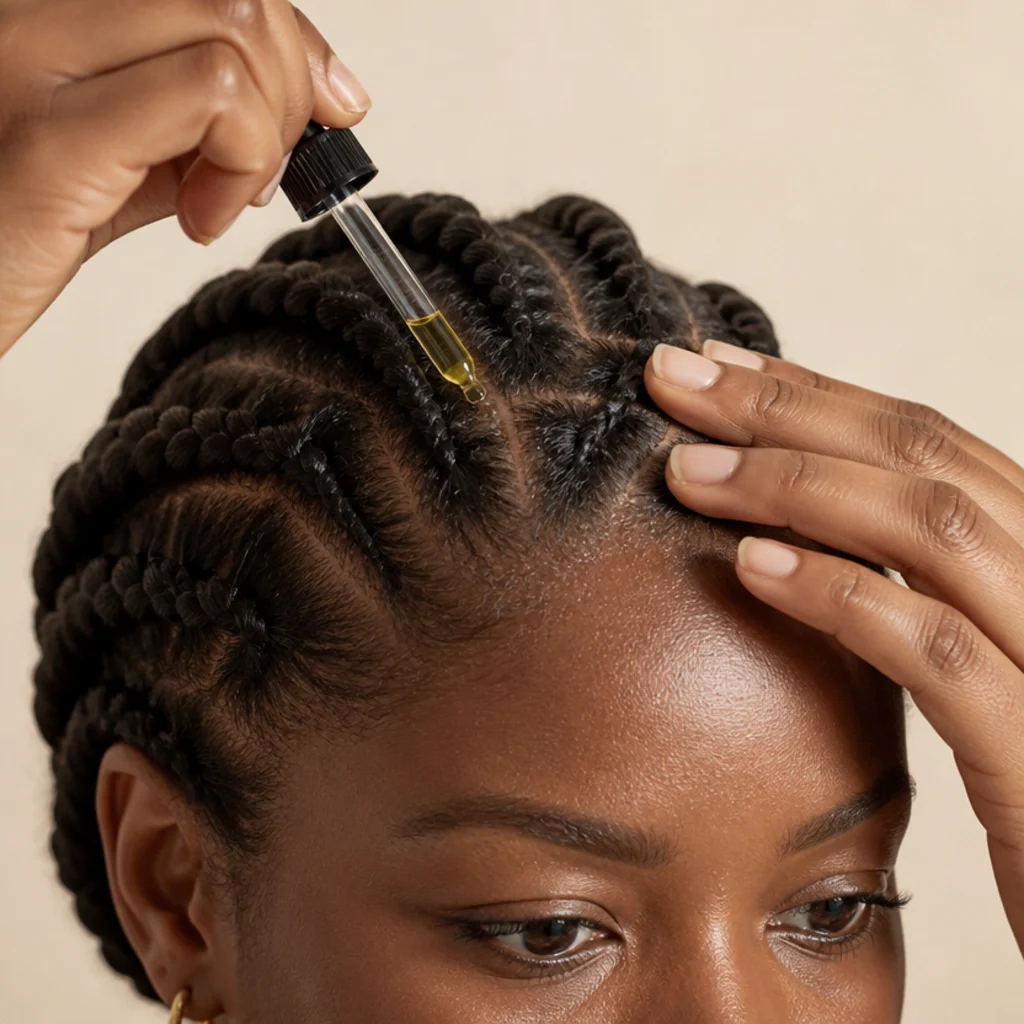
Both styles can last four to six weeks with good care, and the upkeep routine stays simple either way. Cleanse the scalp roughly every one to two weeks with a diluted shampoo in an applicator bottle aimed straight at the parts, then rinse thoroughly and let the braids dry completely to prevent mildew and odor at the root. Keep the scalp lightly moisturized with a water-based spray and a small amount of oil, and sleep on satin every night to cut friction frizz. Knotless braids often look tidy a little longer because there's no knot to loosen, twist, or slip at the root, while knotted jumbo may need an earlier edge or root touch-up around week three or four. As new growth fills in, both styles read fuzzier, especially at the crown, and that's your cue to plan a take-down rather than stretch the style toward matting. Never redo the style past six to eight weeks without a full take-down and wash, and ask your braider how they recommend refreshing your specific hairline between installs.
14Budget and Timing Trade-Offs
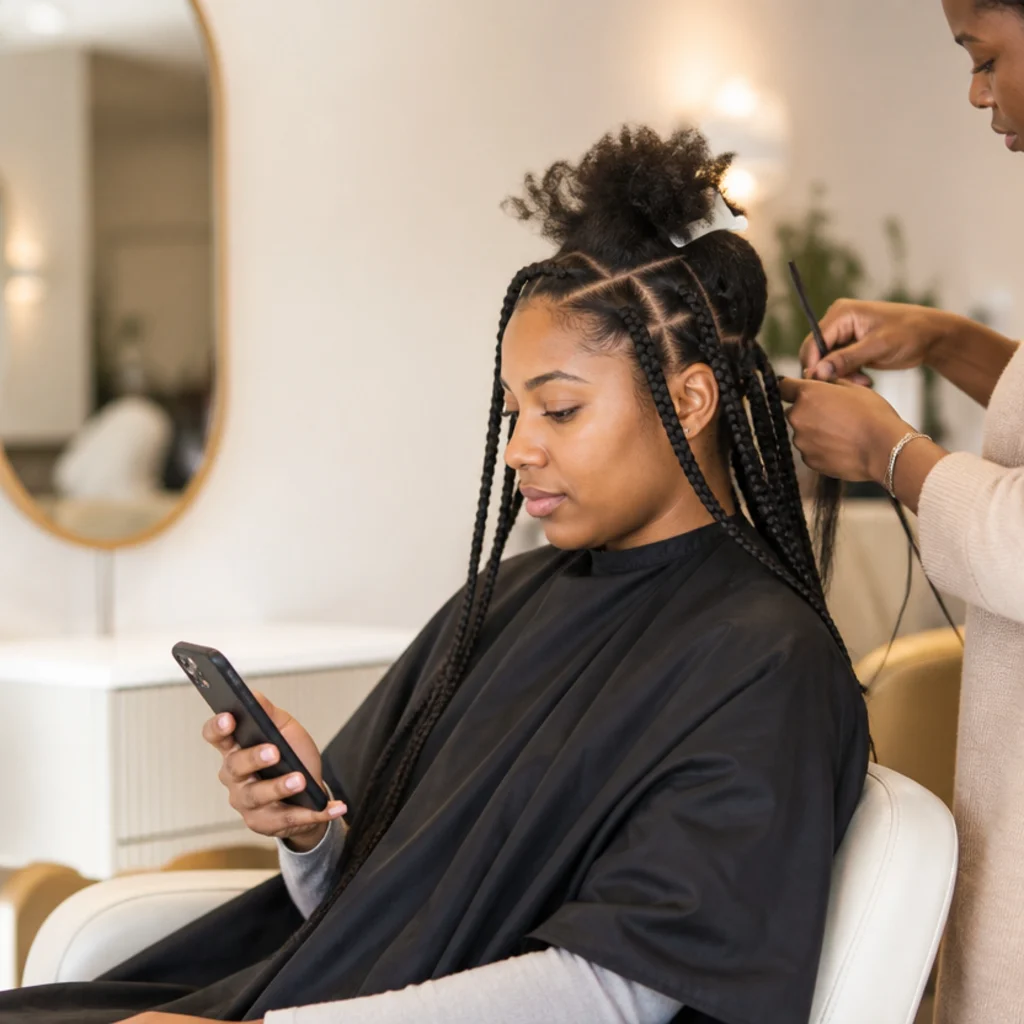
Practical factors often settle the decision when the look you love works either way. Knotted jumbo generally means less chair time, and many braiders price it lower for that reason, while knotless takes longer and typically carries a modest premium for the extra feed-in skill. Hair quantity is another factor: jumbo sizing uses relatively few braids, so you may need fewer packs of extension hair than a small-braid style, which offsets some of the cost. Prices still swing widely by region, salon tier, length, and hair brand, so treat any number you hear as a rough guide, not a fixed figure from an unrelated market. The smart move is a written estimate covering install time, packs required, and any add-ons like beads or color before you commit. Book knotless earlier in the day when your braider is fresh, since the technique rewards a steady, unhurried hand, and ask directly whether the quoted price includes the hair or whether you supply your own.
15Which One Should You Pick
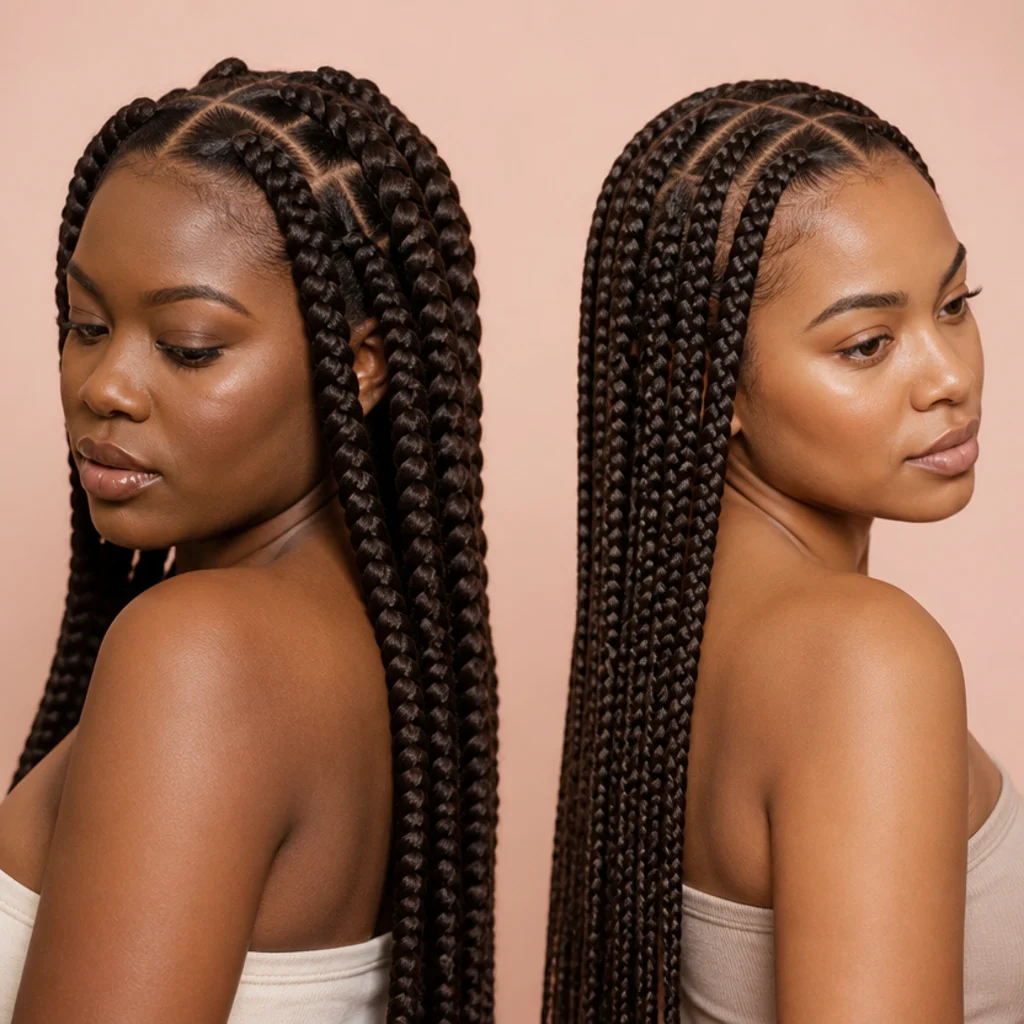
Here's the honest bottom line. Choose classic jumbo box braids if you want the fastest install, a firmer and more defined root, a lower price, and you know you're not especially tender-headed. Choose jumbo knotless box braids if you value a flat natural root, gentler first-day tension, better-hidden pulled-back styling, and a hairline that lies flat against the skin, and you can spare the extra chair time and cost. For most people, across most face shapes and densities, medium jumbo knotless box braids strike the best balance of comfort, versatility, and impact — it's my default recommendation for a first-timer. Match the base to your scalp sensitivity, the length to your daily life and how much nightly upkeep you'll realistically do, and the size to whether you want maximum drama or maximum flexibility. Get those three right and you'll land on a protective style you actually enjoy wearing instead of one you count down the weeks to remove.
Pro Tips from the Editor
- Arrive with hair freshly washed, fully detangled, and blow-dried straight; a braider working through tangles or damp roots loses time and grips tighter, which raises your tension risk.
- The first-week test for correct tension is simple: you should be able to raise your eyebrows and sleep on your side without soreness. Anything sharper than "snug" is too tight, so say so during the install.
- For sensitive scalps, pre-stretched lightweight hair plus a knotless base is the single most comfort-preserving combination, more than length or size alone.
- Buy one extra pack of extension hair beyond the estimate, especially for color, so you avoid a mid-install dye-lot mismatch or running short at the back.
- Keep beads and heavier accessories in the lower third of each braid; weight near the root is what stresses edges and triggers headaches.
- Let braids dry completely after every wash and sleep on satin nightly; trapped moisture at the root causes odor and mildew, and cotton friction is the top cause of premature frizz.
- Plan the take-down at four to six weeks and never push past eight; new growth matting at the root is far harder and more damaging to remove than a timely take-down.
How to Choose / Get the Look
Start with your scalp, since it overrides everything else. If tension gives you headaches or your edges are fine or fragile, lean knotless and brief your braider to keep the hairline soft and the front rows loose. If comfort isn't an issue and speed and budget matter most, knotted jumbo is efficient and bold. Next, pick your length honestly against your real routine: shorter and lighter is much easier to live with, while long, sweeping lengths demand nightly protection, gentle root care, and more money. Then choose your size — medium jumbo offers the most styling flexibility for buns and updos, while full jumbo maximizes drama with the fewest braids. When you book, bring two or three reference photos that clearly show the root type, the length, the section size, and any color or beads you want, since a picture removes ambiguity that words can't. Ask directly for comfortable, no-headache tension, a clean and specified parting pattern, and the exact size and length in inches. Confirm the hair brand, how many packs are needed, and get an estimate of install time and any add-on costs in writing. Finally, stage your aftercare before install day: a satin bonnet, a scalp applicator bottle, a water-based leave-in mist, and a light oil will keep either style looking fresh for weeks.
Frequently Asked Questions
Are jumbo knotless box braids better for your hairline than knotted?
For most people, yes. The gradual feed-in reduces the immediate tension at the root, where fine hairline hairs are most vulnerable, and it lets a braider taper the front row featherlight. Comfort still depends on your braider keeping the perimeter loose and leaving a few baby hairs out, so speak up during the install if any front section feels tight rather than snug.
Do jumbo braids install faster than smaller braids?
Yes, by a lot. Because the sections are large, you need far fewer braids overall — often 40 to 70 on a full head versus a couple hundred for small braids — so both knotted and knotless jumbo finish much faster. Knotted jumbo is typically the quickest of all, often two to four hours, since the knot anchors instantly while knotless adds feed-in time at every root.
Can I add beads to jumbo knotless box braids?
Yes. The thickness of jumbo braids anchors beads securely and can carry heavier wooden or ceramic styles that fine braids can't. Keep beads toward the lower third of each braid to limit extra pull near the scalp, don't overload every braid, and ask your braider to secure each bead with a small clear elastic so it can't slide off or creep upward.
What is medium jumbo and who does it suit?
Medium jumbo sits between standard box braids and full jumbo, roughly finger-width sections. It flatters the widest range of face shapes and densities, keeps install time reasonable, and stays versatile enough for buns and updos where full jumbo can feel bulky. That balance of comfort, drama, and flexibility is why it's the size I recommend most for a first jumbo experience.
How long do jumbo braids last?
With gentle cleansing every one to two weeks, light water-based moisture, and satin protection nightly, both styles commonly last four to six weeks. Knotless often holds a tidy root a little longer because there's no knot to loosen. Plan the take-down by six weeks and avoid pushing past eight — new growth matting at the root gets harder and more damaging to remove the longer you wait.
Which is more comfortable to sleep in, jumbo or knotless?
Knotless usually wins on sleep comfort, especially at longer lengths, since the weight spreads along each braid rather than concentrating at a knot pressing into the pillow. Whichever you choose, gather the braids into one or two loose plaits inside a satin bonnet so the weight balances across your head and the ends stay tangle-free through the night.
Can I wash jumbo box braids without ruining them?
Yes, and you should. Dilute a gentle shampoo in an applicator bottle, aim it directly at the parts, massage lightly, then rinse thoroughly and let the braids dry completely before bed. The two mistakes to avoid: scrubbing roughly, which causes frizz, and leaving the root damp, which invites odor and mildew. A monthly deep clean keeps either style looking fresh through the full wear window.
Are jumbo braids heavy or damaging to natural hair?
Jumbo braids can feel heavy at long lengths, but they aren't inherently damaging when installed with comfortable tension on healthy hair and removed on time. Damage comes from tension that's too tight, sections too small for your density, or leaving the style in past eight weeks. Lightweight extension hair, a knotless base, and a timely take-down are what keep jumbo braids protective instead of harmful.
How much do jumbo knotless box braids cost compared to knotted?
Knotless typically carries a modest premium over knotted jumbo because the feed-in technique takes longer and needs more skill. Actual prices swing widely by region, salon tier, length, and hair brand, so treat any figure you hear as a rough guide and get a written quote. Ask specifically whether the price includes the extension hair or whether you supply your own — that one detail can shift the total noticeably.